




![[EXCLUSIVE] Dragon’s Dogma 2: Dark Arisen Team Opens Up About the Expansion’s Name, New Norgan Region, and Performance Goals](https://cdn.gamerbraves.com/2026/07/Dragons-Dogma-2-Dark-Arisen_Interview_FI-360x180.jpg)





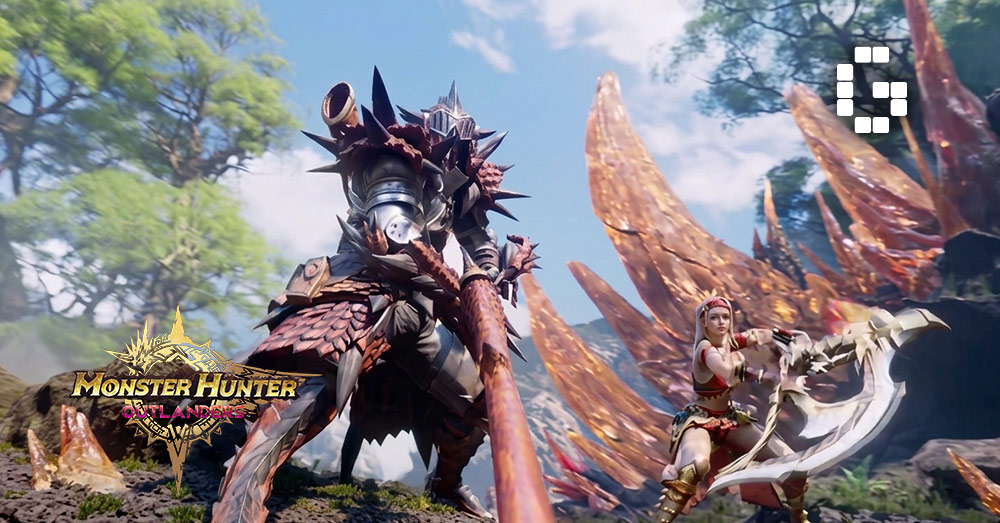
The Monster Hunter franchise has always had a way of pulling players into its world, and TiMi Studio Group is banking on that same pull for its mobile entry into the series. Recently, we had the opportunity to sit in on a pre-CBT2 briefing session with Dong Huang, Producer of Monster Hunter Outlanders, where the team walked us through what the game is, what the second closed beta test brings, and answered some of the community’s most pressing questions.
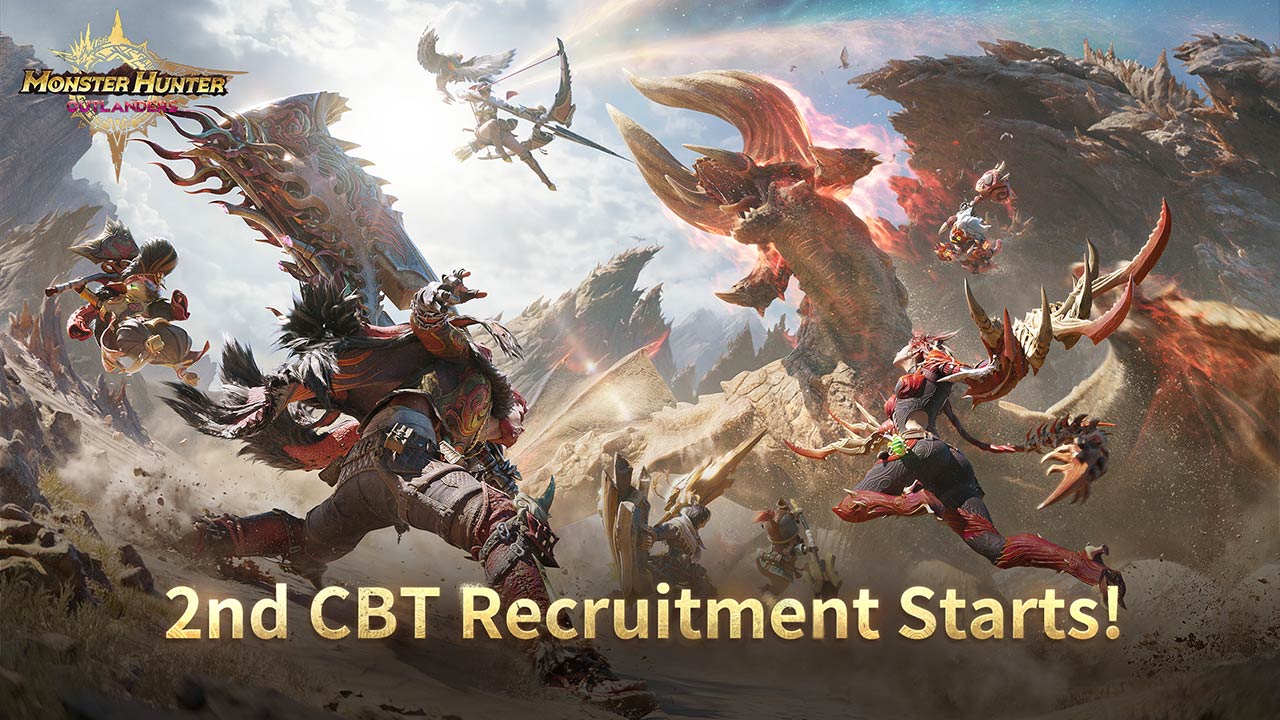
At its core, Monster Hunter Outlanders is a free-to-play mobile action hunting game developed by TiMi Studio Group in collaboration with Capcom. It sits firmly in the Monster Hunter universe but tells a completely original story set in a brand-new region called Aesoland, a mysterious island filled with unique ecosystems, local inhabitants, and a strange mineral known as Radiantite that quietly influences everything living on the island.
Players take on the role of an explorer whose guild makes an emergency landing on Aesoland after a sudden storm throws their investigation off course. From there, it becomes a story of discovery and survival. For those wondering whether the game ties into the broader Monster Hunter timeline, it does not. The world, storyline, and key characters are entirely independent, with no narrative connection to any other installment in the series.
Two Regions, One Open World
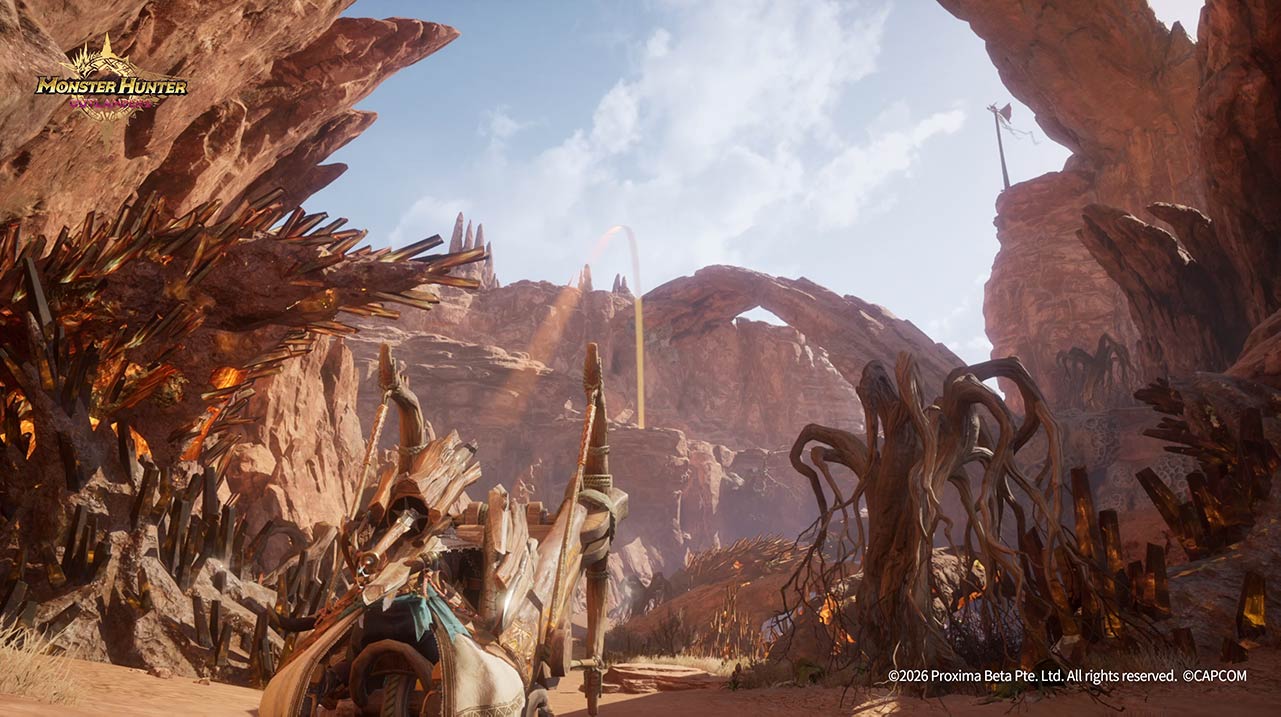
CBT2 opens up two distinct regions for players to roam: the Giantwood Locale and the Searing Plains, each with their own terrain, climate, and ecosystem. While the original vision was a fully seamless open world, the team made a deliberate call to split the game into regions separated by brief loading screens.
“Within a single region, players still enjoy a completely seamless, free-roaming experience,” Huang explained. “Moving between regions involves a brief loading screen. This design choice ensures that each region’s unique content and tailored gameplay can be presented at the highest possible quality. It was a considered trade-off.”
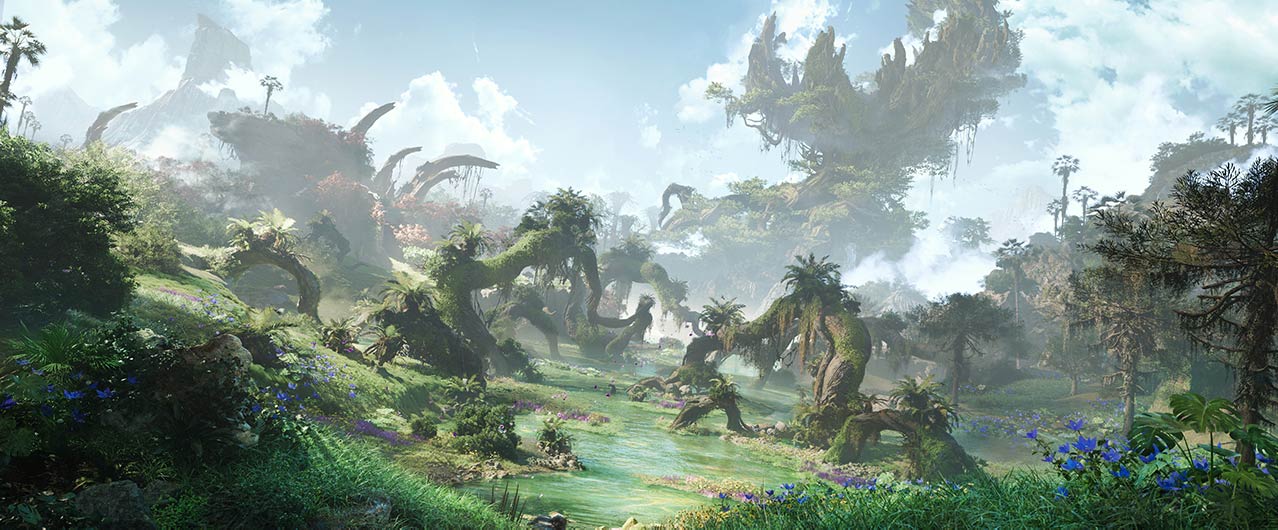
Beyond just running around, the game features a building system that lets you construct field facilities out in the open world, opening up new routes and vantage points. Field events are scattered across the map too, ranging from a Zen Stone Balance challenge to a Gliding Challenge and an Egg Heist. It’s the kind of extra content that rewards players who take the time to poke around rather than beeline straight to the next hunt.
The Weapons and How Combat Works on Mobile
Getting Monster Hunter’s combat to feel right on a touchscreen is no small task, and TiMi has approached it with two distinct control modes. Classic Mode is built for players who want that familiar action feel, with follow-up attacks triggerable through quick taps and a full skill button layout. Adventure Mode strips things back to just three buttons: Attack, Defensive, and Burst, making it accessible for players newer to the genre without removing the depth underneath.
CBT2 features six weapon types for the Fated Adventurer, the game’s customizable protagonist: Great Sword, Long Sword, Dual Blades, Bow, Heavy Bowgun, and Lance. When asked whether more weapons are coming, Huang kept it brief: “Each weapon has its own unique skill set and movepool,” he said, directing players to official channels for future announcements.
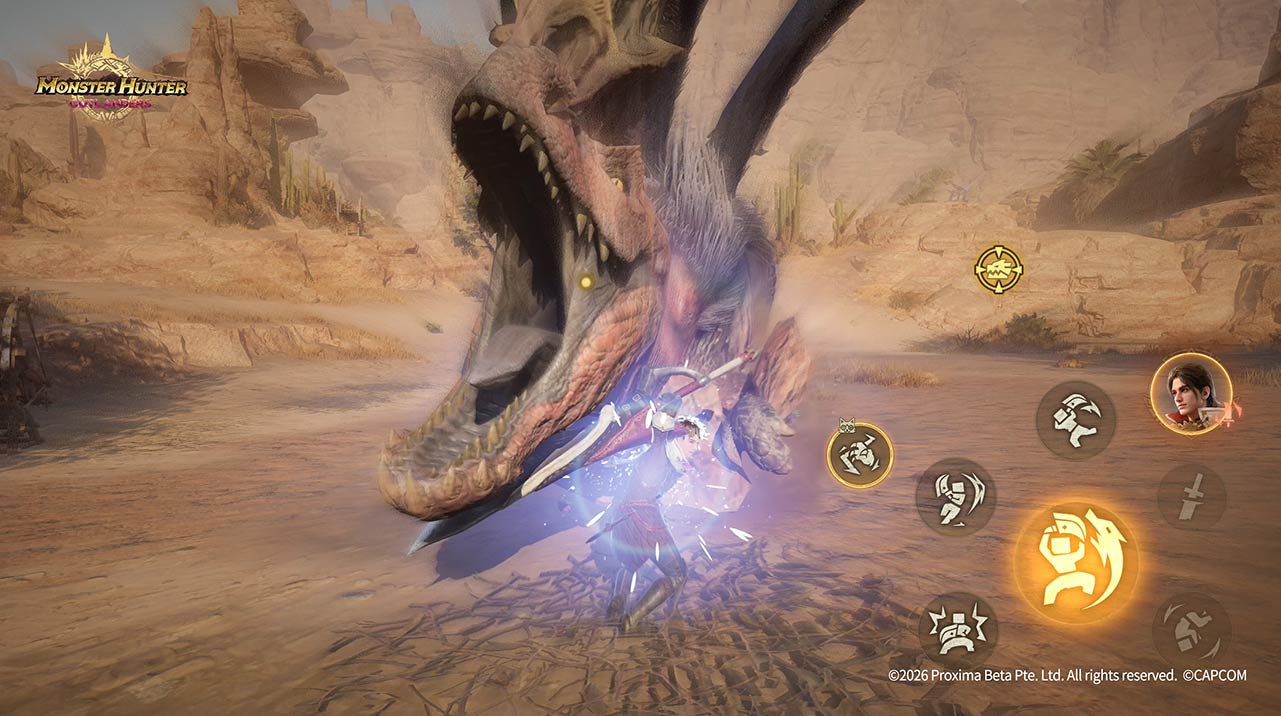
The game also includes an Auto-Focus Camera that locks onto monsters during combat, a part lock-on system for targeting specific monster parts, and clearer visual feedback for monster attacks and player inputs. These feel like thoughtful additions rather than just accessibility features, especially if you’re trying to coordinate with teammates.
Playing With Others: Co-op and the Squad System
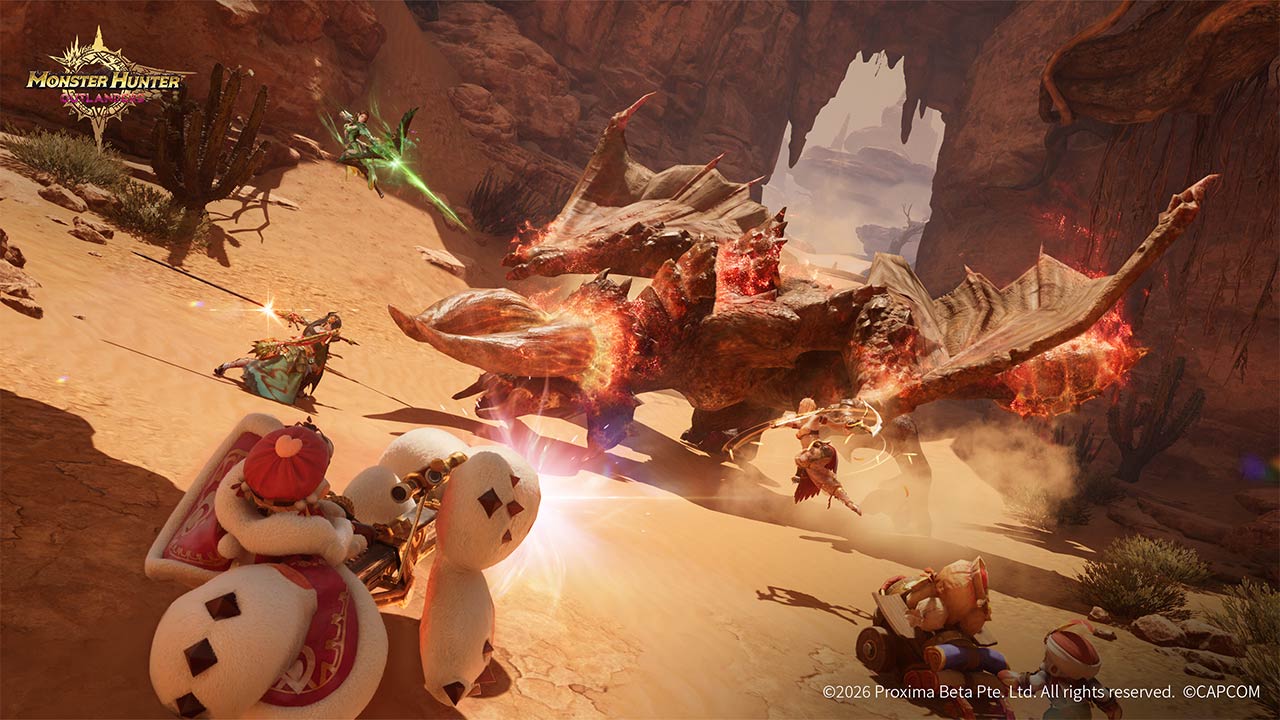
Multiplayer supports up to four players, and the standout addition here is the Co-op Skill system. When multiple players time their attacks on the same monster part within a short window, the squad triggers a coordinated strike dealing massive damage. It’s a mechanic that rewards communication and teamwork over just button mashing.
But Huang was quick to clarify that the co-op experience goes well beyond that one system. “The Co-op Skill is certainly the most visible distinction, but the core of the multiplayer experience goes much deeper,” he said.
“Because each player’s abilities are distributed across different roles, communication and coordination between teammates become a defining part of what makes multiplayer unique, from deciding when to use skills, to choosing which part of the monster to target, to timing your all-out offensive pushes.”
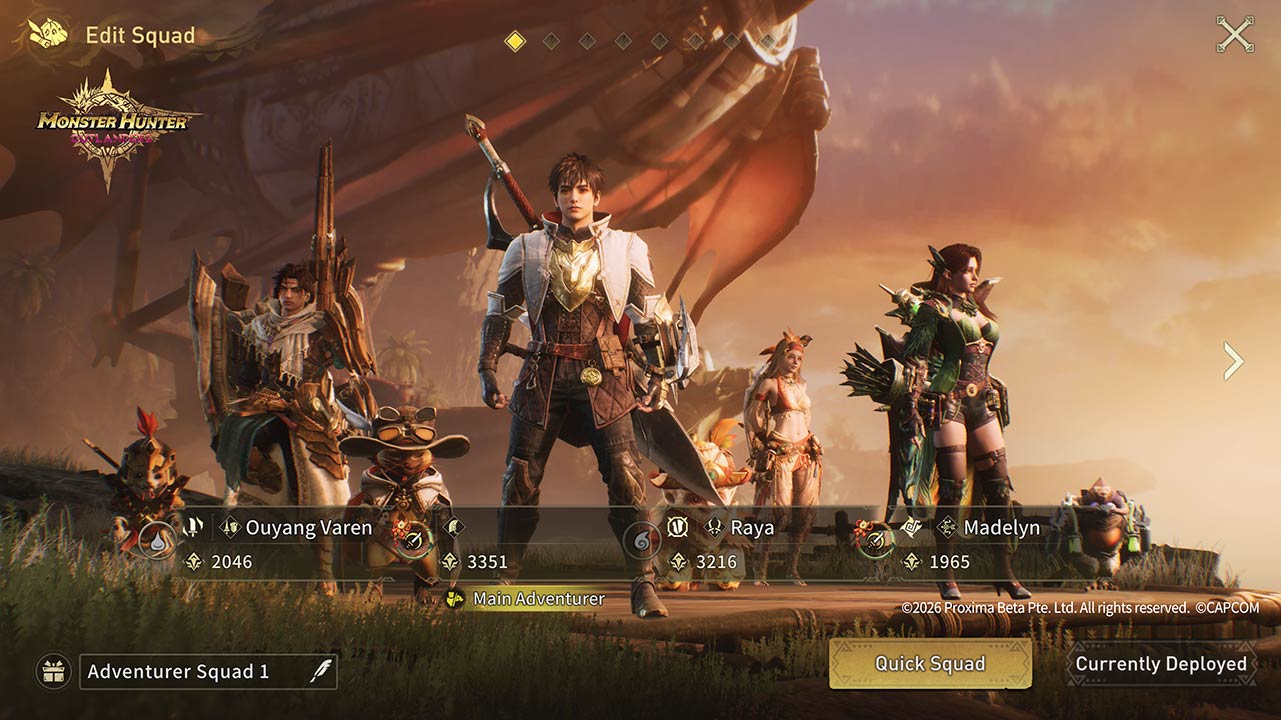
For players who prefer to go solo, the game fully supports that too. You can bring up to three Fellow Adventurers you meet through the story to fill out your squad, so you’re never forced into online play. Co-op content includes weekly Squad Co-Op challenges in Normal and Dangerous modes, daily Co-Op Hunts, and Arena Quests with leaderboard competition across Solo, Squad, and Duo formats.
Adventurers, Roles, and the Buddy System
Rather than a traditional character creation system, Monster Hunter Outlanders is built around a cast of named Adventurers, each locked to a specific weapon and role. The three role types are Assault (damage dealers), Disruptor (control and debuff), and Support (healing and buffing).
CBT2 introduces ten named Adventurers alongside the Fated Adventurer. On the Assault side, there’s Ouyang Varen on Lance, Midori on Long Sword, Luka on Bow, and Pyro on Great Sword. Disruptors include Raya and Keres on Dual Blades, Pepper on Heavy Bowgun, and Freya on Great Sword. Support Adventurers are Madelyn on Bow and Arkaya on Lance.
Each Adventurer is paired with one of three Buddy types: the classic Palico for Assault, the new Rutaco for Disruptors, and the new Trillan for Support roles. Even within the same Buddy type, each companion has a distinct appearance and ability set, so pairing choices can actually affect how you approach different hunts.
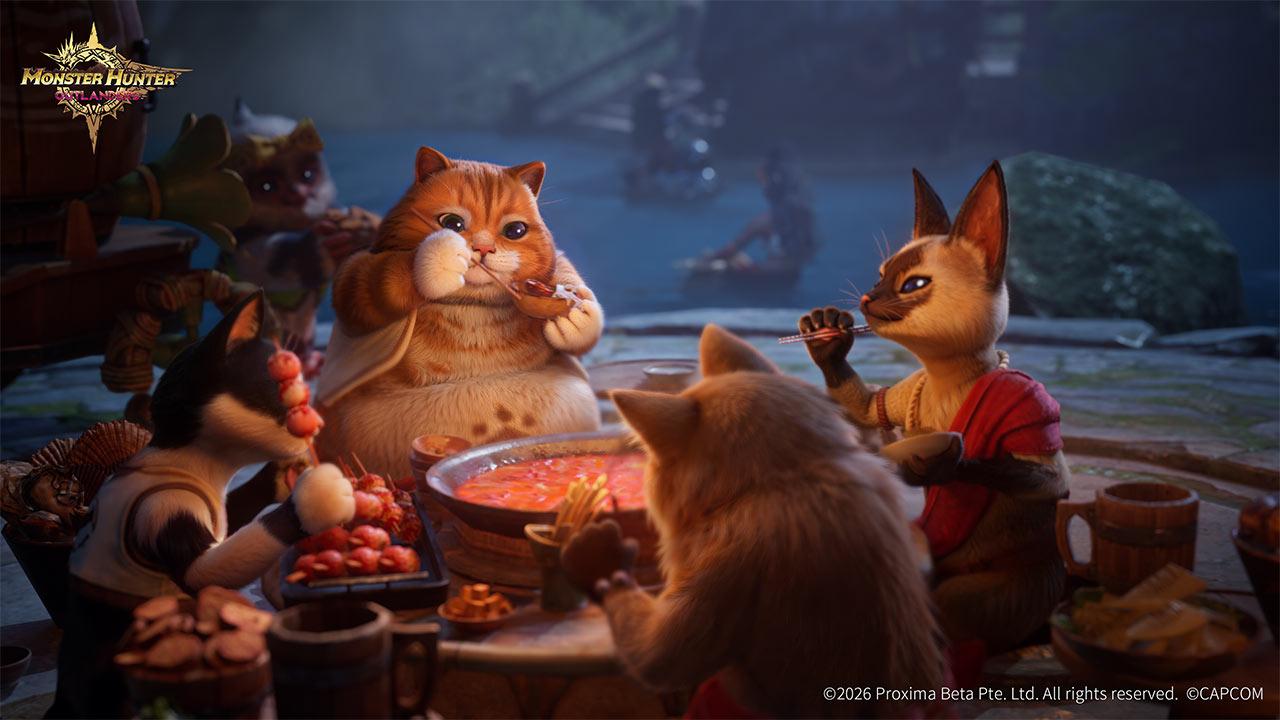
The Fated Adventurer stands apart from the rest by being the only character who can use all six weapon types and switch between all three roles. Huang addressed how this fits into the long term: “Their greatest advantage lies in the ability to use every weapon type and switch between all three role types. As the Adventurer roster grows, the Fated Adventurer will continue to unlock new capabilities.”
As for how long it takes to unlock new Adventurers, Huang said the team is still figuring out the right pacing. “Finding the ideal pacing for Adventurer unlocks is something our team is genuinely eager to learn from CBT2,” he said.
“We warmly welcome player feedback on the Ruta Coins system and are fully open to adjusting it based on community input.”
The Monsters: Old Favorites and New Threats
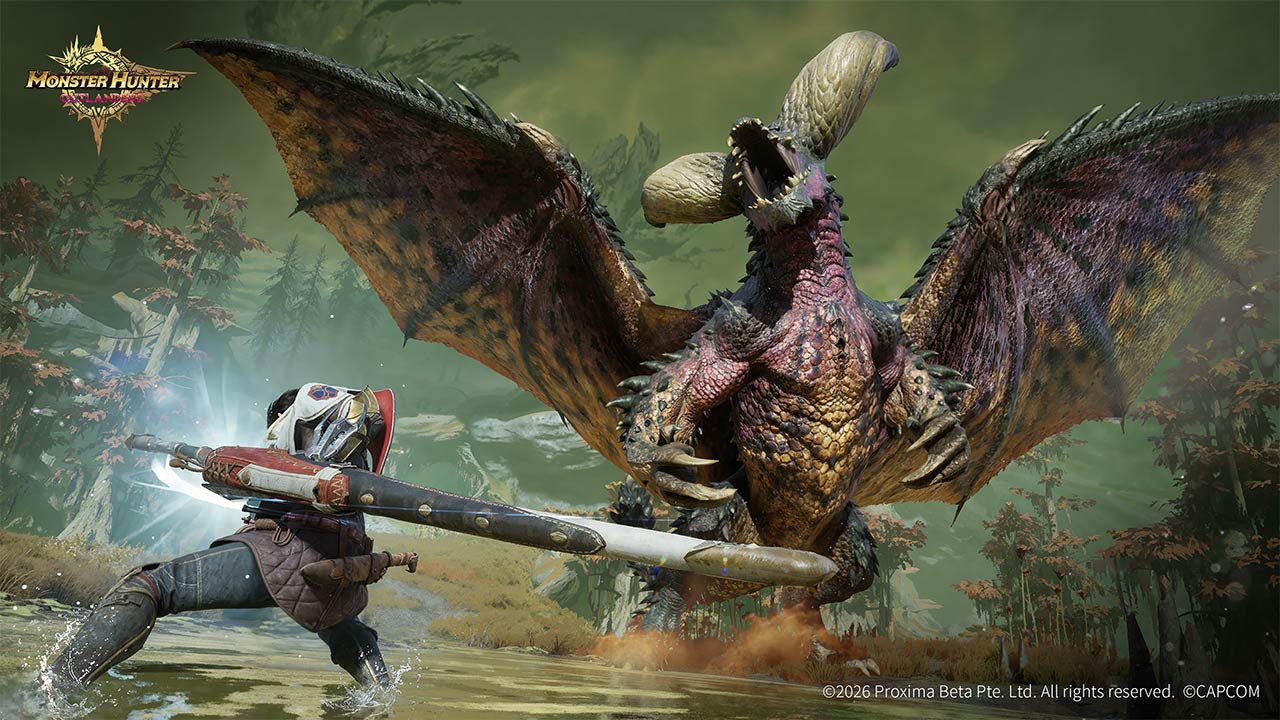
The standard large monster roster for CBT2 includes Diablos, Rathian, Anjanath, Paolumu, Great Jagras, and Tobi-Kadachi, with more returning fan favorites promised in future updates. But the bigger draw for this test is the Radiant Monsters, a new category of creature unique to Aesoland.
Radiant Monsters aren’t just buffed versions of existing ones. The Radiantite mineral transforms them in both appearance and behavior, and when they enter a frenzied state mid-hunt, they unlock entirely new movesets. CBT2 features five: Radiant Diablos, Radiant Anjanath, Radiant Barroth, Radiant Rathian, and Radiant Pukei-Pukei.
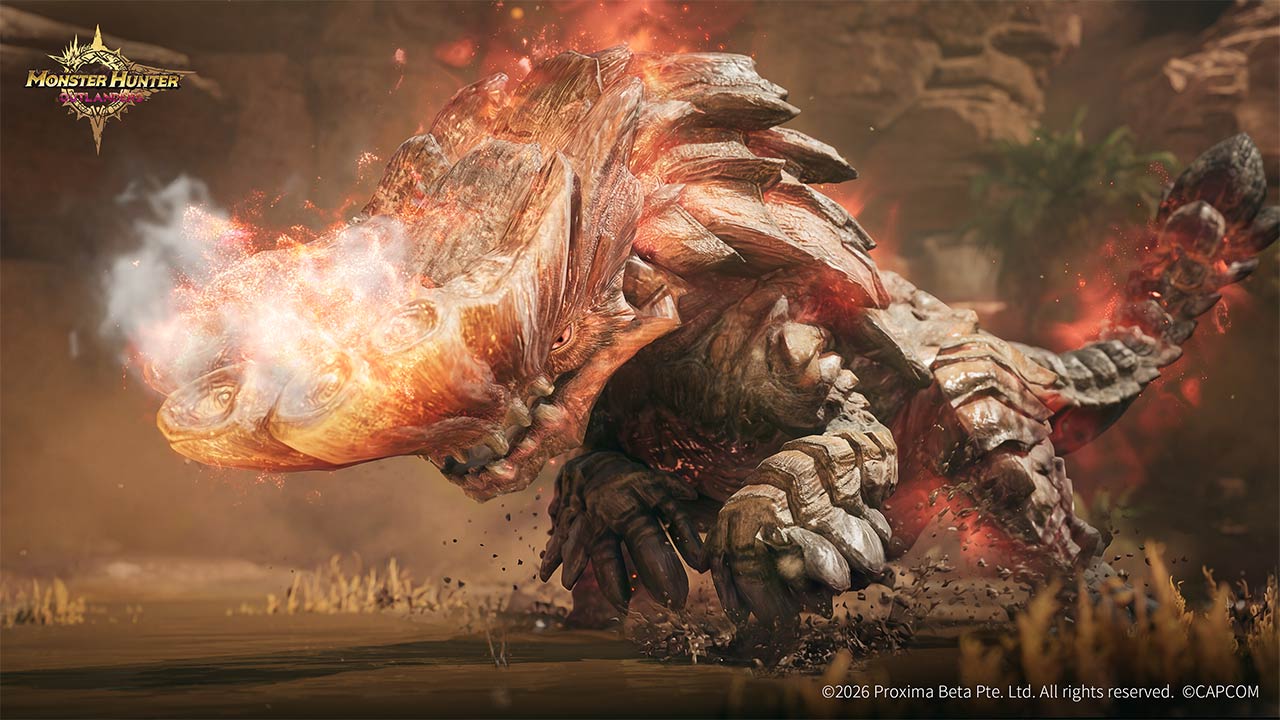
On whether completely new monsters are in the game, Huang confirmed it without giving much away. “What we can share now is that we’ve introduced the Radiant Monsters, a special monster type that has mutated under the unique conditions of Aesoland, possessing distinct frenzied states,” he said. “As for the full roster, please keep an eye on our official channels.”
The flagship monster for Monster Hunter Outlanders is also still under wraps, though Huang teased a creature from the early April trailer that “performed a salute toward the sun.”
Guilds, Seasons, and Long-Term Content
The Guild System introduces persistent player communities with their own exclusive activities. Two are available in CBT2: Dance Night Party, a 10-minute competitive dance event, and Guild Clash, a weekly timed co-op challenge where guilds race against each other for the fastest clear times.
The Season System ties into four ranked modes: Expedition, Solo Trial, Co-Op, and Honorable Showdown. Completing ranked challenges earns points that level up your rank, and each level grants two fixed rewards. The structure is designed so that focusing on just two of the four modes is enough to claim all available season rewards for that season.
Daily quests, called Adventure Proposals, refresh every day with six tasks tied to the game’s main modes, keeping the regular reward loop ticking.
The Big Question: Can You Play for Free?
This was probably the most direct question of the briefing, and the answer was equally direct. Monster Hunter Outlanders is free-to-play with no PvP modes, which means paying players have no combat advantage over non-paying ones. New Adventurers are unlocked using Ruta Coins, which can be earned through regular play, not just purchased. Cosmetics carry no stat bonuses.
And on the core question of whether you can actually get through the game without spending: “Absolutely yes,” Huang said.
“In the vast majority of game modes, players who stay active will naturally complete the main story and progress their characters without spending a single penny. The development team are Monster Hunter fans ourselves. We’ve run multiple test sessions simulating the journey of a non-spending player, and we had a great time.”
He added: “Several game modes are specifically designed around fully balanced stats, meaning that any player who invests time in honing their hunting skills and mastering their combat technique can compete and thrive without any monetary investment.”
That said, payment options do exist for players who want to support the game or move at a faster pace. These include multiple premium currency top-up tiers, a monthly pass, a battle pass, and various time-limited bundles, giving players the flexibility to spend as much or as little as they want. The structure is designed to accommodate different preferences rather than pressure anyone into opening their wallet.
It is worth noting that monetization features are only active in the Mainland China version of CBT2 for testing and optimization purposes. Players in all other regional test builds will not encounter any paid content during this test, so the focus for everyone outside of that region is purely on the gameplay itself.
Platform, Offline Play, and Other Questions
A few other things worth noting. When asked about a PC version, Huang said development is focused on mobile and there’s nothing to share about a PC release. The game requires an online connection and does not support offline play. On 120 FPS support for newer devices like the M5 iPad Pro or iPhone 17, the team said the relevant technical work is still under research.
Update frequency after launch is also still being worked out, though Huang framed it broadly: “Our overall approach is to continuously deliver new content and regular updates, guided by player data and community feedback, ensuring there is always something new to look forward to.”
Monster Hunter Outlanders is clearly a significant undertaking for TiMi Studio Group. It is trying to bring the Monster Hunter experience to mobile without stripping away what makes the series feel good, and based on what was shared in the briefing, the team has put genuine thought into both the systems and the player experience. CBT2 coverage is on the way, and more impressions will follow once the embargo lifts.