






![[EXCLUSIVE] Brendan Gan Delivers One of Malaysia’s Best-Ever Worlds Results, Shares Thoughts on Pressure and the Local Scene](https://cdn.gamerbraves.com/2026/08/Brendan-Gan_Interview_FI-360x180.jpg)





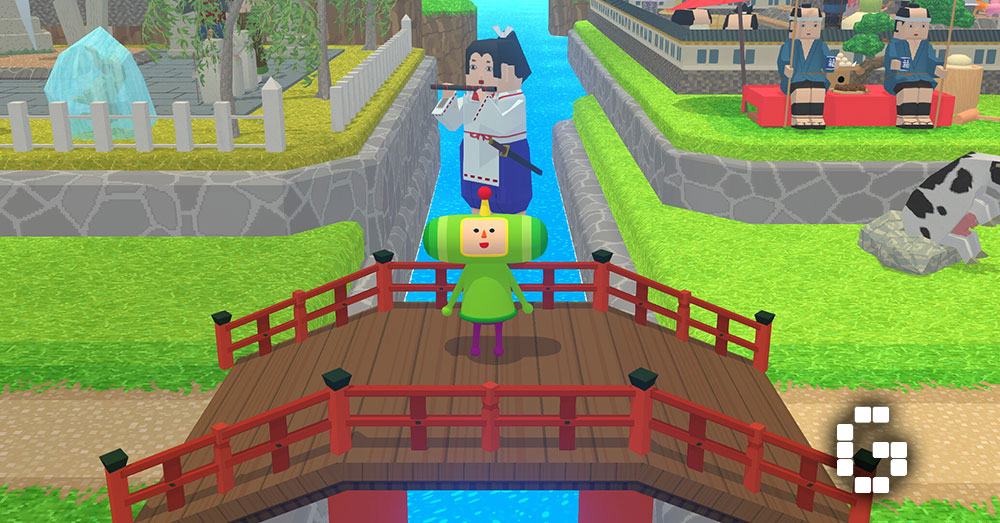
The beloved Katamari series is finally rolling back onto consoles with Once Upon A KATAMARI, the first mainline entry built specifically for current-generation hardware. We had the chance to sit down with producer Ryo Ishida, who previously worked on We Love Katamari REROLL+ Royal Reverie and Klonoa Phantasy Reverie Series, to discuss how the team approached reviving this iconic franchise for modern audiences.

Evolving the Classic Formula
When it comes to adapting Katamari for today’s players, Ishida explained that the team took a comprehensive approach to modernization while preserving the core experience.
“The only thing that hasn’t changed is the controls. The way it moves, the stage is being chosen, and all the other options, we have changed everything. The only thing that remains unchanged is how the controls move,” he told us.
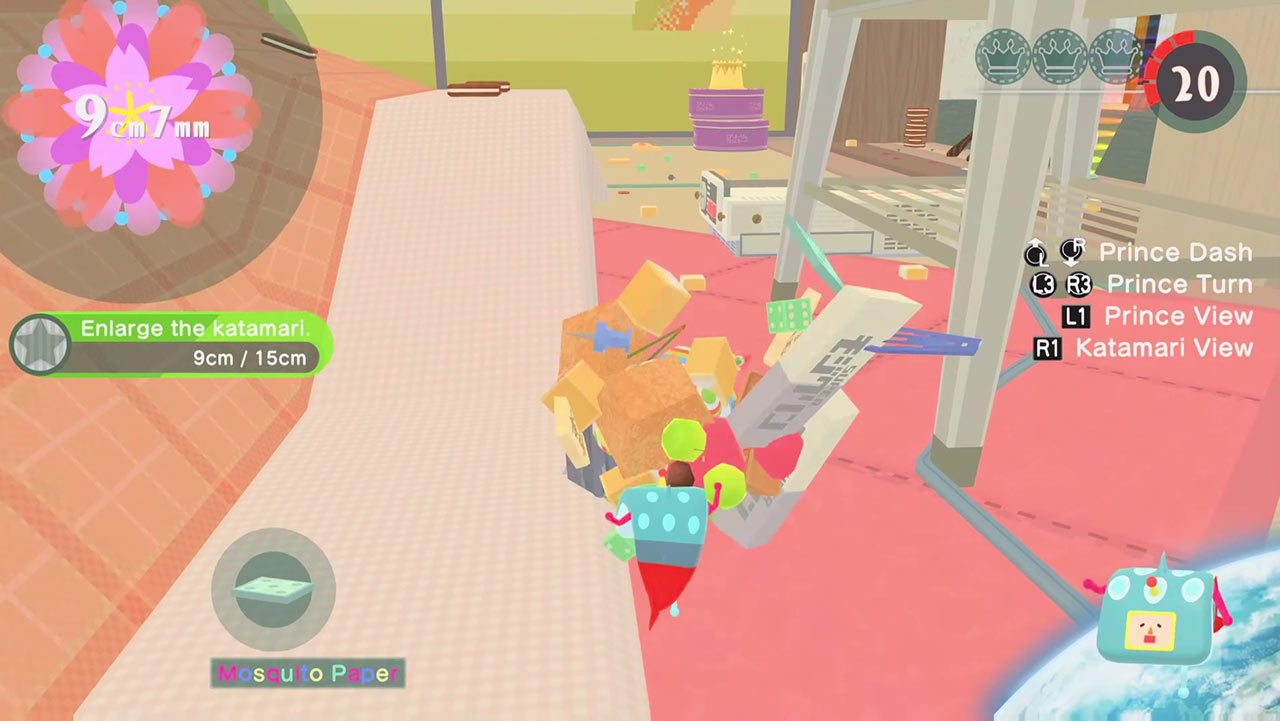
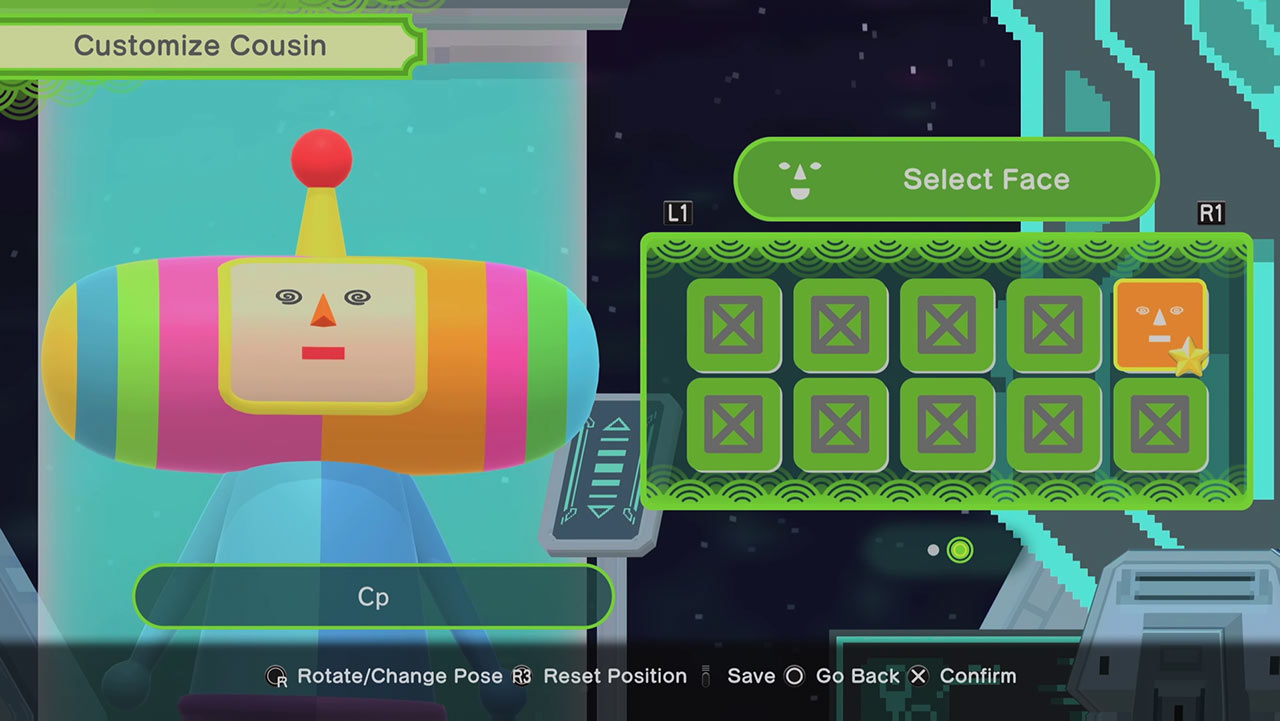
This philosophy extends beyond simple visual upgrades. The game introduces entirely new mechanics while maintaining the intuitive gameplay that made the series famous. One standout addition is the mate customization system, which allows players to modify both the Prince and his cousins. “One of the biggest features we would like to highlight in this game is the mates customize function, where it allows you to change the face or the colors of the prince. It’s not just the prince that you can customize, but you can customize the cousins as well,” Ishida noted.
The team also completely reimagined how players progress through the game. As Ishida explained, “We have also changed the way that the stage is being selected, as well as, as mentioned earlier, the mates customize, where they can customize the outlook of the Katamari and their cousins. And we hope that gives the player a sense of, like, it’s not just a remaster of a previous game, but a brand new game that they can enjoy as well.”
Finding Balance Between Chaos and Calm
The Katamari series has always occupied a unique space in gaming, offering both relaxation and excitement in equal measure. Ishida was quick to clarify misconceptions about the game’s tone: “Rather than saying it’s a completely chill game, it’s a game that also has chaos, where you’re just rolling around and picking things up.”
He emphasized that this duality is intentional, creating an experience where players can engage at their own pace while still encountering moments of pure mayhem. “It’s a universe where the players are able to experience this weird world at their own pace, but also not just as a chill game, because it’s a game that also has parts of very, very chaotic fun to it, as well.”
The producer highlighted how the game’s strangeness contributes to its appeal: “So we feel like there’s a lot of interesting things. There’s parts of this that would provide interest to the [player]. Rather than just being a chill game, it also has a lot of fun aspects to it, as well. It’s a really weird world, especially.”
Time-Traveling Adventures
One of the most striking new features in Once Upon A KATAMARI is its journey through different historical periods, including the Jurassic Period, Ice Age, and Ancient Japan. The creative reasoning behind this decision was refreshingly straightforward. “The main concept behind it was because it was interesting. If you were to, if you could, maybe in Katamari world, if you could pick up a dinosaur that’s just walking along the road, or what if the terrain was just purely ice?” Ishida explained.
These varied settings aren’t just visual novelties but provide genuinely different gameplay experiences. “It gives a whole new prospect. It gives a whole new kind of fun, as well as interest to the players, in that they can basically just roll around all these random different time periods and stages that allows them to experience it at their biggest, as much as they [can],” he said.
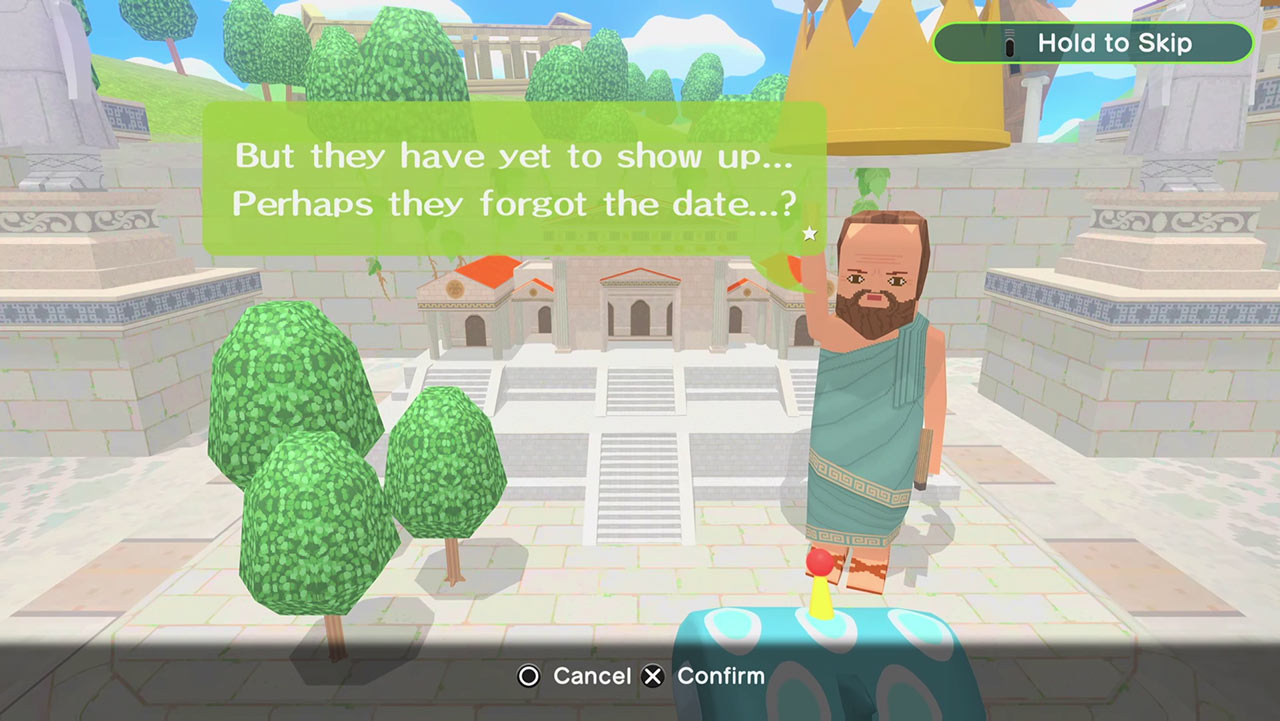
The approach to these historical settings prioritized gameplay enjoyment over strict accuracy. “There wasn’t really anything like, for example, we did not make it with the idea of realism of the time period in mind. It was more of trying to allow the Katamari to roll in a different environment,” Ishida clarified. “But, of course, we added some original items into those worlds, as well as some items that are valid, relevant to that time period or that setting.”
The team’s philosophy was flexible and fun-focused: “The idea of incorporating these time periods and environments was not exactly a very, like, it wasn’t something that we were very, very, very insistent on details on. It was just about how much more we could make it fun by maybe if we put this in, or if we added this extra original object in that might fit into this time period.”
Crafting the Perfect Soundtrack
Music has always been a cornerstone of the Katamari experience, and Once Upon A KATAMARI continues this tradition while expanding in new directions. The team approached the soundtrack with both reverence for the original and ambition for innovation. “The original Katamari is, of course, one of the base parts, one of the base original tracks that we used, of course. But of course, in having Katamari go through all these different time periods and different environments, we needed to create new soundtracks to fit the theme of these stages as well. We had to create new original music, especially for these new areas,” Ishida explained.
The development team worked to incorporate multiple musical genres, carefully matching each piece to its corresponding stage. “So we wanted to include as many genres as we could into Katamari. So of course, we had to take a look and ensure that, for example, if this stage would match with, for example, if we use a ballad, there are stages that would not fit ballads.”
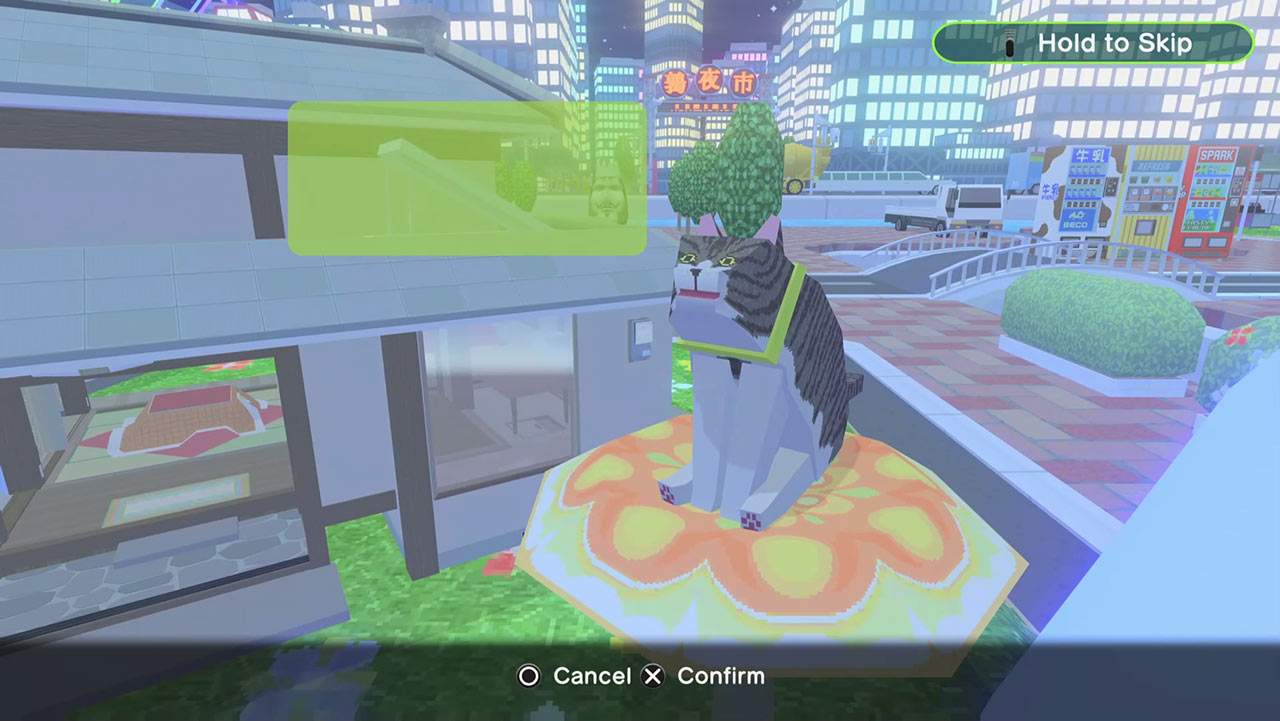
Ishida provided a specific example of their thoughtful approach: “For example, in the Ancient Japan stage time period, we would have to use something that’s a bit more Oriental, something more traditional Japanese, and that was where our thought process on how we were to create new and original tracks for all these new areas started.”
Multiplayer Madness
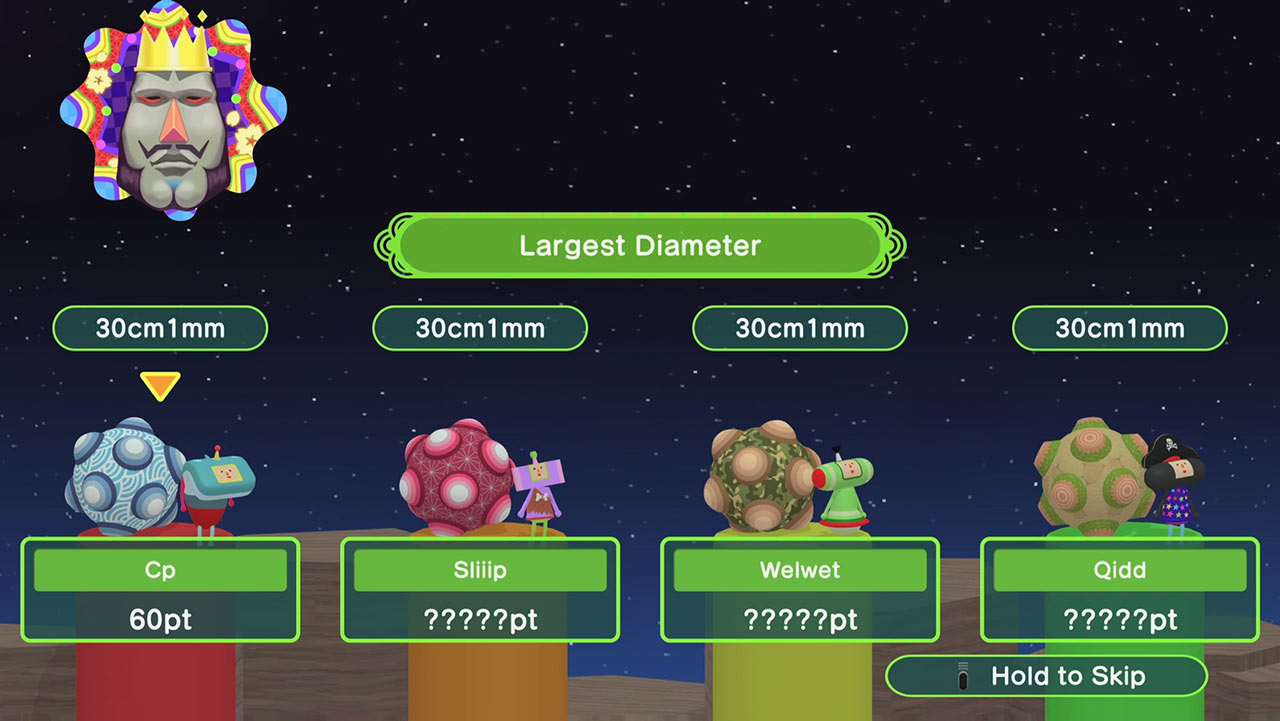
The new four-player multiplayer mode presented unique design challenges, requiring the team to create a cohesive experience that felt distinctly different from single-player gameplay. Ishida described their solution: “We wanted to create a place where the four-player multiplayer mode doesn’t feel like you’re just playing as one player, like a one-player mode, but with four people. We wanted to make it more cohesive, where all four players will have to gather at one spot before they start the game.”
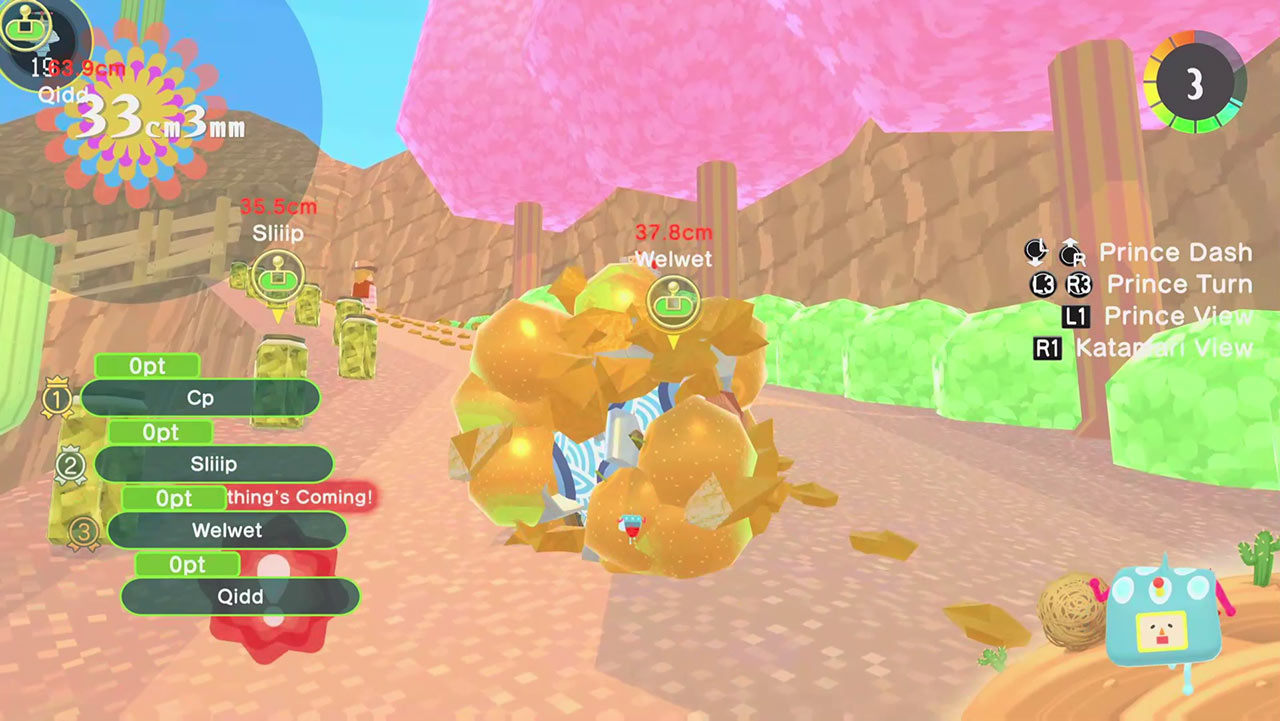
The team implemented a point exchange system featuring big and small Katamaris that can change size during gameplay, adding strategic elements to the multiplayer experience. “There’s a new point exchange system where you have a big Katamari and a small Katamari, and it allows them, for example, you can change a big Katamari, and as they roll, they just get smaller and smaller, and it becomes a small Katamari at the end, and this allows people to have more variations within and also, the chaos and enjoy the chaos, while they are playing, whether in the multiplayer mode, so it doesn’t really feel like they’re just one person, four of one people rolling around, and this small Katamari will be able to roll into a big Katamari, and it can get either bigger or smaller.”
The producer emphasized the social aspect of the multiplayer design: “The gameplay was that, so that everyone will be able to have fun, regardless whether, even if you are, I guess, even if you’re not friends.”
Welcoming New Players While Satisfying Veterans
Balancing accessibility for newcomers with depth for longtime fans required careful consideration. The team implemented an S-rank system that provides clear goals for dedicated players while ensuring the base experience remains approachable. “They can aim for an S rank so if they aim for the S rank so it would show they have cleared their goal but of course our goal is to make all the players aim for the S rank rather than at the end of the game, you don’t know whether or not you have passed or failed,” Ishida explained.
The approach reflects the team’s broader philosophy of inclusivity. When asked about targeting specific audiences, Ishida responded: “Not really, but we wanted to make a game that was open that anyone could enter and play and be able to play and have fun with.” He further elaborated: “We would like to create a game that follows the Katamari story, the Katamari series, to be in the same, kind of the same, we wanted to make a game that follows up with all the previous Katamari series, but also we wanted to create a game that was easy for casual and new players to enter the game and that’s why we came up with this.”
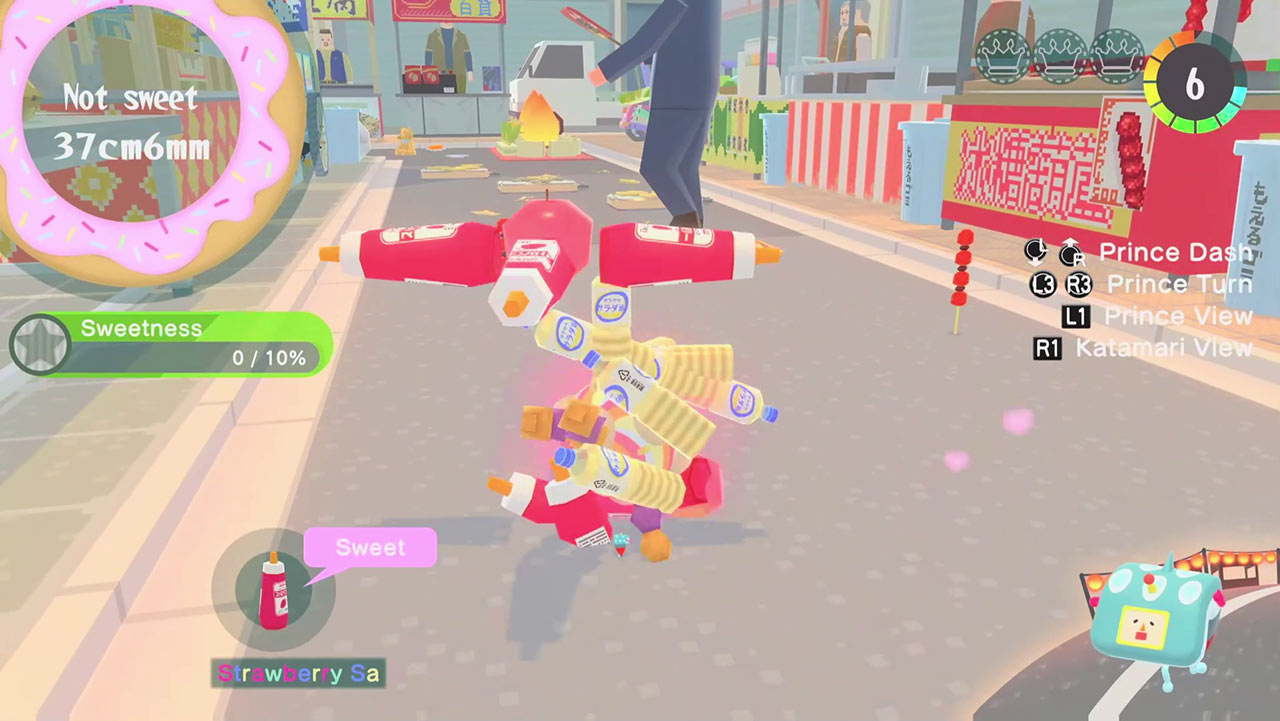
For Ishida, stepping into the producer role for a beloved franchise came with its challenges, especially given the gap since the last mainline entry in 2011. “It was a bit difficult, however, I managed to get some advice from people who had worked on the previous works, also because they worked on the remastered version, and from then I also took some advice from back then,” he shared.
This collaborative approach helped ensure continuity while allowing for innovation: “I also spoke to these people who worked on the previous works, and I got some advice on what are the parts that could be kept in this current game, or what can be changed in this current game, and I took their advice on how to create this game.”
The Return Fans Demanded
The decision to create a new mainline Katamari game came directly from fan feedback. “We had a lot of feedback, user feedback, where they were asking for a new game and when the new game would release, so that was when we decided to create this game now. Because our latest project would have been in 2018,” Ishida revealed.
He acknowledged the significant gap between releases: “So it was a pretty big gap between the previous work and currently, because in between we did have a few remasters and so on, but then the users wanted a brand new game and that’s how we came about with creating this game.”
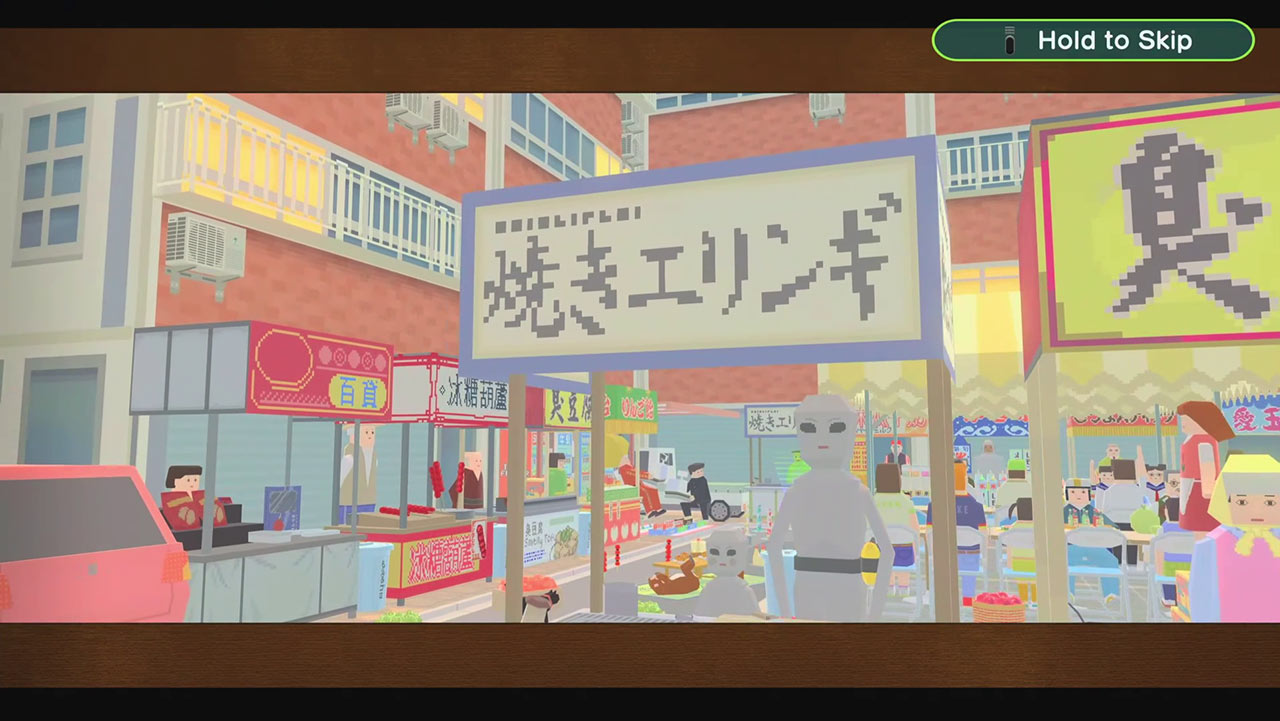
Avoiding repetition across multiple franchise entries required creative thinking about core objectives and progression systems. “The goal is not to make the ball bigger, but to aim for maybe a different goal depending on the stage,” Ishida noted. He emphasized that while the core concept remains unchanged, the execution offers variety: “Katamari on its own, at its core, is about rolling around picking up things, but that’s not all that it’s supposed to be.”
The team focused on ensuring the game felt genuinely new rather than just another remaster. As Ishida put it: “We hope that gives the player a sense of, like, it’s not just a remaster of a previous game, but a brand new game that they can enjoy as well.”
A Personal Touch
The decision to include character customization reflects broader trends in modern gaming while serving the specific needs of the Katamari audience. “Recent games and current games, especially in this current generation, a lot of games have a lot of ways where you can customize your own characters or your own avatars,” Ishida observed.
He explained the reasoning behind adding this feature to Katamari: “As you know, recent games and current games, especially in this current generation, a lot of games have a lot of ways where you can customize your own characters or your own avatars. And that is one of the few things that we thought about, because in Katamari, it’s a bit hard to be able to customize your characters fully.”
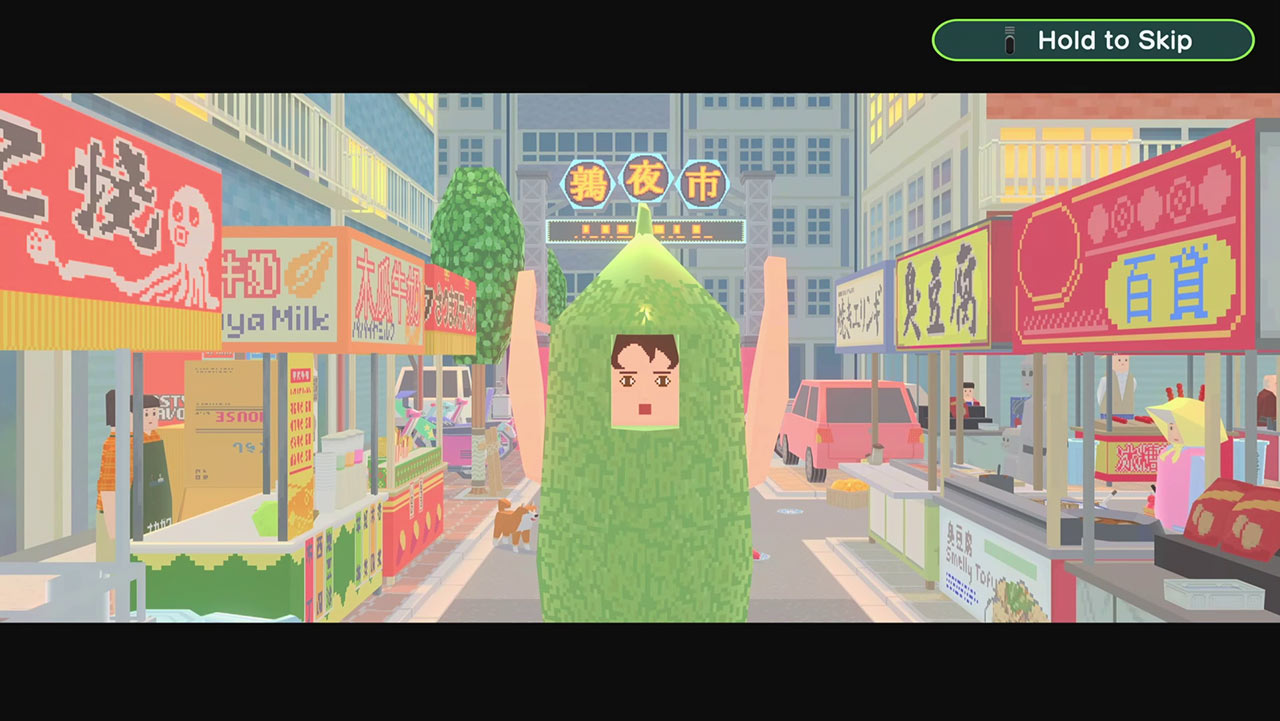
For Katamari, this feature serves a deeper purpose than simple personalization: “We came up with the idea that if we allow people to customize their mates as well, aside from just customizing their Katamaris, whether changing the color, changing the face, it would give them a bit more immersion into the game, because most people who play games want to play as an avatar of themselves or at least a character that they can relate to, be it with accessories or character customization. And we wanted to include that into Katamari as well, so that the players will be able to inject themselves or their own personalities into the game.”
Looking Forward
As fans prepare for the return of the King of All Cosmos and his royal family, Ishida’s message is one of discovery and exploration. “We hope that players will be able to explore Katamari to their fullest to find out what changes, what are the differences, and what are the new and what are the old on their own,” he said.
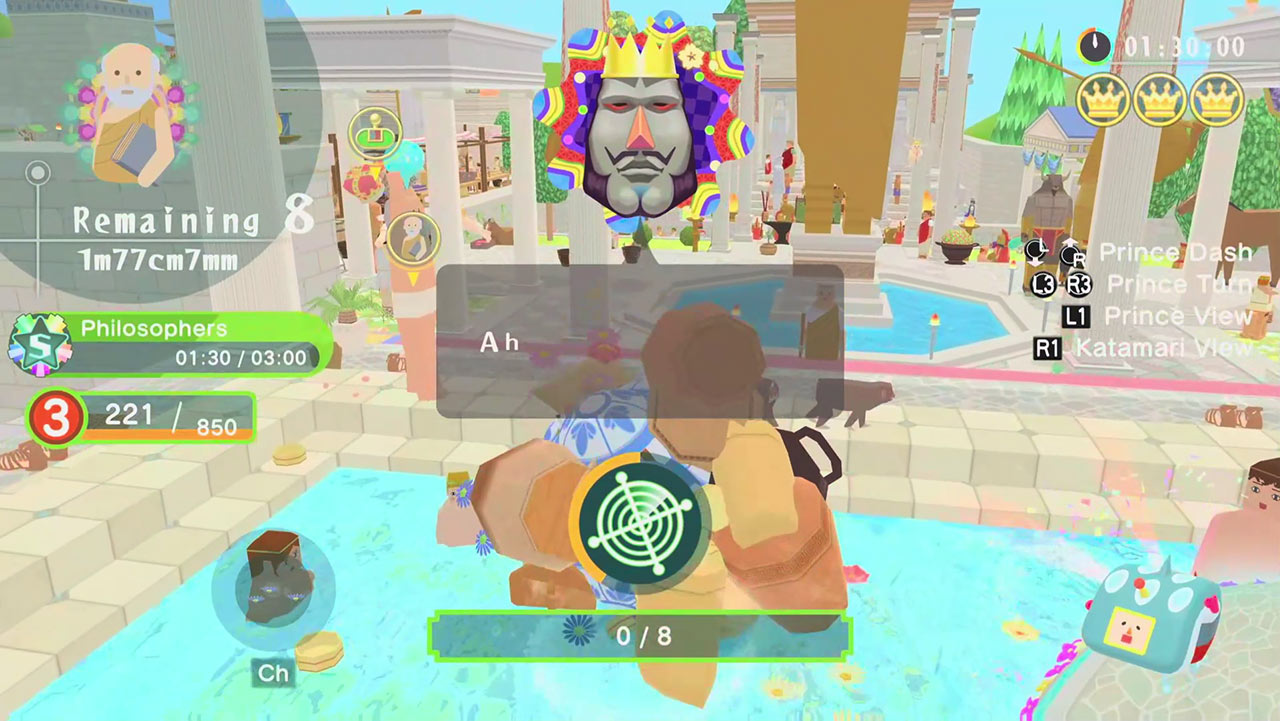
The development of Once Upon A KATAMARI represents both a return to form and a leap forward for the franchise. With fan feedback driving the decision to create a new entry after years of remasters, the game promises to deliver the signature Katamari experience while introducing enough new elements to feel genuinely fresh. For both longtime fans and newcomers alike, it seems the wait will have been worth it.