










![[EXCLUSIVE] Dragon’s Dogma 2: Dark Arisen Team Opens Up About the Expansion’s Name, New Norgan Region, and Performance Goals](https://cdn.gamerbraves.com/2026/07/Dragons-Dogma-2-Dark-Arisen_Interview_FI-360x180.jpg)






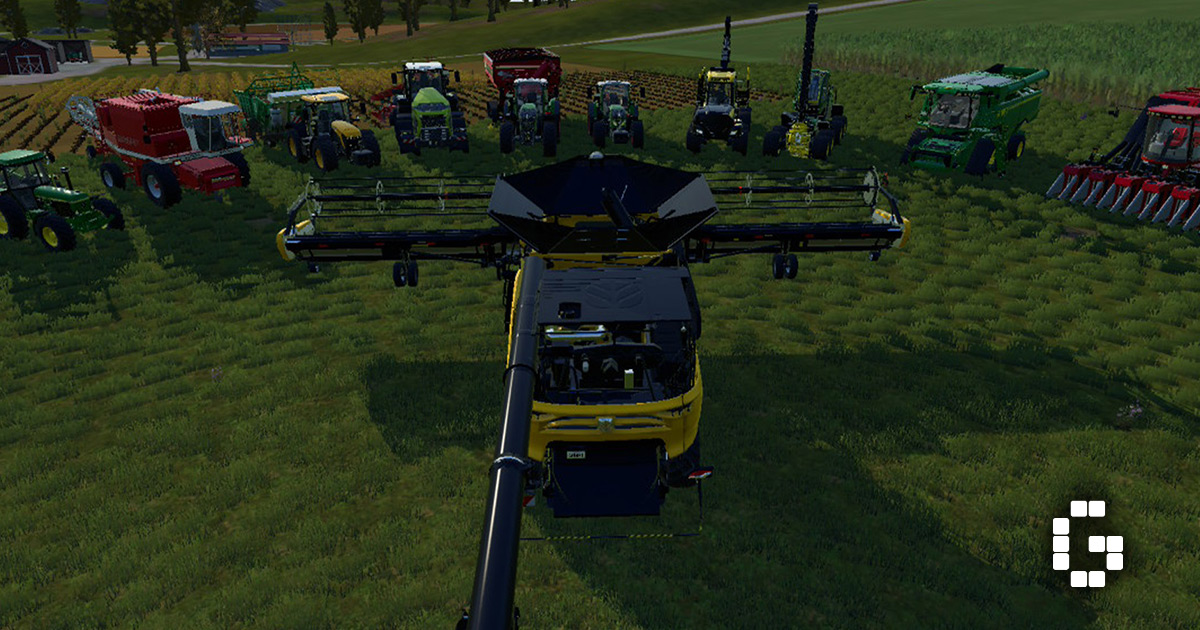
Farming Simulator has long been the go-to game for players who want to live out that quiet, wide-open countryside dream. Tending crops, raising animals, hauling logs – it sounds simple, but there’s something genuinely satisfying about building a farm from the ground up. The latest mobile and Nintendo Switch entry, Farming Simulator 26, tries to keep that feeling alive in a portable package. It gets some things right, but it also comes with a fair share of trade-offs that are worth knowing about before you buy.
A Simpler, More Casual Approach
From the moment you start playing, it’s clear that Farming Simulator 26 is built with casual players in mind. The whole experience leans toward ease and accessibility. There’s a one-button AI worker system that puts hired hands to work instantly, instant vehicle switching even for leased equipment, and seeders and fertilizers that don’t require constant micromanaging. There’s also a Creative Mode if you just want to jump straight into trying out machinery without worrying about money or progression. For newcomers or players who want something low-pressure, that design makes sense.
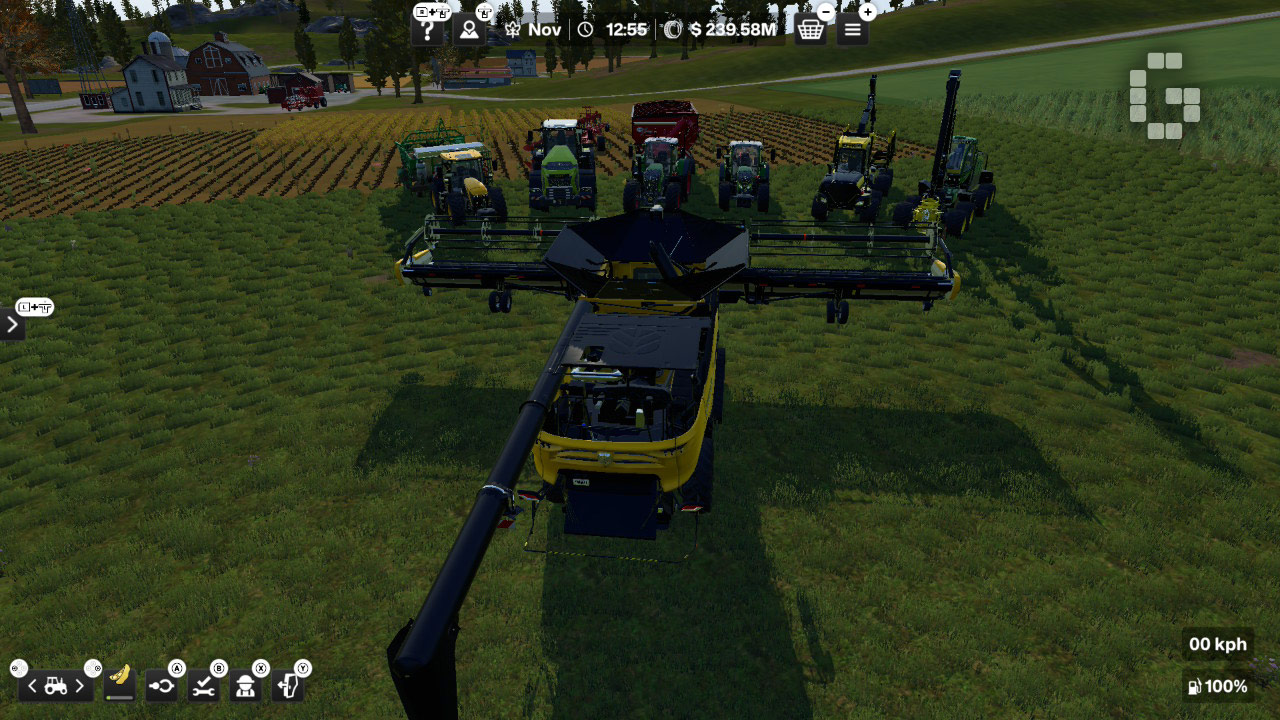
The UI, however, is a different story. It’s clearly designed for touchscreens first, and navigating it with a controller feels clunky and unintuitive. Simple actions often need multiple button combinations, which breaks the relaxed flow the game is going for. The upside is that the game does show on-screen prompts, so nothing is a complete mystery. And in handheld mode with touch controls, it’s a much smoother experience.
Maps, Farming, and the New Goods System
The game features two maps: Harbuck, which leans into traditional open-field farming, and Dawnbridge, which focuses more on industrial production and goods processing. That difference in feel gives players some variety depending on what they want to do.
The core loop of planting and harvesting crops still delivers that familiar sense of reward, and driving agricultural vehicles around remains enjoyable. Livestock activities are kept simple – feed the animals, collect their products, sell or process them. Forestry is also available as an alternative income source, and cutting down trees, transporting logs, and turning them into higher-value products like planks or furniture is genuinely satisfying.
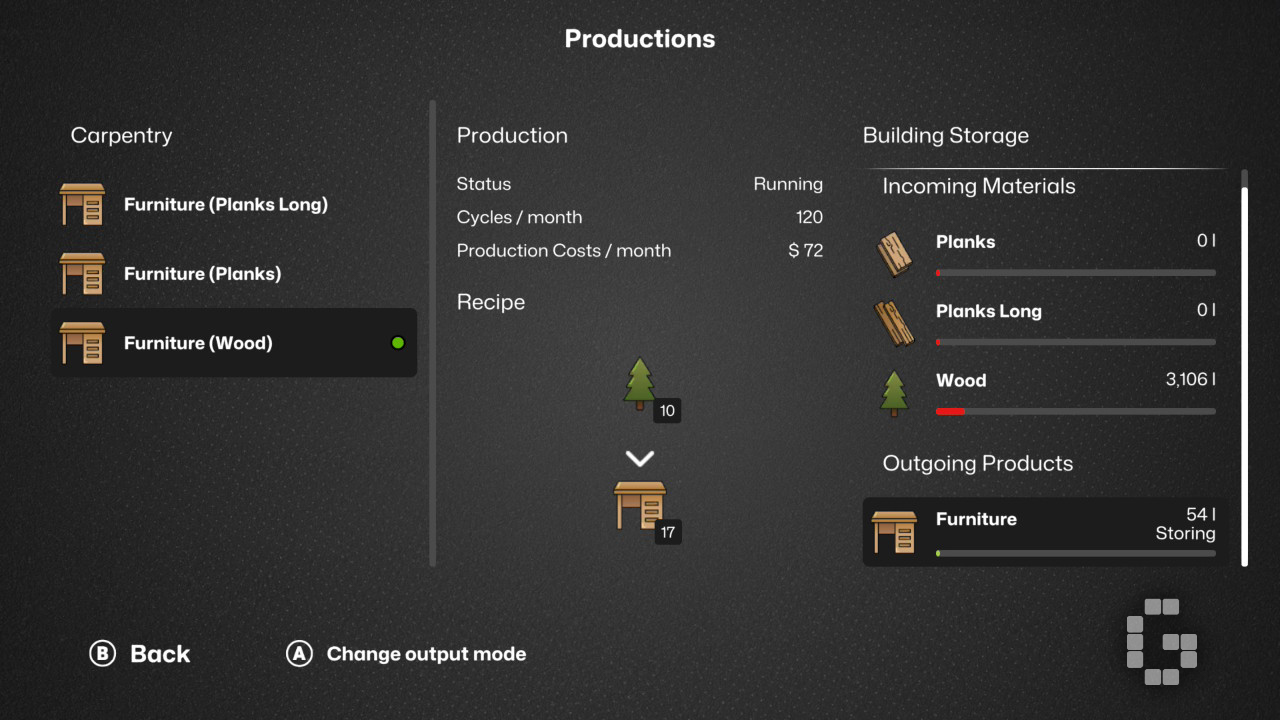
That goods processing system is actually one of the better new additions in this entry. The Advanced Goods system lets you take raw products like milk or logs and turn them into things like cheese or furniture, which sell for more and add a new layer to the progression. It adds more variety to what was already a familiar formula.
Progression Feels Slow Early On
Despite all the casual-friendly design choices, the early game is surprisingly tight. Starting capital is very limited – barely enough to buy one vehicle or a few tools – so switching between farming, livestock, and forestry isn’t really possible right away. Players have to grind a bit before they can expand.
Contract work helps bridge that gap, and the lease option that comes with contracts means you can use equipment you can’t afford to buy yet. The problem is the time limits on contracts are often mismatched with the amount of work involved, making some jobs more stressful than relaxing.
The game also has a new Challenge system that hands out bonus cash rewards on a weekly basis or through timed real-world challenges. It works well in a mobile context, but it feels a bit out of place on a console.
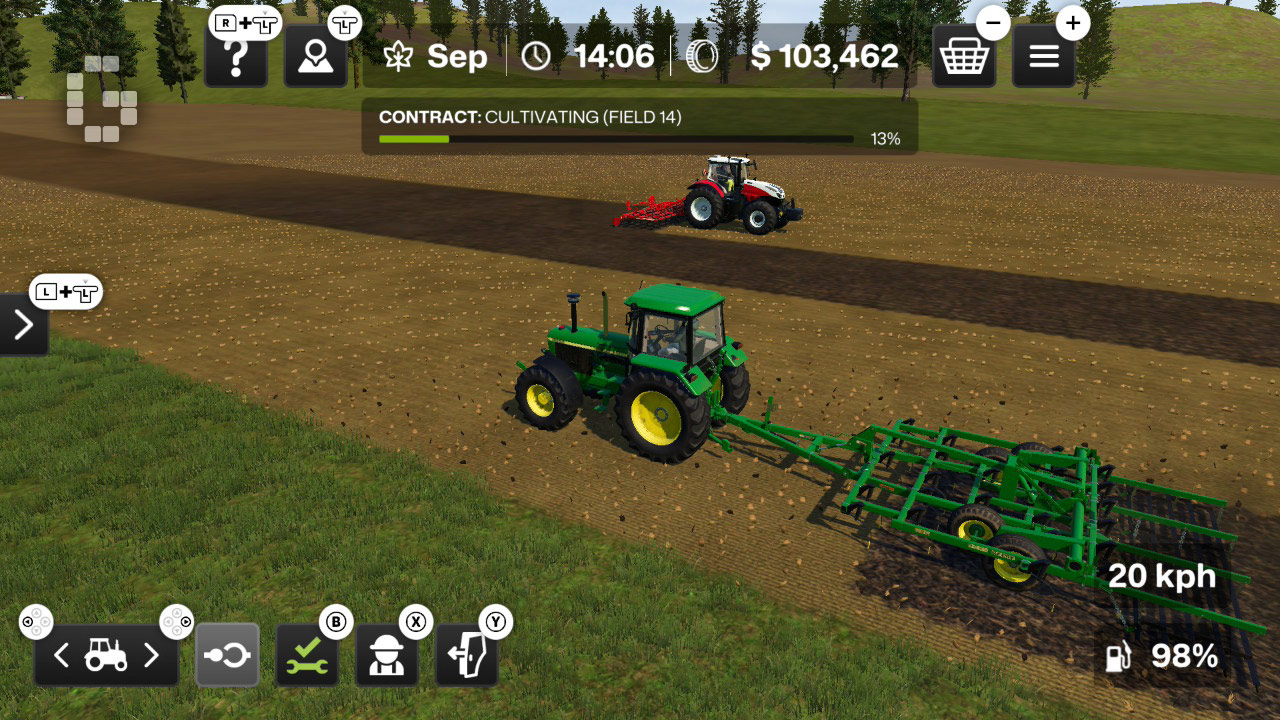
The Timescale feature, which lets you speed up in-game time from real-time all the way to 90x, is helpful for speeding through crop cycles. But it creates a real conflict with contracts, since deadlines also speed up. A slower timescale makes contracts easier but slows everything else down; a faster one does the opposite. The two systems don’t work well together, and players will likely have to pick one focus and stick with it.
AI Workers Are Helpful But Not Perfect
AI Workers do a solid job of reducing the amount of micromanagement in the game, especially on bigger fields. In most cases they’re reliable enough to leave running while you handle something else. That said, they’re not without quirks – they sometimes prioritize small patches of leftover ground over larger unfinished areas, which can slow things down during time-sensitive tasks.
Visuals and Audio Fall Short
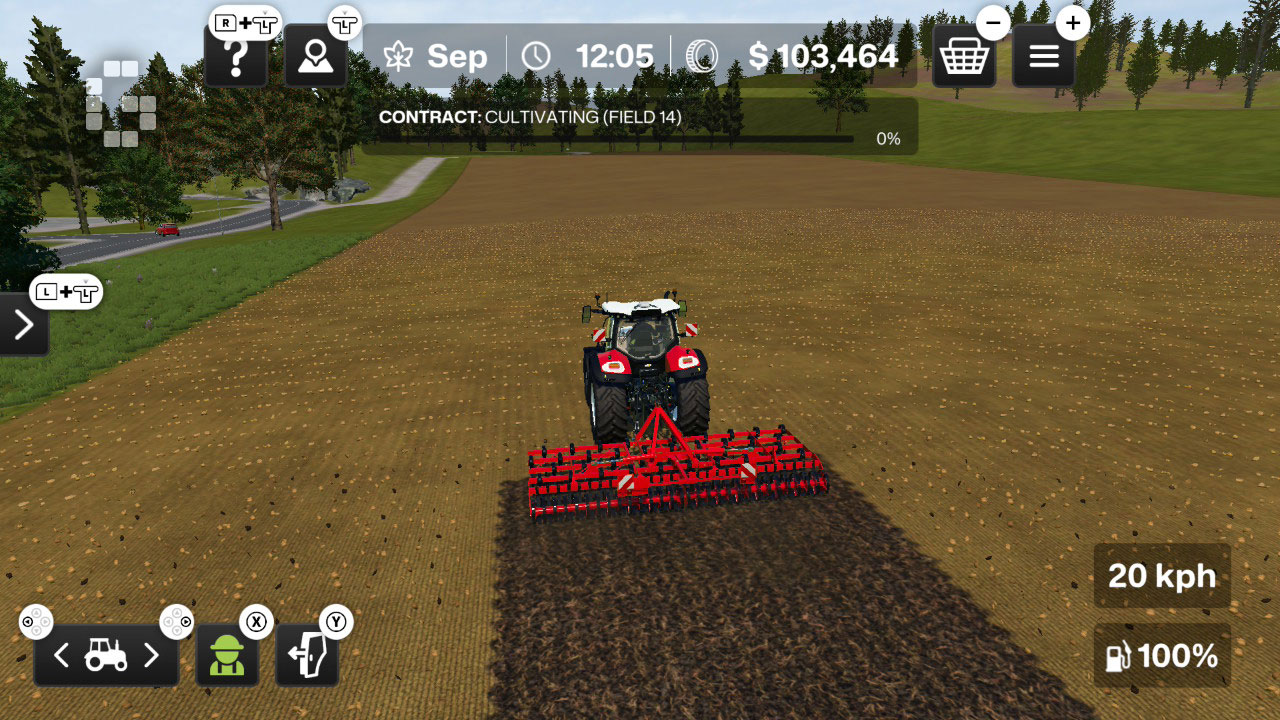
Technically, Farming Simulator 26 doesn’t put its best foot forward. The visual style is noticeably simplified compared to Farming Simulator 23, with less realistic textures, flatter coloring, and jagged edges throughout, suggesting little to no anti-aliasing at work. The game also runs at 30 FPS rather than 60, which is stable but still a letdown given how stripped-down the visuals already are. Players on the Switch 2 should also note there’s no native Switch 2 version, so you’re running the standard release on upgraded hardware with no visual benefit.
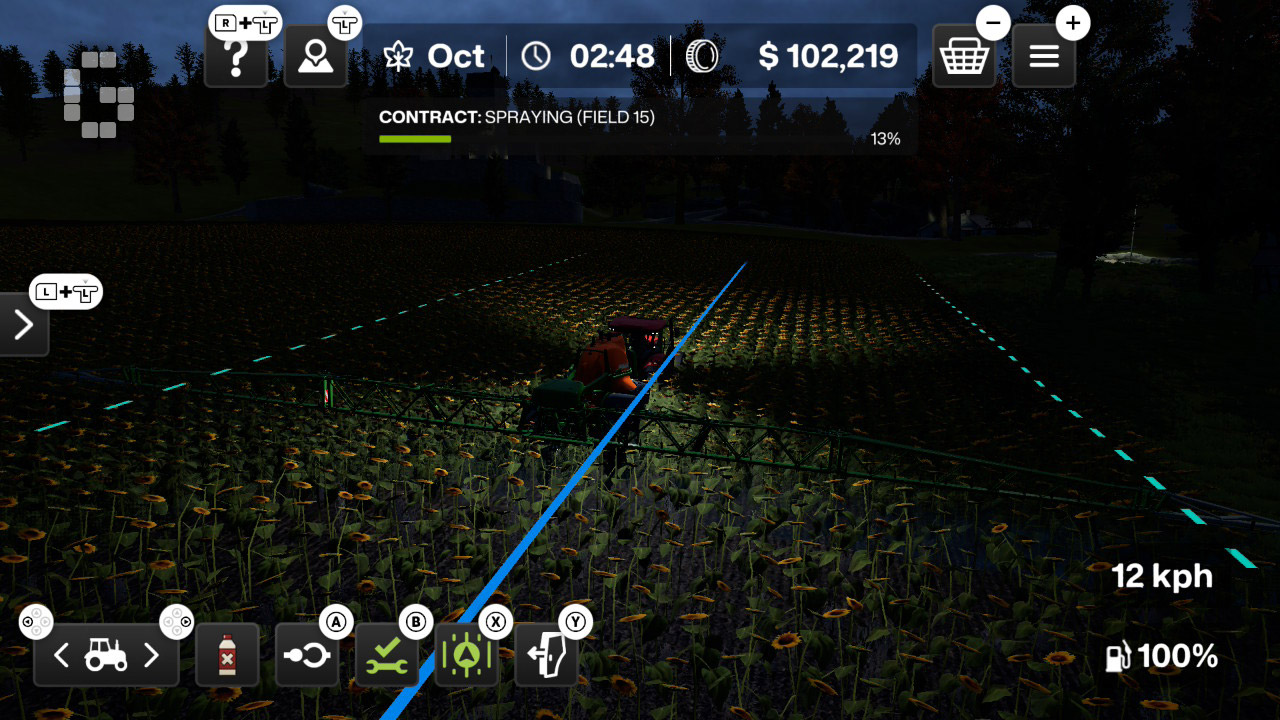
Audio follows a similar trend. Vehicle and tool sounds are functional but lack the weight and presence you’d expect from heavy farm machinery. It all works, but it doesn’t add much to the atmosphere or immersion.
Verdict
Farming Simulator 26 is a game with a clear audience in mind: casual players who want to dip into farming life on a portable device without a steep learning curve. For that crowd, the new goods system, the accessible mechanics, and the two distinct maps offer a decent enough experience.
For longtime fans expecting a deeper simulation or a meaningful visual and mechanical step up from Farming Simulator 23, the game may feel like it’s taken a few steps back. The slow start, the tension between Timescale and contracts, the controller navigation issues, and the visual downgrade are real problems that chip away at the overall experience. It’s still a playable and enjoyable game, just one with some noticeable compromises baked in.





The Review
Farming Simulator 26
PROS
- Gameplay is more accessible for new players.
- Progression loop fits a portable game well.
- Touchscreen UI is comfortable in handheld mode.
- AI workers are highly effective at reducing micromanagement.
- Advanced Goods system adds meaningful progression variety.
CONS
- Controls feel stiff and unintuitive when navigating menus without a touchscreen.
- Contract system and Timescale feature clash with each other.
- Visuals look simpler and rougher compared to Farming Simulator 23.
- Audio fails to deliver simulator immersion.