







![[EXCLUSIVE] Brendan Gan Delivers One of Malaysia’s Best-Ever Worlds Results, Shares Thoughts on Pressure and the Local Scene](https://cdn.gamerbraves.com/2026/08/Brendan-Gan_Interview_FI-360x180.jpg)






At Tokyo Game Show 2025, we had the chance to sit down with two key developers behind Call of Duty: Black Ops 7. Miles Leslie, Associate Creative Director at Treyarch, brings two decades of industry experience and has worked on every single Black Ops title over his 17 years with the franchise. Alongside him was Marc-Antoine Saindon, Lead Designer at Beenox, who has been crafting Call of Duty experiences since 2013 and currently oversees several multiplayer maps for Black Ops 7.
Together, they shared insights about the upcoming game in the Black Ops series that promises to bring players deep into the heart of Japan while maintaining the signature Black Ops experience that Leslie describes as the ongoing challenge of finding “ways to innovate and surprise while maintaining the core Black Ops identity that millions of players have come to know and love.”
Japan Beyond Tokyo
Black Ops 7 features six maps set across Japan, extending well beyond the capital city to showcase different parts of the country. When asked about whether all maps were based on Tokyo, Leslie clarified the broader scope of their Japanese setting.
“In the design, we cross different ecosystems across Japan, including snow, forest, and urban cities,” Leslie explained. “So all 6 of those maps, but also in the co-op campaign, you are going to experience different parts of Japan, not only Tokyo.”
The team’s commitment to representing Japan authentically came from a genuine desire to explore the country in depth. “We’ve always wanted to go deeper into Japan, and really explore it as a story narrative device, but also all the different ways and locations that are in it,” Leslie said.
“And so for us, Black Ops 7 was the perfect time to do that.”
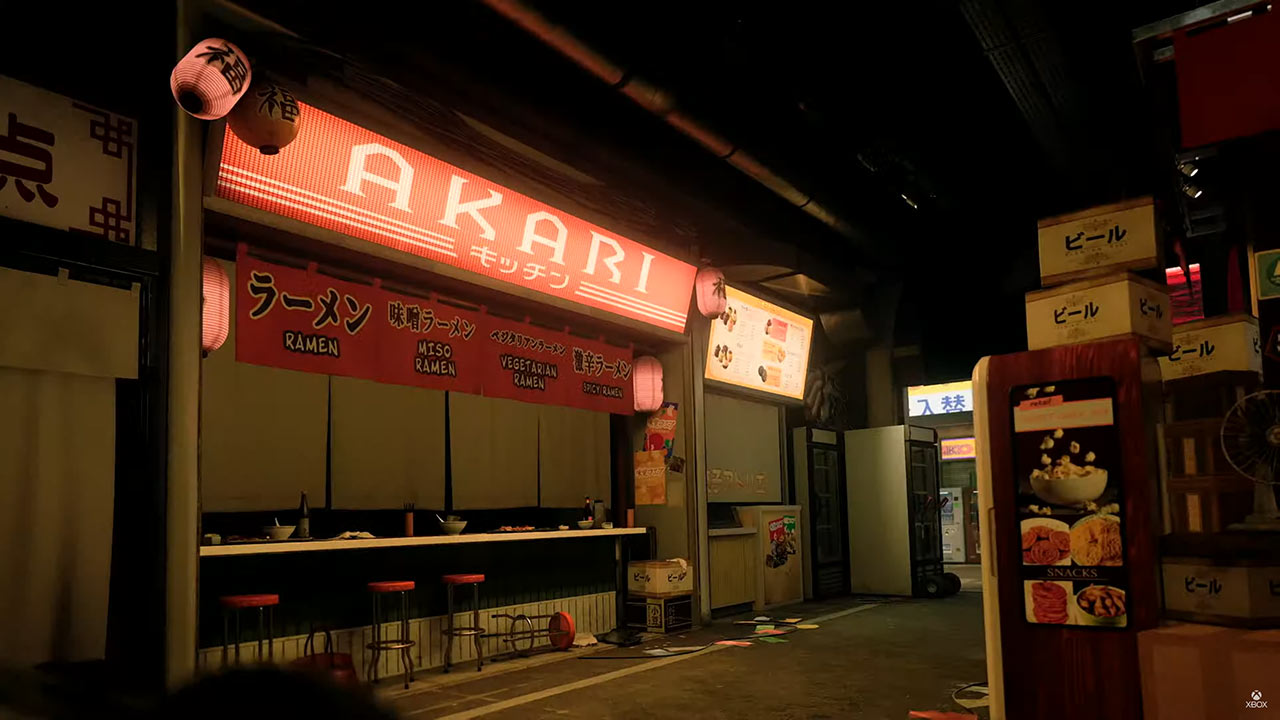
What started as planned Japanese elements kept expanding during development. “We sent a team here, and it was funny because they were sending so many images back that it just kept growing how much Japan was in the game, because they’d send something to me like, oh my god, that’s amazing. I have to put this in the game. That’s amazing. We have to put it in. It just kept growing, and it felt right.”
The developers hope Japanese players will feel represented while also giving international players a chance to experience Japan. “I hope that they feel represented in the game. Obviously, we have not recreated any place one-to-one. It was important for us to take all the ingredients across all of Japan and transport it into Black Ops,” Leslie noted.
“So I hope they get excited about seeing their home in the game, Black Ops style. But then we’re also excited for all the players outside of Japan that wish to come to Japan so that they can experience it as well.”
Wall-Jumping Opens New Possibilities
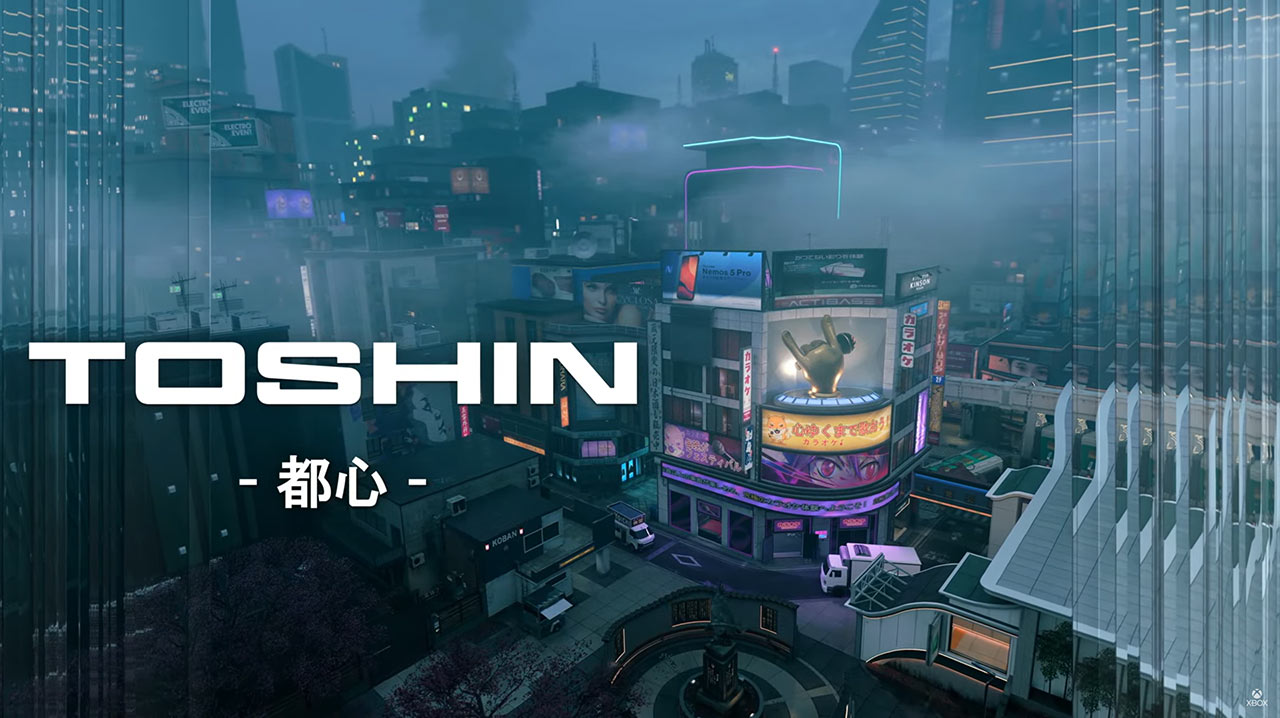
The addition of wall-jumping in Call of Duty: Black Ops 7 significantly changes how players can navigate maps, with Saindon highlighting how this affects gameplay creativity. When discussing which Japan map the team had the most fun developing, he pointed to Toshin as a standout example.
“For me, Toshin has a lot of unique features. With the addition of the wall-jumping and the movement of the map, the players can be very creative while moving around the map,” Saindon explained.
“For example, you can directly jump from the karaoke room to the top of the train and then directly into the cafe. So you can move around the map like you’re playing parkour.”

This new movement system represents one of the tools the team uses to keep the Black Ops formula fresh. “There’s a skeleton we have, but we have tools that we can use to bend the rules around that skeleton,” Saindon said.
“For example, in this game, the wall jump allows us to do things we didn’t do before in the maps and add a layer of verticality and parkour that we didn’t have in BO6, for example.”
Classic Map Makeover
Longtime Call of Duty fans will recognize some familiar battlegrounds, but with a fresh Japanese twist. Popular maps like Raid and Hijacked return, reimagined in their new setting. Leslie shared his personal excitement about how natural these classic maps felt in their new Japanese locations.
“One of the things I love is we took the classic maps and when we put them in Japan, it just felt right. Between Raid and Hijacked, but playing Hijacked and seeing the Tokyo Bay, it just felt right. Why wasn’t it always in Japan?” Leslie reflected. “To us, that was a really amazing thing. It was like, yeah, of course, Express is just in Japan. It was never in LA. It was always in Japan. For me, when I revisited some of the old maps, moving them to Japan was a really special thing.”
The connections between maps go deeper than just visual themes. Leslie hinted at story connections between the Japanese maps, particularly those set in Tokyo Bay.
“Through the campaign, there’s actually connections between the Japanese maps overall, which you’ll see why they are both in the Bay. Those maps specifically, I think the Forge and Hijack, but that was really important that you actually can see that this is going to make a connection between the maps overall, that it feels like a sense of place that you’re like deep in Japan.”
When updating classic maps for Black Ops 7, the team carefully balanced preserving what players loved with incorporating new mechanics. “When we bring them in and remaster them, and we do it every game where we remaster, is when we playtest them with all the new mechanics, is we look for opportunities to make it fit right for the game,” Leslie explained.
“And so opportunities for wall jump, opportunities for using even the equipment, small tweaks, but we also have to balance that we don’t really spoil what players love about the original map. So it’s a tight balance between keeping it the same, but updating small things so it works for Black Ops 7. And I think we hit that balance just right.”
Bridging Old and New Players
With Black Ops 7 bringing back characters from previous games while introducing new ones, the team faced the challenge of appealing to both veteran fans and newcomers. The story continues from Black Ops 6 and connects back to Black Ops 2, featuring returning characters like David Mason, Raul Menendez, and Troy Marshall.
Leslie, who has worked on every Black Ops game, understands the complexity of managing storylines and character returns. “My brain has all of the sort of what’s canon, not canon characters here. And it’s really difficult, to your point, of what characters to bring back and not bring back. One is to tell the right story.”
The team was careful not to alienate new players in Call of Duty: Black Ops 7 while rewarding longtime fans. “It was important for us that if you didn’t know, you still are going to fall in love with these characters,” Leslie said.
“They might mention stuff, but we try to explain the backstory to those things that might make you interested, where you’re like, oh, you know, he’s talking about Frank Woods, right? I want to go, who is Frank Woods? Or if you know, you get excited because he’s talking about Frank Woods. And so there’s always a tight balance on trying to appease the fans that exist and bring in new fans.”
Designing Maps for Multiple Modes
Creating maps that work across different game modes presents unique challenges. Saindon explained their approach to making versatile map designs that can accommodate everything from team deathmatch to new competitive modes.
“I’m not saying that there’s a fixed template that maps must follow. But there is a skeleton that we usually use to follow the skeleton. For example, there are three main crossroads, etc. Basically, if we follow the skeleton, it can work in different modes,” Saindon said.
“When we design a map, we don’t design a specific map for a specific game mode, but we hope that every map will work well in different modes.”
Leslie added that testing different modes actually helps them utilize more of each map. “The fun part is, when we playtest all the different modes, it actually, as we move the objectives around, it actually forces you to use the rest of the maps, right? Like, Overload is a new mode that we’ve got coming, and it’s a competitive mode, but you’re using more of a map, very different from TDM or Hardpoint. And that’s really fun for us because we’ll make iteration changes, but then you have to make sure you don’t spoil anything across the other modes.”
Bigger Battles, New Gadgets
The game introduces 20 vs 20 multiplayer matches alongside the traditional 6 vs 6 modes. This larger scale allows players to use gadgets that wouldn’t work well in smaller matches, addressing a specific design challenge the team wanted to solve.
“For this time, in 6 vs 6, we wanted to keep the core, the more traditional way of fighting, but you can see in the game, we have a lot of new features, a lot of new gadgets, like in the campaign, there’s a grapple hook, and there’s a Kinetic Jump, and there’s wingsuiting, and these gadgets, in core 6 vs 6, they don’t feel right,” Leslie explained.
“But we thought, if you can’t use these gadgets in battle, it’s a shame, so we wanted to see if we could expand the scene, for example, a 20 vs 20 grapple hook, then these gadgets, like wingsuiting, or Kinetic Jump, could be used.”
The larger multiplayer mode serves a specific purpose in the game’s design philosophy. “So basically, what we want to do is some of the gadgets in the game can’t be used in a 6 vs 6 map, so how do we create a map that can use these new gadgets? So we came up with a 20 vs 20 grapple hook.”
Balancing Intelligence Gathering
Black Ops games have always emphasized intelligence gathering and tactical gameplay, but the team was mindful of making these elements engaging rather than overwhelming. When asked about striking this balance, Leslie acknowledged the challenge while highlighting the game’s customization options.
“This is a very good question. Of course, this is difficult. Because when we’re balancing, we want to try to balance different players’ different strategies and tactics,” Leslie said.
“So, in multiplayer games, we have different specialties, combat specialties, and now we also have hybrid specialties. So you can still adjust your equipment. So, in other words, now players can actually customize it even more. Of course, this will be more difficult for our team to balance. But I think in this game, this kind of depth can really allow players to do what they want to do.”
A Platform for Creativity
Set in 2035, Black Ops 7 serves as what the developers described as “a platform where the team can bring out their creativity.” Leslie outlined how the various new elements combine to create a fresh experience while maintaining the Black Ops identity.
“We add in some different elements. Like this time, the wall jump is a new element. The 2035 background setting is a new element. Japan is a new element. The new story is a new element. We add in these new elements to make the players feel very fresh, but the rest is still a Black Ops world,” Leslie explained.
“Of course, every time we release a new game, there will always be a new challenge. But we hope to maintain this principle, to make the players feel like this is a familiar Black Ops game, but there are a lot of new features.”
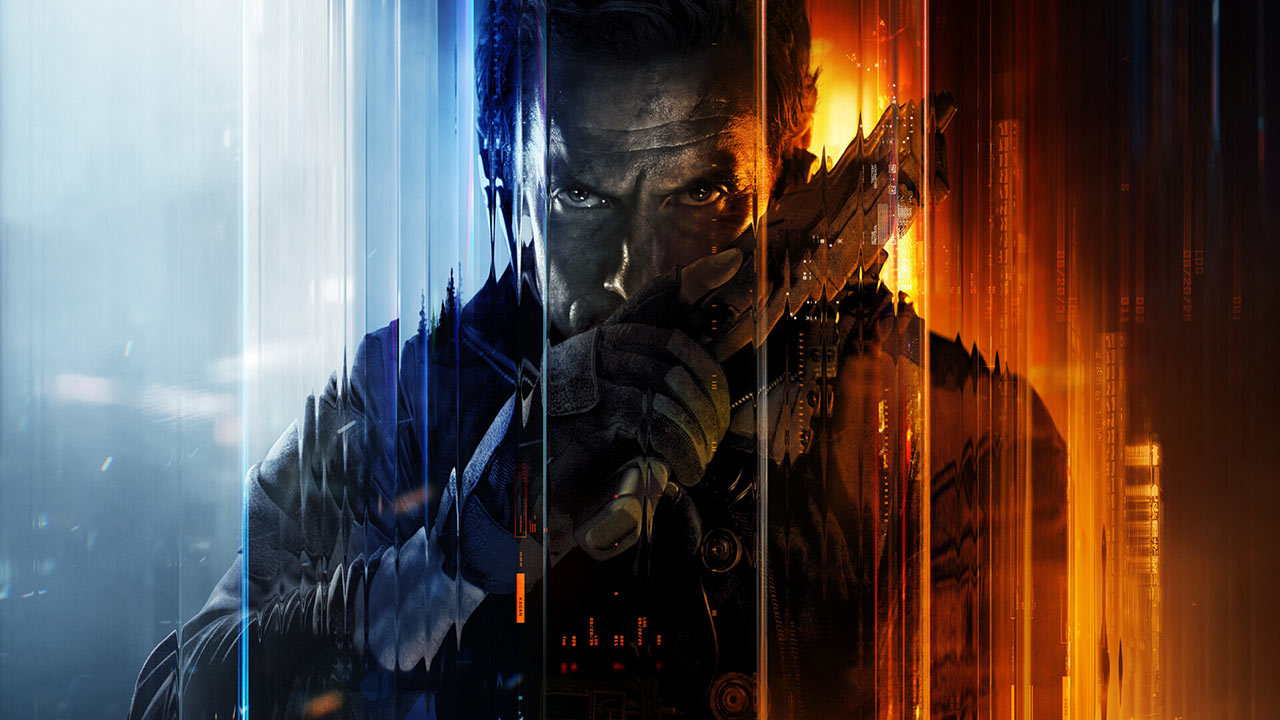
The game promises multiple ways to play, from the single-player and co-op campaign to various multiplayer modes, zombies, and connections to Warzone. As Leslie summarized: “Black Ops 7 is a huge game with a lot of different experiences for players.”
For both longtime fans and newcomers, Call of Duty: Black Ops 7 appears ready to deliver the signature Black Ops experience with meaningful innovations, all set against the backdrop of a carefully crafted Japanese setting that respects the source material while fitting naturally into the game’s universe.