










![[EXCLUSIVE] Dragon’s Dogma 2: Dark Arisen Team Opens Up About the Expansion’s Name, New Norgan Region, and Performance Goals](https://cdn.gamerbraves.com/2026/07/Dragons-Dogma-2-Dark-Arisen_Interview_FI-360x180.jpg)



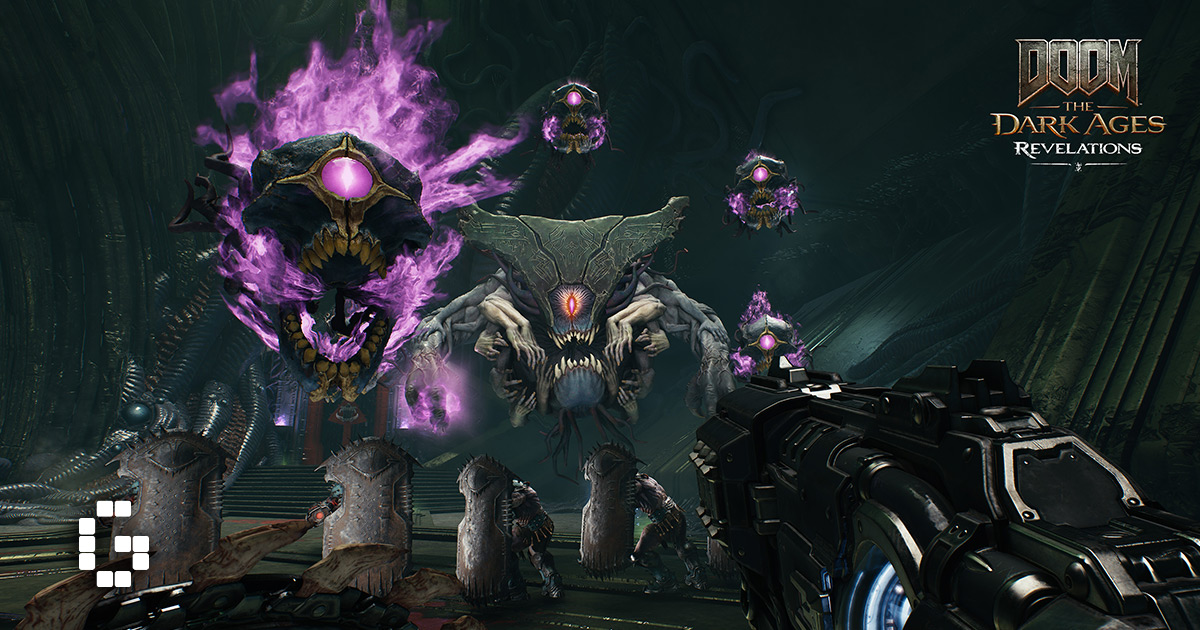
Doom: The Dark Ages launched in 2025 to strong reception, building on the foundation of Doom 2016 and Doom Eternal while carving out its own identity with a slower, heavier combat style. Now, with the DLC Revelations just around the corner, fans are eager to know what is coming next. We recently got the chance to hear from id Software co-studio directors Hugo Martin and Marty Stratton as they answered the community’s biggest questions about the expansion.
The Spear Is the Heart of the New Mechanics
One of the first things discussed was how the DLC adds new opportunities for skill expression, and the answer was simple: it all comes down to the spear. The weapon comes with several distinct abilities, including throw, stab, meat hook, and slash, each designed to act as a counter against specific enemy types. “The throw is more effective and does more damage against flying enemy types,” Martin explained.
“So if you see a Cacodemon or a Pain Elemental, there’s a choice to be made. Do you use one of the empowerment pips, or do you save it for a melee character like a Baron or an Agaddon that’s pressuring you? Because the stab is a good counter against those.”
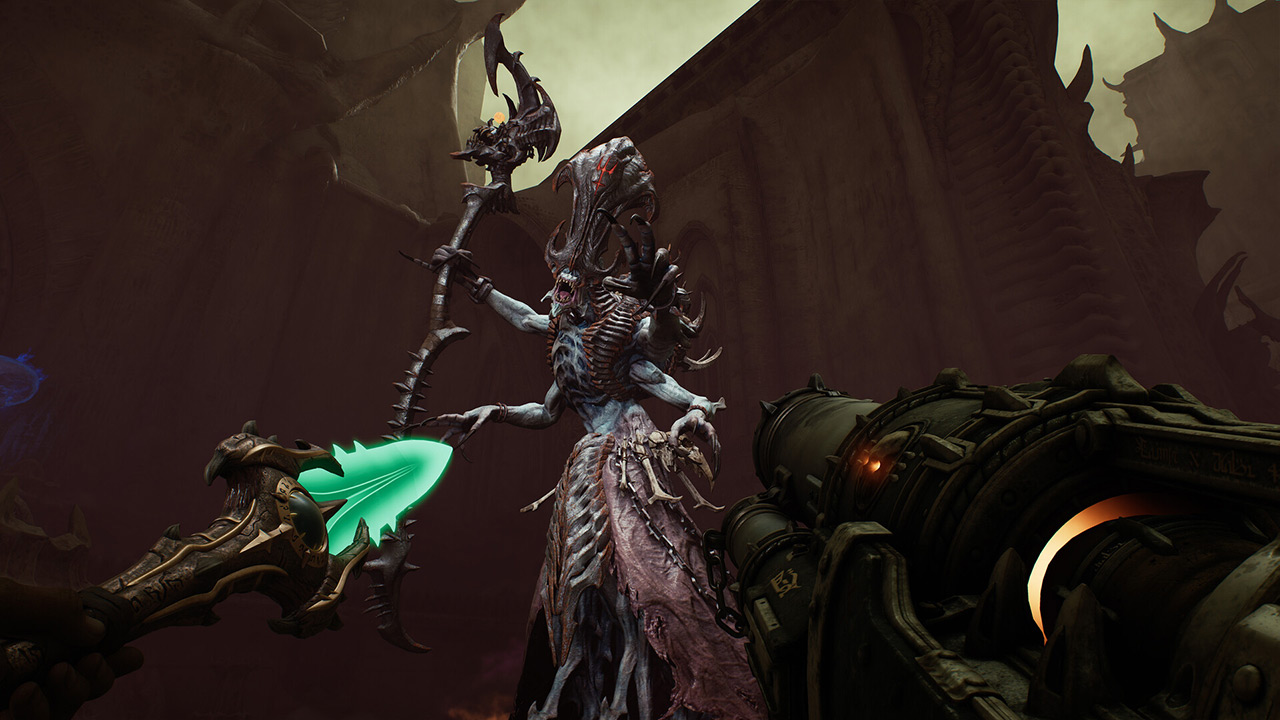
As players upgrade the spear, those counters expand. A fully upgraded stab, for example, becomes effective against evasive enemies like the Arch-Vile, eventually allowing players to chain stuns into what Martin called a “stun lock state.” Stratton added that all of these options are immediately accessible through different button or key combinations, meaning players are making those reads and decisions in real time rather than pausing to cycle through menus.
“With the spear, all of those things are just a different key combo or button combo in the moment,” Stratton said.
“It makes those choices very right there in your fingertips.”
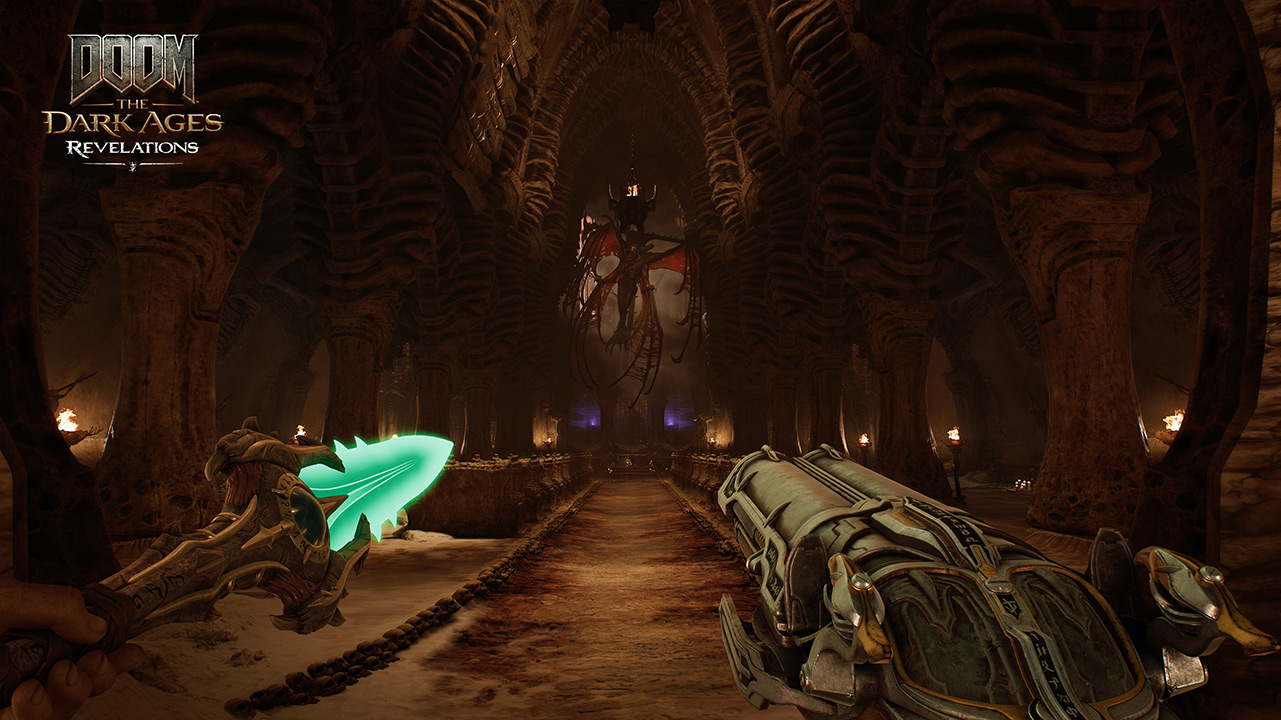
The design philosophy here follows what the team established in The Dark Ages base game, where most decision-making happens in the left hand. The spear takes over that role from the shield in certain situations, while the right hand handles raw damage output.
How Long Is It and What Does It Actually Contain
The DLC is estimated at 10 to 12 hours, though that number can shift depending on how thoroughly players explore, what difficulty they choose, and how much of the endgame content they engage with. Stratton described the split as roughly 60% main content and 40% endgame content.
When it comes to the number of levels, there was some back-and-forth during the session itself. Martin initially said three levels plus the hub, Stratton later clarified it as four levels plus the hub, naming Upper Hell, Ice Hell, Bone Hell, and Osseus. The official post-session correction then confirmed six levels total under the names listed above. Martin acknowledged the confusion, saying the backtracking structure of the DLC makes it feel like far more ground is being covered. “You will be backtracking through those levels, so in my mind it feels like there are like 10 levels,” he said.
“What’s important is 10 to 12 hours worth of content.”
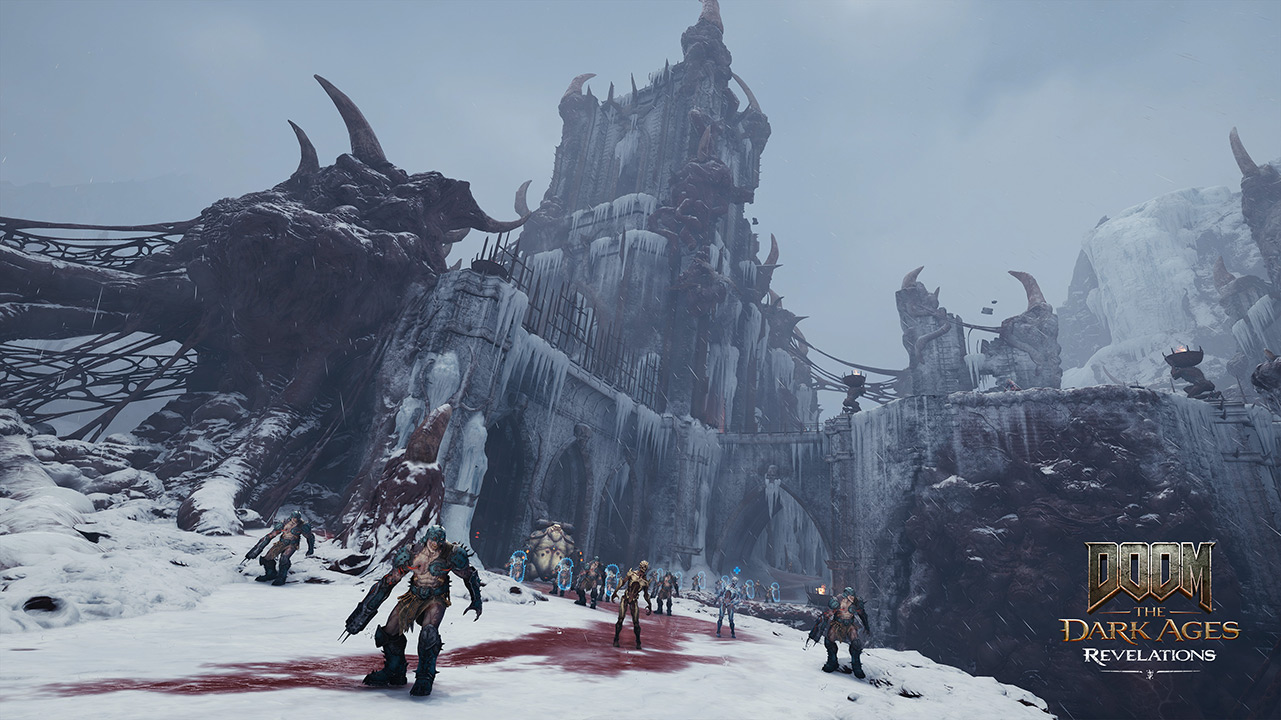
A key structure element is the Master Key system. As players complete levels in the base game, they earn pieces of a Master Key. Once it is fully assembled, it unlocks previously inaccessible areas and gates throughout levels the player has already visited, opening up additional combat scenarios, Slayer Trials, and classic Doom-style content.
“Endgame is not just an add-on or a retread of content you’ve already experienced with different combat,” Martin said.
“It is made up of primarily all new experiences.”
The Flynn Taggart Story and Classic Doom Levels
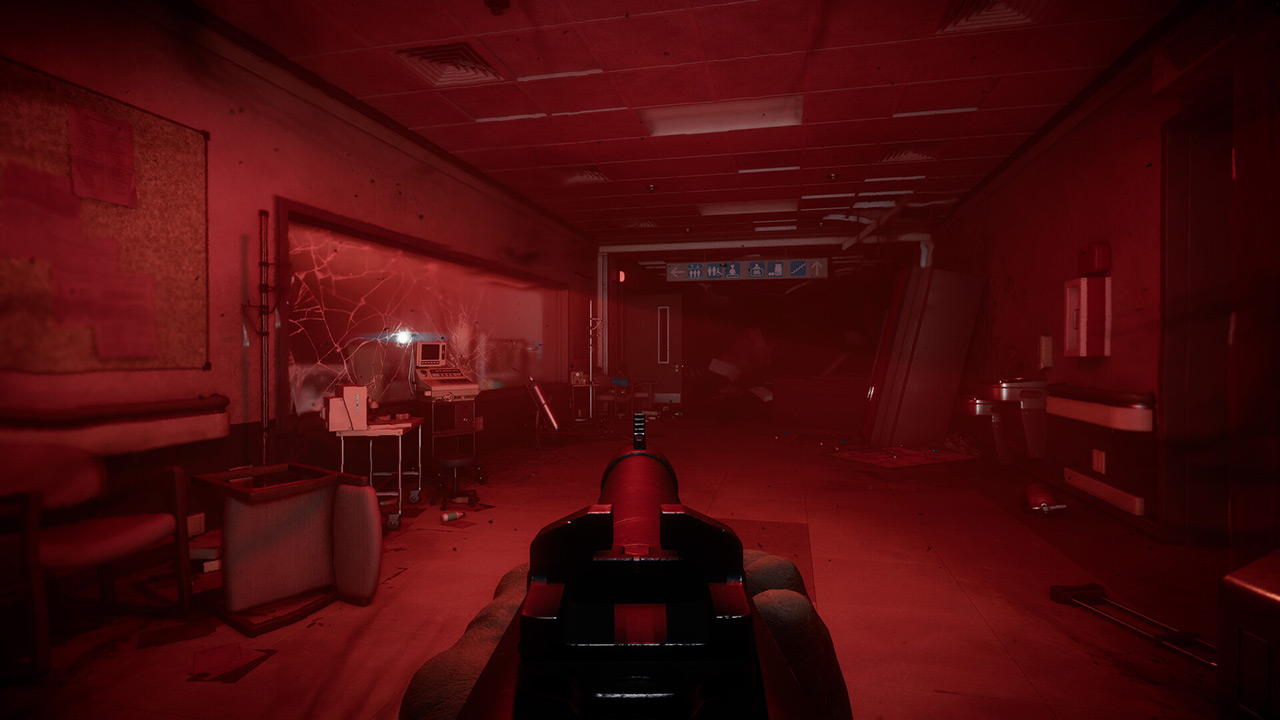
One of the more talked-about elements in the lead-up to the DLC has been the inclusion of DOOM 2 levels. During the session, Martin explained how this connects to the broader lore the team has been building since Doom 2016. Before the Slayer became the Slayer, he was a Marine, and according to the novels, his name was Flynn Taggart. The DLC uses what the team calls nightmare levels to tell a portion of that story, and those sequences served as the fictional justification for including the classic maps. “We get a chance to explore that stuff,” Martin said,
Stratton noted that unlike the pixel-faithful recreations in Doom 2016, these versions of the classic maps use the original textures but render them in the modern engine. “In 2016, it was like you were walking into history,” Stratton said.
“This is kind of like history with the graphics turned up.”
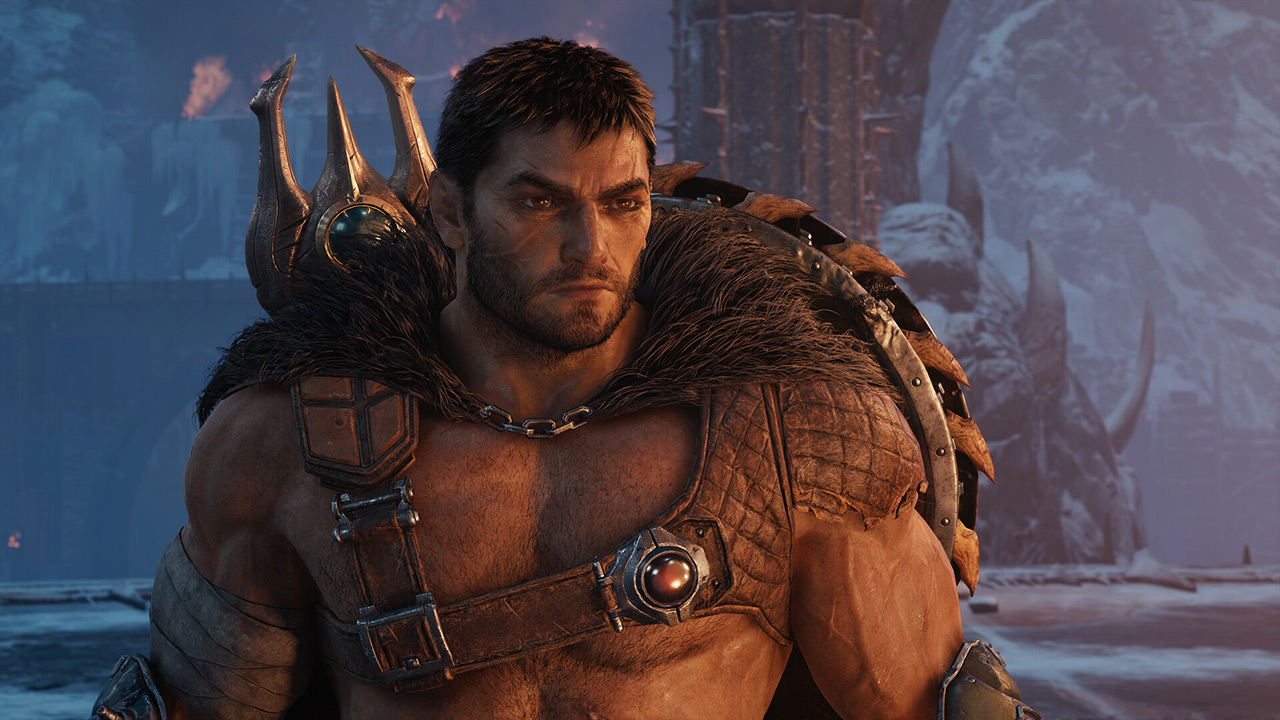
The flashback sequences featuring Taggart are also playable rather than cutscenes or lore pages. Martin described them as short but meaningful, framing them around the idea of experiencing the story rather than watching it.
“You will experience that part of the story firsthand as you play through what are basically his memories,” he said.
Lore, Codex, and Story Threads From Doom 2016
For players who have been following the story since 2016, Revelations appears to pay off some long-running threads. Martin pointed out that certain characters and events mentioned in the codex from the original 2016 game will show up directly in this DLC.
“A lot of the things you’re going to be doing in this game were written about in the codex all the way back in Doom 2016, like the Wretch and the person who created your armor,” Martin said. “You’re going to meet that character this time.” Stratton encouraged players to read the in-game codex carefully, calling this one the best the series has produced. Martin offered a specific tip for anyone wanting to catch up on the lore before jumping in.
“Just read the history of the Sentinels. I think it’s a six or seven part story from Doom Eternal. We certainly read it a million times in preparation for the DLC. If you want to do a quick catch-up, just read that.”
How Influences From Eternal and 2016 Show Up
When asked whether Doom 2016 and Doom Eternal influenced the DLC, Martin said the answer is yes across the board, from story to mechanics. “There are definitely elements from each one, like lore elements from Doom 2016, mechanics from Doom Eternal, the meat hook, elements of the hammer from The Ancient Gods DLC,” he said.
The meat hook in particular returns with expanded depth. Players can now re-engage it mid-air after unlocking the right upgrades, and directional input while hooked affects how the Slayer is launched, either going vertical or covering more horizontal ground depending on where the player aims.
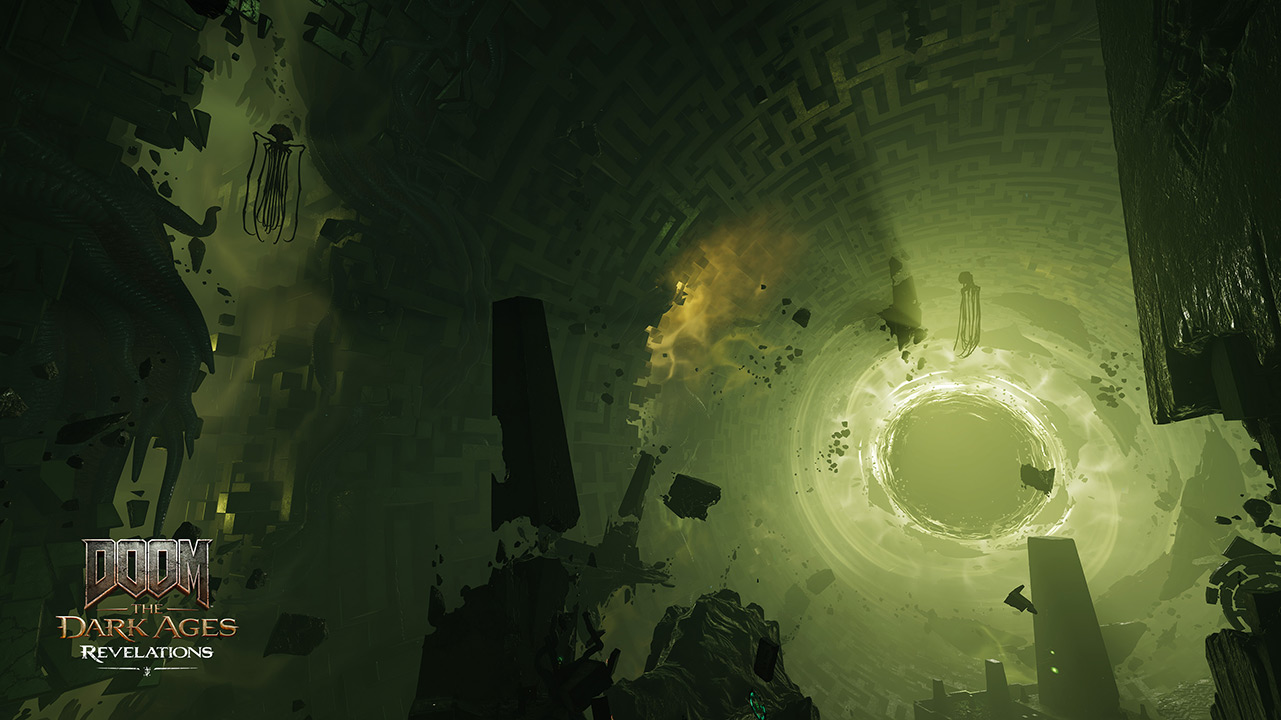
A new ability called Orbit creates a lock-on that lets the player circle around an enemy, and doing so builds up resources for other tools like the heat blast on the accelerator or the charge for the pulverizer. For players who prefer staying grounded, these mechanics are designed to support that playstyle without forcing the kind of vertical air movement that defined Doom Eternal.
“You could use both the spear and the shield, you could just go back to the shield, or you could use the spear exclusively,” Martin said. “For those who want to stay more grounded, there’s a lot of mechanics built in for that.”
The Shield Stays, and Here Is Why
Some wondered why the shield was kept at all given the focus on the spear, and the answer from both directors was straightforward: player choice. The DLC begins with the shield damaged and out of commission for a stretch of time, forcing players to rely on the spear and adjust to it. Once the shield comes back, it returns in a reduced state story-wise, with tier one versions of the runes unlocked rather than full power. “By game’s end, the Wretch… I don’t want to give away the story, but the shield gets returned to full power,” Martin said.
“But by then your spear has also neared full power.”
Stratton described the pacing of switching between both tools as something that develops naturally over the course of the DLC, with the endgame pushing players toward using both in combination. “As I was playing more and more, I really found myself switching between the shield and the spear,” Stratton said.
“There’s a lot of depth there.”
Enemy Roster and New Variants
The DLC introduces a range of new enemy variants. Martin listed spectre variants, purple hell knights, explosive hell knights and zombies, leader variants, and a particularly tough Agaddon hammer variant. He also noted a broader push toward evasive AI, enemies that actively pull players around the space and force more reactive decision-making.
One notable addition is the health zombie, a single blue-tinted zombie that replaces clusters of regular ones. It was designed to address feedback about regular zombies causing chip damage from behind while players focused on more threatening enemies. “One blue zombie will equal four or five,” Martin explained.
“So you don’t have to deal with the crowds as much. You can focus on the AI that matter.”
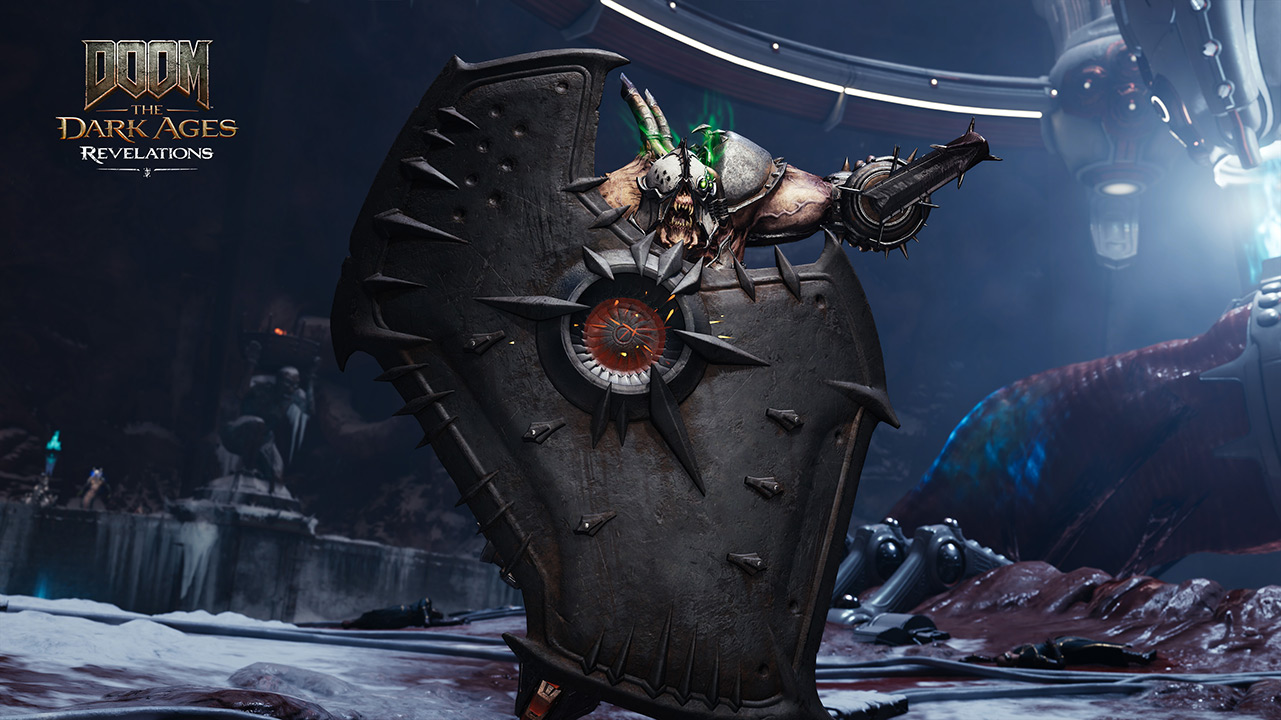
The Arch-Vile in this game summons demons rather than resurrecting them, while a new enemy called the Warlock buffs other demons and creates area hazards. Martin recommended eliminating the Warlock quickly and noted that an upgraded stab can turn the Arch-Vile’s summons against it by triggering a chain reaction.
Exploration and Secrets
Exploration plays a significant role in the DLC, with Metroidvania-style backtracking through the hub and main levels. The team took direct feedback on board when it came to secrets, specifically that players preferred not having them marked on the map. “We actually had one playtester who didn’t think there were any secrets this time around,” Martin said.
“They said we skimped out on secrets, and it’s like, no, they’re there. They’re just hidden.”
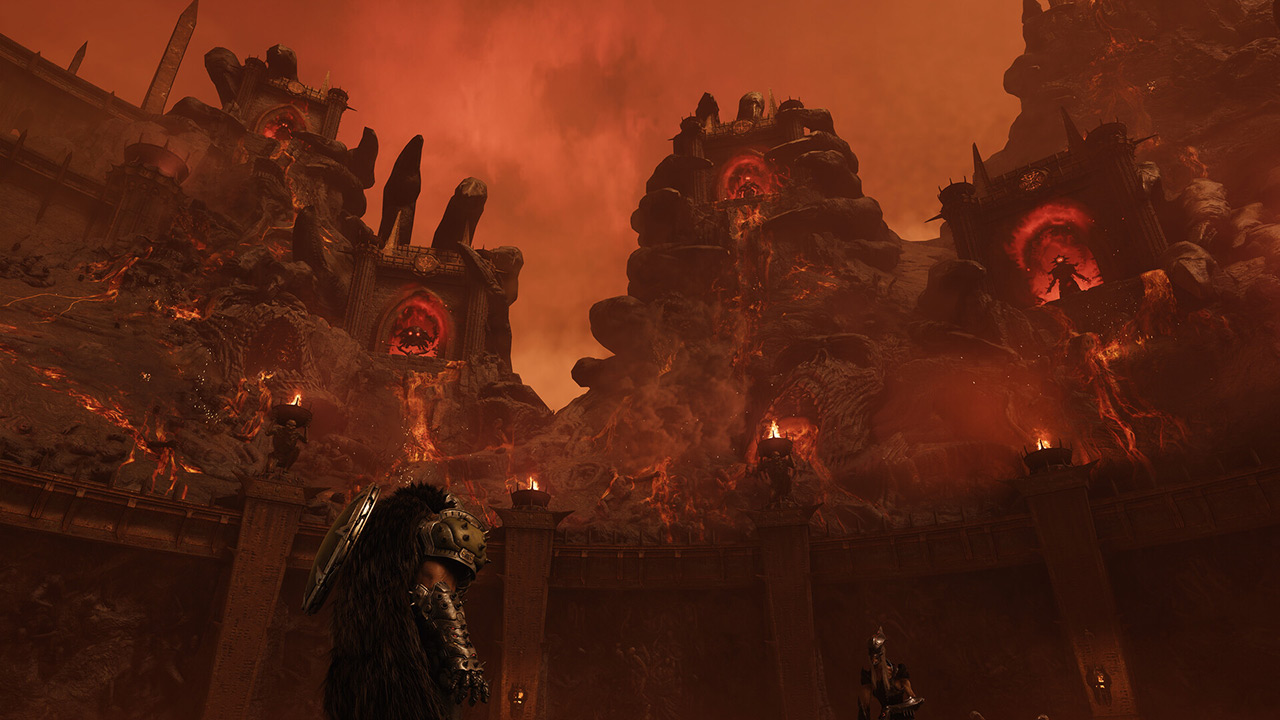
Secrets this time include lore items, currency, hidden paths, and classic-style doors to unlock. The dragon Ratlin, which featured in the Dark Ages base game, does not appear in Revelations. Martin confirmed it was killed in the story, along with the character responsible. The Atlan mech also did not make it, though Martin acknowledged there was a version of the DLC that included it.
“It just didn’t fit from a narrative perspective,” he said.
“The DLC wanted to keep it focused so we could tell the story we really wanted to tell in a meaningful and satisfying way.”
Difficulty and Accessibility
The DLC ramps up difficulty gradually compared to The Ancient Gods, which Martin described as intense from the opening moments. The structure of Revelations allows for a smoother slope that eventually reaches higher peaks than anything in The Ancient Gods. Completing both the base game and the endgame content unlocks additional arenas in the Repertorium, described by Martin as the place where the fully upgraded spear can be taken to its limits.
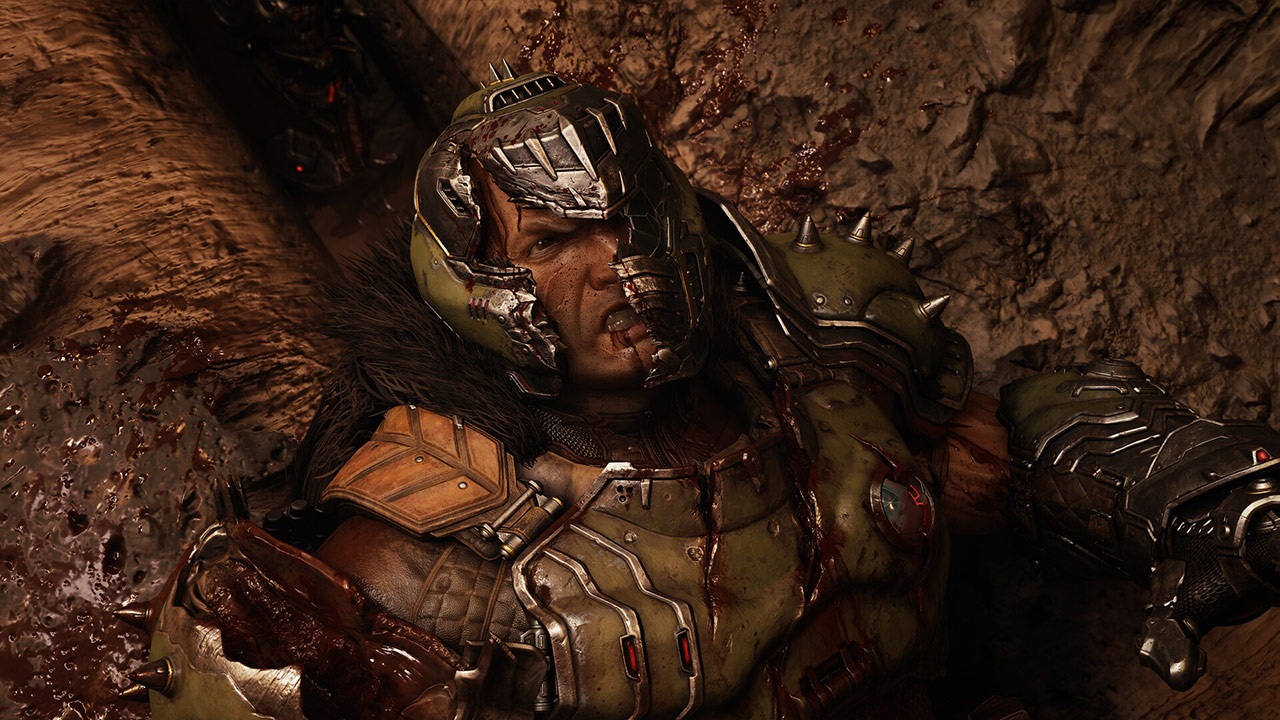
All of the game’s accessibility and gameplay sliders remain available, but Martin made a specific request to the community: try not to adjust them immediately. “I will see some people play 10 minutes, they’re like this is not hard enough, and they’ll crank up the sliders,” he said.
“And then two hours later they’ll run into the Agaddon with the hammer and think it’s broken. Do what you want. They’re there for a reason. But it would be nice if you didn’t move the sliders until you beat it 100%.
Stratton also reminded players that Revelations picks up with a full loadout, so playing through The Dark Ages base campaign first is strongly recommended.
On What Makes id Software Work
Asked about how id Software has managed to deliver three distinct Doom entries plus major DLCs at a high level within roughly a decade, Stratton pointed to a combination of strong leadership, creative focus, and what he described as muscle memory built up over years of doing this work together. Martin brought up the weight of the studio’s own legacy as a motivating force. “They literally invented a genre and made one of the greatest video games of all time,” he said of the founders.
“So it’s kind of like, they made The Godfather. Our project has to be good.”
He also touched on the commitment to reinventing the combat loop with each entry, acknowledging that this approach inevitably draws some criticism from fans of previous games, but describing it as something the team plans to keep doing.
“We would hope that our next game is nothing like anything we’ve done before, whether it’s Doom or something else,” he said.