


![[EXCLUSIVE] Dragon’s Dogma 2: Dark Arisen Team Opens Up About the Expansion’s Name, New Norgan Region, and Performance Goals](https://cdn.gamerbraves.com/2026/07/Dragons-Dogma-2-Dark-Arisen_Interview_FI-360x180.jpg)












The idea of playing your favorite PC or console games on your mobile phone sounds appealing, but how well does it actually work in practice? A report from AppMagic digs into the data, and the results are more nuanced than you might expect.
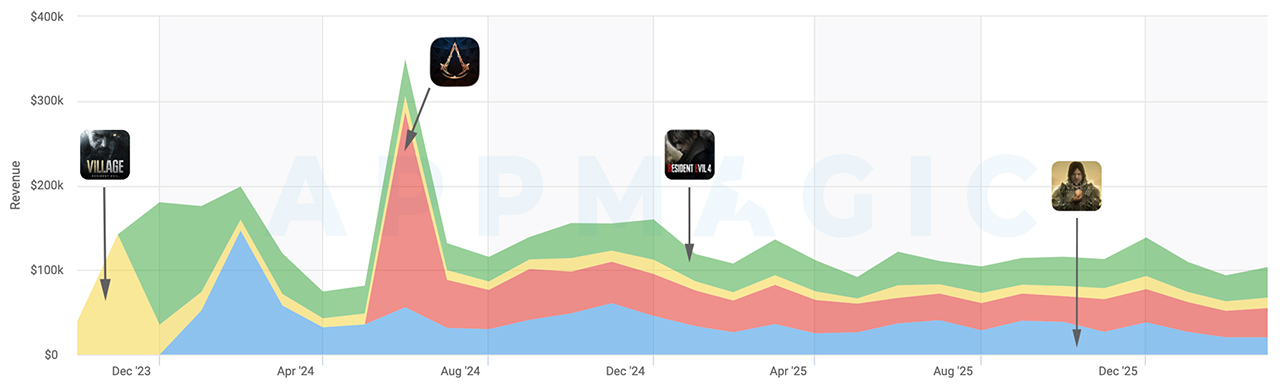
Back in 2024, Apple made a big splash announcing that major titles like Resident Evil Village, Resident Evil 4, Death Stranding Director’s Cut, and Assassin’s Creed Mirage were coming to iPhone. Full AAA games, running natively on a phone sounded like a turning point for mobile gaming. The catch? Only the iPhone 15 Pro and higher could run them, leaving the standard model out entirely. That detail alone made the whole announcement feel more like a hardware marketing push than a genuine shift in how people play games.
The revenue numbers backed that up. According to AppMagic data, Resident Evil 4 was the best performer of the bunch, earning around $1 million on mobile. The other titles fared even worse, most staying around $500K or below on mobile.
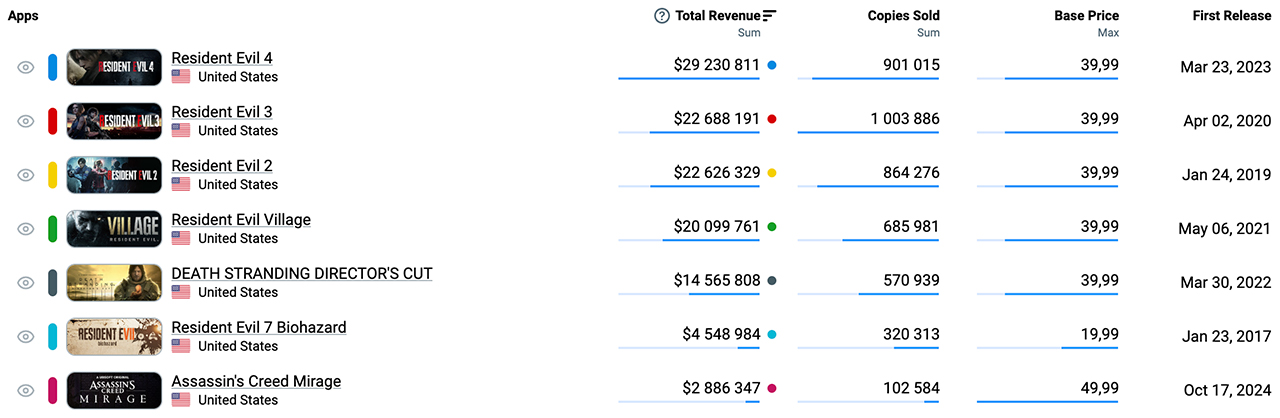
A big part of the problem is price. These games cost $40–$50, which is totally normal on PC or console, but feels like a steep ask on mobile. Most phone gamers are used to free-to-play titles where they spend gradually over time, not a single large upfront payment. Even offering a few free missions as a trial didn’t seem to push many players toward buying the full version.
After that initial wave, there wasn’t much follow-up. Newer iPhone launches didn’t bring a fresh batch of AAA ports, and the trend largely fizzled out. While AAA titles struggled, smaller indie games have found a much more comfortable home on mobile and AppMagic’s data shows it clearly.
Stardew Valley has earned over $28 million on mobile. Balatro, the poker roguelike that won multiple Game of the Year awards, has crossed $20 million in mobile revenue with nearly 3 million downloads. Slay the Spire is above $12 million, INSIDE has reached $11 million, and Don’t Starve sits close to $8 million.
Why do these work when AAA titles don’t? The short answer is that indie games and mobile gaming already share a lot of the same DNA. Short play sessions, simple controls, clean visuals, and low prices are things both mobile players and indie fans already expect. Moving an indie game to mobile doesn’t require changing much about it. It just makes it easier to access.
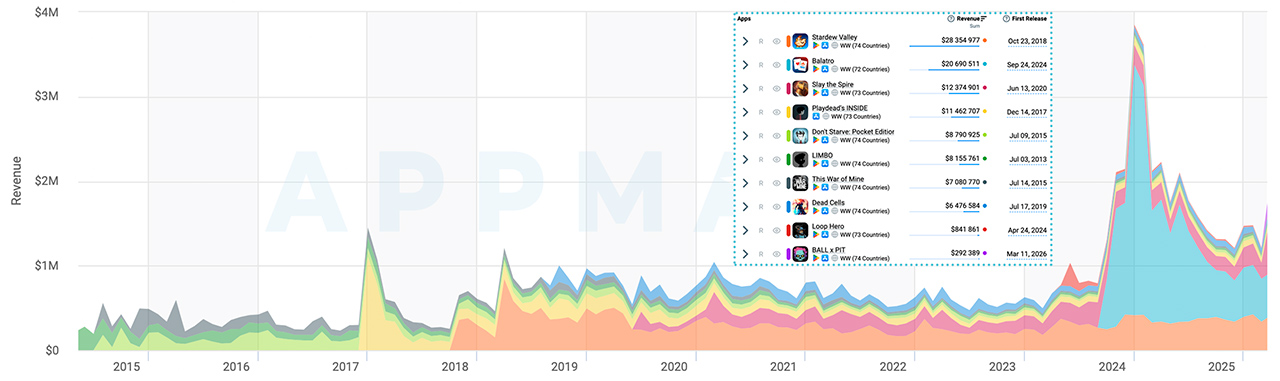
Balatro is a good example. Its straightforward visual style and addictive loop made it a natural fit for a phone screen. It still earned significantly more on Steam but mobile added a meaningful chunk on top of that.
Mobile works best as an extra revenue stream, not a replacement for PC or console. The games that perform well on mobile are the ones that were already a good match for it with short sessions, simple mechanics, affordable prices. Games that don’t check those boxes tend to struggle, regardless of how well they do elsewhere.
As phones get more powerful and gaming becomes more woven into daily life, the gap between platforms may continue to close. But based on where things stand now, mobile is best treated as an extension of a game’s success.