




![[EXCLUSIVE] Brendan Gan Delivers One of Malaysia’s Best-Ever Worlds Results, Shares Thoughts on Pressure and the Local Scene](https://cdn.gamerbraves.com/2026/08/Brendan-Gan_Interview_FI-360x180.jpg)






![[BIC2026] Hiroaki Nagashima from Toei Games Talks New IPs, Indie Roots, and Asia-First Strategy](https://cdn.gamerbraves.com/2026/08/Toei-Games-BIC-2026_Interview_FI-360x180.jpg)
![[BIC2026] From Outsider to Organizer: How Isabella Seo Jungsook Helped Build Busan’s Indie Game Scene through BIC](https://cdn.gamerbraves.com/2026/08/Isabella-BIC-2026_Interview_FI-360x180.jpg)
![[BIC2026] CanOpener’s Logan Moon Opens Up About Dungeon Settlers Ahead of Its September Early Access Launch](https://cdn.gamerbraves.com/2026/08/Logan-Moon-BIC-2026_Interview_FI-360x180.jpg)


Picture walking into a movie theater where tickets cost $70 each. Most people would turn around and leave, no matter how good the film might be. Yet this is essentially what’s happening in gaming today – and it’s getting worse. While industry executives debate whether games should be less cheaper and cost even more to match rising development budgets, millions of players are being quietly priced out of their favorite hobby.

A former PlayStation executive recently made headlines by saying game prices should have gone up over the years to match rising development costs. His business logic makes sense on paper – games cost more to make, so they should cost more to buy. But this view misses a crucial reality: we’re living through what many call a cost-of-living crisis. Energy bills, groceries, and housing costs have skyrocketed while wages have stagnated. In this environment, asking people to pay even more for entertainment isn’t just tone-deaf – it’s economically shortsighted.
The gaming industry stands at a crossroads. It can continue down the path of higher prices and bigger budgets, potentially turning gaming into a luxury hobby for the wealthy. Or it can explore a different approach: making games cheaper, more accessible, and ultimately more profitable through volume rather than premium pricing.
The Current Price Problem
Right now, most new games from major publishers cost $60-70, the same price they’ve been for about 20 years. It’s worth noting that this pricing mainly applies to big publishers like Sony, Microsoft, EA, and Activision – indie developers rarely charge these amounts for their games making them more cheaper option.
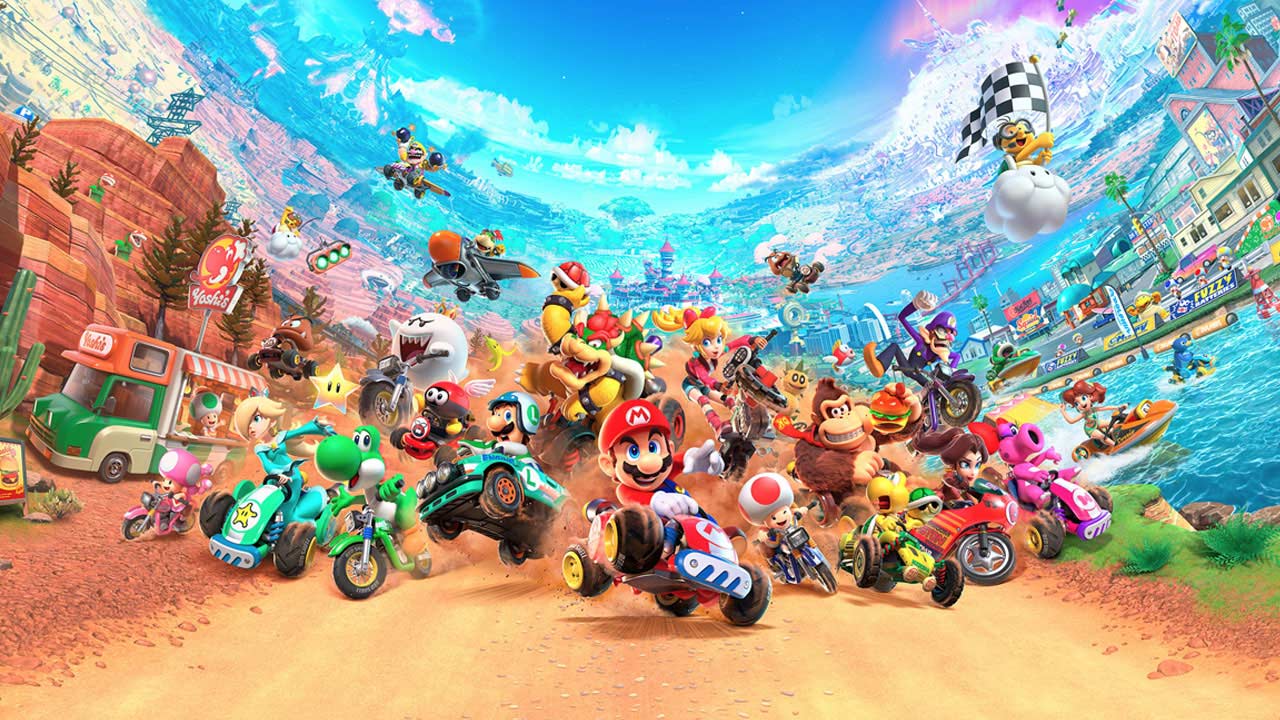
However, there are signs that even these prices are rising. In late July, Microsoft initially announced that Outer Worlds 2 would be priced at $80, though they later reversed this decision to $69.99 after backlash from consumers and developers. When Nintendo announced that Mario Kart World would be priced at $79.99, many saw this as a signal that other publishers might follow suit in raising their prices.
During this time, making blockbuster games has become much more expensive. Some big games now cost over $200 million to make, compared to $10 million in earlier console generations. Companies need to sell millions more copies just to break even.
Shawn Layden, former PlayStation Worldwide Studios chairman previously shared his insights about this problem during our interview at gamescom asia 2024.
“In my world, console gaming, a AAA game is easily triple-digit millions of dollars, 100 million, 150 million, 200 million,” he explained. Layden then compared this to earlier times.
“When I began in this business back in the PlayStation 1 era, you could make a really big game for 4,5,6,7 million dollars. Now fast forward to the year 2024 to make that same blockbuster game that sells 10 to 15 million or 20 million units. It’s gonna cost you 150 million dollars before marketing. And yet at the store you can only charge $59.99 plus tax.”
The harsh reality is that games are becoming inaccessible to millions of working-class players. When people are struggling to pay for electricity and groceries, spending $70 on a single game becomes impossible, no matter how much they might want to play it.
This isn’t just about individual hardship – it’s about the future of gaming itself. When you price out entire economic classes, you shrink your potential audience. You lose the creativity and perspectives that come from diverse player bases. Gaming risks becoming an echo chamber for those privileged enough to afford it.
Even within the industry, developers recognize this problem. Many acknowledge that games are too expensive to develop and have to sell for too high a price, creating an unsustainable cycle that hurts everyone involved. Layden noted that these rising costs have led to a risk-averse market.
“When the cost of game production reaches a number that large, naturally publishers and developers have a reduced tolerance for risk.”
Why Cheaper Games Could Work Better
What if the solution isn’t raising prices but lowering them? This isn’t just wishful thinking – there’s some logic behind it.
If games were cheaper, more people would buy them. Instead of selling fewer copies at high prices, companies could sell many more copies at lower prices. This approach has worked in countless other industries, from books to movies to music.
Think about it this way: if a game costs $200 million to make and sells for $60, the company needs to sell about 3.3 million copies just to cover costs (not counting retailer cuts and other fees). But if that same game cost $40, it might sell to twice as many people. Suddenly, 6 to 7 million sales at $40 could bring in more money than 3 to 4 million sales at $60.

Lower prices also mean less risk for buyers. People are more willing to try new games or unknown studios when the price is lower. This could help smaller developers compete with big companies and encourage more creative risks in game design.
This isn’t just theory – it’s proven business practice. Many successful games already use this approach. Popular indie games often cost $15 to 30 and sell millions of copies. Take Expedition 33, for example, which launched at a lower price point and found success by making itself accessible to a wider audience. Some free games make huge profits through small purchases that add up across massive player bases.
The key insight is that entertainment products have what economists call “elastic demand” – lower the price, and demand can increase dramatically. A $30 game might sell three times as many copies as a $70 game, leading to higher total revenue.
Shorter, Smarter Development
Part of the solution might be rethinking game development itself. Instead of betting everything on massive, $200 million blockbusters, companies could focus on shorter games that cost less to make. These could be sold at lower prices while maintaining healthy profit margins.
An important point that often gets overlooked is that players don’t need highly realistic graphics to have fun. Games with simpler graphics and lower production budgets have proven to be just as engaging and enjoyable as big-budget titles. This shows that cutting development costs doesn’t have to mean sacrificing quality or player satisfaction.
This approach reduces risk for developers while making games more affordable for players. It also allows for more experimental and diverse content, since the financial stakes aren’t as high for each individual project.

The current pricing model is already showing cracks. Many players now wait months or years for games to go on sale rather than buying at launch. Others turn to subscription services or free-to-play games instead of purchasing individual titles.
This behavior shows that demand exists, but not at current price points. Players want to play games – they just can’t or won’t pay $70 for the privilege.
What Players Really Want
Most players today want to buy several games per year, not just one or two premium titles. Lower prices would let people build bigger game libraries, which could actually increase total spending on games. It’s similar to how streaming services work – people pay less per movie but watch many more movies, leading to steady subscription revenue.
But Layden also noted a demographic shift in gaming: “Back when I started, the average age of the game players was between the ages of 18 and 22.Now the average age of the gamer is anywhere from early 30s, like 32,34. These are people in the opposite situation. They have more money, but they have less time.”

This makes shorter, more focused games at cheaper and lower prices even more appealing – players can experience complete games without the time commitment of 80-hour titles, and afford to buy more games that fit into their limited gaming time. Layden even mentioned struggling with longer games himself: “I look at something like Red Dead Redemption 2, I wanna play that game, but I can’t find 80 hours to do that.”
This approach could also help solve the industry’s creativity problem. When games are cheaper, players are more willing to try different genres and experimental titles. This creates a healthier ecosystem where creative risks can pay off financially.
The Global Market Reality
Gaming is now a global industry, but $70 represents very different purchasing power in different countries. In many parts of the world, a single game costs the equivalent of several days’ wages. Lower prices could open up enormous new markets that are currently priced out entirely.
Even in wealthy countries, economic inequality means that gaming’s traditional audience is shrinking. Young people, students, and working families – historically core gaming demographics – increasingly can’t afford new games at launch prices.

The answer isn’t necessarily the same low price for every game. Different types of games could have different price points based on their scope, development costs, and target audiences. The key is ensuring that gaming remains accessible to people across different economic circumstances.
Maybe big blockbuster games could justify higher prices, while smaller or experimental games cost less. Maybe different regions could have different pricing to reflect local economic conditions. The important thing is moving away from the current one-size-fits-all approach that’s pricing out millions of potential players.
Budget Management and Digital Distribution
Beyond rethinking game length and scope, publishers need to manage their budgets more carefully. Not every game needs to push the boundaries of realistic graphics or have massive production values to be successful.
The smartphone industry offers a useful comparison. As manufacturers produce phones in higher volumes, prices for non-flagship models have decreased over time. Gaming should follow a similar pattern, especially with digital distribution. When games are sold through platforms like Steam, PlayStation Store, or Xbox Store, there are no manufacturing costs, no physical discs to produce, and no shipping expenses. Selling one more digital copy doesn’t increase costs at all – the infrastructure is already in place.
This means that the traditional retail model, where physical products had fixed costs per unit, no longer applies to most games. Digital distribution has removed significant expenses from the equation, yet game prices haven’t reflected these savings. If anything, this makes the case for lower prices even stronger – publishers can afford to sell more copies at lower prices because each additional sale comes with almost no extra cost.
The combination of better budget control, realistic expectations about graphics, and the cost advantages of digital distribution creates a clear path forward. Publishers don’t need to spend $200 million on every game, and they don’t need to charge $70 to be profitable when digital distribution costs are so low.
A Better Path Forward
The former PlayStation executive is right that the current system has problems. Development costs are rising, and companies need sustainable business models. But the solution doesn’t have to be asking players to pay more while getting less.
Instead of raising prices and hoping fewer people will pay more, the industry could make prices for games cheaper and invite more people to participate. This approach could create a virtuous cycle: more players mean more sales, more sales mean more revenue, and more revenue can fund better and more diverse games.
The evidence suggests this isn’t just the more ethical approach – it might be the smarter business strategy. In a world where entertainment options are endless and economic pressures are mounting, making games more cheaper and accessible could be the key to long-term industry growth. Gaming has always prided itself on being for everyone. Now it’s time to make sure everyone can actually afford to participate.