


![[EXCLUSIVE] Dragon’s Dogma 2: Dark Arisen Team Opens Up About the Expansion’s Name, New Norgan Region, and Performance Goals](https://cdn.gamerbraves.com/2026/07/Dragons-Dogma-2-Dark-Arisen_Interview_FI-360x180.jpg)









![[BIC2025] Game Developers Share AI Innovation Insight at Busan Indie Wave Conference](https://cdn.gamerbraves.com/2025/08/BIWC-AI_News_FI-1.jpg)
Two notable presentations at the recent Busan Indie Wave Conference demonstrated how independent game developers are using artificial intelligence (AI) to create new gaming experiences. The August 14th event, held at the Grand Josun in Haeundae and co-hosted by the Busan IT Industry Promotion Agency and Busan Indie Connect Festival Organizing Committee, featured sessions on AI-driven gameplay and creative storytelling. Among the conference’s 10 sessions, which served as a preview for BIC 2025, particular focus was given to how AI can enhance player engagement and create more dynamic game worlds.
AI-Powered Storytelling
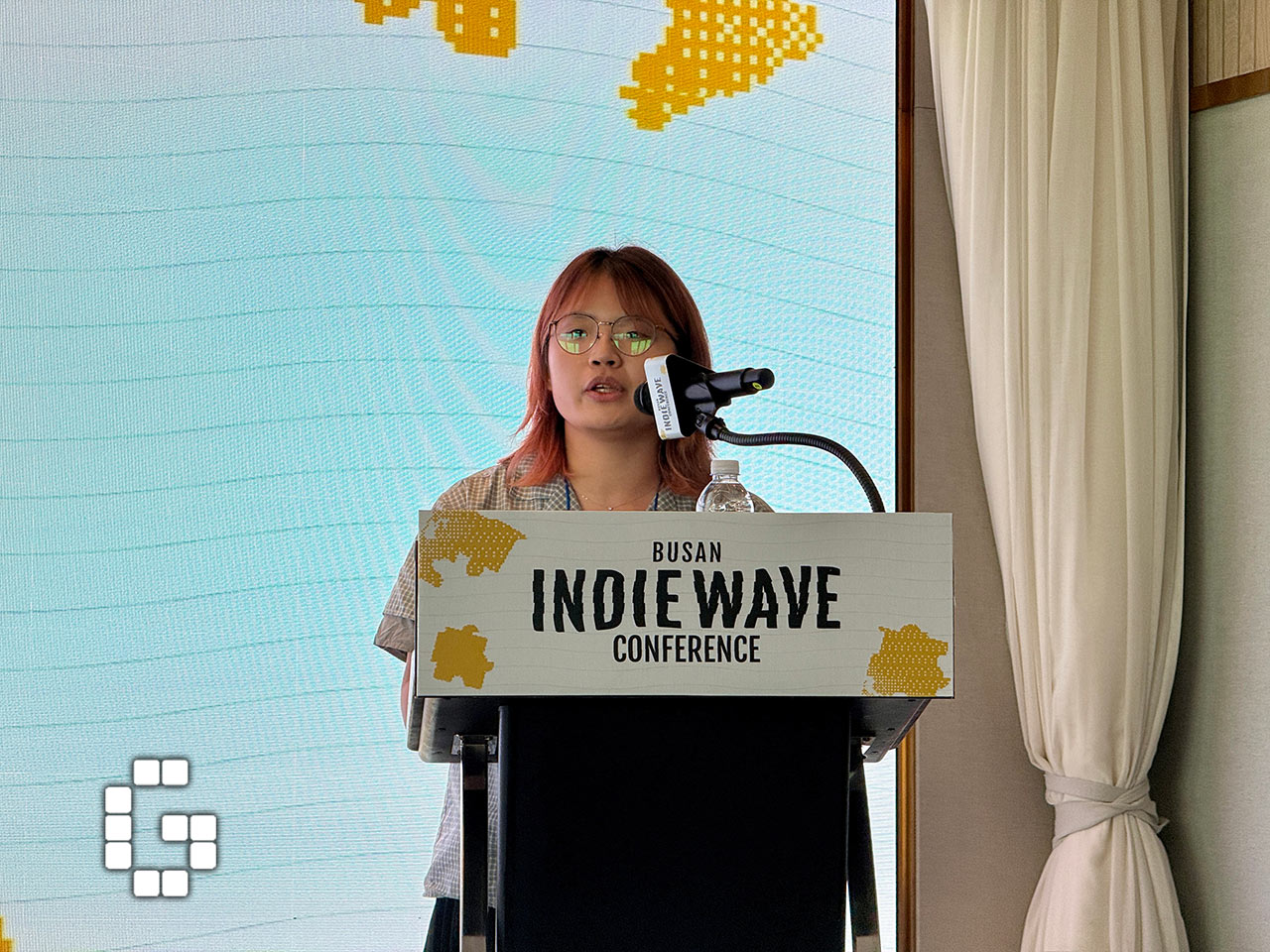
Chuyan Xu, Lead Game Programmer at Ada Eden, presented how AI drives gameplay in their indie title “1001 Nights.” The game draws inspiration from the classic Arabian Nights tales, where players become Scheherazade telling stories to King Shahryar. Players must craft narratives that lead the king to say specific words like “sword,” “knife,” or “shield.”
The game uses a large language model (LLM) to make the king react dynamically to player stories. He shows anger, moves the plot forward, and responds based on what players tell him. This system makes each choice feel important and pushes players to be creative.
The quality of stories affects gameplay directly. Weak tales create low-powered weapons, while engaging stories unlock stronger gear. The game turns key story moments into “weapon cards” and battle dialogue. When players defeat the king, they get a “storybook” that records their journey, titles earned, the king’s fate, and their complete adventure.
On the technical side, Xu recommends using JSON mode with few-shot techniques to keep the king’s personality consistent. Some players try to “jailbreak” the AI by asking it to ignore its role or discuss modern topics, which always makes the king angry. The team faces challenges like mixed-language output, where English words appear in Chinese stories. While they don’t plan to add more languages yet, AI still creates unique and creative gameplay despite small issues like imperfect image generation.
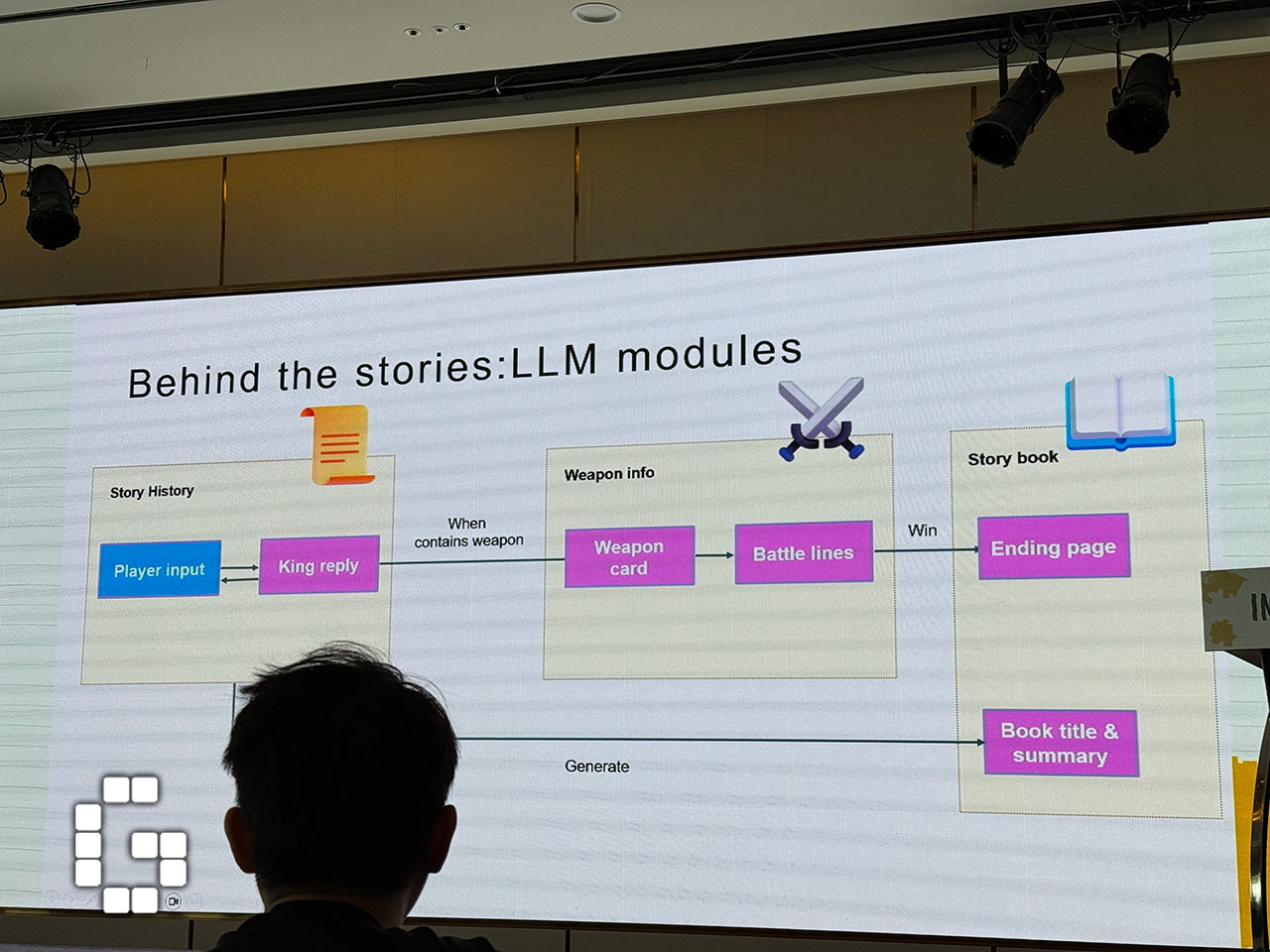
For resource management, Xu suggests using high-performance AI for core systems while free models handle less important decisions. She warned that repeated bad inputs can cause “hallucinations,” but most players accept minor errors. Her key advice: always include a step to check and fix broken JSON data to keep the game stable.
Panel Discussion on AI’s Future in Gaming
A panel featuring Heesu Suh (Eleven Dot Studio CEO), Jihoon Kim (ALIENZ CEO), Jiyun Kim (TEAM.WOOTSANG Leader), and Professor Deukwoo Lee discussed their experiences adding AI to their projects.
Each developer had different reasons for exploring AI in games. Jihoon Kim got interested after watching his father create images and music with AI for YouTube, thinking games could benefit similarly. Heesu Suh wanted to move beyond fixed game choices and tested ChatGPT by role-playing as a Jedi to explore AI interaction. Jiyun Kim added AI chat features to make characters deeper and improve replay value in a single-ending game.
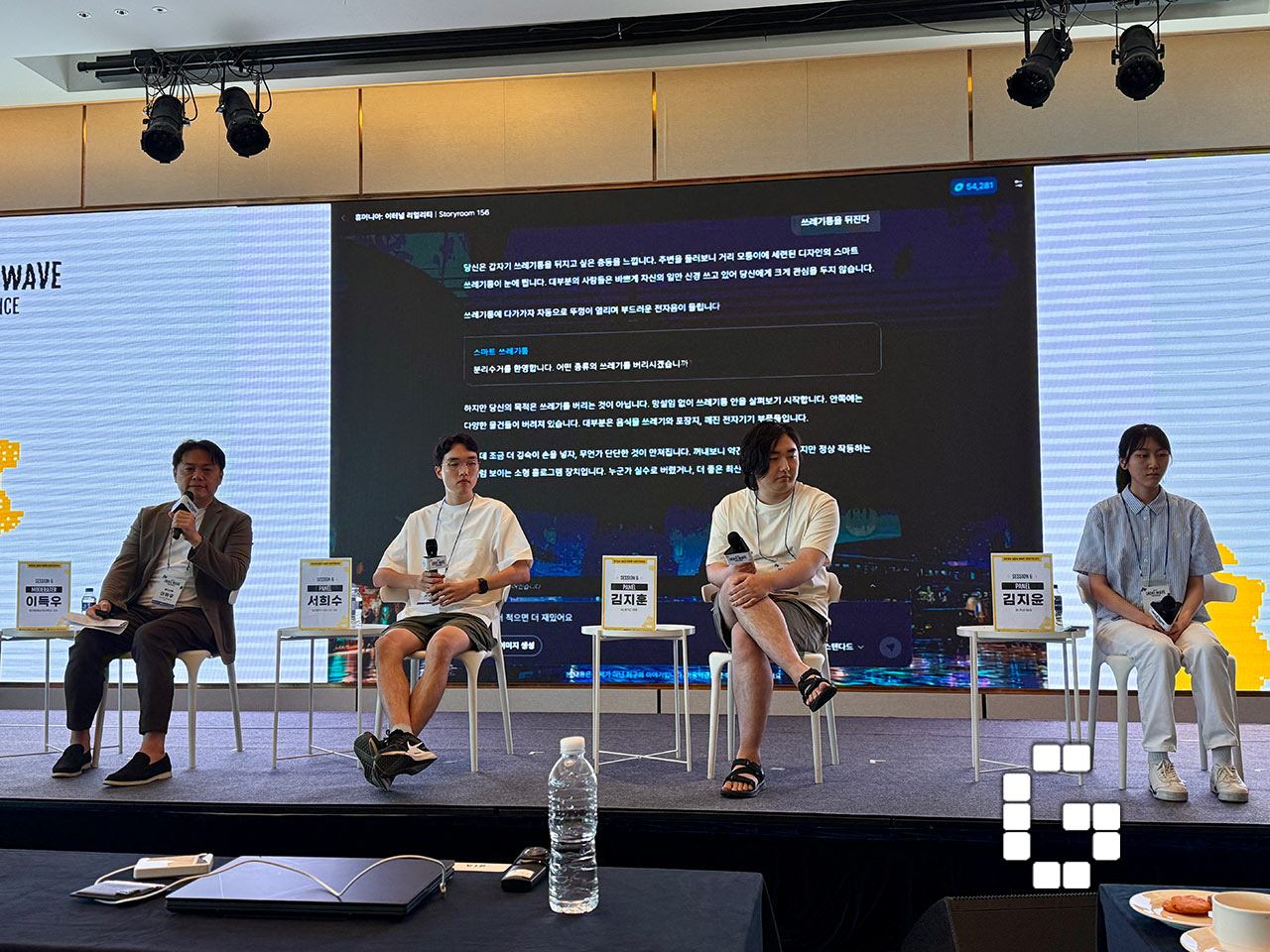
The developers agreed that AI’s biggest challenge is its unpredictable nature. Keeping character personalities consistent takes significant work. Jiyun Kim explained that beyond inputting personality types, they document each character’s history, values, and restrictions, plus provide many sample lines to get the right outputs. They also cut AI response times from 1-2 minutes to about 15 seconds through better models and prompt optimization.
Interestingly, this unpredictability sometimes creates unexpected fun. Jiyun Kim noted that while she sometimes sacrificed character traits for the story, AI focusing on character personality could build worlds the planners never imagined, offering richer experiences. Since 100% control isn’t possible, creating unpredictable experiences through player interaction becomes a new type of entertainment.
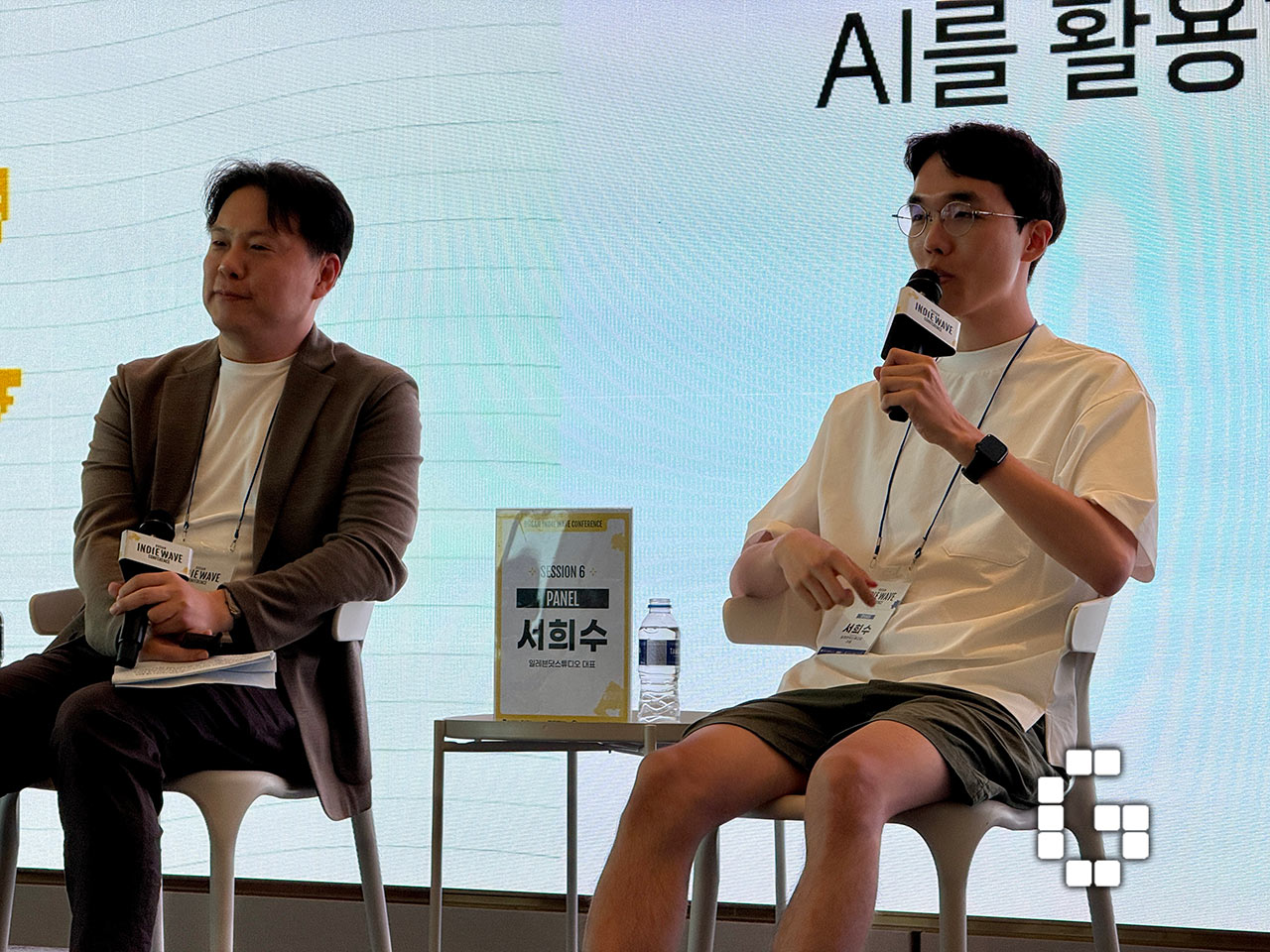
The developers stressed that prompt engineering is crucial for guiding AI in the right direction. Jihoon Kim compared this knowledge to a “Michelin restaurant recipe,” calling it a potential competitive advantage. While paid AI models work better, Heesu Suh noted that free versions are enjoyable enough, and costs can be covered with ads.
Looking forward, AI is expected to make game worlds more alive. Future NPCs won’t just repeat the same lines but will remember player interactions and respond accordingly, creating three-dimensional characters. Stories could extend infinitely, and real-time 3D space generation, similar to Google’s “Genie” project, might become possible. Lower development barriers could let more IP holders and regular people create games.


However, the panelists warned against using AI blindly. Player experience must come first. Jihoon Kim emphasized that “AI is just a tool,” and Jiyun Kim suggested “starting small and applying it deeply is a good approach.” AI should be used with clear design goals and careful application without hurting core game enjoyment.
The Busan Indie Wave Conference highlighted growing role of AI in indie game development, showing both its creative potential and the careful consideration needed to implement it effectively.