


![[EXCLUSIVE] Brendan Gan Delivers One of Malaysia’s Best-Ever Worlds Results, Shares Thoughts on Pressure and the Local Scene](https://cdn.gamerbraves.com/2026/08/Brendan-Gan_Interview_FI-360x180.jpg)




![[GCAxTHGS25] Onimusha Returns in Way of the Sword: Developers Share How It Balances Legacy and Innovation](https://cdn.gamerbraves.com/2025/10/Onimusha-GCAxTHGS25_Interview_FI.jpg)
After nearly two decades away, Capcom’s beloved Onimusha series is making its long-awaited return with Onimusha: Way of the Sword. During gamescom asia x Thailand Game Show, we sat down with Producer Akihito Kadowaki and Director Satoru Nihei to discuss the challenges of reviving a dormant franchise, the creative decisions behind choosing legendary swordsman Miyamoto Musashi as the protagonist, and how the team used RE Engine to bring their vision to life.
The Long Road Back: Why Now?
The question on every fan’s mind has been simple: why did it take 20 years for Onimusha to return? According to Nihei, the answer comes down to resources and timing. “The most important reason why it didn’t happen before is simply the number of people,” he explained. “We just didn’t have enough manpower to work on it for a long time.”
Within Capcom, the desire to bring Onimusha back never disappeared, but the reality of game development priorities made it difficult. “The game industry prioritizes titles that the market wants — Monster Hunter, Resident Evil, Street Fighter, and so on,” Nihei said. “Back then, a team of 10 or 20 people was enough. Now, you need hundreds.”
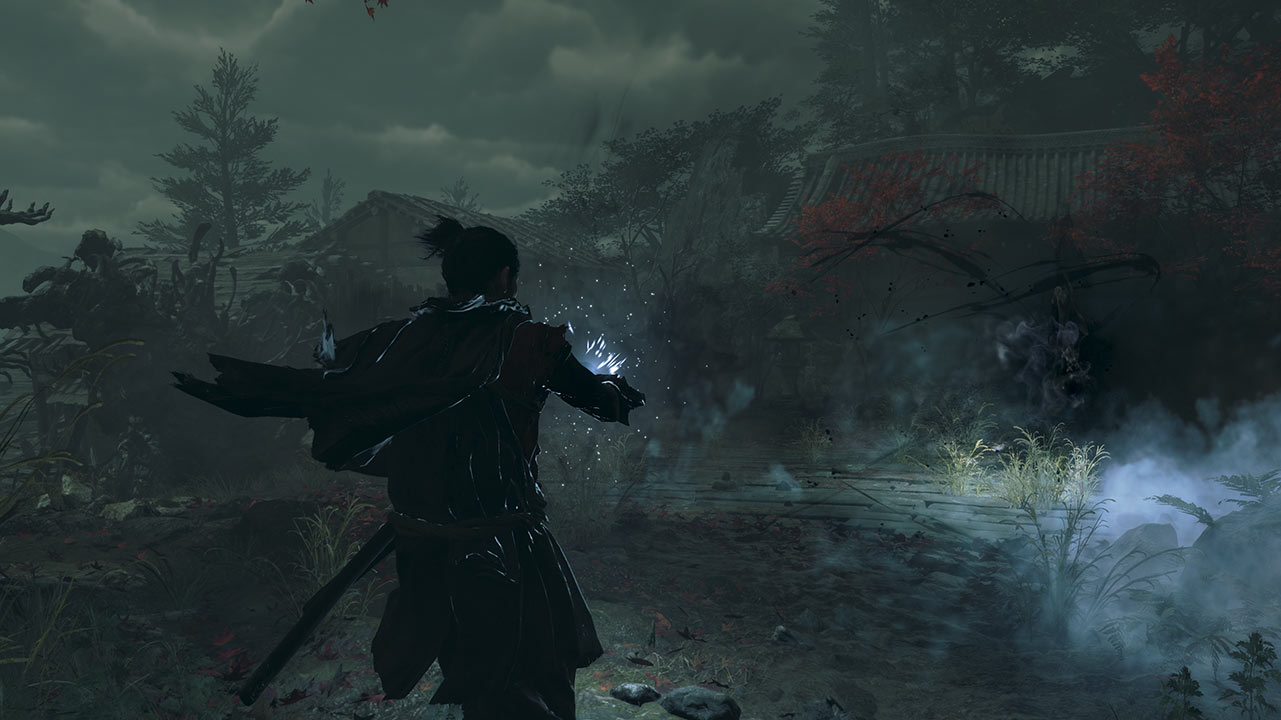
The breakthrough came in 2020 when two critical factors aligned: Capcom had integrated RE Engine into their development pipeline, and they finally had the right number of people available. “It took five years, but here we are. It’s back,” Nihei said.
Building a Team Around a Vision
Getting the project off the ground presented its own set of challenges. Kadowaki described the early development process as requiring careful alignment. “Within the team, there were people who already knew the series and others who weren’t familiar,” he said. “So the first challenge was putting everyone in the same space — making sure they understood the world they were about to create.”
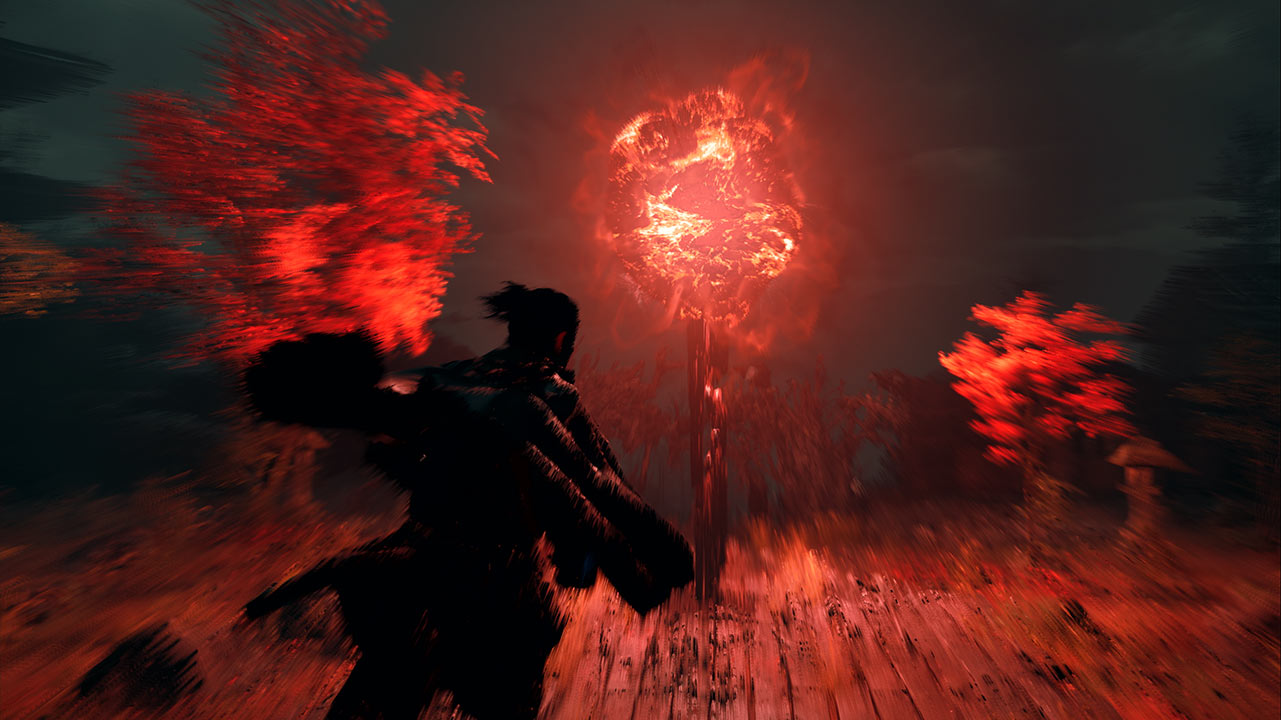
Beyond team alignment, the developers faced technical and design challenges in creating satisfying combat. “How do we make it satisfying? How do players feel the satisfaction after a slash, after a fight scene?” Kadowaki explained. “We had to balance audio, visuals, and controls — making sure the gameplay flows smoothly and feels intuitive.”
Musashi’s Journey: A Reluctant Hero
The choice of Miyamoto Musashi as protagonist was both strategic and thematic. While Kadowaki acknowledged that attracting a global audience was part of the consideration, the decision went deeper. “When a new user plays a game, if there’s a character they’re already familiar with, that’s probably the easiest entrance — an easy opening door for new players to become interested,” he said.
But the game’s Musashi isn’t the legendary master swordsman of history. “The subtitle Way of the Sword has already kind of summarized a little bit of the entire direction,” Kadowaki explained. “Musashi, history-wise, is supposed to be the most powerful swordsman. That’s his final form. But within the game, it’s about when he’s younger, when he is on his journey to become the best swordsman.”

What makes this portrayal unique is Musashi’s relationship with the Oni Gauntlet, the series’ iconic power source. “Obviously, he wanted to do it with his own power, but now that we have the gauntlet, in the beginning, there’s a struggle like ‘I don’t want to be strong because of this, I want to do it myself,'” Kadowaki said. “That kind of dilemma is going on. But throughout the play, you will see how he will accept his fate.”
Nihei emphasized how this differs from typical game narratives. “If you watch any anime or game, the protagonist usually gets the power and accepts it, and that’s the pattern. But for Musashi here, he does not want this power. He is constantly fighting with it.”
The developers also wanted a specific tone for their samurai. “This time, we wanted to write a story about a samurai who’s actually fighting until he’s covered in mud and blood, with a bit of an eerie scene,” Nihei said. “We wanted a samurai that’s a little bit on the ‘dirty’ side.”
Equal Powers: The Musashi and Ganryu Rivalry
One of the most interesting reveals from the Tokyo Game Show 2025 trailer was that Sasaki Ganryu, Musashi’s greatest rival, also wields an Oni Gauntlet. The decision to give both characters the same power stems from historical respect. “Musashi and Ganryu existed in the history of Japan. They’re the real swordsmen, and they fought proudly, and both of them were very strong,” Kadowaki explained. “We wanted to give the same power to both of them, to kind of respect the history of the part where they were both equally good swordsmen.”

Nihei added that this equality serves the narrative structure. “We have always wanted to build up the relationship between these two. They really existed, but they’re also the main characters of this entire series. We want everyone to stick along until the end to see the battle between these two, in so many aspects, until the end.”
The Toshiro Mifune Connection
Players familiar with classic samurai cinema will notice that Musashi bears a striking resemblance to legendary Japanese actor Toshiro Mifune. Interestingly, this wasn’t the original plan. “To be honest, in the beginning, we didn’t set him as an example first and then design the character,” Kadowaki said. “As we designed him, he naturally started to resemble Toshiro Mifune, and people began saying, ‘Hey, this guy looks like Toshiro Mifune.’ From then on, we decided to model him after Mifune.”
The resemblance made sense given their creative direction. “Nihei wanted to create a samurai who was very down-to-earth, covered in mud and blood, and gritty. The character that really fit this Musashi was Toshiro Mifune,” the director explained. “But we all have to accept the fact that Mifune is a global samurai. Everyone around the world recognizes him.”
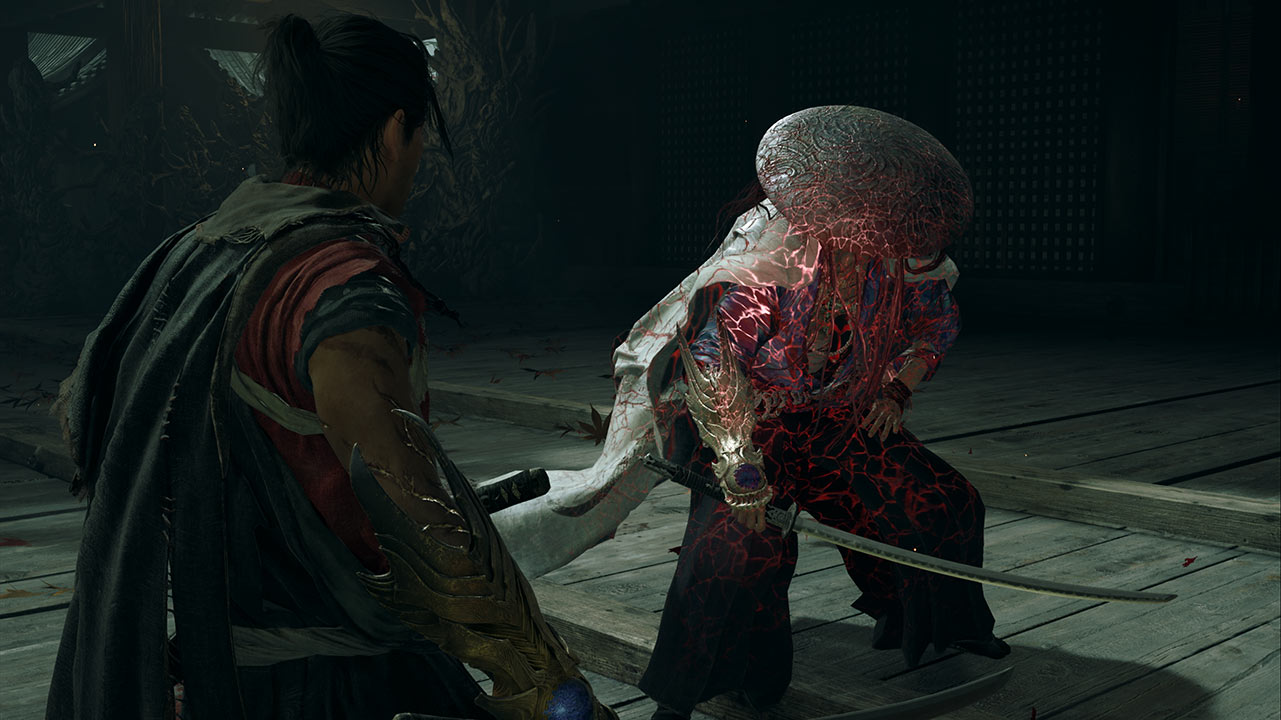
However, the team is clear that the character remains Musashi, not Mifune. “Even though he was modeled after Mifune, the character is still Miyamoto Musashi. The voice, the story, everything is Musashi, not Mifune. We want players to focus on Musashi’s journey, not the actor’s image.”
Sword Fighting as Art and Science
Combat design received special attention from the development team. “We focus a lot on the sword. The type of sword, the movements, everything,” Kadowaki said. “We even hired a professional swordsman to show us how the movements work, how each sword has a particular usage, and all that.”
The process involved extensive collaboration between game designers and sword experts. “We had long talks on how to make the sword fighting scenes and usage as realistic and as interesting as possible. At the same time, it’s a game — it has to be fun to play,” Kadowaki explained.

The team also embraced the dark fantasy elements that define Onimusha. “There’s a lot of movement that’s unbelievable, more ‘inhuman,’ probably the right word to put it. We tried to add some speed and motion to enhance those vibes even more.”
For players who have tried the demo, this focus on combat satisfaction is evident. “If you played the demo, you probably saw the fighting scenes — the sword clashes, the effects, and the ‘satisfaction of cutting,’ as we call it,” Nihei said. “That feeling of cutting your enemy is way more satisfying than before. We wanted players to feel that when they play — that Capcom-level action satisfaction.”
Kyoto: Where History Meets Horror
The game’s setting in Kyoto was a deliberate choice that supports both the historical and supernatural elements of the story. “If you go to Kyoto, you’ll hear lots of folklore, tales, and ghost-related supernatural stories — which fit perfectly into the dark fantasy world we wanted,” Kadowaki explained. “The design of locations and enemies in the game is inspired by that.”

The team worked closely with local authorities to ensure accuracy. “A lot of it looks exactly like the original, but many elements have changes and modifications — all of which were consulted with professionals. The team even talked to the Tourism Association of Kyoto and local authorities to confirm that the recreated areas were accurate and respectful.”
As for the game’s mature content, Kadowaki confirmed it will feature the violent combat expected from a sword fighting game. “There’s going to be slashing, blood, bodies being severed — a lot of that. It’s a must,” he said. However, the team has included options for sensitive players. “If your heart is a little bit on the softer side, you can actually adjust the settings — you can hide the gore or even change the blood color.”
Bridging Two Generations of Fans
With 20 years between releases, the team faced the challenge of satisfying longtime fans while welcoming newcomers. “We started by thinking, ‘What makes Onimusha, Onimusha?’ The conflict, the gauntlet — this is iconic in the game, so we kept it,” Kadowaki said. “Fans still love that world, but at the same time, we developed it for new users. They can just come in, and they’ll get the vibe immediately and understand the story.”
Nihei emphasized that returning to the franchise meant raising the bar. “We have great original fans who already love the series. But that doesn’t mean we can just create the same thing. It has to be better. That’s why, even though we keep the world of Onimusha the way it should be, we’ve added many aspects so that both old and new players will be satisfied.”
The team’s goal is to make the game immediately satisfying even for first-time players. “If you’re a first-time player, you can already feel the excitement from the first sword slash — you don’t need to go high-level to experience that satisfaction,” Nihei said. “From the first battle, you can already feel the impact.”
A Complete Experience
When asked about balancing this entry as both a continuation and a fresh start, Kadowaki was clear about their priorities. “We tried to put in a lot of characters with personality and individuality, making the game as entertaining and interesting as possible. The reason is that we wanted to make a game that’s satisfying on its own. We’re not planning to lure players in and then come up with a sequel.”
That said, the team is open to expanding the universe if players respond well. “If players like it and the feedback is great, there’s a possibility of expanding in the future. Maybe we’ll bring back some characters and dig deeper into their stories. But for now, the focus is making this the best game possible.”
Regarding their creative process, Kadowaki noted that most of their ideas made it into the final game. “Whatever we wanted, we put it in the game already. The parts that were cut weren’t bad ideas — they were usually too hard to communicate or too difficult for players to understand.”
The team continues refining the game based on feedback. “Even since the first promotional trailer, we’ve kept improving the balance so that both new players and longtime fans can enjoy it,” Nihei said. “Until release, we’ll keep polishing the game to make it as fun as possible.”
After 20 years, hundreds of developers, and five years of development, Onimusha: Way of the Sword represents both a return to what made the series special and an evolution designed for modern audiences. Whether the wait was worth it will be up to players to decide, but one thing is clear: the team at Capcom has poured everything they have into making sure Musashi’s journey is one worth taking.

![[GUIDE] JoJo’s Bizarre Adventure: Golden Spirit Codes and How to Redeem Them](https://cdn.gamerbraves.com/2026/09/JoJos-Bizzare-Adventure-Golden-Spirit-Redeem-Codes_News_FI-350x250.jpg)

![[GCAxTHGS25] Resident Evil Requiem Devs Discuss Fear, Strategy, and Story](https://cdn.gamerbraves.com/2025/10/RE9Interview_Interview_FI-75x75.jpg)