



![[EXCLUSIVE] Brendan Gan Delivers One of Malaysia’s Best-Ever Worlds Results, Shares Thoughts on Pressure and the Local Scene](https://cdn.gamerbraves.com/2026/08/Brendan-Gan_Interview_FI-360x180.jpg)





![[BIC2026] Hiroaki Nagashima from Toei Games Talks New IPs, Indie Roots, and Asia-First Strategy](https://cdn.gamerbraves.com/2026/08/Toei-Games-BIC-2026_Interview_FI-360x180.jpg)
![[BIC2026] From Outsider to Organizer: How Isabella Seo Jungsook Helped Build Busan’s Indie Game Scene through BIC](https://cdn.gamerbraves.com/2026/08/Isabella-BIC-2026_Interview_FI-360x180.jpg)
![[BIC2026] CanOpener’s Logan Moon Opens Up About Dungeon Settlers Ahead of Its September Early Access Launch](https://cdn.gamerbraves.com/2026/08/Logan-Moon-BIC-2026_Interview_FI-360x180.jpg)



A former Microsoft executive has reflected on the early days of the original Xbox, suggesting that securing major Japanese franchises like Final Fantasy could have significantly strengthened the console’s position during its launch era.
Ed Fries, who served as Vice President of Game Publishing at Microsoft during much of the original Xbox’s lifecycle, discussed the topic in a recent interview, explaining that negotiations with major Japanese publishers were often more complicated than they appeared from the outside.
Square Enix Interest Was There, But Carefully Managed
According to Fries, many Japanese publishers were interested in supporting Microsoft’s first console, but there was a strong reluctance to appear too aligned with Xbox due to concerns about potential backlash from Sony.
Fries explained that companies like Square Enix were open to discussions, but had to be cautious in how they approached platform support. He noted that while there was interest in bringing franchises such as Final Fantasy to Xbox, publishers did not want to be seen as directly opposing Sony in a highly competitive market.
He suggested that Sony’s dominance at the time created a situation where publishers feared potential consequences for supporting rival platforms too openly, including reduced marketing support or delays in development resources such as dev kits.
“Sony Could Punish Them,” Fries Claims
Fries described the situation as a delicate balancing act for Japanese publishers, stating that many were effectively trying to introduce competition into the console market without provoking a strong reaction from Sony.
He argued that publishers supported the idea of competition in theory, but had to navigate carefully to avoid risking their relationship with the industry leader at the time. This led to a situation where some deals were made quietly, while others never materialized despite mutual interest.
Final Fantasy Eventually Came to Xbox, But Late
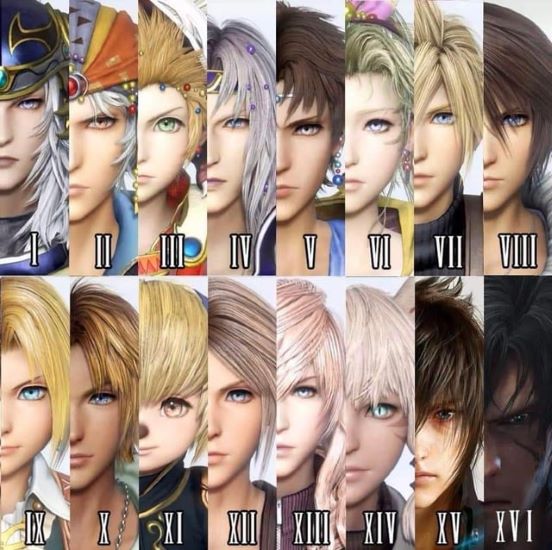
While early negotiations did not fully bring major exclusives to Microsoft’s platform, Xbox eventually secured several Square Enix titles over time, including The Last Remnant and Infinite Undiscovery.
The Final Fantasy series itself eventually made its way to Xbox platforms with entries such as Final Fantasy XI and later Final Fantasy XIII, which remains playable on modern Xbox hardware through backward compatibility on Xbox Series X|S.
However, Fries implied that earlier and deeper support from Japanese publishers could have helped the Xbox brand establish a stronger foothold in Japan and among JRPG audiences during its early years.
Xbox’s Early Strategy and Missed Opportunities
Fries was heavily involved in shaping Microsoft’s early gaming strategy, including the acquisition of studios such as Bungie and Rare. Despite these successes, he acknowledged that securing more Japanese third-party support—particularly major franchises like Final Fantasy—remains one of the missed opportunities from that era.
He emphasized that while Xbox eventually built strong partnerships with several developers, the early market dynamics made it difficult to compete directly with Sony’s established presence in Japan.
Legacy of a Competitive Console Era
The comments highlight how competitive pressures and platform dominance shaped third-party relationships during the early 2000s console generation. According to Fries, many publishers were not opposed to supporting Xbox, but were constrained by industry politics and risk management concerns.
In hindsight, he suggested that a more balanced competitive environment could have benefited both developers and players by allowing broader access to major franchises across multiple platforms earlier in the Xbox lifecycle.