![[EXCLUSIVE] Dragon’s Dogma 2: Dark Arisen Team Opens Up About the Expansion’s Name, New Norgan Region, and Performance Goals](https://cdn.gamerbraves.com/2026/07/Dragons-Dogma-2-Dark-Arisen_Interview_FI-360x180.jpg)





![[EXCLUSIVE] PUBG: BLINDSPOT Project Director Shares Insights on Creating a New Type of Tactical Shooter](https://cdn.gamerbraves.com/2025/08/PUBG-BLINDSPOT_Interview_FI.jpg)
Tactical shooters have followed a fairly established formula for years. Players navigate maps from a first-person perspective, engage enemies around corners, and rely on quick reflexes and positioning. PUBG: BLINDSPOT breaks from this tradition entirely.
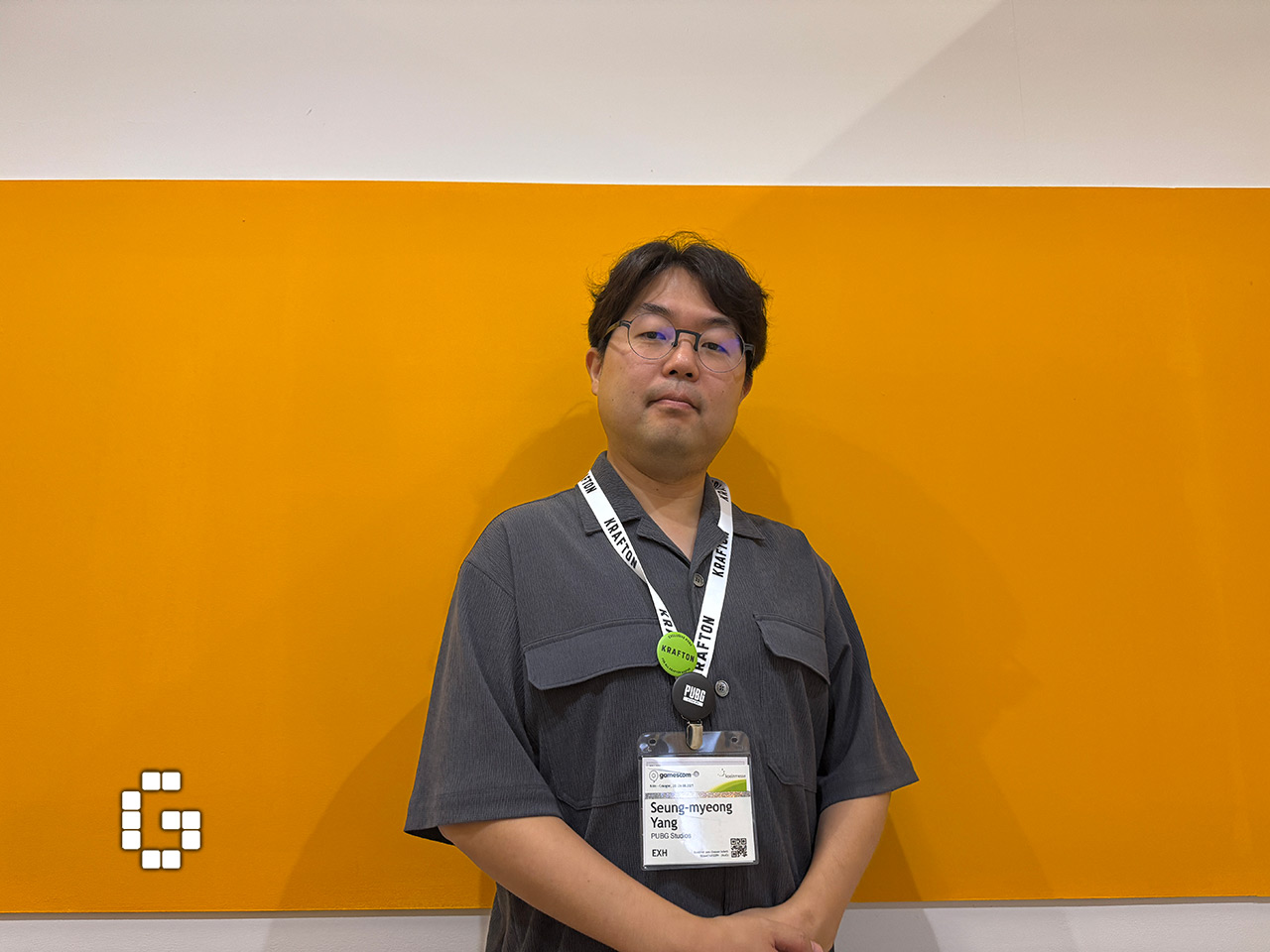
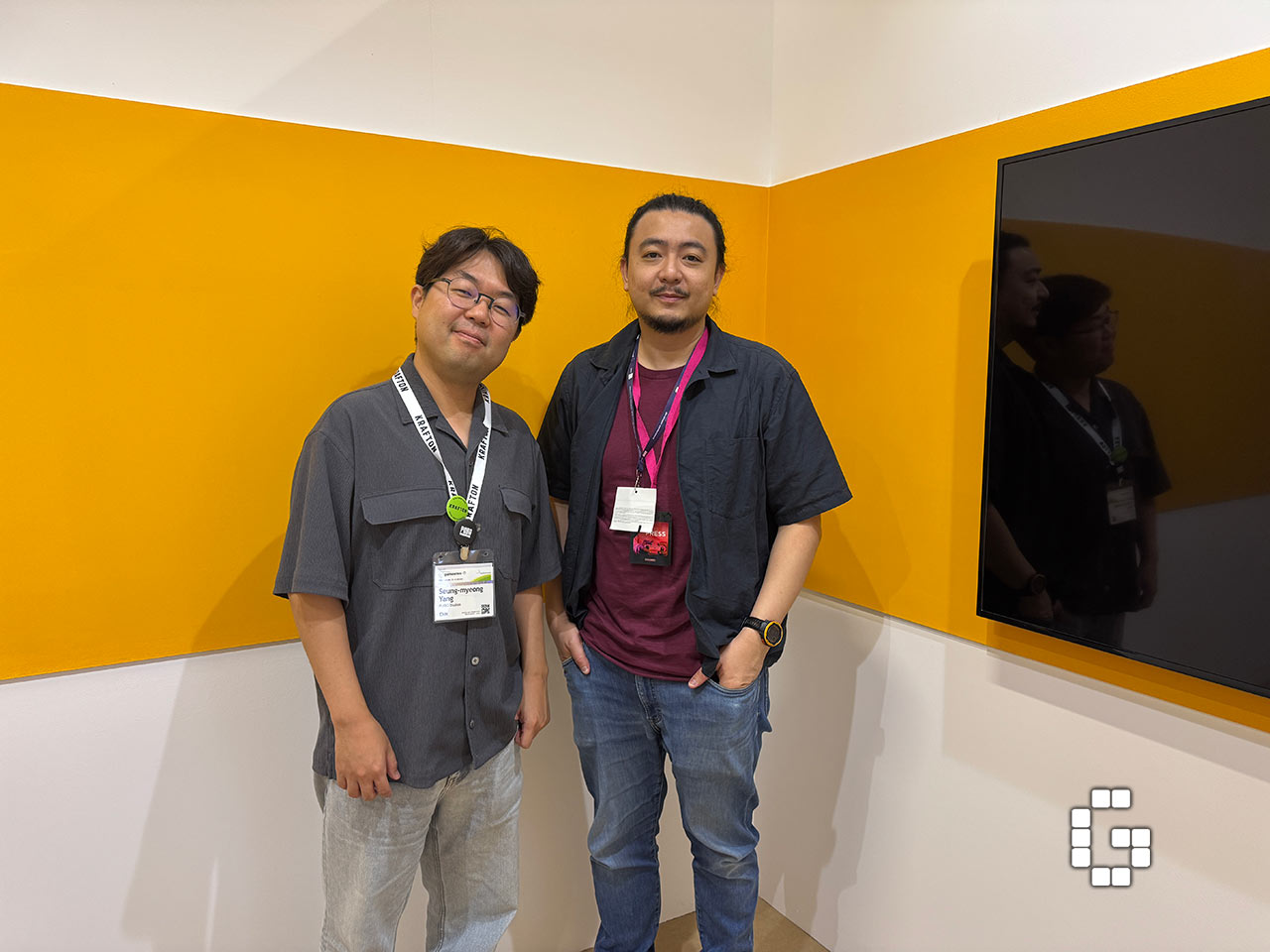
We recently had the exclusive opportunity to sit down with Seung-myeong Yang, the Project Director leading the development of PUBG: BLINDSPOT at PUBG Studios, during gamescom 2025. Yang brings extensive experience in game development, having previously served as Creative Director and Producer at KRAFTON from 2020 to 2023, and before that spent seven years at Nexon Korea. His career in game development spans over two decades, beginning as a Server Programmer on DarkEden at Softon Entertainment in 2002.
Yang walked us through the development process and design decisions behind what represents a significant departure from conventional shooter mechanics. PUBG: BLINDSPOT operates from a top-down perspective and introduces mechanics like shared team vision and destructible environments. Rather than adapting existing shooter formulas, the development team has built new systems from the ground up. The game maintains connections to the broader PUBG universe while establishing its own distinct gameplay identity.
A New Perspective on Combat
PUBG: BLINDSPOT takes the familiar world of PUBG and changes the viewing angle completely. Instead of the first-person view players know from PUBG: Battlegrounds, this new game uses a top-down perspective that creates different tactical challenges.
“PUBG: BLINDSPOT is a very different game from the regular PUBG because it’s top-down,” Yang explains. “Because if you look at a shooter game, you can shoot anywhere you want. But in PUBG: BLINDSPOT, it’s always in the middle part. So in a real-life FPS game, if there’s a cover, there’s a table, and you can duck or cover. But in that game, I don’t see that as an option.”

The team addressed this challenge by developing special mechanics for cover and tactical positioning. “We made a lot of effort in order to enable players to be able to hide behind covers and to avoid getting hit by bullets. So we made a lot of effort in that aspect. So we tweaked the controls. It’s a very special feature,” Yang says.
The aiming system adapts to different situations. “If the enemy is in my viewpoint, if the enemy is in the range of my view, then the trajectory will automatically aim towards that enemy,” Yang explains. “However, if the enemy is not within your view, like let’s say in gas or some sort of fog, or is hidden behind something, or is hidden behind some sort of cover, then you have to press the left control key, and then the aim would go downwards.”
Seeing Through Your Team’s Eyes
One of BLINDSPOT’s most distinctive features is its shared vision system. Unlike traditional shooters where players only see what their character sees, BLINDSPOT lets players see what their entire team sees.
Yang describes how this feature developed: “We started with a top-down view. So we just showed a cone of vision to just show my view. As a result, it also showed a lot of the space behind the character on the screen. So what we did was we tried to apply this camera logic to the camera gadgets, like the CCTV feeds. And we tried to show that with these cone-of-view visions as well. And it turns out to be very interesting. We didn’t have to show a separate screen. You could just show it seamlessly on the same screen. And it turned out to be very fun.”
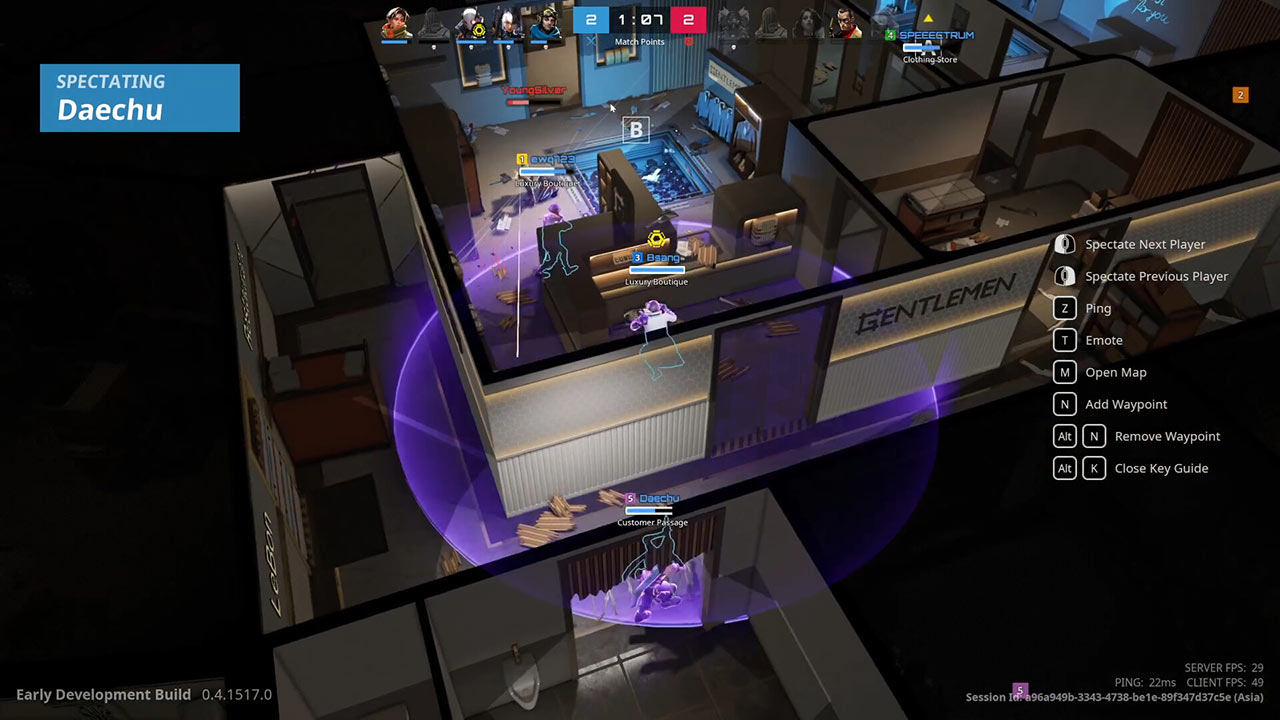
The team expanded this concept beyond security cameras. “And that’s when we thought, if we can apply this logic to the CCTV feeds, why don’t we apply it to teammates’ visions as well? And it turned out to be fun,” Yang says.
Diverse Indoor Battlegrounds
While early footage showed office and hospital environments, PUBG Studios has additional maps in development. “So, currently, I think the footage that you saw was our Hospital map. Currently, we are also preparing the shopping mall level and a very luxurious mansion, and a warehouse. These are all different concepts, although indoor. And we are also preparing a luxurious yacht map as well,” Yang reveals.
All maps focus on single-story layouts. The team tested multi-level designs but encountered problems. “For now, we did try many tests with different height differences, but since it’s a top-down view, the experience didn’t feel really smooth, and the way that you have to control the keys didn’t really feel seamless,” Yang explains.
“So, it’s going to be a bit difficult for us to allow players to shoot from the first floor to the second floor. So, for now, we’re going to focus on just one level map because we haven’t found any that are really smooth. So, we’re going to try to make a single-story map that is not too difficult because we haven’t found a solution yet,” he adds.
The team continues to explore vertical gameplay options. “Perhaps in the future, we could consider the option of introducing an elevator, but we’re going to have to run some tests to validate whether elevators will really provide more fun to the game,” Yang says.
Destructible Environments and Character Design
Like Rainbow Six Siege, BLINDSPOT features destructible walls that players can break through or reinforce. “Yes, as I said, there are already destructible walls, just like Rainbow Six, you can also reinforce the wall so that players cannot easily destroy it,” Yang confirms.
The game features 14 unique characters, each with distinct abilities. Yang explains their design process: “In fact before we come up with the designs for the characters we run a lot of prototypes so if we come up with a really good idea for a character we first run a fast simple iteration then we come we add that simple character to the existing characters and we validate whether that experience is fun or not and we have to make sure that it works properly in a top-down way and so and then once we validate that it’s fun then we then publish up the character.”

Rather than strict character classes, the team opted for flexibility. “So we don’t have specific classes for characters. Although the characters do have their own designated gadgets and weapons, and that may somehow kind of set up that character’s role in some way, we don’t force players to play the characters in that specific way,” Yang explains.
“So, although this character could be a little better at controlling, we don’t force them to do that; we want to leave it off to the players, and we want a lot of player freedom. We don’t have class, but if you do want to kind of categorize the character in some way. We could say that there are specific character groups that use gadgets that can destroy walls, some are better at collecting intel, some are better at giving more damage to the enemies, and so on,” he adds.
Built for Competition
PUBG: BLINDSPOT uses the 5v5 format found in games like Counter-Strike, Valorant, and League of Legends. Yang explains the reasoning: “So, when you look at other games, for example, Counter-Strike, Valorant, Rainbow Six, and so on, and LoL, they all go for 5 versus 5. And I think it’s sort of a ratio that a lot of players are familiar with. And we think that an odd number works better. It allows you to see more varied tactics, and it gives you the feeling that you’re meaningfully contributing to the game session. And even though one of your teammates dies, you still have the hope that the remaining teammates can still make it win.”
The team has esports plans for the game. “So, for now, we are running some matches with streamers, based. However, once we have a larger fanbase, we want to go for more active esports. And we want the cycle of the purchase cycle to work between the esports and the actual in-game to work properly. Because that’s very important for PvP games. So, yes,” Yang notes.
Staying True to PUBG
Despite its different gameplay style, BLINDSPOT remains rooted in the PUBG universe. “First off. We were wearing the PUBG: Battlegrounds weapons model and the gun sounds, and we were able to use that a lot. And as I said in yesterday’s presentation, we also wanted to adopt the feeling of the gun shooting to our game as well, and then gradually, I think it became somewhat like PUBG: Battlegrounds in some way,” Yang explains.
The connection goes beyond assets. “Also, when we were coming up with the designs for the characters, we adopted PUBG’s lore. It’s in the PUBG universe. For example, we are going to be able to see the blue chip and the typhon in Blindspot as well. I think we further developed and expanded PUBG’s concept, and you can see that in the characters of Blindspot,” Yang says.
“And also, if you look at it from the PUBG franchise perspective, the games are gonna be under the PUBG IP franchise and grow up. So, as far as I understand, I think PUBG Studios has a wider range in terms of the profits, and so I think that allows PUBG Studios to decide to include PUBG: BLINDSPOT,” he adds.
Platform Plans
Currently available on Steam, the team has broader platform plans. “Yes, we want to support other gamepads as soon as possible. And once that is possible… Then once that is feasible, we are planning to expand to other platforms as well. That’s my desire, not like an official plan, however,” Yang says.
Mobile platforms are under consideration. “Yes, we have also thought of porting it to the mobile platform as well. However, it’s not an easy job to port that touchscreen control over to the mobile platform for now. However, I think it’s going to be possible to convey that tactical gameplay experience to mobile. So that is something that we are currently coming to an audience with. But not officially,” Yang explains.
Yang notes the potential advantages of mobile controls: “So because I look at it, like, if you didn’t use a mouse, I felt that phones or iPads would be, you know, easy. Just tap, tap, tap. Because I think one of the things is that the mouse you need to move, and if you need a controller, you need to have the UI of the mouse moving, right? But over here, I think it’s just like, if you put it on a phone, it would be a lot easier.”
A Message to Players
Yang has a message for tactical shooter fans considering BLINDSPOT: “So, for the PvP gamers out there, for example, those who love Counter-Strike or LoL, when you try out Blind Spot, I believe you’re going to find that gameplay experience a little unfamiliar from the existing games that they have played so far. It may be something somewhat different from what they may have expected.”
He acknowledges the learning curve but encourages patience: “However, once you overcome that minor difficulty, and overcome that minor inconvenience, and have the patience to stick to the game, they’re going to be able to realize how fun this game is.”
PUBG: BLINDSPOT represents an attempt to bring different mechanics to the tactical shooter genre while maintaining connections to the PUBG brand. With its top-down perspective system, destructible environments, and focus on team-based gameplay, it offers a different approach to competitive shooting for players interested in trying new mechanics.

![[EXCLUSIVE] inZOI Studio CEO Hyungjun Kim Talks AI Innovation and Community-Driven Design at gamescom 2025](https://cdn.gamerbraves.com/2025/08/inZOI-gamescom-2025_Interview_FI-75x75.jpg)