











![[EXCLUSIVE] Beyond the Base Game: Cygames on What Endless Ragnarok Means for Granblue Fantasy: Relink](https://cdn.gamerbraves.com/2026/06/GBF-Relink-Endless-Ragnarok-Exclusive_Interview_FI-360x180.jpg)


![[EXCLUSIVE] inZOI Studio CEO Hyungjun Kim Talks AI Innovation and Community-Driven Design at gamescom 2025](https://cdn.gamerbraves.com/2025/08/inZOI-gamescom-2025_Interview_FI.jpg)
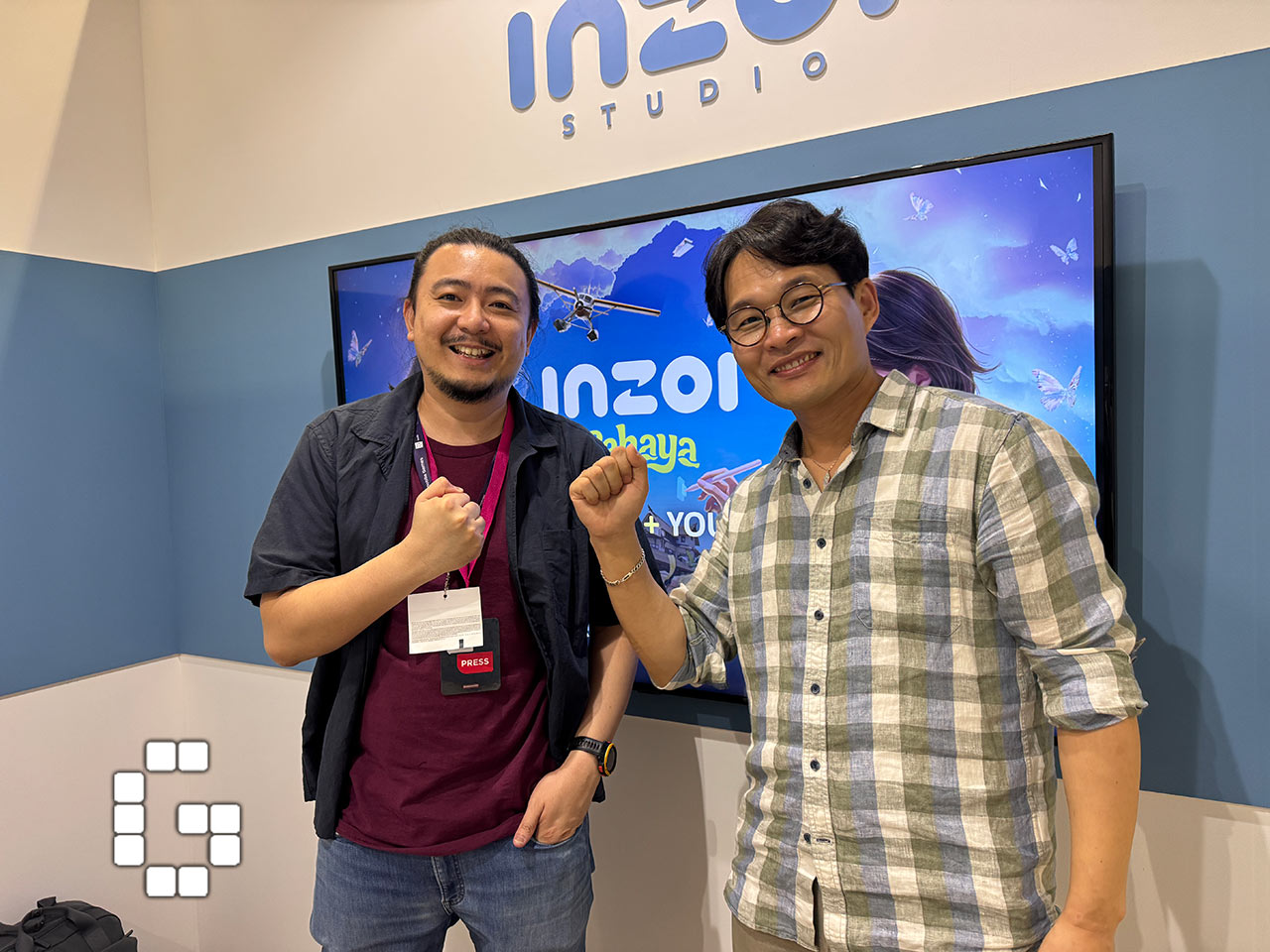
The life simulation genre has a new contender making waves in the gaming world. inZOI, developed by inZOI Studio, has been turning heads as a potential rival to The Sims franchise. During gamescom 2025, we had the exclusive opportunity to sit down with Hyungjun “Kjun” Kim, the Producer, Director, and CEO of inZOI Studio, to discuss the game’s unique approach to virtual life simulation, its ambitious AI systems, and what the future holds for this Early Access title.
Kim brings extensive experience to inZOI, with a career spanning over 15 years in game development. His journey includes key roles at major studios like NCSOFT, where he served as Producer for AION and Executive Director, and KRAFTON, where he was Associate Director for PUBG: BATTLEGROUNDS and later became Producer and Director of inZOI.
A Humble Approach to Competition
When asked about comparisons to The Sims, Kim’s response was refreshingly modest. “I have been a long-time player of The Sims, and I truly admire the depth and brilliance it offers. It’s an honor for our game to be compared to The Sims,” he explains. “That said, I don’t believe we can surpass it anytime soon. Perhaps in the future, with continued effort, we may reach a level where we can stand on par with The Sims, but that will take considerable time.”
Kim acknowledges the resource challenges his team faces compared to the established franchise. “At this stage, we don’t even have the resources to create as much content as The Sims. Still, if we keep working hard, I hope that one day our game will be recognized in the same way.”
What sets inZOI apart from its competitors is its emphasis on experiences outside the home. “Unlike The Sims, inZOI places a strong emphasis on experiences outside the home. This direction is partly inspired by my personal fondness for The Sims 3,” Kim reveals. The team has prioritized creating a wide range of outdoor activities. “Even though we may not be able to deliver frequent updates right away, we are focusing on creating a wide range of outdoor activities, such as driving, building ships, fishing, and farming, to establish a clear point of difference.”

The game’s current update already showcases these elements. “In our current update, we’ve already introduced many of these elements: additional vehicles within cities, ships on the new island, as well as fishing and farming systems. Overall, our main focus is to expand the variety of outdoor activities available to players,” Kim explains.
This focus came directly from community feedback. “We involved our community by asking players what features they most wanted to see in inZOI. The top request was ‘city completeness,’ with many players expressing a desire for richer, more detailed city content. This feedback has become a key focus for our future development, and we plan to continue filling the cities with more activities and experiences.”
Revolutionary AI That Surprises Even Its Creators
Perhaps the most intriguing aspect of inZOI is its advanced AI system for NPCs, or “Zoi” as they’re called in the game. Kim describes how these AI characters have exceeded their expectations: “So, yes, creating AI in NPCs made them act more independently, almost like their own beings. We’ve been running a lot of tests, and we found that they actually came up with many interesting stories that even we wouldn’t have thought of.”
The AI behaviors can be surprisingly human-like. “In romantic relationships, sometimes they really behaved almost like real human beings once we incorporated AI into their systems. And as for your second question—yes, we’ve seen that a lot, and we’re always surprised,” Kim notes.
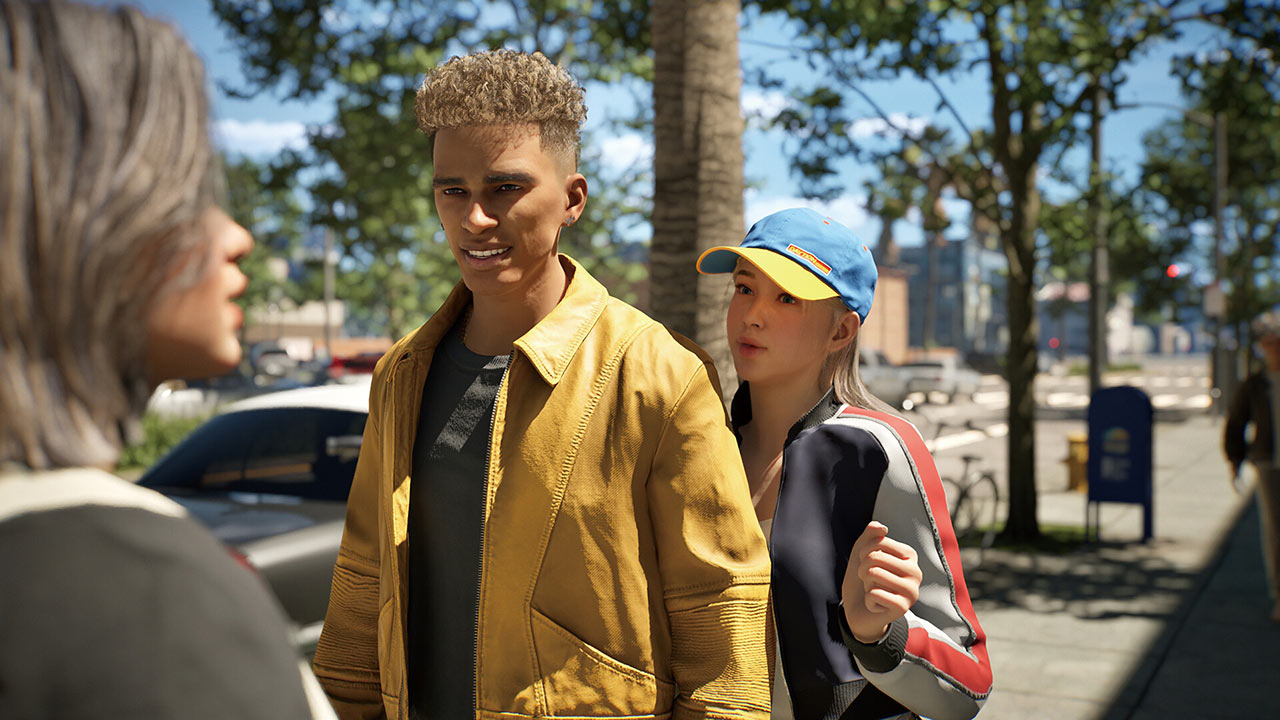
He shares a particularly memorable example: “For instance, NPCs with AI can come up with their own gestures, and they can even interrupt each other. One particularly interesting event was when a Zoi actually died. During the funeral, another Zoi approached me and started giving a kind of sermon about death—saying things like, ‘Death is a part of life. Death is just something that happens. You should accept it.’ That was really surprising for us, and it was an entirely unexpected result.”
Money Talks: Testing AI Relationships
Kim describes an interesting experiment with the AI system involving money lending. “I tried to borrow money from an NPC—it was just 1 euro. We were like, ‘Okay, give me 1 euro. I want to borrow 1 euro from you.’ The Zoi that had close relationships with me tried to talk with me, but they didn’t actually lend me the money. As for strangers, they weren’t open to the idea at all.”

The test revealed the AI’s understanding of relationships and trust. “I did succeed once—with my Zoi daughter. It only worked when I told her, ‘Okay, if you give me 1 euro today, I’ll give you 10 times the amount tomorrow.'” The AI even demonstrated unprompted curiosity: “And then, on another occasion, one of my Zoi daughters came up to me and asked, ‘Who is this person in the picture in your wallet?’ That was a really surprising thing for a Zoi to do.”
The Complexity of Virtual Psychology
The Zoi characters possess over 600 psychological states, with behavior that changes based on various external factors. However, managing this complexity presents significant challenges. “To be honest, they’re actually quite difficult to control in their current state. The developers are struggling because it’s really challenging to account for all the different traits the Zoi types have—and especially the combinations of those traits,” Kim admits.
“Whenever we add new traits or functions, the data can get tangled together, and it becomes confusing for us to keep track of whether we’ve already added controls for certain features or not. So right now, we’re fixing things as we go, and it’s not entirely under computer control yet.”

The team has turned to AI to help manage this complexity. “But we’re seeing some hope, because AI has been really helpful in keeping track of these complexities. The AI looks at the initial state of the game, helps us understand what controls are already in place, and identifies what controls are needed for a specific type of Zoi. So in that sense, AI is giving us a lot of valuable support.”
Simulating Human Emotion Through Numbers
The emotional system in inZOI draws from psychological concepts, with help from actual psychologists. “We’re actually using a concept from psychology. Each Zoi has a representative or ‘main’ emotion, which is determined by scoring different emotions based on what’s happening. The emotion with the highest score becomes Zoi’s main emotion. We even had help from psychologists when designing this system,” Kim explains.
The system runs with impressive scale. “All interactions are given serial numbers and scores. For example, if a Zoi encounters a really bad accident, 50 points are added to their ‘unhappiness’ score. If that score ends up higher than all the others, unhappiness becomes their main emotion. Right now, we have about 15,000 of these instances running in the city at any given time.”
Kim describes how unpredictable results can emerge: “Because there are so many emotions and interactions happening, unexpected results can occur—and sometimes even errors. For example, when a Zoi drinks from a bottle, I might expect one reaction, while players might expect another. But then a completely different emotion emerges, something no one predicted. That’s how we sometimes end up with ‘mad Zoi.'”
Balancing the Emotional Scale
Managing these emotional systems requires careful numerical balance. “Everyone has different ideas about how emotions should work. In our case, the development team manages everything through numerical values. Each emotion is assigned a value. For example, we even have a value for jackpots—so when a Zoi hits a jackpot, happiness becomes the main emotion. Any lower-level interactions that happen around the same time are mostly overwritten or ignored,” Kim explains.
The psychological consultants validated this approach: “Interestingly, the psychologists we consulted told us this is somewhat similar to real life: you have your unconscious, and then a dominant emotion. Anything that doesn’t override that dominant emotion just stays in the unconscious, while the main emotion prevails.”
The system includes emotional interactions and cancellations. “There are also cases where emotions can cancel each other out. For instance, if a Zoi hits a jackpot but then gets into a really bad car accident, the unhappiness from the accident would override the jackpot happiness and become the main emotion instead. We also work with relative emotions—positive and negative. So if something positive happens while a Zoi already has positive emotions in range, then all the positive emotions get boosted with ‘bonus points.’ In other words, they’re enhanced.”
Living in a Connected World
One of inZOI’s most ambitious features is its interconnected simulation. “All the Zoi inside the map are cross-connected—they’re aware of each other’s interactions, and that history stays with them. Almost everything is simulated and tracked for all the Zoi. When a new Zoi is born, their traits are determined at that point. This puts a heavy load on the CPU, so our game is quite taxing in that regard,” Kim reveals.
The financial system operates at a family level. “As for finances, they’re mostly tracked at the family level rather than individually. We did add an accounting system in this update, so there are records of how their finances are managed, but it’s not too sophisticated. In the future, we might expand it so that spending behavior is influenced by a Zoi’s traits—for example, one might spend more money on food, while another might spend more on vanity items.”
Community-Driven Development
As a first-time simulation game for both Kim and his team, community feedback has become essential. “This is actually our first time making a simulation game—my first time as well—and through this process we’ve come to realize just how important it is to communicate with players. That’s one of the reasons we launched the game in Early Access: to hear directly from them.”
Kim emphasizes the community’s role in shaping development: “Since we don’t have much prior experience with this genre, the community has been giving us a lot of valuable hints about what we should focus on next and what direction to take. Moving forward, we’ll continue engaging with our players, because I’m really looking for that kind of feedback to guide our decisions for the future.”

The recent DLC demonstrates this community influence: “For example, our DLC Island Getaway: Chahaya was inspired by ideas from our players. We’re relying on them to help us shape the next steps as well.”
Beyond practical input, the community provides emotional support. “Another important aspect is that, even while developers keep creating, sometimes we start doubting our own vision. The community doesn’t just give us ideas—they also give us support and encouragement. And it’s that support that really drives us to keep going forward.”
The Long Road Ahead
Kim sets realistic expectations for the game’s completion timeline. “From the very beginning, I expected this to be a long process. I knew the game would stay in Early Access for quite a while. So even though I’m ambitious, I don’t think we’ll be able to fully release it by late next year, I believe it will still be in Early Access then. The company might not fully agree with that timeline, but that’s the way I see it.”
The recent DLC served a practical purpose beyond content addition. “As for the DLC, the reason we released it wasn’t about monetization. It was mainly for practice, for the dev team to gain experience. We felt we really needed to go through the process of releasing a large new chunk of content, because once you have multiple DLCs, they can create counter-interactions or unexpected bugs. Without that practice, it becomes very difficult to figure out where a bug comes from or what interaction caused it.”

Kim explains the strategic value of this approach: “So the main purpose of this DLC was to train the team in releasing big updates and handling version management. Once you start having multiple versions of anything, it becomes challenging to manage them all. That’s why we needed the practice. For now, though, we don’t plan on releasing another DLC anytime soon.”
While currently available on Steam and macOS, inZOI has confirmed plans for PlayStation 5. “We’ve already announced that inZOI will be coming to PlayStation 5 in 2026. As for Nintendo Switch, that’s not something we’re working on at the moment,” Kim clarifies.
A Vision for the Future
When discussing inZOI’s potential as a platform, Kim acknowledges ongoing internal discussions. “I have a lot to say about that. There are many opinions being shared within the team and the company, but nothing has been confirmed yet. I think everyone is generally aligned, and we’re also getting a lot of suggestions from other teams within the company about what direction the game should take. We do have a vision in mind, but I’m not sure we’ve fully decided yet on exactly what we expect the game to become.”
Reflecting on the development process, Kim shares his personal perspective: “Developing inZOI has been a huge personal challenge for me. Throughout this process, the love and support we’ve received from the community has really kept us going, and that continues to be our biggest motivation to complete the game.”
He expresses both gratitude and a sense of responsibility: “Honestly, I never even thought the game would make it this far—let alone be considered for platforms like the Switch. Seeing how well it’s been received, far better than I expected, makes me feel both grateful and a little apologetic to the players, because I know there are still areas where the game feels lacking. That motivates us to keep improving, to make sure the ‘mad Zoi’ becomes a fully functioning ‘Zoi,’ and to keep searching for ideas that will help us deliver the game we’ve envisioned.”
With its ambitious AI systems, community-focused development approach, and emphasis on outdoor experiences, inZOI represents a fresh take on life simulation games. Kim’s honest assessment of the challenges ahead, combined with his team’s dedication to innovation and community engagement, demonstrates the careful approach being taken to develop this complex virtual world.