
![[EXCLUSIVE] Dragon’s Dogma 2: Dark Arisen Team Opens Up About the Expansion’s Name, New Norgan Region, and Performance Goals](https://cdn.gamerbraves.com/2026/07/Dragons-Dogma-2-Dark-Arisen_Interview_FI-360x180.jpg)








![[CF 2025] Naoki Hamaguchi Exclusive Interview – An Insight Into The Final Fantasy VII Remake Series](https://cdn.gamerbraves.com/2026/01/Naoki-Hamaguchi-CF-Interview_Interview-FI-3.jpg)
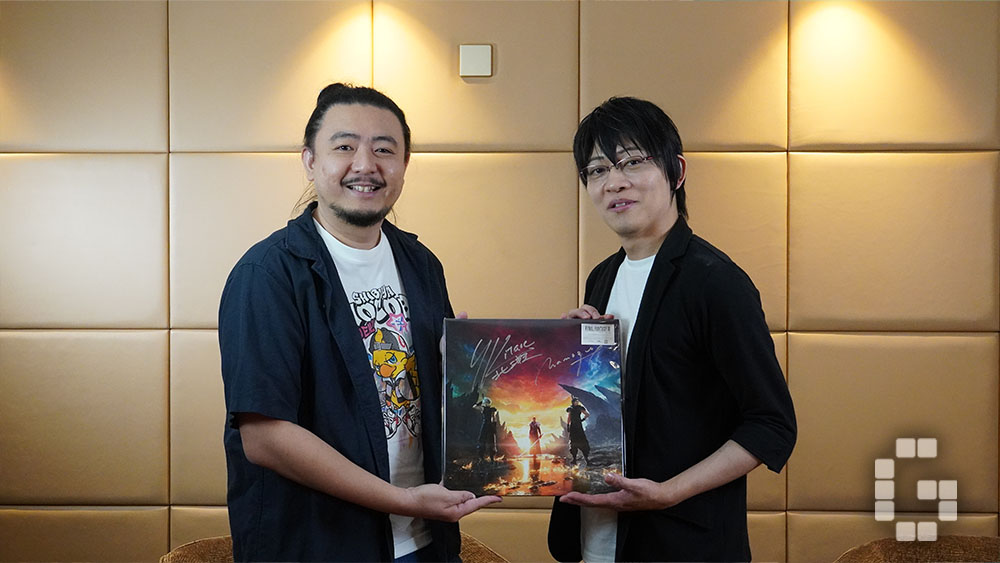
During Comic Fiesta 2025, we had the opportunity to have an exclusive interview with Naoki Hamaguchi, Director of the Final Fantasy VII Remake series. Appearing as a special guest from Japan, Hamaguchi-san reflected on the creative vision behind Final Fantasy VII Remake and Final Fantasy VII Rebirth, the challenges of honoring a legendary title, and the lessons learned across nearly a decade of development. What followed was an in-depth discussion that balanced personal reflection with broader insights into modern game creation. We also have this interview in video form on our YouTube page, and you can watch it by finding it at the end of this article.
The Lasting Emotion Behind Rebirth

We began by asking Hamaguchi-san what emotion he personally wanted players to remember most after completing Final Fantasy VII Rebirth. His answer centered firmly on the connections formed throughout the journey.
“So, the thing we wanted players to take away the most from Rebirth is the bonds between the characters within the game, as well as the relationships, the unique relationships that exist between them,” he explained. For Hamaguchi-san, this idea was not confined to narrative moments alone. “So, the theme of bonds is represented throughout the game, whether it’s in the combat design, the story as well. Just the entire philosophy of the game design.”
Rather than forcing that message through exposition, the team aimed to let players feel it naturally. “So, it’s very easy to feel that notion of bonds and the relationships when you are playing the game,” he added.
Maintaining Rhythm Through Minigames

Rebirth’s extensive selection of minigames has been a frequent topic of discussion, so we asked how Hamaguchi-san views their role within the overall experience. He was quick to frame the issue as an industry-wide challenge rather than something unique to Rebirth.
“So, that’s not a unique problem for FFVII Rebirth only,” he said. “A lot of games, aside from the main theme and the main story progression, also have the side games and the mini games built into them.”
According to Hamaguchi-san, pacing was the key concern. “So, when you’re playing the game and you’re going through the main story progression, as well as the intended game design, you tend to fall into this trap of having the same tempo. So, you tend to get bored playing it.” To counter that, the team deliberately introduced variety. “So, to sort of combat this and keep that fresh feeling of going through the game, that’s why we introduced these minigames, to sort of add a diversity of experience as you’re playing the game, to keep up a good rhythm, so to say.”
He acknowledged that not all players respond the same way. “So we understand when you introduce these different facets into the game, some people would play it and really really enjoy it, but some people rather just get on with the main story.” Still, he emphasized that this balance was carefully considered. “So it’s sort of a calculated move on our part to include all of these different facets of the game.”
Hamaguchi-san also pointed to legacy as a guiding factor. “So, the original FFVII also had lots of minigames, and it was very famous for that.” Preserving that diversity felt essential when approaching the remake.
Barret’s Evolution in the Remake Series

When asked if any character had grown on him more deeply through the remake process, Hamaguchi-san highlighted Barret Wallace as a standout.
“So, as a creator, all of the characters are special to me,” he said, before focusing on one in particular. “But in terms of the remake series and introducing new facets of the characters to sort of pull the viewers in, for me, it is Barret.”
He explained how limitations shaped the original portrayal. “So, in the original FF7, Barret was a product of the time, very contemporary, and it was very cookie-cutter. There were limits to what they could do with the character.” With modern technology and storytelling tools, those restrictions no longer applied. “But currently, with the new Barret, the Barret in FF7 Rebirth, we were able to showcase more of Barret’s character, personality, the sort of justice he seeks, and the things he wants to protect.”
Hamaguchi-san also highlighted how Barret’s role against fate became clearer in the remake. “Barret stood against fate with the other characters in the new remake.” The fan response confirmed that effort. “So, even after Rebirth went on sale, there were lots of positive comments from fans about Barret and his development, and I was very, very glad to receive those comments.”
Navigating the Weight of the FFVII Compilation
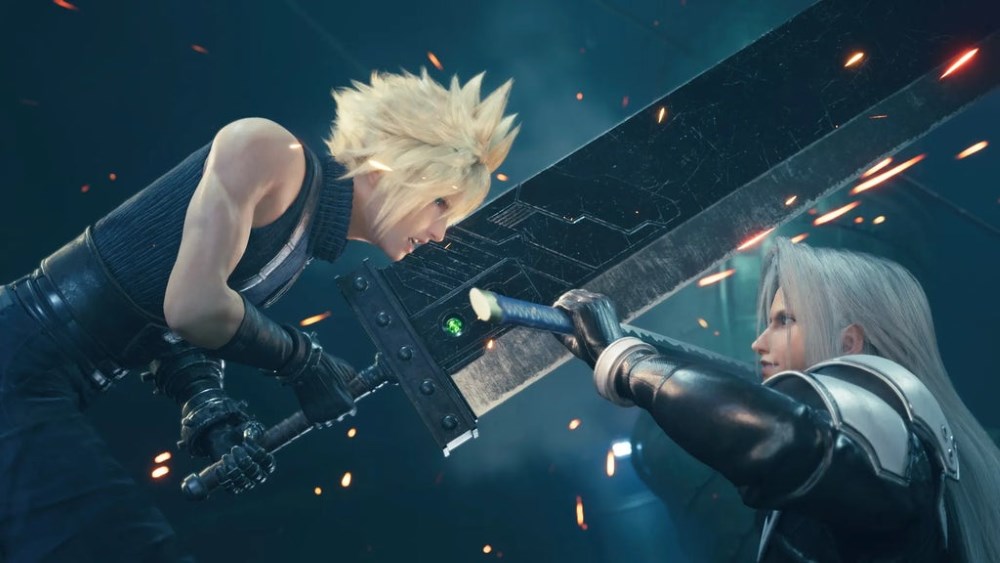
With Final Fantasy VII spanning numerous spin-offs and timelines, we asked whether those existing stories imposed creative limitations. Hamaguchi-san framed the project as something broader than a simple remake.
“So, it’s not from the perspective solely of making the remake but the Remake project as a whole,” he explained. “Even from members such as creative director Nomura and producer Kitase, they didn’t just want to make a remake, they wanted to make a story that could include the compilation of the spin-offs and the soul that they have birthed across the years into this new project and bring a fresh feel to FF7.”
Balancing accessibility and depth proved challenging. “One of the things we sort of grappled with is how much do we show, how much do we include,” he said, especially for players unfamiliar with the expanded universe. At the same time, he acknowledged the growing popularity of non-original characters. “Because of these spin-offs, because of these different additions to the FF7 series, there are a growing roster of popular characters who weren’t in the original FF7.”
When we mentioned Jessie as a personal favorite, Hamaguchi-san responded warmly. “So Jessie in the remake was one of the characters who managed to grow a lot of new fans or maybe convert previous people who didn’t really like her into people who really do like her.” He added that he was “really happy to hear that.”
Reflections on a Dream Project
We asked Hamaguchi-san about a comment he made earlier this year regarding remaking Final Fantasy VI and whether any elements from that title influenced his work on the Final Fantasy VII Remake series. He shared, “So because I played the original FF6 as a kid, and it was sort of one of the roots of me as a gamer, now as a game creator making titles, you can sort of see how that comes through in the work I produce.”
He continued to explain that while producing the FFVII Remake series, the team had to remain faithful to the original FF7 story, though they added new parts to enhance the experience. “So in that respect, because we are keeping to the FF7 script, there was no really conscious incorporation of FF6 themes or special bits into the new series,” he clarified.
Hamaguchi-san also admitted that after nearly a decade dedicated to the FF7 remake project, he personally would prefer to support a new creator rather than take on another large-scale remake himself. “Because I have used up all this time into producing this remake of FF7, should I be the one to undertake remaking another series? So rather than myself heading another remake project, I would rather see maybe a new creator come in and put myself in the support section to sort of cheer them on, rather than being the one to head a new remake project”, said Hamaguchi.
When we commented, “It’s interesting that a lot of game creators, at least in Square Enix, their favourite FF is FFVI,” Hamaguchi-san reflected on the changing times. “So recently, because the company has been growing and changing, as new employees come in and the company just keeps going on. The younger folk who come in don’t say FF6 anymore, they say, oh yeah, FF13 was my favourite. So I really do feel the passing of the ages.”
Lessons from a Decade-Long Remake Journey
Reflecting on the scope of the project, we asked what lessons Hamaguchi-san learned from directing such a massive remake over nearly ten years.
“First and foremost, not just limited to Square Enix, but even other companies undertaking such a big project… it requires a measure of resolve,” he said. He emphasized that few studios could commit to a project of this scale. “So it’s very difficult to even propose a project of this scale.”
As the trilogy nears its conclusion, his focus has expanded beyond longtime fans. “Now we’re not just delivering this title to the existing fanbase from Final Fantasy VII,” he explained. “What we want to do now is also see how many new players we can deliver it to, as an experience.”
For Hamaguchi-san, a successful remake cannot be reduced to a formula. “It’s not on me to define what makes a good remake project,” he said. Instead, he believes success comes from understanding the original’s strengths and building upon them. “At the end of the day, what can we do to make players happy?”
Creative Exchange Beyond Borders

When the conversation turned toward his relationship with the Clair Obscur: Expedition 33 development team, we were curious to know what Hamaguchi-san had taken away from those exchanges, especially following their highly visible collaboration event in Paris.
“So in terms of my relationship with the Clair Obscur developers, we have a very good relation, you know when they were in Japan I would see them and then in Paris they came to see me so it’s a mutually respectful relationship, I’m glad to have built this relationship,” he shared.
During those discussions, one topic stood out to him in particular. “When I talked with them, a very interesting story came up,” he said, before recounting how the Clair Obscur director spoke about leaving a large studio environment to pursue a more compact, focused development approach. The idea of framing games as “double-A” rather than competing directly with blockbuster productions resonated with Hamaguchi-san, not as a hierarchy, but as a statement about creative intent. “So, he (Guillaume Broche) started in UBI, so when he was in UBI and the development budget got bigger,he thought to himself how can they make something more unique but with a maybe a smaller more compact budget or team right so that’s why he sort of became an independent and started and made this he calls it a AA game”.
What concerned him more was how easily those comments could be simplified into binaries. “When you go into the either/or, these simple choices, when you make one choice you get rid of the other,” he explained. In his view, debates such as action versus turn-based or AA versus AAA miss the point. “Games are meant to be diverse,” he said, emphasizing that different styles should evolve side by side rather than be positioned against one another. Ultimately, he believes that philosophy is best communicated not through arguments, but through the games themselves.
Imagining Final Fantasy VII Through a Malaysian Lens
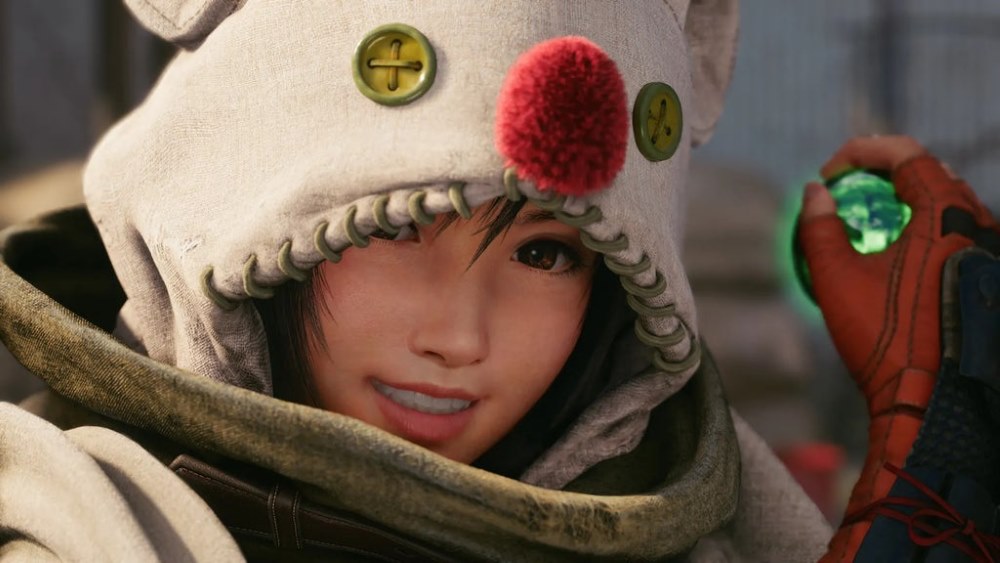
We then posed a lighter, more imaginative question: if one Final Fantasy VII character could visit Malaysia, who would enjoy the experience the most?
“It’s Yuffie,” Hamaguchi-san answered. Despite Yuffie’s background in Wutai and her familiarity with Asian-inspired culture, he felt there was something deeper at play. He explained that even when traveling within Asia, he personally experiences a constant sense of novelty and discovery. That same feeling, he believes, would resonate with Yuffie’s personality.
“There’s always some level of freshness in the experience,” he said, noting that cultural similarities do not diminish the excitement of encountering something new. From his perspective, that blend of familiarity and surprise makes Yuffie the perfect fit for Southeast Asia.
Feedback That Left a Lasting Mark
 Looking back on the release of Final Fantasy VII Rebirth, we asked whether any particular fan response had stayed with him as a creator.
“So as someone who was in the FFVII development, I had full confidence when I delivered the final product, this is a good product,” Hamaguchi-san said. Seeing strong reviews from both fans and media, alongside continued sales momentum, reinforced that belief. “As a developer, honestly, I just feel really really happy.”
One comment, however, stood above the rest. While discussing the expanded world design of Rebirth, he recalled feedback from a player who said they felt more emotionally moved by the remake than by the original Final Fantasy VII. That reaction validated one of the team’s core goals. Rather than scaling the world down, they chose to scale it up, creating a more immersive interpretation of the original vision. For Hamaguchi-san, hearing that the remake deepened (the) emotional impact was especially meaningful.
A Message to Southeast Asian Fans
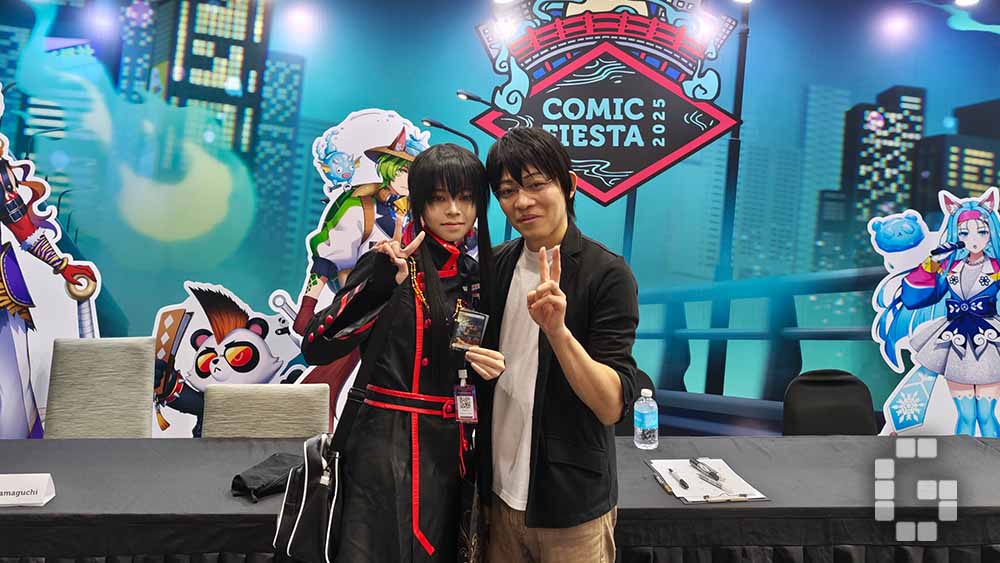
To close the interview, we asked if he had anything he wanted to say directly to Final Fantasy VII fans in Southeast Asia.
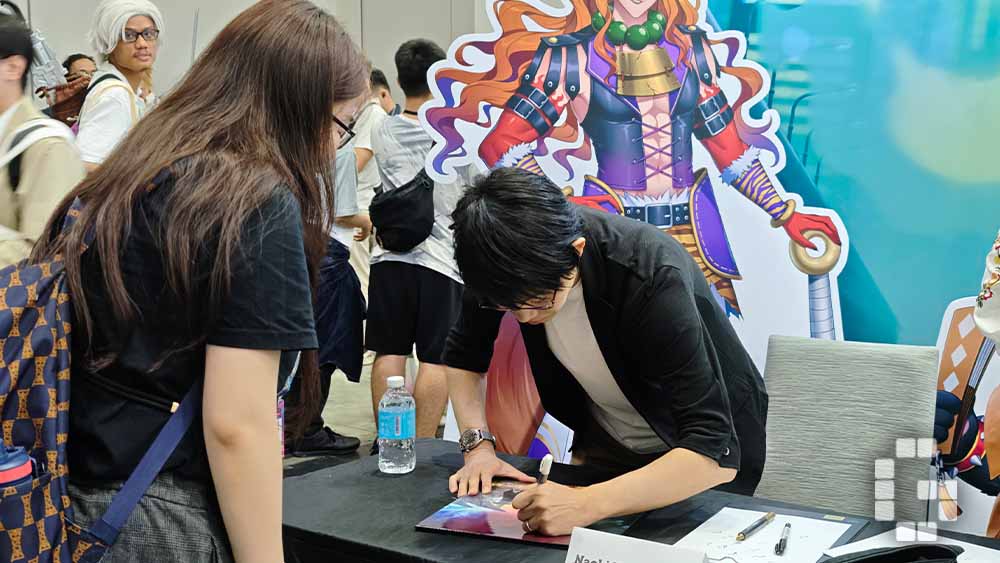
“This is my first time in Malaysia, and my first time seeing the fans on the ground,” he said, reflecting on the warmth he experienced during Comic Fiesta 2025. The passion fans showed, not only for Final Fantasy VII but as a whole, left a strong impression on him.
As the remake project approaches its conclusion, he noted how encouraging it has been to see global enjoyment of the series. “If you haven’t played yet,” he added, pointing out that the games are expanding to more platforms, including Xbox Series X|S, Nintendo Switch and Nintendo Switch 2, “please play it once you can.” For Hamaguchi-san, sharing the world of Final Fantasy VII with as many players as possible remains the ultimate goal.