










![[EXCLUSIVE] Brendan Gan Delivers One of Malaysia’s Best-Ever Worlds Results, Shares Thoughts on Pressure and the Local Scene](https://cdn.gamerbraves.com/2026/08/Brendan-Gan_Interview_FI-360x180.jpg)






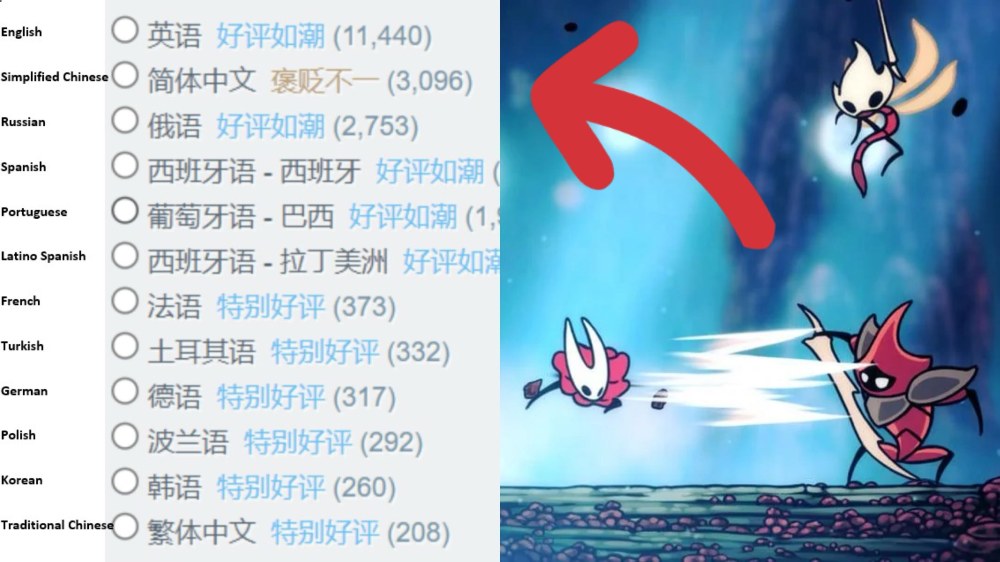
Hollow Knight: Silksong has stumbled in one of its largest markets. Chinese players are voicing frustration over what many describe as a bafflingly poor localization. Since the initial backlash, the game’s Simplified Chinese review score has worsened, dropping to just 38% positive of nearly 35,000 reviews.
To our Chinese speaking fans:
We appreciate you letting us know about quality issues with the current Simplified Chinese translation of Hollow Knight: Silksong.
We’ll be working to improve the translation over the coming weeks.
Thanks for your feedback and support.
— Matthew Griffin (@griffinmatta) September 5, 2025
This earned the dreaded “Mostly Negative” label on Steam. The wave of negative feedback has also dragged the game’s overall global rating down to 76% “Mostly Positive,” despite maintaining 90%+ approval in English and most other languages.
A Translation Problem at the Core
Eurogamer first reported the controversy when Silksong’s Chinese reviews hit a “Mixed” 42% positive score from about 20,000 players. The criticism did not target gameplay or mechanics. Instead, players argue the translation feels awkward, inconsistent, and completely out of step with the game’s intended tone.
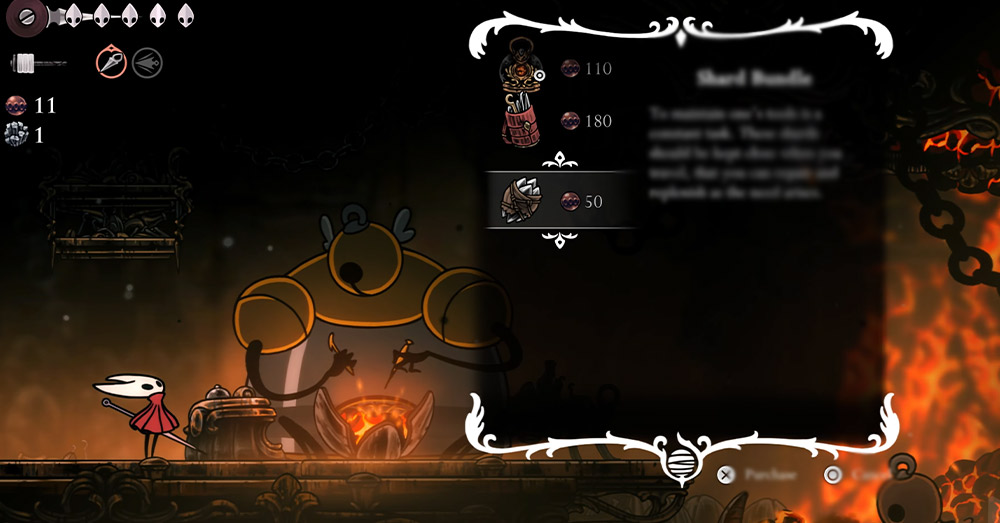
Translation experts and developers have echoed these concerns. Tiger Tang, lead translator for Omori’s Chinese localization, said Silksong’s text “reads like a Wuxia novel instead of conveying the game’s tone.” He stressed the issue is less about grammar and more about creative direction. According to Tang, a full retranslation may be required.
Team Cherry Responds to Backlash
Recognizing the scale of the problem, Team Cherry quickly promised to address the localization. Matthew Griffin, the studio’s publishing and marketing lead, wrote:
“We appreciate you letting us know about quality issues with the current Simplified Chinese translation of Hollow Knight: Silksong. We’ll be working to improve the translation over the coming weeks.”

While Griffin did not provide a timeline, his response shows the studio’s commitment to repairing trust with Chinese fans. Improving localization is no small task, especially with creative and stylistic issues, but Team Cherry has emphasized its dedication to raising the translation’s quality.
Why the Backlash Feels Different
Unlike some “review bomb” controversies, this one reflects genuine dissatisfaction. Of the roughly 16,000 negative reviews worldwide, more than 11,800 come from Simplified Chinese players. This suggests the situation is not coordinated negativity but an overwhelming group of fans raising real concerns.
Adding fuel to the fire, one of Silksong’s credited translators, Hertzz Liu, reportedly leaked details about the project on Chinese social media before launch. This revelation further undermined confidence in the translation. The first Hollow Knight had a six-person team working on its Chinese localization, while Silksong had just two.
Players will be watching closely to see if Team Cherry opts for a patchwork fix or a full retranslation. Either way, the studio’s quick response shows it recognizes the importance of meeting expectations in every language. For full platform availability and the latest news, you can visit Hollow Knight: Silksong’s official website and follow Team Cherry on X, YouTube and Facebook.

![[GUIDE] JoJo’s Bizarre Adventure: Golden Spirit Codes and How to Redeem Them](https://cdn.gamerbraves.com/2026/09/JoJos-Bizzare-Adventure-Golden-Spirit-Redeem-Codes_News_FI-350x250.jpg)