



![[EXCLUSIVE] Dragon’s Dogma 2: Dark Arisen Team Opens Up About the Expansion’s Name, New Norgan Region, and Performance Goals](https://cdn.gamerbraves.com/2026/07/Dragons-Dogma-2-Dark-Arisen_Interview_FI-360x180.jpg)












Third-party Nintendo Switch controllers are nothing new, but every once in a while, one comes along that tries to do more than simply replicate the Joy-Con or Pro Controller experience. The Omelet Super Joypad, developed by Omelet Gaming, is one such attempt. On paper, it positions itself as a hybrid solution: a detachable Joy-Con-style controller that can also function as a full grip controller, packed with modular parts, programmable buttons, Hall-effect sticks, and adjustable triggers.
After spending time with it across different use cases and games, the Omelet Super Joypad ends up being a controller I feel mostly okay about. It has clear strengths, some genuinely interesting ideas, and a few issues that prevent it from being an easy recommendation for everyone—especially for newer hardware owners.
Unboxing and First Impressions
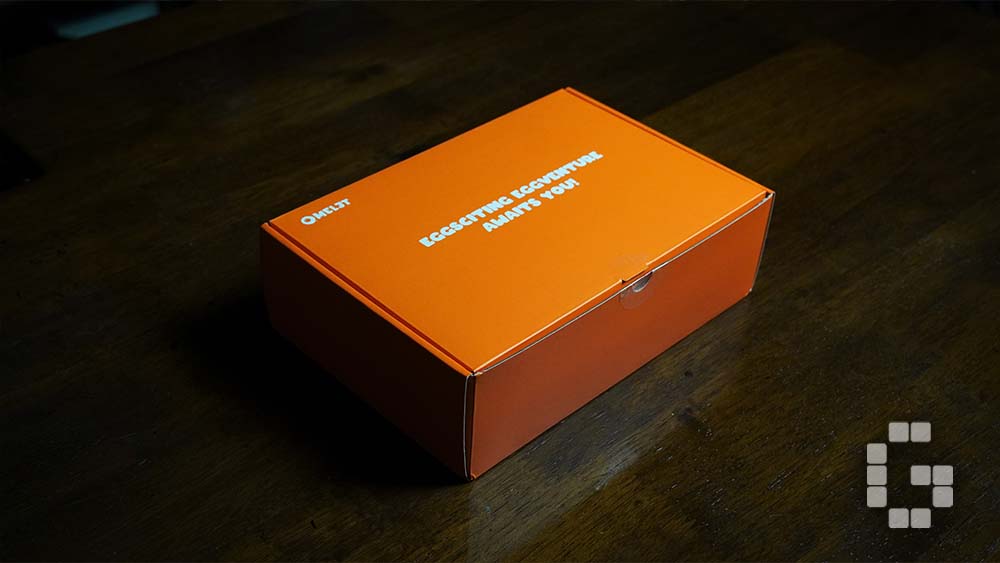
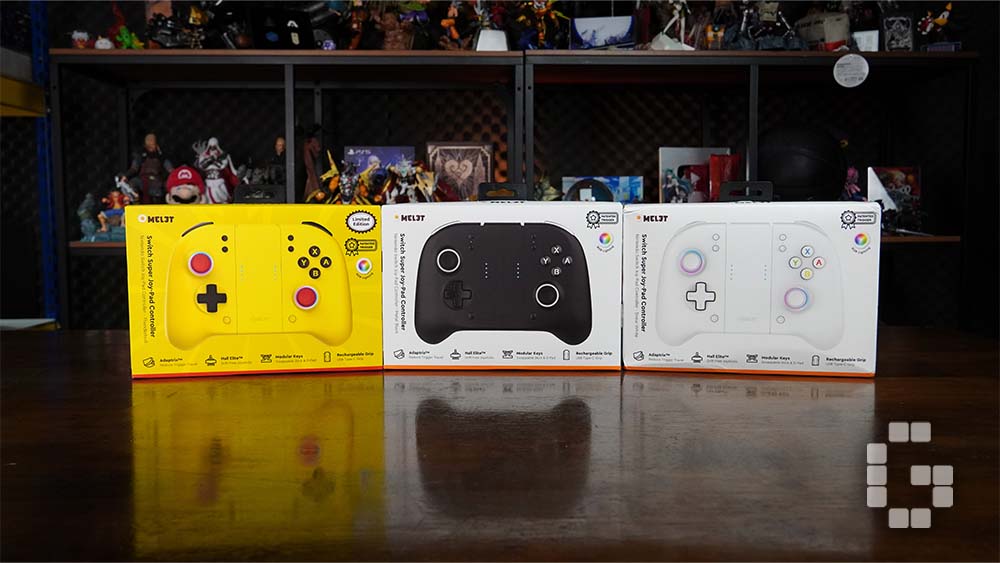
Right from the start, the Omelet Super Joypad makes an effort to communicate value. The packaging is busy, with the front, back, and sides clearly highlighting the controller’s feature set. It is obvious that Omelet Gaming wants buyers to know exactly what they are paying for before the box is even opened.
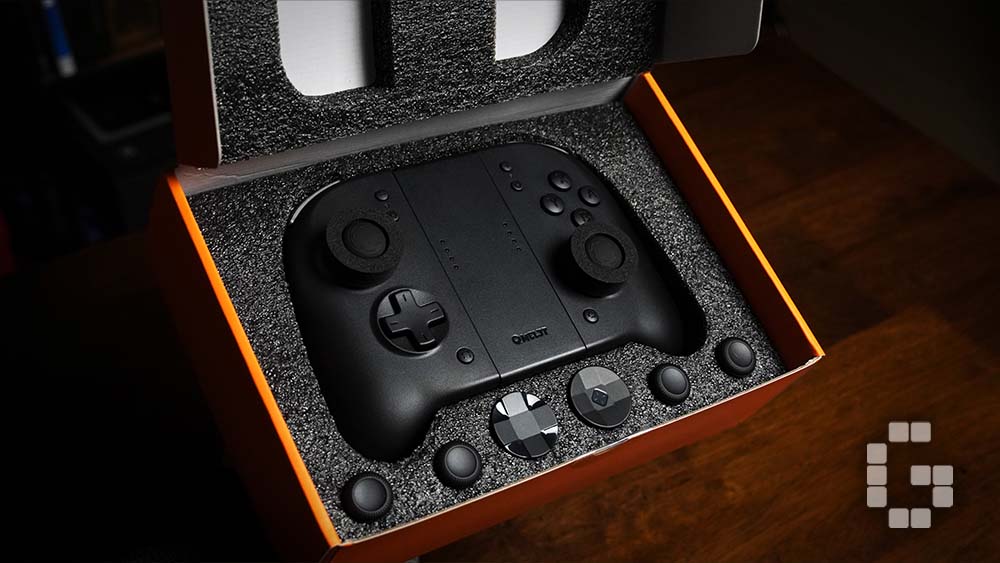
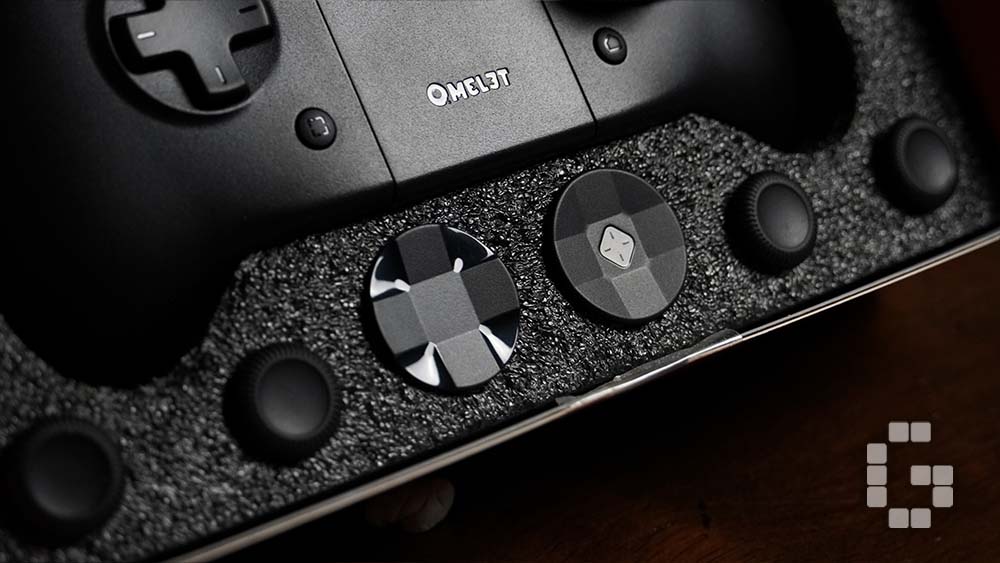
Inside, the controller is neatly packed within an inner box, and it does not arrive alone. Alongside the controller itself, you also get two additional sets of replaceable thumbsticks and two interchangeable D-pads. This immediately reinforces the idea that modularity is a core selling point of the Super Joypad.
However, one notable omission is a charging cable. Considering the number of accessories included, this feels like a small but unnecessary oversight, especially for a controller that relies entirely on USB-C charging.
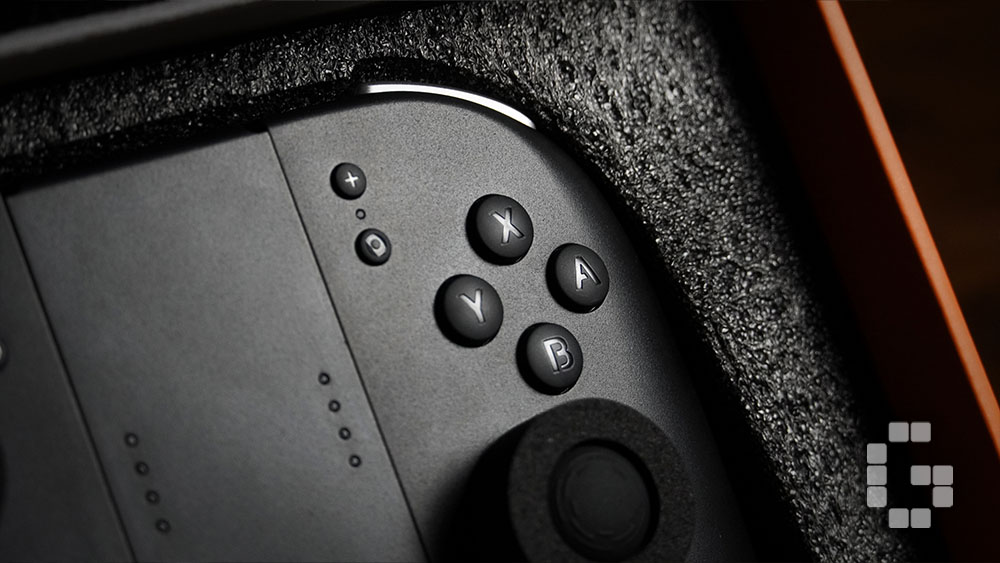
In hand, the first surprise is the weight—or rather, the lack of it. The controller is significantly lighter than most players might expect, especially those accustomed to the Nintendo Switch Pro Controller or other third-party alternatives. While it does not feel cheap or fragile, the lightweight construction can be slightly jarring at first. Over time, though, it becomes clear that despite its lightness, the controller still feels solid enough for regular play.
When assembled in its full grip form, the ergonomics are acceptable but unremarkable. It is comfortable, but it does not stand out in the way some premium controllers do. Detached from the grip, each side uses the same rail system found on Nintendo’s Joy-Cons, allowing it to slide directly onto a Switch or Switch OLED console. Even when held in one hand, each side remains reasonably comfortable.
Button placement largely follows standard conventions, but once you look more closely, you start to notice that there are more buttons here than you might initially expect—both on the front and the back.
Compatibility and Console Support


The Super Joypad’s physical design makes its intended compatibility very clear. Thanks to the built-in rails on each side, it can directly attach to a Nintendo Switch or Nintendo Switch OLED, replacing the stock Joy-Cons entirely. When attached, the console feels closer to a “Pro Controller with a screen in the middle,” which is appealing in theory.
In practice, the experience is mixed. While the controller does feel nicer to hold than standard Joy-Cons, the overall length and size of the Super Joypad give the middle section—where the Switch screen sits—a slightly fragile feel. There is a constant sense that too much pressure could cause the console to slip out or bend awkwardly. That said, during extended handheld play of roughly an hour, and even after intentionally shaking and jerking the setup to test its stability, the controller held together without issue. The concern is more psychological than practical, but it is still worth noting.
Attachment on the original Switch and Switch OLED is straightforward plug-and-play, with no additional setup required. Wireless connectivity, however, tells a different story.


Pairing the Super Joypad wirelessly with both the Nintendo Switch and Nintendo Switch 2 proved to be frustrating. While each side of the controller connected almost instantly on its own, getting both sides to pair together as a single controller was inconsistent. They frequently refused to sync simultaneously, leading to repeated pairing attempts and wasted time. Even after successful pairing, the controller disconnected several times during testing.
On the Nintendo Switch 2 specifically, the Super Joypad can only be used wirelessly, which further highlights these pairing issues. At this stage, wireless stability is one of the controller’s weakest aspects.
Buttons, Controls, and Input Performance


In terms of layout, the Super Joypad does not deviate much from what players are already familiar with. The face buttons, D-pad, triggers, and shoulder buttons are all positioned where you would expect them to be, and overall responsiveness is acceptable. Inputs register reliably, and there were no major issues with missed presses during regular gameplay.
However, the front-facing turbo buttons are a notable misstep. These buttons sit directly below the + and – buttons, making them the first point of contact for your thumbs when reaching upward. As a result, I frequently pressed them by accident when attempting to pause a game or open a map. This is a problem that other controllers have solved by offsetting or recessing these buttons, but here they are placed parallel and too close for comfort.
On the back of the controller are two programmable buttons, which add flexibility, particularly in games that require frequent inputs while your thumbs are occupied. While useful, the implementation feels limited. The back buttons do not appear to support mapping to triggers or bumpers, which restricts their potential.
Using each side of the Super Joypad as an individual controller is surprisingly comfortable, but practicality varies depending on the game. The close proximity of the buttons and sticks makes more complex or fast-paced games difficult to play in this mode.
Features and Customisation
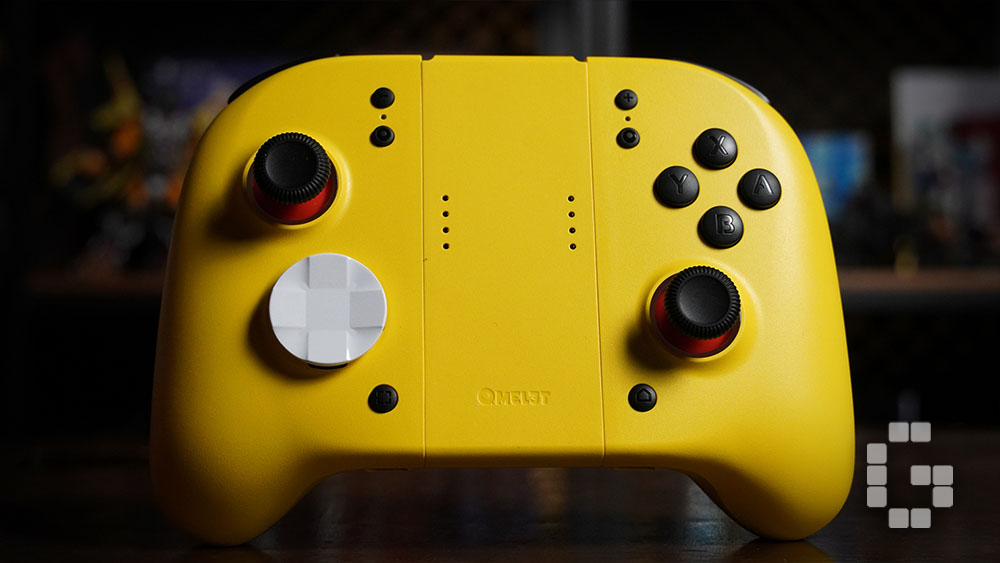
This is where the Omelet Super Joypad truly shines. Feature-wise, it is arguably overqualified for a Switch controller.
The patented Adaptrix Triggers allow you to adjust trigger travel via a physical knob, which is a rare and welcome addition. The Hall Elite Joysticks inspire confidence in long-term durability, addressing concerns about stick drift. The modular thumbsticks and D-pad are easy to swap, requiring no tools and minimal effort.
Additional features include a charging port on the grip that allows both controllers to charge simultaneously, RGB halo lights around the thumbsticks with manual colour adjustment, vibration level customisation, turbo functionality, and programmable back buttons. On paper, this is an impressive checklist, and it is clear that Omelet Gaming aimed to deliver maximum value.
Battery Life and Charging
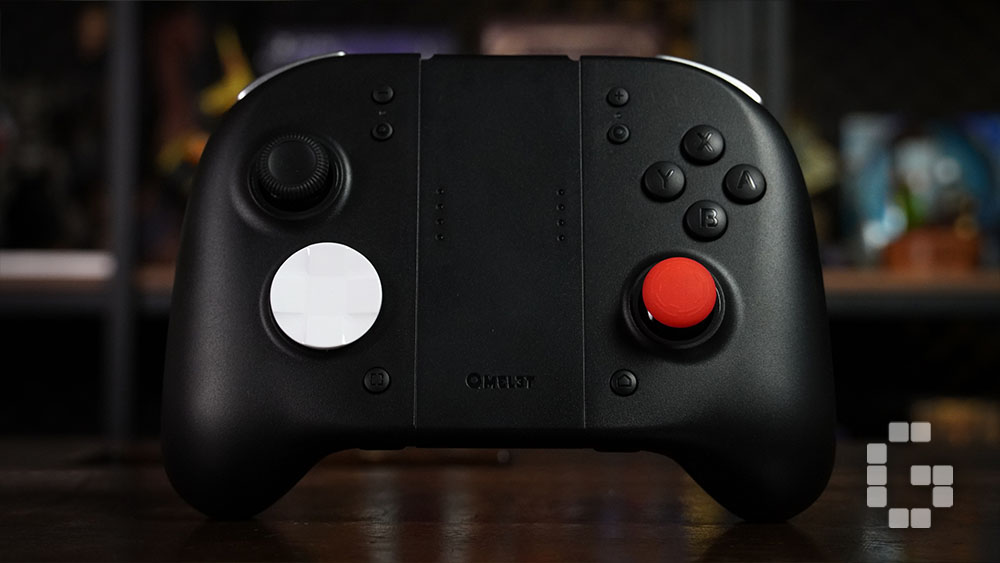
Each side of the Super Joypad is powered by a 3.7V 500mAh battery. In real-world use, battery life averaged around four hours of continuous gameplay, which is reasonable but not outstanding.
Charging is handled via USB-C, and a full charge takes approximately one hour. Charging while playing is possible, and the connection process is simple enough, though the lack of an included cable remains disappointing.
Gaming Experience Across Genres
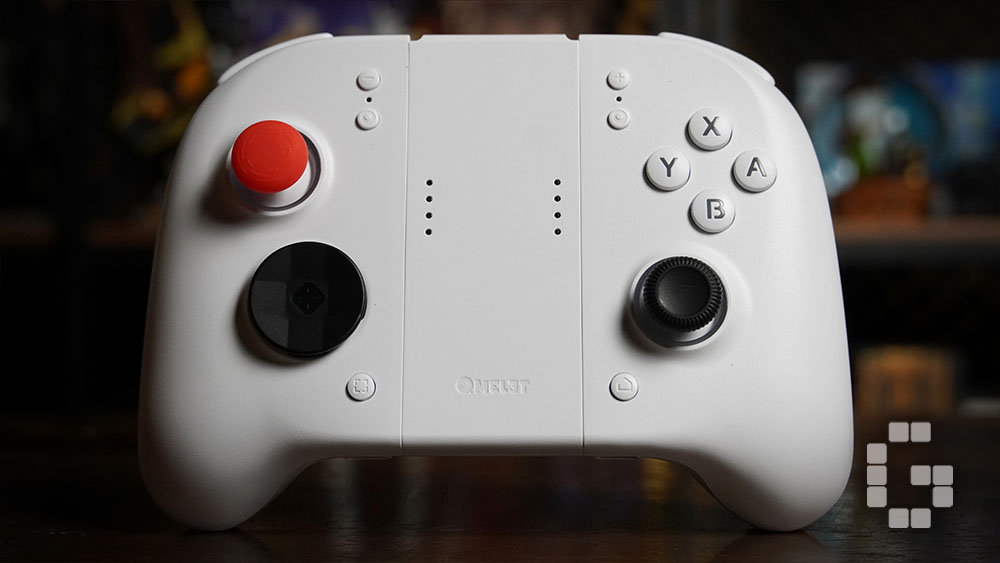
In action-heavy games like The Legend of Zelda: Tears of the Kingdom (on Nintendo Switch and Nintendo Switch 2), the Super Joypad performs well enough. Inputs are responsive, and gyro aiming works adequately, though not exceptionally. In Mario Kart World, the experience remains serviceable, but gyro responsiveness felt slightly less precise when compared to Nintendo’s first-party controllers.
Across all tested games, including more demanding titles like Cyberpunk 2077, the controller consistently registered inputs without noticeable delay, and analog stick accuracy held up surprisingly well, resulting in stable camera control and aiming. However, while all buttons and triggers are technically responsive, they lack a satisfying tactile feel when pressed. The button travel and feedback feel somewhat muted, which, over longer sessions, left the overall input experience feeling less engaging than expected. This does not affect performance in a measurable way, but it does contribute to a subtle sense of dissatisfaction, particularly for players accustomed to more tactile, premium-feeling controllers.
While playing Super Smash Bros Ultimate, the controller was struggling with the finer inputs needed to play this game. Many times, I struggle to do any neutral input as the sticks don’t seem to immediately recognise any non-movement after some quick movements.
Despite this, the Super Joypad remains competent across most genres, even if it does not deliver the same level of physical feedback or polish found in higher-end alternatives.
Final Verdict
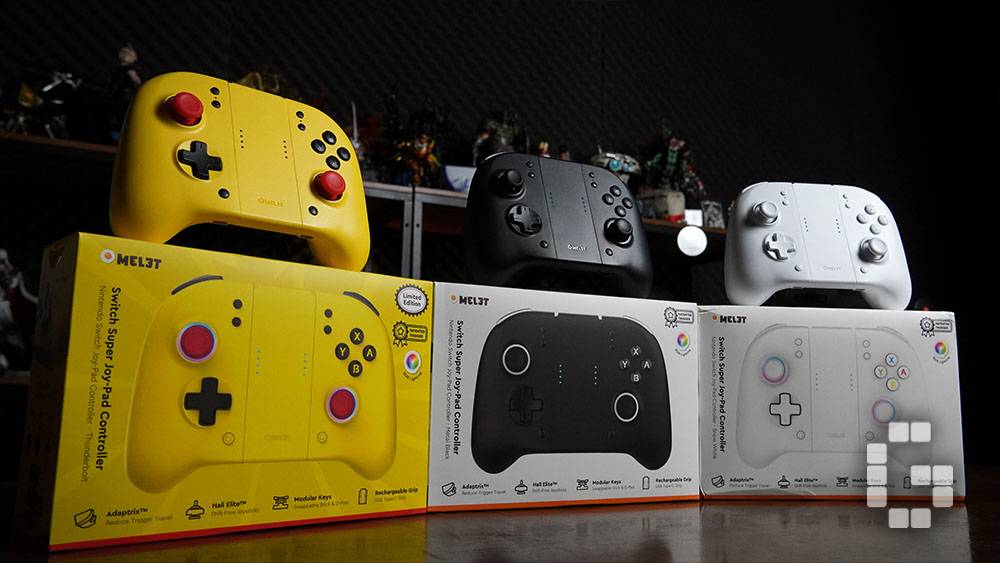
The Omelet Super Joypad is a controller with clear ambition. It delivers a generous feature set, extensive modularity, and generally solid performance, but it is also held back by wireless pairing inconsistencies, awkward button placement, and a handful of design decisions that feel under-refined. At a retail price of RM229.90, this is by no means a cheap controller, and that price point inevitably invites closer scrutiny.
For Nintendo Switch and Switch OLED owners, the Super Joypad can still be a reasonable option if you are specifically looking for something different from standard Joy-Cons and place a high value on customisation. The physical attachment feature works better than expected, and the controller remains structurally reliable during extended handheld sessions. However, players who simply want a comfortable, reliable controller may find that there are cheaper alternatives that offer fewer features but a more focused and refined experience.
For Nintendo Switch 2 owners, the recommendation becomes more uncertain. While the controller does technically work, its reliance on wireless connectivity—and the instability that accompanies it—makes it difficult to confidently recommend at this price. In this case, it may be better to either wait for a revised version of the Super Joypad or consider spending a bit more on a more established, polished alternative.
Overall, the Omelet Super Joypad is not a bad controller. It sits in an awkward middle ground: priced like a premium accessory, packed with features, yet lacking the refinement needed to fully justify its cost. It feels like a product that is very close to being great, but not quite there yet.