








![[EXCLUSIVE] Brendan Gan Delivers One of Malaysia’s Best-Ever Worlds Results, Shares Thoughts on Pressure and the Local Scene](https://cdn.gamerbraves.com/2026/08/Brendan-Gan_Interview_FI-360x180.jpg)






During a recent media hands-on session, I spent roughly four and a half hours with MY HERO ACADEMIA: All’s Justice on PC via Steam. The preview build included Story Missions, Team-Up Missions, Hero’s Diary chapters, and free battles against CPU opponents using all available characters and stages. While not a final release, the session provided a clear look at how MY HERO ACADEMIA: All’s Justice handles combat, narrative, and character systems. Going in with medium expectations, I found the game more engaging than anticipated, particularly in how it refines arena fighter conventions while leaning confidently into team-based mechanics.
Heroic Showdowns — Story and Setting


MY HERO ACADEMIA: All’s Justice is a 3v3 arena fighter developed by Byking Inc. and published by Bandai Namco Entertainment Inc. The game immerses players in the high-stakes world of My Hero Academia, featuring large-scale hero-versus-villain battles where Quirk-driven combat is central. Story mode presents key moments from the series’ climactic arc through fully voiced, cinematic 3D cutscenes. The quality of these sequences is impressive, with detailed character models, expressive animations, and dynamic lighting that make the world feel alive and engaging. Even for fans familiar with the anime, the cutscenes offer a fresh perspective. Combat encounters in story mode also challenge players to think strategically about their Quirks and team composition, making battles feel purposeful rather than repetitive. Though the missions I got to try out were more focused on Bakugo instead of our titular Hero Izuku Midoriya, these scenes were still powerful and a joy to watch.
Team-Up Missions — Cooperative Strategy


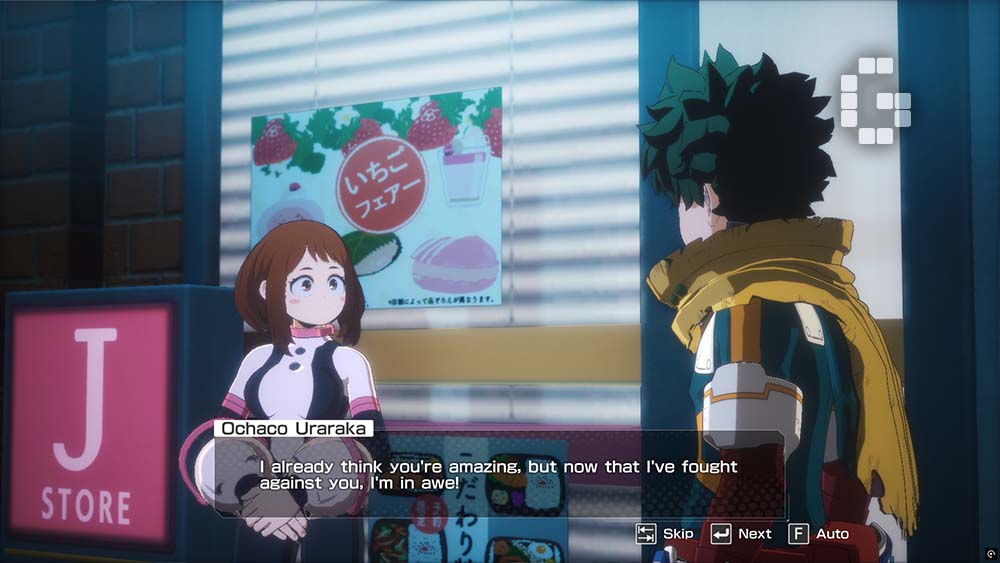
Team-Up Missions place players in a section of the city that acts as a hub, offering freedom to explore while completing objectives with Class 1-A allies. While the hub map is somewhat sparse, it provides a clear space for experimentation with combat skills, character switching, and team strategies. Cutscenes in these missions are simpler than those in story mode, but the missions themselves allow players to experience the variety of Quirk interactions and tactical depth MY HERO ACADEMIA: All’s Justice offers, making them a worthwhile experience even if you’re less interested in narrative content.
Combat Systems — Quirks and Mechanics
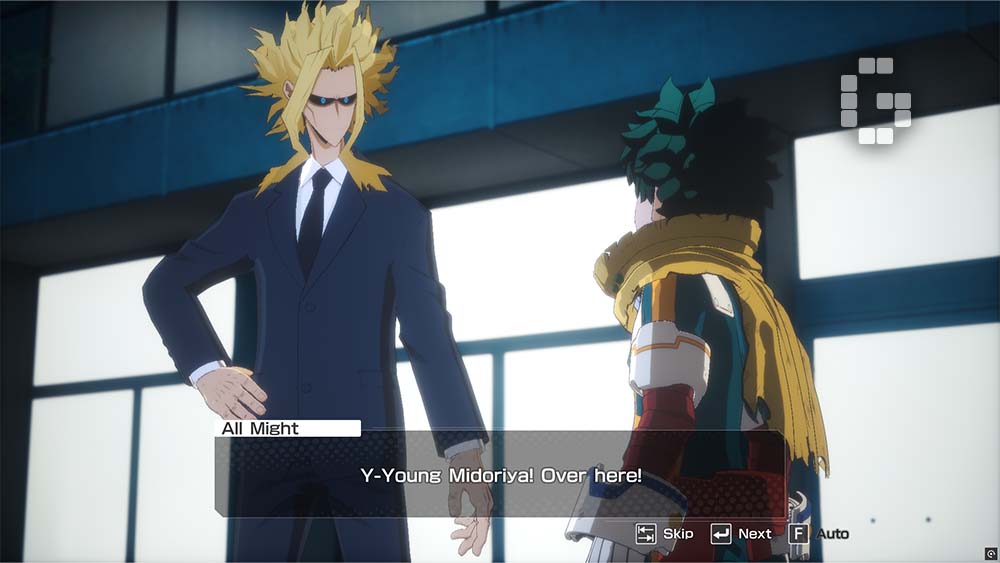
Combat in MY HERO ACADEMIA: All’s Justice is more complex than expected. Players have a run button that also functions as an air dash, while the block button doubles as a dodge when flicked during guarding, which can take some getting used to. Characters have two skill buttons to trigger Quirks, some of which change depending on directional inputs or by holding the button. Descriptions for certain Quirks are vague, making it important to familiarize yourself with a character’s moveset before battle.
The “Rising” mechanic boosts attack power, movement speed, and Quirk effectiveness for a short time, rewarding precise timing. Players can also execute unblockable attacks and counters, adding layers of strategy. Chaining Quirks into combos felt intuitive and satisfying, while defensive tools such as guarding, dodging, and countering add depth without overwhelming new players.
Free Battles — Testing the Roster


Free battles in MY HERO ACADEMIA: All’s Justice offer a straightforward way to jump into combat. Players select three characters from the roster, choose a control scheme, either manual or auto, with auto helping to perform ultimate moves automatically, and pick a map. Beyond these options, the mode follows the familiar conventions of arena fighters, letting players focus on experimenting with characters and Quirk combinations. The roster is large and diverse, though some characters naturally feel stronger or weaker than others, which adds an extra layer of consideration when forming a team.
Hero’s Diary — Character Moments


Hero’s Diary chapters in MY HERO ACADEMIA: All’s Justice provide a slice-of-life perspective on individual characters. Segments featuring Minoru Mineta, Eijiro Kirishima, and Mina Ashido were enjoyable, highlighting personality and daily life outside of combat. These chapters complement the story-driven and Team-Up missions, adding a layer of character immersion that feels rewarding and personal.
Presentation and Visuals

The game’s visual presentation impressed throughout the hands-on session. Story mode cutscenes are fully voiced, cinematic, and polished, while Team-Up Missions and Hero’s Diary segments are visually simpler but functional. The contrast between high-end story sequences and lighter mission content doesn’t detract from the overall experience, and the voice work adds strong immersion across modes.
Early Impressions
MY HERO ACADEMIA: All’s Justice has some minor rough edges, including occasional unclear mechanics and simpler animations outside story mode. Without access to online play or a full campaign, it’s difficult to assess balance or performance fully. However, early impressions suggest that the game successfully balances spectacle and strategy. Fans of the anime will appreciate the faithful adaptation of the Final War arc, while arena fighter enthusiasts can explore layered combat, team synergies, and dynamic combos.
With further polish, MY HERO ACADEMIA: All’s Justice shows promise as one of the more solid adaptations of the series, offering both newcomers and longtime fans an accessible yet engaging arena fighting experience.