
![[EXCLUSIVE] Dragon’s Dogma 2: Dark Arisen Team Opens Up About the Expansion’s Name, New Norgan Region, and Performance Goals](https://cdn.gamerbraves.com/2026/07/Dragons-Dogma-2-Dark-Arisen_Interview_FI-360x180.jpg)











METAL GEAR SOLID Δ: SNAKE EATER brings one of gaming’s most beloved stealth adventures into the modern era with stunning visuals and improved gameplay mechanics. Our review of METAL GEAR SOLID Δ: SNAKE EATER examines how well Konami’s remake captures the essence of the 2004 classic while addressing its dated elements. From the impressive Unreal Engine 5 graphics to the refined stealth mechanics, we’ll explore what works, what doesn’t, and whether this remake successfully bridges the gap between nostalgic fans and newcomers to the series.
The Story That Started It All
Despite being called Metal Gear Solid 3, this game actually tells the earliest story in the franchise timeline if you want to follow it chronologically. The series features several different versions of the character Snake, which can be confusing due to similarities in costume design and even facial features. But in this third installment, you follow the story of Naked Snake, also known as Jack.
Set during the Cold War in 1964, Naked Snake is a member of the FOX unit who gets sent on a mission to secure a Soviet scientist and weapons developer named Nikolai Stepanovich Sokolov and safely bring him to the United States. Sokolov is key to building a dangerous nuclear weapon called the Shagohod, which could potentially end the Cold War, but in the wrong hands it could trigger a new world war. Because the mission carries such high risks and could threaten relations between the two nations, the CIA can only send a single operative into Soviet territory. Stealth becomes the best approach for Snake, which is strongly reflected in the gameplay too.
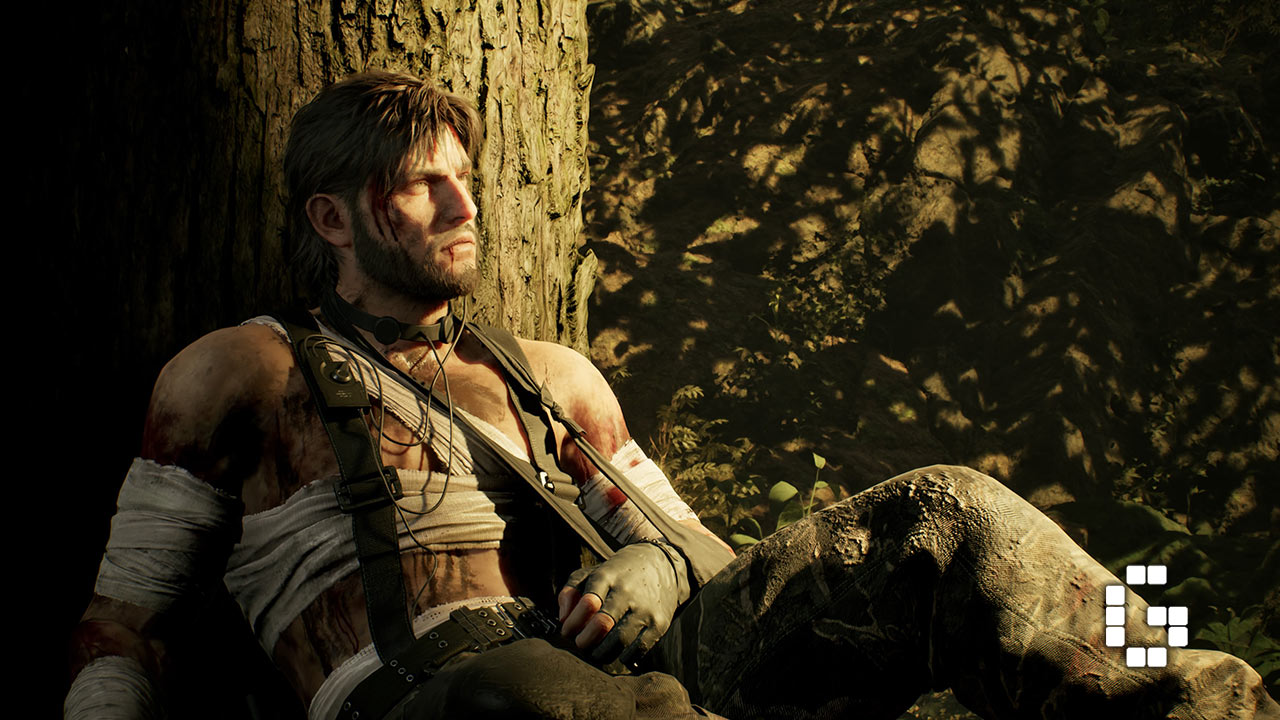
The game’s story remains largely the same with a few major spoilers revealed early on. The game clearly serves as the starting point of the Metal Gear Solid saga, especially covering Naked Snake’s early years before he becomes the legendary figure known as Big Boss. This extends not just to him, but also to other key characters who remain relevant in later games.
What makes this remake interesting is how it asks players about their familiarity with the Metal Gear Solid franchise and which entries they like the most before starting your adventure. This isn’t just a gimmick since your answers affect the game, specifically on which special bonus equipment that you can get. This adds extra replay value along with access to the “European Extreme” difficulty which can only be unlocked after completing the game on “Extreme.”
Visual Excellence That Impresses
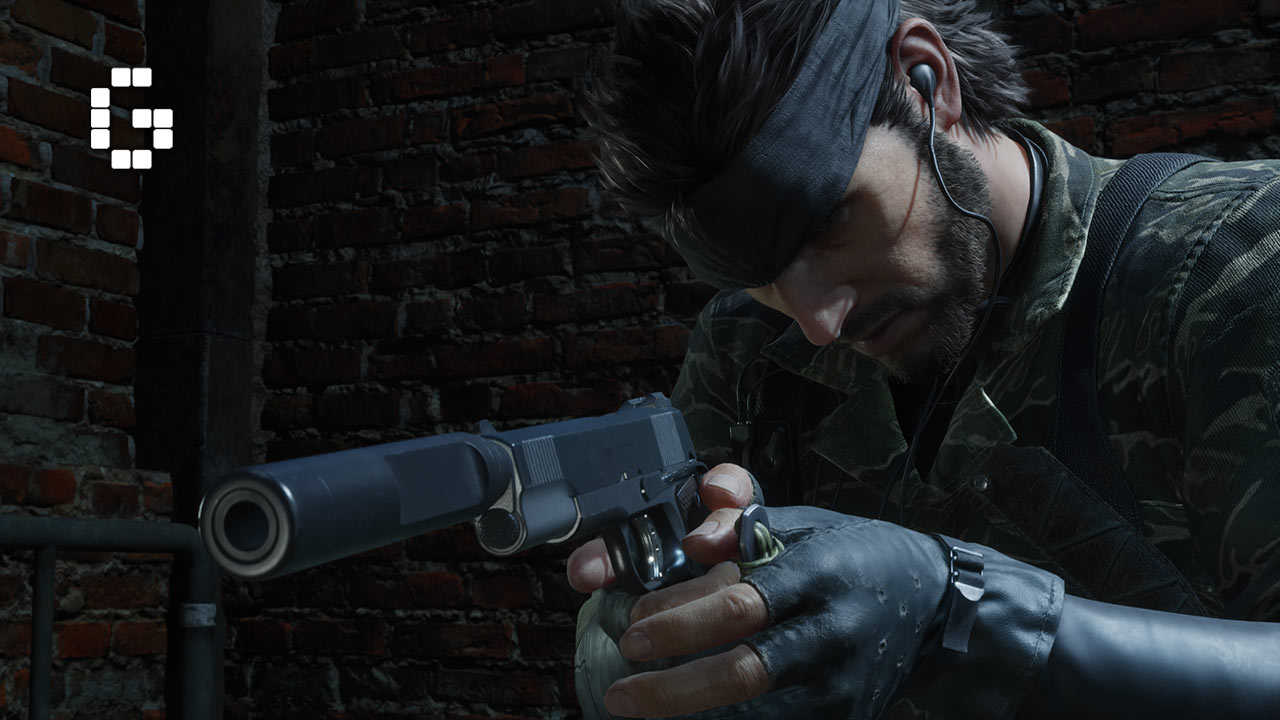
The most striking improvement in this remake is undoubtedly the graphics. Built on Unreal Engine 5, the developers have clearly leveraged the new technology to create a far more immersive look to the game. Every asset has been recreated from scratch in high quality, lighting is stunning and rich with visual effects, and the forest-dominated environments are packed with details that are worth exploring. Rather than rushing through missions, there were moments when stopping in certain areas just to capture the surroundings becomes necessary, which was made easier thanks to a fully featured Photo Mode.
Beyond all that, the part that stands out most about the graphical upgrade is the 3D character models and animation quality. Remembering how Metal Gear Solid 3 looked on the PS2, this remake delivers what can be considered the best version of each character. Snake in particular looks exactly as imagined in the modern version, and there is just no better 3D representation of him. This holds true for almost every other character – they feel different for sure, yet clearly much more improved compared to their original versions. Recreating iconic characters in a remake is always a huge challenge because fans have strong expectations and familiarity with the originals, so the design team’s achievement for this remake deserves praise for sure.
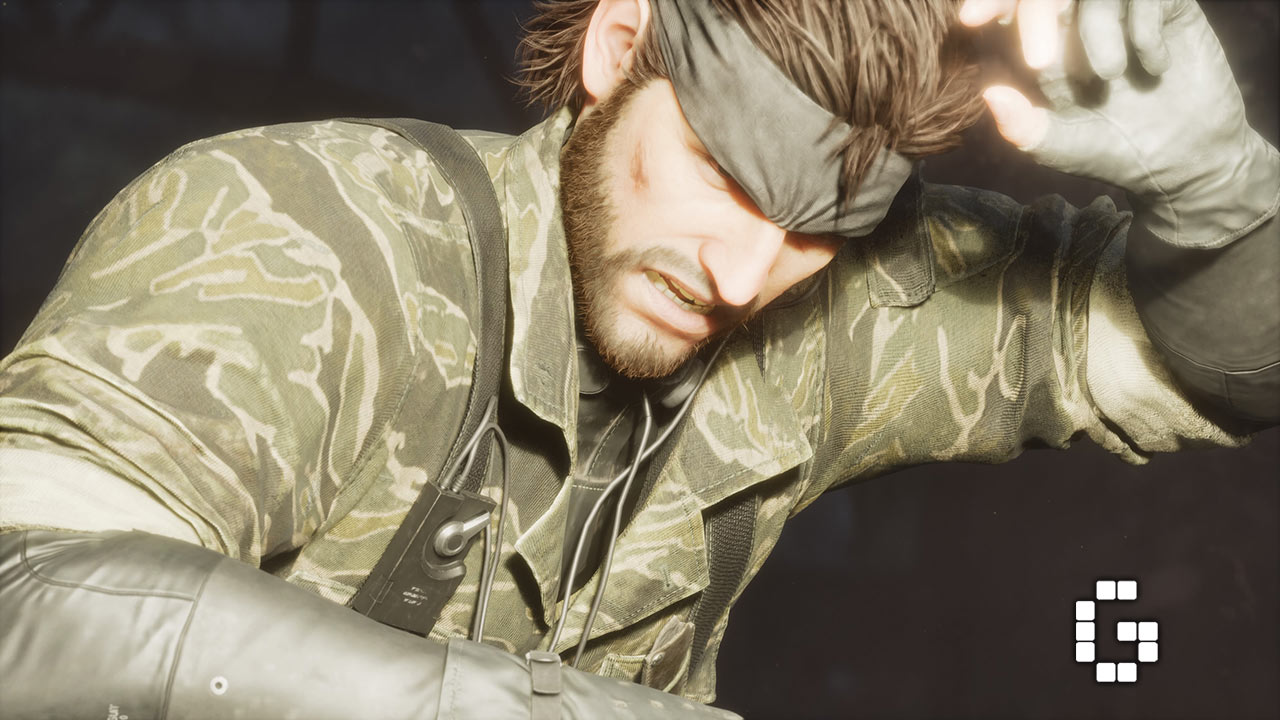
Beyond character models, there’s a major improvement in animation quality both in cutscenes and gameplay. For story sequences, the game still uses the original motion capture data which translates naturally into the new graphics. Character movements are smooth, and many moments feel cinematic that can be compared to modern AAA games. That said, there are instances where characters appear stiff, particularly when expressing emotions where the movements or facial expressions sometimes feel unnatural. But overall, the developers have maximized the cutscene quality in such a big way, and how they are also giving faces far more expressiveness than before.
Gameplay animations are where the difference is most apparent. One of the biggest complaints about the original was the stiff character movement, which made stealth sequences less fluid and sometimes led to stupid blunders. This remake makes Snake move much more smoothly, so much so that it can feel reminiscent of The Phantom Pain. The improved gameplay animations not only look better but also improve the overall control, so it makes the game feel more enjoyable and responsive.
Stealth and Survival at Its Core
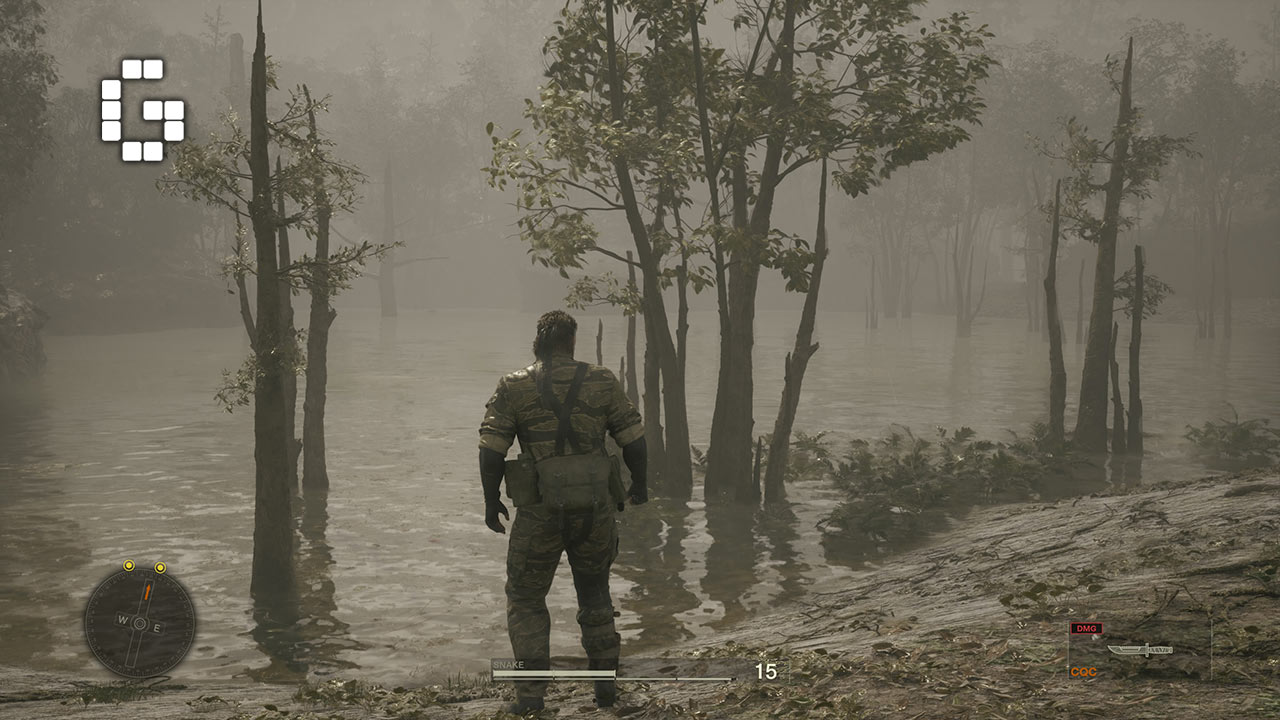
Each mainline Metal Gear Solid entry brings its own unique gameplay style, but what unites them all is obviously stealth. Every encounter forces you to think strategically rather than simply taking out all enemies like a typical action shooter. This applies not just to defeating enemies efficiently, but also to how you maneuver through areas filled with traps and secret paths. Playing on Normal difficulty is relatively easy, but what makes the game challenging is how well you can execute each encounter.
You could rush in, shoot, and run around eliminating everyone, but doing so could make things difficult, especially when enemies can just shoot once and Snake goes down instantly in an awkward position. That “cool factor” of the character disappears because of that, and it becomes clear that this game isn’t meant to be played recklessly. While going in guns blazing is definitely still an option, infiltrating enemy bases undetected like a ghost is far more satisfying and rewarding.
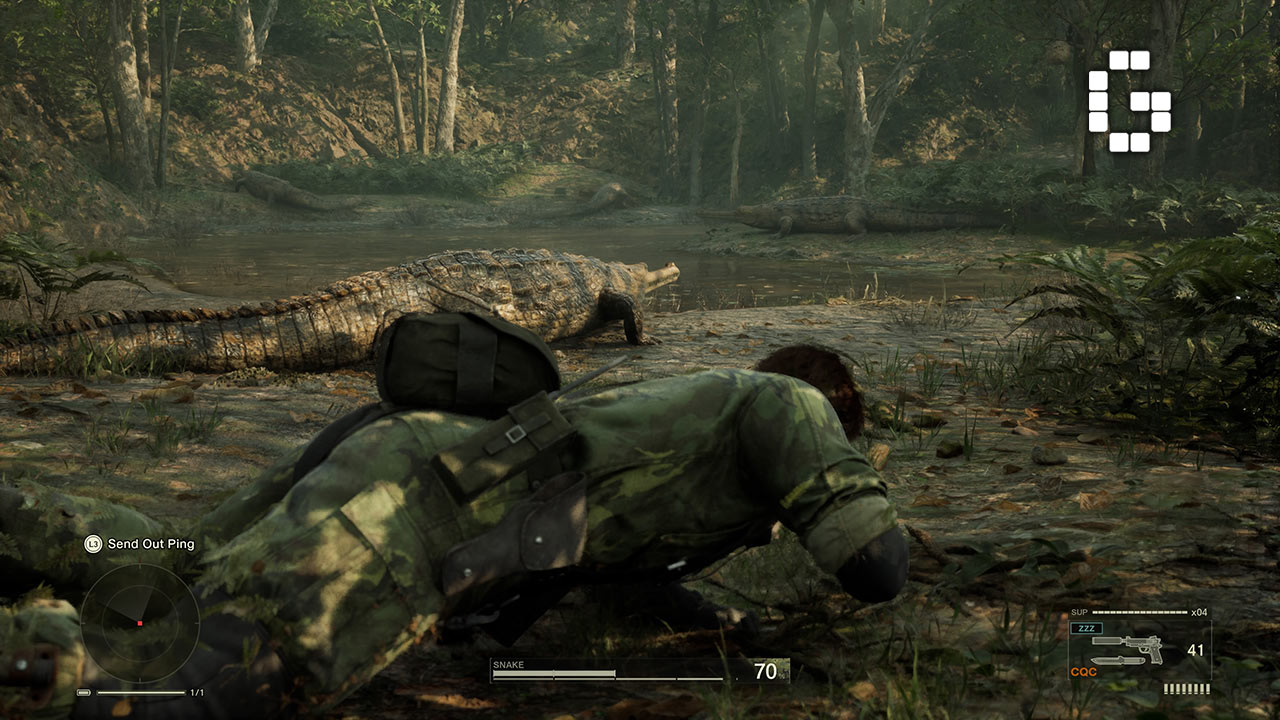
To survive, Snake is equipped with a full arsenal and gadgets that help with navigation and detecting enemies. Stealth favors pistols which come in both real bullets and tranquilizers, but securing as many weapons and ammo as possible is crucial for open combat and tough boss fights which exist in this game too.
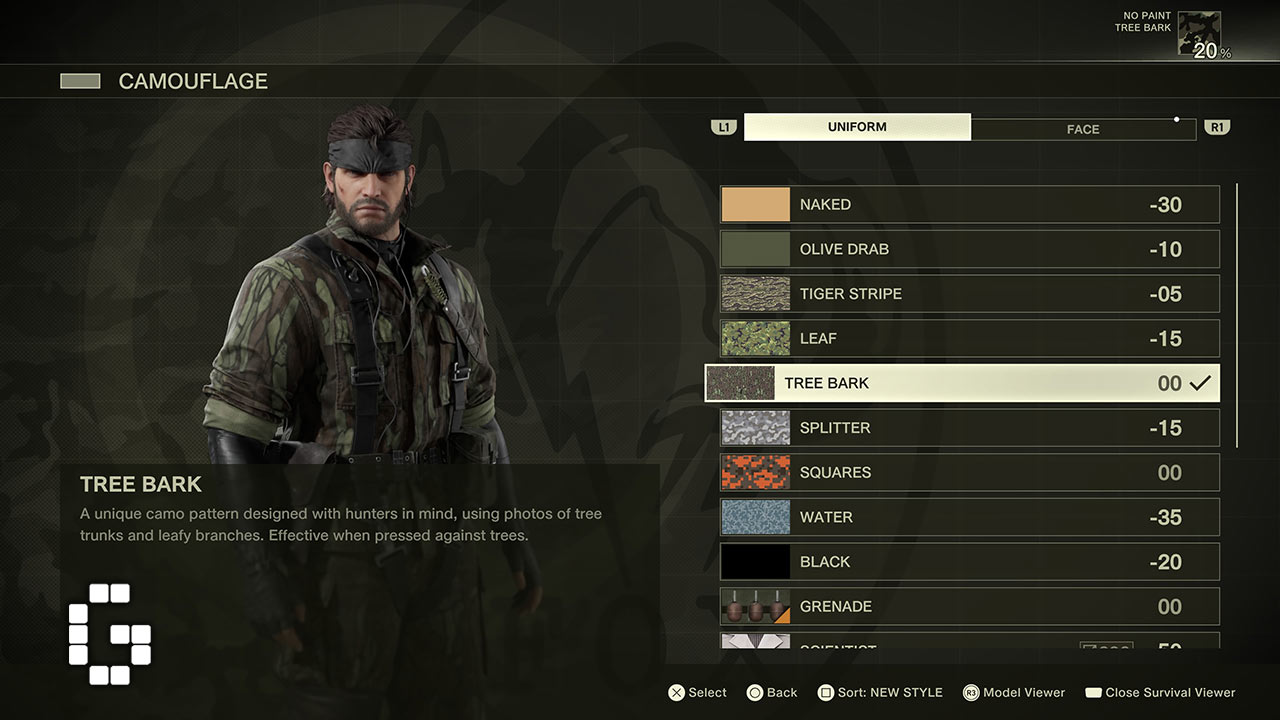
Snake Eater introduces one of the most interesting innovations to stealth in the franchise with Camouflage. You can hide Snake’s presence depending on the environment. For example, enemies can still detect you underwater, so you need to adjust your camouflage using Water patterns for underwater areas, Tiger Stripe for forests, Splitter for urban zones, and so on. This doesn’t make you completely invisible, but the system functions more as a stat boost to your stealth that is also indicated by plus or minus values next to each pattern. Aside from the uniform pattern, you can also enhance camouflage by applying face paint.
Another standout feature in Snake Eater is the survival element where you must hunt for resources, including food, to restore stamina. Since the game is set in dense forests, you’ll find plenty of wild animals and plants to use as raw food to ensure you rarely run out of resources. Harsh environmental conditions can also injure Snake – for example, passing through thick mud may cause leeches to attach, so it requires you to treat wounds using a unique HP recovery system that matches the type of injury with specific items.
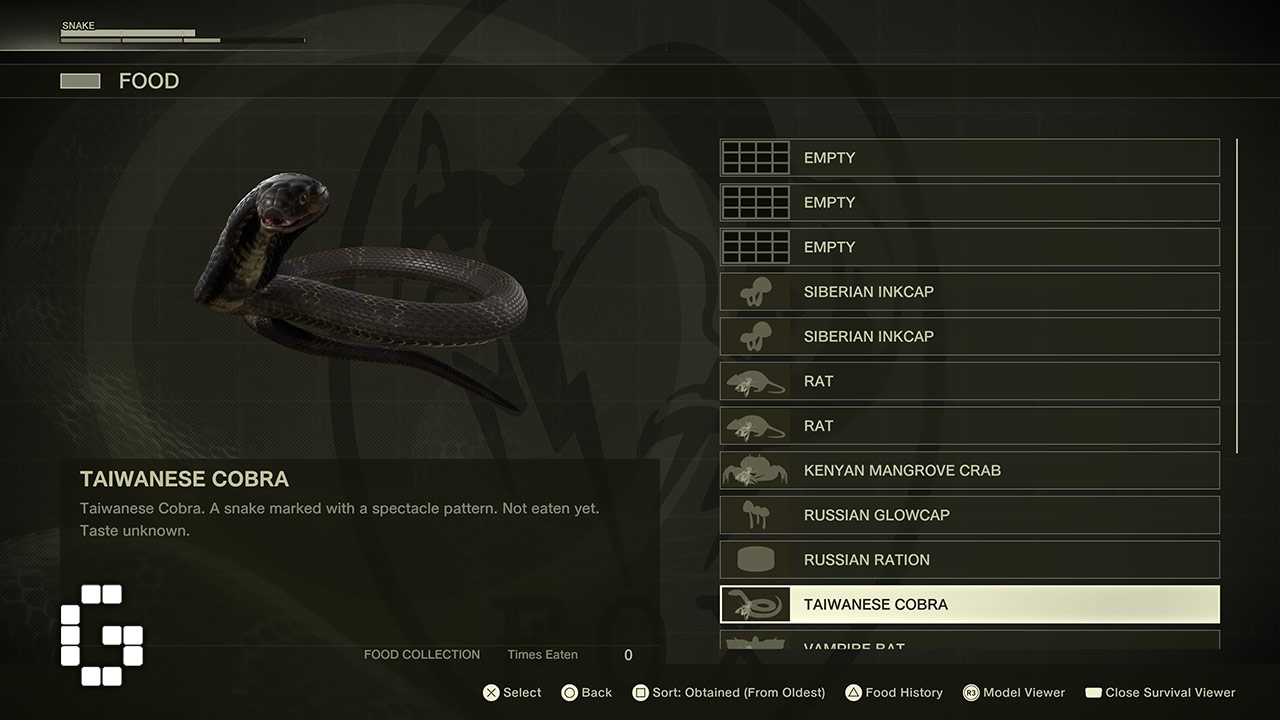
All these systems combine to create an immersive survival experience. While it can feel a bit tedious, the game ensures you have enough resources and that gameplay flow isn’t overly disrupted. Shortcuts like quickly switching camouflage without opening the Backpack menu also make the experience smoother.
Gameplay Improvements and Issues
The remake significantly improves the original’s stiff character movement, making Snake feel much more responsive and fluid. The enhanced animations don’t just look better – they actually improve the overall control experience, making stealth sequences more enjoyable.
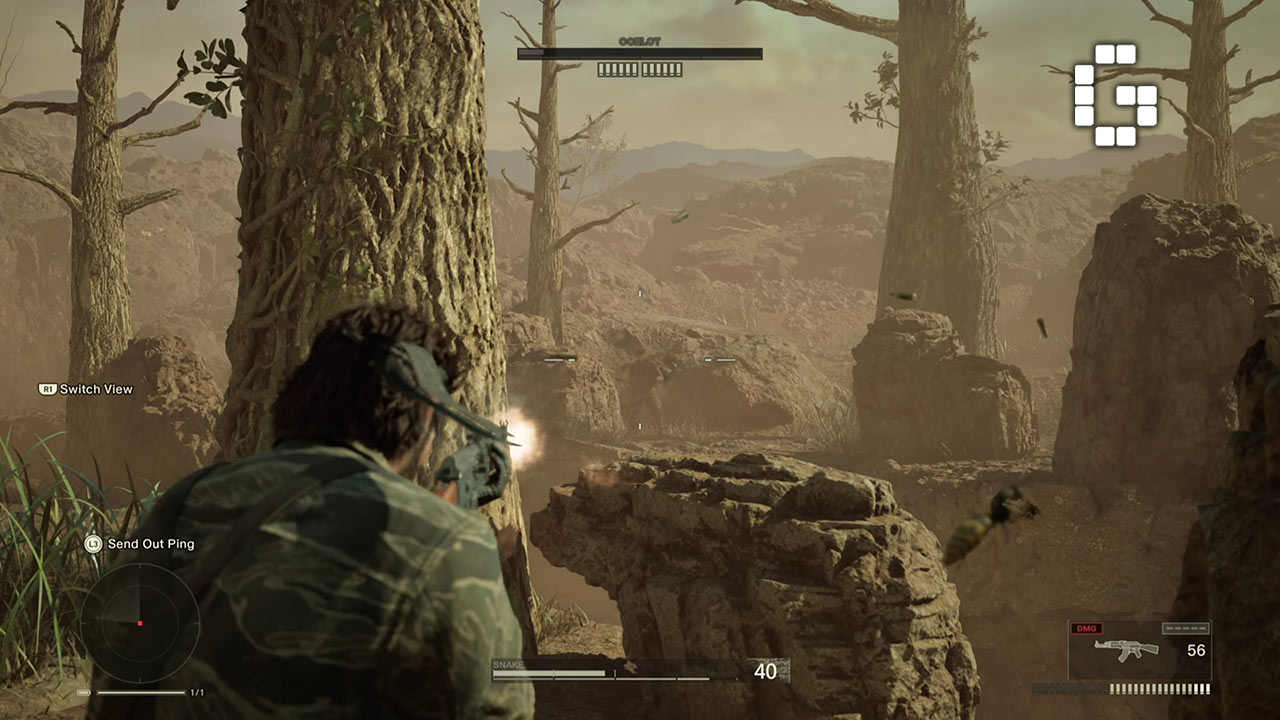
Players can choose between two camera modes: Legacy mode maintains the original’s fixed-camera perspective, while New Style offers a modern third-person view. Each has advantages – Legacy mode allows for more accurate first-person shooting, while New Style makes exploration more comfortable but with less precise third-person aiming.
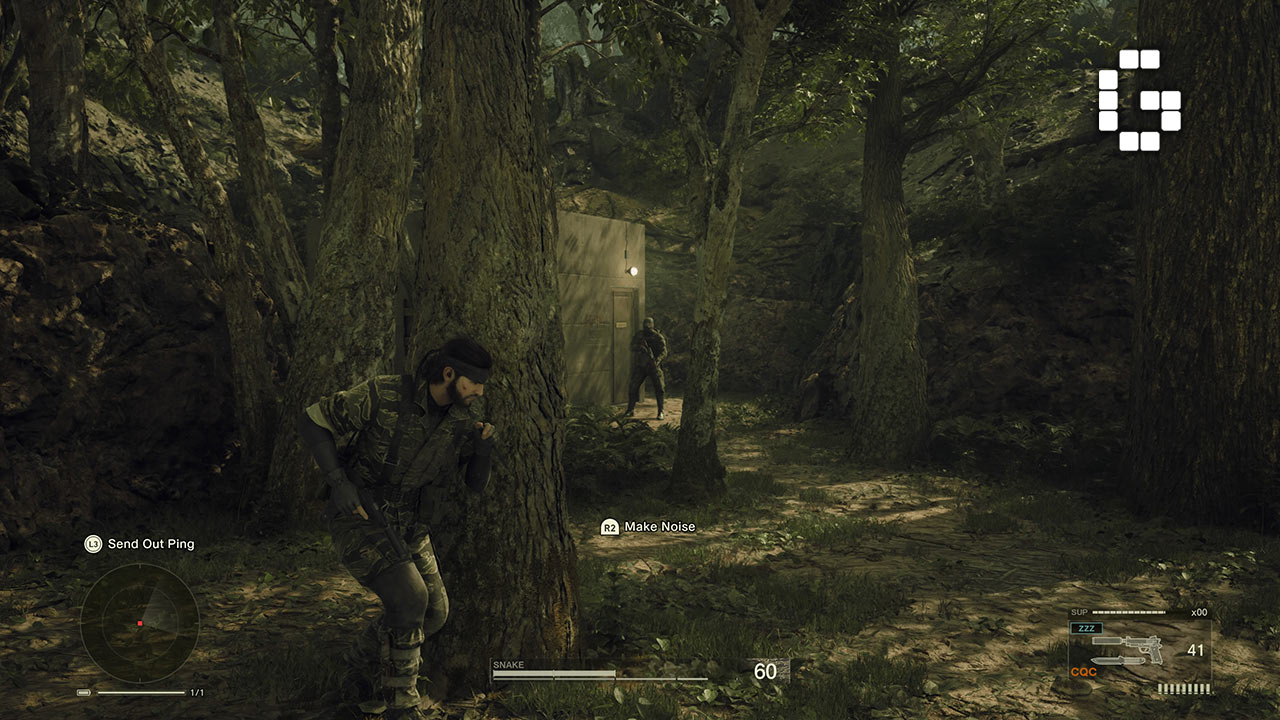
Unfortunately, some problems from the original persist. Stealth takedowns can be inconsistent, sometimes triggering chokeholds instead of knockouts regardless of enemy awareness. Cover-based shooting feels restrictive, only working from specific corners and sometimes failing to activate properly. Enemy AI also has issues, with guards occasionally detecting players when they shouldn’t, and patrol dogs behaving erratically. AI issues are also a thing – enemies may suddenly detect you when they shouldn’t be, and patrol dogs always behave so stupidly like either standing frozen or suddenly revived after being killed. These problems from the original persist and can disrupt the otherwise improved experience.
New Features and Accessibility
This remake wouldn’t feel complete without a variety of new features designed to maximize comfort and accessibility. Starting with gameplay modes, the developers have included Legacy mode which follows the original game’s fixed-camera perspective, and New Style which is designed to feel more like modern third-person shooter games. While many players may prefer New Style, each mode actually has its own advantages.
In Legacy, the fixed camera limits your field of view which makes the game inherently more challenging. But at the same time it allows for first-person shooting, which is far more accurate than relying on third-person aiming. New Style on the other hand makes exploration more enjoyable, but aiming in third-person is less precise, especially since the crosshair can’t always be relied on.
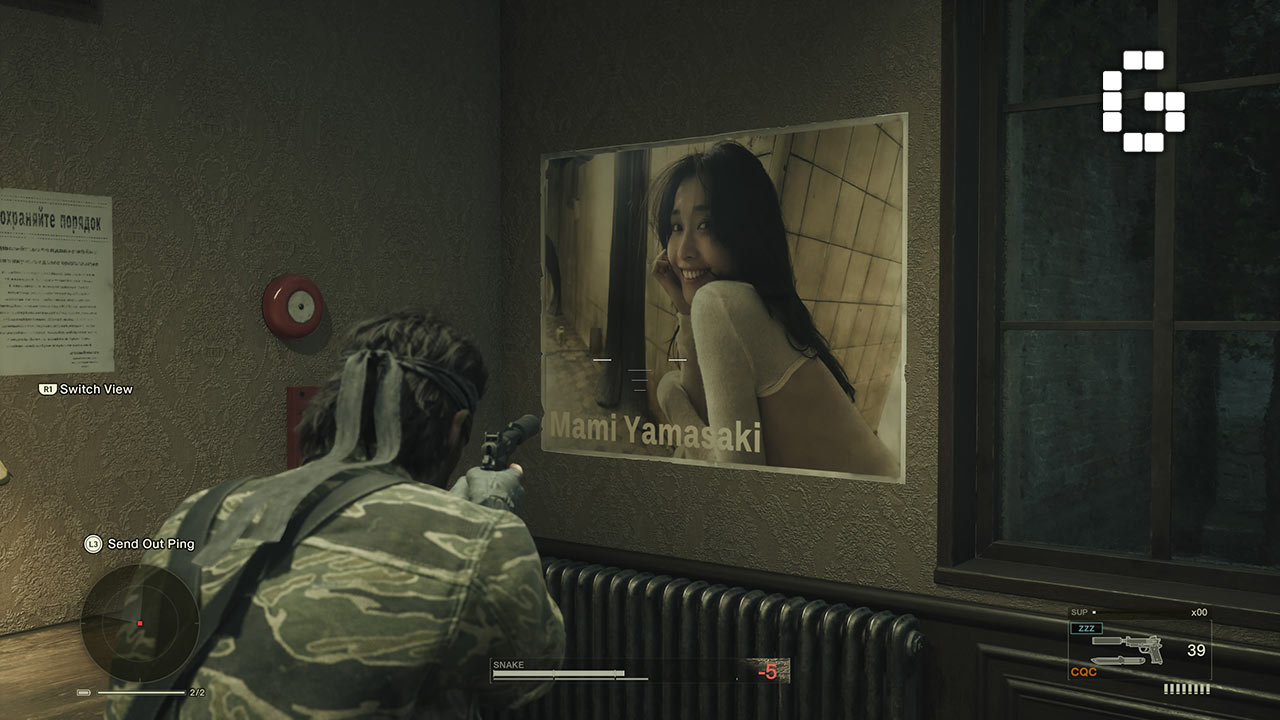
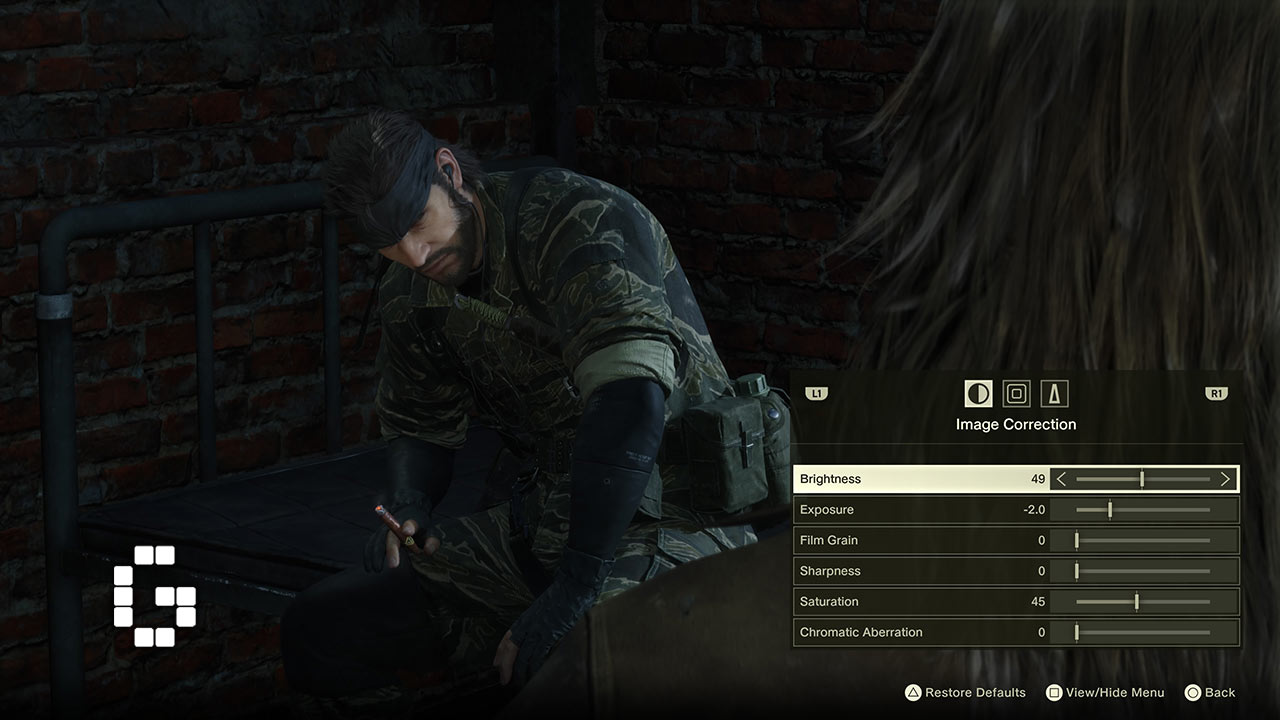
Beyond camera modes, the game adds numerous features including a Photo Mode with extensive options which can even be used during cutscenes, as well as new accessibility options for control schemes and visual indicators. To enhance the nostalgic feel, there’s also a Filter selection that changes the overall visual tone with different styles. Playing the game fully using the Legacy Filter preserves much of the original greenish/yellowish tint while keeping visuals natural without excessive contrast.
To further extend playtime, the game includes a variety of side content. The standout is Snake vs. Monkey, a minigame that puts your character on a mission to capture monkeys in collaboration with the Ape Escape franchise. The minigame’s structure remains faithful to the original – you progress through increasingly challenging stages. Instead of using a net like in Ape Escape, you now capture the monkeys using Snake’s special equipment, which adds a fun and distinct twist. Completing this minigame rewards you with items that can be carried over into the main campaign.
Verdict
If METAL GEAR SOLID Δ: SNAKE EATER represents a serious effort by Konami to revive the franchise, then they’ve certainly laid a solid foundation. From the perspective of longtime players, the wide range of improvements from the visuals and revamped gameplay with smoother animations to various adjustments designed to ensure a satisfying experience are impressive. It’s hard to go back to the original game now, and after enjoying this remake, you can’t help but hope for similar treatment of other classic titles, especially those still locked to old generation consoles like Guns of the Patriots.
Of course, impressions may differ from other players, since this game isn’t exactly easy to recommend unconditionally, especially because of its old-school gameplay feel, heavy emphasis on stealth, and strong focus on survival mechanics that demand careful attention. That said, based on the experience, the biggest drawbacks lie in cover-based controls, shooting accuracy, special actions, and enemy AI, all of which still feel inconsistent and in need of a more thorough overhaul.
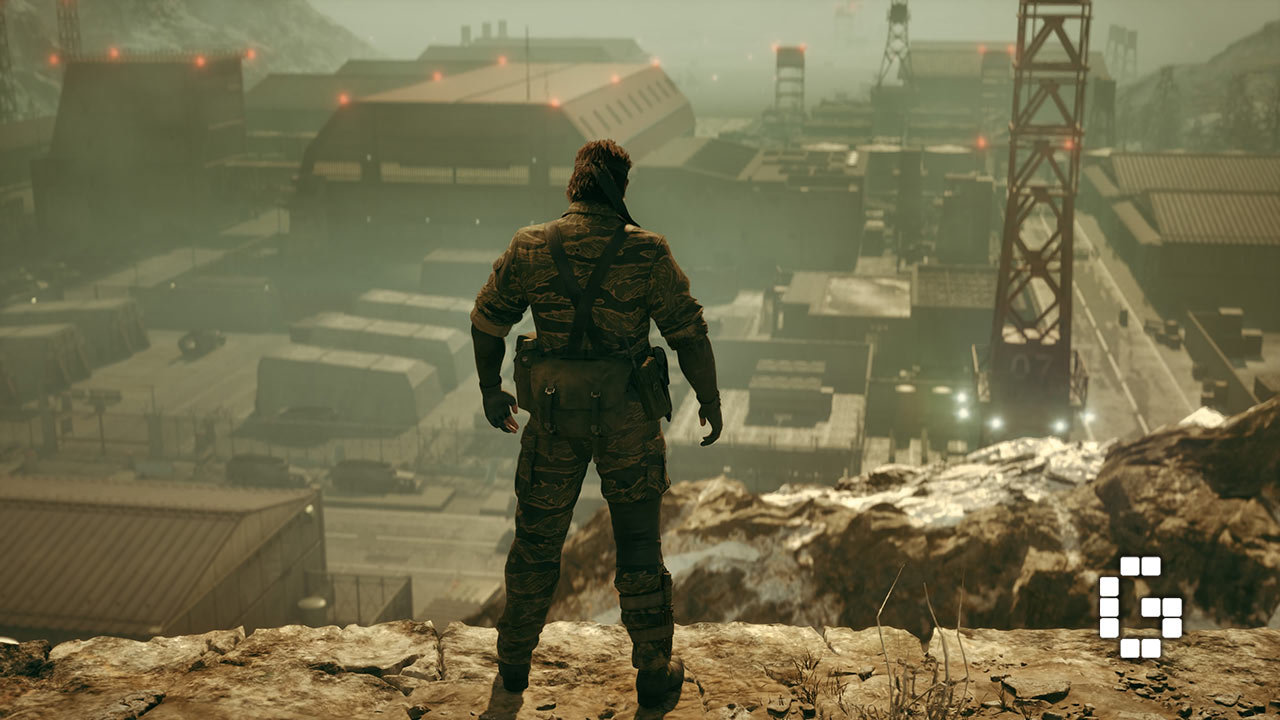
For longtime Metal Gear fans, this remake represents an excellent way to revisit a classic story with modern presentation. Newcomers should understand that this isn’t a typical action game – it’s a methodical stealth experience that rewards patience and planning over quick reflexes. Despite its imperfections, the remake establishes a strong foundation that hopefully signals Konami’s commitment to reviving this beloved franchise.





The Review
METAL GEAR SOLID Δ: SNAKE EATER
PROS
- Amazing visual and animations overhaul with Unreal Engine 5.
- New character models translate every character so perfectly.
- Legacy and New Style mode is essential in its own way.
- Gameplay is a lot smoother and enjoyable.
- Exploration always feels rewarding.
- Great replayability with Fox Hunt mode on the way.
CONS
- Some story cutscenes looks weird when translated to the new graphics, especially when seeing character trying to express emotion.
- Annoying inconsistencies in gameplay.
- AI quality could be better.