







![[EXCLUSIVE] Brendan Gan Delivers One of Malaysia’s Best-Ever Worlds Results, Shares Thoughts on Pressure and the Local Scene](https://cdn.gamerbraves.com/2026/08/Brendan-Gan_Interview_FI-360x180.jpg)




![[EXCLUSIVE] Studio 4°C Co-Founder Koji Morimoto on AI, Creativity, and Animation’s Future at ASEAN Digital Summit 2025](https://cdn.gamerbraves.com/2025/09/Koji-Morimoto-Exclusive_Interview_FI.jpg)
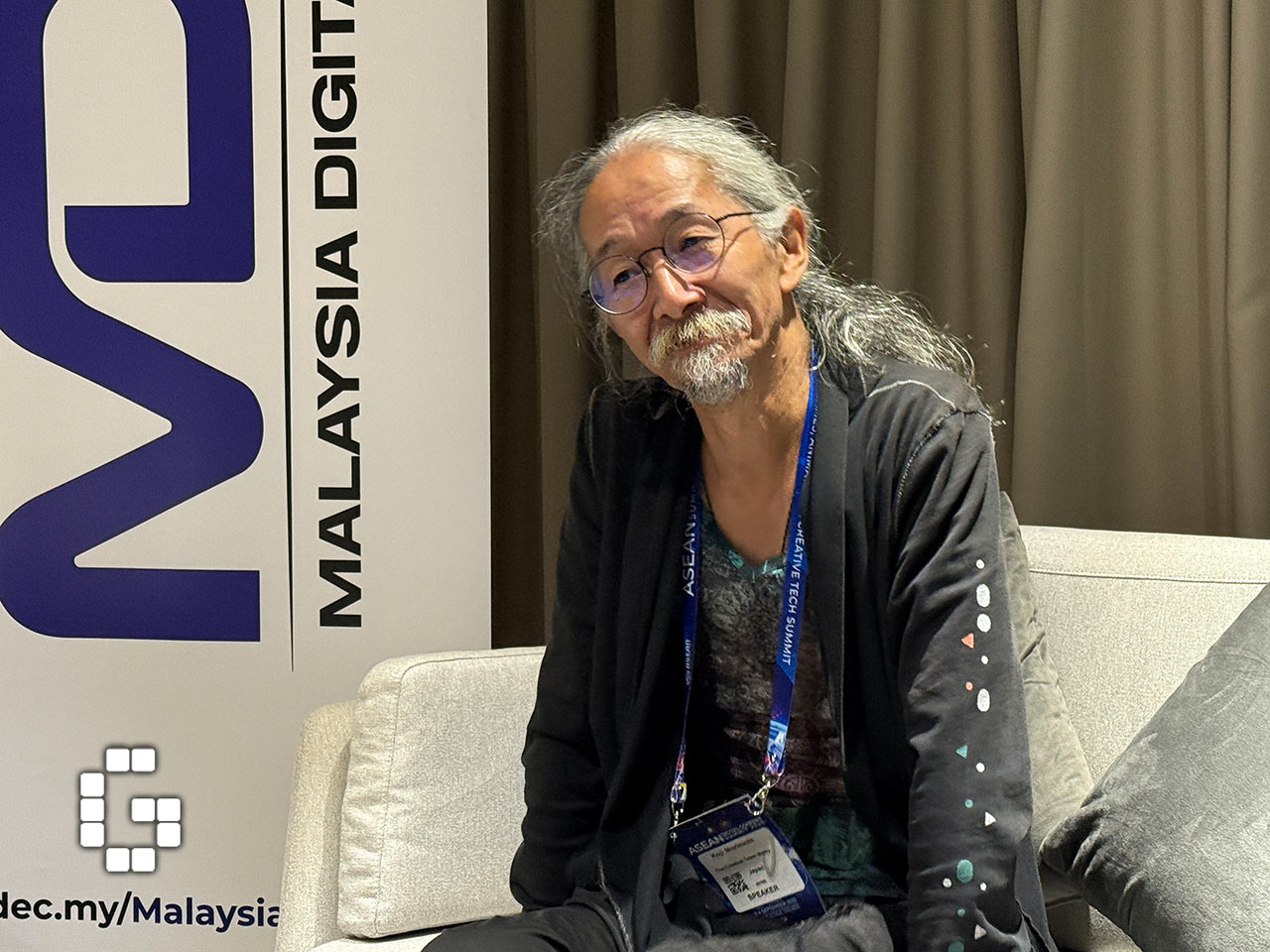
We had the rare opportunity to sit down with Koji Morimoto, the legendary animator behind some of Japan’s most iconic works, including his groundbreaking contributions to Akira. As co-founder of Studio 4°C and a visionary known for his experimental storytelling, Morimoto’s influence on animation extends far beyond Japan’s borders. During his recent conference appearance at the ASEAN Digital Content Summit 2025, where he engaged in an insightful conversation with industry peers, we caught up with him for this exclusive interview to discuss his journey, the changing landscape of animation, and his thoughts on emerging technologies.
From Space Battleship Yamato and The Digital Revolution’s Impact
When we asked about the most defining moments of his career, Morimoto’s response was immediate. “If I had to pick one, it would be when Space Battleship Yamato aired,” he reflects. “For me at that time, it was unbelievably fascinating—so much so that it became the turning point when I decided to become an animator.”
This singular moment of inspiration led him down a path that wasn’t typical by today’s standards. Japan had no formal animation schools when Morimoto started, making him one of the very first “zero-year” students in a newly established program.

As someone who helped shape classics like Akira, we were curious about his perspective on today’s Asian animation industry compared to the past. “The work has become harder in some ways,” Morimoto explains during our interview.
“The lines are more complex now, with more details that require extra effort to draw. At the same time, the internet has completely changed things. On the positive side, you can now easily watch animation from all over the world. But the downside is that the originality or unique style of each country has become less distinct, which I find disappointing.”
Innovation vs. Repetition in Modern Animation
When mentioning current trends in global and Asian animation, asking whether he sees more innovation or repetition, his response revealed his optimistic outlook. “Even though I just mentioned that originality has decreased, I still believe innovation is taking the lead. I think we are at a turning point,” he states.
“There is repetition, yes, but also new creativity. Personally, I’m looking forward to seeing more fresh ideas, and I feel excited about where the industry might be heading.”
He particularly admires new artists he discovers online. “Yes, absolutely. I find many artists interesting, including those from France—especially graduates of GOBELINS, Paris. Their work is very inspiring to me.”
AI and Learning from Younger Generations
Perhaps the most intriguing part of our conversation centered on AI and its role in animation. “If we’re talking strictly about traditional artistry, it’s hard to ignore AI’s presence,” Morimoto acknowledges.
“Its rise will replace many things, including jobs for artists. For example, with AI, a film production team might only need ten people—or even fewer. This is a trend we can’t stop, and it doesn’t just apply to animation, but to almost every industry.”
However, his perspective isn’t entirely somber. “On a lighter note, I sometimes think about AI creating ‘clones’ of myself—copies that could help me complete projects faster and allow me to do more of what I want.”
Having collaborated extensively with younger artists, we asked what he’s learned from working with them. “Because of the generation gap, younger people are far more adept with new tools and technologies, so I learn from them in that regard,” he explains. “As for ideas, their perspectives are fresh and very different from mine. I often discover new ways of thinking and new inspiration by working alongside them.”
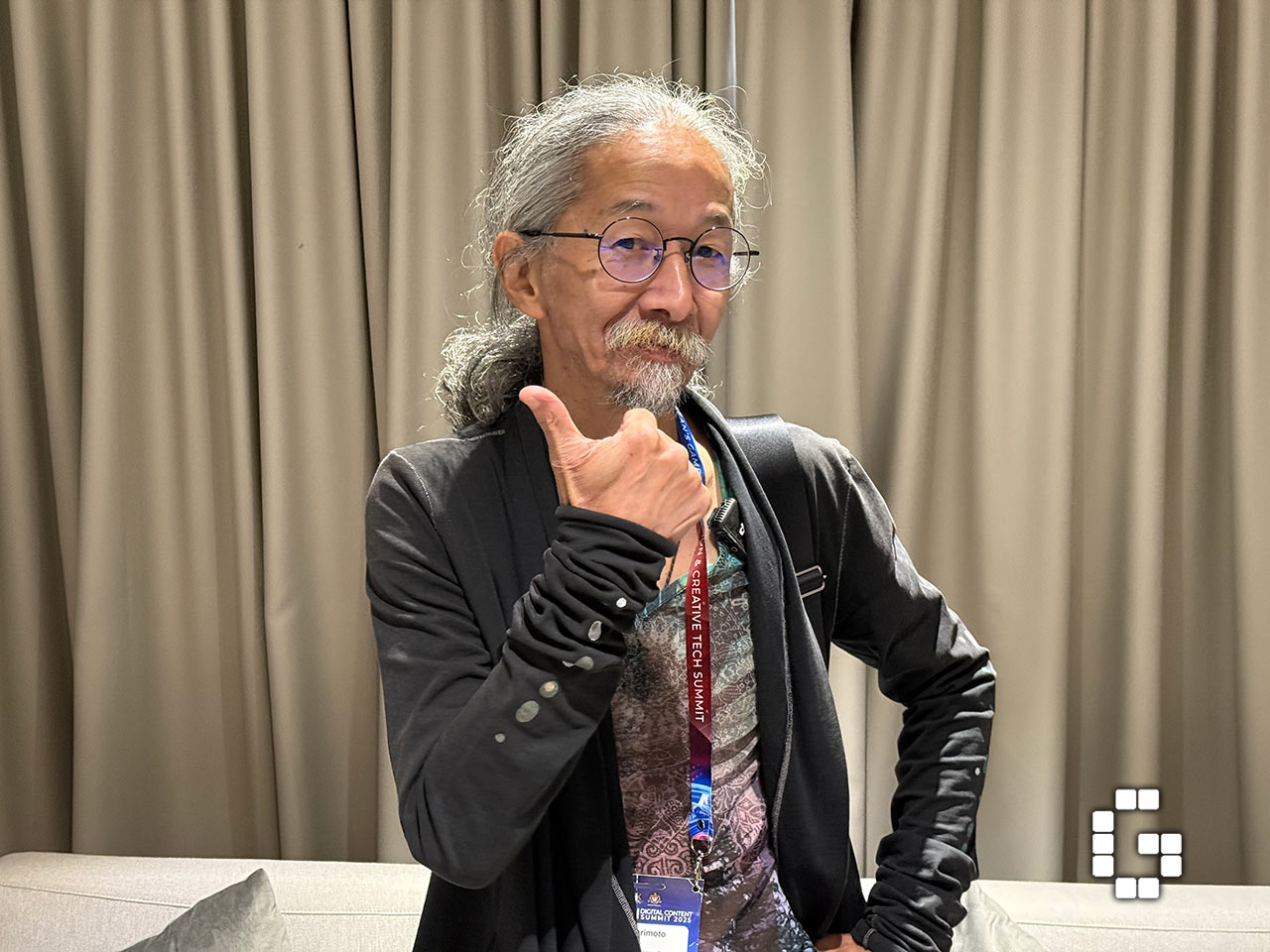
For young animators in Southeast Asia who look up to Japanese masters, Morimoto offers wisdom born from experience. “When I was young, we were chasing Disney, trying to follow their style. But eventually, we stopped chasing and started creating something original. That’s when we built a wall of our own,” he reflects. “So I think it’s natural to start by chasing something, but once you break through that barrier, your own creativity will emerge.”
Conference: Sharing Knowledge About Art and Creativity
On the same day, Morimoto also delivered a comprehensive conference session that delved deeper into the principles that have shaped his illustrious career. The impressive presentation took the form of a conversation led by Takafumi Yuki, CEO and publisher of Throne Inc.
During the conference, he invited the audience to recall the era when animation was still in its early developmental stages in Japan, without any formal educational institutions. Morimoto was among the pioneering group of students dubbed “year zero” for the newly introduced program, inspired by great works such as Mobile Suit Gundam and Future Boy Conan.
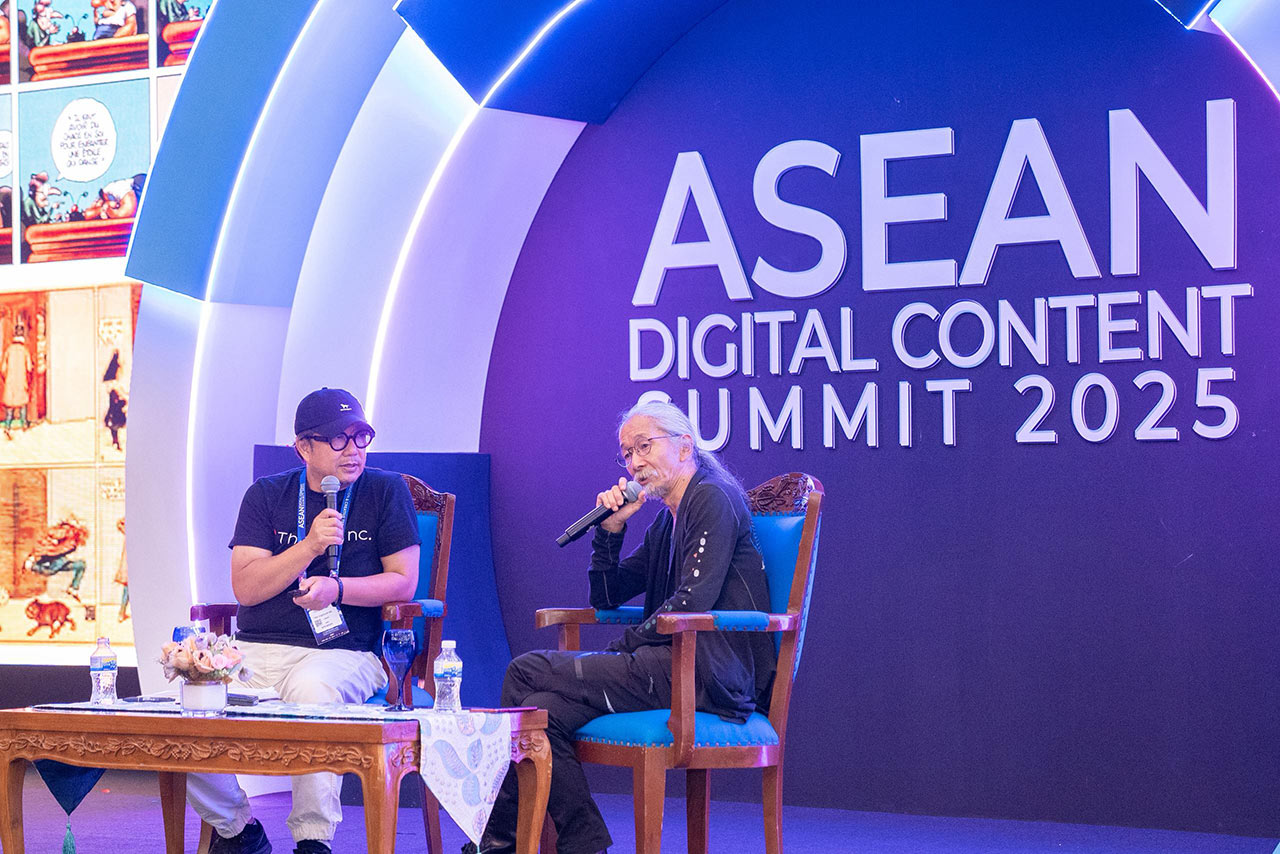
In his conference talk, Morimoto elaborated on his artistic influences, particularly his fascination with French comics (Bande Dessinée) and the legendary artist Moebius, whom he greatly admires for creative freedom and use of color. “As a student, I often sketched and observed people, and that became an important source of inspiration,” he shared with the conference audience.
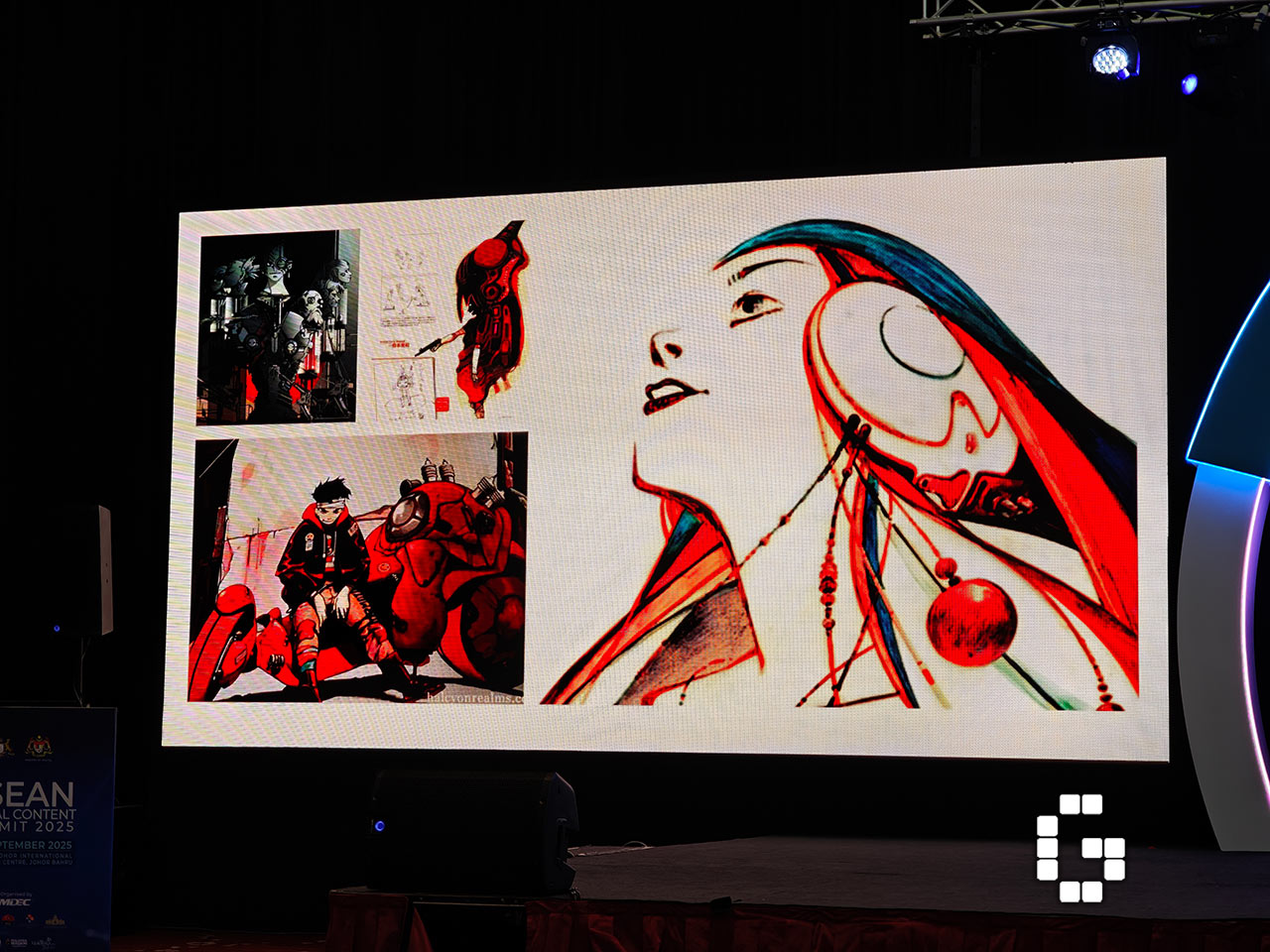
His character designs in the 1980s stood out from typical Japanese anime, with different proportions and lines. Most notably, Morimoto is known for introducing three-dimensional depth (Z-depth) into 2D animation, particularly showcased in Akira.
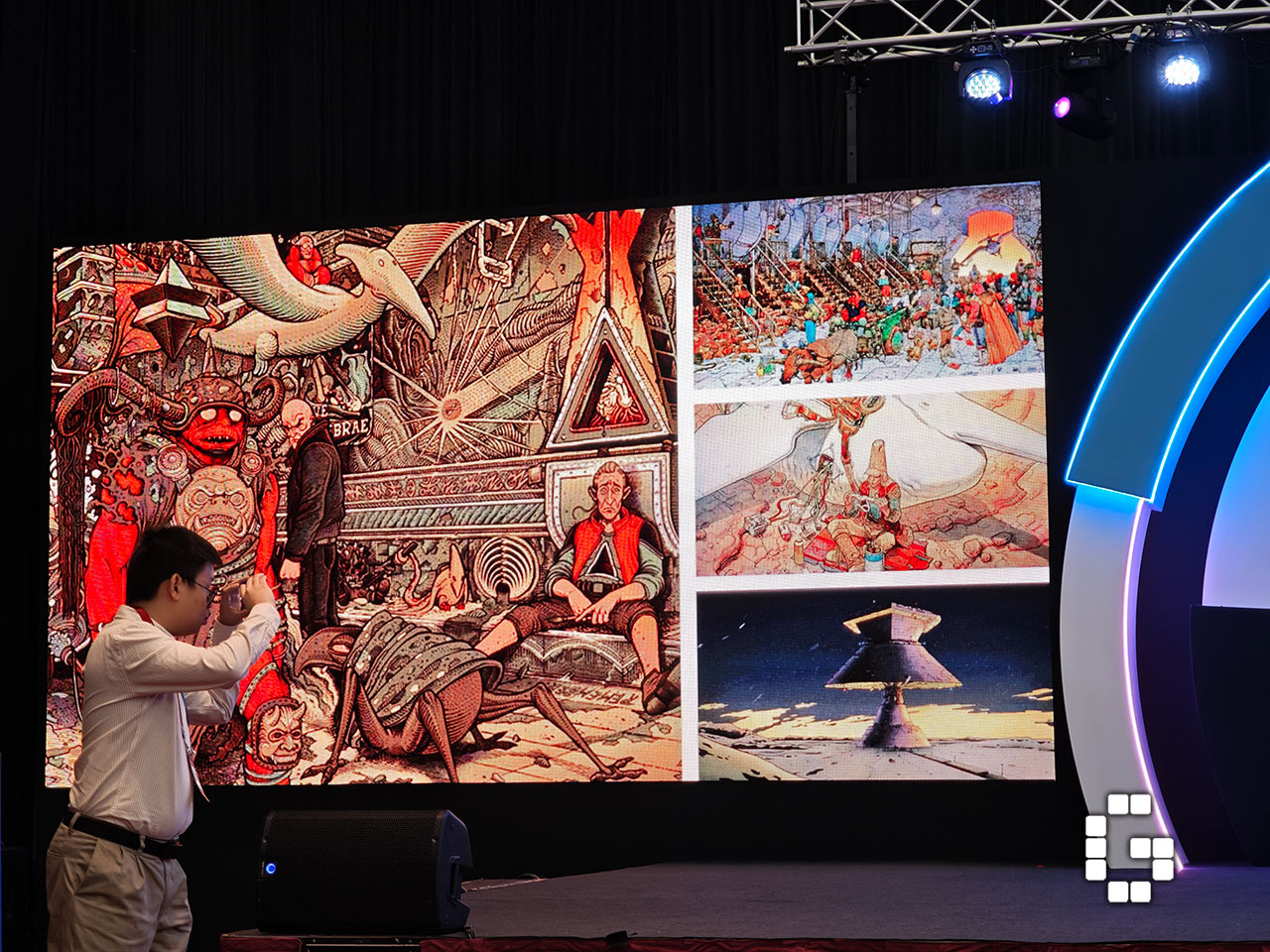
“Everything was created by hand, frame by frame,” he explained to the conference attendees, emphasizing that this achievement occurred before computer graphics technology existed, making Akira one of the last major films to achieve such visual depth without digital assistance.
Technology as a Tool, Not a Master
During the conference, Morimoto also discussed his early experiments with CG technology in Macross Plus, particularly for concert scenes, though it was extremely expensive at the time. His principle remains consistent: technology should be used selectively and effectively to enhance animation without overwhelming it.
This philosophy extends to his current views on AI. During the conference, he explained that AI will enable individual artists to create entire films independently—something impossible in his early days. He encouraged young creators in the audience, noting that they now have unprecedented opportunities through tools like smartphones and platforms like YouTube.
Although he’s currently exploring AI applications in scriptwriting and design, he acknowledges it’s “still unstable at the moment” but expects it to become more practical within a few years.
Creative Philosophy
To conclude his conference presentation, Morimoto shared his fundamental creative philosophy: “Creativity often comes from observing everyday details and seeing things from different perspectives. Small changes in how you view or approach the world can build up into creative breakthroughs.”
He encouraged aspiring artists to experiment beyond tradition and trust their own vision, emphasizing that breakthrough creativity often emerges from the smallest shifts in perspective.

Both our interview and his conference presentation revealed an artist who remains deeply engaged with his craft’s evolution. Morimoto recognizes the challenges facing traditional artistry while embracing the opportunities that technological advancement brings. For a master who helped create some of animation’s most enduring works in an era before digital tools, his openness to change and continuous learning serves as an inspiring example for creators of all generations.
![[GUIDE] JoJo’s Bizarre Adventure: Golden Spirit Codes and How to Redeem Them](https://cdn.gamerbraves.com/2026/09/JoJos-Bizzare-Adventure-Golden-Spirit-Redeem-Codes_News_FI-350x250.jpg)

![[GUIDE] The Seven Deadly Sins: Origin Codes & How to Redeem Them](https://cdn.gamerbraves.com/2026/09/Seven-Deadly-Sins_-Origin-Tier-and-Codes_News_FI-1-350x250.jpg)