
![[EXCLUSIVE] Dragon’s Dogma 2: Dark Arisen Team Opens Up About the Expansion’s Name, New Norgan Region, and Performance Goals](https://cdn.gamerbraves.com/2026/07/Dragons-Dogma-2-Dark-Arisen_Interview_FI-360x180.jpg)











There are games that throw a lot at you at once with a combat system here, a story beat there and somehow none of it sticks together. PRAGMATA is not one of those games. Set on a cold, hostile moon with only a mysterious android girl at your side, it builds something genuinely memorable out of its moving parts: tight dual-character gameplay, progression systems that keep rewarding you well into the back half, and a relationship at its center that quietly sneaks up on you.
In our review of PRAGMATA we’ll cover everything from the combat, the hacking, the exploration, the story setup, and where the game stumbles so you know exactly what you’re walking into.
Story
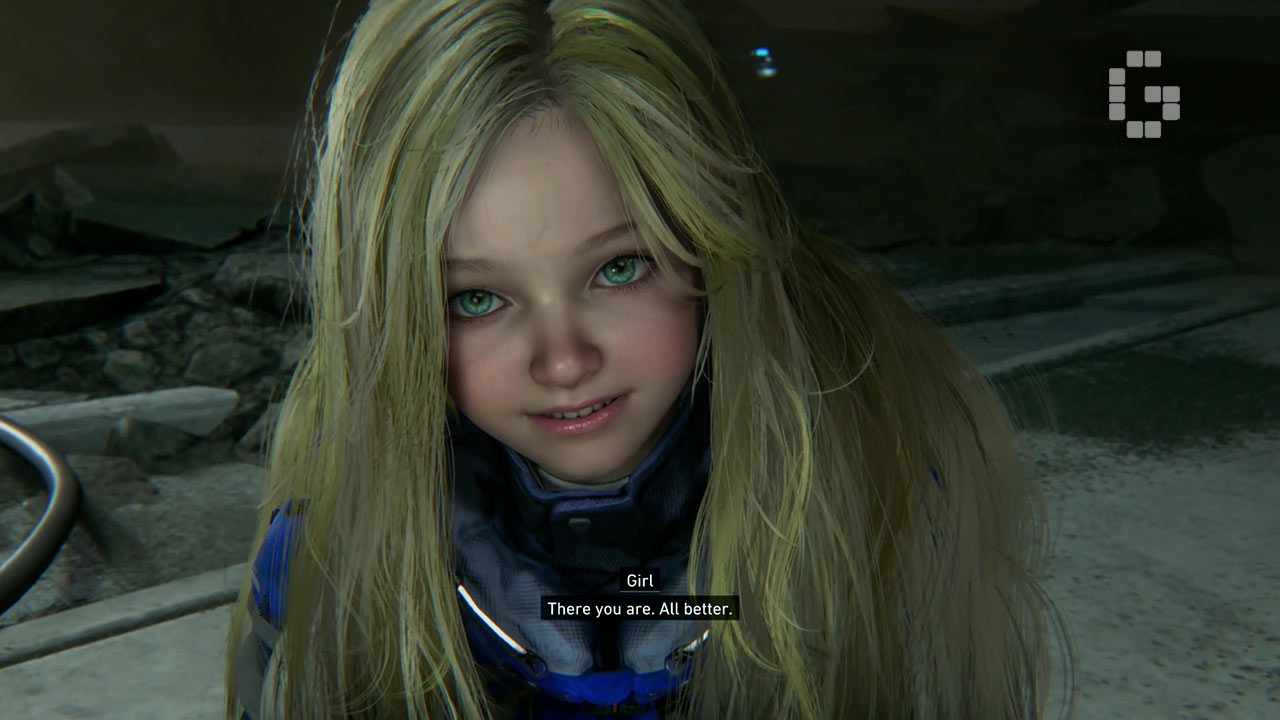
PRAGMATA takes place in a near future where humanity has discovered lunum ore and used it to develop Lunafilament, a material capable of replicating anything as long as its data exists. When all contact with a lunar research station goes dark, a response team is sent up and among them is Hugh Williams. He’s not the seasoned veteran of the group. When a violent lunar quake scatters the team and leaves him critically injured, it shows. What snaps him into focus is Diana, an android girl built from Lunafilament itself, who appears beside him in the chaos. From that point, Hugh has two goals: protect Diana and find a way to get back in contact with Earth.
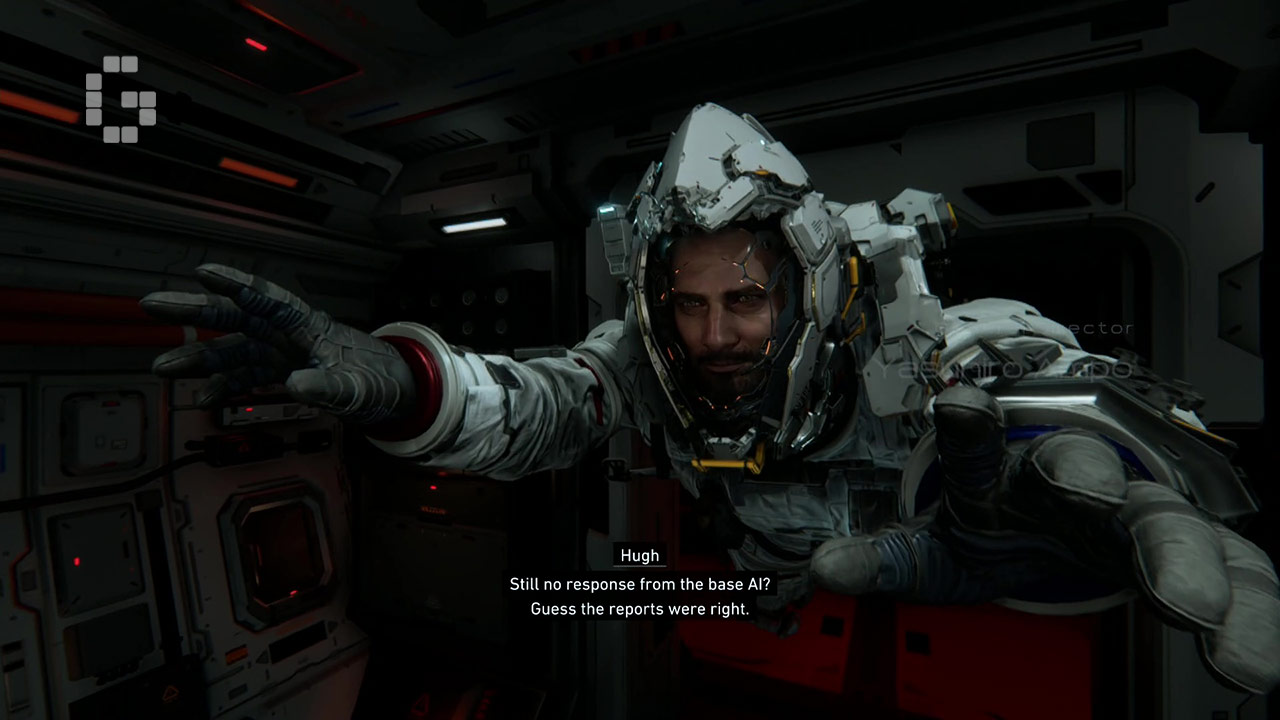
What the game does well from the start is resist making Hugh the classic tough-guy protector. He leans on others early on, and it’s meeting Diana that gives him direction. The two are written as genuine equals with Hugh handling shooting and physical combat while Diana deals with hacking, and neither of them would last long without the other. That mutual dependence is felt in the moment-to-moment gameplay, not just the cutscenes.
Combat
Hugh carries four weapon slots at any given time. One is always reserved for his default sidearm, the Grip Gun which has unlimited ammo, slow auto-reload, and always there as a fallback. Later in the game, a second option becomes available for that slot: the Pulse Carbine, which fires faster but hits softer per shot. Knowing when to swap between the two adds a small but real layer of decision-making.
The other three slots are each locked to a specific category: Attack Units, Defense Units, and Tactical Units. Carrying capacity for each expands as the game progresses, but equipping duplicate weapons is never allowed since two Attack Unit slots means two different Attack Unit weapons, not the same one twice. This shapes how players approach their loadout, pushing toward variety rather than stacking a favorite.
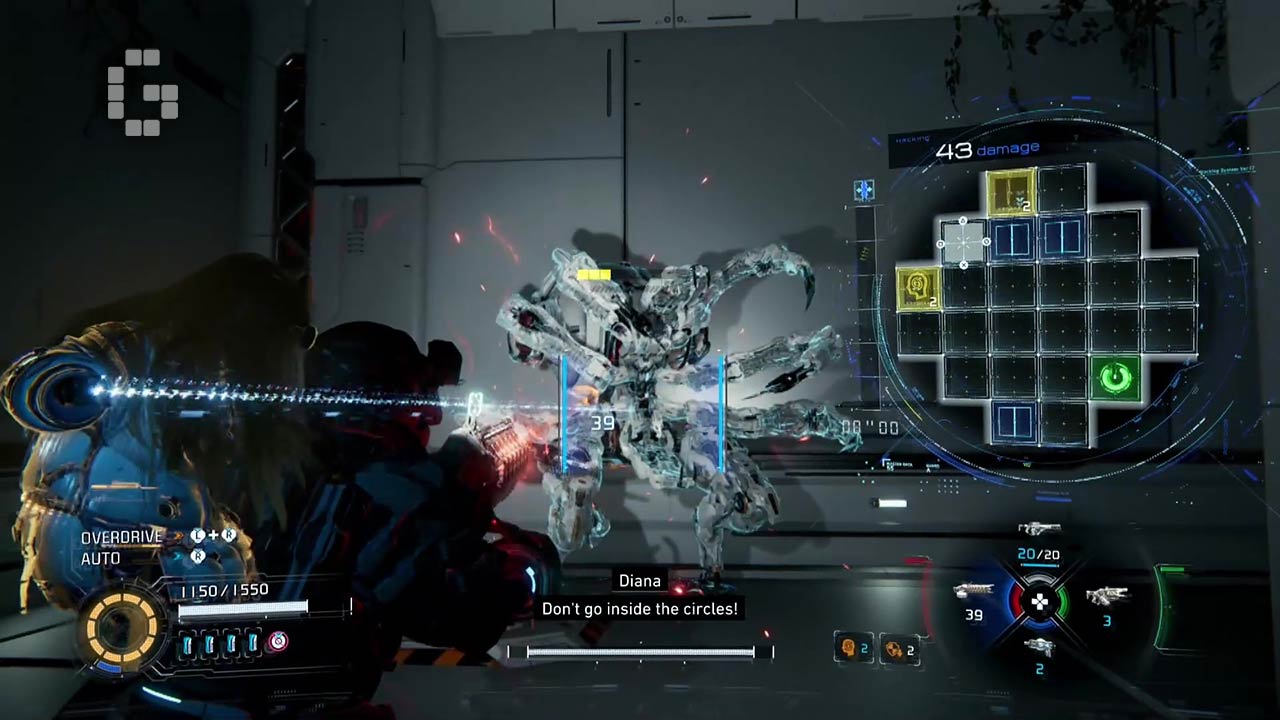
Attack Units cover your direct offense. The Shockwave Gun hits hard up close like a shotgun. The Charge Piercer rewards patience with a penetrating shot after a full charge. The Photon Laser also requires charging but delivers a sustained beam rather than a single hit. Defense Units shift the focus toward survival with the Decoy Generator projecting a hologram that pulls enemy attention away from Hugh, creating breathing room mid-fight.
Tactical Units handle crowd control: the Stasis Net locks enemies in a semicircular energy field, the Riot Blaster covers a wide area like a grenade launcher, and the Sticky Bomb removes specific rows or columns from an enemy’s hacking panel, clearing a path for Diana.
Enemies and the Environment
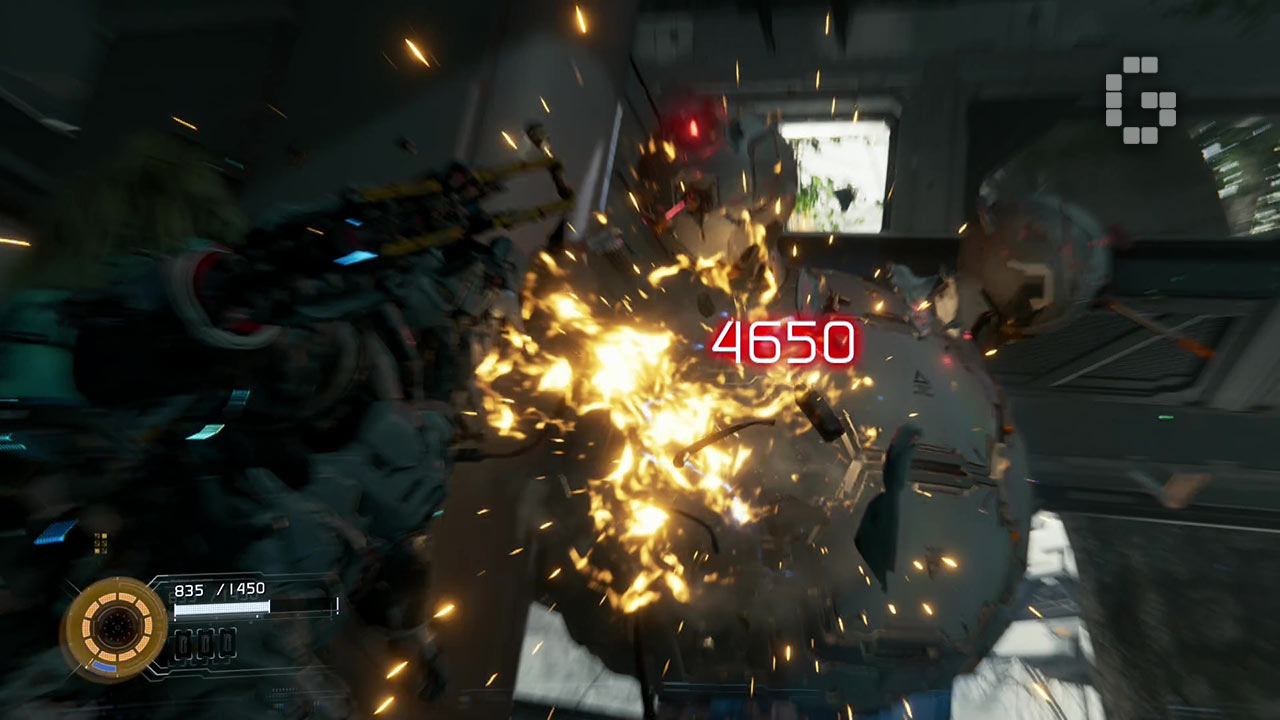
The enemy variety in PRAGMATA is solid. Sphere-type robots come in several forms like a flying type that hunts Hugh actively, a ranged type that fires missiles from a distance, and a melee type that spins into close-range damage. The larger humanoid robots carry a coordination threat: they can raise a shield that completely blocks Diana’s hacking until Hugh physically destroys the covering on their face, which turns those encounters into something that demands deliberate teamwork.
Spider-type enemies add a different kind of tension. They fold their limbs across their chest to cover their weak point and have the ability to cloak, appearing from any direction. The only warning is a subtle distortion in the air. Getting grabbed by one triggers a forced hacking sequence where Diana has to break through the enemy’s panel fast, or Hugh takes a second hit on top of the first.
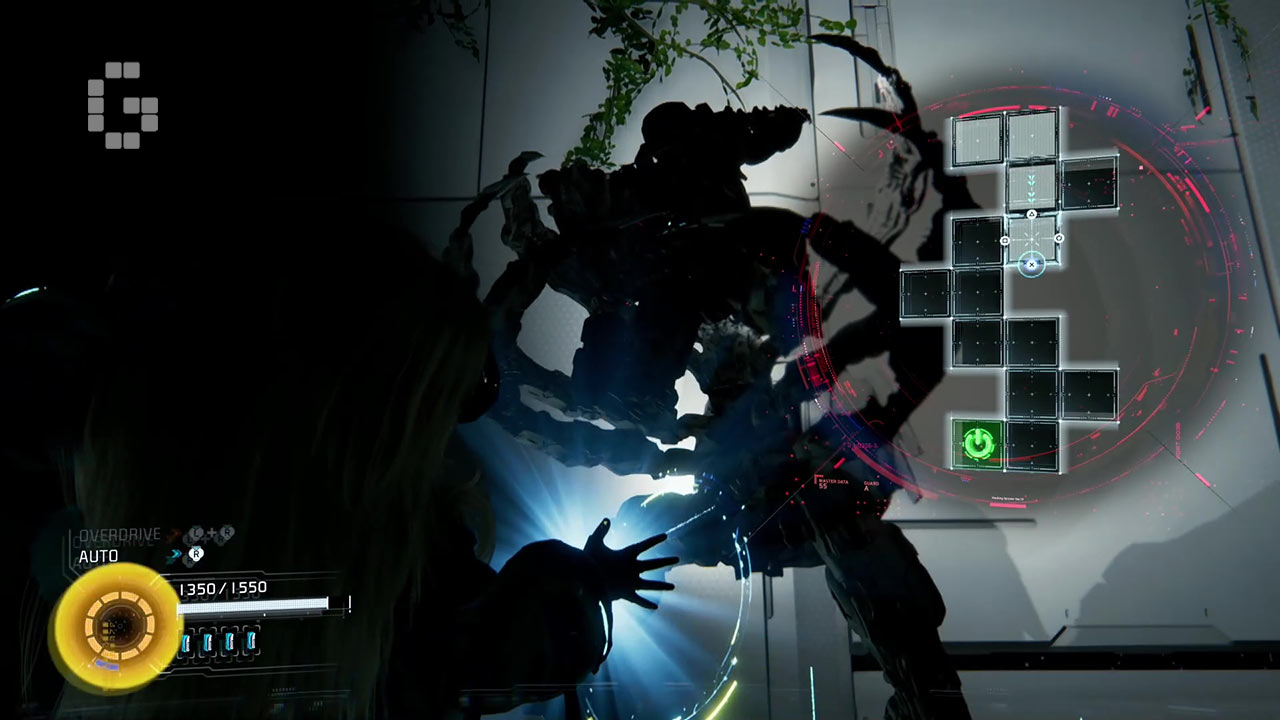
The environment also plays a direct role in combat. Laser installations can be activated mid-fight by having Diana hack a nearby switch, clearing out groups of enemies at once. Persistent electrical fields on the ground can be used as weapons, you can lure enemies into them and they short out. Jammers are the main environmental threat: they emit interference that shuts down all of Diana’s hacking, blocking enemies, doors, and any hackable mechanism. When multiple jammers stack up, clearing them becomes the immediate first priority.
Each boss in PRAGMATA is its own distinct encounter. The first, fought inside the space station, is a heavily armed combat robot that charges, launches tracking grenades, cycles through a wide range of attack patterns, and functions as a final exam for everything the early game teaches.
One boss takes place in a recreation of New York City built on the lunar surface, a striking backdrop that matches the spectacle of the fight. The boss runs through multiple phases and its most punishing move is a map-wide barrage that leaves no safe ground. The only option is to climb one of the randomly placed buildings in the arena and hold on until it ends.
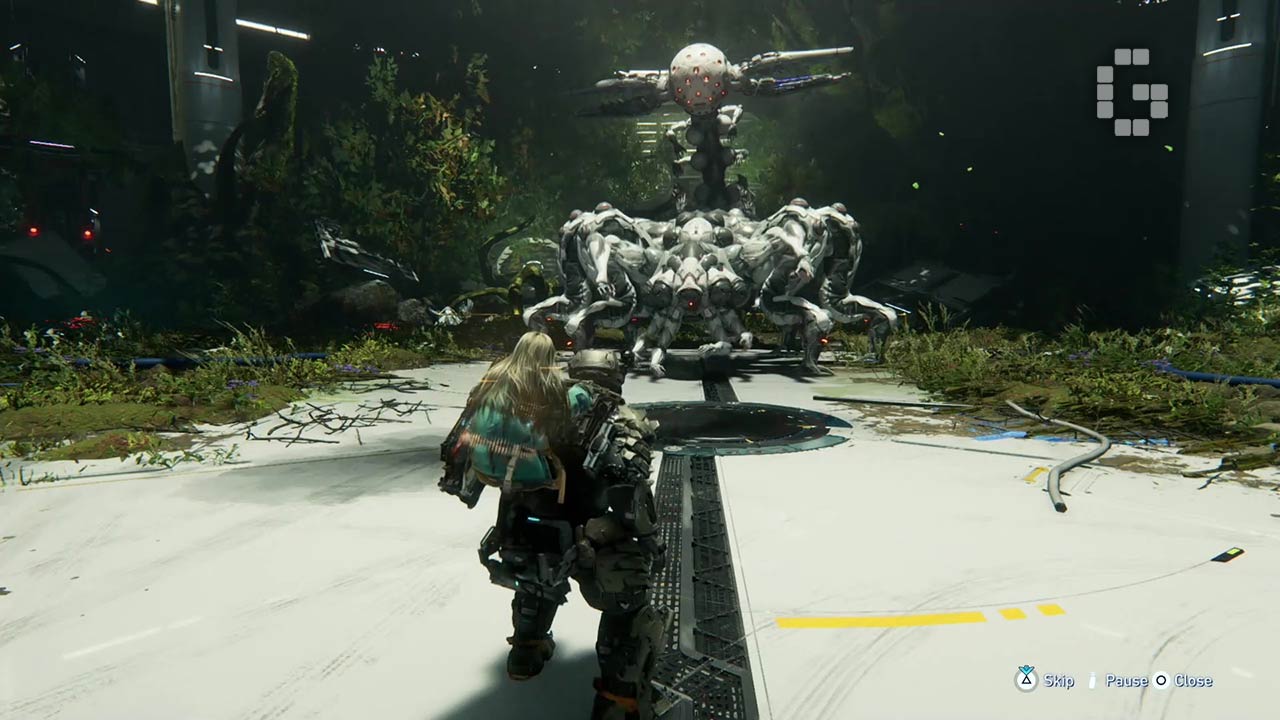
Another boss is a mechanical fusion of scorpion and octopus, and what makes it land is a visual quality to the body that reads as disturbingly organic and is almost like flesh in a game that otherwise commits fully to clean sci-fi design. All fights are backed by effects and sound design that make them feel appropriately cinematic.
Hacking
While Hugh handles the physical fight, players simultaneously manage Diana’s hacking in real time. Every enemy has its own panel with a unique layout, so each encounter is a puzzle layered on top of a firefight. A successful hack strips an enemy’s armor and opens them up to significantly more damage.
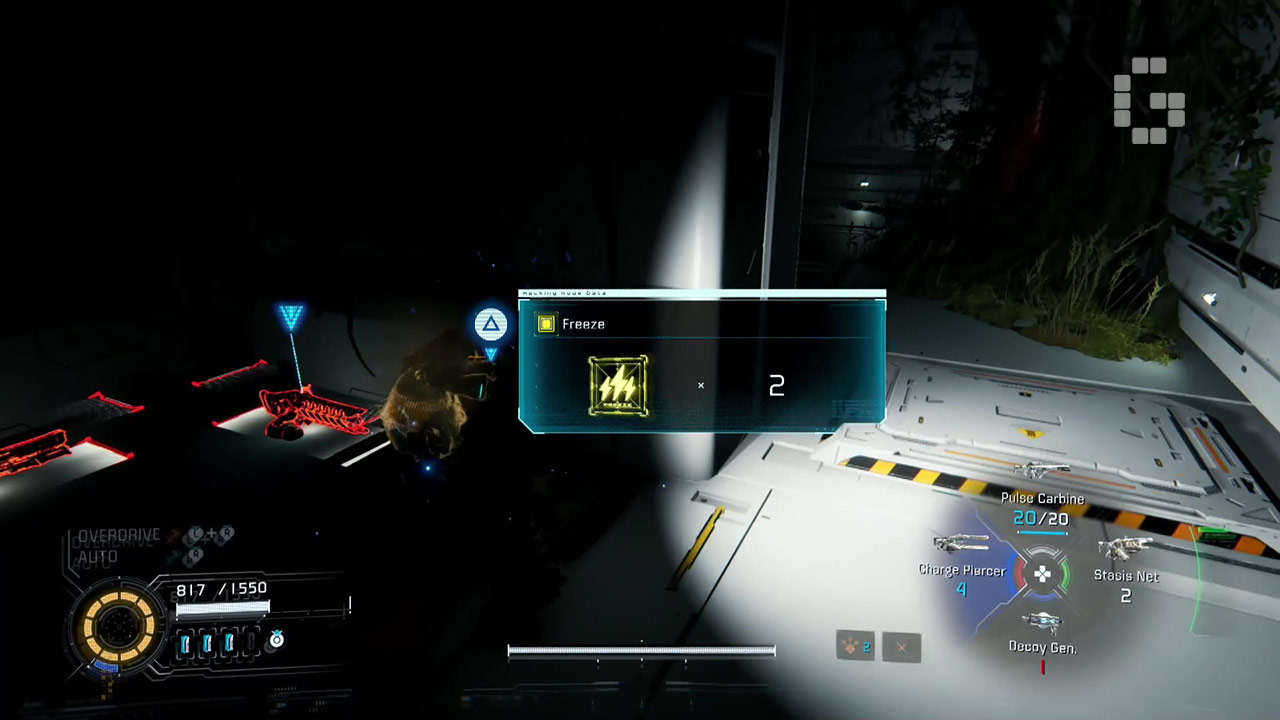
Navigation means guiding a cursor from a start point to a green endpoint. Blue nodes along the path can be linked to boost damage output and duration, though connecting every one isn’t always the right move. Reading the situation and deciding how many to chain is part of the skill. Yellow nodes trigger special effects when included in a completed path: reducing enemy defense, hacking multiple targets at once, briefly freezing enemy movement, or scrambling targeting so enemies turn on each other. Using a yellow node spends it from stock, so managing supply and deciding when the effect is worth it adds a consistent strategic layer.
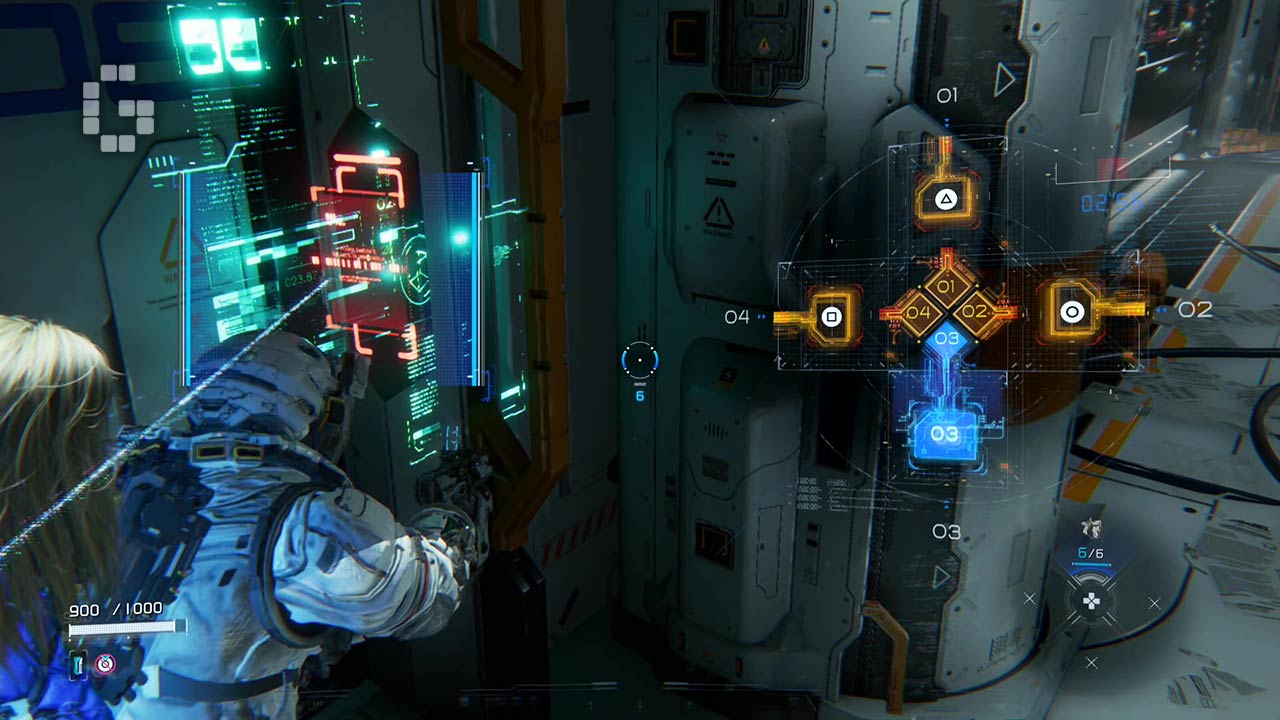
When an enemy is in an exposed state, an Offense Mode panel activates separately. Connecting those nodes charges up bonus damage for the next hack, making it worth engaging with even when an enemy is already vulnerable. Diana builds a Hacking Gauge through successful hacks, and once full, it can be spent on Overdrive which can simultaneously hacking every enemy on the field and locking them in place. In dense encounters, it completely flips the situation. An auto-hacking ability unlocked later draws from the Gauge in smaller amounts, taking some of the edge off the constant coordination the game demands.
Hacking also extends beyond enemies. Locked doors, environmental traps, and even incoming enemy missiles are all valid targets. Hacking a missile mid-flight and redirecting it back at the enemy that fired it is one of the more satisfying tools available, and in encounters where aerial units are stacked and hard to address directly, it’s often the most efficient option.
Exploration and Progression
Exploration in PRAGMATA doesn’t pad itself out with excessive collectibles or long checklists. What’s there to find is there for a reason, and the rewards are strong enough to make looking worthwhile without the process ever feeling like busywork.
The Shelter serves as the home base between runs. Escape Hatches found during exploration can be unlocked to fast-travel back at any time, allowing players to restock Hugh’s suit with Repair Cartridges, upgrade equipment, and recover before heading back out. The Shelter itself levels up when a major boss goes down and each level raises upgrade caps and progressively unlocks new features like a Training Simulator, Bot Database for enemy intel, and Outfit Storage for cosmetics. It starts as a basic pit stop and grows into a fully equipped base over the course of the game.
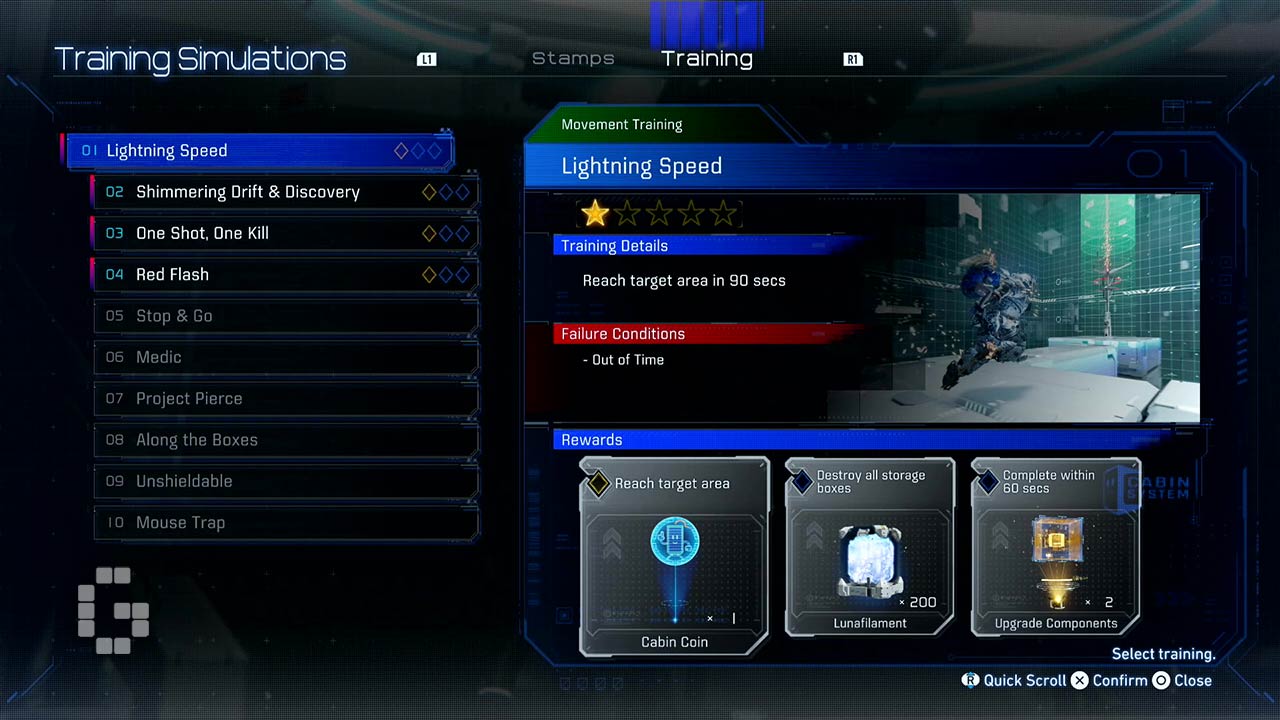
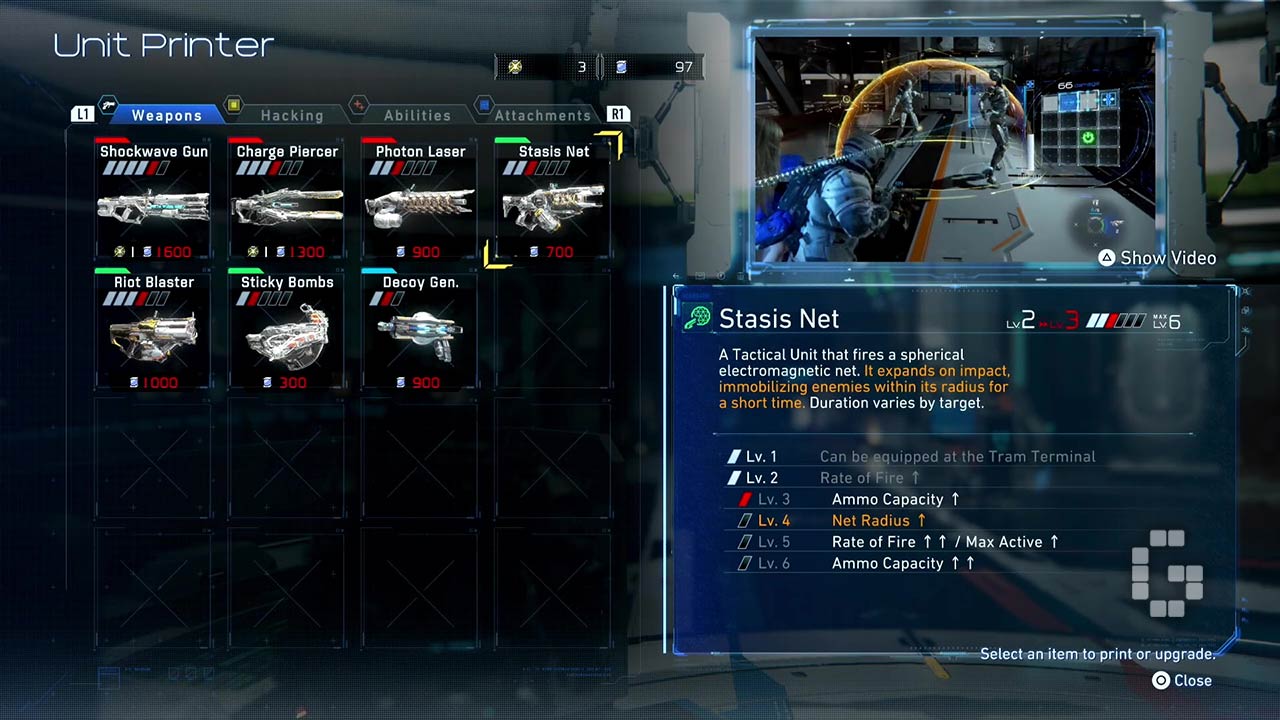
Stat upgrades are handled through yellow cubes called Upgrade Components, which can be invested into Hugh’s weapon damage and fire rate, his suit’s health and defense, or Diana’s hacking damage and exposure window. Lunafilament collected during exploration feeds into the Unit Printer, where weapons and hacking nodes discovered in the field can be manufactured, upgraded, or unlocked. The Printer also handles auto-hacking and MOD slot expansions.
Diana’s new abilities are tied directly to story progression rather than a currency system, which keeps her development feeling connected to the narrative rather than detached from it.
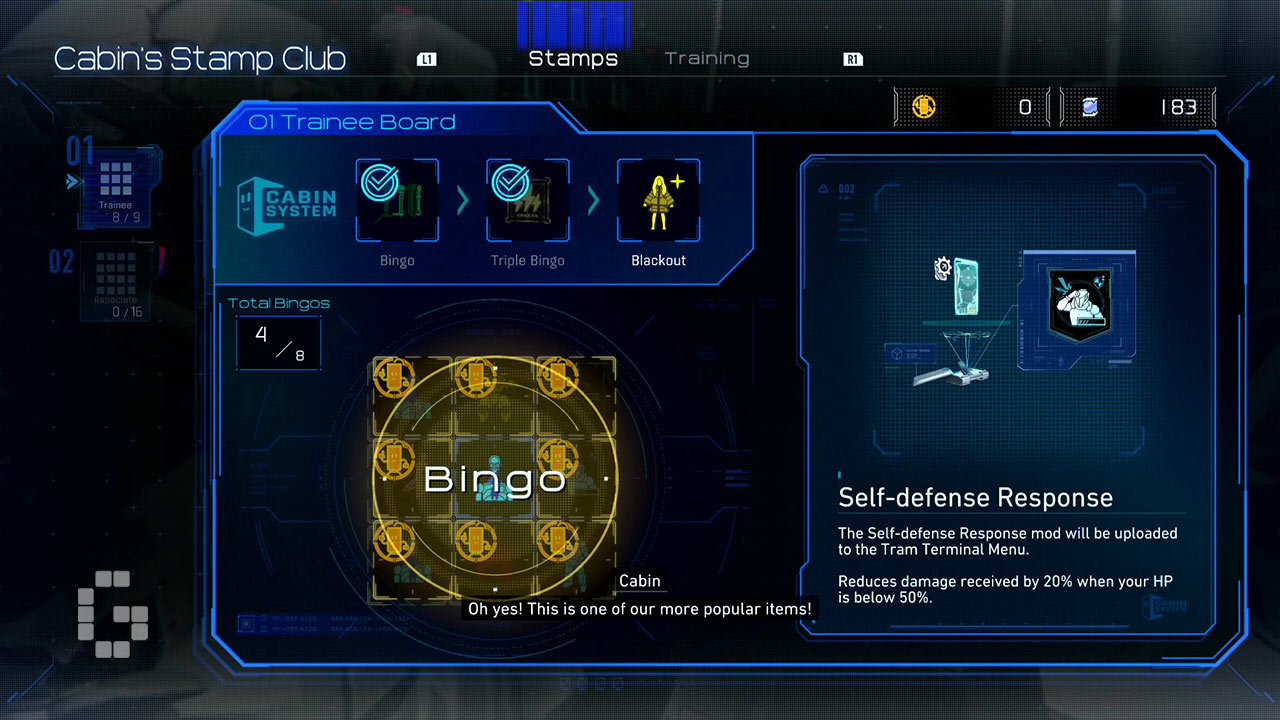
The Cabin system is the most distinctive piece of the progression setup. A robot named Cabin lives in the Shelter, and players spend Cabin Coins which are collected during exploration to unlock individual tiles on a bingo-style grid. Each tile yields something different: items, Bot Data, Red Zone access keys, or cosmetics. Completing a full row triggers a Bingo reward with something more substantial. There’s also a hidden layer the game doesn’t announce: occasionally during exploration, a “Ta-da” sound plays nearby. It signals a miniature Cabin figurine hidden somewhere in the area. Shoot it to collect it, and it goes on display back in the Shelter, giving a small touch that gives thorough exploration a charming secondary reward.
Running through all of it is a quieter thread: the relationship between Hugh and Diana. During exploration, players can collect items called Read Earth Memories (REMs ). Brought back to the Shelter and placed in the REM Replicator, they print out completely ordinary Earth objects and scenes that have never existed on the moon: a children’s slide, a globe, a CRT television. Diana explores each one and asks with genuine curiosity what it was used for back on Earth. Her reactions to the mundane are one of the small, consistent pleasures of the game.
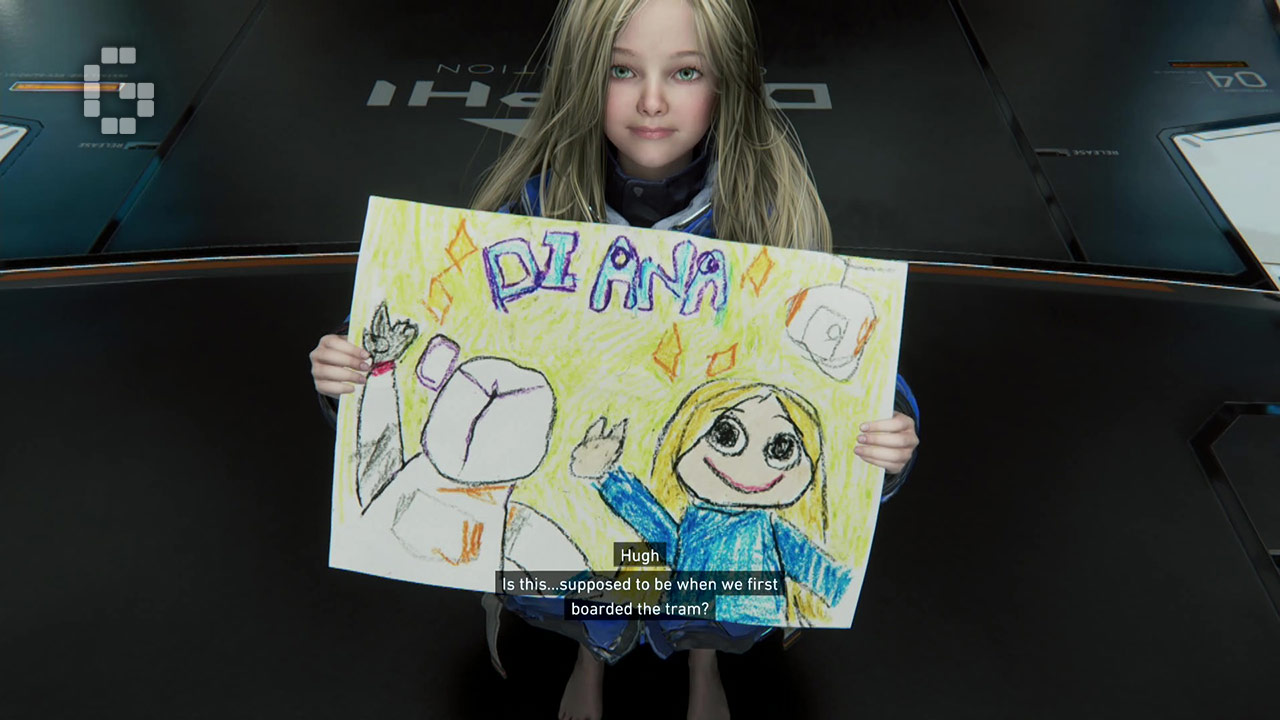
Talking to Diana regularly at the Shelter builds affinity over time. Reach certain thresholds and she’ll present a drawing she made which are simple, childlike, warm in the way that only a child’s art is. The drawings get pinned to the wall of the Shelter, and over time, that functional base starts to feel a little more like somewhere someone actually lives.
Visuals and Performance
PRAGMATA runs cleanly on PS5 with both a Quality Mode and Performance Mode available. Quality Mode holds up well in practice with no significant frame drops during normal play or heavy combat sequences.
The environments cover real ground visually. The game opens in the lunar research base which features a white palette, precise instrumentation, mechanical and colonial design and can feel immediately cinematic. The recreation of New York City on the lunar surface is a dramatic shift: cyberpunk neon against the grey of the moon’s exterior, simultaneously alive and post-apocalyptic. Later, a region filled with plant life such as vines, moss, overgrowth, and even an artificial beach follows two areas defined by cold technology.
The implication, conveyed entirely through environment, is that whoever lived there missed Earth enough to rebuild pieces of it. Diana’s hair also behaves naturally now, falling and shifting with her movement rather than moving stiffly as in earlier builds.
Verdict
PRAGMATA delivers on what it sets out to do. The back-and-forth between shooting and hacking is consistently engaging, the progression systems keep delivering something new well into the game’s back half, the environments reinvent themselves visually across the runtime, and the relationship between Hugh and Diana accumulates emotional weight without forcing it.
That said, the game is not without friction. The constant demand to manage Hugh and Diana simultaneously is the steepest barrier to entry though the auto-hacking ability that unlocks later softens it, but the coordination challenge never fully disappears. The restriction against equipping duplicate weapon types pushes players toward deliberate loadout decisions, but it also places a ceiling on build variety that some players will find limiting.

Both of these reflect the same design philosophy: PRAGMATA creates tension through constraint, forcing decisions under pressure rather than letting players settle. That’s a clear and intentional vision, and where it lands between challenging and restrictive will depend on the individual. For players willing to meet it on its terms, it’s one of the more memorable experiences the moon has to offer.
Played on PS5





The Review
PRAGMATA
PROS
- Unique and cohesive dual-character mechanic between shooting and hacking.
- Hacking system is layered and varied, with every panel feeling distinct.
- Every boss fight is a fresh design with impressive spectacle.
- Environments shift dramatically between areas, keeping the visual experience from going stale.
- Hugh and Diana's relationship feels equal and grounded, with genuine emotional weight.
- Progression systems are well-structured and consistently rewarding in practice.
- Exploration strikes a comfortable balance, never tedious or overwhelming, but consistently engaging.
CONS
- Simultaneously managing Hugh and Diana sets a steep barrier to entry.
- Restricting duplicate weapon types limits build variety and freedom.