![[EXCLUSIVE] Dragon’s Dogma 2: Dark Arisen Team Opens Up About the Expansion’s Name, New Norgan Region, and Performance Goals](https://cdn.gamerbraves.com/2026/07/Dragons-Dogma-2-Dark-Arisen_Interview_FI-360x180.jpg)







![[TGS2025] Producer Masaaki Hayasaka Discusses Balancing Nostalgia and Innovation in Dragon Quest I & II HD-2D Remake](https://cdn.gamerbraves.com/2025/09/DQ-1-and-2-HD-2D-Remake-TGS2025_Interview_FI.jpg)
During Tokyo Game Show 2025, we had the chance to sit down with producer Masaaki Hayasaka to discuss the upcoming Dragon Quest I & II HD-2D Remake. With the remake set to release next month, Hayasaka shared insights into how the development team approached modernizing these classic RPGs while keeping their original charm intact.
These two games hold a special place in JRPG history—Dragon Quest I essentially created the template for JRPGs when it launched in 1986, while Dragon Quest II expanded on that foundation with party-based gameplay and a more complex world. Now, nearly four decades later, these foundational titles are getting the full HD-2D treatment, following in the footsteps of the successful Dragon Quest III remake.
Finding the Right Balance Between Old and New
The biggest challenge for any remake is satisfying both longtime fans and newcomers. For Hayasaka and his team, this meant taking a bold approach. “The main concept for this game that we approached with was to change boldly from the original game without altering its core,” he explained.
The original Dragon Quest I and II were notably compact games, which created concerns during development. “Since the original DQI and II were quite compressed in terms of content, we did see some concerns from existing fans during development, saying, oh, you know, what if this stays this way for the remake, volume-wise?” Hayasaka noted.
The team recognized that these concerns would extend beyond just longtime fans. “We also thought that these same thoughts about content volume would also apply for new players that were more accustomed to playing these more in-depth modern games,” Hayasaka said.
“To meet the expectations of both of these groups, we felt that it was crucial this time around to not only make substantial changes, but also to focus on increasing the content volume to suffice as a modern game.”
However, expansion came with its own risks. “We were also very much careful not to alter the core elements of the original too much, lest it become something entirely different,” Hayasaka emphasized.
Connecting the Erdrick Trilogy
One major addition to this remake is presenting Dragon Quest I and II as a continuous package for the first time. The team used the broader Erdrick trilogy timeline as their guide. “We did have the theme of the Erdrick trilogy as a connected narrative timeline. So going from DQ3 to DQ1 to DQ2,” Hayasaka explained.
“We treated this as an overarching framework, while also incorporating elements within each title that would allow players to really feel the connection between the titles,” he continued. While each game can still be played independently, the team has a recommendation.
“Since each of them are also independent titles or stories on their own, you can play them in any order without issue. However, from more of a developer perspective, we do recommend starting with Dragon Quest 3, because we believe playing in that order will really let you feel those connections between the titles for the Erdrick trilogy most strongly.”
The content expansion was significant. “At the very least, we did aim for the same or greater volume as DQ3 in terms of fleshing out the content, and since this title was also releasing after Dragon Quest 3, we also thought having less content wouldn’t make a very good impression on users,” Hayasaka said.
The results exceeded expectations: “Most importantly, given how quite compact or concise the original game was, we did also anticipate users may be concerned about the volume, but as it turns out, when we did finally unveil it, it ended up being more voluminous than that of DQ3, so that was quite plenty.”
Learning from Dragon Quest III
Having already completed the Dragon Quest III HD-2D remake, the team brought valuable experience to this project. “Speaking on the DQ3 remake, when we were working on this, we truly learned that the opinions of what we want, and what one wants in a remake truly varies greatly among players,” he said.
“The more well-known the original title is, as with the case of DQ3, the more diverse the varying expectations and ideas of what constitutes the best version is. And this really isn’t just true for players, it also applies to the development team as well. Since we had all grown up with Dragon Quest,” Hayasaka explained.
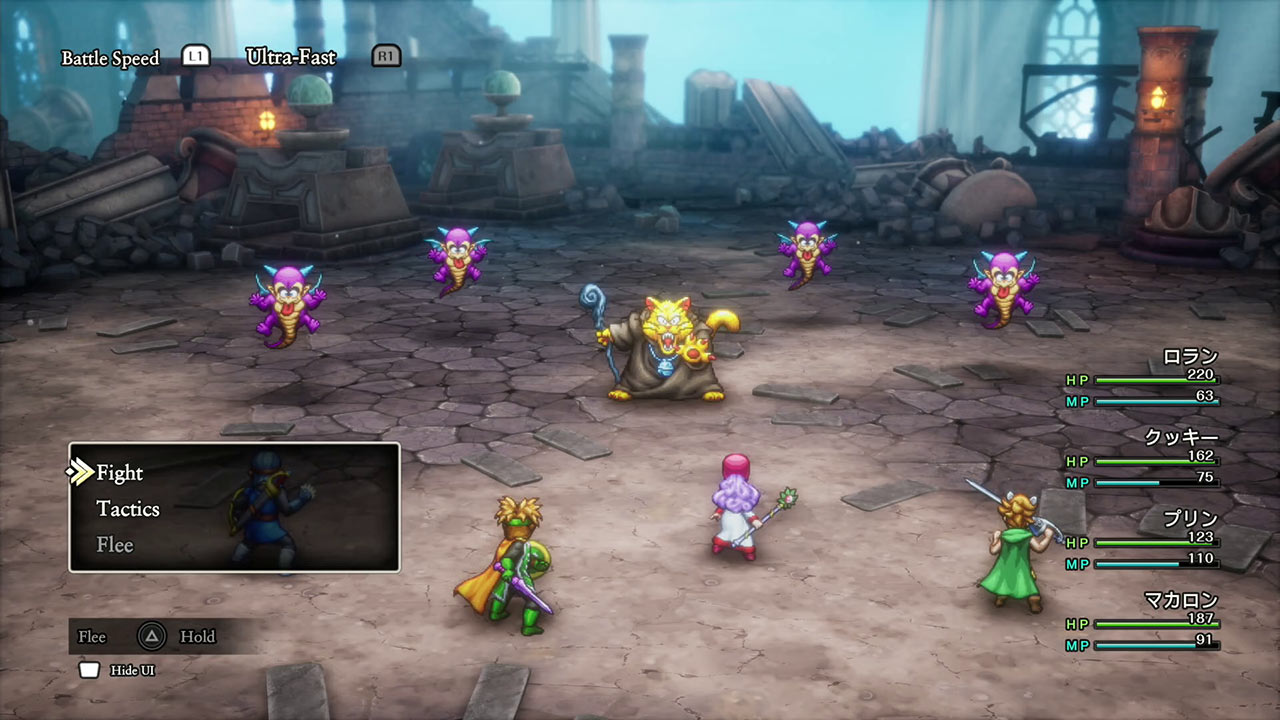
This understanding shaped their approach to the new project. “With all of this, physically it’s impossible to satisfy every single request. And so, we have to seek out the best possible solution that we think would bring out the most joy to our customers, while also considering the time constraints and technical limitations,” he said.
The challenge was even greater for Dragon Quest I and II. “This time, with the DQ1 and DQ2 remake, the scope of changes from the original title was quite larger than with the DQ3 remake. So, there was more of that difficulty of selecting among the various options, the opinions, and this was significantly greater,” Hayasaka noted.
“Even so, we approached development with the attitude that this must surely be the best approach that will bring the most joy to the greatest number of people and we proceeded with that conviction.”
Working with the Original Creator
Throughout development, the team maintained close collaboration with Dragon Quest creator Yuji Horii. “Generally, we proceeded by proposing all of the scenario plots to Horii-san,” Hayasaka explained.
“Regarding the atmosphere and pacing, we had Horii-san play at various stages, like the initial mock-ups, every build, when a certain amount was implemented, and we proceeded development while incorporating his feedback each time. So, there was very much close alignment in this way.”
Making Games More Accessible
The original Dragon Quest was known for being particularly challenging. The remake addresses these issues directly. “Yes, in terms of accessibility and quality of life updates, there have been updates made to the type of spells and equipment that are available in this title. And we’ve thoroughly adjusted the battle balance,” Hayasaka said.

“We were aware that with Dragon Quest I, some fans had the impression that it’s quite a difficult and challenging game. So, in that way, we thoroughly revised the battle balance from the original game, so we’d like for players to rest assured on that front,” he continued.
The team built on lessons learned from their previous work.
“In terms of our learnings from Dragon Quest III, we had already made significant improvements in order to enhance playability, taking from user feedback and such. We’ve implemented features like the ability to display the treasure chest location on and off, and also to show the enemy weakness. And so there’s various different playability adjustments, quality of life updates, that would certainly make this game a much more accessible and playable experience.”
Visual Improvements and Technical Enhancements
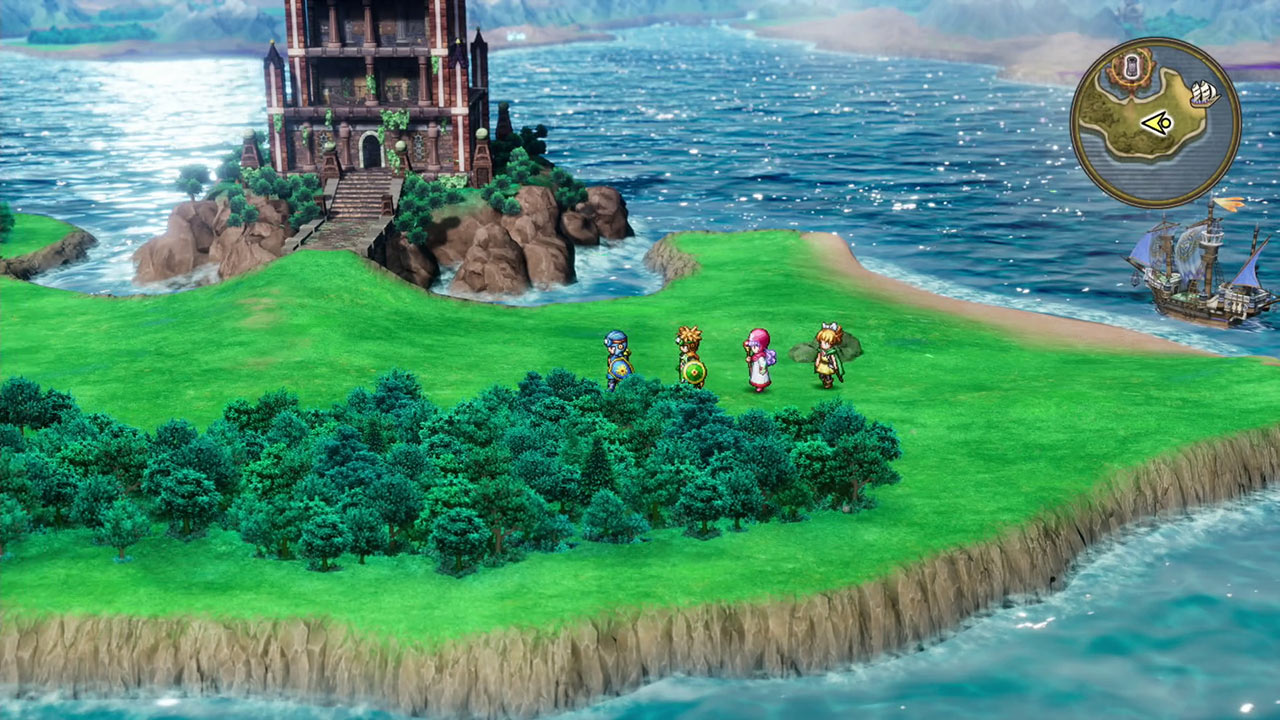
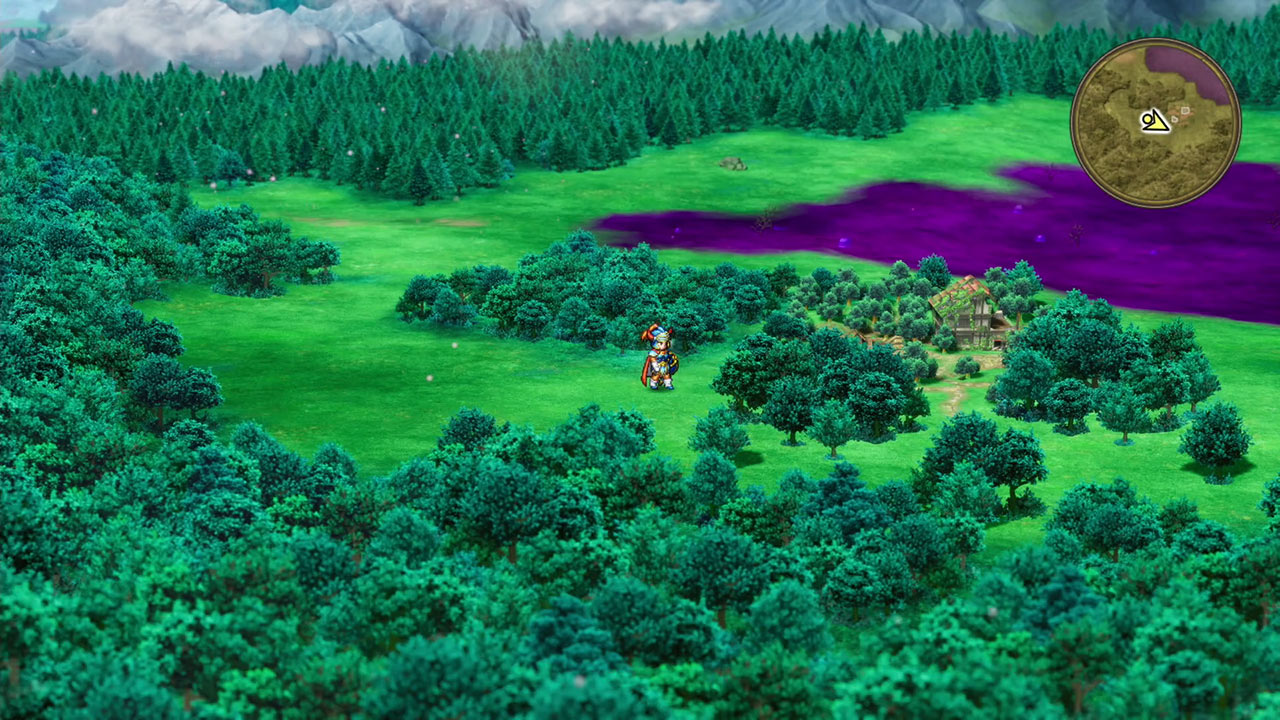
Building on the Dragon Quest III remake, the visual presentation sees several improvements. “I would say the most noticeable change is probably the addition of a diagonal movement of the pixel sprites. We were unable to include this in the previous Dragon Quest III remake due to development constraints,” Hayasaka explained.
“We had things like character adjustments, but we were able to fully implement it this time. And additionally, for backgrounds, we’ve very much enhanced the quality in areas like the castle floors, where the surface has a mirror effect,” he said. “
Especially with the background, the background team leveraged their knowledge that was gained from the previous Dragon 3 remake development experience to really create something better. So we truly hope that players will pay close attention to these.”
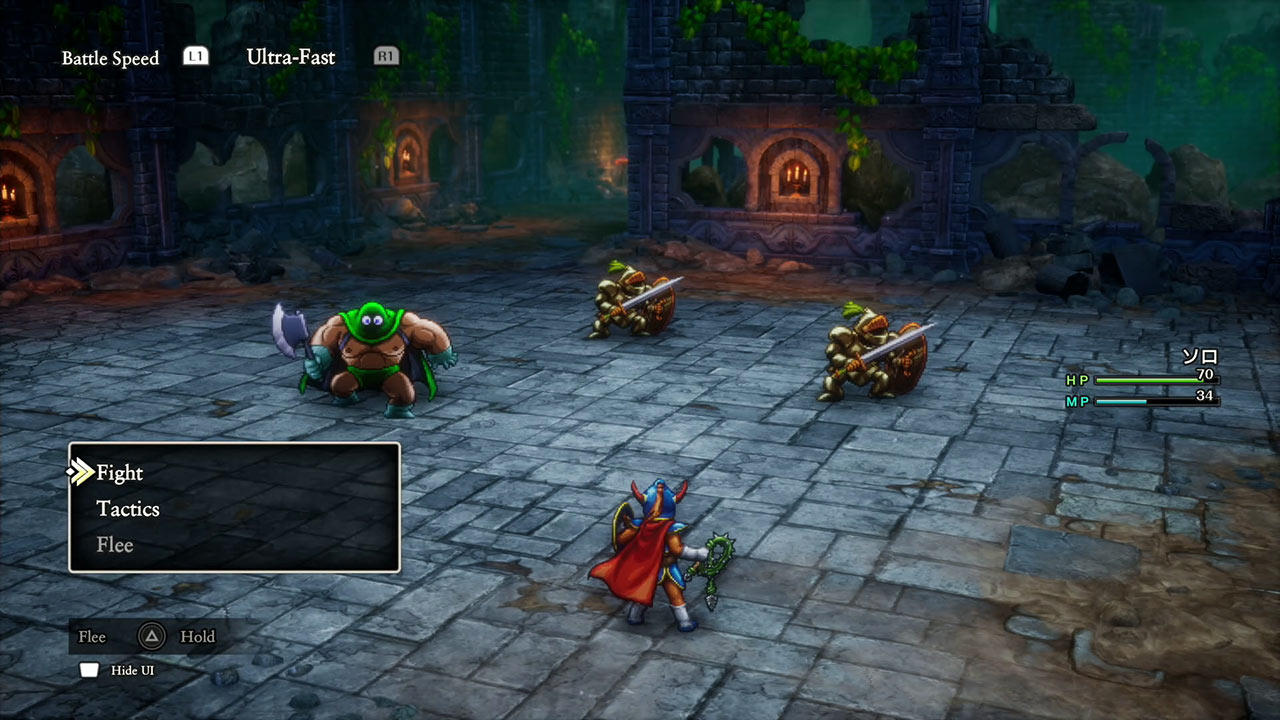
The team chose to build on their existing foundation rather than start from scratch. “We didn’t make major revisions, since in that sense that would really negate the advantage of carrying over the same development team and having that foundation of knowledge going from DQ3 and DQ1 to DQ2,” Hayasaka said.
“We were also keen on being able to release this title as soon as possible, and if we weren’t going to take this approach, it would make releasing within this window quite challenging.”
New Characters and Story Elements
One significant addition to Dragon Quest II is making the Princess of Cannock a playable character. “This is based on our thinking that we always wanted to implement something new, whether this is a job or a new character. The last time we included the monster tamer, the Beastmaster, as a new job within the title. So this time we were saying, who or what can we add?” Hayasaka explained.
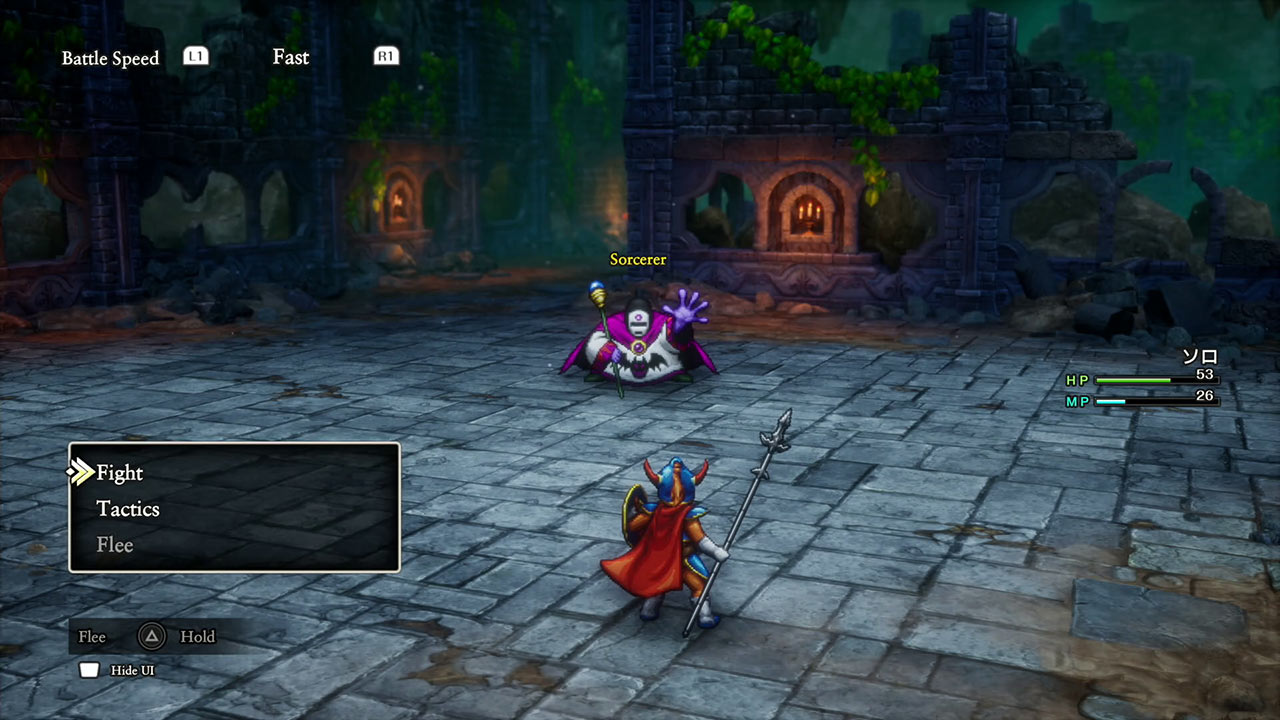
“We had discussed this with Horii-san, you know, this is someone that’s going to add a lot to the synopsis, also has no relations to Erdrick as well. And so we settled, we said, you know, it has to be the Princess of Cannock. So that’s how we decided,” he said.
The expanded scenarios also allow for deeper character development. Regarding party systems, Hayasaka noted: “In terms of the scenario, however, we did put a lot of effort into ensuring that each character speaks extensively this time. And this really allows for a deeper exploration of their stories.”
Development Challenges
When asked about the overall difficulty compared to Dragon Quest III, Hayasaka was candid. “I would say both were equally challenging. With Dragon Quest III, we released that title first, and it was our first HD-2D title in the series. So naturally, it took considerable time just to solidify the graphical direction,” he said.
“On the other hand, for this Dragon Quest I and II Remake, while the graphical direction more so follows DQ3 Remake’s established style, we didn’t face too many challenges in the graphical direction area. However, adjusting and accommodating for the significantly expanded scenario was very time-consuming and demanding.”
Looking Toward the 40th Anniversary
With Dragon Quest’s 40th anniversary approaching next year, the timing of this remake holds special significance. When asked if fans could consider this a gift for the milestone anniversary, Hayasaka responded: “That’s a really good question, if people can think of it that way as a gift, that there’s nothing that truly makes us happier.”
“This year is the 39th anniversary, and the next year will be the 40th anniversary, which is quite a big milestone. I’m sure the higher-ups are also planning something quite exciting,” he added.
Looking Forward
Regarding future projects in this style, Hayasaka was measured in his response. “Recently, we did announce a title for HD-2D, like Elliot. I don’t think it’s limited specifically to this series. We’ve also had Octopath Traveler in the past with HD-2D,” he noted.
“To answer your question of should players be hopeful about more DQ titles coming back in these different styles, I think that’s more so of a decision left to perhaps more important people than I. But I think it does come down to the performance of 3 and the reception of 1 and 2 to come. From that, there may be possibilities. I also do believe that HD-2D as a graphic expression is something that really shines the more retro a game is. I do think that’s a factor, but yes, that would be very interesting.”
As the Dragon Quest I & II HD-2D Remake prepares for release next month, Hayasaka’s words reveal a development team committed to honoring the originals while creating something new. The remake represents both a celebration of the series’ history and a careful balance between nostalgia and modern gaming expectations.
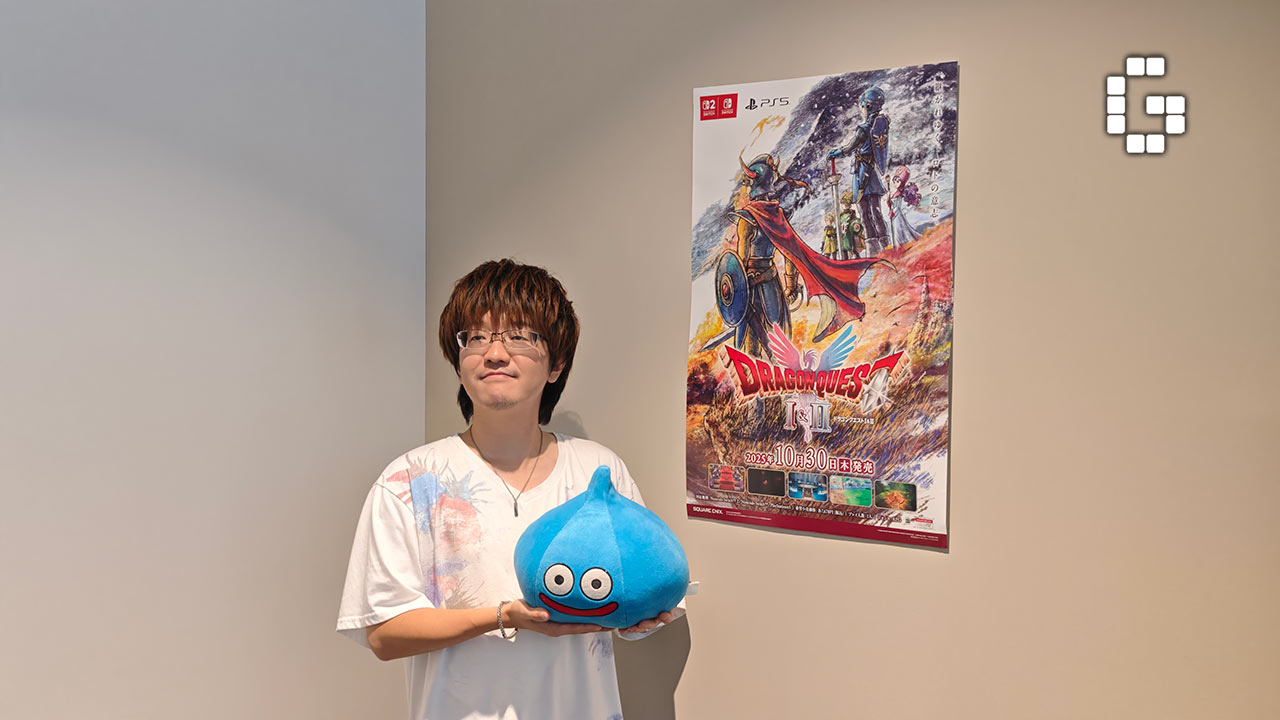
Hayasaka has particular hopes for those familiar with the original games. “We hope especially that those who played the original will experience this remake. And as I mentioned earlier as well, it’s because there’s quite a few changes to the scenario. And so those that are familiar with the original title are likely to be pleasantly surprised by the differences in this remake,” he said.
“Since this is a remake, we are also producing this trilogy with the hopes that fans of the original will be delighted. And I think with that, this will be a great success. And so, I do believe that the more times one has played 1 and 2 or previous players of this title would likely feel it very fresh and new.”