













![[EXCLUSIVE] Dragon’s Dogma 2: Dark Arisen Team Opens Up About the Expansion’s Name, New Norgan Region, and Performance Goals](https://cdn.gamerbraves.com/2026/07/Dragons-Dogma-2-Dark-Arisen_Interview_FI-360x180.jpg)




Survival crafting games are everywhere these days, so it takes something special for one to stand out. Witchspire tries to do just that by dropping players into a magical, storybook-like world where they take on the role of a witch trying to survive and explore. Instead of leaning on size or complexity, the game leans on charm and personality to set itself apart. Below, we break down how the game plays, what makes it fun, and where it still needs work as it continues through Early Access.
Gameplay
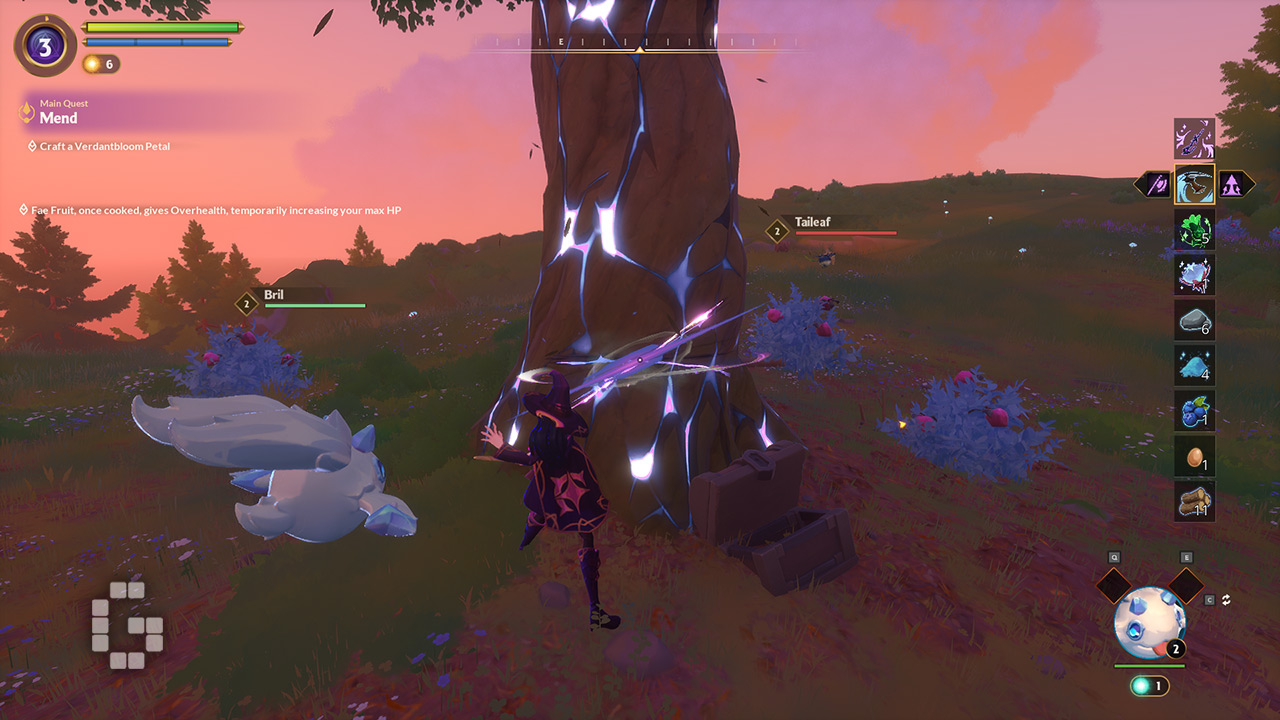
At its core, Witchspire follows the same familiar survival crafting patterns players will recognize from other games in the genre. Chopping trees, mining rocks, and gathering resources are all part of the daily grind, but magic is woven into nearly every part of the experience to cut down on repetitive busywork. Magical tools and wands help speed up gathering, and some upgrades even let players clear an entire tree in a single motion instead of chopping away at it piece by piece. This magic-first approach shows up in gathering, farming, and getting around the map, which helps the witch fantasy feel like a real part of gameplay rather than just a coat of paint.
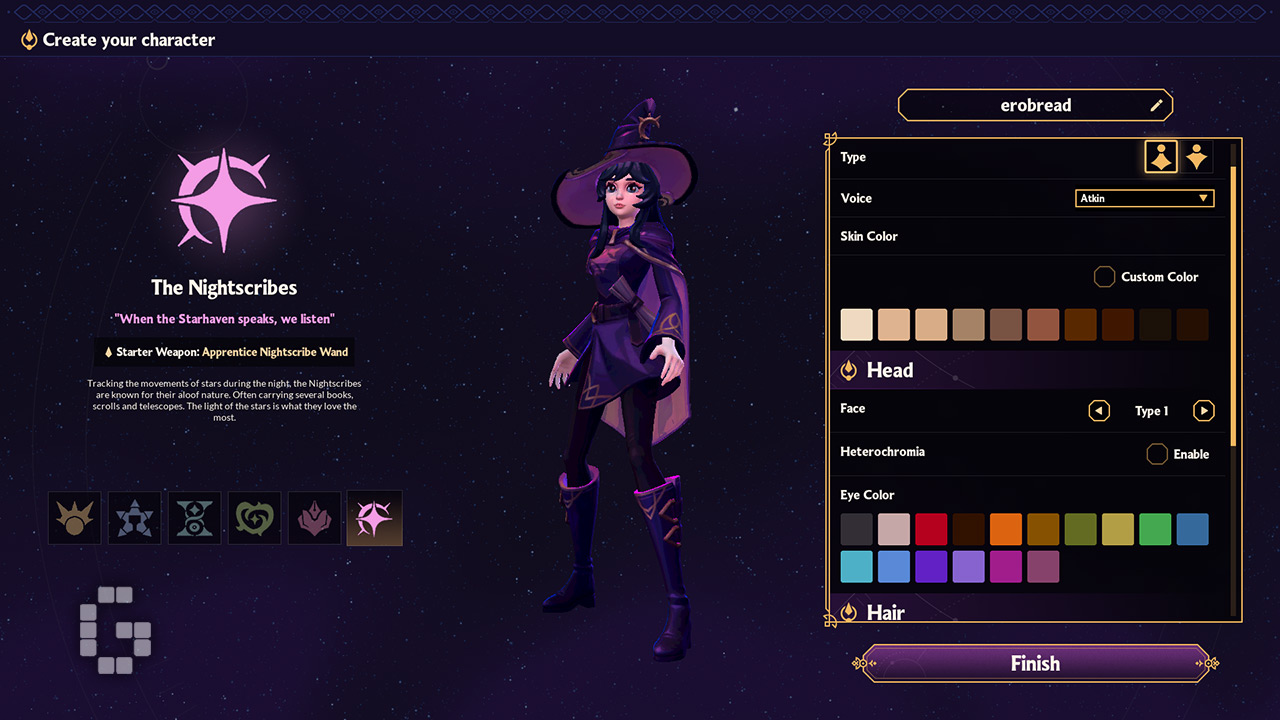
Right from the start, players get to pick from different witch classes, each with its own starter weapon, theme, and way of playing. Some classes are built around spellblades, while others focus on wands, giving players some early freedom in how they want to handle combat before getting deeper into the game.
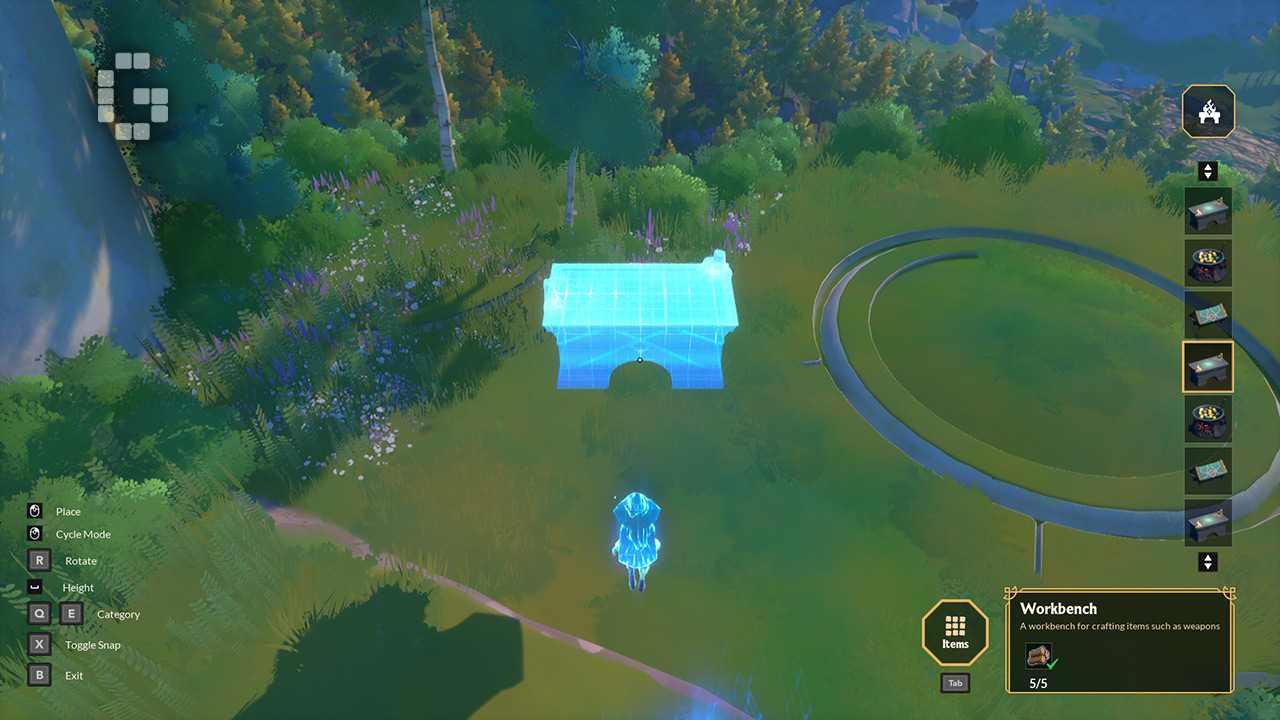
Building is one of the game’s strongest features. Players can levitate while placing objects, which means there’s no need for those awkward dirt staircases or clunky scaffolding just to build upward. Walls, roofs, and decorations can all be placed freely in midair, making construction feel smooth and satisfying. That freedom does come with a catch, though. Because objects can be placed anywhere in the air, it’s easy to accidentally set something down in a spot that later becomes impossible to reach, leaving players with a piece they can’t interact with anymore.
Exploration gets a big boost once the broom becomes available. Being able to fly changes how the world feels, turning travel into something exciting instead of a chore. Places that once seemed far away become quick and easy to reach, and there are also solid customization options for players who want to personalize their character and space.
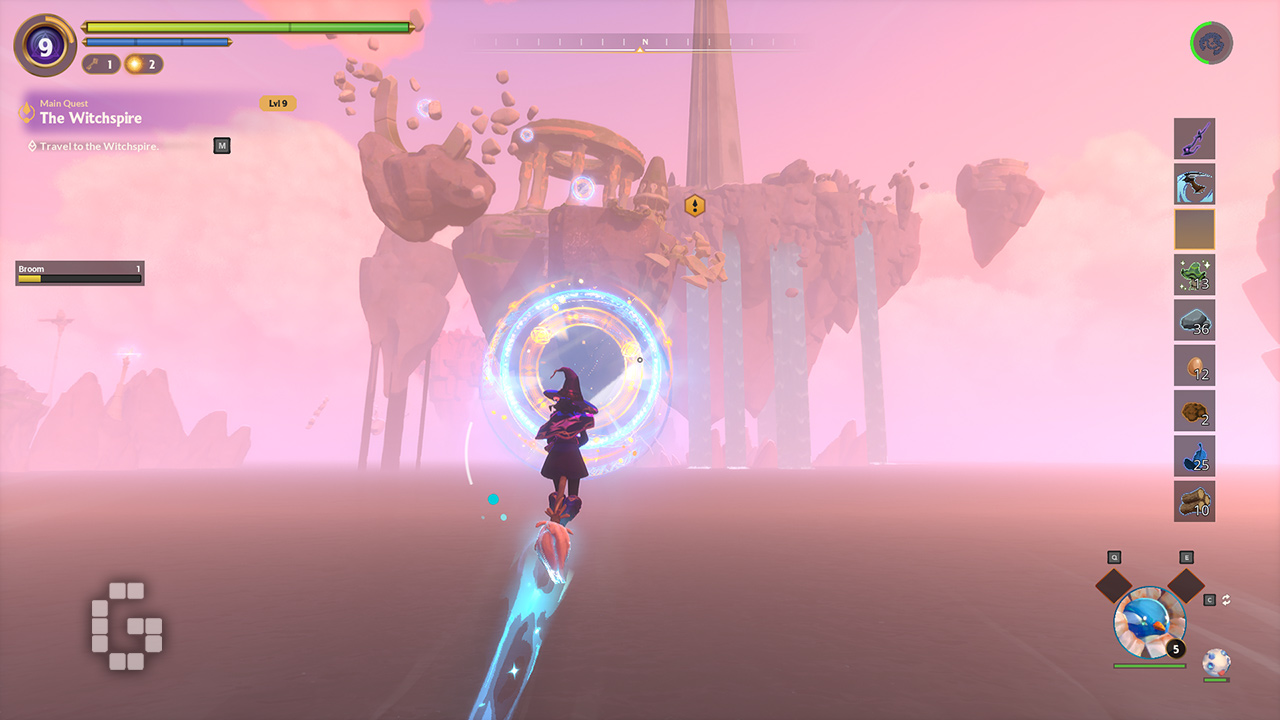
Progression runs through something called the Luminary system, a large skill-tree-like structure that controls most of the game’s unlocks. Instead of just being one straight line of upgrades, the tree branches out into different categories, letting players unlock new buildings, new wands and weapons, and passive boosts like extra damage. There are also movement upgrades, including the ability to unlock multiple jumps, which gives players more ways to get around tricky terrain. Even in its current Early Access state, there always seems to be something new to work toward, whether that’s a better tool, a fresh spell, or another crafting option.
Combat and Familiars
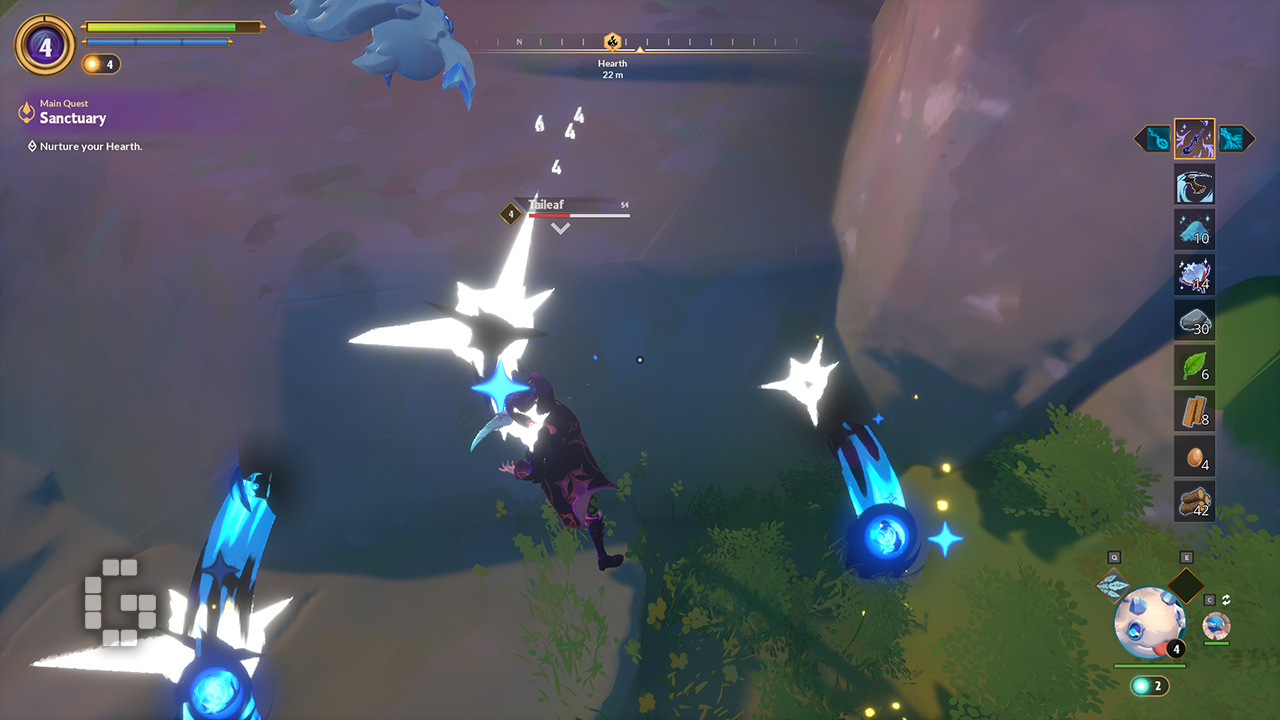
Combat in Witchspire is functional and ties directly into one of the game’s biggest hooks: familiars. Instead of a standard dodge roll, players blink forward in the direction they’re facing to dodge attacks. It’s a small touch, but it fits the magical theme and gives combat movement a slightly different feel compared to other survival games.
Enemies can be captured and recruited to fight alongside the player, similar to what you’d see in games like Pokemon or Palworld. The way capturing works here, though, is a bit different from just tossing a ball or device at a creature. When an enemy is defeated, an orb lingers at the spot where it fell, and players have to interact with it to attempt a capture. Essences can be crafted or found that increase how long the orb lingers, which in turn improves the odds of a successful capture. This adds a layer of preparation and resource management to the process instead of leaving it purely up to random chance.
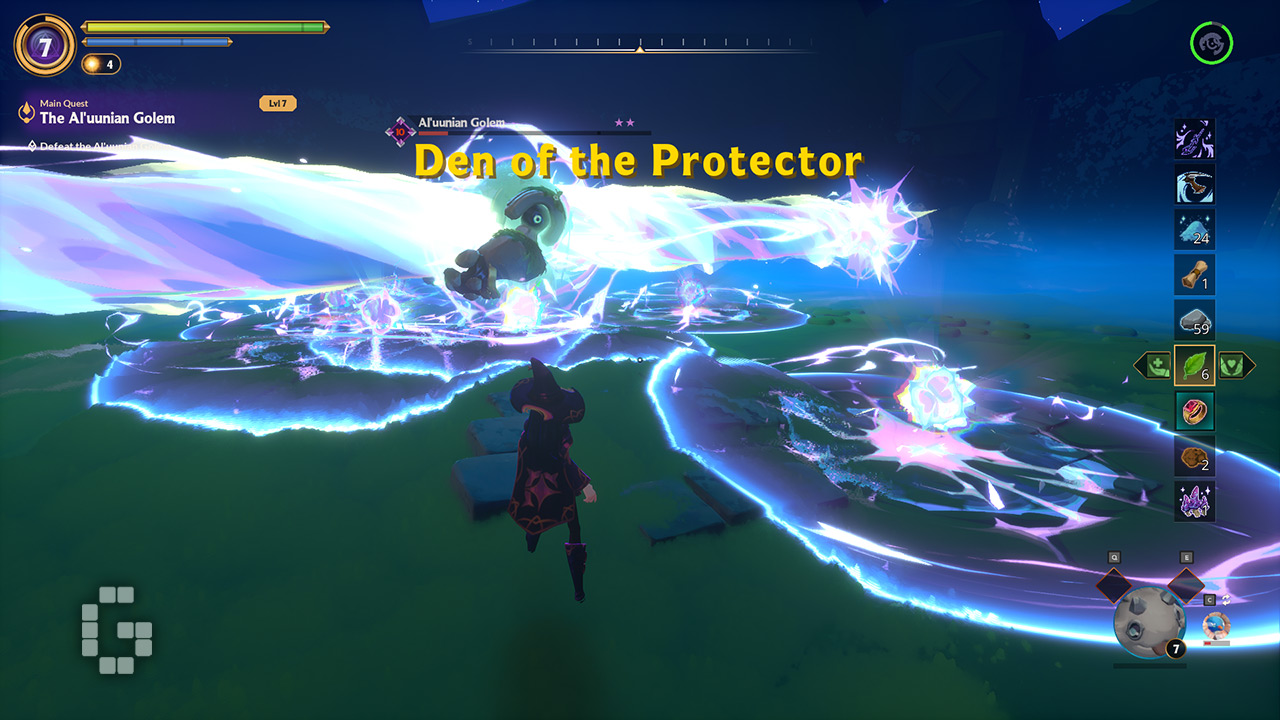
The familiars themselves have their own distinct designs and personalities that match the storybook feel of the world, rather than feeling like reskins of creatures from other games. As it stands, there are around 30 familiars to collect. That’s a decent number to start with, but players hoping for a massive roster may find themselves wanting more.
Frustrations and Early Access Limitations
As with most Early Access titles, Witchspire still has some rough patches. Melee combat with the spellblade can feel slow and clunky. On top of that, aiming can feel a bit off, since spellblade spells fire based on where the character is looking rather than where the reticle is actually pointed. This can be confusing, especially for newer players still getting used to the combat. Glitches also pop up fairly often, especially after respawning. Sometimes the only way to fix them is by using an unstuck command or restarting the game entirely, which can be a frustrating interruption, though it’s the kind of issue that’s somewhat expected in Early Access.
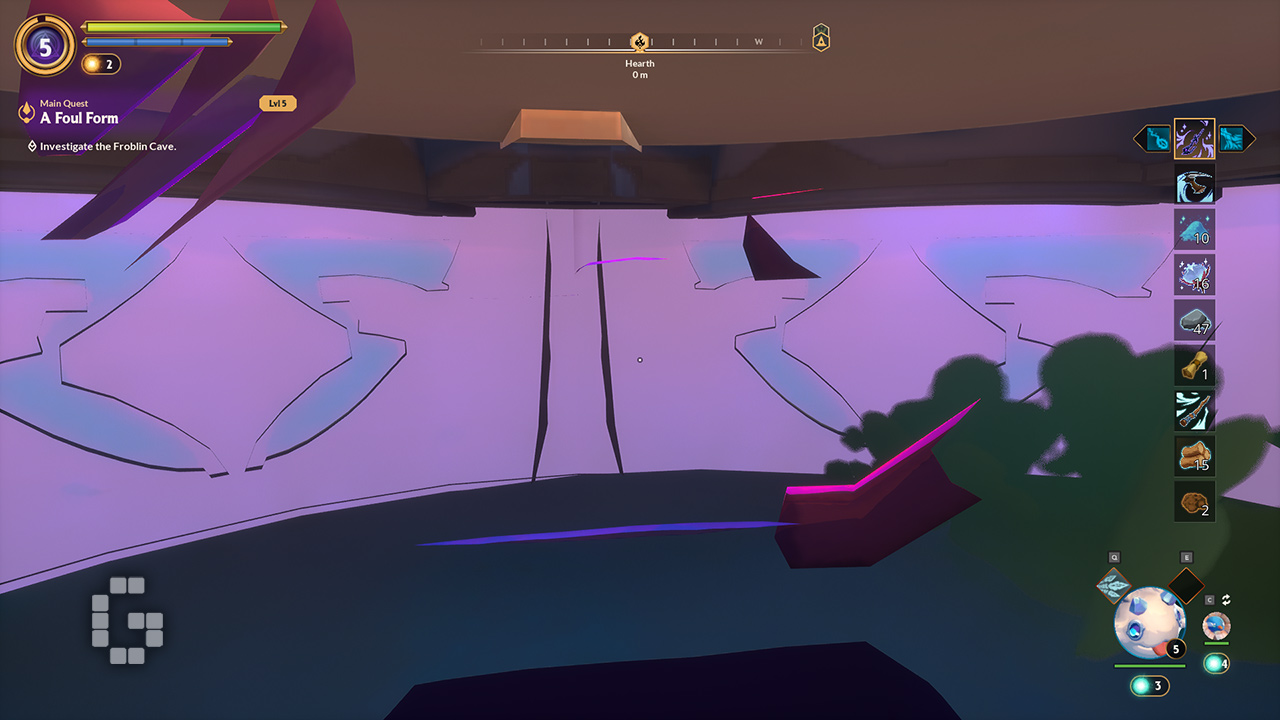
The game world is large and open, but the rate at which creatures spawn can make it feel emptier than expected. Despite how much space there is to explore, there can be long stretches where players don’t run into much of anything, which takes away from the sense of discovery. Crafting has its own share of friction too. The crafting menu, along with the AI assistance built into it, can be awkward to use, turning what should be a simple process into something more complicated than it needs to be.
The furniture and decoration catalog is also fairly limited right now, so players wanting to fully personalize their homes might find the options a bit thin. Getting around the map can be a hassle as well, since there’s currently no way to place custom pings or markers. Without a quest marker system, it’s easy to lose track of where you’re supposed to go next.
The Verdict
Witchspire has a clear identity and plenty of heart, especially when it comes to its class variety, building system, exploration, and familiar capturing. As an Early Access title, though, it still has some noticeable issues, from combat quirks and building mishaps to glitches and a map that can feel underpopulated despite its size. For players who enjoy survival crafting games and don’t mind a few rough patches along the way, Witchspire offers a charming and promising experience that’s worth keeping an eye on as development continues.
The Review
Witchspire
PROS
- Charming, storybook-like world with a strong sense of identity.
- Broom flight makes exploration fast and enjoyable.
- Distinct witch classes with different starter weapons and playstyles.
- Rewarding skill tree and progression system.
- Unique familiar capture system using lingering orbs and craftable essences.
CONS
- Combat can often times feel clunky and slow with reticle accuracy issues especially with spellblade.
- Frequent glitches, especially after respawning.
- Despite exploration options and large world it feels empty at times.
- Crafting menu and UI can sometimes be frustrating to use.
- Building freedom can lead to unreachable, wasted placements.