










![[BIC2026] Hiroaki Nagashima from Toei Games Talks New IPs, Indie Roots, and Asia-First Strategy](https://cdn.gamerbraves.com/2026/08/Toei-Games-BIC-2026_Interview_FI-360x180.jpg)
![[BIC2026] From Outsider to Organizer: How Isabella Seo Jungsook Helped Build Busan’s Indie Game Scene through BIC](https://cdn.gamerbraves.com/2026/08/Isabella-BIC-2026_Interview_FI-360x180.jpg)
![[BIC2026] CanOpener’s Logan Moon Opens Up About Dungeon Settlers Ahead of Its September Early Access Launch](https://cdn.gamerbraves.com/2026/08/Logan-Moon-BIC-2026_Interview_FI-360x180.jpg)

![[EXCLUSIVE] From PlayStation to Indie Advisor: Shuhei Yoshida Talks Games, AI, and the Future of the Industry](https://cdn.gamerbraves.com/2026/08/Shuhei-Yoshida-BIC-2026-Exclusive_Interview_FI-360x180.jpg)


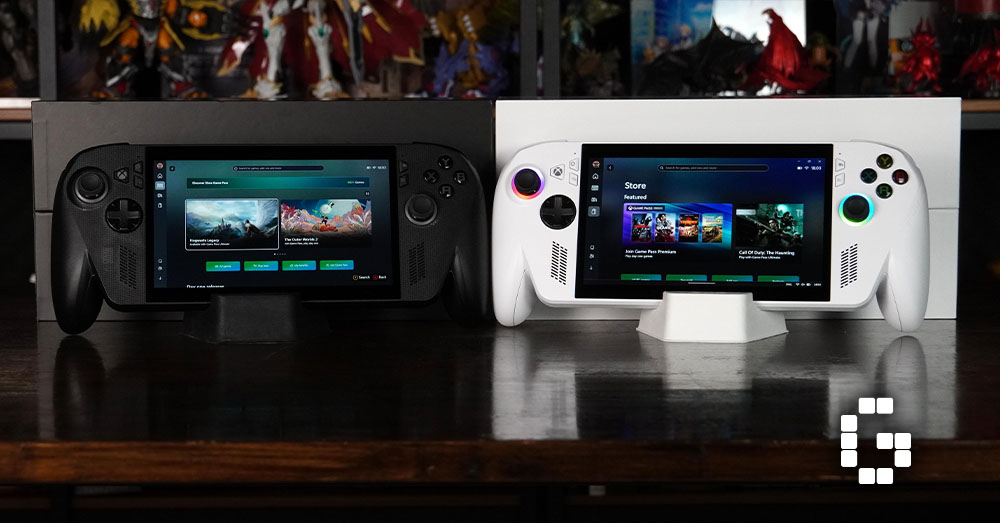
It feels like we’re living in the golden age of handheld gaming again. Everywhere you look, there is a new device promising to bring your entire PC library straight to your hands. Enter ASUS and Xbox, who have teamed up to release the ROG Xbox Ally and ROG Xbox Ally X. These two sleek handhelds aim to prove that portable gaming can be powerful, stylish, and surprisingly convenient.
Both systems are built to provide a full Windows gaming experience in a compact form factor, combined with the polish and familiarity of an Xbox controller. After spending a good amount of time with both models across a variety of games, from Sonic Racing CrossWorlds to Elden Ring, it is clear that they both deliver impressive performance, although not without their flaws.
Design and Build Quality
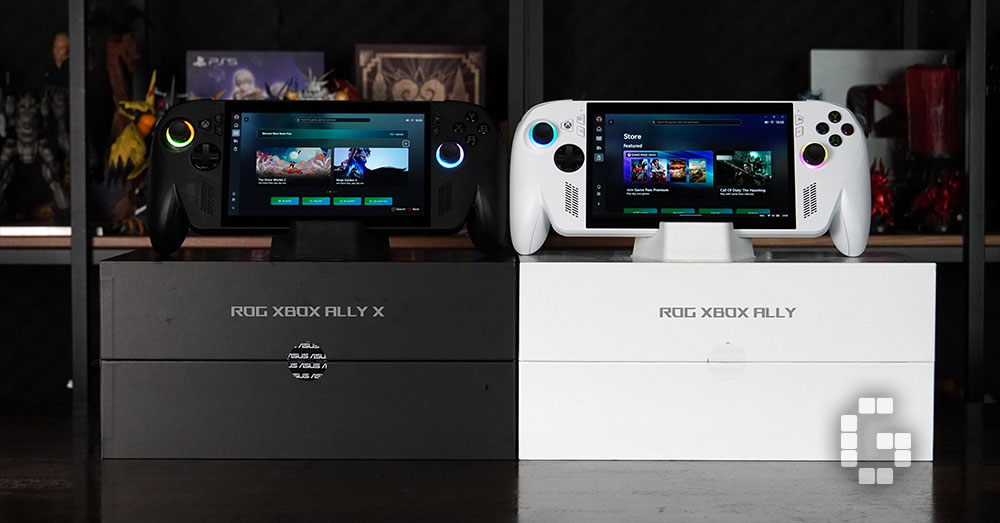
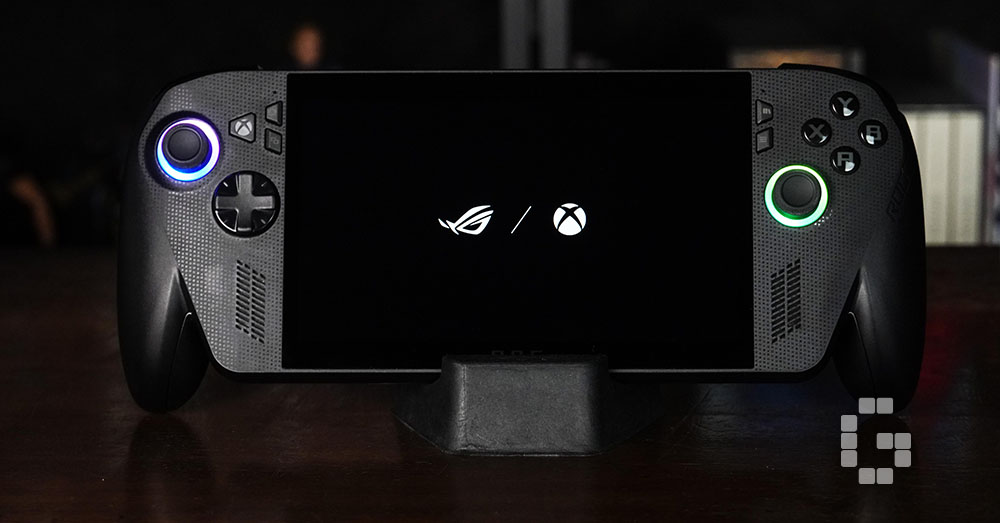
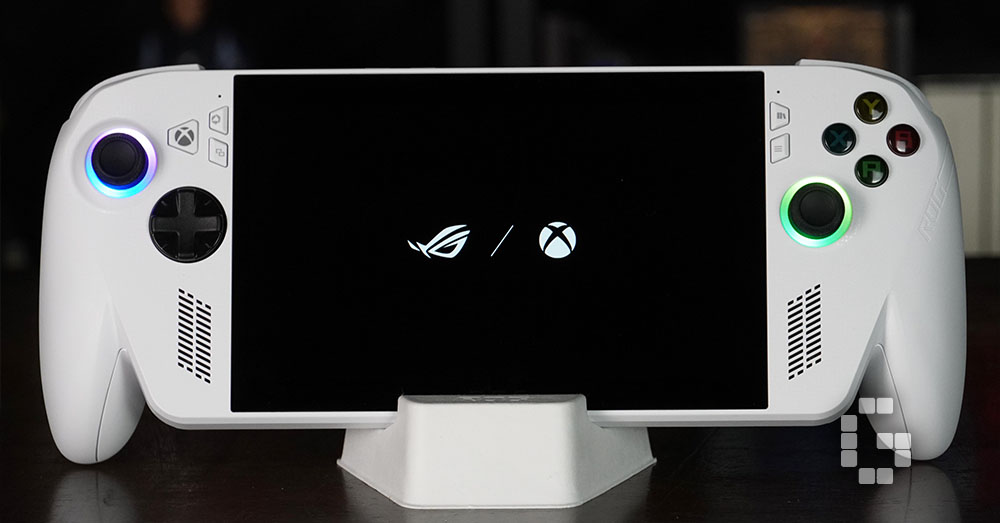
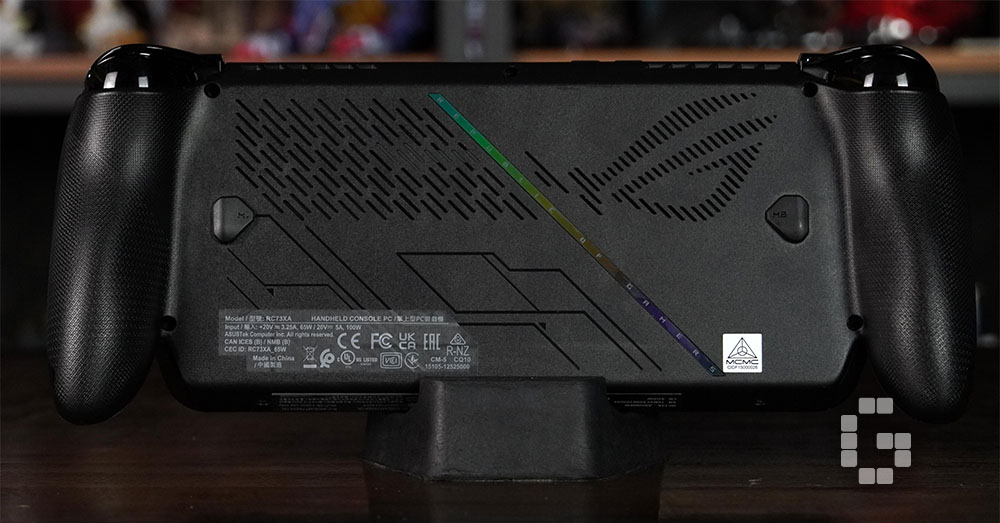
At first glance, the ROG Xbox Ally and ROG Xbox Ally X look almost identical, but the differences become clear once you hold them. The standard ROG Xbox Ally comes in white and feels light and agile. The ROG Xbox Ally X, finished in matte black, looks more premium and feels slightly heavier and sturdier.
Both are shaped with comfort in mind. Their grips are modeled after the Xbox Wireless Controller, which makes them immediately familiar to hold. The design is ergonomic and the weight distribution helps reduce fatigue during longer gaming sessions. Build quality is solid across both models, although the bulkier ROG Xbox Ally X may not be ideal for players with smaller hands.
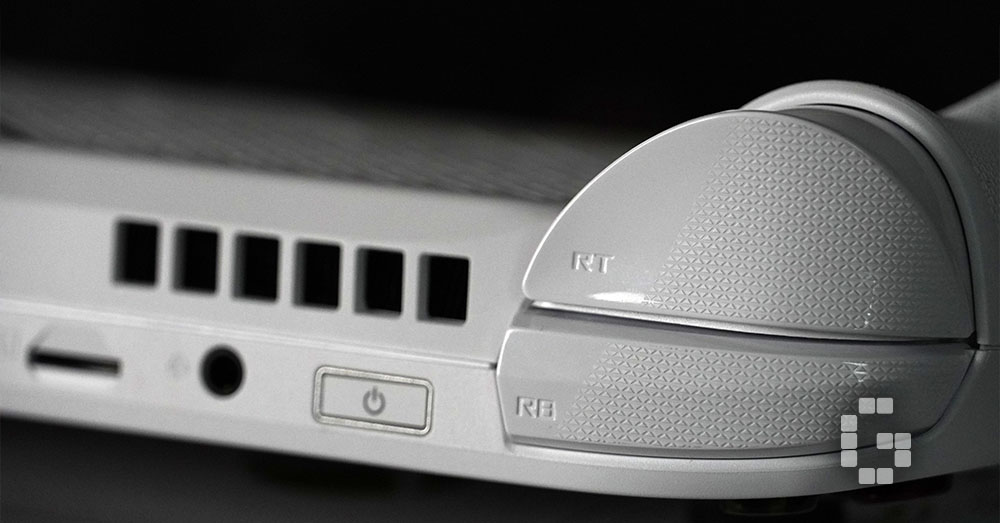
Thermal performance is reasonable. Both devices stay cool during casual use, but once you switch to Turbo mode or raise settings, the top vents start to release noticeable heat. Even so, fan noise remains soft and never becomes distracting.
Display
Both models feature a 7-inch 1080p 120Hz IPS display with Corning Gorilla Glass Victus. The screen is sharp and responsive, with strong clarity and color balance. Whether you are exploring the futuristic streets of Cyberpunk 2077 or parrying in Stellar Blade, the visuals look clean and detailed. The high refresh rate also makes fast-paced games like Sonic Racing CrossWorlds feel exceptionally smooth.
The only real downside is the lack of an OLED option. While the IPS panel performs well, it cannot match the richer contrast and deeper blacks that OLED displays provide. Considering the price point and competition, this feels like a missed opportunity.
Performance and Real-World Testing
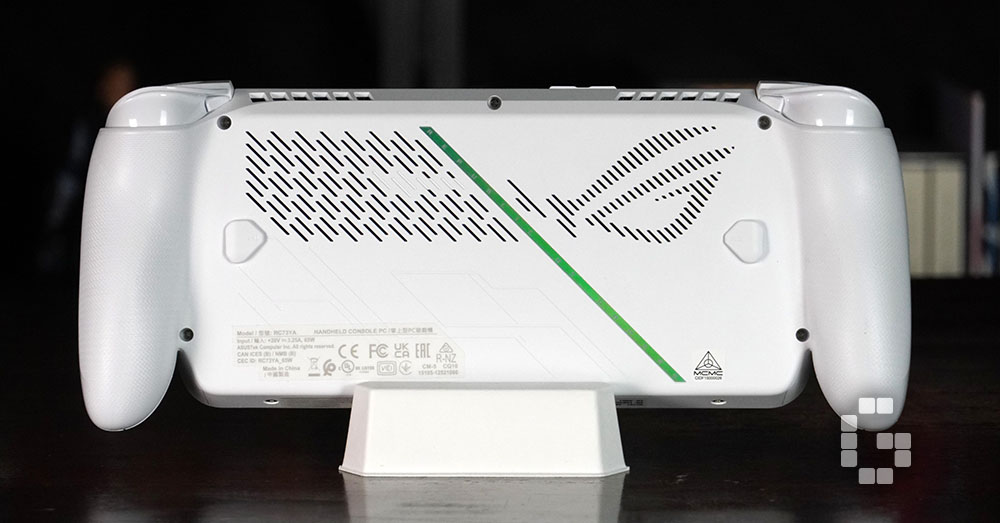
The ROG Xbox Ally uses the AMD Ryzen Z2 A processor, paired with 16GB of LPDDR5X-6400 memory and a 512GB SSD. It balances performance and efficiency, making it a strong choice for those who want smooth gameplay without major heat or battery concerns.
The ROG Xbox Ally X upgrades to the AMD Ryzen AI Z2 Extreme processor, featuring 24GB of faster LPDDR5X-8000 RAM and a 1TB SSD. This version is built for players who prefer higher frame rates and more demanding titles.
In real-world use, the standard Ally performs well on light and mid-range games but starts to show its limits with heavier AAA titles. Sonic Racing CrossWorlds runs at 60 frames per second on low to medium settings but experiences drops at high settings. Switching performance modes can help, but it never fully removes the slowdown.
Stellar Blade tells a similar story. The game averages around 47 frames per second on low settings, but maintaining that requires staying in Turbo mode. In performance mode, the frame rate drops closer to 31 frames per second, which remains playable but noticeably less smooth.
DOOM: The Dark Ages is where the standard Ally struggles. Even on low settings, performance hovers around 14 to 15 frames per second. The Ally X handles it better, but you will still need to stay around medium settings for consistent play.
Cyberpunk 2077 pushes both devices to their limits. On the ROG Xbox Ally, it is only playable on low or Steam Deck-equivalent settings, reaching around 18 frames per second in Turbo mode. The Ally X fares better with roughly 30 frames per second at similar settings, though enabling ray tracing quickly drops performance.
Elden Ring performs best on the ROG Xbox Ally X, averaging around 45 frames per second on high settings in Turbo mode. There are some dips during heavy loading moments, but overall it remains smooth and enjoyable. On the standard Ally, dropping to medium or low settings gives a steadier experience.
Overall, both devices can handle a wide range of titles, but the ROG Xbox Ally X clearly leads in stability and headroom.
Xbox Integration and Software
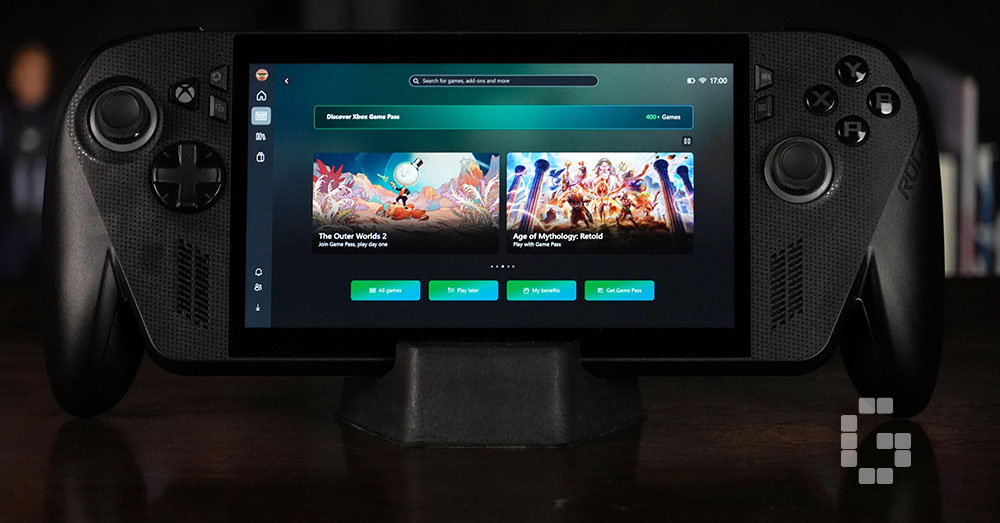
Xbox integration is seamless and easy to use. The ROG Xbox Ally boots directly into the Xbox app, offering instant access to your library, Game Pass, and cloud gaming. Switching between the Xbox interface and Windows 11 is quick, though first-time users may find it slightly confusing at first.
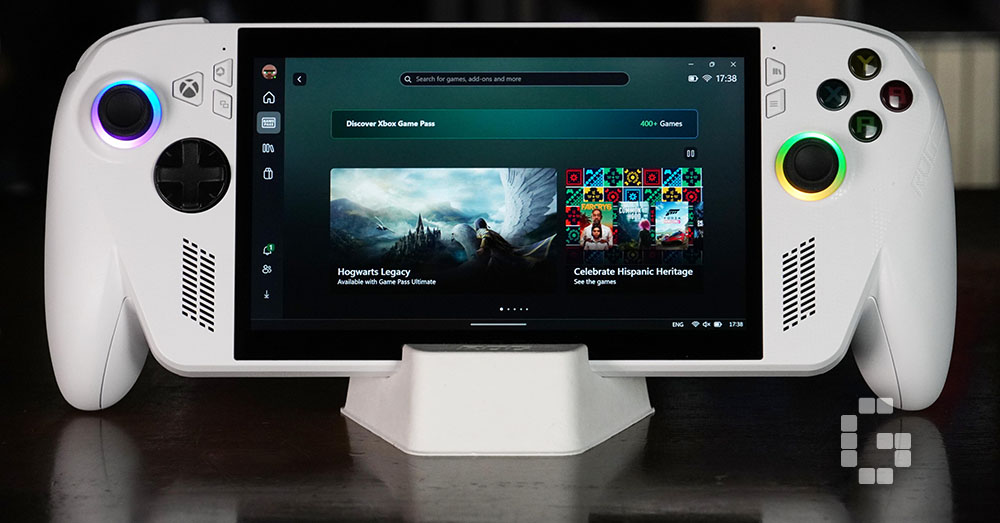
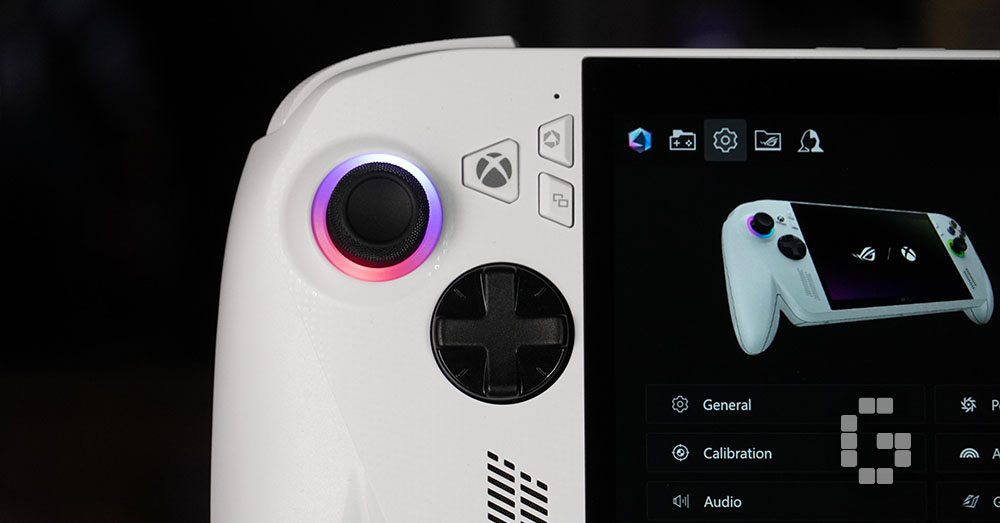
The operating system runs smoothly, and inputs across touchscreen, gamepad, and even mouse are responsive. Additional function buttons make navigation simpler, especially when launching games or adjusting settings through Armoury Crate. ASUS’s Armoury Crate remains one of the best utilities for system control and customization.
Battery Life and Thermals
Battery life varies depending on how you play. In performance mode with lighter games, both devices can last several hours. Once you turn on Turbo mode or run demanding AAA titles, battery drain increases quickly. The ROG Xbox Ally X has a larger 80Wh battery compared to the Ally’s 60Wh, and it lasts noticeably longer during heavy use.
Charging is quick and efficient. Both devices can reach a full charge in about 1.5 hours using the included adapter. Even when charging, the systems stay relatively cool and fan noise remains low.
Controls, Audio, and Comfort
Controls are tight and responsive. The analog sticks are small but accurate, while the face buttons have a familiar, tactile click that Xbox players will appreciate. The back macro buttons are a nice addition, though their placement can make them awkward to use naturally during gameplay.
Audio quality is excellent for handhelds. The speakers are loud, clear, and rich, offering sound quality closer to a compact laptop than a typical portable console. Both devices include a headphone jack and Bluetooth connectivity, giving players flexible audio options.
Pricing and Value
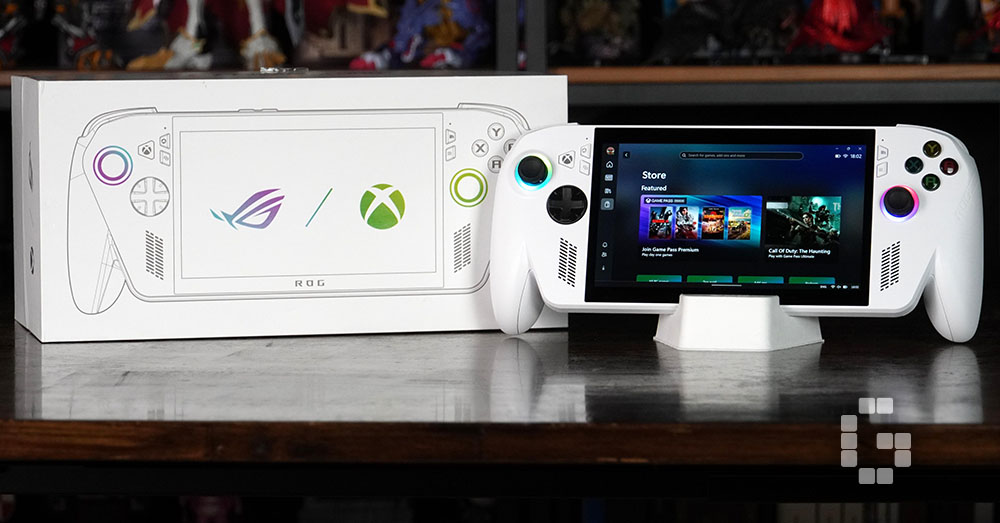
The ROG Xbox Ally is priced at RM2,699, while the ROG Xbox Ally X costs RM4,299. For most players, the standard Ally offers solid value as an entry point into handheld PC gaming. It runs indie and mid-tier games smoothly, and with some adjustments, even larger titles are playable.
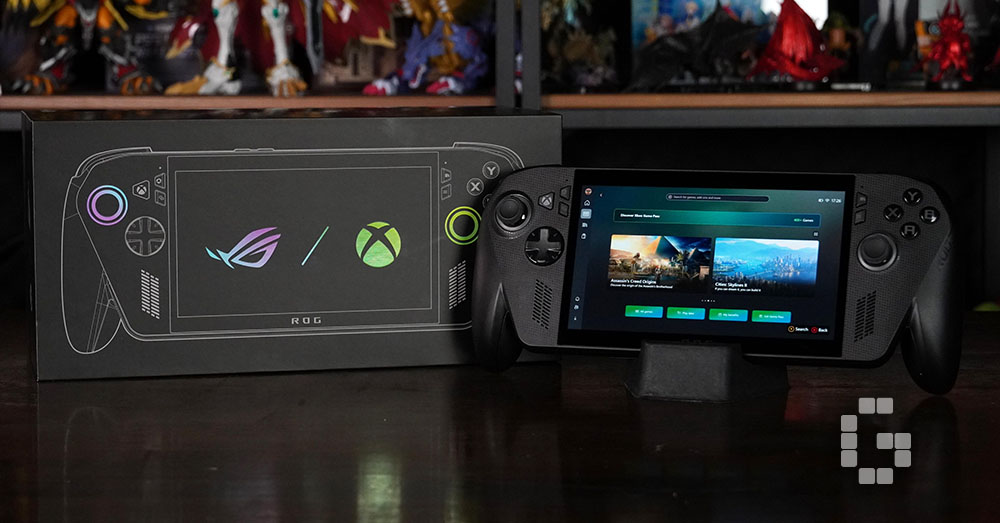
The ROG Xbox Ally X is aimed at enthusiasts who want better performance, higher storage capacity, and more stability when running demanding games. The price jump is significant, but the added hardware makes a difference for those who plan to push the device to its limits.
Verdict
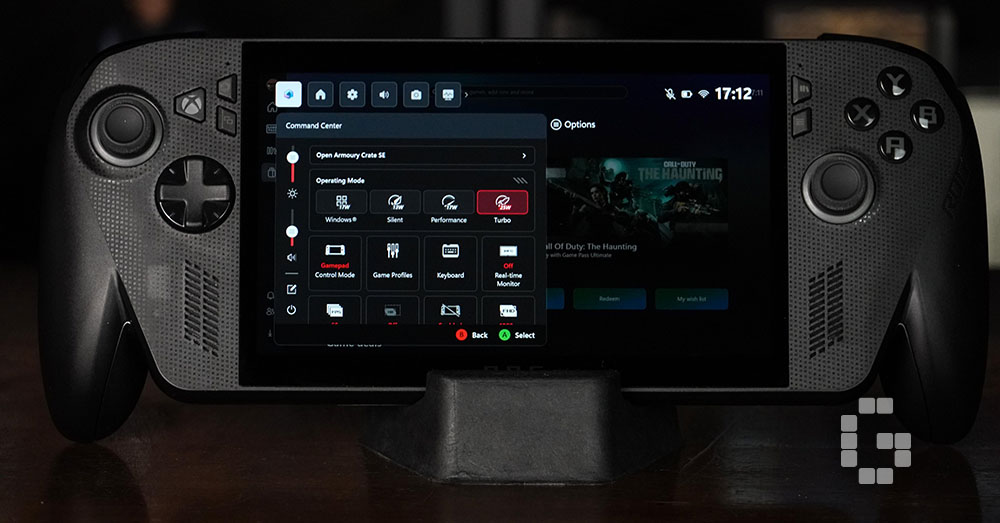
The ROG Xbox Ally and ROG Xbox Ally X make it clear that ASUS and Xbox are serious about handheld gaming. The standard ROG Xbox Ally is not perfect, and it struggles with graphically heavy titles, but it remains an enjoyable and accessible option for gaming on the go. The ROG Xbox Ally X delivers stronger performance and better endurance, though that comes with a higher price.
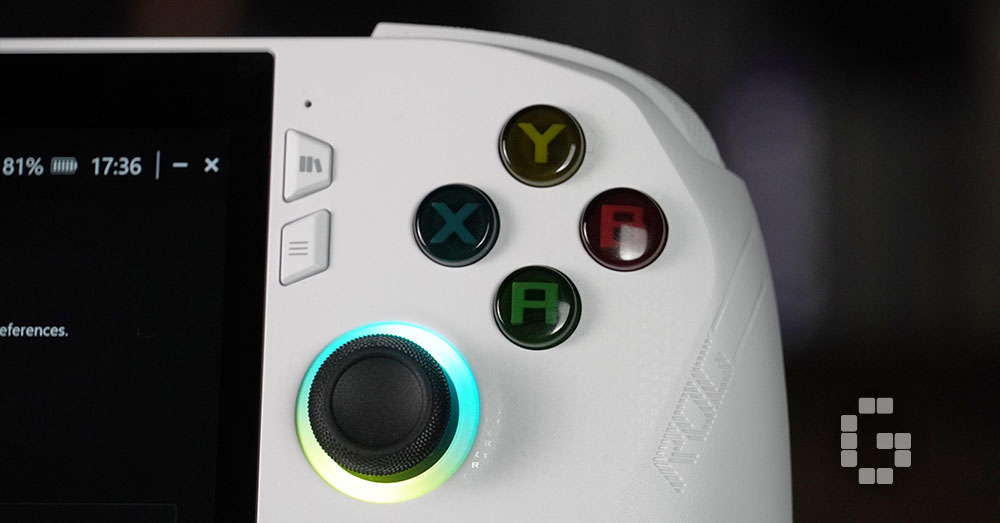
Neither device is flawless, yet both succeed in showing that handheld gaming PCs are no longer just a niche hobby. The ROG Xbox Ally is a great starting point for newcomers, while the ROG Xbox Ally X is the better choice for those seeking more power and longevity.
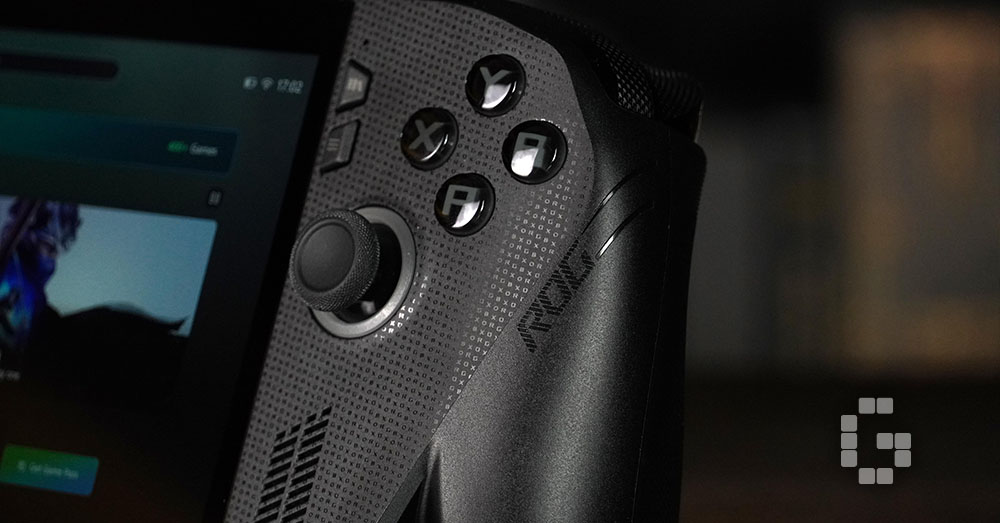
ASUS and Xbox have proven that portable gaming is not just a side story anymore. It has officially joined the main narrative of modern gaming.