














![[EXCLUSIVE] Dragon’s Dogma 2: Dark Arisen Team Opens Up About the Expansion’s Name, New Norgan Region, and Performance Goals](https://cdn.gamerbraves.com/2026/07/Dragons-Dogma-2-Dark-Arisen_Interview_FI-360x180.jpg)



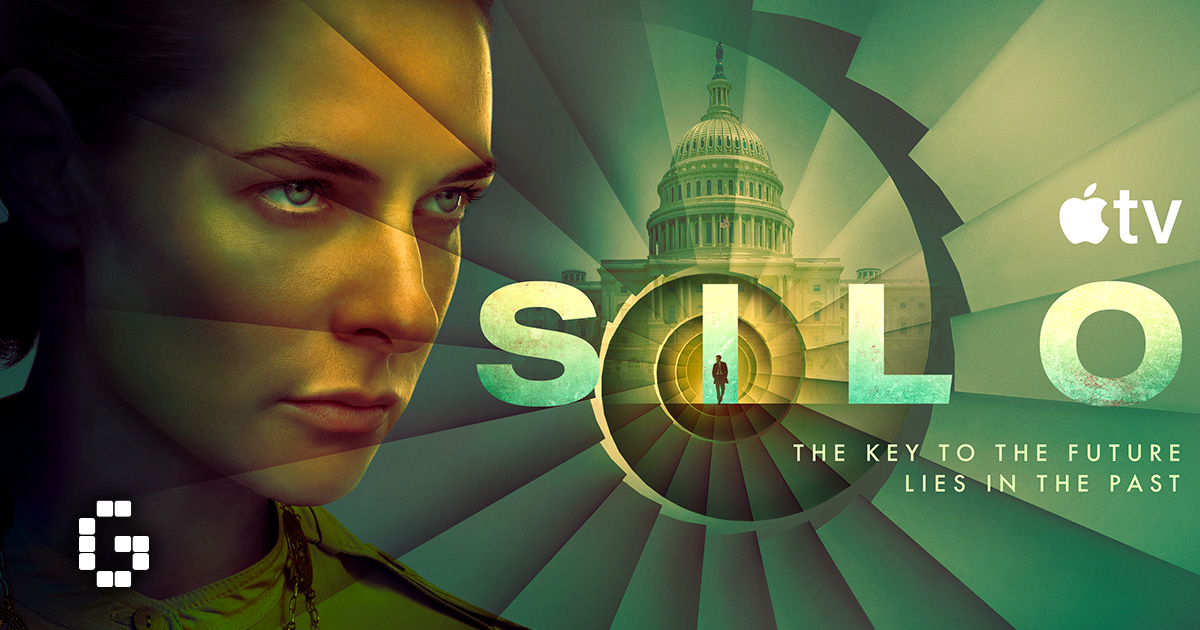
We recently had the opportunity to hear from the cast and creators of Silo ahead of season 3, and what unfolded across those conversations was something that felt less like a press junket and more like a group of people genuinely proud of what they had made. Rebecca Ferguson, who plays lead character Juliet Nichols and also serves as executive producer, was joined by showrunner Graham Yost, and together they offered a behind-the-scenes look at how the season came together.
Separately, we spoke with Common and Alexandria Riley, who play the complex Sims couple at the center of the silo’s power structure, as well as Jessica Henwick and Ashley Zukerman, who bring to life the origin story that finally begins to explain how the world of Silo came to be. Across all of those conversations, a few things stood out: this season is bigger in scope, bolder in storytelling, and the people making it are convinced it is the best one yet.
A Story Rooted in the Present
For a show set in an underground society hundreds of years from now, Silo has a surprising amount to say about the world we are living in today. Graham Yost was quick to point out that much of that was not entirely planned. Hugh Howey wrote the books 13 to 14 years ago, and many of the themes, from artificial intelligence to disinformation to geopolitical conflict, were already baked in. “We wrote season three three years ago, so it was before all of this heated up again,” Yost said. “But I would also say that once you get to the full understanding of what’s going on in Silo, you realize that what you might think is happening or what you’re told is happening is not what really is going on,” he added.
That tension between perceived truth and actual reality sits at the heart of the show and resonates strongly with viewers today. “A society without memory can be filled with modern stories and modern information, and it can be very dangerous. That’s exactly the story we’re telling,” said Zukerman, who plays Daniel in the origin story timeline. Henwick, who plays Helen alongside him, noted that the books were written with exactly this kind of moment in mind.
“Hugh Howey wrote books definitely set right now so that he could discuss exactly what you’re talking about.”
Zukerman drew a direct line between the show’s themes and real-world consequences, describing what happens to a person, and a society, when history is erased. “Without that memory, without that experience, without knowing where you’ve come from and the mistakes you’ve made, you end up being able to be filled up with whatever story someone wants to fill you up with,” he said.
Answers Are Finally Coming
One of the biggest developments in season three is that the show begins pulling back the curtain on how the silos came to be. Yost explained that this was a deliberate decision given where they are in the overall arc.
“We felt that we’re at the halfway point of the series because we knew we would be doing four seasons, and we needed to give our audience some answers.”
The origin story, drawn from the second book in Howey’s trilogy, is presented as a political thriller with a romance at its center.
“We made it more of a political thriller and a romance between Daniel and Helen. But through that, we get to find out what’s going on and how all this began. You don’t learn everything, but you learn a lot so that by the end of season three, the audience has been given a fair amount of answers.”
Henwick described reading the material as a fan first. “As a fan of the show, I was so desperate to know the answers that it felt like it came at the perfect time in the storyline,” she said. She also offered some reassurance to viewers who have been following the show closely. “It’s a four-season arc. It’s got an ending that they had planned from the beginning. We’re not throwing shit at the wall,” Henwick added.
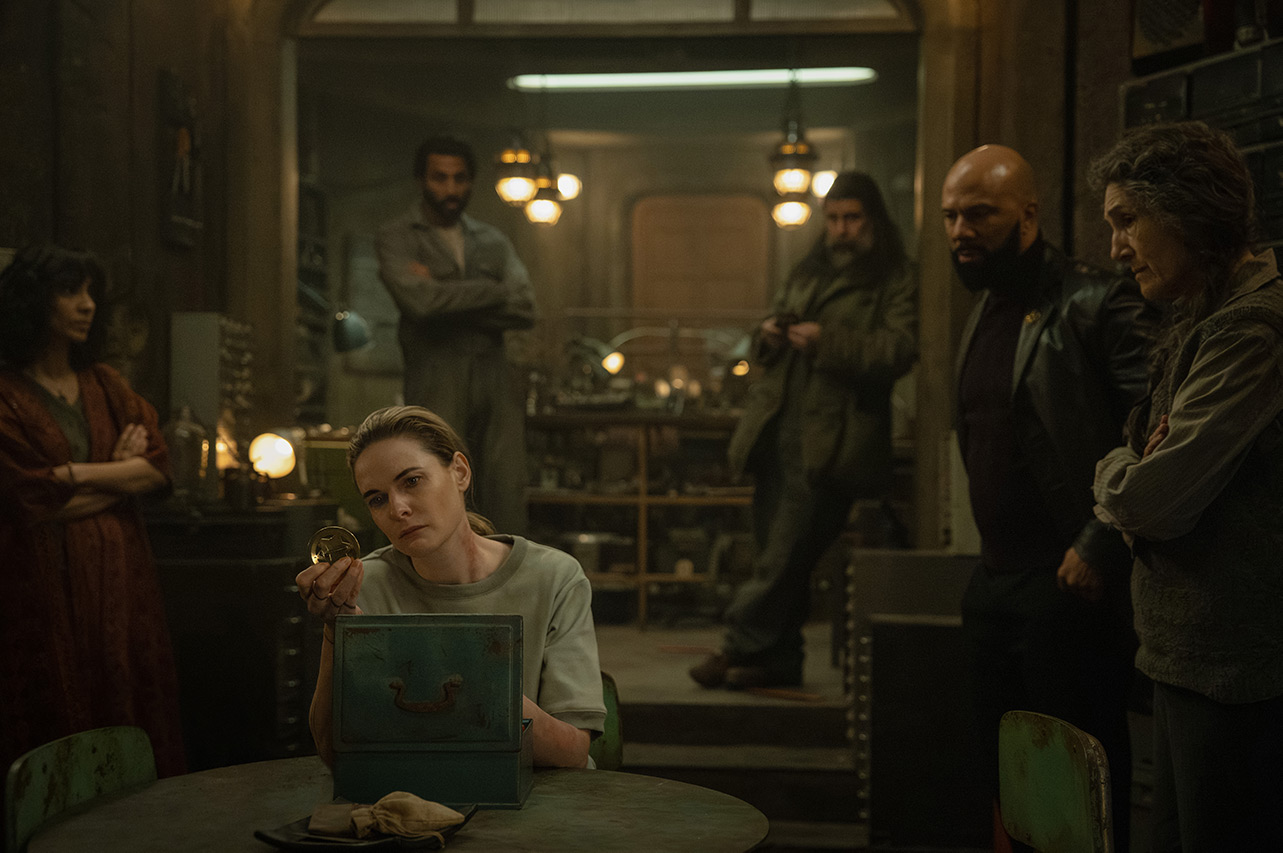
Henwick also praised the show’s willingness to take creative risks. “Graham’s not afraid to push boundaries and that continues through season three and season four,” she said. Zukerman echoed that sentiment, pointing to the humanity woven into even the most high-concept elements of the story. “It was such a humanely told version of this story. It seemed like what Graham wanted to tell was a story about hope. It’s not just a cynical, cruel story, but one about hope, how to keep that light alive inside of you.” he said.
Two Timelines, One Season
Structuring a season around two separate timelines set hundreds of years apart was no small challenge. Yost admitted it was a genuine concern early on. The key, he said, was finding the thematic thread that tied them together. “The memory loss that Juliet is going through will be reflected in the memory loss that Daniel’s sister Charlotte is going through. And so we get a sense that this thing started 350 years ago or more,” Yost said. Once the writers found those parallels, the two stories began supporting each other rather than competing. “At times they go in wildly different directions. But that also became fun,” he added.
Yost also credited the physical scale of the production for helping keep the two worlds distinct. Season three operated with two units filming simultaneously for months, one focused on the origin story and the other on events inside the silo. “That was exhausting,” he said. He also singled out production designer Nicole Northridge for shaping how each location felt different while still belonging to the same world. “She came up with how Silo 17 would look different from Silo 18. And in season three, we had all this stuff taking place outside the silos. That became her responsibility,” Yost said.
Ferguson, who was involved in those production conversations as executive producer, summed up the effect simply. “When you see Silo One, you look at it and go, that makes sense,” she said. Yost agreed. “We needed it to be recognizable immediately, that it’s a different place, and yet feel within the world,” he added. When asked about how they managed the logistics of two simultaneous timelines, Ferguson was playful. She suggested they used AI scheduling. “We did not use AI scheduling,” Yost said.
Juliet Nichols, a Different Kind of Leader
Season three opens with Juliet having lost most of her memory and waking up as mayor, a role she never sought out. Ferguson described what drew her to the character from the beginning.
“She had a DNA to her. She could fix things. Things were broken, but she was so broken herself, and she didn’t know how to fix herself.”
Playing a version of Juliet stripped of her memories presented a new kind of challenge. “It was easier to play her disconnected than connective,” Ferguson said
Yost added that placing Juliet in the mayor’s seat was intentional.
“She’s always driven to find the truth and to be of service to her silo. And then she wakes up and she doesn’t know who she is, but she’s mayor. We thought, well, that’s fun.”
He was careful to note that this is not where she stays. “She doesn’t stay in that one state the whole time. But it was a nice place to start,” Yost added.
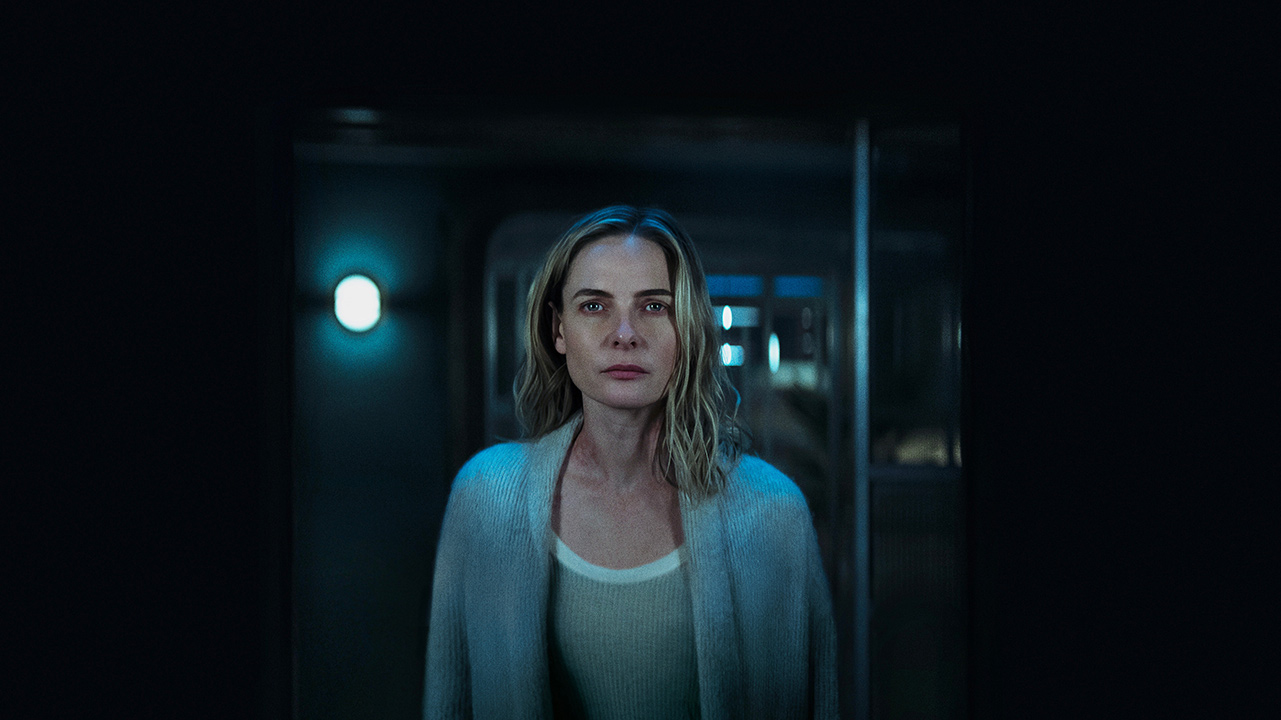
Ferguson also reflected on what she has come to understand about Juliet after years in the role. Working through the character’s emotional walls required ongoing conversations with Yost on set. “I would be like, no, she wouldn’t do this. Why is she talking to him like this? And Graham would be like, because she needs him and we need the character to go somewhere. And it was a struggle because it was easier to play Juliet, number one,” she said. That challenge, she suggested, is part of what makes the arc so rewarding to watch unfold.
Robert and Camille Sims: Love Under Pressure
One of the most talked-about dynamics this season involves the shift in power between Robert and Camille Sims, played by Common and Alexandria Riley. For the first time, the couple, who have always been described as a stable and united front, find themselves at odds. “This season we see them being forced apart,” Riley said. “There’s a power dynamic, there’s a change in status happening which causes a lot of conflict which then has a domino effect.” She described the fallout honestly.
“It’s actually chaos. I think we see them break apart before we see them come back together.”
Common, who plays Robert Sims, acknowledged that the role is far removed from who he is in real life. “Robert Sims is really the opposite of me. He is about protecting the status quo and will manipulate and will kill for the powers that be.” But he found value in inhabiting that perspective. “You get to understand people who are not like you. What would make someone truly want to defend the powers that be? Well, they truly believe this is what’s best.” He grounded the character’s choices in something recognizable. “Some people do things just because they feel like they’re protecting and creating a safe space for their families, for their communities, and for their nation.” He was also clear that the character does not remain static.
“He’s going through his own discoveries too, and it’s not just staying in that one place. If it was that one place, that would be boring. And it also would be not true to life.”
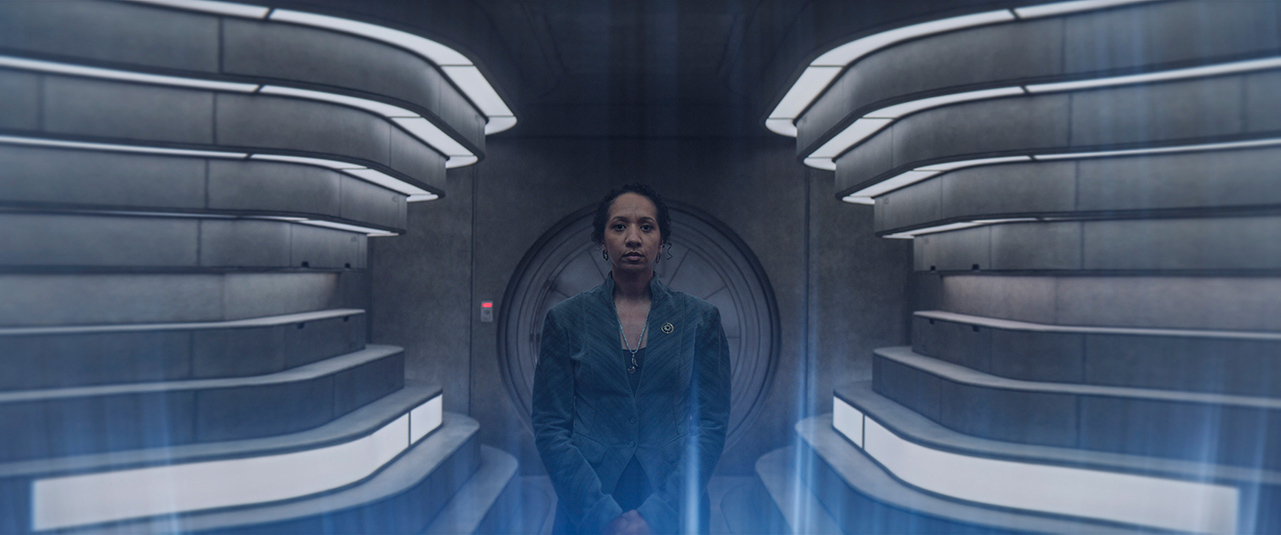
Riley described Camille’s arc as someone fundamentally good who is forced into impossible decisions. “She’s certainly of that position of a fundamentally good person, just making bad decisions and doing them in a really questionable, shady way, but something we’re all capable of at the same time when we’re put in the right situations, especially as a parent, as a partner,” she said. She added that the weight of those decisions takes a visible toll on Camille as the season progresses. “We see as the series goes on how that erodes her quite a bit and how that weighs on her,” Riley added.
Despite the conflict on screen, both actors were insistent that the love between the characters had to remain visible throughout. “Even when you have a conflict with someone you love, the love doesn’t go anywhere. It’s just like you don’t agree with them,” Common said. He compared it to something any parent might recognise. “It’s times where I’m like, looking at my daughter, like, who are you? What are you doing? But I still love her,” he added. Riley said this was something they actively worked to protect in their scenes. “We wanted to make sure we always tried to cling on to the love between them and figure out a way to show that whilst they were going through the turmoil,” she said.
On set, the two actors said the role reversal made for lively conversations. “We’d argue, and we’d get into conversations where he’d tell me, you shouldn’t be doing it like this,” Riley said. Common joked that she was fully in her element. “She was in her power. You couldn’t tell her nothing,” he said. Riley did not deny it. “He was hating all the way through,” she laughed.
Daniel and Helen: A Relationship Built Slowly
In the origin story, Daniel and Helen begin with mutual suspicion before developing something much deeper. Both Zukerman and Henwick were deliberate about not rushing that journey. “Although there’s that strong connection early on, we really wanted to make it feel real,” Zukerman said. “We delayed that for as long as we could. They just kept challenging themselves even though they may have felt a connection to each other.” Henwick agreed, noting that both characters are highly logical people who would keep rationalizing away what they feel.
“I think Helen would just keep minimizing it, and so I wanted to be honest to that.”
Henwick described Helen as someone who typically boxes people into categories quickly, which makes Daniel’s effect on her all the more significant. “Every time she thinks she’s got him figured out, he manages to take her by surprise, and that’s rare for her. It’s rare for her to meet someone who can go toe-to-toe with her.” She also noted the deeper emotional pull underneath the professional tension.
“Lonely people often recognize lonely people, and it’s a sort of an instant chemistry. You kind of can’t boil it down to this or that.”
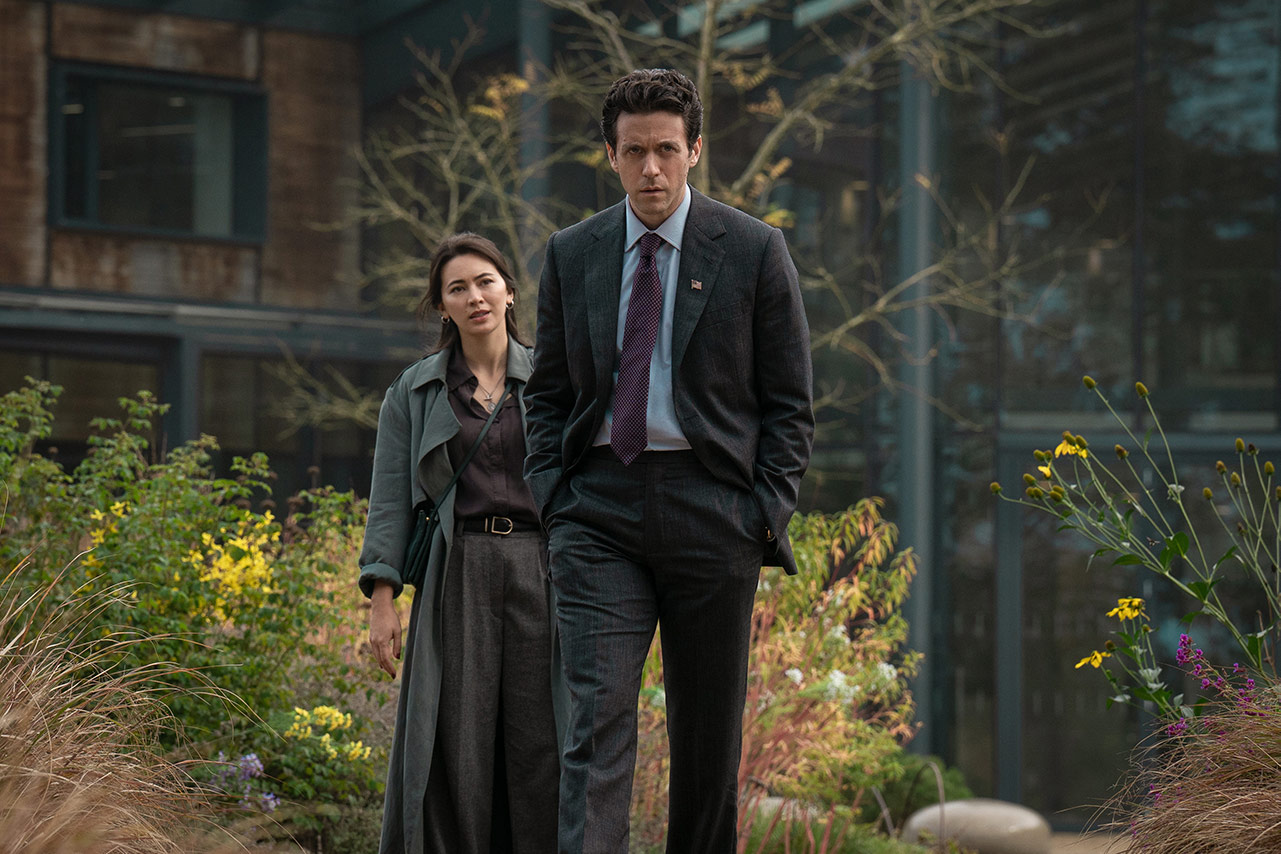
Zukerman spoke about what it meant to play a character who loses everything that defines him. “It was a gift, because it’s a rare thing to be given the opportunity to portray two different minds in one story,” he said. His approach was to make Daniel feel as grounded and specific as possible from the start, so that the absence of that self would register. “I just wanted to fill him with everything that is strange about me. I wanted to personalize his trauma and his complexity as much as I could, so that when he loses his memory, it’s just an absence of that,” Zukerman added.
Henwick also reflected on what she took away from playing the character personally. “I’ve historically been very good at just compartmentalizing and recently I feel like I went on a journey and it kind of started at the same time as Helen. It was like unpacking all the boxes and letting things get messy and going, yeah, I’m not happier but I’m richer and more complex and that’s okay. The bad memories make you just as much as good memories do,” she said.
Music, Connection, and What Makes a Set Feel Like Home
Away from the drama on screen, Common spoke about how music has shaped his approach to acting. “Music has inspired me to be an artist. It’s been a step for me to get to acting.” He reflected on how the discipline of a music career, including dealing with failure and rejection, prepared him for the demands of performing on screen.
“In my music career, in the studio, in different moments on stage, I have fallen whether symbolically or literally, and then you got to get back up. The rejection that comes when you don’t get a part, the takes that don’t go right, music has prepared me in that way.”
He also revealed he has a new album on the way, a collaboration with producer Madlib titled Still Waters, which he worked on between seasons. “I never tried to work on a whole album during filming because I’m giving myself to this, to the character, and it needs my attention and my whole spirit.” The musical connection extended to his working relationship with Riley, who is also a singer. At their wrap party, the two performed one of Common’s songs together.
“As we wrapped the whole series, we performed together. The music has been part of our connection.”
Riley recalled being starstruck when she first learned she would be working opposite him. “I was a big fan. I thought they had it wrong. I was so nervous.” She added that the shared love of music helped ease that initial nerves and built something genuine between them from early on. “We have the same taste, and so it was really fun.”
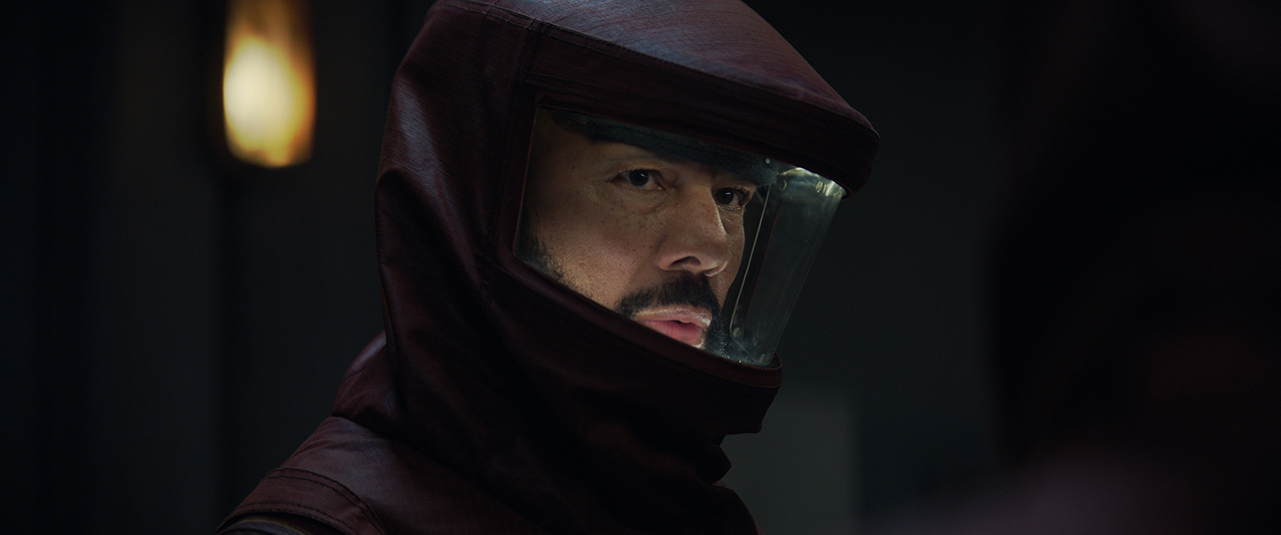
Ferguson painted a warm picture of what life on the Silo set actually looked like day to day. Rather than large individual trailers, the cast and crew shared a communal space with tables, an olive tree, and lights strung up overhead. “We would all eat together. We would have a big olive tree and circus lights, and we put music, and it was very collaborative,” she said. She said it stood in contrast to many other productions she has worked on. “A lot of movie sets is very isolating. This set was a family. We shared feelings together. We cried together. We laughed together. And that is why I’ll miss it. It was our life,” Ferguson added.
Yost also reflected on the quieter moments that stuck with him most. He recalled sitting with Ferguson in a cell on the sheriff’s station set between takes and pitching her the entire story of season two. “We sat in the cell and I told her the story. And just that feeling, for something a show this big, okay, at the very base, we know that this is going to work,” he said.
What to Expect
If you ask the people who made it, season three is the one worth waiting for. Common has not been shy about telling people.
“Wait till season three drops. I’ve been telling my friends like, yo, it’s some fresh music or something that we’re putting out.”
He called it his favorite season they have done and said viewers will be surprised by where the characters end up.
“I think people are going to be like surprised at where they taking the characters. Like not just our characters, but a lot of the characters where the story is going. And it’s a lot of things that you think, you know, what’s happening and you don’t know what’s happening.”
The Silo’s secrets are starting to unravel.
Catch up on #Silo — New Season July 3 pic.twitter.com/w41ZteCgrQ
— Apple TV (@AppleTV) June 25, 2026
Riley expects it to provoke a reaction too. “It’s going to shake the audience up a little bit and have them having to choose sides.” She credited the writers for keeping the show unpredictable.
“You can never relax in this show. From season one, we learned that. You do not know what characters are going to be there the next week.”
Henwick pointed to that boldness as one of the show’s defining qualities.
“Graham’s not afraid to push boundaries. It’s a swing to have your characters that you introduced in the first episode disappear and change your main character.”
Yost summed up the season’s ambitions simply: the audience has earned some answers, and this season starts delivering them. But there is still more to come in a fourth and final season. For now, what is clear is that the people behind Silo believe in what they have built, and they are genuinely looking forward to sharing it.