



![[EXCLUSIVE] Brendan Gan Delivers One of Malaysia’s Best-Ever Worlds Results, Shares Thoughts on Pressure and the Local Scene](https://cdn.gamerbraves.com/2026/08/Brendan-Gan_Interview_FI-360x180.jpg)





![[BIC2026] Hiroaki Nagashima from Toei Games Talks New IPs, Indie Roots, and Asia-First Strategy](https://cdn.gamerbraves.com/2026/08/Toei-Games-BIC-2026_Interview_FI-360x180.jpg)
![[BIC2026] From Outsider to Organizer: How Isabella Seo Jungsook Helped Build Busan’s Indie Game Scene through BIC](https://cdn.gamerbraves.com/2026/08/Isabella-BIC-2026_Interview_FI-360x180.jpg)
![[BIC2026] CanOpener’s Logan Moon Opens Up About Dungeon Settlers Ahead of Its September Early Access Launch](https://cdn.gamerbraves.com/2026/08/Logan-Moon-BIC-2026_Interview_FI-360x180.jpg)


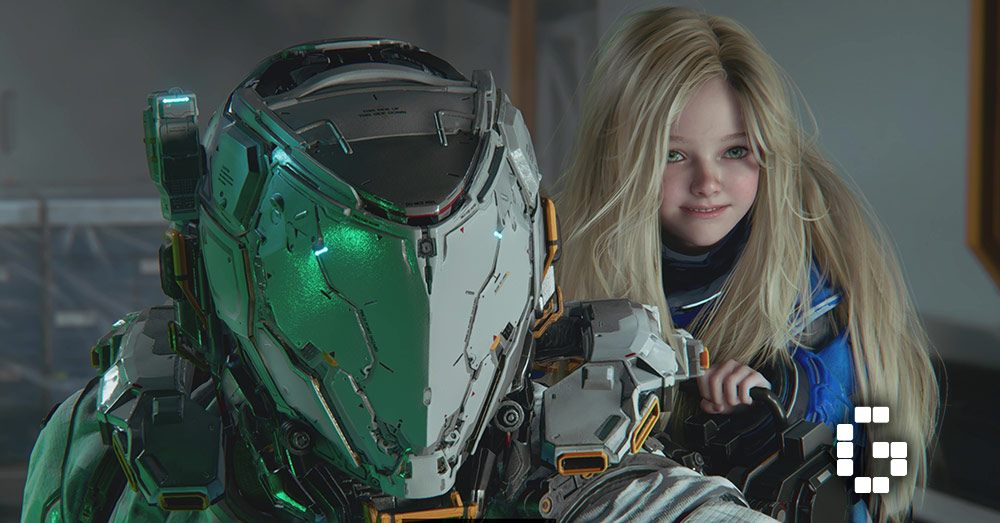
The second hands-on session with Capcom’s upcoming hack-and-action title PRAGMATA clocked in at two hours and compared to the first preview, there was a lot more to dig into. From a deeper look at combat and hacking to a clearer picture of the story and progression systems, this session gave a much better sense of what the full game could look like. Here’s a breakdown of what was on offer.
Setting the Stage
Pragmata puts players in the boots of Hugh Williams, a man stranded on the moon after a mission goes sideways. His unlikely companion is Diana, a young android girl created from a revolutionary material called Lunafilament, a substance capable of replicating anything as long as its data exists. The two are left with no support, no way home, and a moon full of hostile AI forces standing between them and survival.

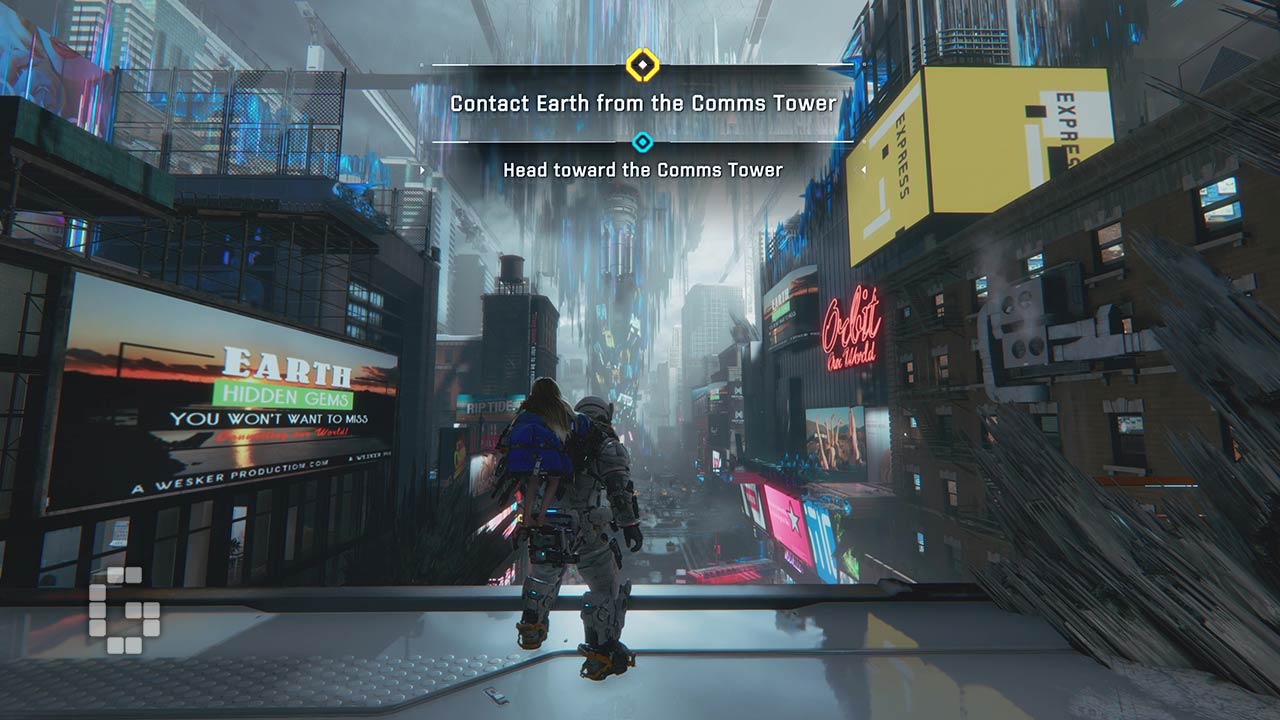
The story takes place in the near future, years after humanity discovered lunum ore and used it to develop Lunafilament at a lunar research station. One day, all contact with that station goes dark. A response team is sent in, and Hugh is among them until a lunar quake scatters the group and leaves him critically injured. Diana finds him, and from that point, the two are inseparable.
What makes the dynamic work is that neither character is just dead weight. Hugh handles the shooting and physical combat while Diana handles hacking, and the game is built around both of them contributing equally. The story leans into that mutual dependence rather than falling back on the usual “tough adult protects helpless kid” setup, which gives the relationship a more grounded and believable feel.
Combat
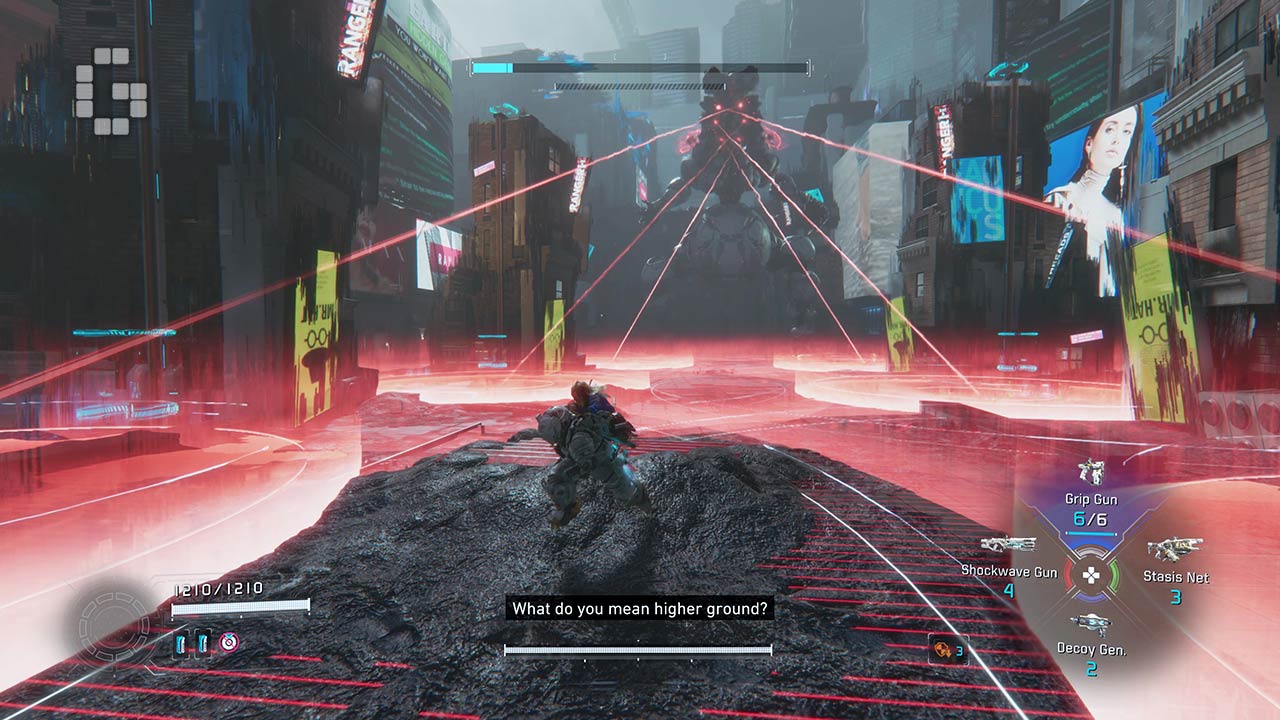
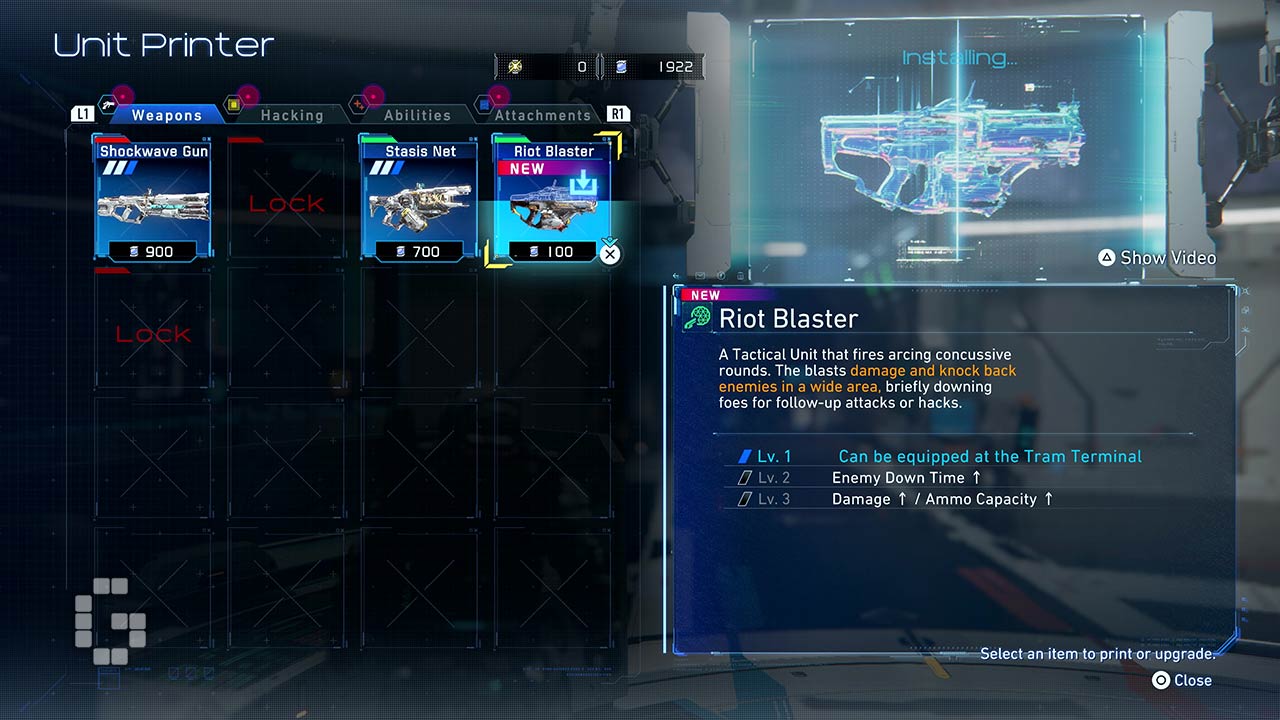
The core combat from the previous build carries over, but this session introduced more weapons and enemies that flesh it out considerably. Hugh has four weapon slots in total. One is always reserved for the Grip Gun, his default sidearm with unlimited ammo that reloads on its own over time which is essentially a safety net that ensures players are never completely out of options. The other three slots are interchangeable but each locked to a specific category: Attack Units, Defense Units, and Tactical Units.
Attack Units are your offensive weapons. The preview included the Shockwave Gun, a close-range weapon that works like a shotgun, and the Charge Piercer, which needs a full charge before it fires. Defense Units lean toward survival and creating space and the only one available in this build was the Decoy Generator, which projects a hologram to pull enemy attention away from Hugh. Tactical Units are more about crowd control; the Stasis Net creates a semicircular energy field that briefly locks down enemies, while the Riot Blaster functions similarly to a grenade launcher with a wide area of effect.
On the enemy side, the variety has expanded noticeably. The sphere-type robots from the previous preview have branched into multiple forms: one that flies and chases Hugh, one that fires missiles from a distance, and a melee type that spins at speed to deal damage. There are also larger humanoid robots that carry an unsettling, almost-human look. These enemies can put up a shield that shuts down Diana’s hacking entirely until Hugh physically destroys the covering on their face, adding a layer of coordination to those encounters.
The environment also plays a role in combat. Laser installations scattered around can be activated by having Diana hack a nearby control switch mid-fight, which can wipe out groups of enemies in one go.
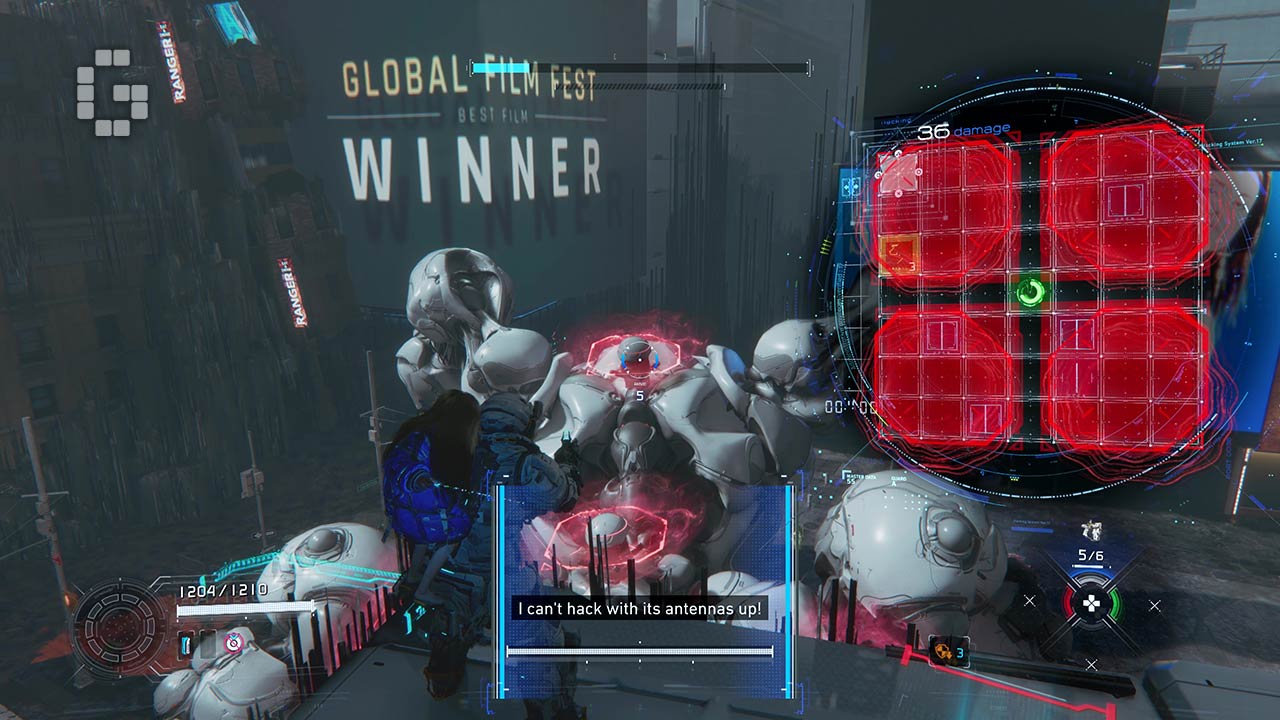
The boss fight in this session was a notable step up. It takes place in a sprawling recreation of New York City on the lunar surface, which makes for a dramatic backdrop. The boss has multiple phases and a wide range of attacks, and its most intense move is a map-wide barrage that leaves no safe ground at all which players have to climb randomly generated buildings and hold on until it stops.
Hacking
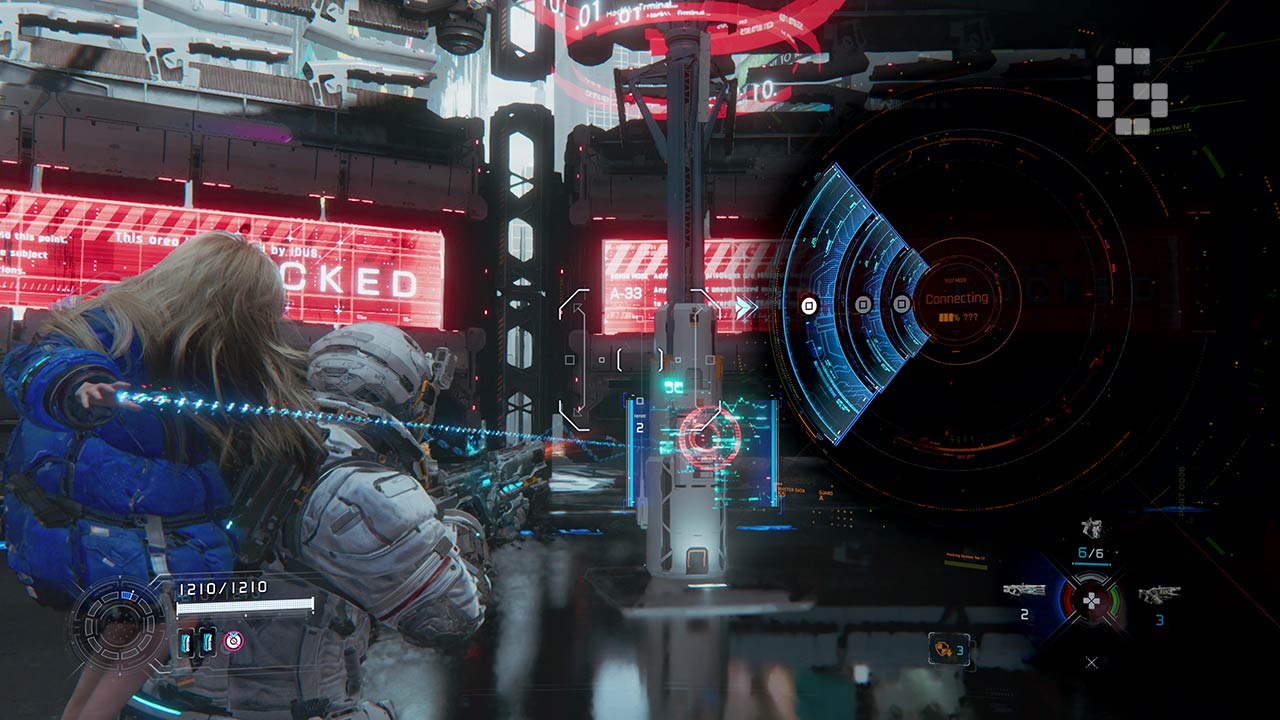
While Hugh is dealing with enemies in the physical space, players also manage Diana’s hacking in real time. Every enemy has its own hacking panel with a unique layout, so each one is a fresh puzzle. Successfully completing a hack strips the enemy of their armor and opens them up to much more damage.
Navigation through the panel involves guiding a cursor from the starting point to a green endpoint. Along the way, there are blue nodes that can be linked to boost the hack’s damage and duration, though linking every single one isn’t always the best call, reading the situation and deciding how many to chain is part of the skill.
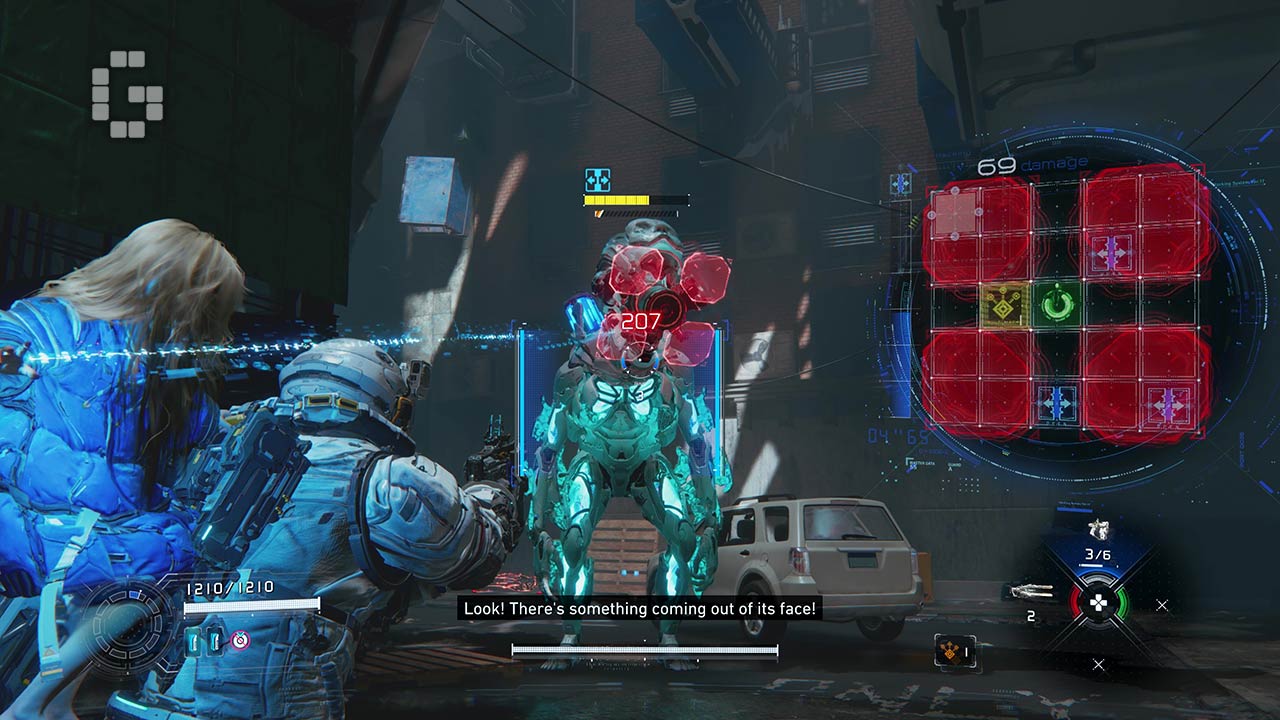
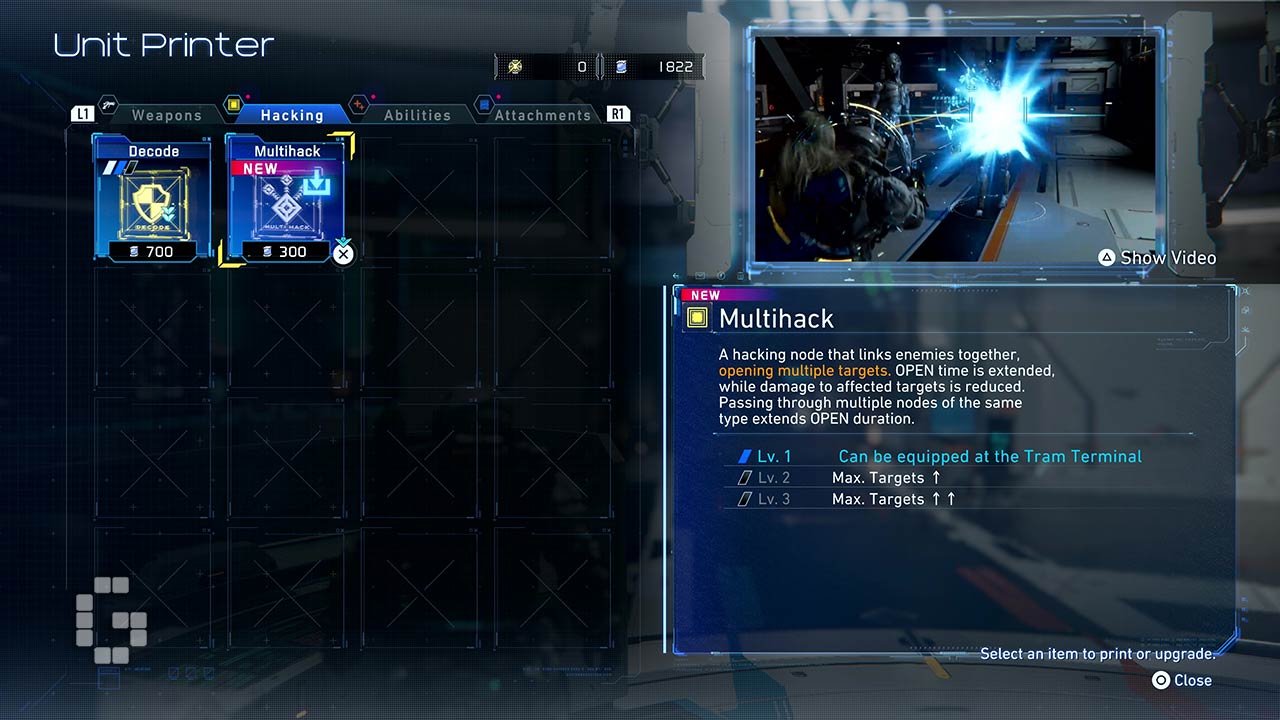
Yellow nodes also appear in panels and trigger special effects when included in a completed hack, like reducing an enemy’s defense or hacking multiple targets at once. The yellow nodes available depend on what Hugh has in his inventory, and using one consumes it, so managing that supply matters.
Hacking isn’t just for enemies, either. Diana can interact with locked doors, traps, and even enemy-fired missiles. Hacking an incoming missile sends it flying straight back at its source.
Progression and Presentation
The game’s growth systems cover Hugh, Diana, and the Shelter which is the base of operations between runs. The most distinctive mechanic here is the Cabin system. A robot named Cabin lives in the Shelter, and players collect Cabin Coins during exploration to spend with him. The coins are used to unlock tiles on a bingo-style grid, and completing a row triggers a Bingo that rewards more powerful items. It mixes deliberate decision-making with an element of chance in a way that feels rewarding.
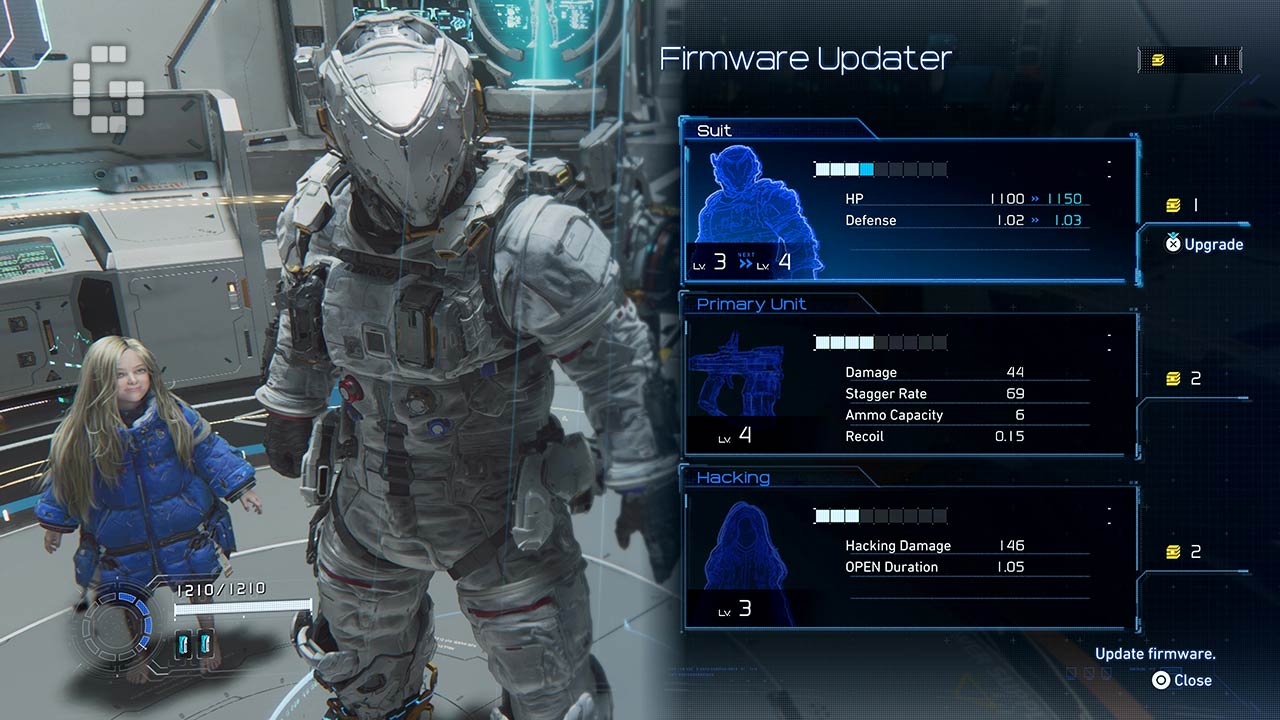
The Shelter itself levels up when players clear major stages, which rewards them with a Shelter License Key. Each level raises the cap on existing upgrades and opens up new skills and items. For direct stat upgrades, yellow cubes called Upgrade Components can be put into three areas: Hugh’s weapon damage, his suit’s defense, and Diana’s hacking strength.
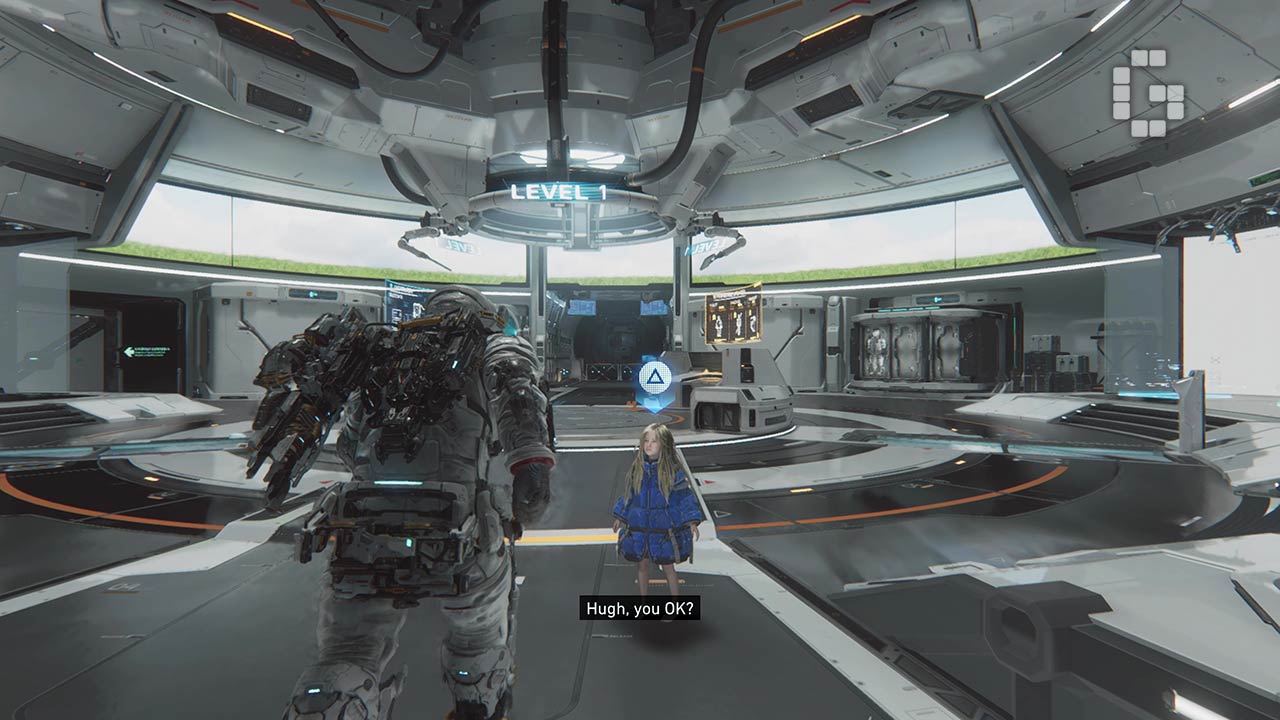
Electronic Coins go toward the Shelter’s 3D printers, where weapons and hacking nodes found during a run are logged and can be manufactured, upgraded, or unlocked. Diana’s abilities, meanwhile, are tied more directly to story progression because as she gains new skills as the narrative moves forward rather than through a separate upgrade screen.
The visual improvements over earlier builds are easy to spot. Diana’s hair, which previously looked stiff, now moves naturally with her. The environments made a strong impression too, the lunar New York City setting mashes cyberpunk neon with the bare, grey surface of the moon in a way that looks both striking and a little eerie. The boss fight in particular pushes the visual spectacle hard, with big effects and sound design that make the whole encounter feel appropriately intense.
Final Thoughts
Two hours into this second preview, Pragmata is showing enough across its combat, hacking, story, and systems to make it worth keeping an eye on. The back-and-forth between shooting and hacking holds up, the progression has real depth, and the relationship between Hugh and Diana gives the whole thing an emotional thread to follow. The full game’s release will be the real test, but on the strength of what this preview offered, it’s a project that looks to be coming together well.