



![[EXCLUSIVE] Brendan Gan Delivers One of Malaysia’s Best-Ever Worlds Results, Shares Thoughts on Pressure and the Local Scene](https://cdn.gamerbraves.com/2026/08/Brendan-Gan_Interview_FI-360x180.jpg)






![[BIC2026] Hiroaki Nagashima from Toei Games Talks New IPs, Indie Roots, and Asia-First Strategy](https://cdn.gamerbraves.com/2026/08/Toei-Games-BIC-2026_Interview_FI-360x180.jpg)
![[BIC2026] From Outsider to Organizer: How Isabella Seo Jungsook Helped Build Busan’s Indie Game Scene through BIC](https://cdn.gamerbraves.com/2026/08/Isabella-BIC-2026_Interview_FI-360x180.jpg)
![[BIC2026] CanOpener’s Logan Moon Opens Up About Dungeon Settlers Ahead of Its September Early Access Launch](https://cdn.gamerbraves.com/2026/08/Logan-Moon-BIC-2026_Interview_FI-360x180.jpg)


There’s a natural logic to bringing a golf simulation to a hybrid console. The measured pace of the sport, the emphasis on timing, and the suitability of short play sessions should make PGA Tour 2K25 an ideal companion for the Nintendo Switch 2. On paper, this is a pairing that makes sense. A full-featured sports title that can be taken on the go feels like a smart match for Nintendo’s latest hardware.
In practice, however, this version settles into something more modest. It is not a disastrous port, nor is it stripped of meaningful features. But it rarely feels particularly tuned to the strengths of the system. The result is a competent yet uneven adaptation that lands somewhere in the middle — playable, occasionally enjoyable, but rarely impressive.
For a game built around precision and rhythm, that middle ground can feel like a missed opportunity.
Content Parity Without Compromise
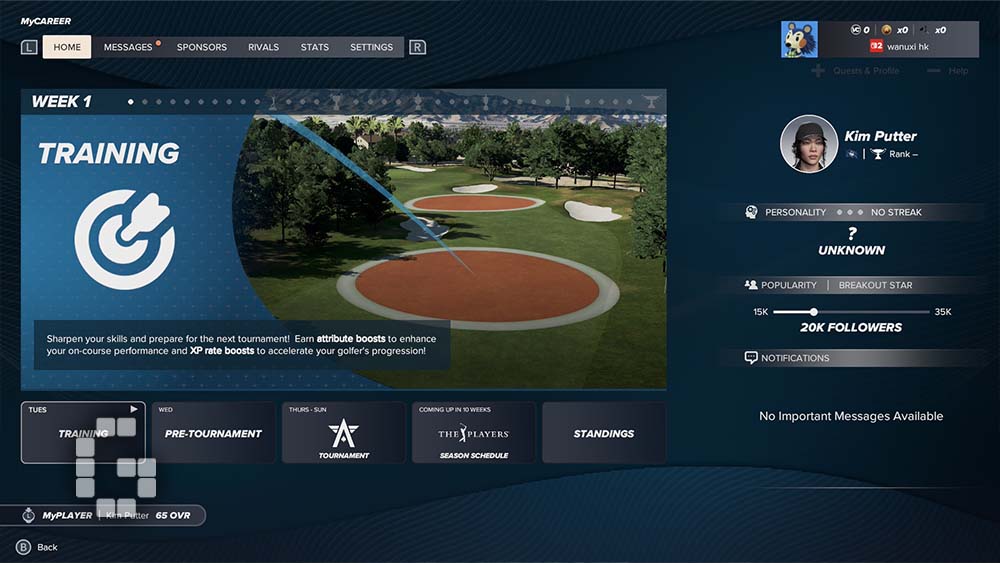
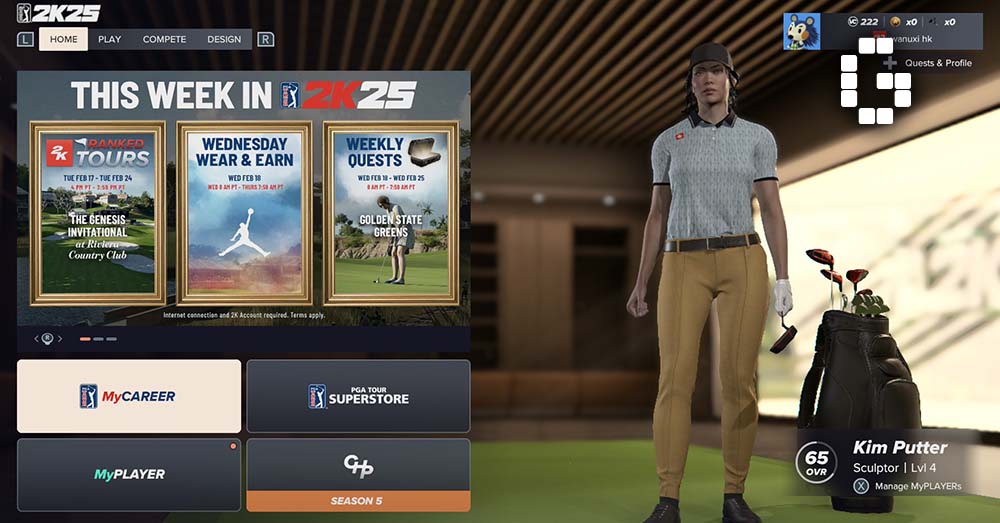
From a feature standpoint, PGA Tour 2K25 arrives intact. The full MyCAREER mode is present, alongside Ranked Tour, online societies, cross-platform play, and the robust course creator. This is not a watered-down portable edition in the traditional sense. The structural foundation mirrors what players receive on more powerful hardware.
That parity matters. There is genuine value in knowing that this version isn’t artificially limited. Career progression, competitive ladders, and user-generated content are all accounted for. If you were concerned about a scaled-back experience, those fears are largely unfounded.
The complications arise not from what’s missing, but from how it runs.
Performance and Frame Pacing
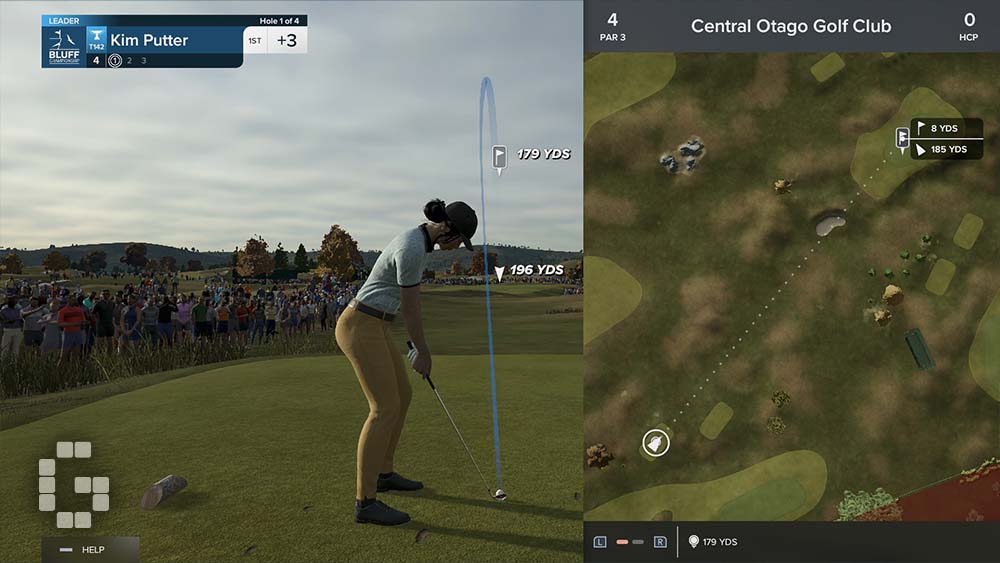 The game targets 30 frames per second, which is a reasonable ceiling for a golf simulation. The sport itself does not demand 60fps fluidity in the way an action-heavy genre might. However, the issue here is less about the numerical cap and more about consistency.
Frame pacing occasionally wavers. Camera sweeps across fairways can introduce subtle hitching, and swing animations do not always feel as fluid as they should. Even when the framerate technically holds, the delivery of frames can feel uneven. That unevenness has a perceptible impact on rhythm.
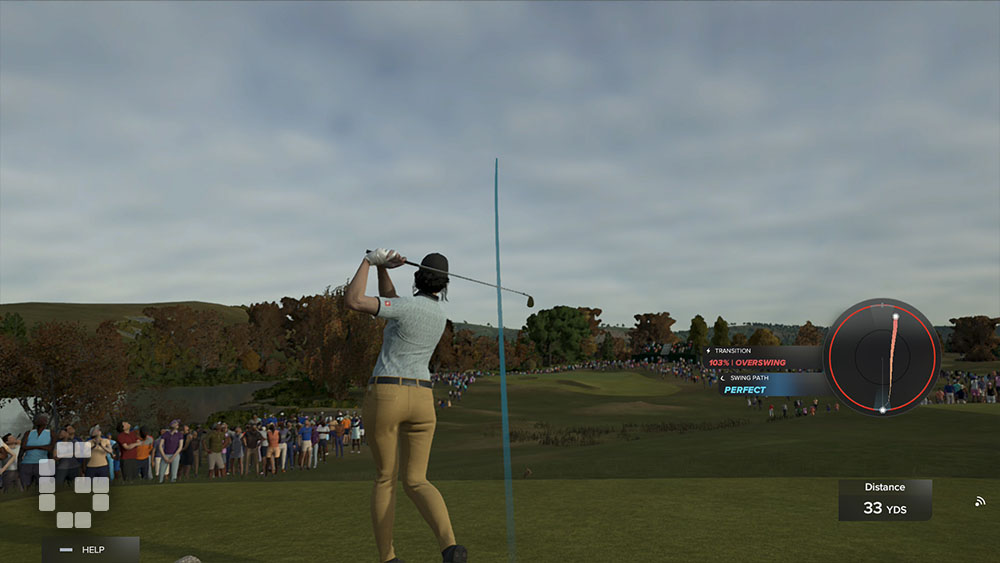
Golf mechanics are built on timing. The swing meter requires steady, deliberate input, and even minor stutters can disrupt a player’s internal cadence. It’s not that the system collapses under pressure, but there is a persistent lack of smoothness that keeps the experience from feeling fully locked in.
Visual Fidelity and Clarity
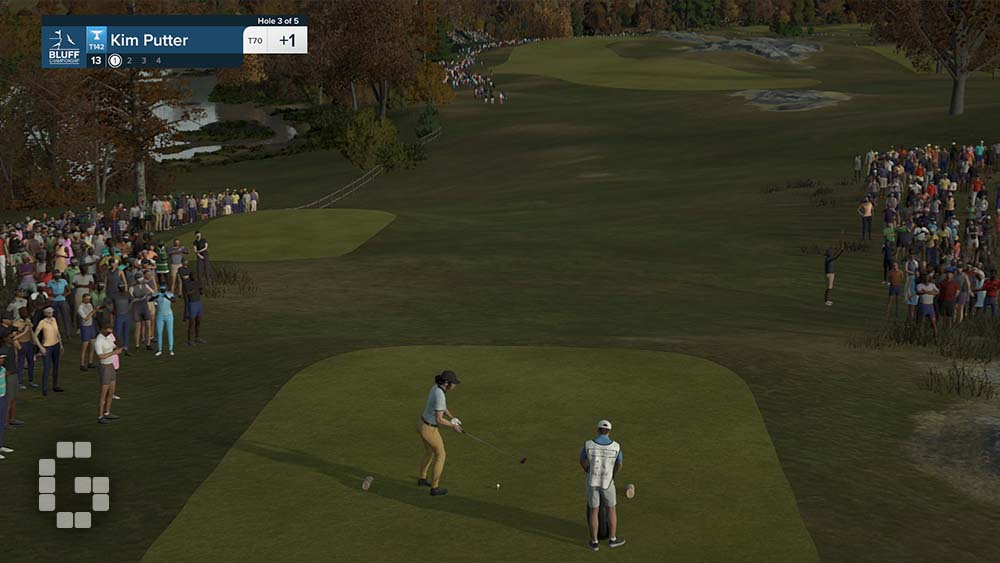
Visually, the presentation is respectable but compromised. Courses retain their overall identity, and environmental detail is present enough to avoid feeling barren. Crowds populate tournament settings, and lighting conditions generally hold up well.
At the same time, reductions in foliage density and overall sharpness are noticeable, particularly when docked. Image reconstruction appears softer than on competing platforms, which can leave the picture lacking crisp definition. In handheld mode, this softness becomes more apparent, especially when tracking the ball against busy greens and fairways. The small white ball can occasionally blend into the environment, making follow-through tracking more difficult than it should be.
None of this renders the game unattractive, but it reinforces the sense that this version is operating with technical concessions rather than optimization.
Input Responsiveness and Menus
If there is one area where the port feels less refined, it is responsiveness outside the fairway. Menu navigation can feel sluggish, and transitions between screens introduce a noticeable drag. Inputs are rarely dropped outright, but there is a slight latency that accumulates over time.
In a sports simulation, responsiveness is central to immersion. Swing timing demands precision, and even a faint delay between input and on-screen action can erode confidence. While gameplay remains functional, it does not feel as immediate as it does on other platforms. That distinction becomes particularly noticeable for players who value competitive consistency.
Load Times and Flow
Load times are also longer than ideal. Transitioning between courses, events, and certain menu-heavy areas can take significantly longer than their counterparts on more powerful consoles. The issue is not just raw duration, but frequency. There are enough loading screens interspersed throughout the experience that the overall flow feels segmented.
On a hybrid console designed for quick sessions, this becomes more noticeable. The friction introduced by longer waits diminishes the pick-up-and-play advantage that portable hardware typically provides.
The Online Requirement Problem
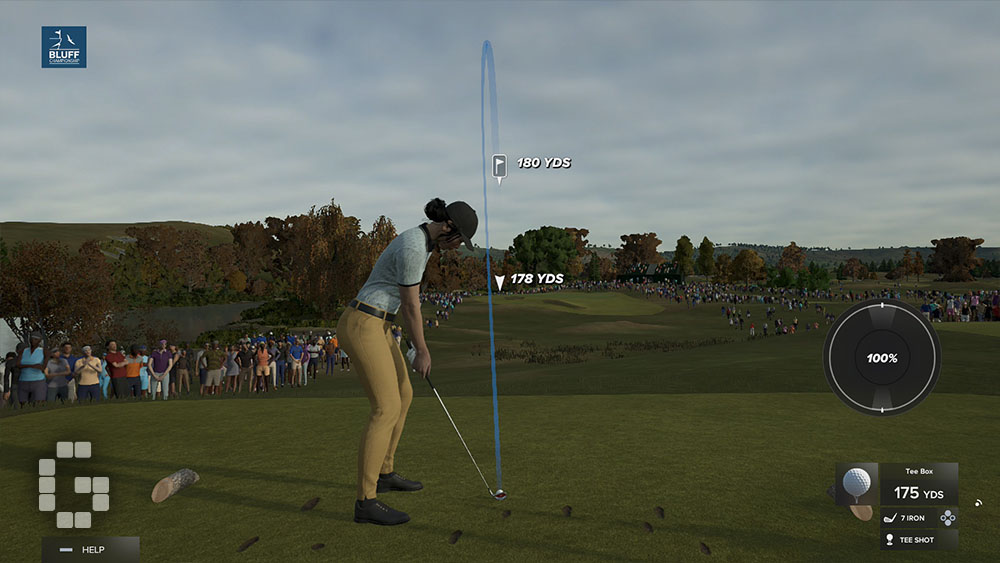
Perhaps the most structurally awkward element of this version is its online dependency. While offline play is technically possible, meaningful progression, XP gains, and career-related systems require connectivity. For a console defined by mobility, this creates an inherent contradiction.
The Nintendo Switch 2 excels as a portable device. PGA Tour 2K25, however, behaves like a live-service title that expects a stable connection. That expectation makes the game feel more at home docked than handheld. For players hoping to take their career mode on the road without restrictions, the limitations are difficult to ignore.
Docked vs. Handheld
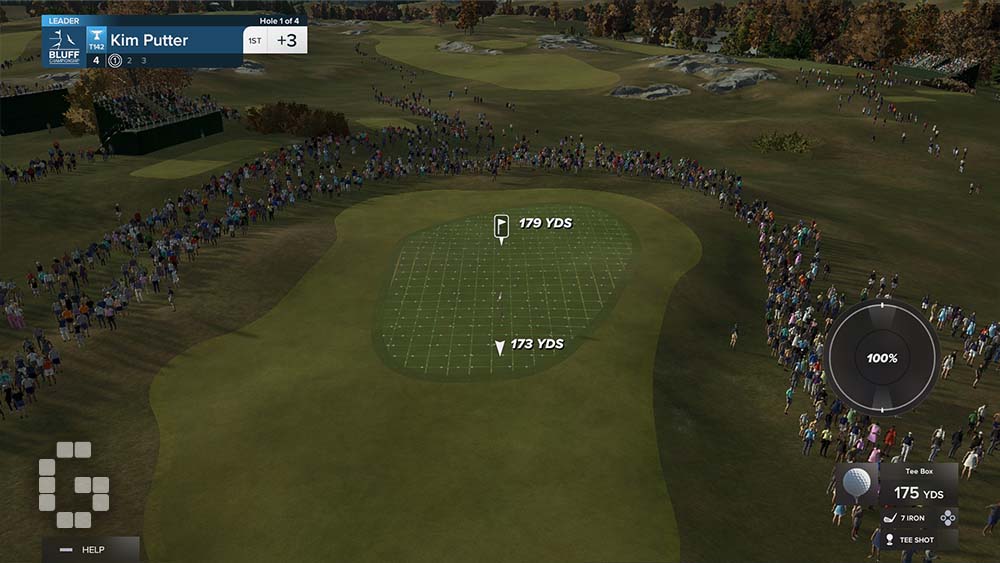
Docked play delivers a more stable experience. The visual softness is less distracting on a larger display, and the online requirement is less intrusive when playing from home. Performance remains capped at 30fps, but it feels steadier in this configuration.
Handheld mode, while entirely functional, exposes the compromises more clearly. Visual clarity is reduced, ball tracking can be inconsistent in dense environments, and any frame pacing issues are easier to detect at closer viewing distances. The portability is welcome, but it does not elevate the experience beyond its technical constraints.
No New Additions
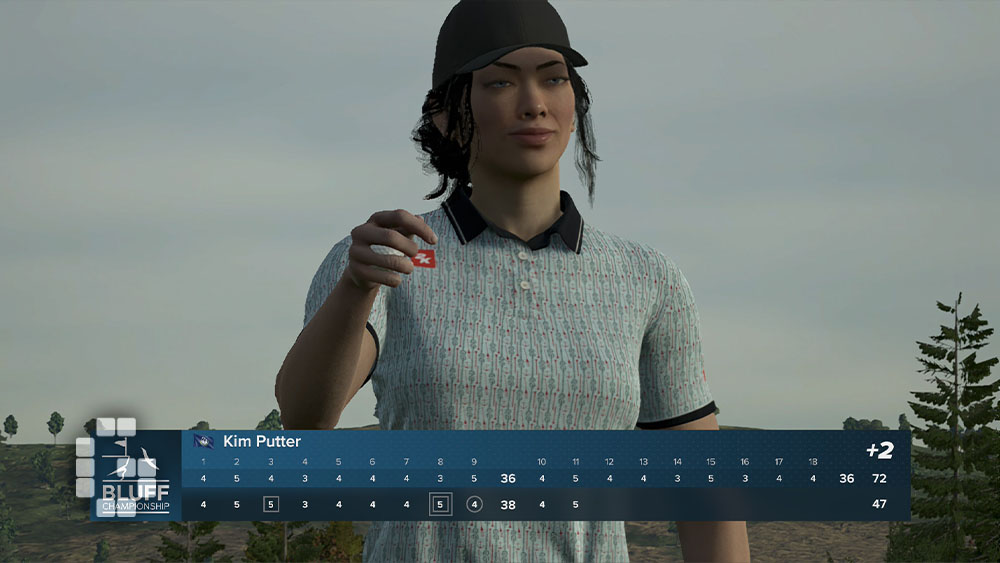
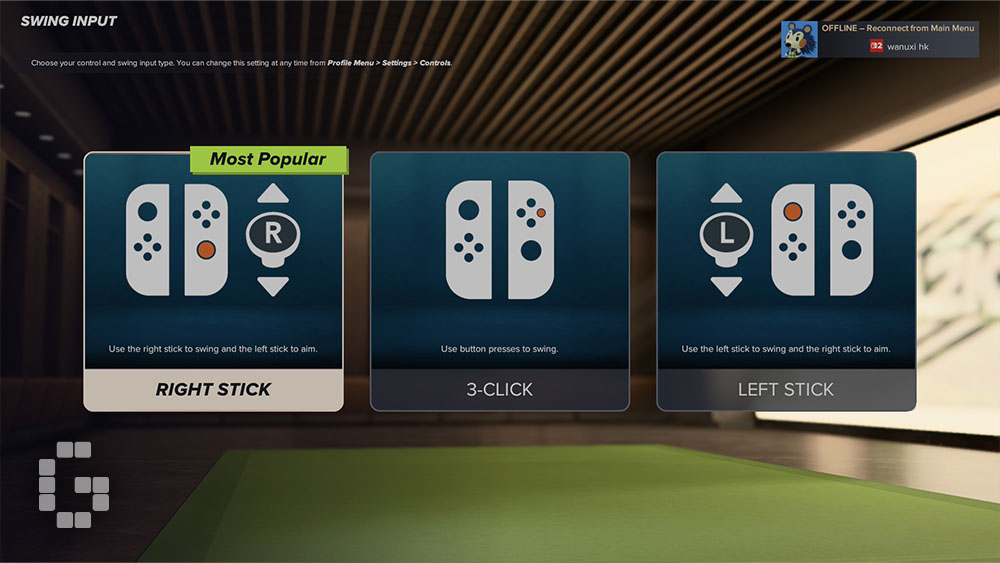
The Nintendo Switch 2 version of PGA Tour 2K25 doesn’t really bring anything new. There are no extra modes or playstyles, and the MyCAREER, Quick Play, Ranked Tour, and course creator are all the same as on other platforms. You can use the Joy-Cons for stick or stick-based swings, but that’s about it. Portability feels underused, as most progression and rewards require an online connection, leaving offline play limited to basic rounds and course creation. It’s functional in handheld mode, but this version mostly feels like a trimmed-down port rather than a fresh experience for the Nintendo Switch 2.
Final Verdict
PGA Tour 2K25 on Nintendo Switch 2 is neither a triumph nor a failure. It delivers the full feature set and maintains structural integrity, which is commendable. The core gameplay remains fundamentally sound, and for players who own only a Nintendo Switch 2, this is a perfectly serviceable way to experience it.
However, the performance inconsistencies, softer visuals, longer load times, and mandatory online elements prevent it from feeling fully optimized for the hardware. It is a version that works, but rarely shines.
For Nintendo Switch 2-only players, it is a solid if unspectacular option. For those with access to more powerful platforms, it is difficult to recommend as the primary way to play.
Ultimately, this is a competent port that settles comfortably in the middle of the fairway — safe, functional, and unlikely to surprise.
You can check out the store page of PGA Tour 2K25 for the Nintendo Switch 2 here.
The Review
PROS
- Full feature parity with other platforms, including MyCAREER, Ranked Tour, and course creator
- Cross-platform online play keeps matchmaking active
- Courses remain visually detailed despite reductions
- Portable play is convenient for casual rounds
CONS
- Inconsistent frame pacing and long load times disrupt gameplay and session flow.
- Sluggish menus and mild input latency affect overall responsiveness
- Mandatory online requirements limit portable flexibility