






![[EXCLUSIVE] Dragon’s Dogma 2: Dark Arisen Team Opens Up About the Expansion’s Name, New Norgan Region, and Performance Goals](https://cdn.gamerbraves.com/2026/07/Dragons-Dogma-2-Dark-Arisen_Interview_FI-360x180.jpg)



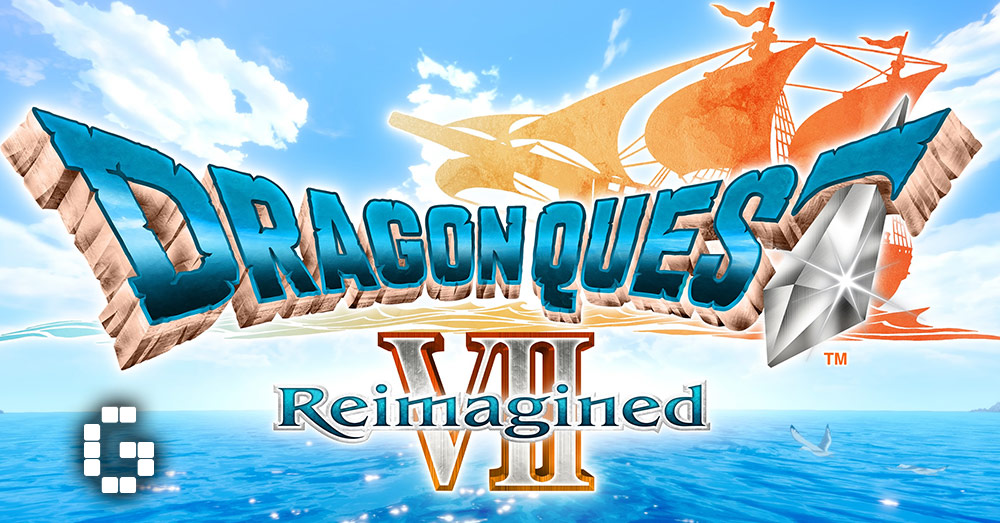
Square Enix took a risk with Dragon Quest VII Reimagined. After the success of their HD-2D remakes for Dragon Quest I through III, they could have played it safe with the same formula. Instead, they chose to reimagine one of the series’ longest and most challenging entries from the ground up. Our review of Dragon Quest VII Reimagined will examine how the remake handles the modernization of a notoriously slow-paced classic, looking at its new visual style, gameplay changes, and whether it manages to make Dragon Quest VII accessible without losing what made it special in the first place.
A Miniature World That Feels Handcrafted
Dragon Quest VII Reimagined doesn’t try to look realistic. Instead, it goes for a diorama-like aesthetic where characters look like articulated figures and environments feel like carefully assembled models. It’s a distinctive choice that gives the game a unique personality.
The style prioritizes clarity and charm. Towns, dungeons, and the overworld are easy to understand at a glance, and lighting shifts between day and night change how familiar places feel. Individual models might not look highly detailed when you examine them closely, but the overall presentation stays cohesive and expressive. This visual approach offers another potential direction for future Dragon Quest remakes, giving the series a modern look without erasing its character.
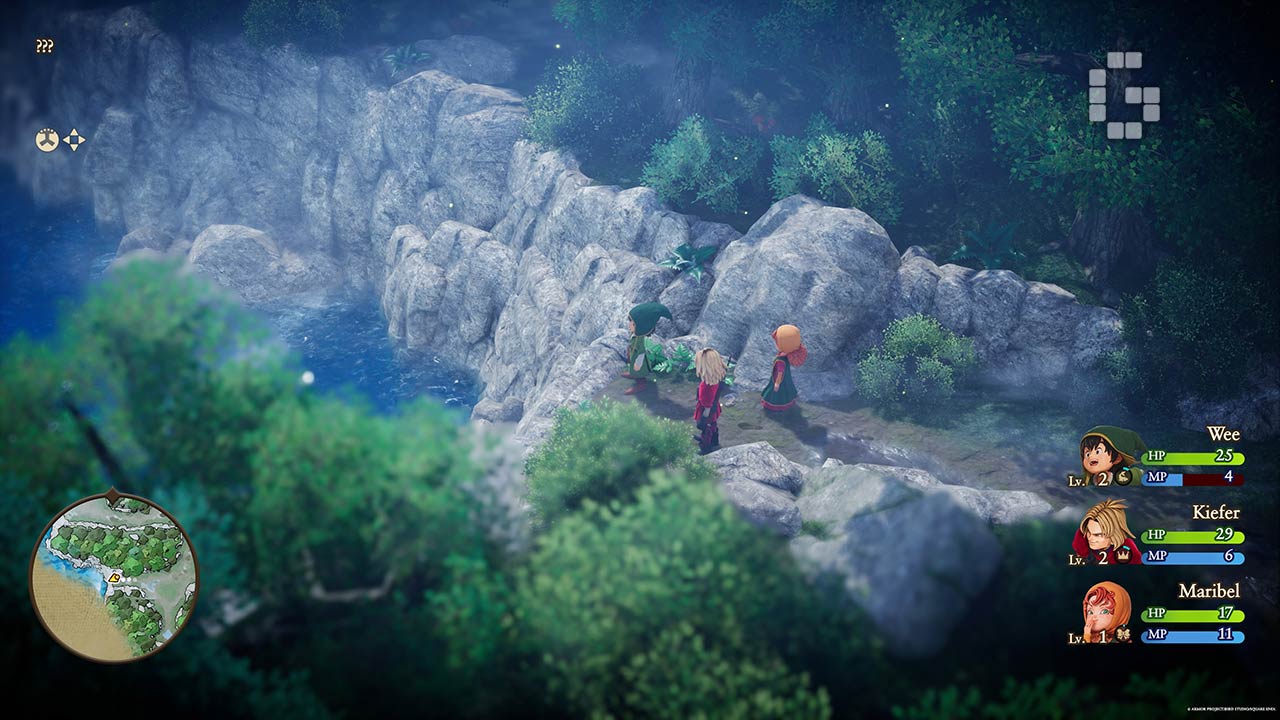
One of the biggest improvements comes from how exploration works. Main objectives now appear as markers on the map, and players can toggle them on or off whenever they want. For a game as long and complex as Dragon Quest VII, this greatly reduces the chance of getting lost or stuck.
While this guidance can diminish moments that originally required talking to NPCs or piecing together environmental clues, the game doesn’t let exploration become shallow. Hidden items, breakable objects, environmental details, and optional paths stay unmarked, rewarding players who take time to look around. Even when treasure locations appear on the map, fully clearing a dungeon still requires thorough exploration, and rotating the camera can reveal things you’d otherwise miss.
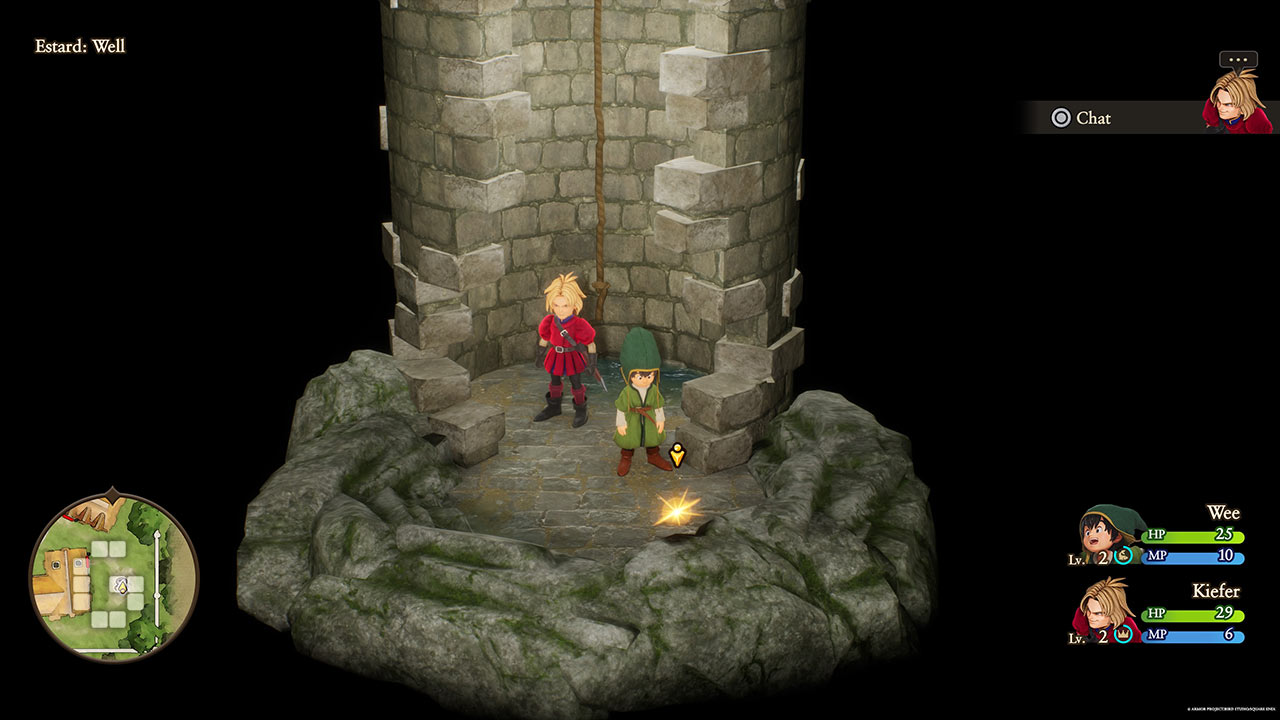
The game clearly wants to keep you moving forward without removing the satisfaction of discovery. By letting players control how much help they get while keeping meaningful rewards for exploration, it finds a middle ground between efficiency and immersion.
Combat That Moves Faster Without Losing Depth
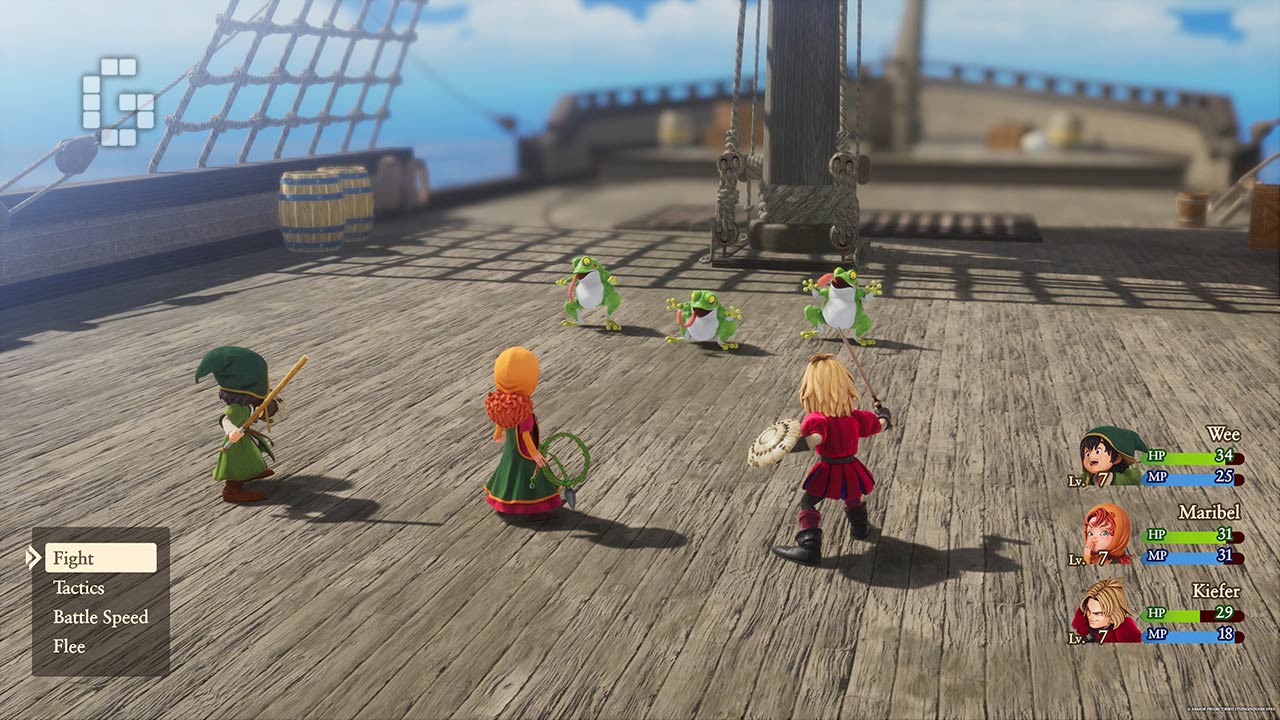
Combat stays turn-based, but nearly everything around it has been streamlined. Enemies now appear on the field instead of triggering random encounters. You can avoid fights you don’t want or start battles with positional advantages. When your party significantly outlevels enemies, you can defeat them instantly, removing the repetitive nature of trivial encounters. This change alone makes the pacing feel much better.
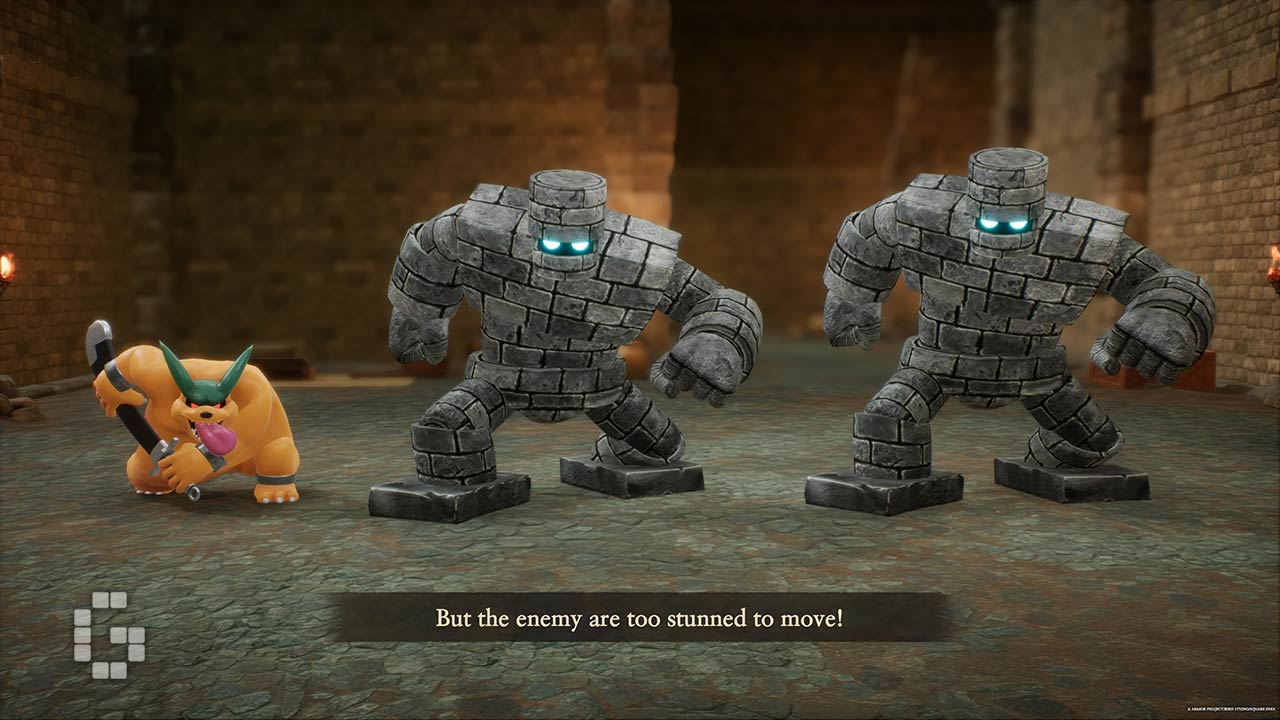
Auto-battle is smart and efficient but intentionally limited. It handles regular encounters well by prioritizing healing, exploiting elemental weaknesses, and finishing off wounded enemies. However, it struggles against bosses and tougher elite enemies. This balance is important because it reduces repetition without removing player agency, saving meaningful decision-making for fights that actually require it.
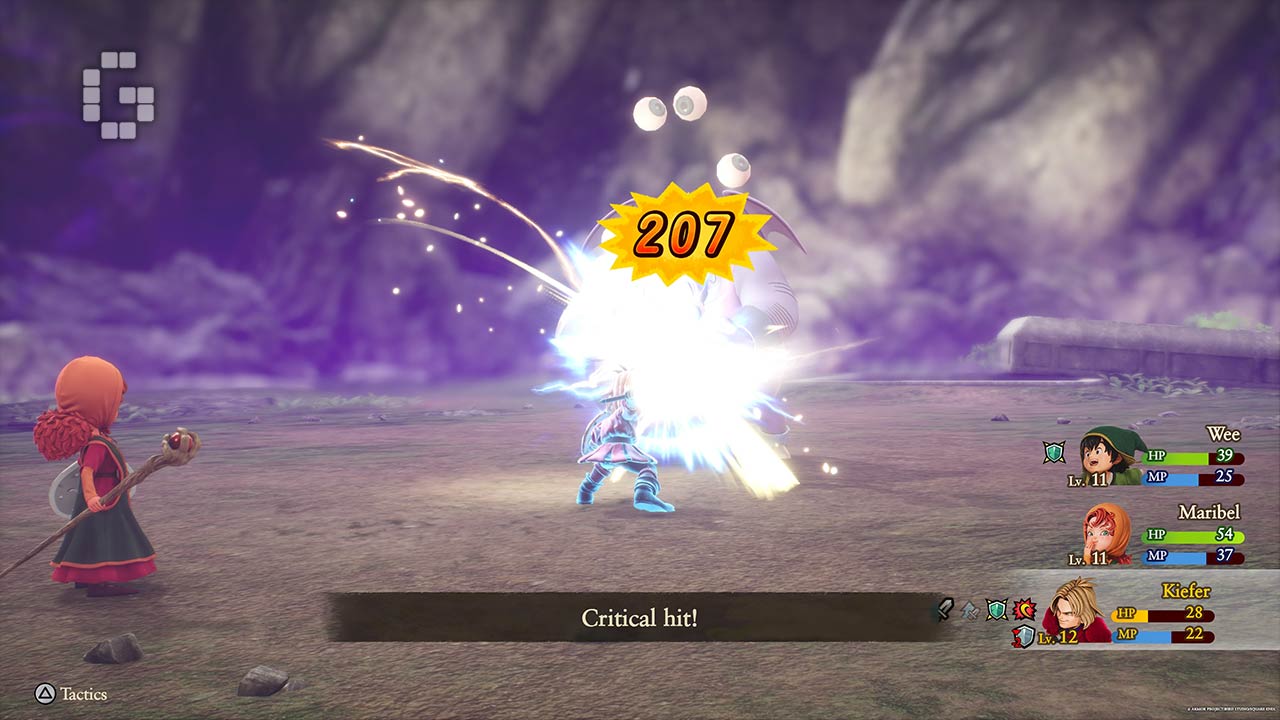
Additional improvements include adjustable battle speed, visible indicators showing which elements work against enemies, frequent save points before major battles, and quick-access healing shortcuts. These changes remove much of the mechanical fatigue that long JRPGs often create.
A Job System Built on Strategy, Not Grinding
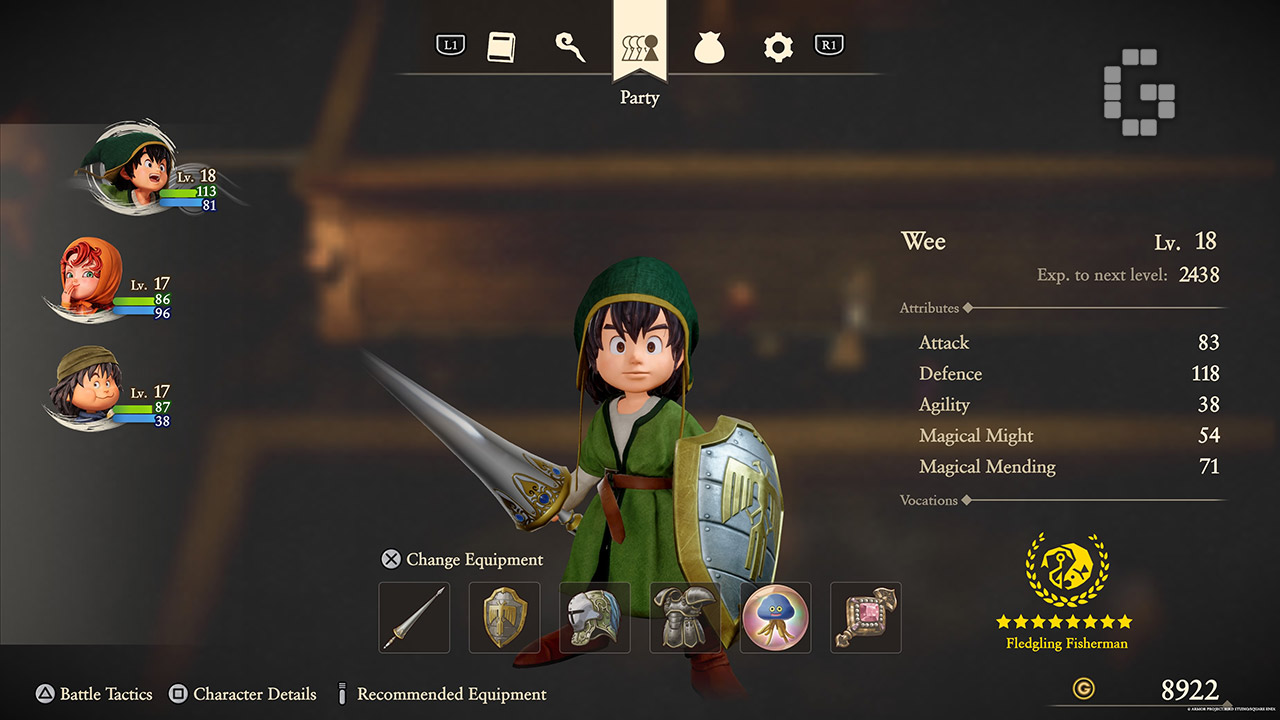
The job system received one of the most significant redesigns in Reimagined. Early on, changing jobs feels restrictive. Skills don’t carry over when you switch, and changing multiple characters at once can temporarily weaken your party. This discourages impulsive experimentation and instead rewards planning, encouraging you to maintain core roles while gradually developing new paths.
The real shift happens when the dual job system, called Moonlighting, unlocks. Characters can then equip two jobs at the same time, eliminating the gap in abilities that previously made switching feel risky. This transforms the system from cautious progression into a space for strategic experimentation.
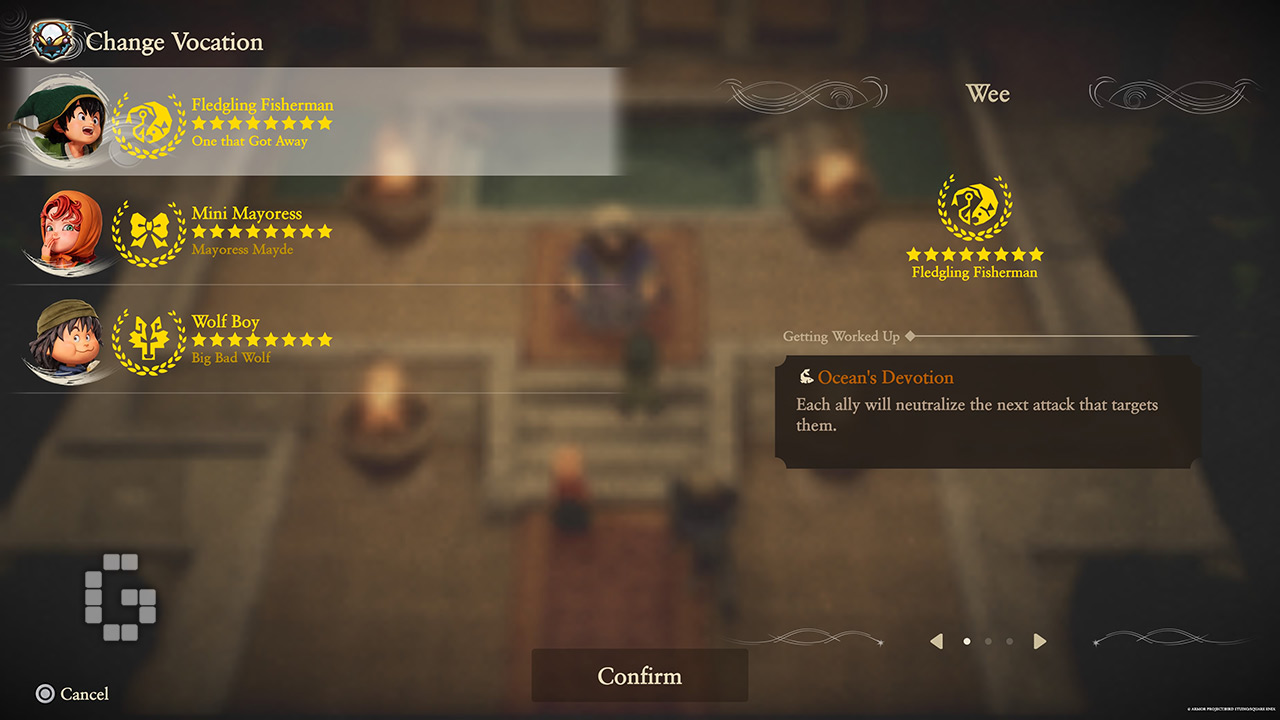
Unlike the original version, where players could eventually inherit nearly every skill to create overpowered characters, Reimagined emphasizes role synergy. Slow characters can pair with Thief jobs to improve their speed, while faster characters benefit from Warrior or Martial Artist roles to maximize damage. Passive and active skills interact in meaningful ways, shifting focus from grinding toward perfection to building smart, complementary team compositions. The result is a system with greater tactical depth and long-term engagement, though it does sacrifice some of the original’s power fantasy.
A Story About Time and Consequence
The narrative keeps its island-based structure, where you travel between past and present to gradually restore lost worlds. After a deliberately slow opening, the game settles into a rhythm where each island tells a self-contained story that usually resolves within an hour while contributing to broader themes.
The tonal variety stands out. Some chapters lean into humor and lighthearted moments, while others deliver genuine tension or emotional weight. Seeing how locations and characters evolve across timelines remains one of the game’s greatest strengths, reinforcing the sense that your actions have lasting consequences.
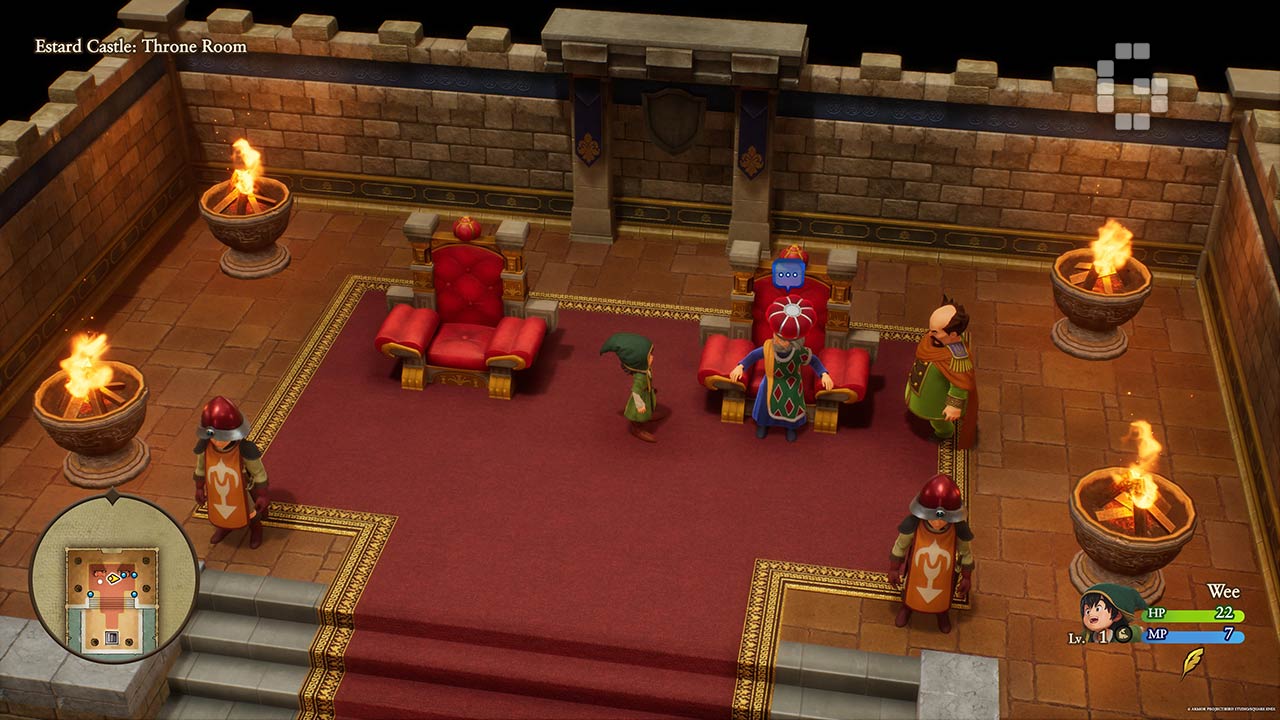
Facial animations during dialogue remain understated, but strong musical direction and voice performances successfully elevate emotional moments without relying on excessive cinematic spectacle.
The Missing Job Costumes
The most debated change among longtime fans is the removal of job-specific character costumes. The job system itself remains deep and flexible, but visual progression is less apparent.
For newcomers, this probably won’t matter much. Weapon and shield appearances still change, and the system works perfectly well without visual job markers. However, for players familiar with the 3DS version, the absence of visible job identity represents a loss of feedback that made growth feel more tangible. It’s not a deal-breaker, but it is a noticeable trade-off for veterans who valued seeing their character builds reflected visually.
Verdict
Dragon Quest VII Reimagined demonstrates how classic JRPGs can evolve without abandoning their foundations. Through thoughtful pacing improvements, modernized combat flow, and a reimagined job system focused on strategy rather than excess, it transforms a famously demanding game into an experience that feels both expansive and approachable.
While the loss of job-specific costumes may disappoint some longtime fans, it does little to undermine what is otherwise one of the most refined traditional turn-based RPGs available today.
For fans of classic JRPGs, Dragon Quest, or players curious about how older RPG design can be thoughtfully modernized, this is an adventure worth taking. It offers what might be the most accessible and well-paced way to experience Dragon Quest VII while respecting its legacy and removing the friction that once defined it.
Played on PS5
The Review
Dragon Quest VII Reimagined
PROS
- Successfully modernizes traditional turn-based combat while preserving its classic core.
- The dual-job system greatly expands build variety and tactical depth.
- Island-based storytelling delivers clear pacing with strong emotional highs and lows.
- The miniature diorama-style visuals offer a distinctive new direction for classic remakes.
- Gameplay systems unfold gradually, maintaining a smooth and comfortable overall pace.
- Auto-battle reduces repetitive encounters without undermining strategic decision-making.
CONS
- The early hours remain relatively slow-paced by modern standards.
- Job changes do not affect character appearance, which may disappoint longtime fans.