










![[EXCLUSIVE] Dragon’s Dogma 2: Dark Arisen Team Opens Up About the Expansion’s Name, New Norgan Region, and Performance Goals](https://cdn.gamerbraves.com/2026/07/Dragons-Dogma-2-Dark-Arisen_Interview_FI-360x180.jpg)



![[BIC2026] From Outsider to Organizer: How Isabella Seo Jungsook Helped Build Busan’s Indie Game Scene through BIC](https://cdn.gamerbraves.com/2026/08/Isabella-BIC-2026_Interview_FI.jpg)
Every year, the Busan Indie Connect Festival (BIC) brings together indie game developers, publishers, and players from around the world. Behind the scenes of this growing event is Isabella Seo Jungsook, a member of the BIC Organizing Committee who has been with the festival since it was officially founded in 2017. At BIC 2026, we sat down with her to talk about how the festival started, how it has changed over the years, and where she hopes to take it next.
Watching From the Outside, Then Stepping In
Isabella wasn’t part of BIC from the very beginning. Before joining the festival, she worked at public institutions connected to the government, including agencies focused on industry promotion. She actually watched the first two BIC events in 2015 and 2016 from the outside, before joining the organizing committee when it was formally created in 2017.
At the time, she didn’t even know what an indie game was. “I thought, ‘Wow, Busan has an indie game festival?’ ‘What is an indie game?’ I didn’t know what it was,” she said. She later realized that BIC was meant to support small, independent game studios, something the Busan IT Industry Promotion Agency (BIPA) and the city wanted to promote. That interest eventually led her to join the organizing committee, and she has been managing and planning the festival ever since, for over 10 years now.
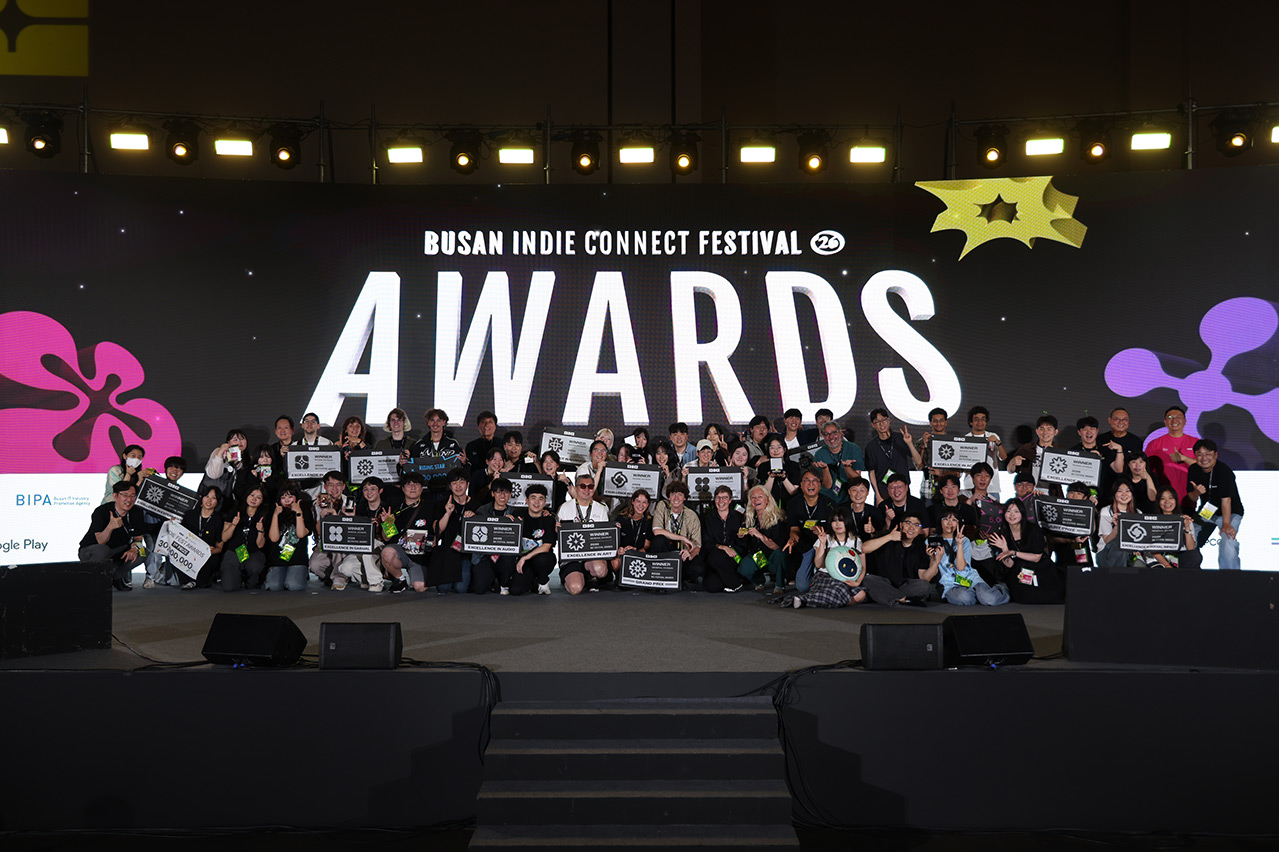
Looking back at how far the festival has come, she said indie games used to be a hard sell. “At the time, nobody really understood indie games, so it was difficult to get anyone to sponsor or support us,” she explained. Support from the Busan Metropolitan Government and sponsors, combined with developers who kept producing good games, is what allowed BIC to keep growing into what it is today.
Building a Platform for Developers
One of the noticeable changes at BIC over the years has been the growing number of panel speakers compared to previous editions. According to Isabella, this wasn’t just about filling the schedule. It was about giving developers access to the people and resources they need to grow.
“I want to raise up BIC for developers. Developers need publishers, funding, acceleration, and things like that. So, I created a platform for them through BIC,” she said. That meant actively inviting popular speakers, well-known publishers, and solid support systems to the festival, so that developers attending BIC could connect with the people who could help fund and grow their games.
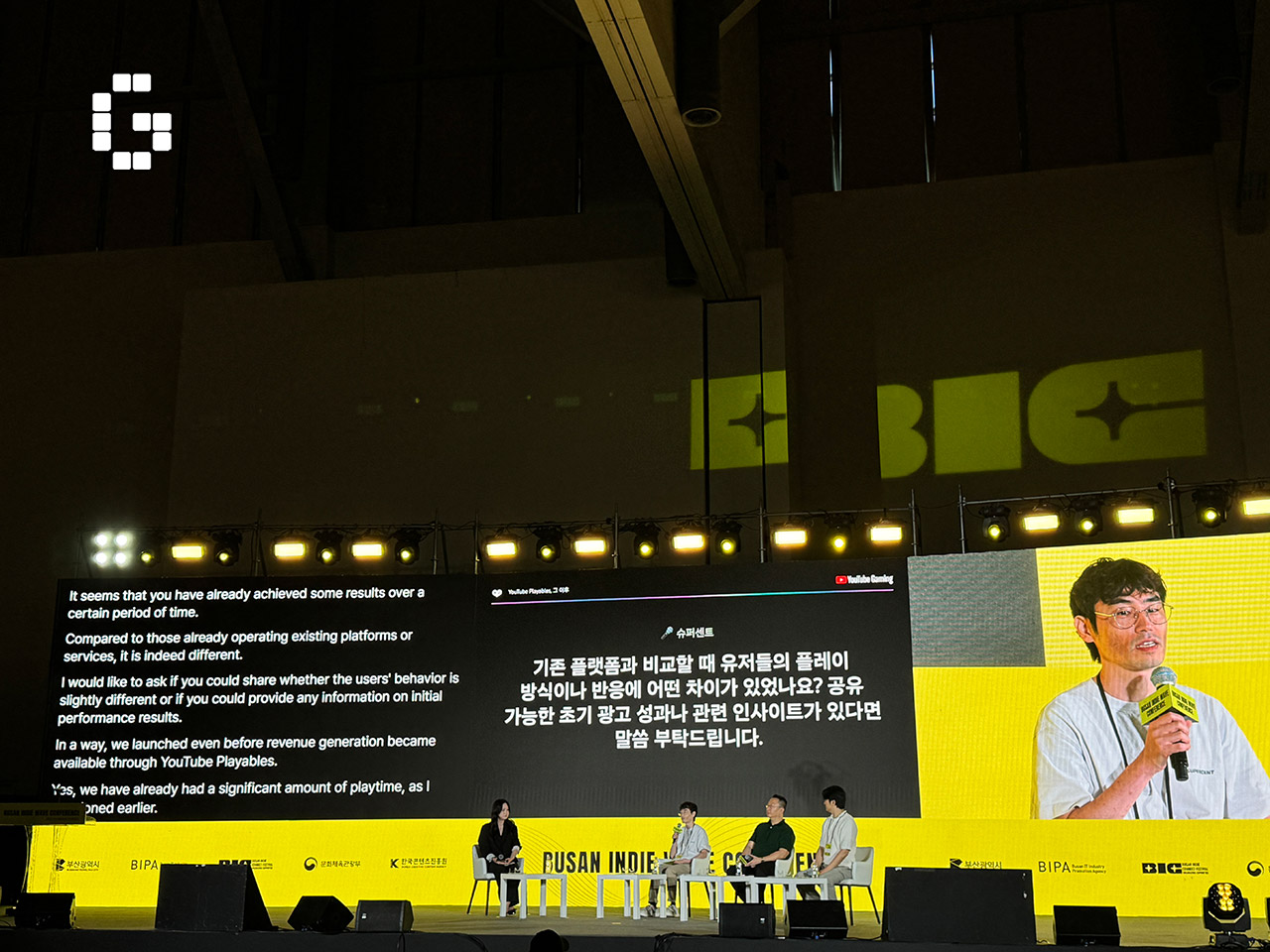
Another feature that stood out at this year’s event was the use of AI translation on the speaker stage. Unlike some festivals that rely on live human translators, BIC 2026 used AI translation for both spoken and text content on stage, something Isabella said drew a lot of positive reactions from attendees.
She explained that the decision came from Korea’s general openness to new technology. “Koreans are accustomed to embracing new technologies and new things,” she said, adding that AI translation tools are already common in Korea and have improved a lot in recent years. She saw the conference as a good opportunity to put the technology to the test, and said that international developers who used the system responded well to it.
Indie Games, AAA Games, and the Value of Owning Your IP
Isabella also spoke about the importance of original IP for indie developers, using Blue Archive as an example. Blue Archive started as a Korean indie IP before becoming a major AAA title, and its presence at BIC as a keynote topic wasn’t meant to draw a line between indie and AAA games. Instead, it was meant to make a point.
“I think AAA games can also be original game IPs, and indie games need to develop their own IP as well,” she said. In her view, indie and AAA games shouldn’t be treated as separate categories. “We shouldn’t divide them, the indie game sector and the AAA game sector. We shouldn’t make that distinction,” she added, noting that indie games have the potential to grow into something much bigger over time.
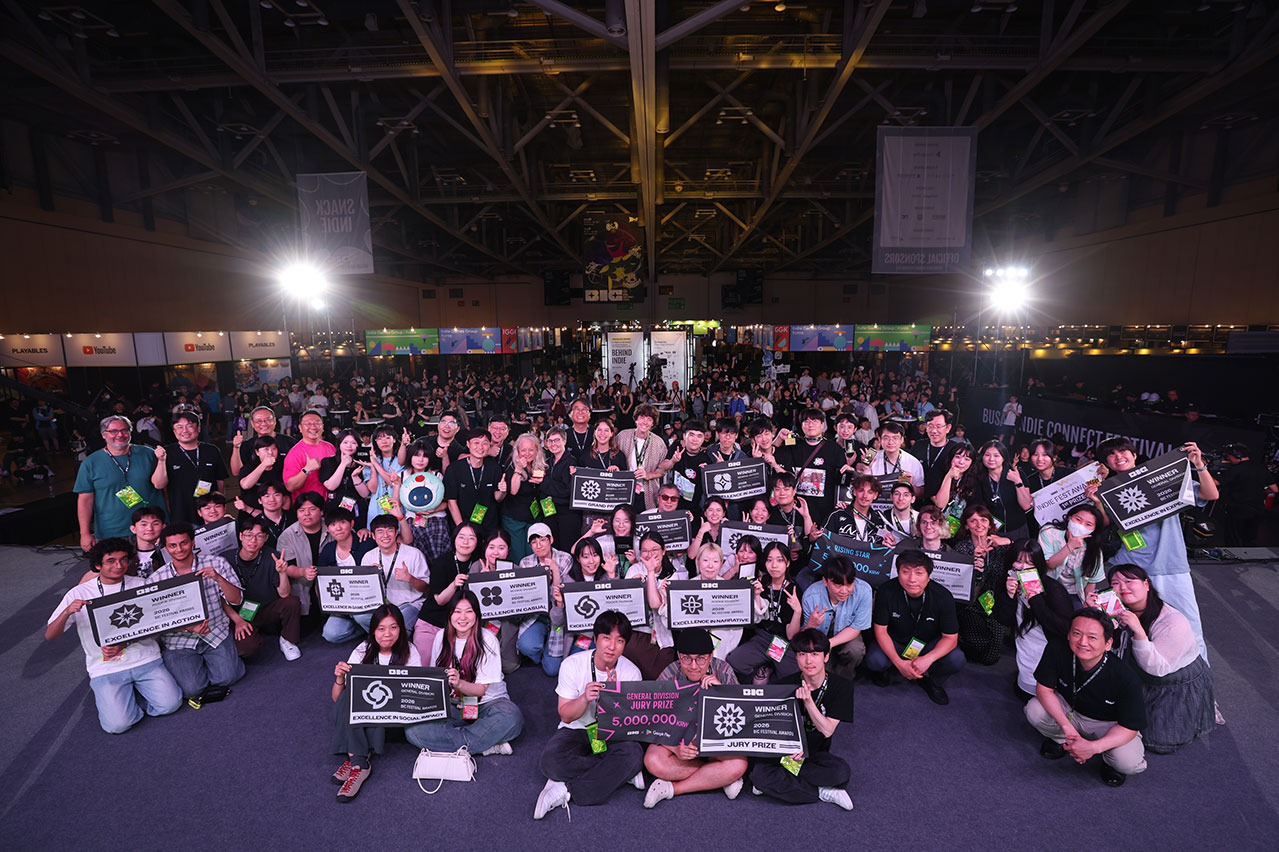
With a larger turnout this year, Isabella said the response from visitors has been strong, particularly when it comes to the exhibition setup. The exhibition floor is organized by development stage, including beta, demo, coming soon, and released titles, which she said helps create a better experience for people exploring the games on display.
She also pointed to small details like lighting, which helps keep visitor attention on the games themselves, along with an increase in activities overall. But for Isabella, the quality of the games remains the most important factor. She also noted that more overseas games have been featured at BIC this year compared to previous editions.
Looking Toward the Future
As for what comes next, Isabella said her main goal is to keep expanding BIC, though not necessarily in terms of physical space. For her, growth is more about relationships and partnerships within the indie game industry.
“I don’t just want to expand the physical space. I think it’s more important to connect with good partners who are involved in and genuinely interested in the indie game industry,” she said. Building a wider network of companies and partners, she added, is the part of BIC’s expansion that matters most to her going forward.


![[BIC2026] CanOpener’s Logan Moon Opens Up About Dungeon Settlers Ahead of Its September Early Access Launch](https://cdn.gamerbraves.com/2026/08/Logan-Moon-BIC-2026_Interview_FI-350x250.jpg)