






![[EXCLUSIVE] Brendan Gan Delivers One of Malaysia’s Best-Ever Worlds Results, Shares Thoughts on Pressure and the Local Scene](https://cdn.gamerbraves.com/2026/08/Brendan-Gan_Interview_FI-360x180.jpg)






Death Stranding 2: On The Beach launched on PlayStation 5 in June 2025. Nearly nine months later, Kojima Productions — in collaboration with Nixxes Software, a studio renowned for its PC porting expertise — has brought this journey across the Beach to PC.
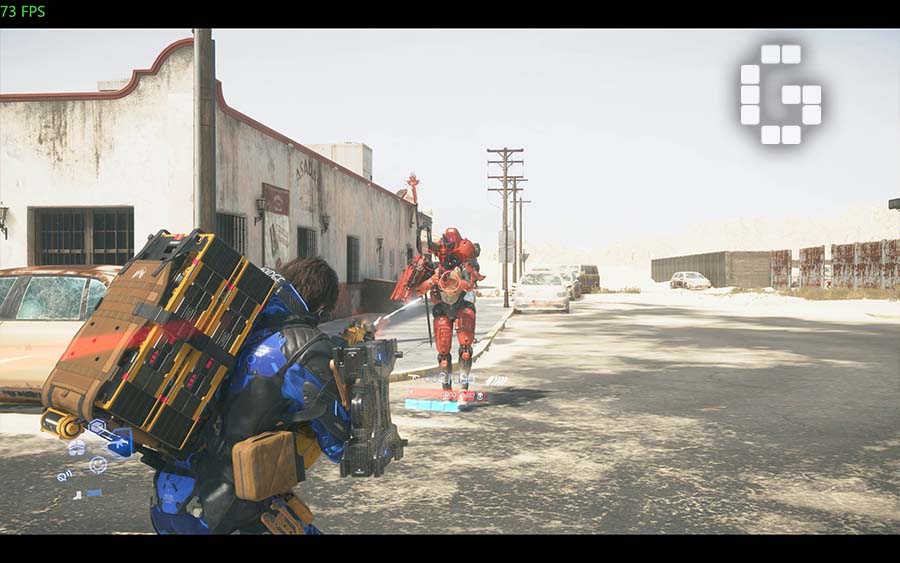
This review is primarily written for players who missed the PS5 launch and have been waiting to see whether the PC version is worth picking up. Is it? How is the port quality? Does the experience justify the wait? Those are the questions this piece sets out to answer. That said, if you’ve already finished the game on PS5 and are wondering whether the PC version offers enough new content for another run, you’ll find answers here too.
This review focuses on technical performance, new content, and control options. It won’t spend much time on the fundamentals of gameplay — that ground has already been covered. (can link back to previous review article)
Story Overview
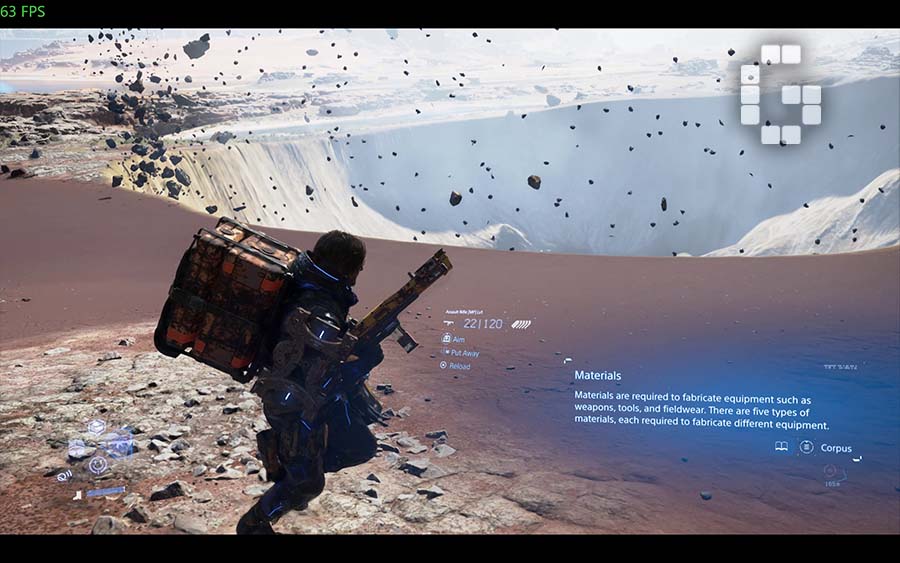
In the aftermath of the Death Stranding, the world has found a fragile semblance of calm — but the boundary between the living and the dead remains dangerously blurred. Sam Porter Bridges returns once more, this time setting out on a more complex, cross-border journey: to carry the hope of connection beyond America and out into the wider world.
The story picks up eleven months after the events of the first game. Sam is no longer alone. Alongside Fragile, he joins a new organisation called Drawbridge, working with a cast of new companions to establish a deeper, global network of connection.
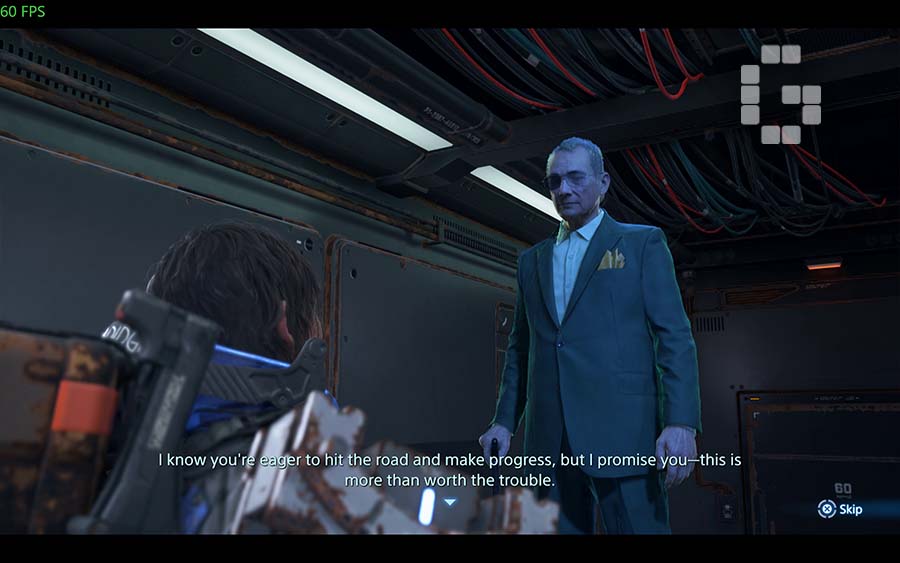
But the peace doesn’t last. Higgs resurfaces, shattering the surface calm, shaking Sam’s belief in what it means to connect, and casting a shadow of uncertainty over everything that follows.
Meanwhile, Lou — now a lively, growing child — takes centre stage, her fate becoming one of the key forces driving the narrative forward. Players will gradually uncover the truth of who Lou really is, and dig deeper into the mysteries that lie beneath the Beach itself.
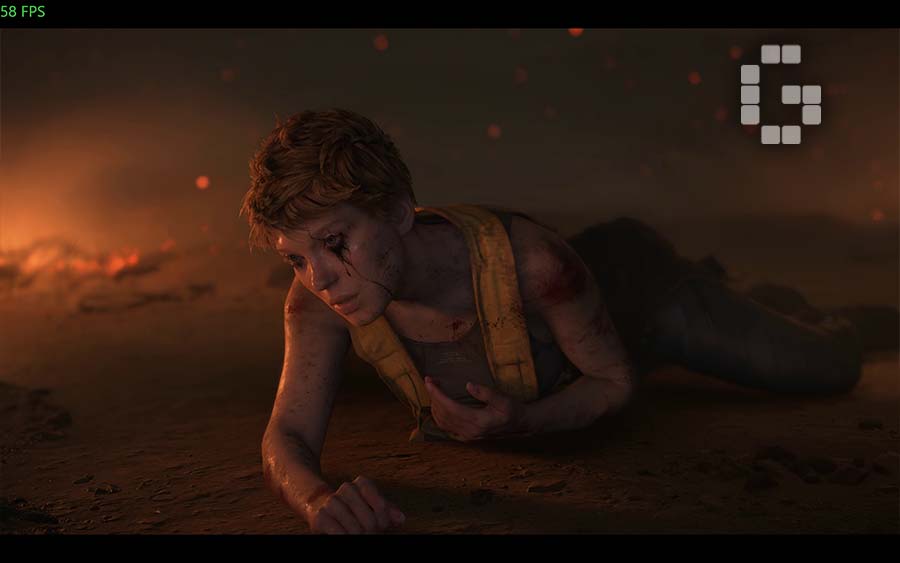
Compared to its predecessor, Death Stranding 2 moves with greater narrative confidence. Perhaps because players now come with prior experience of Kojima’s distinctive storytelling style, it’s easier to follow the thread rather than feeling lost in a fog of fragmented information. Story and gameplay feel more genuinely integrated this time — the plot doesn’t get in the way of playing, and playing doesn’t get in the way of the plot.
PC vs PS5: What’s New
The PC version isn’t simply a port — it launches alongside a meaningful set of new content, some of which has also been pushed to PS5 via update.
The most talked-about addition is To The Wilder, a new high-difficulty mode that significantly raises the stakes for traversal and delivery. Route planning, weather management, and resource conservation all demand more careful attention. For players who’ve already cleared the game on standard difficulty, this is a compelling reason to return.
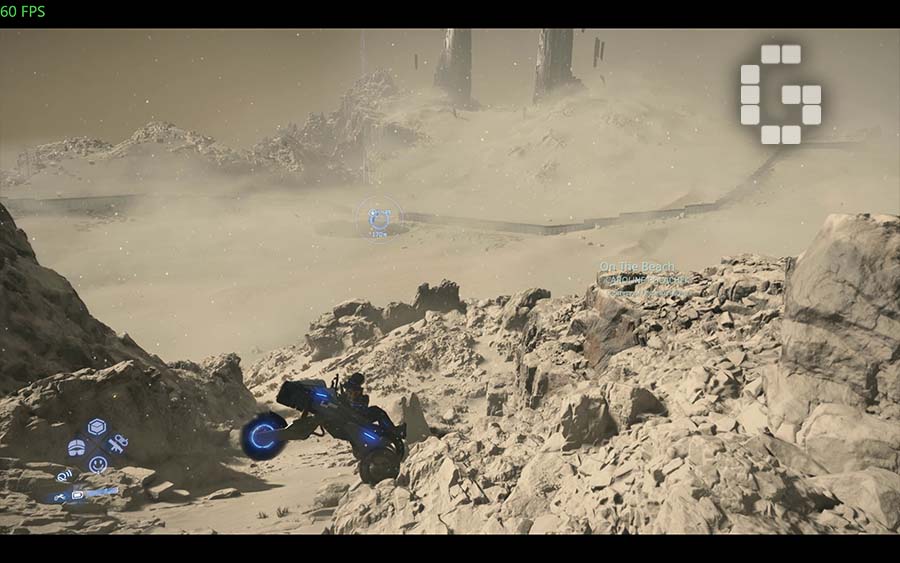
Also making their comeback are previously cut live-action cutscenes, removed during original development due to storage constraints. These scenes fill in narrative gaps that the original release left open — for those familiar with the story, revisiting them adds welcome texture.
On the cosmetic side, linking a PlayStation account to the PC version unlocks an exclusive delivery suit and backpack charm — a small but appreciated bonus for collectors.
PC Performance and Visuals
Test Setup:
- CPU: Intel Core i9-13900HX
- GPU: NVIDIA RTX 4080 Laptop GPU
- RAM: 32GB
- Resolution: 2560 × 1440p
Graphics Presets and Frame Rate


The PC version lifts the 60fps cap from the PS5 release, giving higher-end hardware room to breathe. Across the board, the port is stable — no significant stutters, frame drops, or crashes were encountered during testing.
At Very High, the game runs at roughly 50–60fps. It doesn’t push dramatically beyond that ceiling, but the experience is consistently smooth with minimal fluctuation. Stepping down to High delivers stable 60fps+, while Medium holds a steady ~70fps.For those who prioritise visual fidelity, Very High holds up well. For the best balance of image quality and smoothness, High is the sweet spot. Players on more modest hardware will find Medium a reasonable compromise without sacrificing too much.
Upscaling
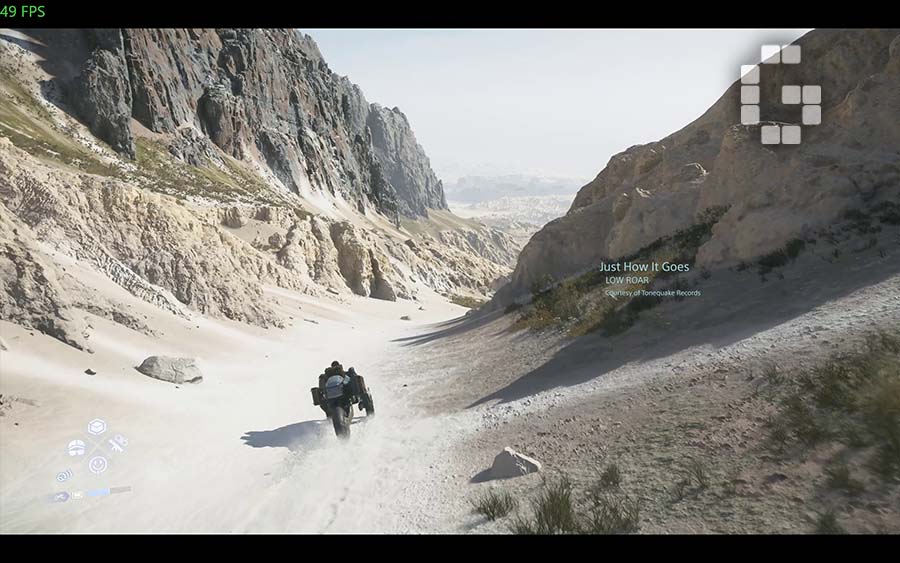
Death Stranding 2: On The Beach supports multiple upscaling options. Testing covered both DLSS and PICO. DLSS delivers a strong balance between image quality and performance uplift, and is the go-to recommendation for NVIDIA GPU owners.
Ultrawide Support
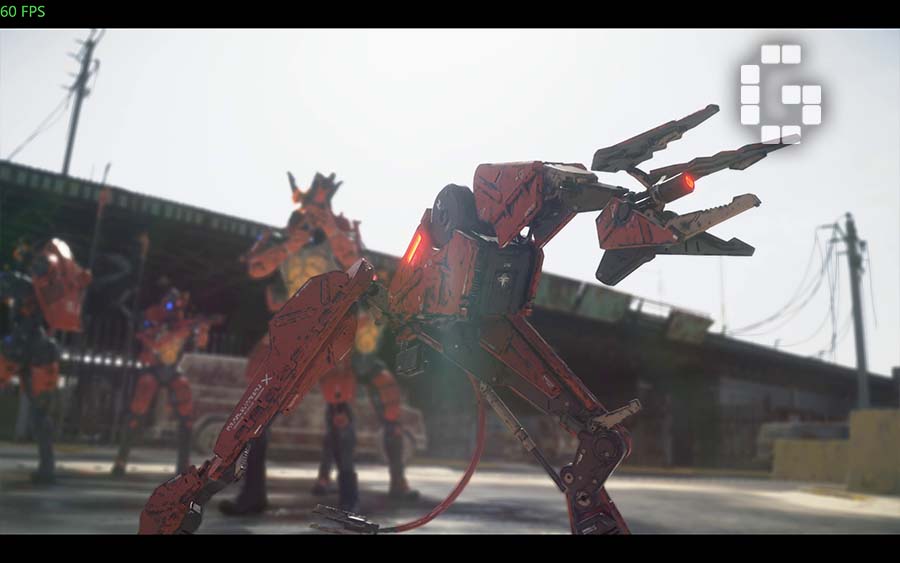
The PC version supports both 21:9 and 32:9 ultrawide aspect ratios, with in-game cutscenes fully adapted — no black bars interrupting the experience. Even at 21:9, the expanded field of view lends the game a distinctly cinematic quality that pairs naturally with Kojima’s film-influenced direction. If you have an ultrawide monitor, this is arguably the definitive way to play.
Controls
Keyboard & Mouse
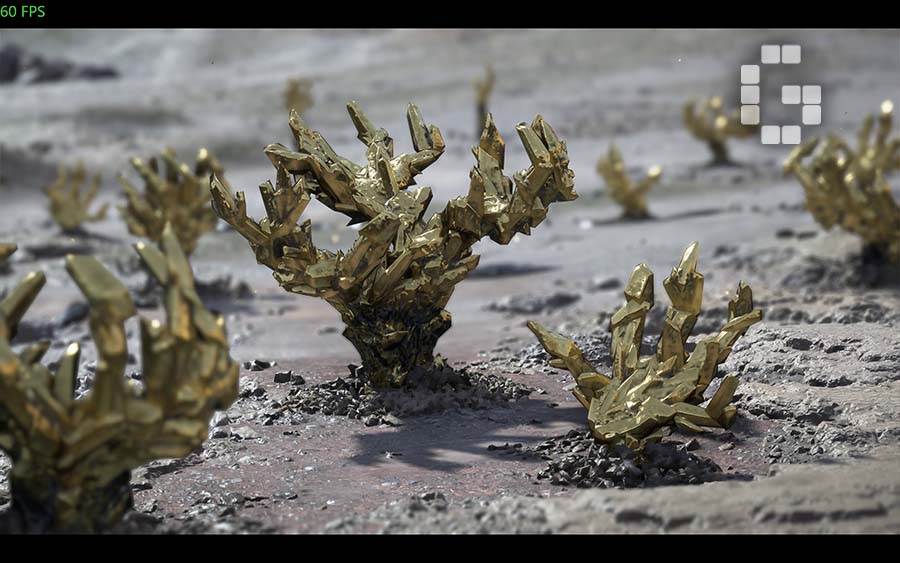
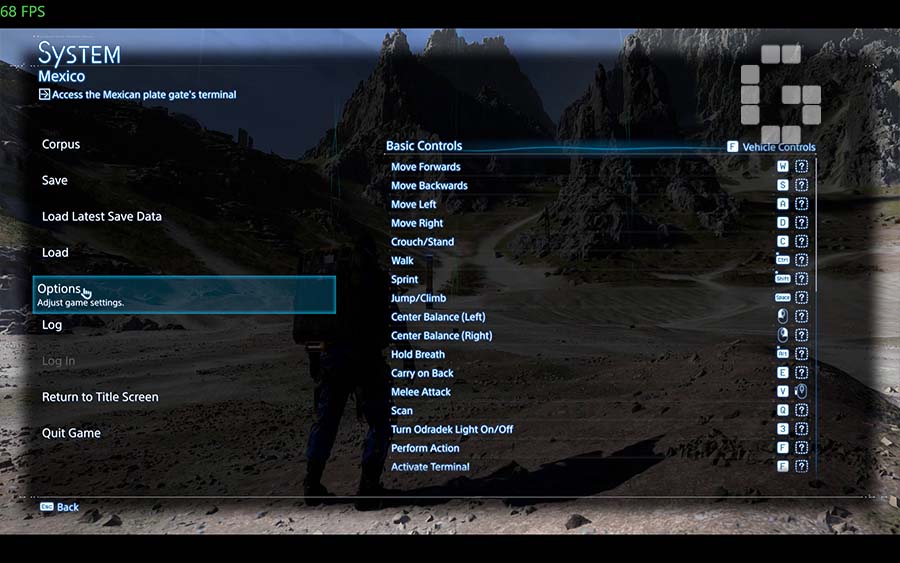
The keyboard and mouse experience is better than you might expect from a game of this type. Default keybindings are intuitive and follow conventions familiar to most PC players, with full remapping available for those who prefer a custom setup.
Default mouse sensitivity feels well-tuned out of the box. In combat especially, the keyboard and mouse setup genuinely shines — aiming, shooting, and throwing grenades all feel more precise and direct than they do on a thumbstick. Even more demanding inputs like cargo balancing translate surprisingly well, with none of the awkwardness that can arise when a console-first game is retrofitted for mouse and keyboard.
DualSense Controller
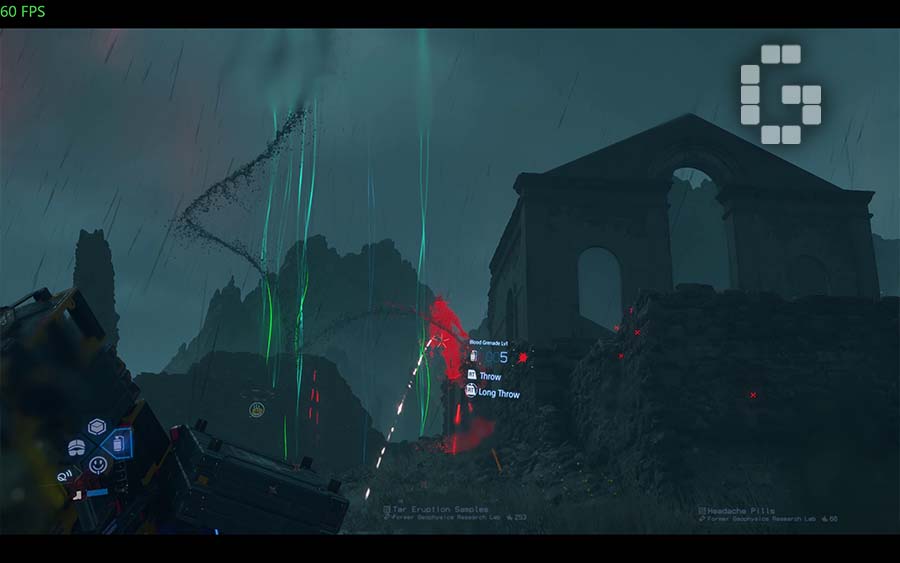
For players coming from the PS5 version, the DualSense experience on PC holds up extremely well. Adaptive triggers and haptic feedback are fully implemented, and the difference from PS5 is negligible.
The subtle resistance underfoot as Sam wades through sand or water, the slow, creeping vibration of approaching BTs, the sudden jolt of an earthquake — all of it carries over intact. There’s no sense of a “downgraded” port here. For players who value immersion above all else, the DualSense remains the preferred way to play.
Verdict
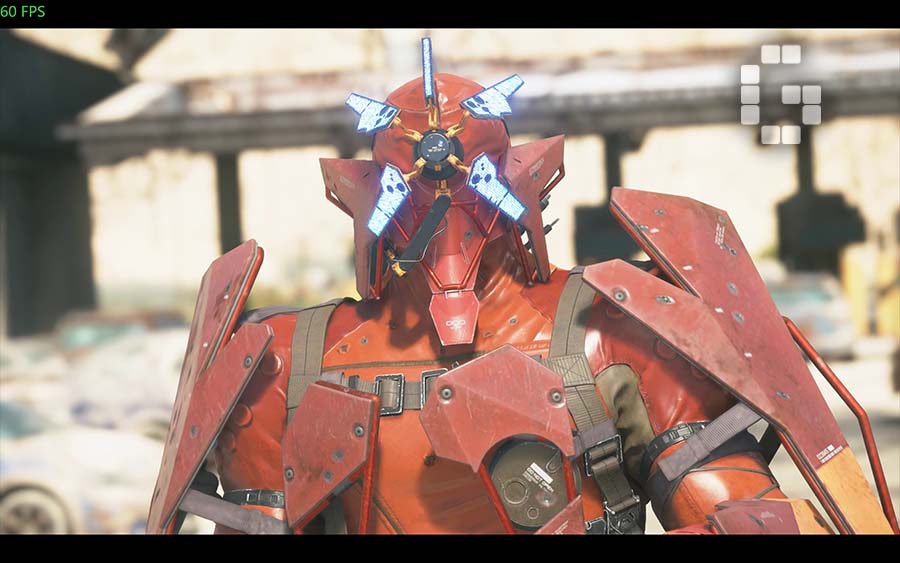
Death Stranding 2: On The Beach on PC is a confident, well-executed port. Nixxes Software has done what they do best — the visuals are strong, performance is stable, both control schemes feel properly supported, and ultrawide monitor compatibility adds a layer of cinematic immersion that suits the game remarkably well.


For different types of players:
- PS5 veterans: If To The Wilder or the restored cut scenes are on your radar, there’s a genuine case for returning — particularly if you’re playing on an ultrawide setup.
- Players who’ve been waiting for PC: The wait was worth it. The port is solid, and this is currently the most content-complete version of the game available.
- Anyone looking for the definitive version: Between the performance headroom, ultrawide support, and restored cutscenes, the PC release makes a strong case for that title.
One line summary: The journey across the Beach holds up just as well on PC — and with ultrawide support, it might just look better than ever.
The Review
PROS
- Rock-solid port quality with no stutters or crashes throughout
- Excellent ultrawide support, fully adapted including cutscenes
- Natural keyboard & mouse implementation with no awkward console-to-PC conversion
- Full DualSense haptic feedback and adaptive triggers, nearly identical to PS5
- Most content-complete version with restored cut scenes and new To The Wilder mode
- Unlocked frame rate, finally free from console constraints
![[GUIDE] JoJo’s Bizarre Adventure: Golden Spirit Codes and How to Redeem Them](https://cdn.gamerbraves.com/2026/09/JoJos-Bizzare-Adventure-Golden-Spirit-Redeem-Codes_News_FI-350x250.jpg)