







![[EXCLUSIVE] Dragon’s Dogma 2: Dark Arisen Team Opens Up About the Expansion’s Name, New Norgan Region, and Performance Goals](https://cdn.gamerbraves.com/2026/07/Dragons-Dogma-2-Dark-Arisen_Interview_FI-360x180.jpg)



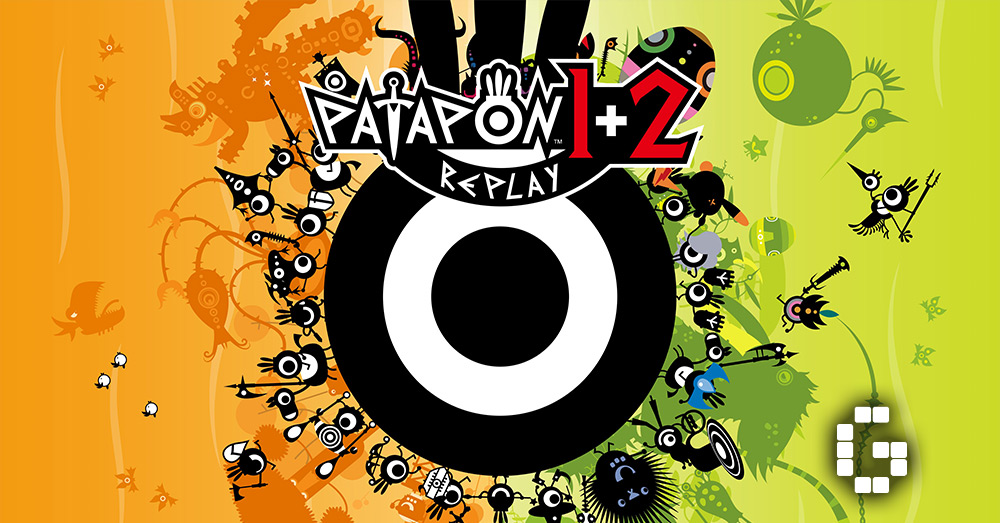
The PlayStation Portable had many unique gems, but few were as distinctive as the PATAPON series. Now, nearly two decades later, Sony has brought back the first two games in PATAPON 1+2 REPLAY, giving both longtime fans and newcomers a chance to experience this one-of-a-kind rhythm-action hybrid. Our review of PATAPON 1+2 REPLAY will explore what makes these games special, what improvements the remaster brings, and whether the experience holds up in today’s gaming landscape.
What Makes Patapon Special
Originally launched in 2007 as one of Sony Japan Studio’s flagship PSP franchises, Patapon immediately stood out for its fresh take on rhythm gaming. The game puts you in the role of the Mighty Patapon, a deity guiding a tribe of eye-shaped creatures called Patapon. Your mission is to lead them on their journey to reach Earthend and witness the mysterious IT, all while helping them survive, hunt for food, and battle their rivals, the Zigoton tribe.
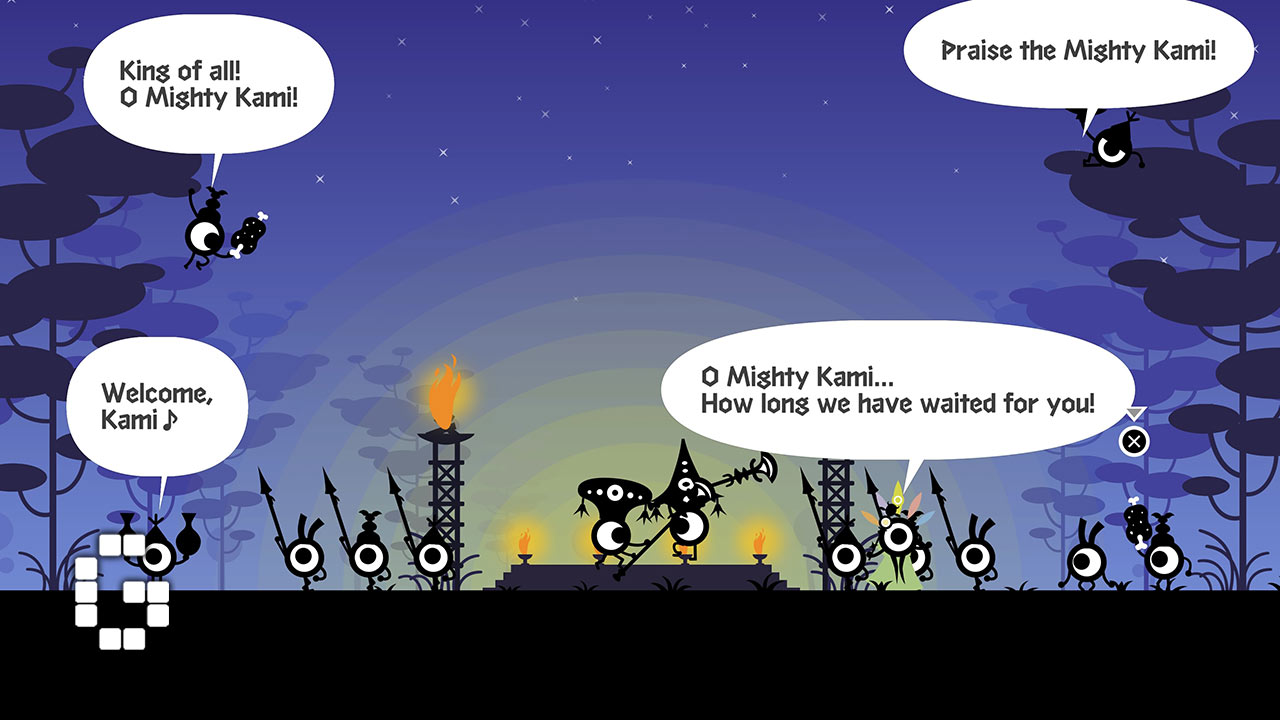
What sets Patapon apart from traditional rhythm games is how it blends musical gameplay with action and strategy elements. Instead of just hitting notes to music, you’re commanding an army through linear stages filled with combat encounters and boss battles. The rhythm mechanics serve as your communication tool with the tribe, delivered through Hatapon, the flag-bearing leader who relays your commands to the entire squad.
The Rhythmic Command System
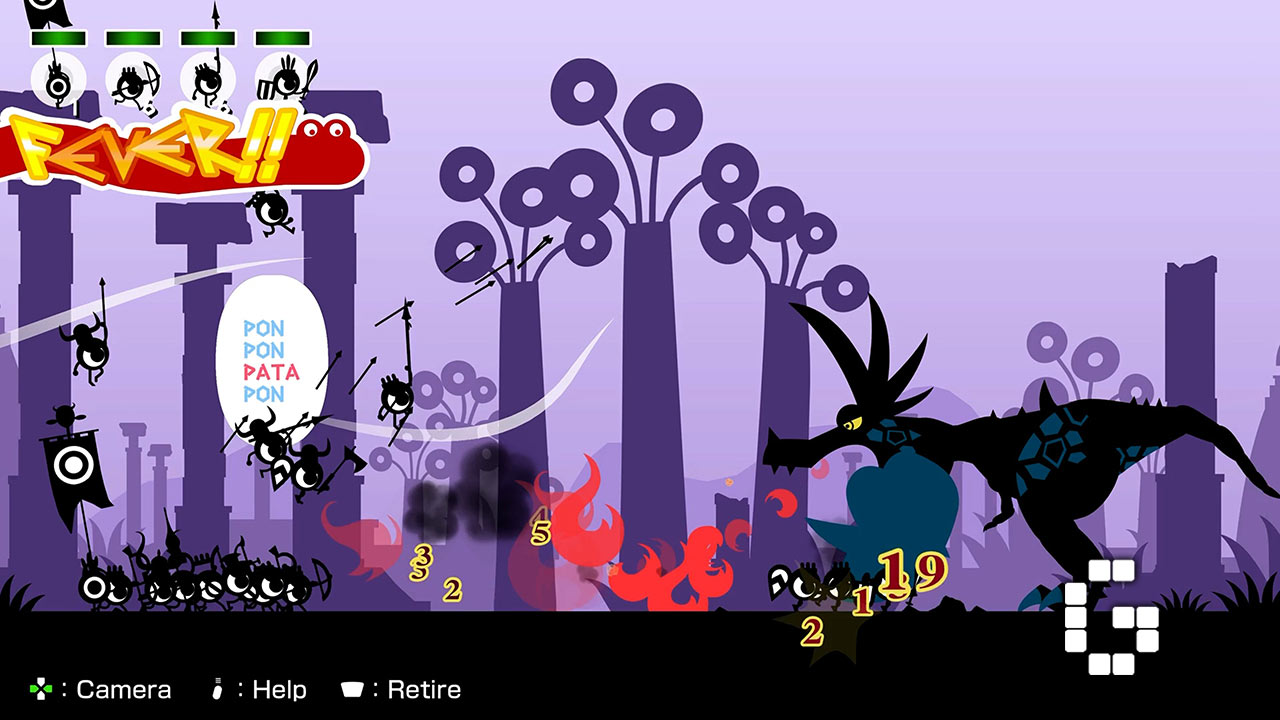
The core gameplay revolves around issuing commands through specific drum sequences that you must time perfectly with the game’s beat. Each command serves a tactical purpose: “Pata Pata Pata Pon” moves your squad forward, “Pon Pon Pata Pon” makes them attack enemies or obstacles, “Chaka Chaka Pata Pon” strengthens their defense against powerful attacks, and “Pon Pata Pon Pata” orders a retreat to dodge incoming damage.
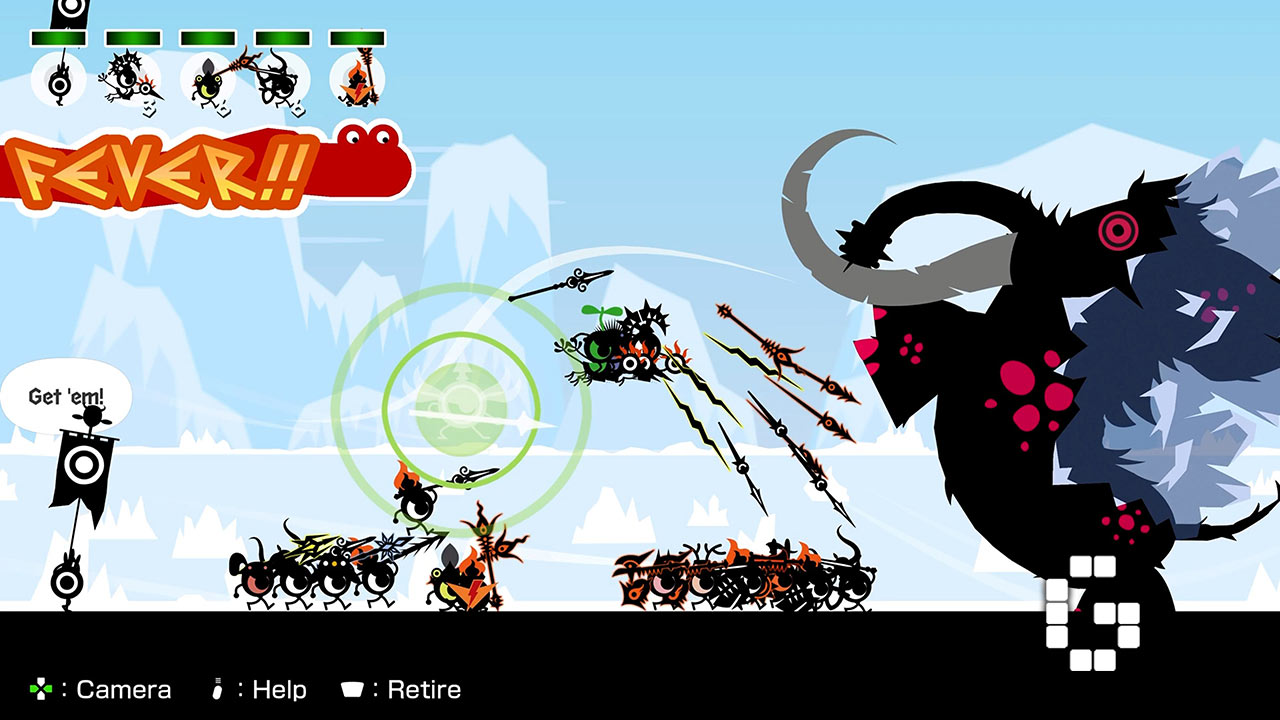
The beauty of this system lies in its simplicity and depth. While the basic commands are easy to learn, mastering the timing and knowing when to switch between different rhythms in real-time combat situations requires skill and practice. Successfully chaining perfect commands without missing a beat triggers “FEVER” mode, creating a satisfying harmony between action and music that feels rewarding every time you achieve it.
Building Your Army
Beyond the rhythm gameplay, Patapon incorporates RPG-like elements that add strategic depth. After completing stages, you can return to your hub area to interact with your tribe and build a larger, stronger army using the resources you’ve gathered. The game lets you customize your squad with different Patapon types, each equipped with various weapons and equipment combinations that affect their stats and abilities.
This customization system becomes increasingly important as you progress, since the enemies you face grow more challenging with each stage. Having the right combination of units and gear can make the difference between victory and defeat, especially when facing the game’s various boss encounters.
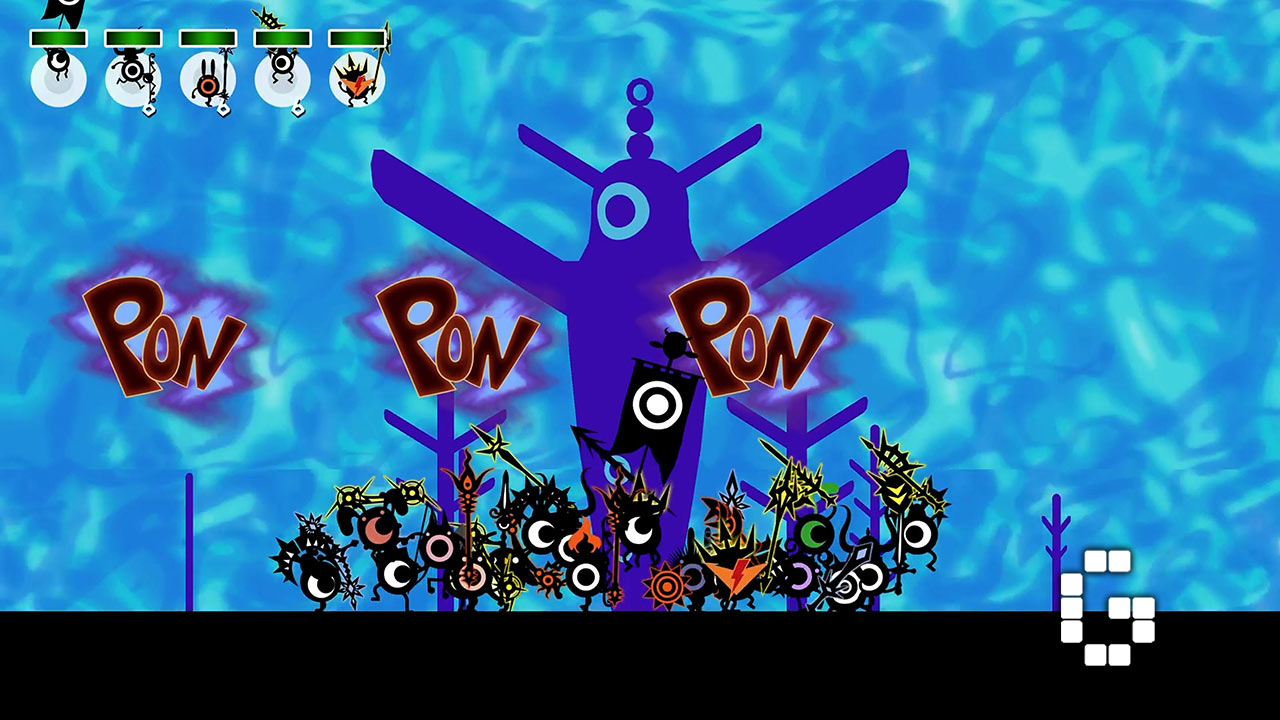
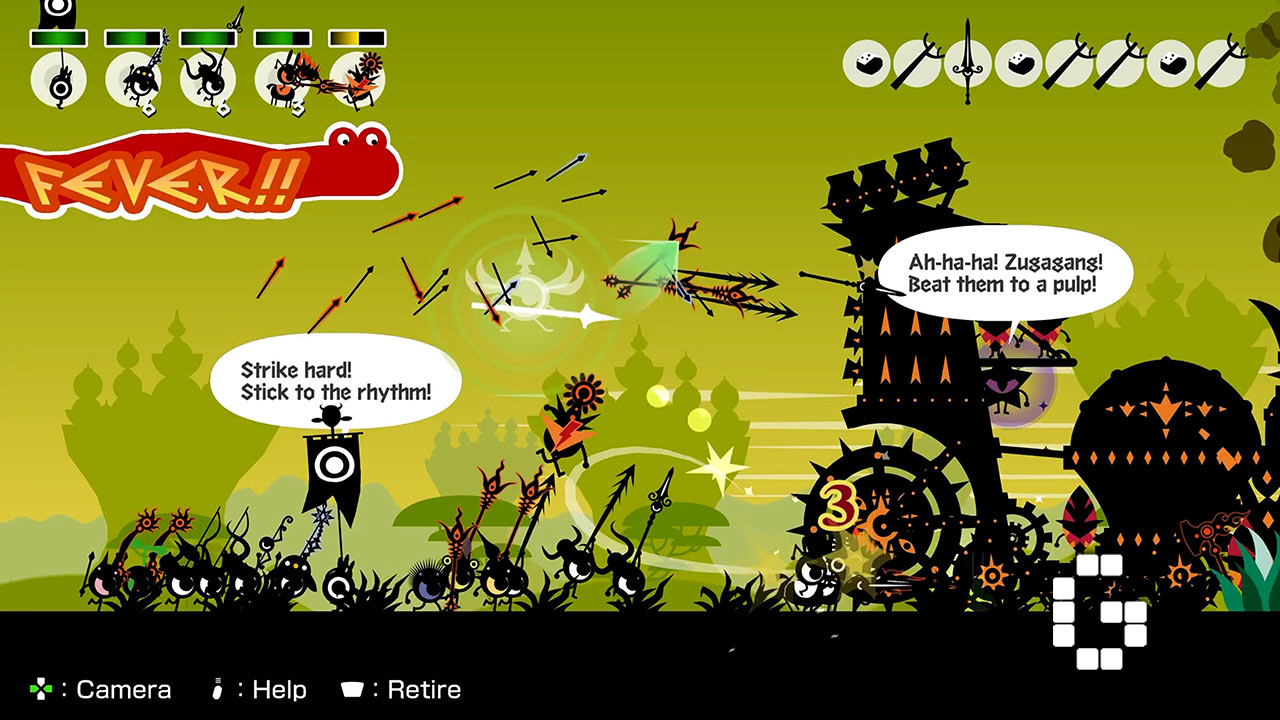
The second game in the bundle doesn’t revolutionize the formula but rather expands on what made the original special. Some players even refer to it as PATAPON 1.5 due to how similar it feels to the first game, but this isn’t necessarily a bad thing. PATAPON 2 continues the tribe’s journey toward IT while adding more content, stages, and refinements to the established mechanics. For fans of the original, having more of the same high-quality experience with additional content is exactly what they want.
The Grinding Problem
Despite its many strengths, PATAPON 1+2 REPLAY doesn’t fix one of the original games’ most significant issues: excessive grinding. Building a properly equipped squad requires substantial resources, including currency and loot drops like weapons and equipment for each unit, particularly those fighting on the front lines.
This creates a situation where your skill at rhythm gameplay isn’t always enough to overcome challenges. As stages become more difficult, you’ll often find yourself forced to replay earlier levels repeatedly to gather the resources needed to strengthen your army. While some repetition is expected and even enjoyable in rhythm games, in Patapon it often feels like a mandatory roadblock rather than a voluntary choice to perfect your performance.
This grinding requirement can become quite tedious, especially for players who just want to experience the story and rhythm gameplay without spending hours farming resources. It’s unfortunate that the remaster didn’t address this balance issue, as it remains one of the few aspects that can dampen the otherwise excellent experience.
Quality of Life Features
The remaster’s most noticeable improvement is in the visual department. The graphics are much smoother and cleaner compared to the original PSP versions, with no signs of the low resolution or rough edges that showed the games’ portable origins. The enhanced visuals are complemented by consistently stable 60 FPS performance, ensuring smooth gameplay without frame drops or technical issues.
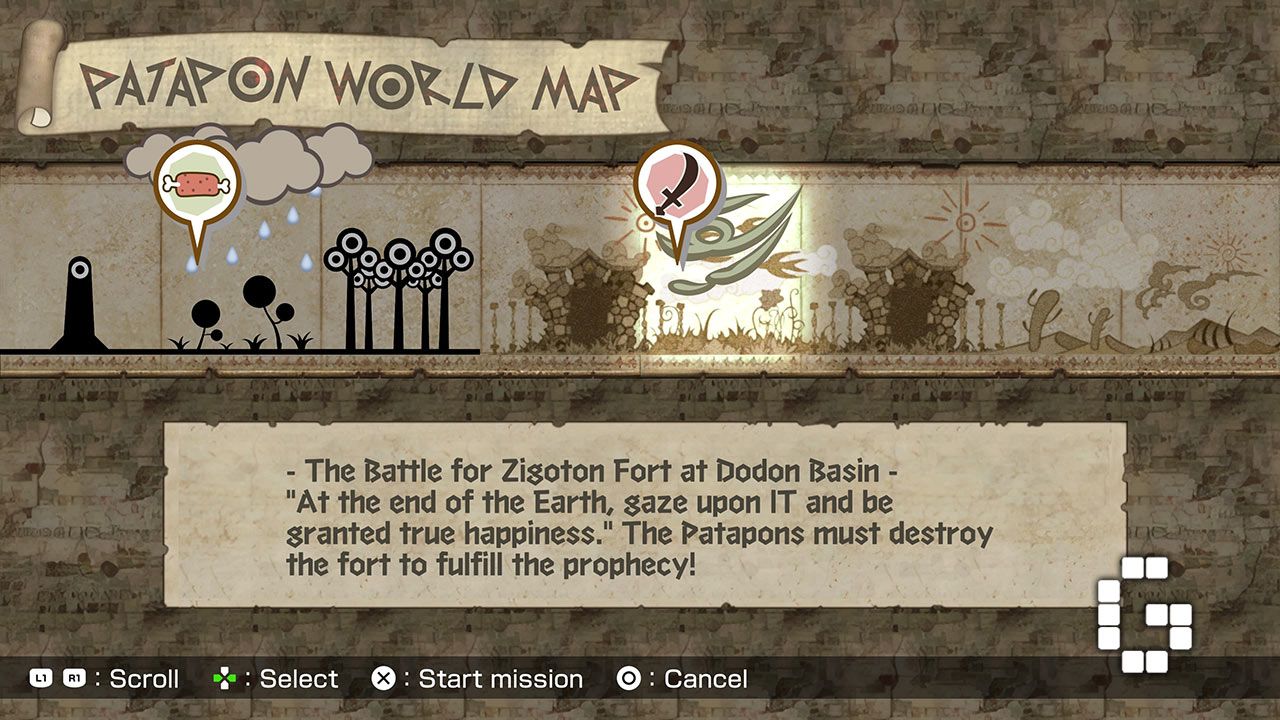
While the remaster doesn’t introduce major new content, it does include some helpful quality of life improvements. Players can now freely adjust the difficulty between Easy, Normal, and Hard settings, making the experience more accessible to different skill levels. There’s also an option to adjust rhythm timing to minimize input latency, which is particularly useful since the original games were optimized for the PSP’s controls and screen. When playing on modern systems, especially on larger displays, this timing adjustment can help ensure your button inputs align properly with the rhythm cues.
Missing the Third Game
One notable omission from this bundle is PATAPON 3, which was also released for the PSP. While the first two games provide plenty of content and represent the core Patapon experience, fans of the series might feel disappointed by the absence of the trilogy’s conclusion. However, the two included games still offer substantial content, especially for newcomers to the series.
Verdict
Nearly two decades after its original release, Patapon’s unique blend of rhythm, action, and strategy gameplay still feels fresh and engaging. The simple yet touching storytelling, distinctive art style, and innovative command system create an experience unlike anything else in gaming. While the remaster doesn’t introduce major content additions or completely overhaul the experience, it successfully presents both original games in their best possible form on modern platforms.
The persistent grinding issues prevent this from being a perfect experience, and the absence of PATAPON 3 feels like a missed opportunity. However, for both series veterans looking to revisit these classics and newcomers curious about one of gaming’s most unique franchises, PATAPON 1+2 REPLAY offers dense, satisfying content that showcases why these games became cult favorites in the first place. The rhythm may be nearly twenty years old, but it still knows how to make you move.
The Review
PATAPON 1+2 REPLAY
PROS
- Surprisingly fun story
- Engaging rhythm gameplay that are very easy to learn
- Overall art direction is still charming
- Some noticeable improvements especially on the visual
CONS
- No Patapon 3
- Both games is still very grindy
- Some players may still experience input lag