













![[EXCLUSIVE] Dragon’s Dogma 2: Dark Arisen Team Opens Up About the Expansion’s Name, New Norgan Region, and Performance Goals](https://cdn.gamerbraves.com/2026/07/Dragons-Dogma-2-Dark-Arisen_Interview_FI-360x180.jpg)



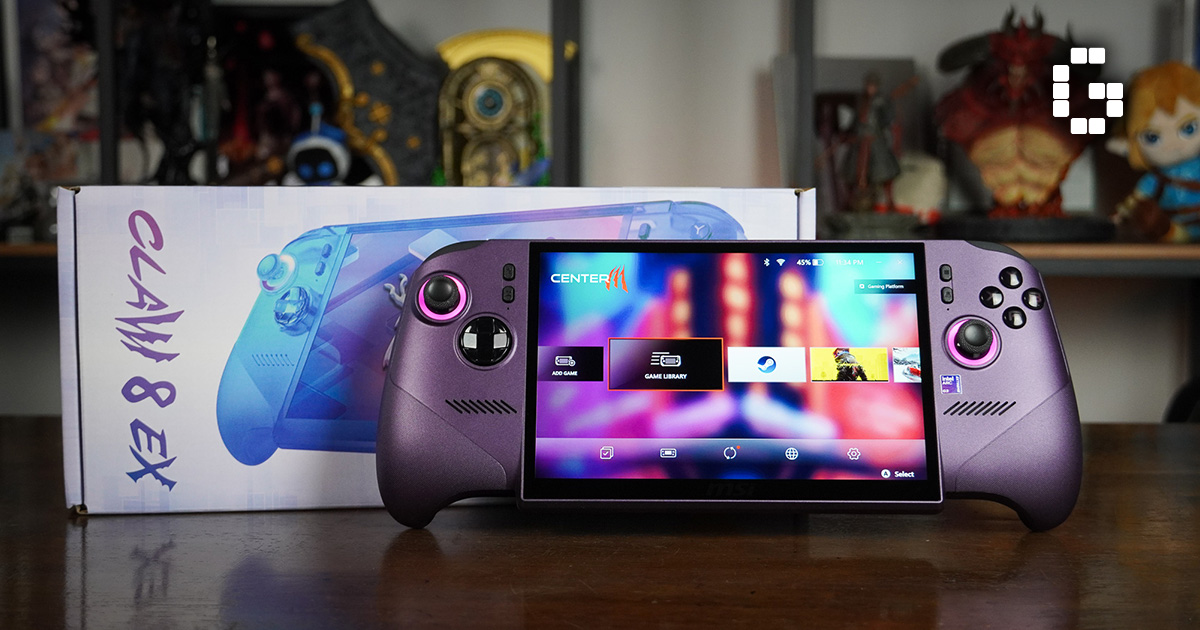
MSI’s newest handheld gaming PC, the MSI Claw 8 EX AI+ steps in as the successor to the Claw 8 AI+, and it brings a good number of changes both inside and out. From a fresh chassis design to a new Intel Arc G3 platform, an upgraded cooling system, and a noticeable jump in performance, there’s a lot to unpack with this device. We’ll take a closer look at how the Claw 8 EX AI+ handles in terms of design, gaming performance, battery life, display quality, thermals, and connectivity, so you can get a full picture of what this handheld offers before deciding if it’s worth the investment.
Design and Ergonomics
The most obvious change with the Claw 8 EX AI+ is its redesigned chassis. MSI introduced flared-base grips that give the handheld a shape much closer to holding an Xbox controller, rather than a traditional handheld device. This redesign turns out to be one of the strongest parts of the whole package. The wider grips make it more comfortable to hold during long gaming sessions and reduce hand fatigue compared to the older, more traditional shape. It feels more natural for extended play and is a clear step up from the previous model.
That said, the device isn’t without its downsides, and weight is the main one. At 785g, the Claw 8 EX AI+ sits on the heavier end for handheld gaming PCs. This weight is somewhat understandable though, given everything the device is packing internally, and it’s still fairly light when you consider it can double as a portable Windows mini PC. The weight becomes less of an issue when gaming on a desk or sitting upright, but it’s more noticeable during longer sessions where the device is held continuously. Playing while lying down, for instance, can get tiring fairly quickly since the hands are supporting all that weight.
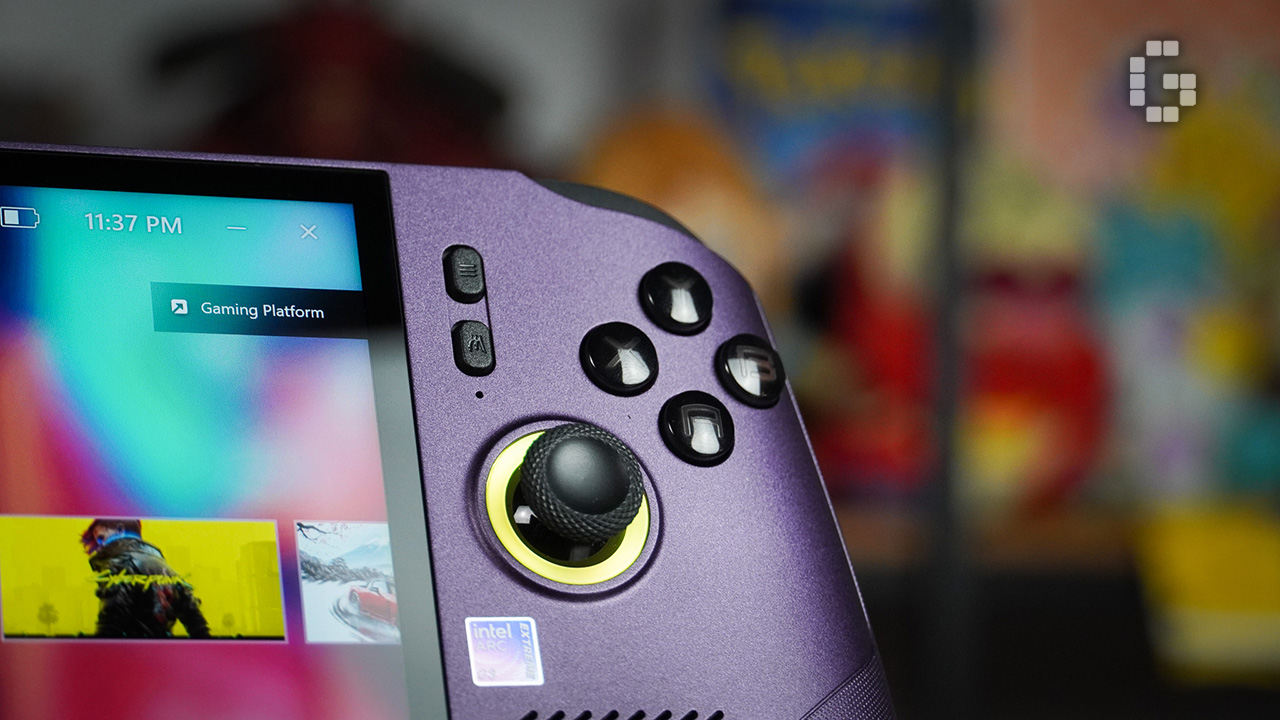
On the controls side, the Claw 8 EX AI+ uses Hall Effect joysticks and triggers. This should help avoid the common problem of analogue stick drift while also offering more precise input, which is especially handy for games that need accurate aiming or movement. The Claw 8 EX AI+ comes with an 8 inch, 120Hz IPS Level LCD, making it one of the bigger screens you’ll find on a handheld gaming PC. This larger panel offers around 38% more screen space compared to smaller handheld displays, which makes it easier to read UI elements, menus, and finer in game details.
The screen runs at 1920 x 1200 resolution with a 16:10 aspect ratio, and it supports native VRR from 48Hz to 120Hz, which helps keep things smooth when frame rates aren’t consistent. Brightness is rated at 500 nits at its peak, which makes the display more usable outdoors or in bright rooms without needing to max out the brightness setting all the time.
Performance
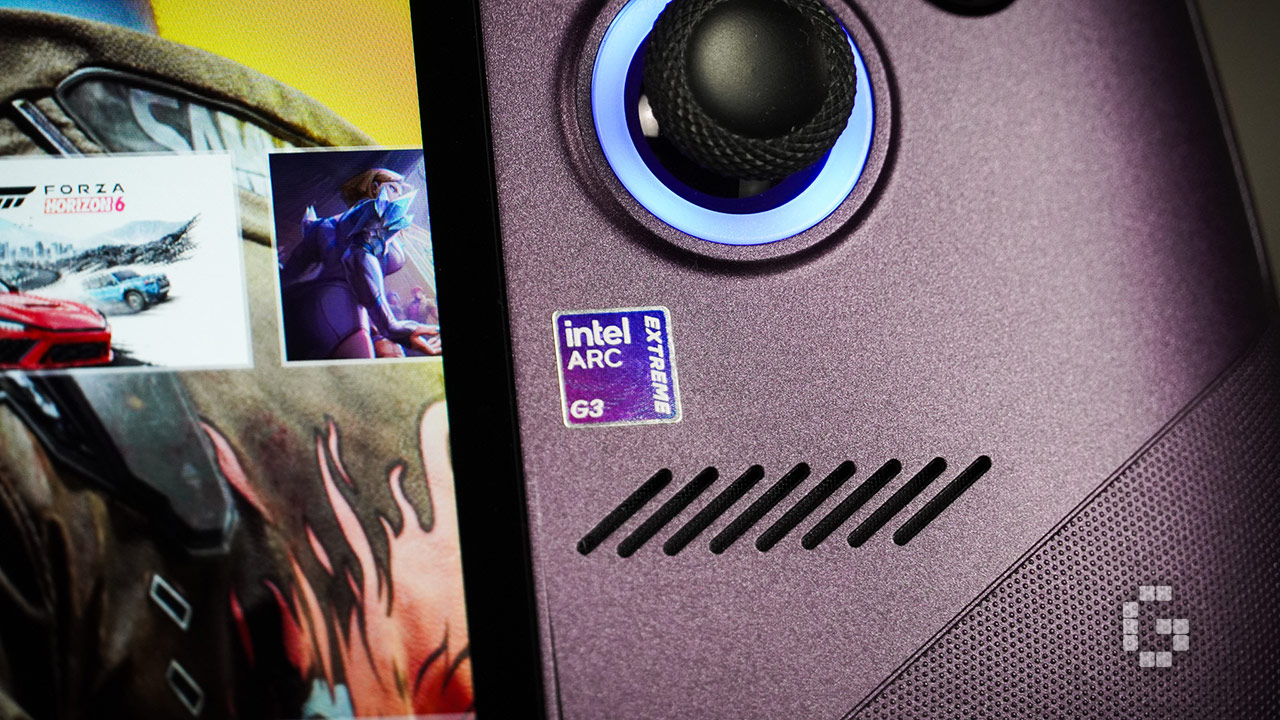
Performance is where the Claw 8 EX AI+ shows its biggest improvement over the previous generation. It runs on the latest Intel Arc G3 platform, based on the Panther Lake architecture, with MSI claiming a 50% to 70% performance boost compared to standard handheld gaming PCs.
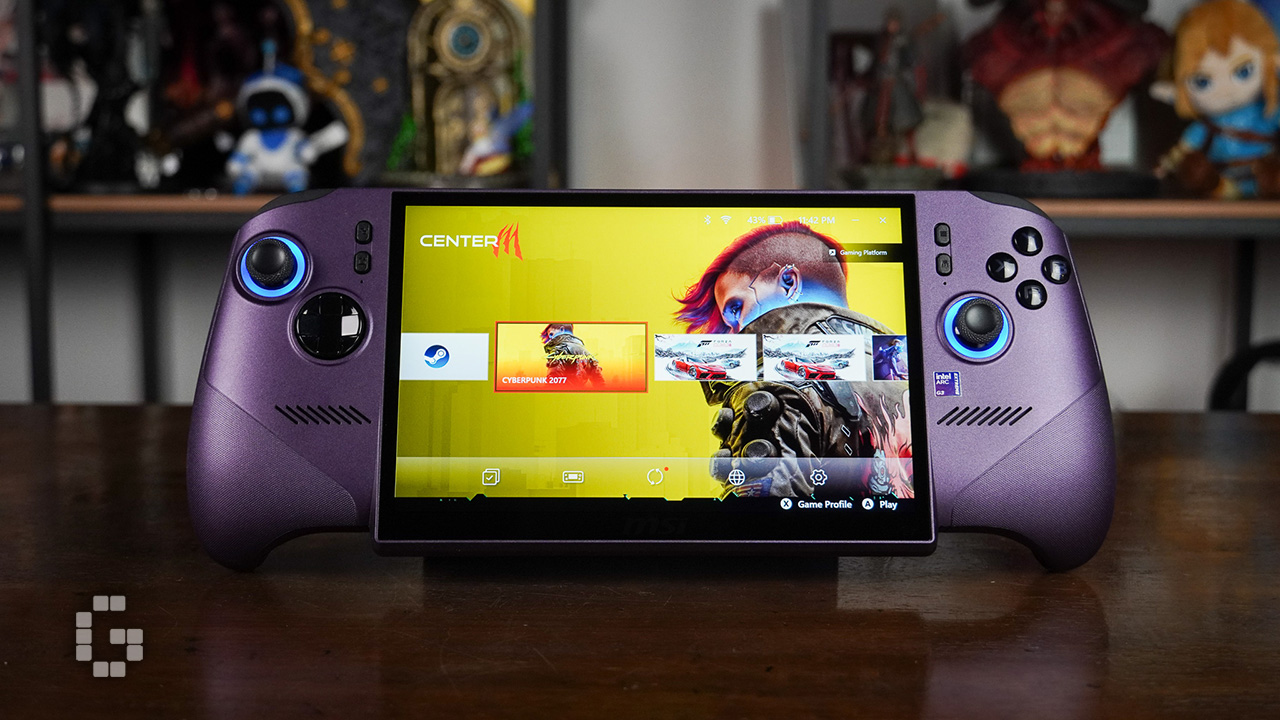
To see how that plays out in real use, three games were tested: Stellar Blade, Forza Horizon 6, and Cyberpunk 2077. Stellar Blade was run on High settings, with frame rates generally landing between 51 and 60 FPS during combat, and higher numbers during cutscenes. Forza Horizon 6 was tested on the High preset with V-Sync turned on, and depending on the track, frame rates ranged from 49 to 60 FPS, with the 1% Low at 41 FPS. Cyberpunk 2077 was tested on High settings with Intel XeSS Frame Generation switched on, and it managed around 83 FPS, with the 1% Low sitting at 69 FPS.
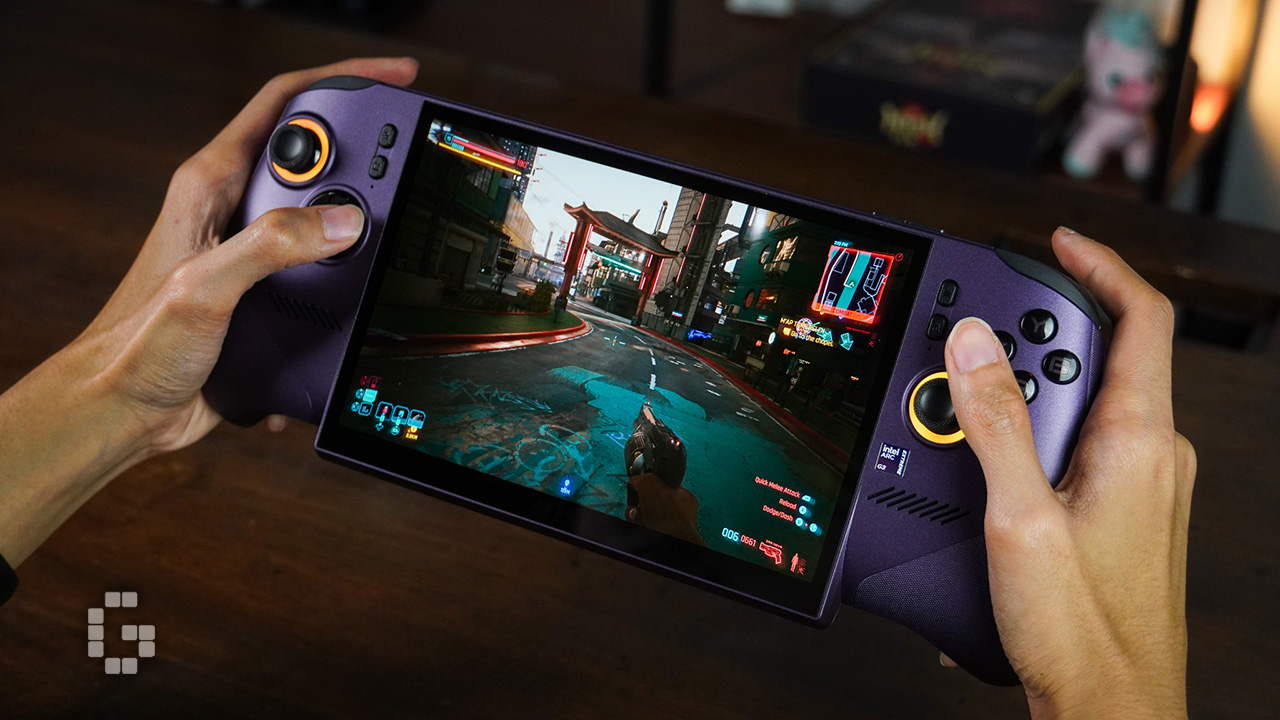
Given the size and form factor of the device, these numbers are solid for a handheld gaming PC. Plugging the device into a power source also brought a roughly 10% performance boost, though this varies depending on the game and workload.
Battery Life
Since portability is one of the biggest reasons people choose a handheld in the first place, battery life matters a lot here. During testing, the Claw 8 EX AI+ showed reasonably efficient power use under an active gaming load. The test began at 5:11 PM with 93% battery and ran until 5:39 PM, by which point the battery had dropped to 78%.
That 15% drop over 28 minutes works out to an average power draw of about 25.7W. Based on the device’s 80Wh battery, keeping up that level of power use would give roughly 3 hours and 7 minutes of continuous gameplay. Actual battery life will differ depending on the game, screen brightness, refresh rate, and power profile used, but overall, the Claw 8 EX AI+ manages a decent balance between performance and power draw.
Cooling is another area where MSI made real improvements. The device uses a redesigned Cooler Boost HyperFlow cooling system, and it holds up well during extended sessions at a sustained 25W TDP. In demanding titles like Cyberpunk 2077, the CPU stayed around 69°C to 70°C, while the Arc B390 GPU ran between 64°C and 70°C.
Even when pushed into 30W to 35W manual power modes, especially during heavier scenes or shader compilation, temperatures stayed controlled, topping out at around 80°C without hitting thermal throttling.
What stands out most is how the heat is managed from a comfort standpoint. The Cooler Boost HyperFlow system pushes hot air out through the top vents instead of letting it spread across the chassis where your hands rest. Throughout long sessions, the Void Purple palm grips, ABXY face buttons, and rear macro triggers all stayed cool to the touch. The upper rear section and the glass display do warm up under higher wattage, but these are areas away from where you’d normally be holding the device. So even though the internals run warm under load, the parts you actually touch stay comfortable.
Ports, Storage, and I/O
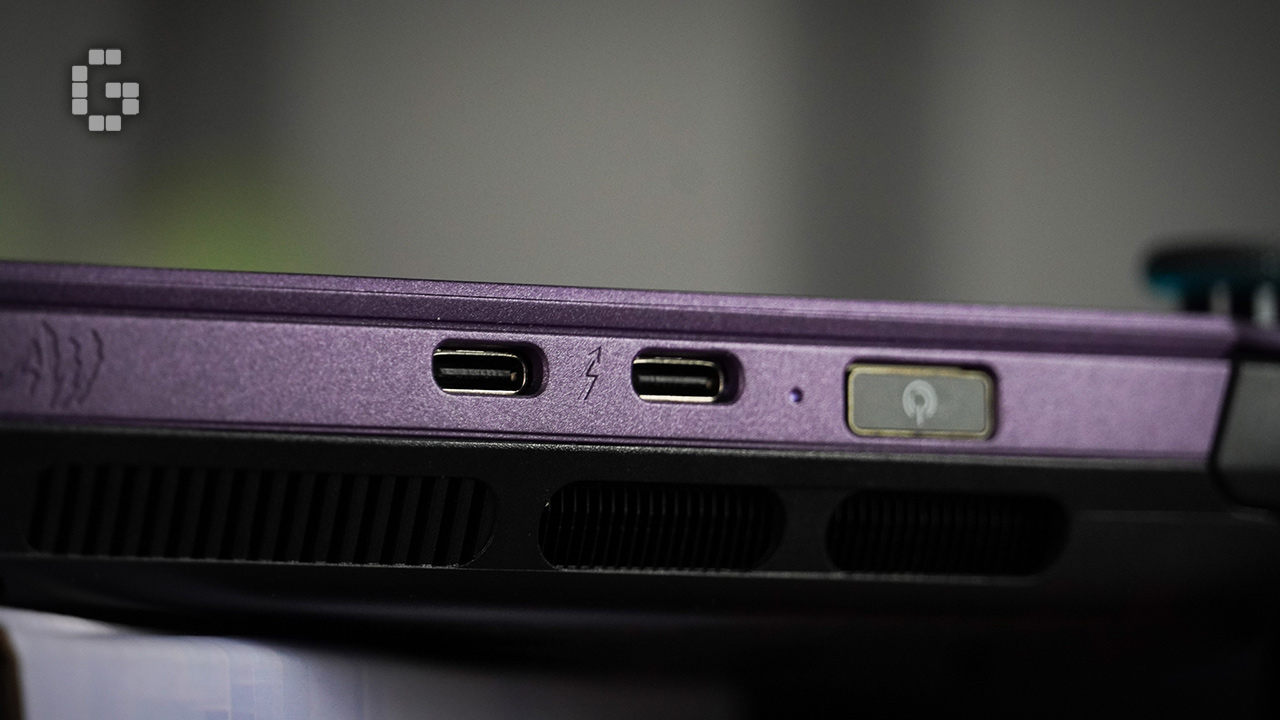
For connectivity, the Claw 8 EX AI+ has dual Thunderbolt 4 ports at the top of the device. During testing, one port was used to connect to an external monitor while the other was used for a USB dongle running a keyboard and mouse.
Once hooked up to a monitor, the Claw 8 EX AI+ basically turns into a small Windows PC. Gaming on the external display felt very close to playing on the handheld itself, with frame rates, rendering, and responsiveness all staying stable with no real performance drop. This is one of the more versatile features of the device, letting it switch from a handheld to a compact desktop setup just by adding a monitor, keyboard, and mouse.
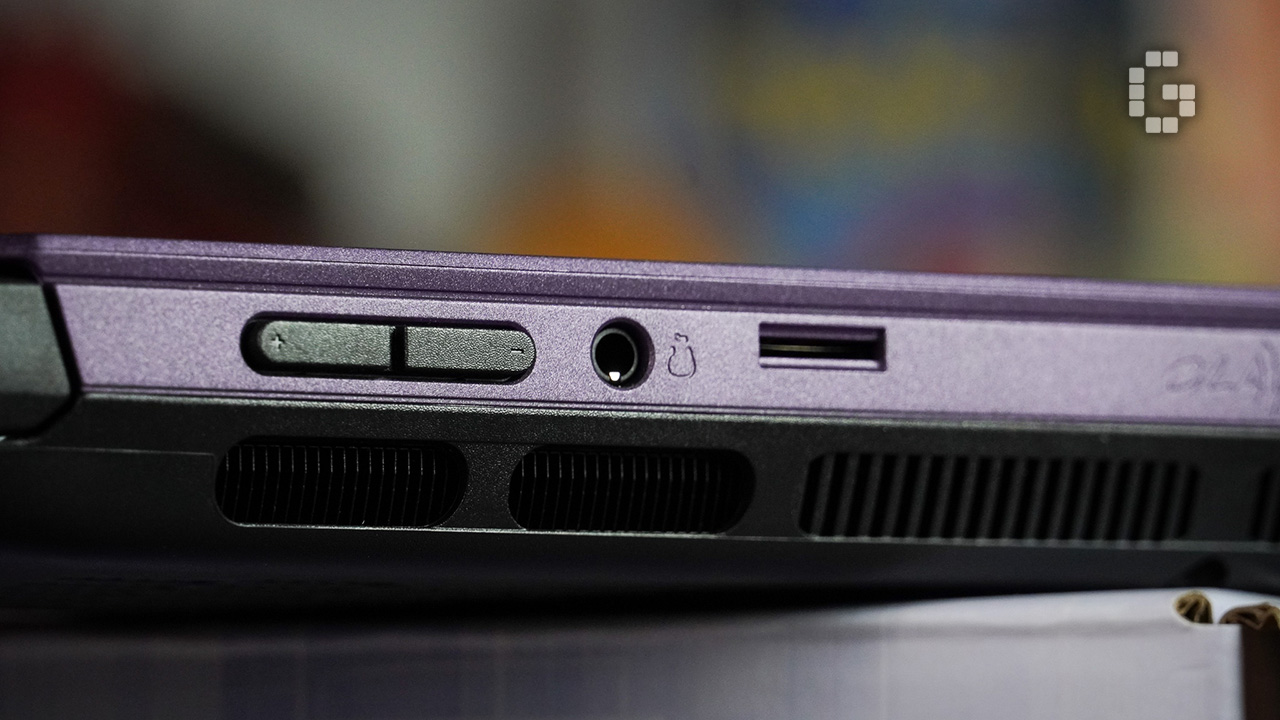
For storage, the device includes a MicroSD card reader for easy expansion without needing to open anything up. The internal PCIe Gen4 NVMe SSD can also be swapped out. Removing the back cover gives access to the SSD, which is useful for anyone planning to install several large games.
Verdict
Taken as a whole, the MSI Claw 8 EX AI+ is a meaningful upgrade over its predecessor, with better performance, improved ergonomics, solid thermal management, and a bigger 120Hz VRR display. At RM7,299, though, it’s positioned as a luxury option for enthusiasts rather than something aimed at the average buyer. It’s built for people who want top tier handheld performance, a larger screen, strong I/O, and a big battery, and who don’t mind paying gaming laptop prices for that.
The 785g weight remains its biggest drawback, particularly during longer handheld sessions, though the redesigned grips do help make it more manageable. For those who value performance and versatility over price, the Claw 8 EX AI+ is a strong high end handheld, but its premium cost means it won’t be the right fit for everyone.


![[BIC2026] Hiroaki Nagashima from Toei Games Talks New IPs, Indie Roots, and Asia-First Strategy](https://cdn.gamerbraves.com/2026/08/Toei-Games-BIC-2026_Interview_FI-350x250.jpg)