





![[EXCLUSIVE] Dragon’s Dogma 2: Dark Arisen Team Opens Up About the Expansion’s Name, New Norgan Region, and Performance Goals](https://cdn.gamerbraves.com/2026/07/Dragons-Dogma-2-Dark-Arisen_Interview_FI-360x180.jpg)


During the one-week Closed Beta Test 2 (CBT2) period, Monster Hunter Outlanders took me from a skeptical veteran hunter to a tester with mixed feelings with this preview. The game clearly puts serious effort into recreating the identity and core structure of the Monster Hunter series. You can feel the intention behind every system, from monster behavior to hunt flow. However, the decision to shift the combat center toward “characters” rather than weapons alone changes the franchise’s traditional identity in noticeable ways.
Before diving in, one important clarification: the CBT2 global server contains no monetization systems. Only the China server includes paid mechanics. This makes the global build effectively the upper limit of the free-to-play experience, and it serves as a useful benchmark for evaluating the developers’ earlier claim that the game remains enjoyable without spending.
Monsters: Familiar Faces with a New Layer
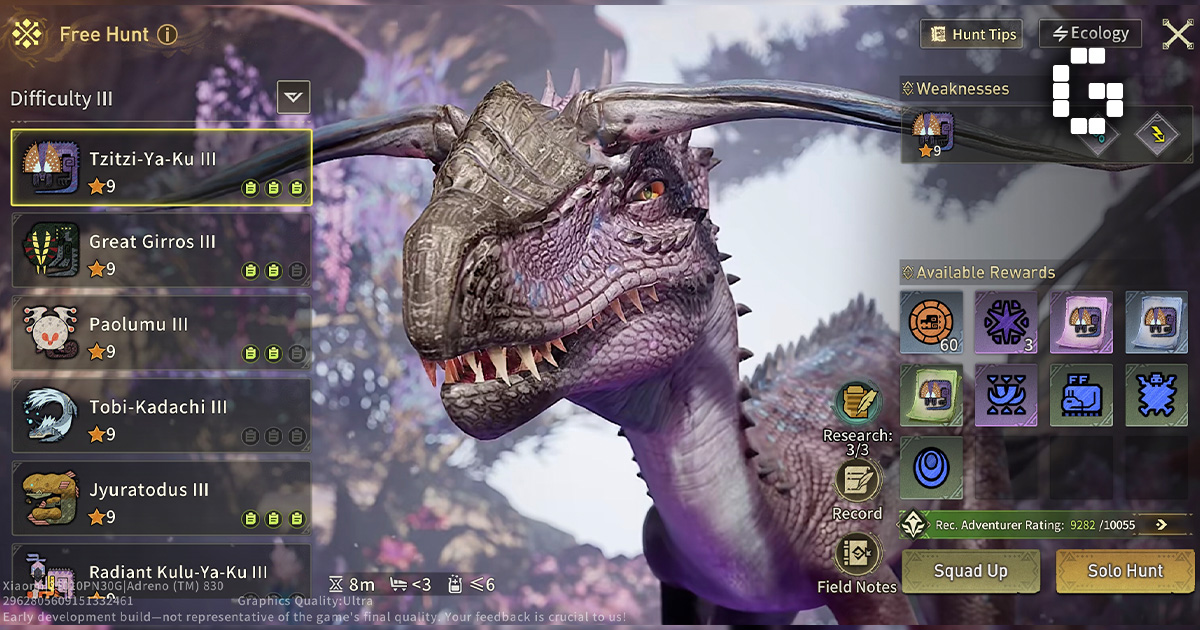
The CBT2 monster roster is heavily based on Monster Hunter: World, featuring around 18 monsters. These include Great Jagras, Kulu-Ya-Ku, Pukei-Pukei, Barroth, Jyuratodus, Tobi-Kadachi, Anjanath, Rathian, Rathalos, Tzitzi-Ya-Ku, Paolumu, Diablos, Great Girros, Legiana, Radobaan, Odogaron, and Kushala Daora.
Elder Dragons such as Nergigante have already been revealed in trailers and promotional materials, but are not available in CBT2.
A major addition is the Radiant Species system. This is not a simple visual variant. Monsters can enter a Radiant state mid-hunt, where one body part becomes infused with glowing crystalline energy. In this state, monsters become significantly more aggressive and unlock exclusive abilities.
Players must focus attacks on the Radiant part and deplete a dedicated gauge to break the state. Once the gauge is fully depleted, the monster is knocked down.
This effectively introduces a destructible phase mechanic, adding a tactical layer beyond simple damage optimization.
Characters & Combat System: Weapons Through a Character Lens
Unlike traditional Monster Hunter games, Outlanders centers its combat system around Adventurer characters rather than pure weapon identity.
CBT2 includes six weapon types:
Great Sword, Long Sword, Lance, Dual Blades, Heavy Bowgun, and Bow.
Different characters using the same weapon can feel completely different, creating a “same weapon, different experience” structure.
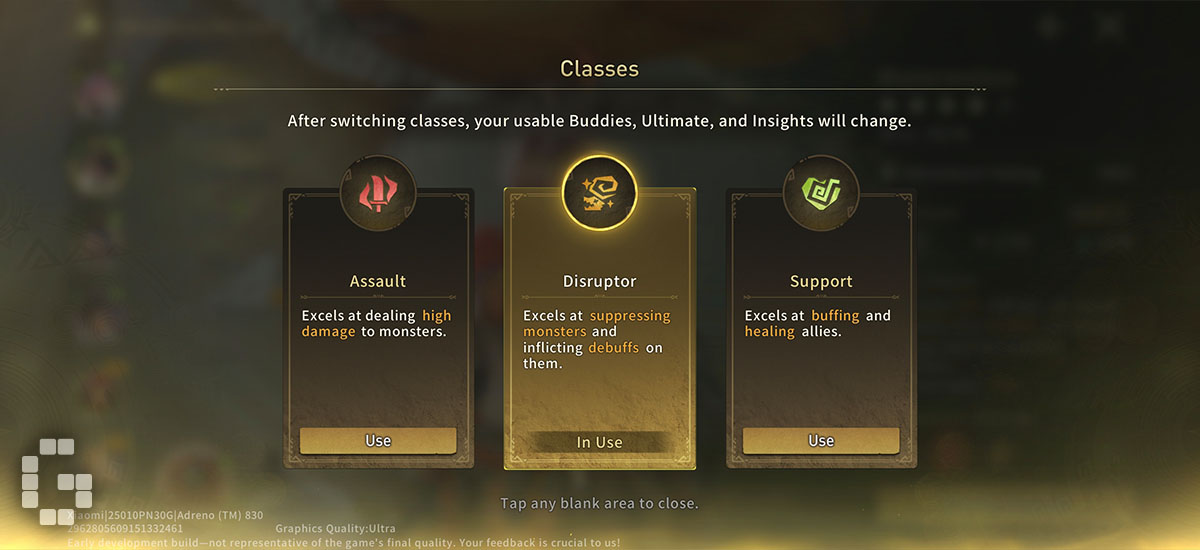
Adventurers and Buddies are divided into three roles:
- Assault (DPS)
- Disruptor (debuff)
- Support (buff/heal)
Aside from the protagonist, most characters are locked into a fixed combination of one role and one weapon.
The Protagonist: Flexible but Conventional
The player-created protagonist is the only character who can freely use all weapons and switch between all three roles. However, this flexibility comes with a clear trade-off: his weapon kits feel more traditional and less expressive compared to other characters.
Across all weapons, the design follows Monster Hunter: World-style fundamentals but with fewer standout mechanics.
- Long Sword uses a Spirit Gauge system where levels increase damage multipliers. Gauge is built through attacks and spent on skills. Countering or combo finishers raise levels.
- Great Sword retains charge attacks and True Charged Slash, but adds a tackle mechanic that preserves charge level. Tackling during True Charged Slash leads into a powerful follow-up with invincibility frames.
- Dual Blades revolve around Demon Mode, trading stamina for speed while building a Demon Gauge that enhances attacks.
- Lance focuses on guarding and counter mechanics with shield-based control.
- Heavy Bowgun / Bow are simplified ranged systems centered on attack loops and resource charging.
The protagonist’s ultimate abilities are also mostly identical across roles, only changing projectile type depending on selected role.
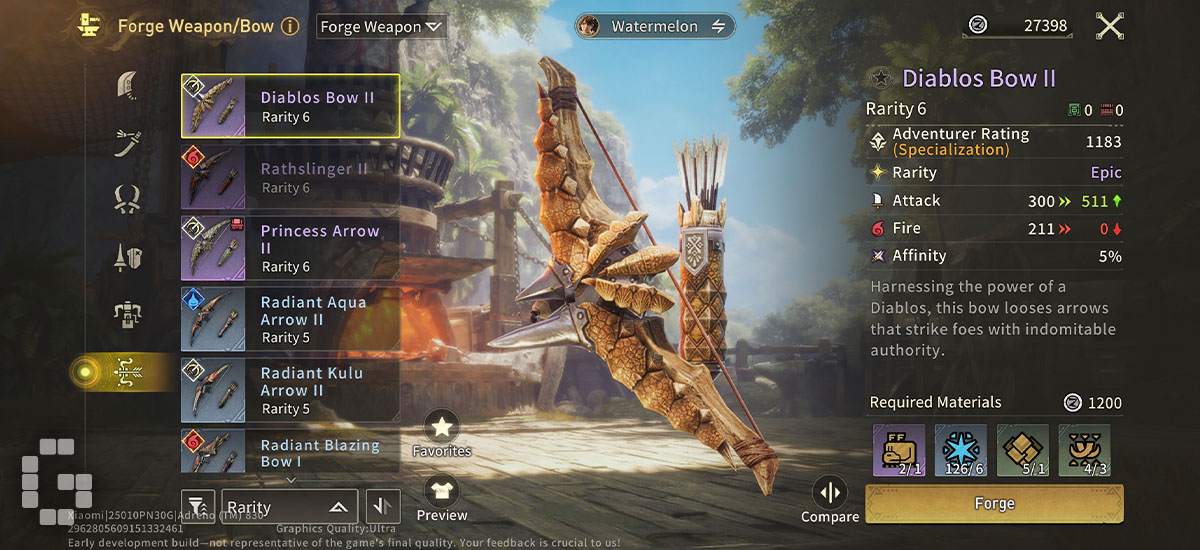
Monster pacing further changes combat flow. Monsters rarely pause or disengage once combat begins. Unlike mainline games, there is no natural “retreat and reset” rhythm.
This creates a relentless combat tempo that heavily punishes slower weapons. Great Sword players in particular struggle to find openings for True Charged Slash, often requiring perfect dodges or guard counters just to act. While skilled players can adapt, newcomers may find the weapon exhausting to use effectively.
Adventurer Characters: High Identity, High Impact
Most non-protagonist characters are built as exaggerated extensions of familiar Monster Hunter mechanics.
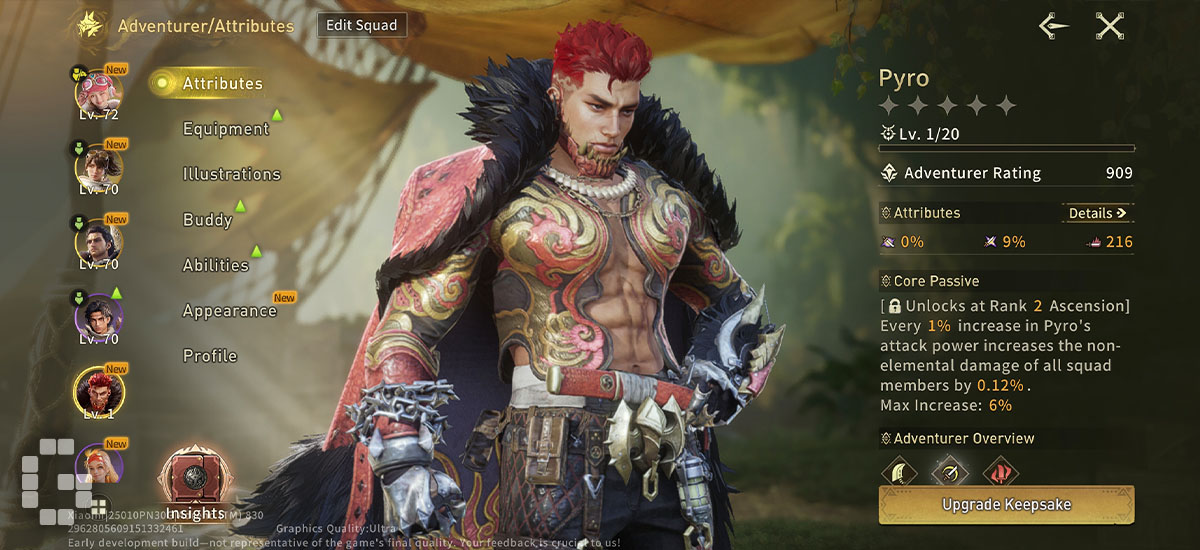
Pyro, a Great Sword character, is the clearest example. His charged slash can magnetize toward targets, functioning like an aggressive long-range extension of Monster Hunter: World’s slinger burst cancel. Within an hour of play, he can reach extremely high damage output, with around 5,000 damage per rotation and 2,000 per max-charge hit, suggesting potential top-tier dominance if unchanged.
Midori draws inspiration from Monster Hunter Rise’s Long Sword. She builds Spirit through normal attacks, sheathes via Skill 2, and uses Skill 3 for red-sheath damage bursts. Perfect dodges accelerate Spirit gain, creating a smooth dodge-to-sheath loop.
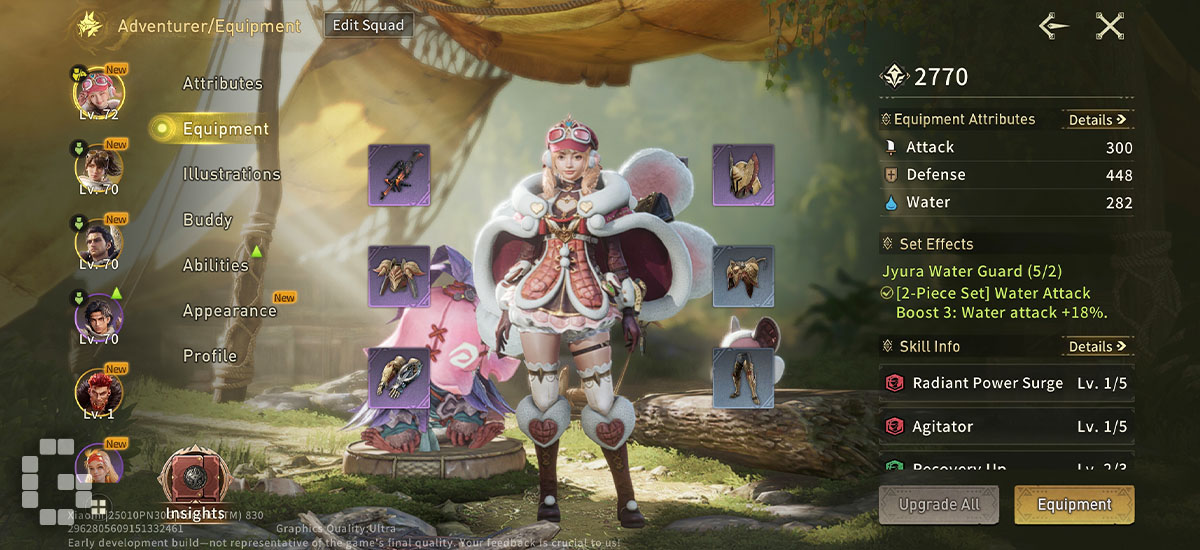
Pepper transforms Heavy Bowgun gameplay into a full aerial cycle system inspired by Monster Hunter Generations’ aerial style. Her loop involves launching into the air, firing multiple shots, charging, dashing, re-launching, and repeating endlessly.
Overall, non-protagonist characters feel expressive and mechanically distinct, while the protagonist feels comparatively restrained. This creates a noticeable imbalance in character design identity.
Progression Systems: Depth Wrapped in RNG
Each Adventurer has six progression systems:
Level, Equipment, Illustrations, Buddy, Abilities, and Insights.
- Level increases stats.
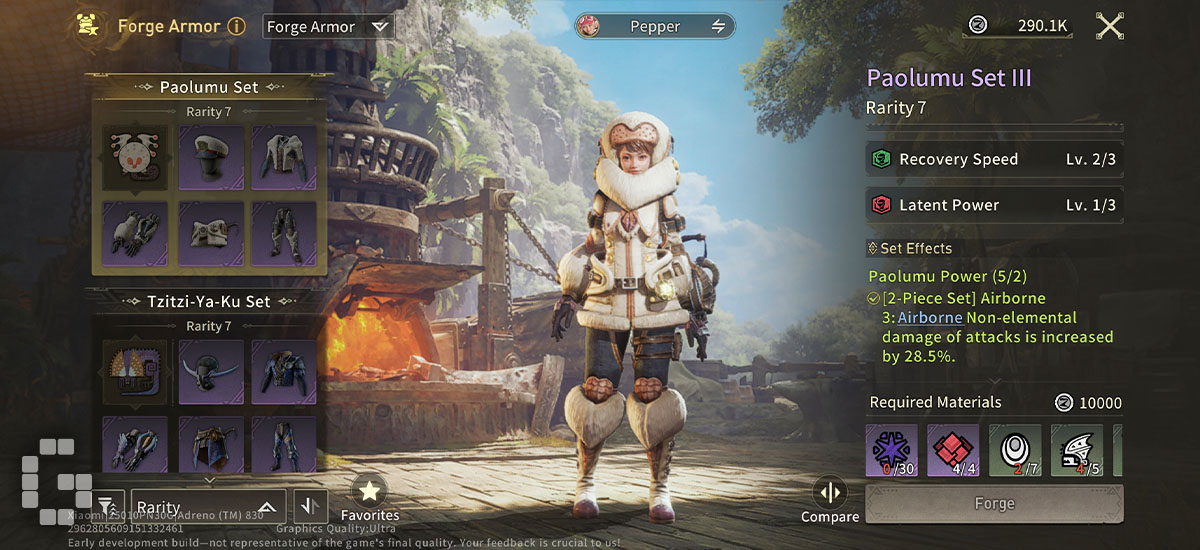
- Equipment follows Monster Hunter armor structure (Head, Chest, Arms, Waist, Legs) but uses fixed skills instead of decoration slots.
- Weapons are upgraded using materials from hunts.
A notable issue is material farming. Small monster resources are often harder to obtain than large monster drops. Creatures like Hornetaur must be individually caught in the field, and respawn timers limit farming speed. This creates a separate loop from traditional large monster hunts.
- Illustrations function like artifact systems with RNG stats. High-rarity drops are rare, and even correct main stats require sub-stat rerolling. This makes Illustrations the most time-consuming progression layer.
- Abilities are upgraded using skill books.
- Insights act like a constellation system and require duplicate characters, directly tying progression to gacha pulls.
One major quality-of-life issue is the lack of loadout presets. Even though seven team slots exist, players must manually re-equip everything when switching builds, including weapons, armor, Illustrations, and Buddies.
Monetization Concerns and Progression Limits
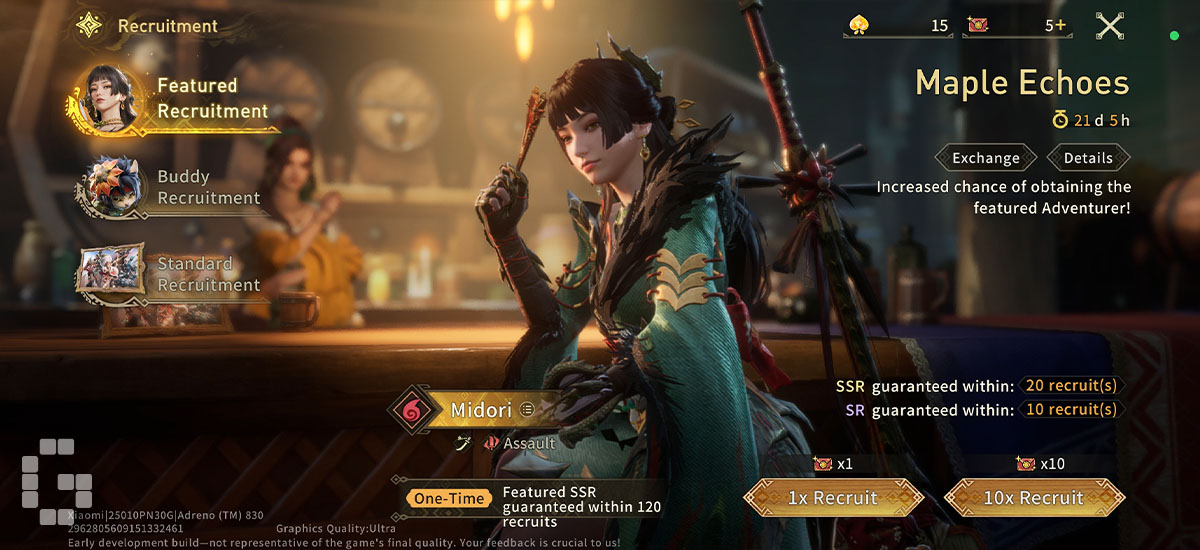
Even without monetization enabled in Monster Hunter Outlanders CBT2 global, the structure clearly points toward a gacha-driven system.
Key mechanics:
- SSR pity: 90 pulls
- 50% featured character rate
- Guaranteed featured after losing 50/50
- Hard pity at 120 pulls (once per banner)
- Pity carries across banners
On paper, this is standard. However, the Insight duplication system significantly increases the true cost of full character optimization.
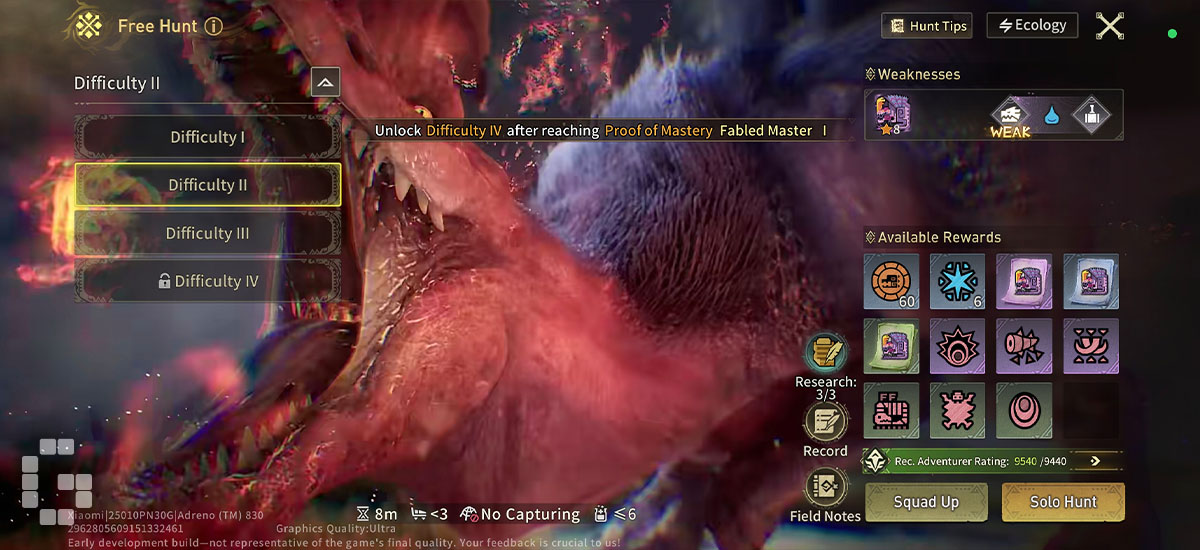
In Monster Hunter Outlanders CBT2, a typical player could earn around 60 pulls in one week, which effectively defines free-to-play progression capacity. Around day five, most players also hit a progression cap in Proof of Mastery (Hunting Master IV), preventing access to higher difficulty content. While likely intended to control progression speed, it made the latter half of the test feel stagnant.
Interestingly, Arena modes (Solo, Duo, Squad) bypass progression entirely by using preset characters, creating a fair competitive environment.
Solo and Multiplayer Systems
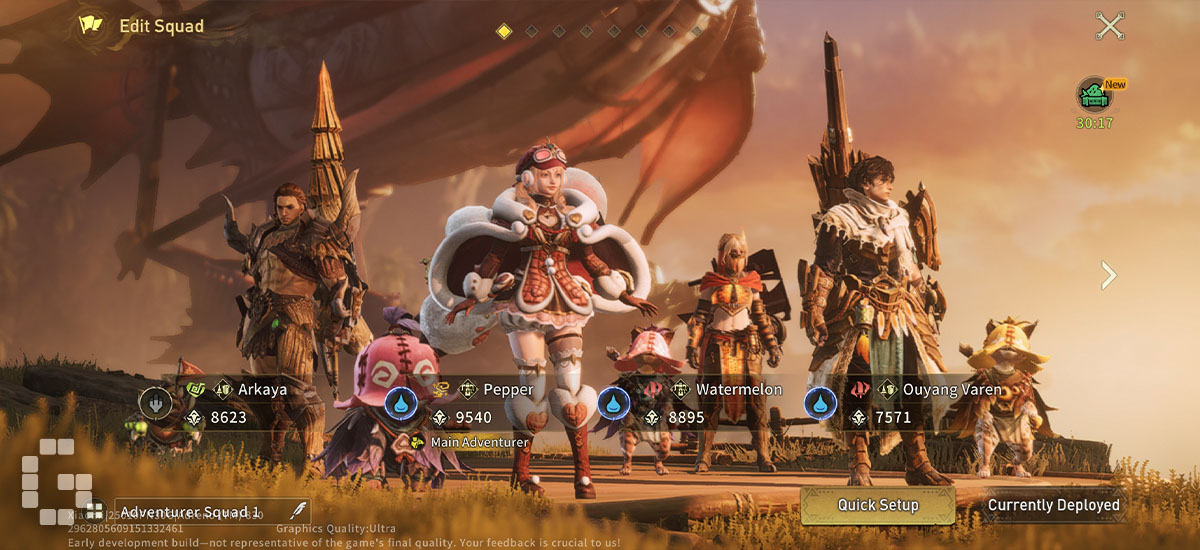
Monster Hunter Outlanders CBT2 supports both solo and multiplayer structures. Solo includes story missions, farming stages, and trials. Multiplayer includes free hunts, co-op hunts, duo/squad arena, and guild systems.
Some story segments require multiplayer participation. In solo hunts, players also control AI teammates and manually trigger ultimates for them.
Co-op synergy is a highlight. Certain character combinations allow chained aerial loops or coordinated knockdowns. A dedicated co-op skill system rewards teamwork with damage boosts and stagger effects.
Controls, Impact, and Mobile Design
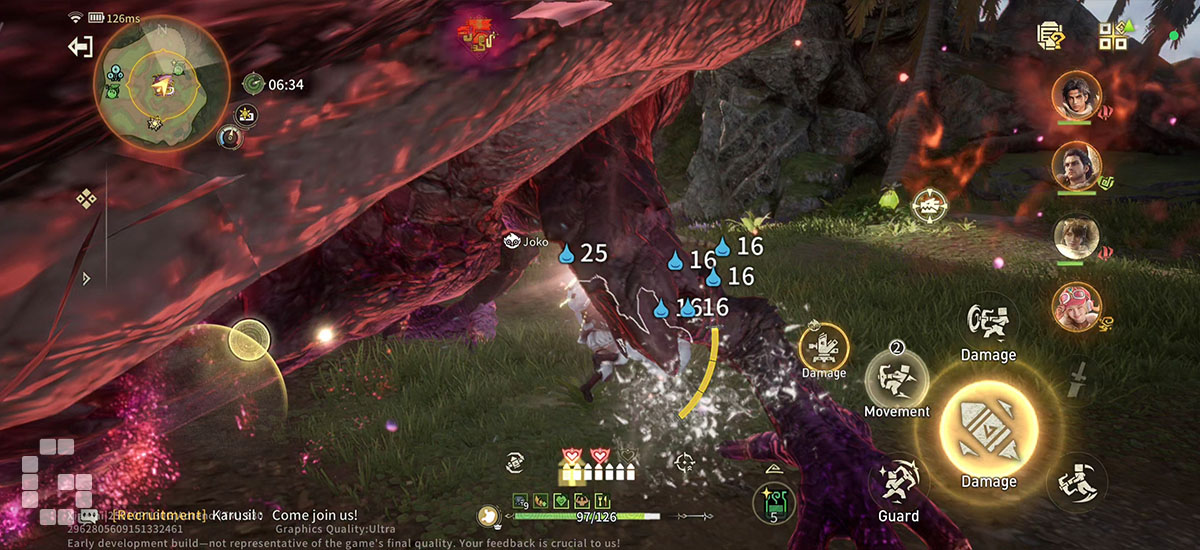
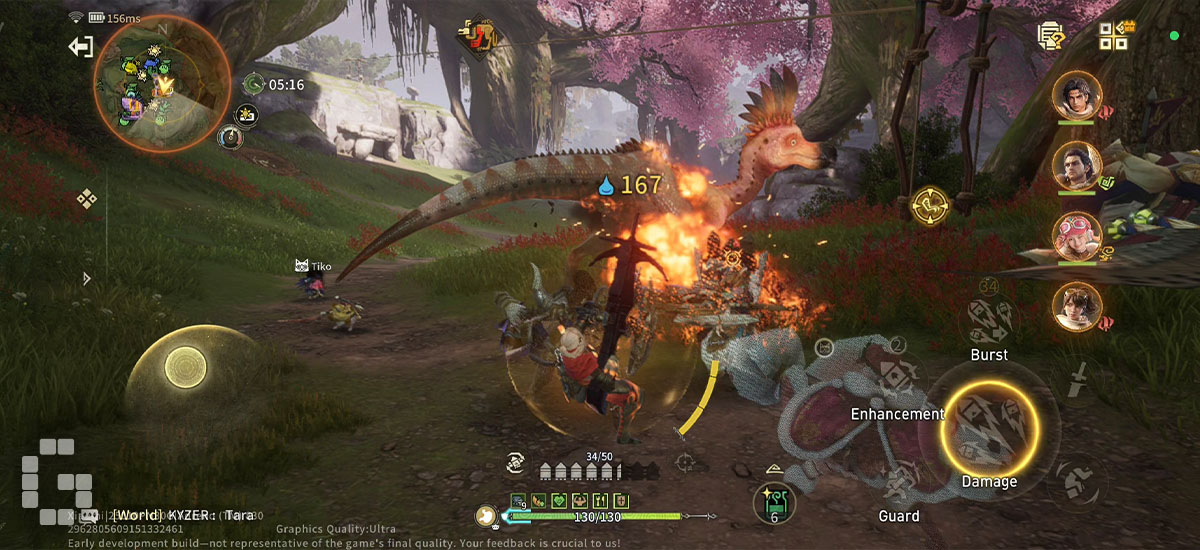
To adapt Monster Hunter-style combat to mobile, controls are simplified into five inputs: basic attack, three skills, and ultimate. This reduces complexity significantly and makes mechanics like Long Sword counters single-button actions. Lock-on targeting is optimized for touchscreen play, improving weak-point targeting for ranged weapons.
Combat impact is strong visually and audibly, though it cannot fully replicate controller feedback. Outside combat, however, mobile design elements like UI clutter and frequent reward pop-ups reduce immersion.
Exploration: Dense, Experimental, and Surprisingly Varied
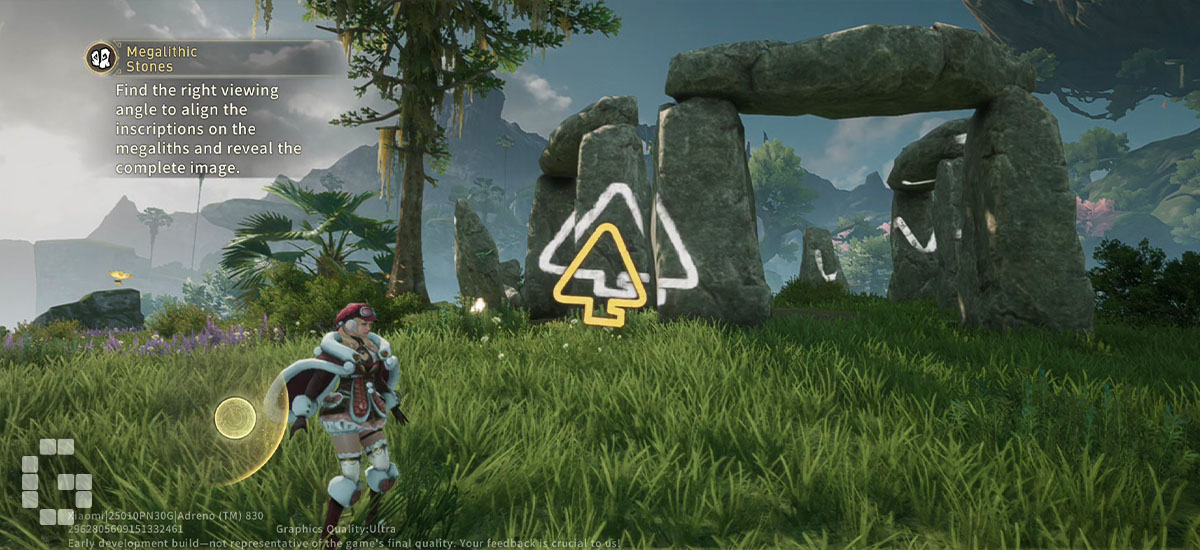
Monster Hunter Outlanders does not use a seamless open world. Instead, it retains zone-based maps similar to traditional Monster Hunter design. However, each zone is densely packed with content.
There are roughly 10 types of minigames, including:
- Wildlife photography
- Fishing
- Puzzle exploration (Megalithic Stones, Zen Stone Balance, buried treasure hunts)
- Combat challenges (Glowing Mayflies, Rampaging Beasts)
- NPC rescue missions (Felyne rescue)
- Egg Heist Challenge
- Winged Treasure Hunt (rhythm-based)
- Gliding Challenge
Rewards primarily consist of Rutacoins, which are modest in value. These activities are more about discovery than efficient farming.
Conclusion
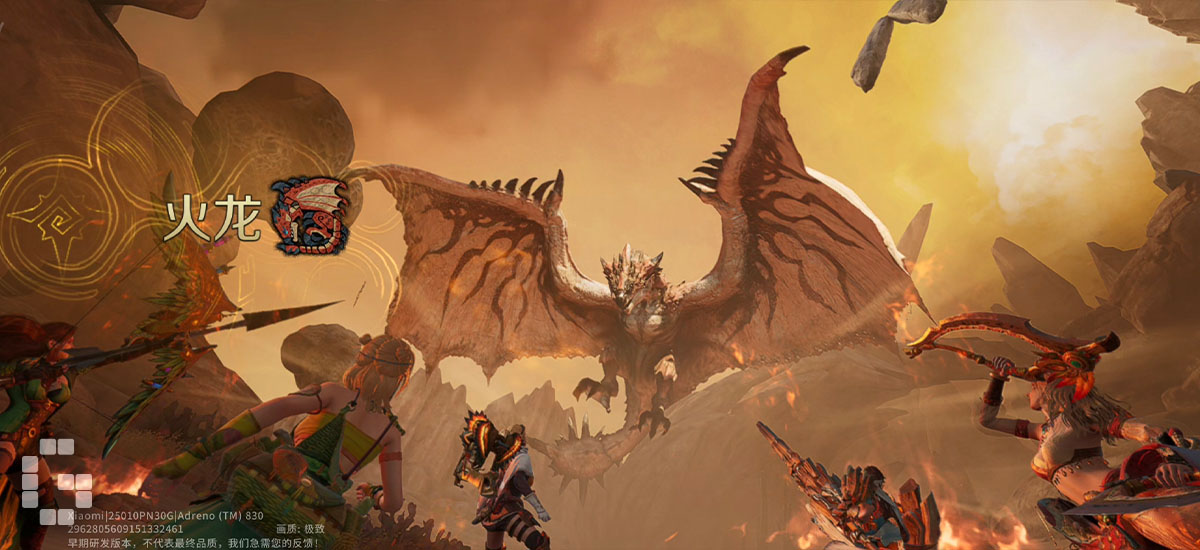
Monster Hunter Outlanders is an ambitious reinterpretation of the franchise that succeeds in several areas but struggles with identity cohesion.
It successfully adapts Monster Hunter combat into a mobile-friendly system and introduces interesting mechanics like Radiant Species. Exploration and multiplayer systems are also surprisingly rich.
However, key issues remain:
- The protagonist feels underpowered compared to specialized characters
- Gacha and duplicate-based progression creates long-term pressure
- UI-heavy mobile design breaks immersion outside combat
- Character-centric combat design diverges from core Monster Hunter identity
For veterans, this is not traditional Monster Hunter—but it is recognizably built from its foundation. For mobile action players, it may still stand as one of the more ambitious hunting-style experiences in development.
Whether the final release can unify these systems into a cohesive experience remains the central question.