














![[EXCLUSIVE] Dragon’s Dogma 2: Dark Arisen Team Opens Up About the Expansion’s Name, New Norgan Region, and Performance Goals](https://cdn.gamerbraves.com/2026/07/Dragons-Dogma-2-Dark-Arisen_Interview_FI-360x180.jpg)



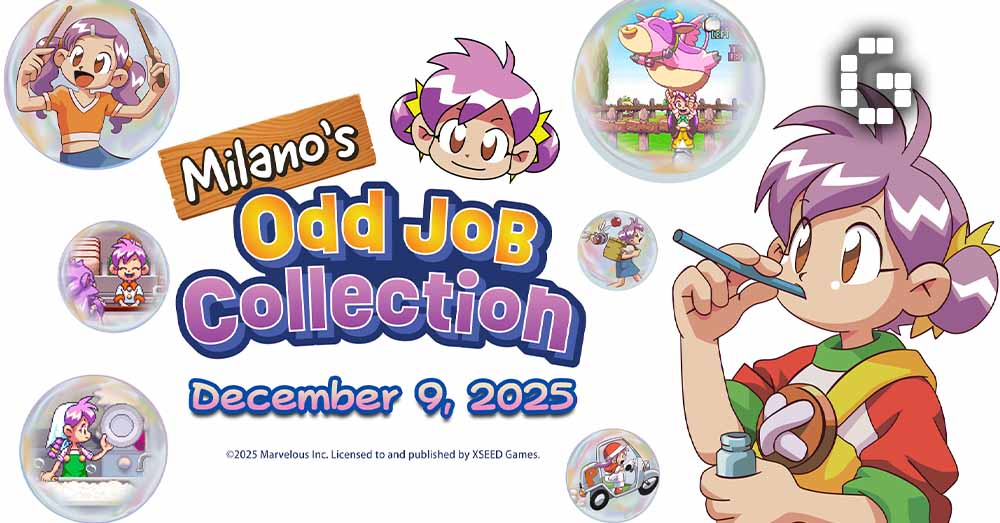
Some games from the late ’90s return as curiosities, appreciated mainly by retro enthusiasts. Milano’s Odd Job Collection is not one of them. Originally released in 1999 in Japan under the name Milano no Arubaito for the PlayStation 1, the game makes its worldwide debut more than two decades later, lovingly rebuilt using Implicit Conversions’ Syrup Engine and fully localized by XSEED Games. This new release includes full English text, English voice acting and modern quality-of-life options, all while preserving the exact charm, art style and gameplay design that made the original such a hidden treasure.
What emerges is a game that feels wonderfully timeless—quirky, heartfelt and completely confident in its identity. Milano’s Odd Job Collection is a slice-of-life minigame adventure that channels the wild creativity of late-90s Japanese game design. With its lively pixel art, eccentric characters and endlessly charming tone, it is easy to see why it became a cult favorite. Going in, I wasn’t sure how well a 1999 minigame collection would hold up in 2025. The answer: shockingly well. This is a rare retro revival that feels not just preserved, but genuinely enjoyable for modern players.
Story & Setting

Milano’s Odd Job Collection centers around 11-year-old Milano, whose mother is hospitalized for several weeks. As a result, Milano is sent to stay at her uncle’s home in the peculiarly named Zucchini Town. Unfortunately (and humorously), her uncle is out on vacation, leaving Milano temporarily in charge of the house with only a peculiar cat named Pepelosa for company.

The goal is simple: survive forty days, earn money through various part-time jobs, decorate the house, keep yourself fed, maintain a routine and experience little moments of daily life. The story never tries to be dramatic or overly serious. Instead, it settles beautifully into the perspective of a child navigating a strange but harmless world. Zucchini Town itself reflects this viewpoint, filled with odd anthropomorphic residents and animals that look just strange enough to feel memorable without being unsettling.

The English localization does an excellent job adapting the humor and tone without losing the unique flavor of the original. The new English voice acting adds surprising warmth to the characters, giving Milano a bright personality and making even minor NPCs feel lively. Players who prefer authenticity can choose the original Japanese audio, now supported with fully translated subtitles. Either way, the story remains simple, wholesome and charmingly absurd—exactly what it needs to be.
Gameplay





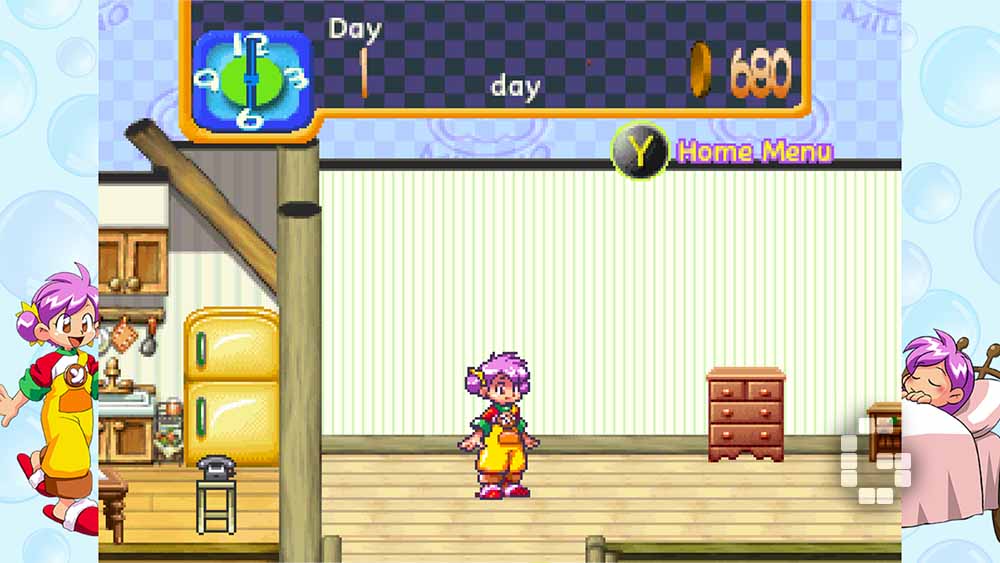
At its core, the game revolves around a daily cycle divided into daytime and nighttime activities. Days are spent taking on odd jobs, relaxing at the park or handling small errands, while nights are dedicated to chores, cooking, caring for Pepelosa or enjoying hobbies like watching TV or reading books. The structure is straightforward and relaxing, creating a comfortable pace that encourages experimentation and replayability.

The highlight is the collection of eight part-time job minigames, each with its own mechanics, scoring system and difficulty levels that unlock as Milano’s stats improve. Washing dishes in Dishwash Woosh is a frantic cleaning game where you scrub plates quickly and efficiently under time pressure. Baking cakes in Pastry Pileup turns into a tile-matching challenge where you combine ingredients correctly before time runs out. Serving fast food in plays like a quick-reaction matching game, requiring you to assemble orders correctly and rapidly. Milking cows in Roundabout Wrangler introduces a reflex-based catching and button-pressing mashing, making it bizarrely intense for what it is.
Catching apples is a classic falling-item minigame with a strict rhythm and faster drops at higher difficulties. Hospital work becomes a button-press puzzle where you must perform the correct instructions to help patients efficiently. Delivering pizza in Pizza Pronto changes things up by letting you steer a scooter through traffic and obstacles to reach your destination in one piece. Finally, playing in a band is a rhythm minigame, complete with timed button prompts and the satisfaction of nailing a performance.

Juggling Tasks
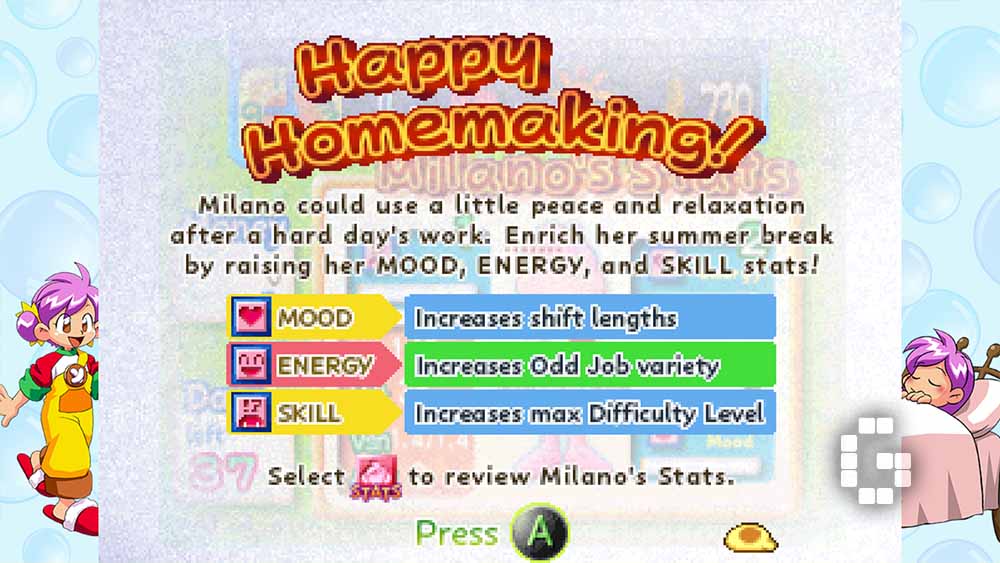
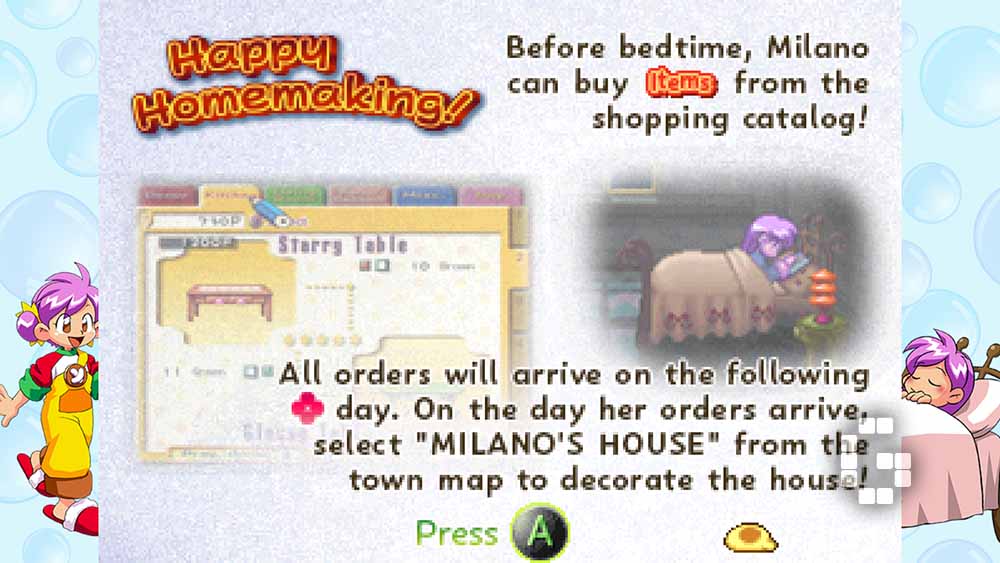
Each activity is simple to learn but surprisingly challenging to master. Milano’s three stats—Energy, Skill and Mood—affects the jobs she unlocks. Raising these stats unlocks harder job variants that reward higher pay but require actual mastery. Between jobs, Milano can also visit the park, order new decorations for her uncle’s home or engage in light activities that give the game a warm, slice-of-life rhythm.

The forty-day limit is one of the game’s smartest design decisions. It ensures playthroughs stay tight and focused, offering just enough time to enjoy everything without dragging out the routine. It also encourages replaying the game with different focuses—maybe first aiming to decorate the entire house, then mastering all minigames, or pushing for top earnings.
Audio & Visuals

Despite its 1999 origins, Milano’s Odd Job Collection looks fantastic. The pixel art animation is shockingly smooth, giving characters expressive movements that often feel more fluid than modern retro-inspired games. Zucchini Town’s residents, from the bizarre-looking cows (called Moogans) to the anthropomorphic townsfolk, reinforce the game’s slightly surreal but wholesome tone. The art style feels intentionally childlike but never cheap, with bright colors and strong visual identity.
The soundtrack is upbeat, lighthearted and often downright catchy. The English theme song is cheerful and endearing, perfectly matching Milano’s optimistic personality. Sound effects are satisfying and never distracting, helping each minigame feel lively and energetic. The English voice acting is surprisingly good, bringing charm and personality to characters who originally had limited voice lines. Even with full English dialogue, the game’s tone remains faithfully retro, and the option to use the Japanese voices with new subtitles ensures that both purists and new players get the experience they want.
Performance & Accessibility
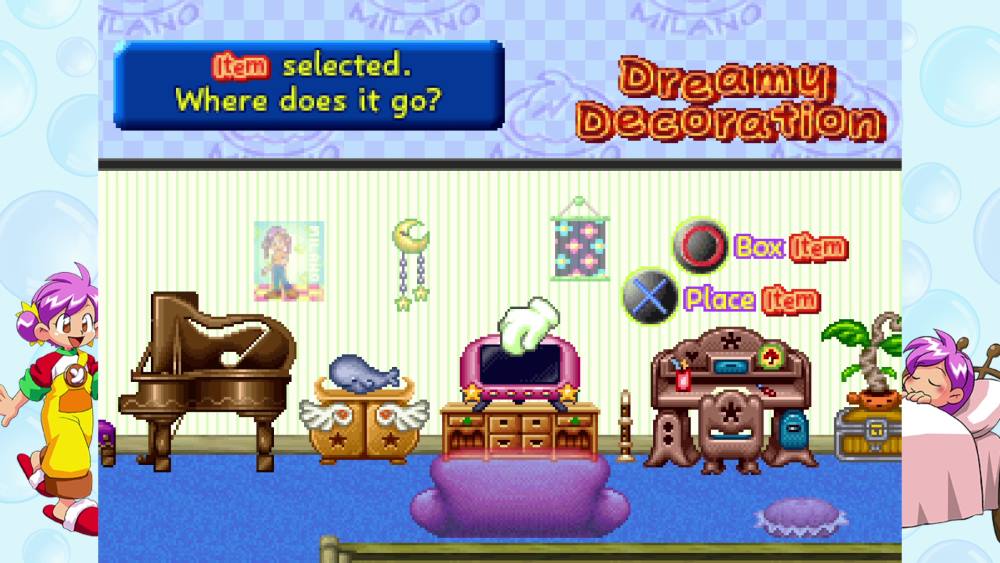
On modern systems, the game runs flawlessly. As we tested this game on Steam, the game requires a controller and does not support keyboard and mouse input, which makes sense given its PS1 origins and minigame-driven gameplay. Controller support is clean and responsive, with modern button prompts mapped to Xbox layouts (if you’re using a controller with Xbox layout) for convenience.
The new features added through the Syrup Engine modernize the game meaningfully without compromising the original design. Save States allow players to save at any point, even in the middle of minigames, making it easy to pick up and put down without losing progress. The Rewind feature is a welcome addition, letting players undo mistakes instantly and retry difficult moments without restarting the entire day. Together with the full English localization, dual audio options and cleaned-up UI elements, these features make the 2025 release far friendlier than the original while maintaining its authentic charm.
Conclusion
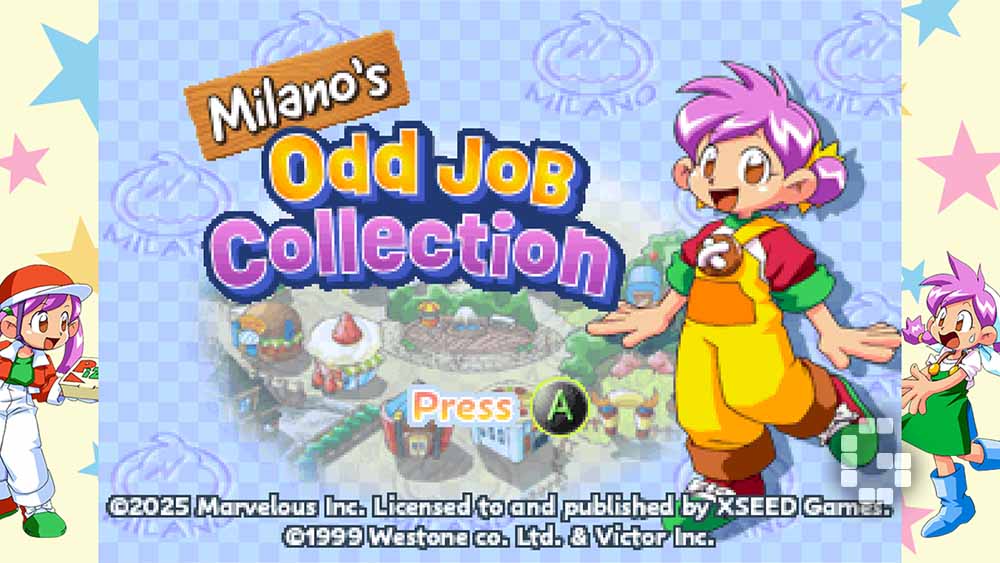
Milano’s Odd Job Collection is exactly the kind of revival that deserves to be celebrated. It preserves everything fans loved about the original 1999 release while adding enough modern enhancements to make it accessible to a whole new audience. It’s charming, quirky, joyful and far more engaging than its simple minigames initially suggest. Players who appreciate retro design, slice-of-life games or unique Japanese oddities will find something truly special here.
This is a game that made me smile constantly, not because it tries hard to be funny or sentimental, but because it embraces its identity so confidently. For me, it’s an easy recommendation for anyone curious about hidden gems from gaming history. In a landscape filled with massive open worlds and complex mechanics, sometimes the most refreshing experience is a wacky little game from 1999 that simply wants to make you happy. We got to try out Milano’s Odd Job Collection, thanks to a free Steam copy given by XSEED Games.
If you are interested in the game, you can visit their official website.
The Review
PROS
- Engaging minigame variety with eight distinct odd jobs, each simple to learn but challenging to master.
- Great audio/visual presentation, with vibrant pixel art and catchy music that hold up beautifully despite 1999 origins.
- Smooth daily-cycle gameplay that creates a relaxing, replayable slice-of-life routine.
- Timeless charm that still feels fresh in 2025 thanks to strong art direction, quirky characters and confident tone.
CONS
- No keyboard and mouse support, which may disappoint PC players who prefer non-controller setups.
- Minigame difficulty spikes may feel frustrating for players who struggle with time-based gameplay.