


![[EXCLUSIVE] Brendan Gan Delivers One of Malaysia’s Best-Ever Worlds Results, Shares Thoughts on Pressure and the Local Scene](https://cdn.gamerbraves.com/2026/08/Brendan-Gan_Interview_FI-360x180.jpg)





![[BIC2026] Hiroaki Nagashima from Toei Games Talks New IPs, Indie Roots, and Asia-First Strategy](https://cdn.gamerbraves.com/2026/08/Toei-Games-BIC-2026_Interview_FI-360x180.jpg)
![[BIC2026] From Outsider to Organizer: How Isabella Seo Jungsook Helped Build Busan’s Indie Game Scene through BIC](https://cdn.gamerbraves.com/2026/08/Isabella-BIC-2026_Interview_FI-360x180.jpg)
![[BIC2026] CanOpener’s Logan Moon Opens Up About Dungeon Settlers Ahead of Its September Early Access Launch](https://cdn.gamerbraves.com/2026/08/Logan-Moon-BIC-2026_Interview_FI-360x180.jpg)

![[Guide] Monster Hunter Stories 3: Twisted Reflection — How to Build A Stronger Monstie](https://cdn.gamerbraves.com/2026/03/MHS3-Monstie-Build-Guide_Guides_FI.jpg)
Choosing the right Monstie in Monster Hunter Stories 3: Twisted Reflection goes far beyond simply picking your favourite monster. While many players focus on visible stats like attack power or elemental affinity, the game actually hides several deeper mechanics that significantly affect how a Monstie performs in battle.
More importantly, some of these traits — particularly a Monstie’s Stamina Tendency and Skill Tendency — cannot be changed or altered by the player. Because of this, they often end up being more important when choosing a Monstie than stats, skills, or even gene layouts, which can eventually be adjusted later through the Rite of Channeling system.
Understanding these systems can make the difference between building a balanced team and ending up with a Monstie that constantly wastes stamina or uses the wrong skills at the wrong time. This guide breaks down the most important factors you should consider when selecting a Monstie, including basic stats, skills, elemental resistances, and the often-overlooked Stamina Tendency and Skill Tendency traits.
This guide will contain major spoilers, so please take note of that before scrolling through!
Elemental Types and Resistances
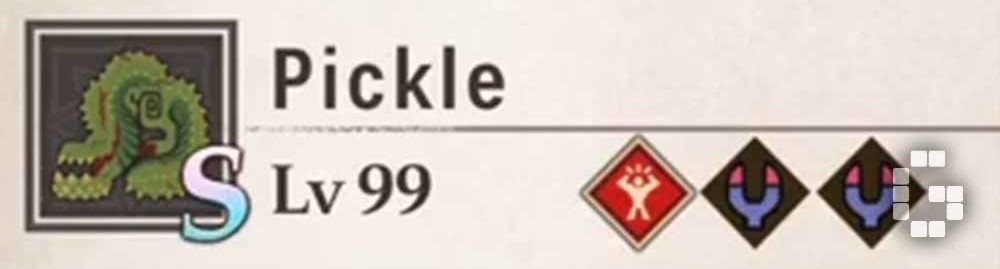
One of the most important traits to consider when selecting a Monstie is its applied element.
Each monster has an elemental type such as:
- Fire
- Water
- Thunder
- Ice
- Dragon
- Non-elemental
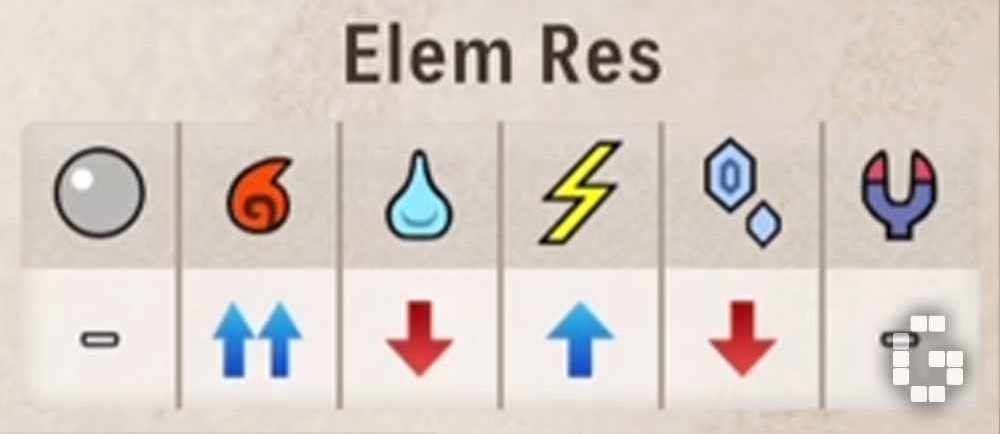
Unlike genes, skills, or stat bonuses, a Monstie’s base and applied element cannot be changed. Because of this, the element you choose will determine how effective the Monstie is against certain enemies throughout the entire game.
Many monsters rely heavily on elemental attacks, especially in later encounters. Bringing a Monstie with the right elemental alignment or resistance can significantly reduce incoming damage while improving your own offensive output.
Because of this, building a team with diverse elemental coverage is often more important than simply picking the strongest monster available.
The Overlooked Traits: Monstie Tendencies

After examining stats, skills, and genes, many players assume they’ve fully evaluated a Monstie. However, there are two hidden traits that players often overlook:
- Stamina Tendency
- Skill Tendency
Unlike stats, genes, or skills, these traits cannot be changed once a Monstie is obtained. Because of this, they are arguably some of the most important factors when deciding whether a Monstie is worth keeping long-term.
These traits influence how the Monstie behaves when controlled by AI.
This is particularly important in Monster Hunter Stories 3 because Monsties may still perform actions independently during battle, and their tendencies will influence what they choose to do in those situations.
Stamina Tendency Explained
A Monstie’s Stamina Tendency determines how likely it is to conserve stamina or rely on basic attacks rather than using stamina-consuming skills on its own.
There are three possible tendencies:
Cautious

Monsties with the Cautious tendency rarely spend stamina on skills.
Instead, they will prefer to conserve stamina and rely on basic attacks unless absolutely necessary.
Because of this, Cautious Monsties have a higher chance of performing normal attacks such as Power, Speed, or Technical attacks instead of consuming stamina on skills. This behaviour can also increase the chances of triggering mechanics such as Second Wind, since stamina is preserved more frequently.
This trait is ideal if:
- Your Monstie has a powerful but expensive skill
- You want stamina saved for critical moments
- You prefer more controlled skill usage
Average

Monsties with an Average tendency strike a balance between attacking normally and using skills.
They will occasionally spend stamina but won’t use it recklessly.
This is the most balanced behaviour type and works well for general gameplay.
Proactive

A Proactive Monstie aggressively uses stamina whenever possible.
These Monsties frequently unleash skills as soon as they have enough stamina to do so.
While this can result in more frequent skill usage, it can also cause the Monstie to run out of stamina quickly, potentially preventing you from using more important abilities when you actually want to issue commands.
Skill Tendency Explained
The second hidden trait is Skill Tendency, which determines what type of skill your Monstie prefers to use when it decides to spend stamina.
There are three main tendencies:
Attack

Attack-oriented Monsties prioritize offensive skills.
These Monsties frequently use damaging abilities, making them ideal for aggressive strategies focused on dealing maximum damage.
Support

Support-oriented Monsties favour buffs and helpful abilities.
These can include:
- Increasing attack or defense
- Healing abilities
- Party-wide buffs
Support Monsties are valuable for maintaining team survivability during longer battles.
Hindrance

Hindrance Monsties specialize in debuffing enemies.
These abilities may:
- Lower enemy stats
- Inflict status effects
- Disrupt enemy attacks
This tendency works well for control-based strategies that weaken powerful monsters.
Important System Change in Monster Hunter Stories 3
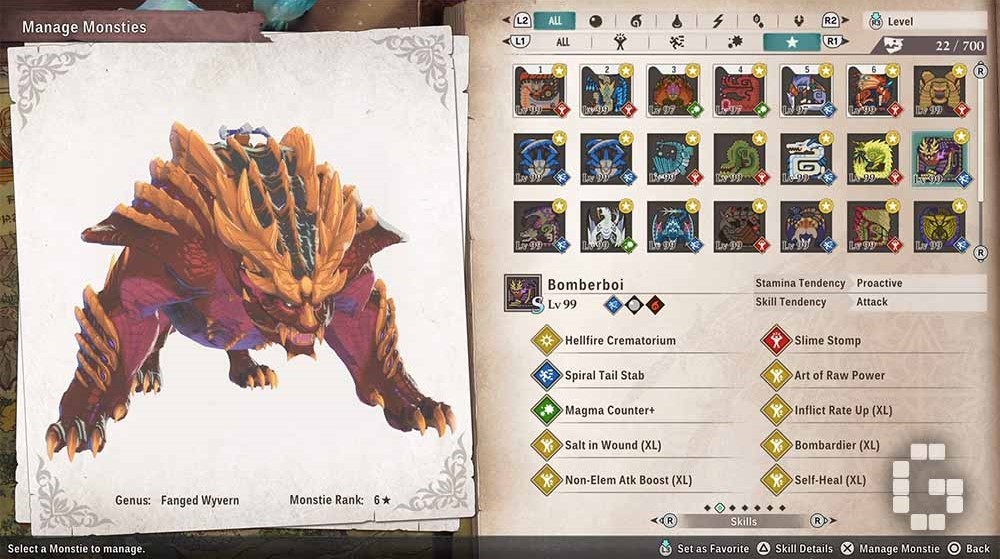
It is also important to understand how stamina works in Monster Hunter Stories 3 compared to previous entries in the series.
In earlier Monster Hunter Stories titles, if a Monstie decided to use a skill on its own without being given an order, that skill did not consume Kinship Gauge. This allowed players to occasionally benefit from free skill usage while saving Kinship for later.
However, Monster Hunter Stories 3 changes this system entirely. Whether the player commands a skill or the Monstie decides to use one on its own, stamina will always be consumed.
Because of this change, a Monstie’s Stamina Tendency becomes significantly more important than in previous games. A Proactive Monstie may constantly spend stamina on its own, while a Cautious Monstie will conserve stamina much more reliably.
This is why many experienced players consider Stamina Tendency — alongside elemental alignment — to be one of the most important traits when selecting a Monstie.
Why Tendencies Matter More Than You Think
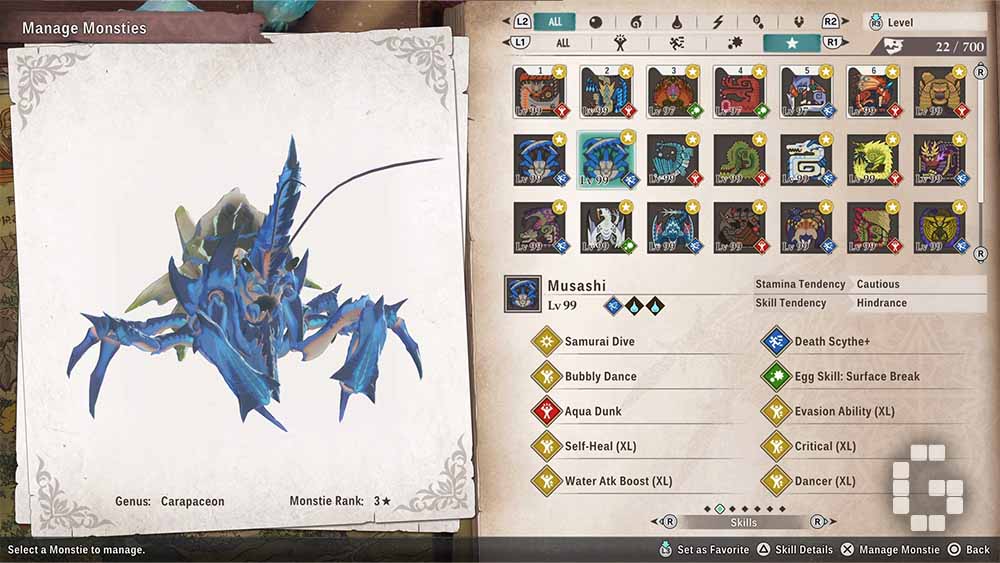
At first glance, tendencies may seem like minor details. However, they can dramatically influence how a Monstie behaves during battle.
Because tendencies cannot be changed after obtaining a Monstie, they become a long-term characteristic that affects how the monster performs throughout the entire game.
Imagine your Monstie has a devastating skill that deals massive damage but consumes a huge amount of stamina. Ideally, you want the Monstie to save stamina until the right moment.
In this situation, a Cautious Stamina Tendency would be ideal because the Monstie will avoid wasting stamina on weaker skills.
However, if the same Monstie has a Proactive tendency, it might constantly spend stamina on smaller abilities, leaving you unable to use the powerful move when you actually need it.
Since stamina is consumed even when a Monstie uses a skill on its own, this behaviour can have a much larger impact in Monster Hunter Stories 3 than in previous titles.
Gene Slots and Bingo Bonuses
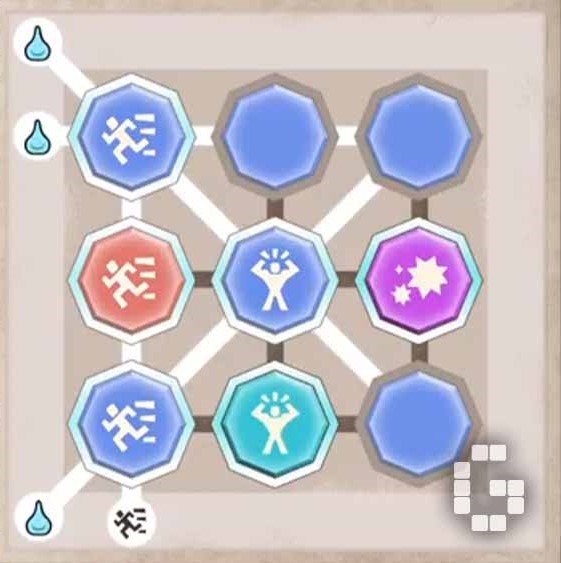
One of the most flexible systems for strengthening a Monstie in Monster Hunter Stories 3 is the Gene Board, which allows players to customize abilities and bonuses through the Rite of Channeling.
Each Monstie has a 3×3 Gene Board consisting of nine slots. When you first obtain a Monstie, some of these slots may be locked, meaning the genes in those slots cannot be moved or replaced immediately. However, once the slots are unlocked later in the game, players gain full control over the board and can rearrange or replace genes however they want.
This flexibility allows players to completely reshape how a Monstie performs in battle.
Gene Types and Elements
Genes are categorized in two main ways: attack type and element.
Attack types include:
- Power
- Speed
- Technique
Meanwhile, genes can also carry one of the game’s elemental properties:
- Fire
- Water
- Thunder
- Ice
- Dragon
Because of this, genes can combine both attributes. For example, a gene may be classified as a Fire Speed gene, meaning it contributes to both Speed-type Bingo bonuses and Fire elemental Bingo bonuses.
Some genes also have no attack type, meaning they only carry an elemental attribute. These are sometimes used purely to help complete elemental Bingo patterns.
Understanding these classifications is important because they determine how Bingo bonuses are activated.
How Bingo Bonuses Work
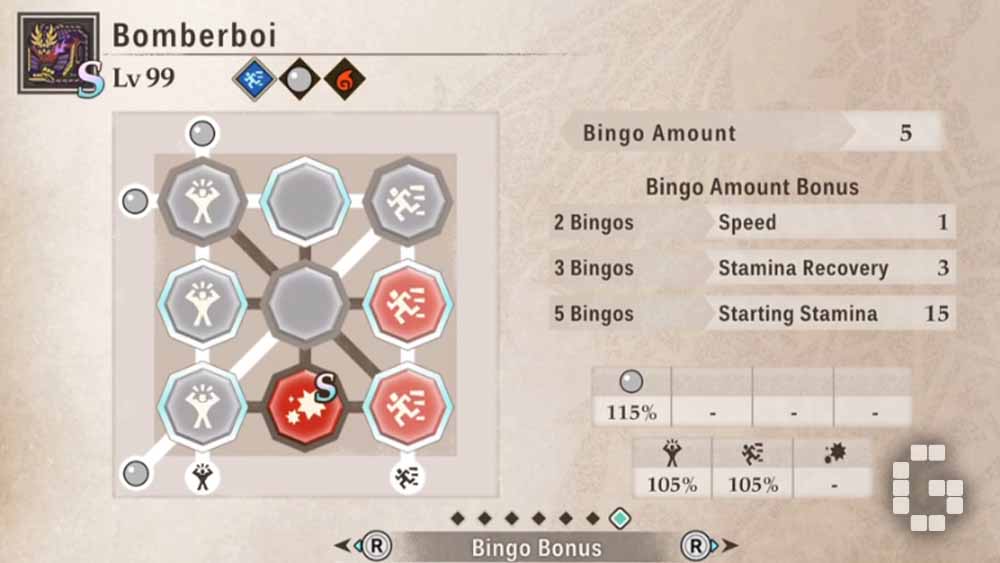
Bingo bonuses occur when genes of the same type or element align on the Gene Board.
This alignment can occur:
- Horizontally
- Vertically
- Diagonally
When three matching genes line up in a row, they create a Bingo, which provides a stat or combat bonus depending on the type of Bingo triggered.
The game rewards players based on the total number of Bingos achieved:
- 1 Bingo
- 3 Bingos
- 5 Bingos
While you can place multiple genes of the same type on a Monstie’s gene slots, the actual Bingo bonuses only activate when you hit 1, 3, or 5 matching Bingos in a row. This means that simply filling the slots with the same gene won’t give you extra bonuses beyond those thresholds. However, adding extra copies of a gene can still be very useful. For instance, if you focus on Fire genes, having additional Fire genes filling up the slots increases the potential Fire damage you deal, because the bonus scales with the number of genes contributing to that element. This is true for every other element and type of gene.
However, maximizing Bingos is not always the only goal.
Mixing Bingo Combinations
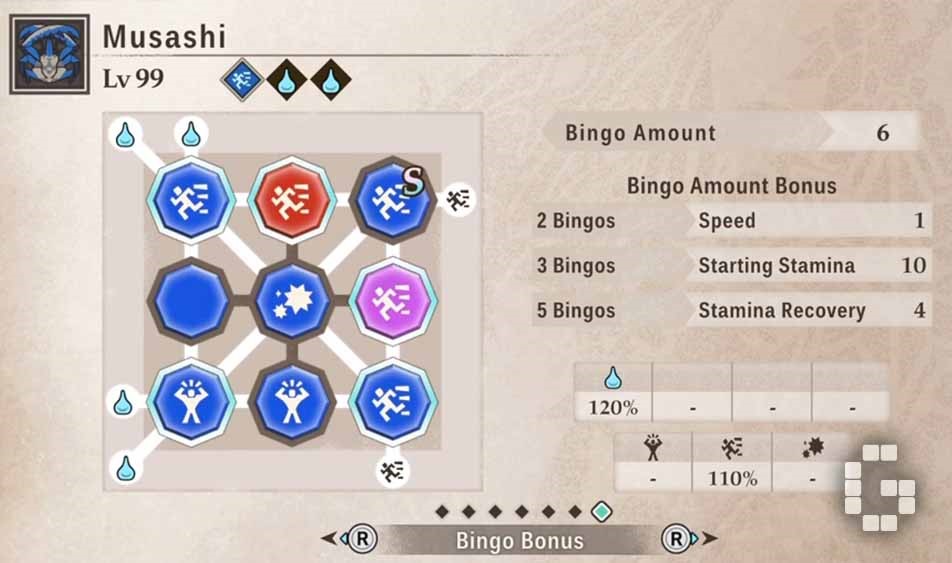
Gene slots of our Shogun Ceanataur, with a ratio of 7:1:1 | Image Credit: Digital Braves
Players can also mix different Bingo types to achieve multiple bonuses simultaneously.
For example:
- A Gene Board might achieve five Fire Bingos while also creating two Speed Bingos.
- Another build may focus on six Power Bingos alongside three elemental Bingos.
These hybrid setups allow players to combine offensive bonuses, elemental boosts, and tactical effects depending on the Monstie’s intended role.
When building your Gene Board, it is important to consider both the genes you want to equip and the Bingo patterns they will create, as the two systems work together to determine your Monstie’s final performance.
Because genes can be rearranged and replaced through the Rite of Channeling, this system gives players a great deal of freedom to experiment and refine their builds over time.
Strategy Considerations When Building Bingos
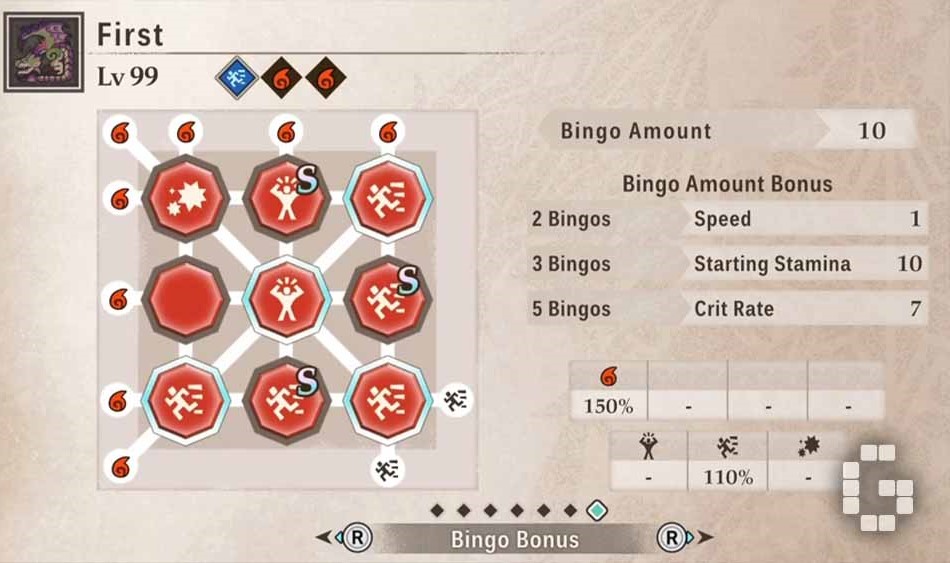
While stacking Bingos can provide strong bonuses, players may sometimes choose to build their Gene Boards differently depending on their strategy.
For example, some players may not necessarily need the bonuses provided by certain Bingo combinations. In these cases, they may choose to spread out their genes in order to prioritize specific skills or passive effects instead of Bingo alignment.
Another common strategy is to focus heavily on a single element. If a player wants a Monstie to specialize in Fire damage, they may fill the Gene Board almost entirely with Fire genes in order to maximize elemental bonuses.
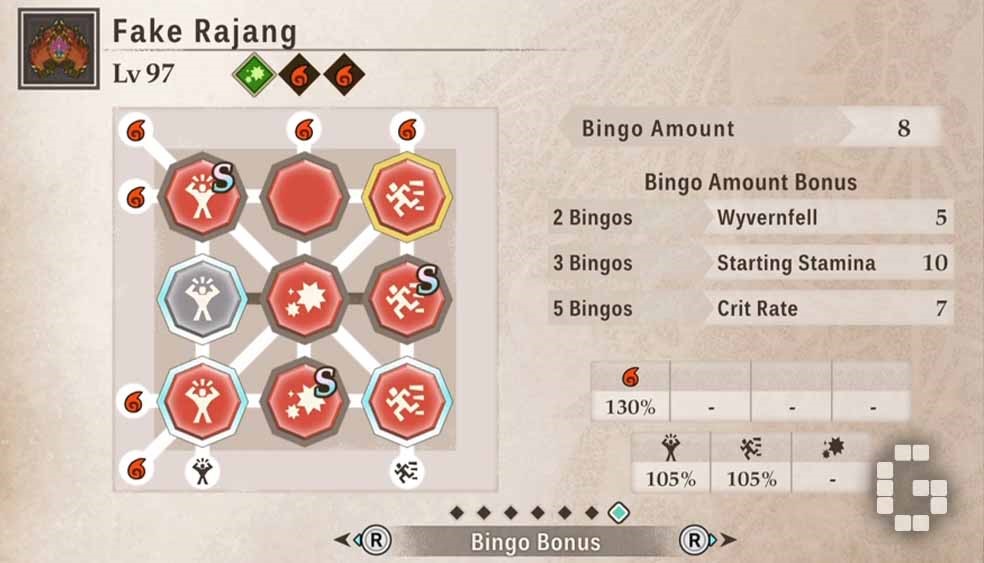
One interesting trick occurs when players build a Gene Board with eight genes of the same type and one different gene.
If the different gene is placed in one of the middle slots on the left or right side of the board (the middle row), it can actually increase the total number of Bingos achieved. In this setup, players can end up with six Bingos instead of five, making it a more efficient way to maximise Bingo bonuses even when one gene is different from the rest.
Instead of creating five Bingos, this arrangement can create six Bingos, making it a more efficient layout for maximizing bonuses.
Because of this, the placement of genes can be just as important as the genes themselves.
Recommended Genes to Look Out For
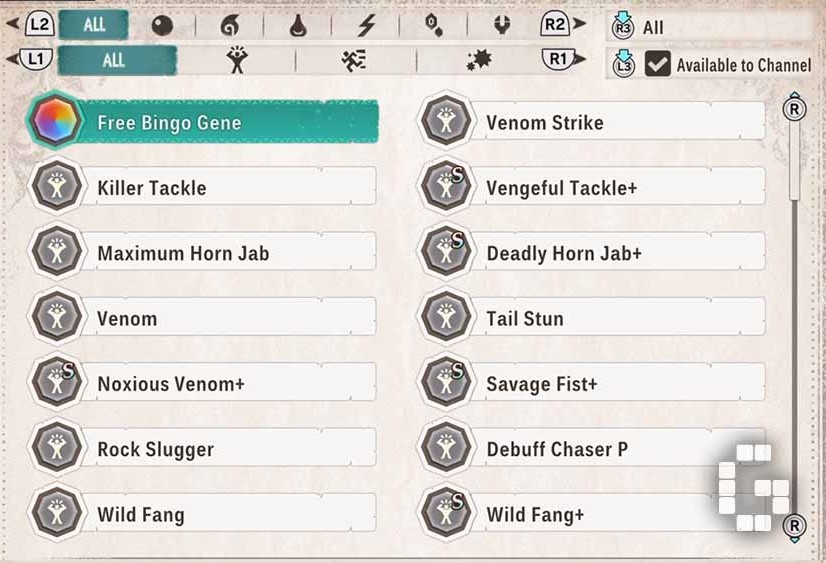
When choosing genes for your Monstie, players should generally prioritize larger gene sizes, especially those marked (XL). These provide the strongest bonuses and make the most efficient use of the limited nine Gene Board slots.
Elemental Attack Boost Genes
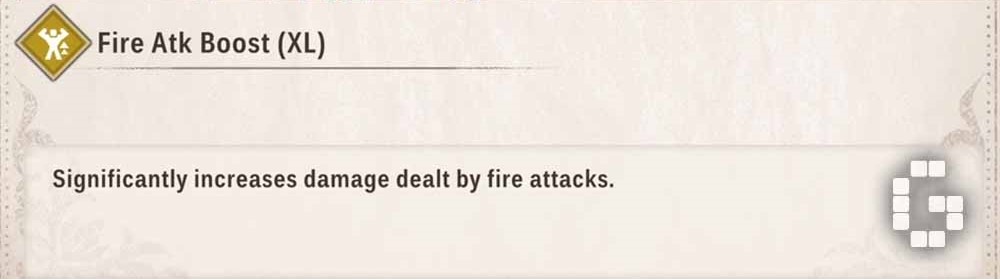
One of the most important genes for elemental builds is elemental attack boosts. For example, Fire Atk Boost (XL) greatly increases Fire-element damage and is a Power-type gene. Genes like this are extremely valuable because they strengthen every elemental skill your Monstie uses.
Strong Elemental Attack Skills
High-damage attack genes can also be useful. Noxious Spit+ is a good example, dealing strong Water-element damage while contributing to Power-type Bingos. However, many builds still prioritize elemental boosts first since they improve overall damage output.
Utility and Survivability Genes
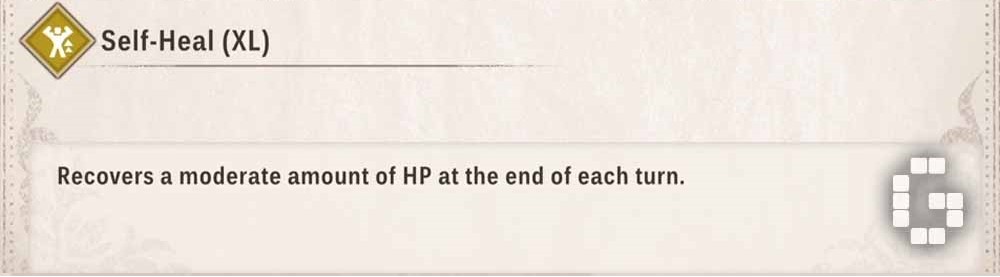
Some genes focus on improving survivability or long-term sustain. Self Heal (XL) restores a moderate amount of HP every turn and is a Fire-element Speed-type gene, making it useful for builds that need extra endurance during longer battles.
Similarly, Evasion Ability (XL) significantly increases evasion, helping Monsties avoid attacks entirely.
Buff and Support Genes
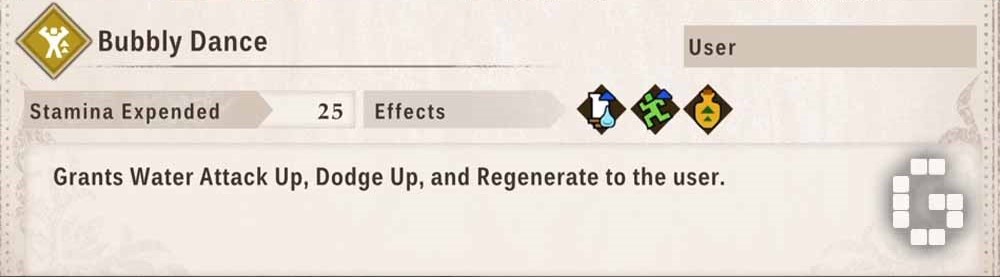
Support-oriented genes can provide powerful buffs. Blazing Howl grants Fire Attack Up and Fire Defense Up to all allies, while Bubbly Dance can grant Water Attack Up, Dodge Up, and Regeneration to the user.
These abilities can greatly strengthen a Monstie or even support the entire team.
Stamina and Resource Management
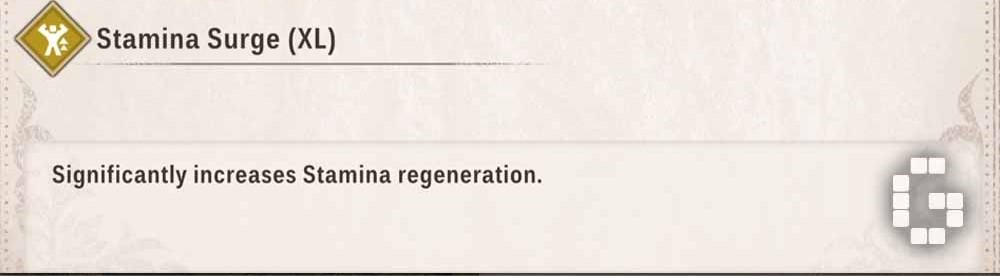
Stamina management is extremely important in Monster Hunter Stories 3, making Stamina Surge (XL) a highly valuable gene. This Thunder Speed-type gene significantly increases stamina regeneration, allowing Monsties to use skills more frequently.
Other Notable Genes
Some additional useful genes include:
- Critical Kinship (XL) — greatly increases Kinship Gauge gain on critical hits
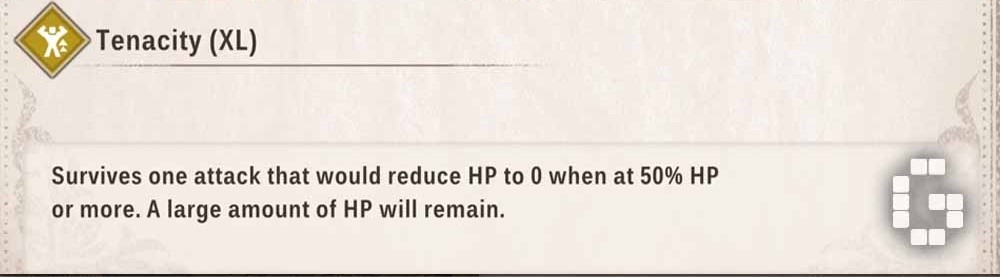
- Tenacity (XL) — allows the Monstie to survive a fatal attack if HP is above 50%
- Critical (XL) — increases critical rate, especially useful for crit-focused builds
There are also genes that increase resistance to specific elements, such as Thunder Defense Boost (XL). However, in most cases it is usually more practical to increase a Monstie’s overall survivability rather than focusing heavily on elemental defense.
The main exception is for specific monsters that have unusual weaknesses. For example, Anjanath has the Dragon element but is also weak to Dragon attacks, making Dragon resistance genes potentially useful in that situation.
Monstie Stats
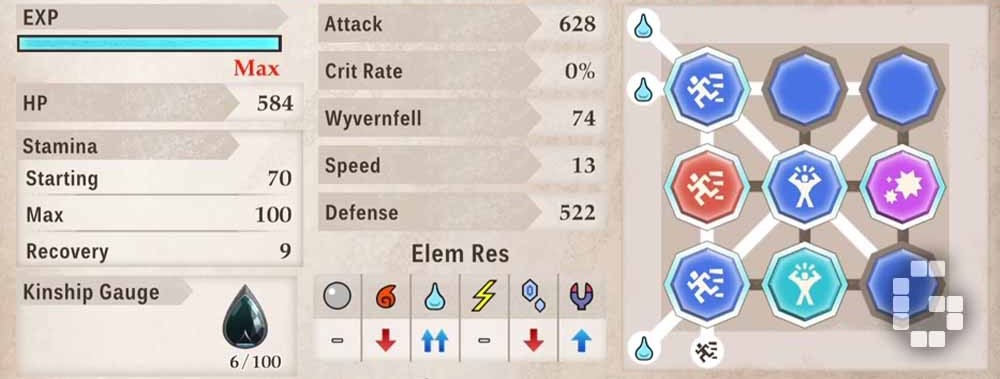
When you first hatch or recruit a Monstie, you will see several core stats such as Health, Attack, Critical Rate, Speed, Defense, and Wyvernfell.
These values determine how the Monstie performs in battle, but it is important to note that Monsties of the same species tend to have very similar base stat ranges.
Because of this, stats alone are usually not the deciding factor when choosing a Monstie.
Skills and Environment Skills
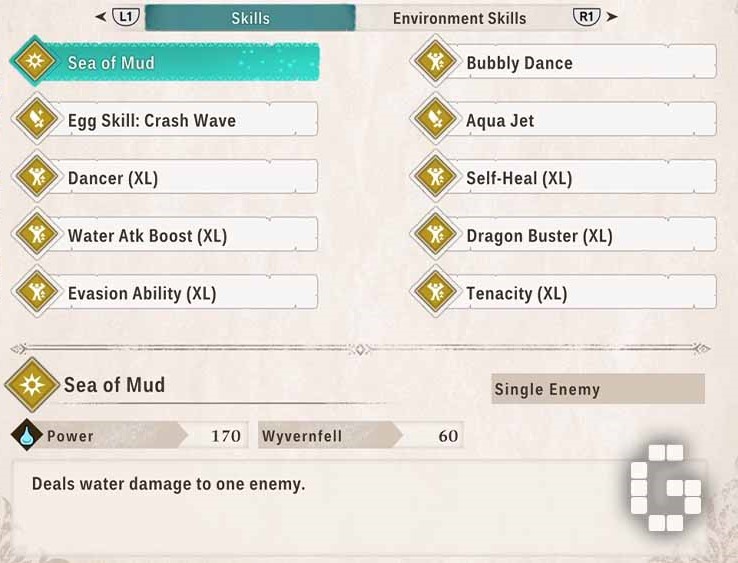
Monsties also come with Skills, which are the active abilities they can use in battle.
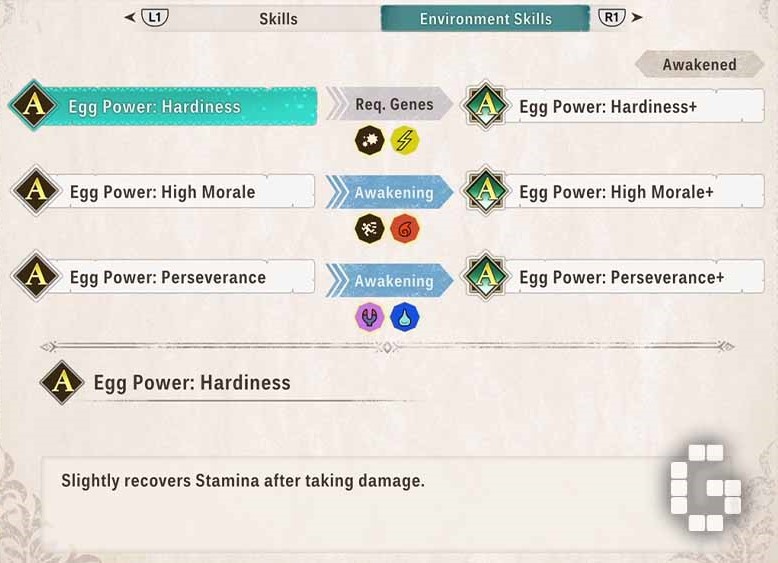
Environment Skills, on the other hand, are passive bonuses that remain active once they are present on the Monstie’s gene board.
Both types of abilities can later be modified through the Rite of Channeling, allowing players to transfer abilities between Monsties.
Final Tips for Choosing the Best Monstie
When selecting a Monstie, it is important to understand which traits are permanent and which can be modified later.
Because applied elements, Stamina Tendency, and Skill Tendency cannot be changed, they should generally be your top priorities when deciding whether to keep a Monstie. Other factors such as stats, skills, and genes can be improved over time through the game’s customization systems.
A Monstie with slightly lower stats but the right tendencies and elemental alignment may ultimately perform far better than a stronger monster with poor behavioural traits.
However, while understanding these systems can help you build stronger Monsties, there is no single “correct” way to play. Some players may prefer to follow highly optimized builds, stacking Bingos and XL genes to create the most efficient Monsties possible. Others might experiment with unusual combinations, hybrid gene boards, or even completely wacky setups just to see what works.
In the end, Monster Hunter Stories 3: Twisted Reflection gives players a huge amount of freedom when building their Monsties. Whether you aim for the meta, experiment with creative builds, or simply raise your favourite monsters, the most important thing is that the Monsties you bring into battle are ones you enjoy using.
After all, half the fun of being a Rider is discovering what kind of Monstie builds work best for you.