











![[EXCLUSIVE] Beyond the Base Game: Cygames on What Endless Ragnarok Means for Granblue Fantasy: Relink](https://cdn.gamerbraves.com/2026/06/GBF-Relink-Endless-Ragnarok-Exclusive_Interview_FI-360x180.jpg)

![[GCAxTHGS25] From IBM Demos to Dead Space: An Exclusive Conversation with Gaming Veteran Glen Schofield](https://cdn.gamerbraves.com/2025/10/Glen-Schofield-GCA-x-THGS25_Interview_FI.jpg)
At gamescom asia x Thailand Game Show, we had the exclusive chance to interview Glen Schofield, the creative mind behind Dead Space and co-founder of Sledgehammer Games. Between the bustling convention floors and excited crowds, Schofield shared stories spanning his decades-long career in game development. From his early days working on IBM PC demos to building some of gaming’s most terrifying experiences, he offered a candid look at his journey through the industry.
The Unexpected Beginning
Schofield’s path into gaming started far from where some might expect. Fresh out of Pratt Institute, an art school in New York City, he landed a job creating demos for the IBM PC during the early days of personal computing. “I’m like a kid out of school, and I’m working on the biggest things in the world, but I had no idea, because nobody knew what PCs were gonna be,” he recalled. At the time, computers didn’t even have mice yet, forcing him to create art through keyboard commands alone.

His transition to video games came by chance. While freelancing as an illustrator at night, he was hired to design two Game Boy covers. Looking at the gameplay screenshots, something clicked. “I can do that in my sleep kind of thing,” he thought. After connecting with a friend who knew a local game company in New Jersey, Schofield became the 12th or 14th employee at a small studio operating above a hairdresser. “We always smelled the chemicals,” he laughed. That studio eventually grew to 150 people and went public before Schofield moved to California to work for Capcom.
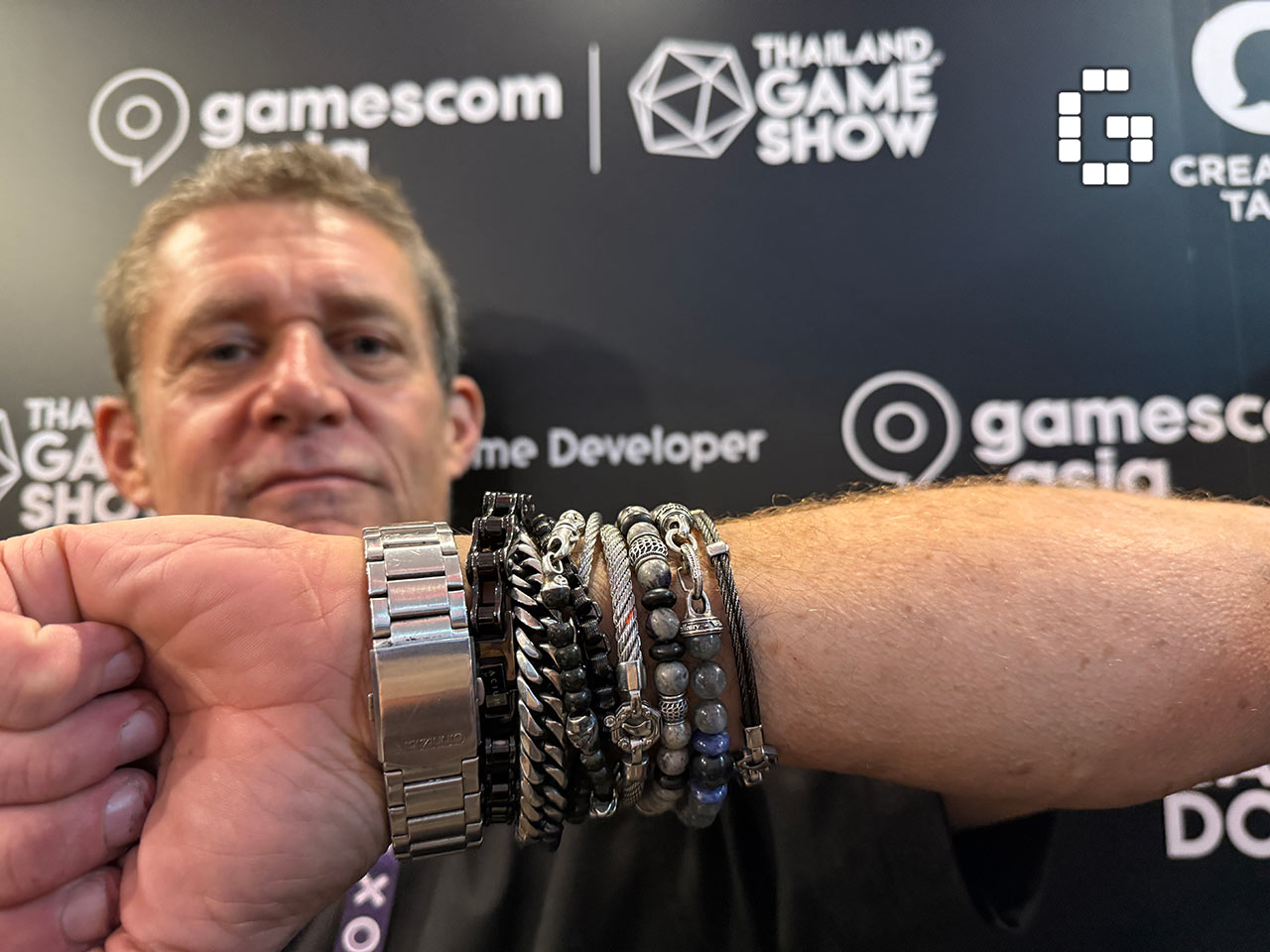
When asked about his distinctive appearance, covered in chains and wearing black, Schofield explained his unique form of self-expression. “I don’t have any tattoos because as an artist, I’m gonna be looking at it all the time and seeing the flaws, I couldn’t do that,” he said. Growing up on the East Coast around New York and New Jersey, gold chains were common, but Schofield took it further.
“I do everything in excess.”
Crafting Fear in an Interactive Medium
Dead Space remains a benchmark for horror games, and Schofield had clear thoughts on what makes horror work in gaming versus other media. The biggest challenge? Player agency. “The difference between Dead Space and a movie is that Dead Space, you don’t know where the camera’s gonna be,” he explained. In film, directors control every frame, but in games, players might miss carefully crafted scares simply by looking the wrong direction.
Rather than fighting this limitation, Schofield learned to embrace it. “If they don’t see every scare, that’s okay. Because sometimes they’re gonna turn around and they’re gonna see what happened from the scare,” he said. This unpredictability became part of the experience itself.
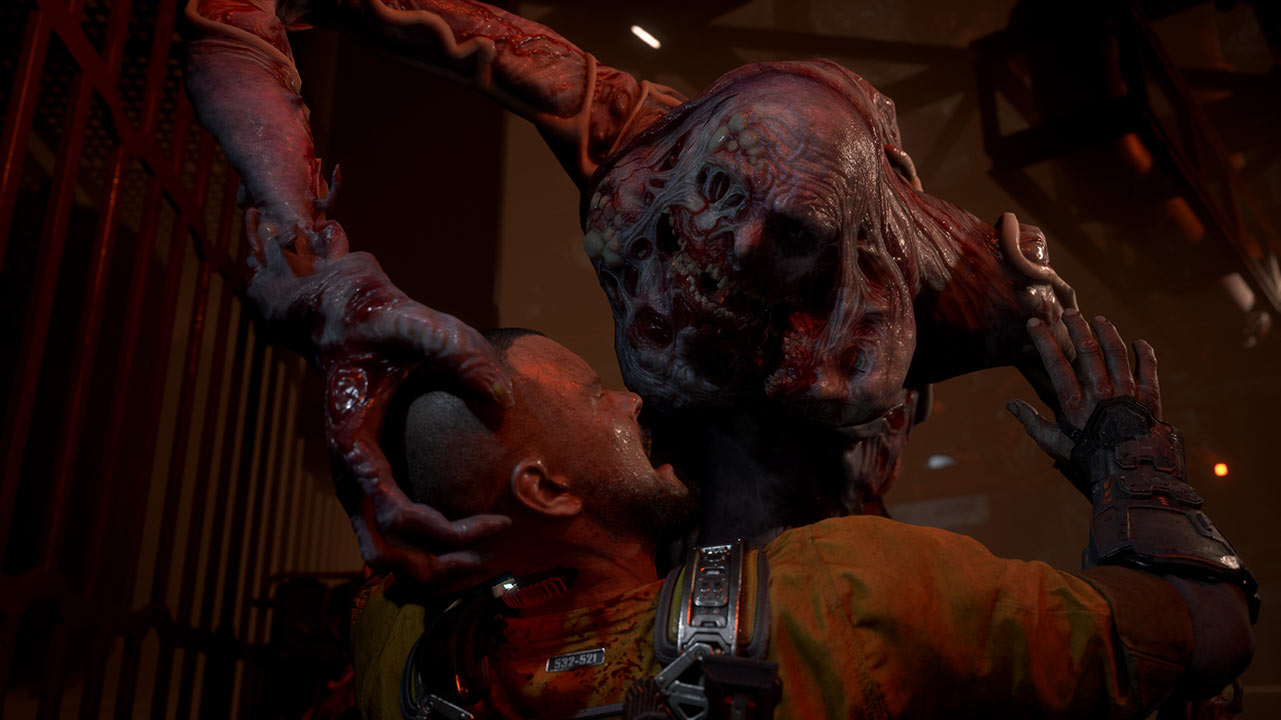
Striking Distance Studios
On the topic of how modern players experience fear, Schofield pushed back against a common criticism. “Everybody’s like, ‘You gotta stop making jump scares. You can’t have jump scares, man,'” he said. His response? “So I’m gonna make a psychological horror game for 15 hours. Come on, who’s gonna play that, right?”
For Schofield, jump scares serve a purpose beyond the immediate shock. “Without the jump scares, why even have tension? Because it’s the tension that gets you, because you’re so worried about being jump scared,” he explained. The key is restraint and unpredictability. “You don’t have to do a lot of them. You can have one in a level.”
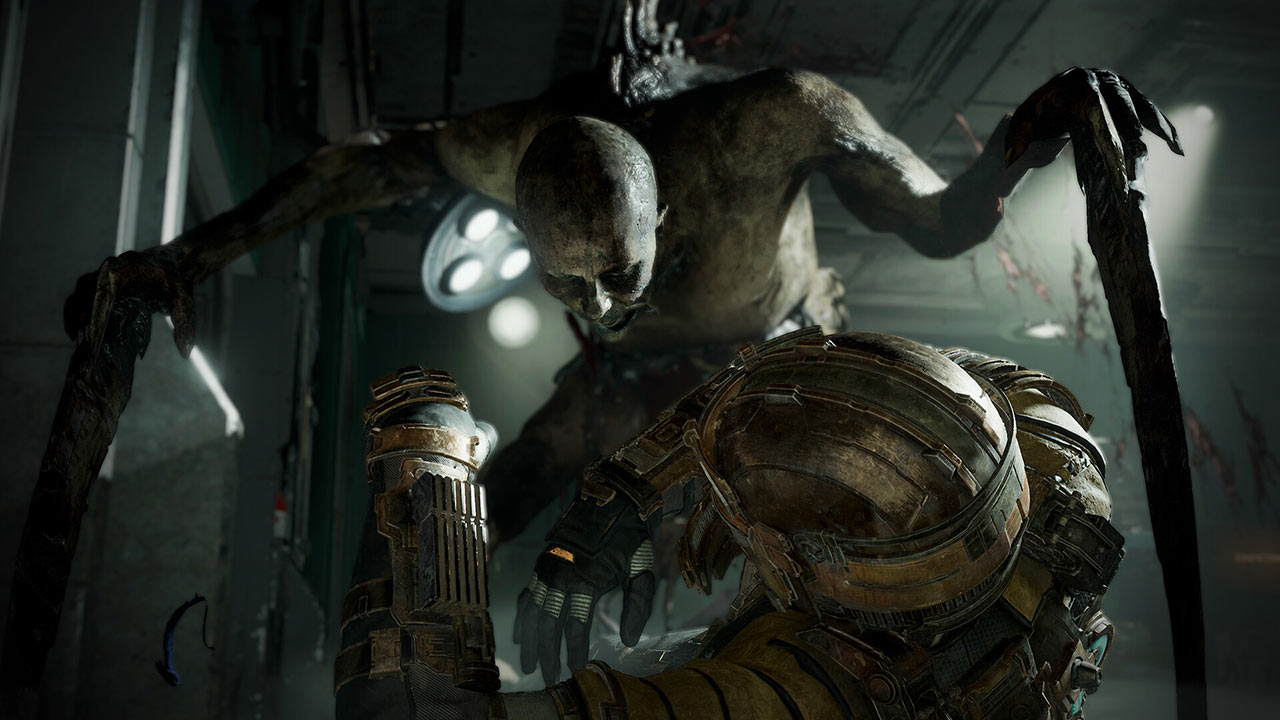
He went further, describing his philosophy of breaking patterns. In Dead Space, he might scare players intensely, then hit them again just two seconds later. “People are like, ‘What did you do that for?’ And I’m like, ‘It’s because there’s no rules,'” he said. By establishing expectations and then breaking them, he keeps players constantly on edge.
Schofield’s love for science fiction came first, with horror following later. Movies like Alien and John Carpenter’s work became his template. “That’s what I like,” he said, noting how few games and films successfully blend these genres. While games like Alien and The Thing exist, they’re licensed properties. Even DOOM, which he considers legitimately scary in its early iterations, has evolved into something different. “The latest ones are just crazy, over-the-top shooters,” he observed.
Advice for Aspiring Horror Creators
When asked for advice on creating horror experiences, Schofield paused. “Nobody’s asked me that. So, I’ve never had to answer it,” he admitted. His answer revealed a common misconception in game development. “Everybody thinks they know how to make horror, everybody thinks they know how to scare people,” he said. When team members try their hand at creating scares, he often finds himself saying, “Ahhh,” and sending them back to basics.
His method involves experimentation and iteration. “Do it in white boxes, do it in prototypes real quick. Boom, does it work? No, the timing’s off, but I can see you can, and then you get the timing right, and then you put it in there,” he explained. Horror requires careful study and constant refinement.
Outside of his game development work, Schofield maintains his roots as an artist, having held one-man shows in San Francisco and beyond. He’s also an Eagle Scout, the highest rank in the Boy Scouts, and was recently named to a list of the hundred most famous Eagle Scouts in the organization’s history dating back to 1900.
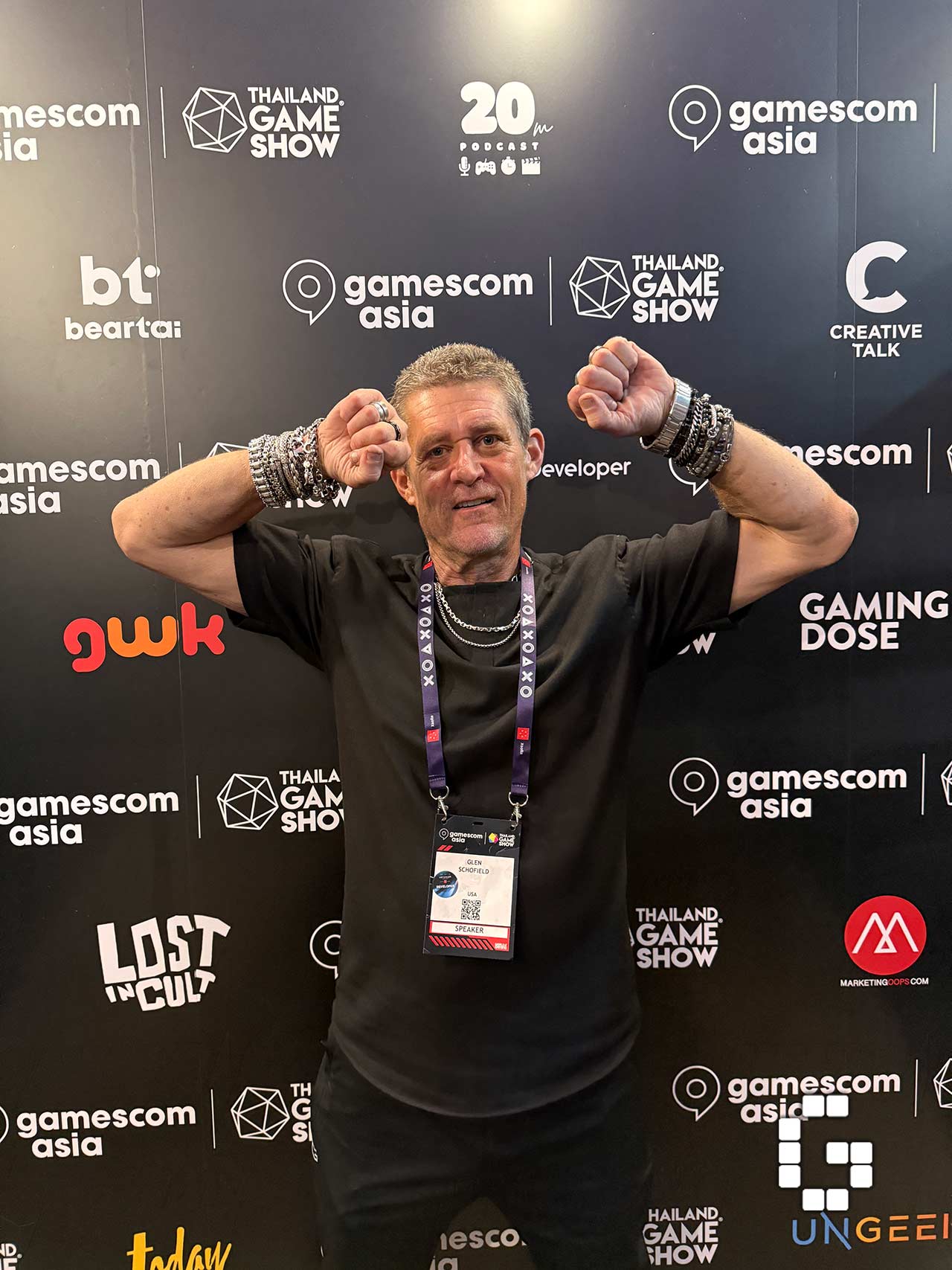
The recognition placed him alphabetically next to Steven Spielberg, who also earned the rank. “I’ve met Spielberg a couple times, and the first time I met him, I said, ‘You’re an Eagle Scout, so am I.’ And that’s what we talked about,” Schofield recalled with evident pride.
He also holds two honorary doctorates in addition to his Bachelor of Fine Arts and Master’s in Business, awarded for his contributions to gaming and his work mentoring others in the industry. “They keep telling my team, call me a doctor, call me Dr. Glen, and they won’t do it,” he laughed.
Throughout the conversation, one thing remained clear: whether he’s drawing constantly wherever he goes or building tension in a horror game, Glen Schofield approaches everything with the same philosophy. Practice, experiment, and don’t be afraid to break the rules.








![[GCAxTHGS25] gamescom asia x Thailand Game Show Wraps Up with Record Attendance and Award Ceremony](https://cdn.gamerbraves.com/2025/10/gamescom-asia-x-Thailand-Game-Show-Closing_News_FI-75x75.jpg)