



![[EXCLUSIVE] Dragon’s Dogma 2: Dark Arisen Team Opens Up About the Expansion’s Name, New Norgan Region, and Performance Goals](https://cdn.gamerbraves.com/2026/07/Dragons-Dogma-2-Dark-Arisen_Interview_FI-360x180.jpg)



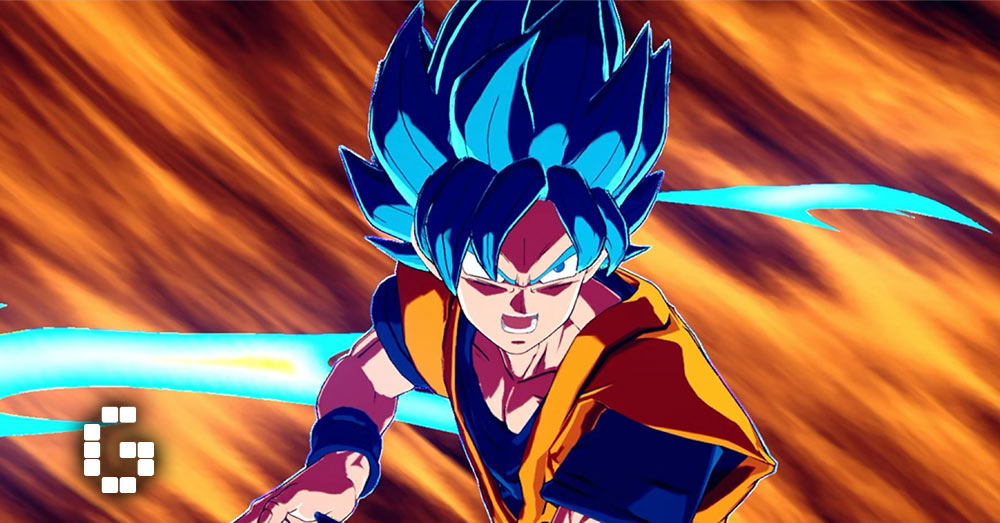
When DRAGON BALL: Sparking! Zero made its way to Nintendo Switch 2 fans were eager to see how the spectacle-driven fighter would handle the transition. We’ll take a close look at how the Switch 2 version performs across different play modes, what visual and technical compromises were made, and whether the port delivers the full Dragon Ball experience on Nintendo’s new hardware.
For those new to the series, Sparking ZERO breaks away from traditional 2D fighting game conventions. This is a 3D arena brawler where movement and spectacle take center stage. The goal isn’t to prove competitive fighting game prowess but to recreate those memorable anime moments—teleporting after enemies mid-air, transforming during battle, and launching cinematic super attacks that reshape the arena itself.
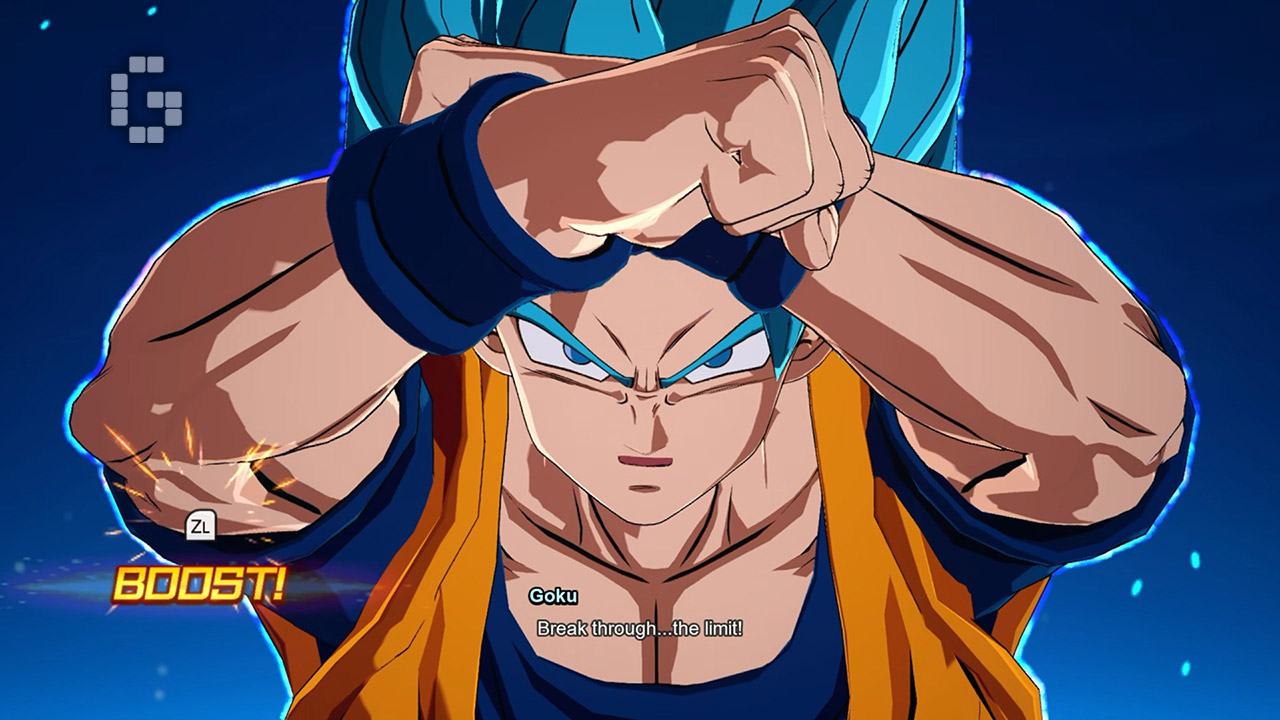
The game leans heavily into fanservice with a massive roster spanning multiple Dragon Ball eras, a story mode that retells and reimagines major moments from the series, and presentation designed to make each fight feel like watching a high-budget anime episode come to life. The gameplay loop delivers pure power fantasy: characters blast each other across huge maps, smash opponents through mountains, and transform mid-combo without missing a beat. The animations capture the anime’s style perfectly, the sound design hits hard, and fights move at a fast, chaotic pace that feels extremely satisfying. Among modern Dragon Ball games, this one truly captures the feeling of a “living anime.”
Technical Performance on Switch 2
The Switch 2 version of DRAGON BALL: Sparking! ZERO runs at 1080p in TV mode with both the UI and 3D scenes rendered at that resolution, locked at 30FPS. In handheld mode, the UI stays at 1080p while 3D scenes drop to 810p, also capped at 30FPS. There’s no 60FPS option available, and the anti-aliasing quality appears low, which means characters can look jagged or overly sharp during movement. Even at 1080p when docked, the image looks noticeably less clean compared to PS5 or PC versions due to lower-quality textures, reduced foliage, and visible aliasing. The port doesn’t offer 4K or 60FPS, though it does support HDR.
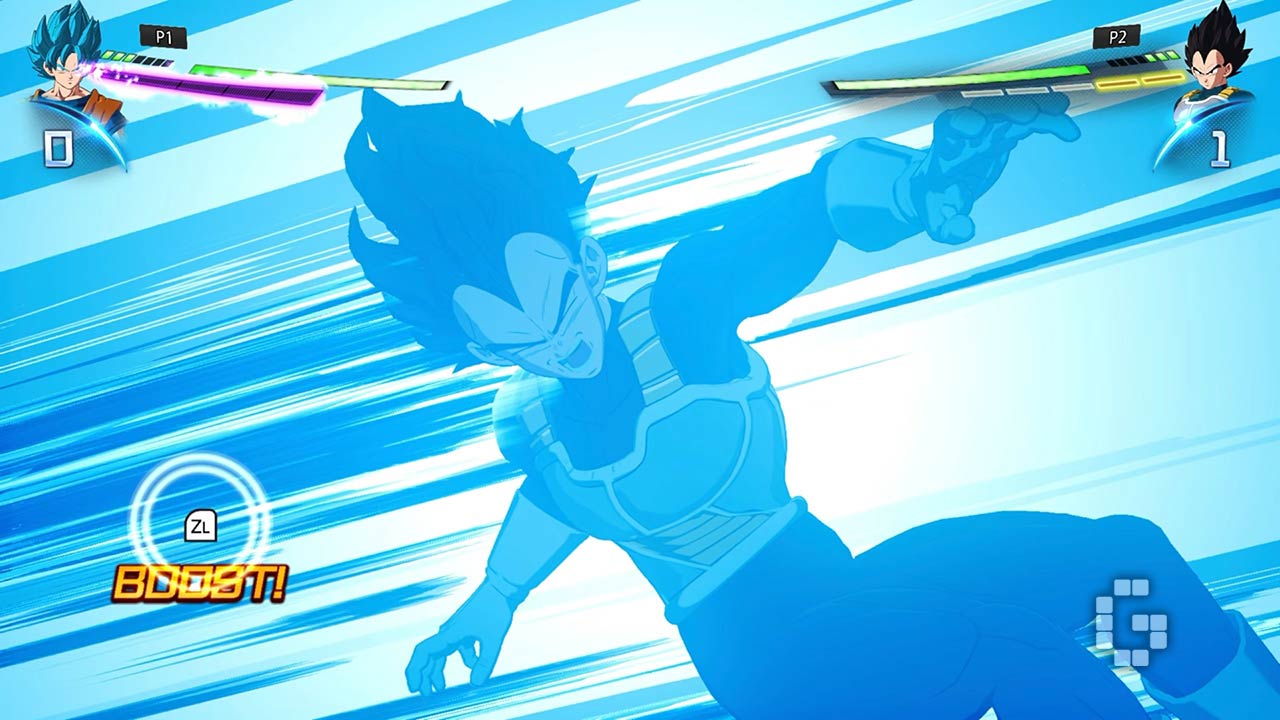
The positive side is that performance remains remarkably stable. Even when the screen fills with massive Ki beams, transformations, explosions, and destructible environments, the game holds steady at 30FPS with no meaningful drops. Both handheld and docked modes use dynamic resolution as needed, but the quality changes aren’t easily noticeable during gameplay. Stability isn’t the problem—the limitation is the 30FPS cap, which feels restrictive for a game as fast-paced and intense as DRAGON BALL: Sparking! Zero.
Visual Quality and Presentation
The most disappointing visual element comes from the pre-rendered cutscenes. Many of them appear surprisingly low-resolution, possibly under 720p, which becomes very obvious on larger screens. Combined with softer textures and reduced effect quality, the docked experience doesn’t match the sharper, faster versions available on other platforms.
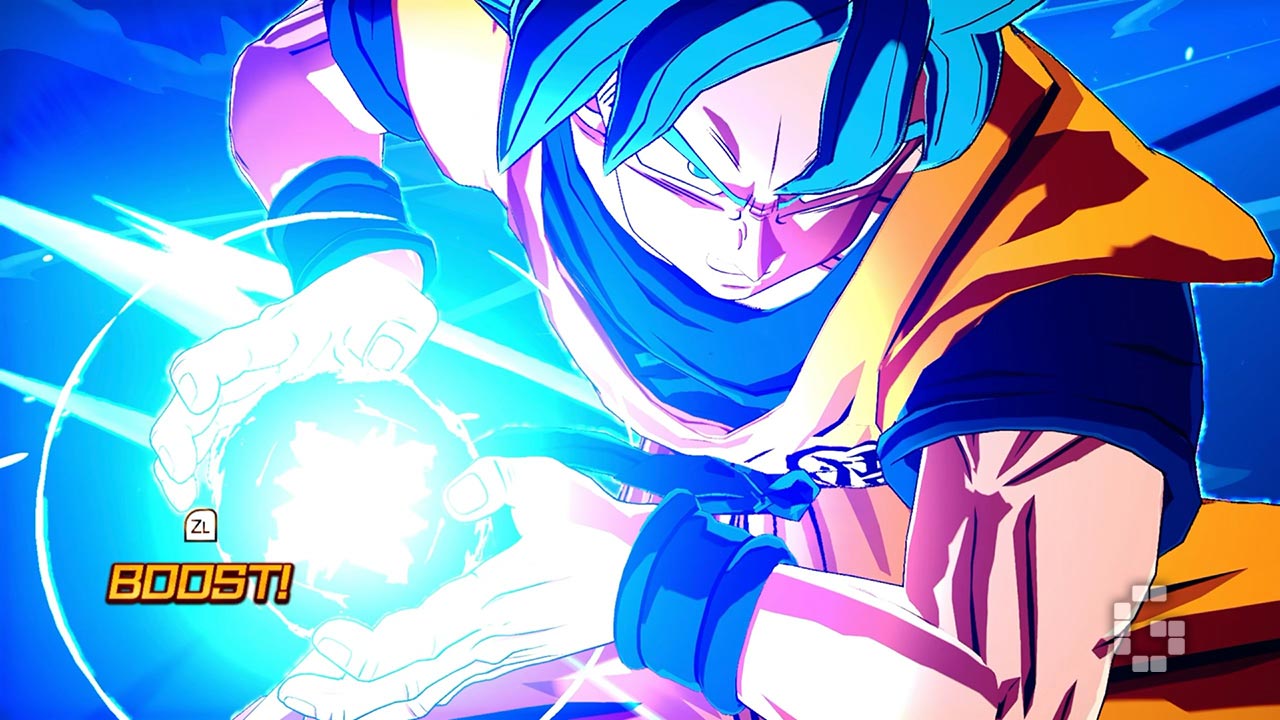
Handheld mode, however, benefits significantly from the higher pixel density and the game’s anime shading style. The visual compromises become far less noticeable on the smaller screen, making the game feel cleaner and more vibrant when playing portably. Gameplay elements like destruction, stage deformation, and heavy particle effects all remain fully intact, and loading times are fast thanks to the Switch 2’s internal storage. Handheld mode feels like the best way to experience this port, while docked mode stays playable but falls behind in visual quality.
Multiplayer and Controls
Local multiplayer works surprisingly well, with the developers managing to support split-screen using just a single Joy-Con per player. They reworked the controls specifically for one Joy-Con play, and while it’s not ideal for competitive players, it functions far better than expected for casual matches with friends or family.
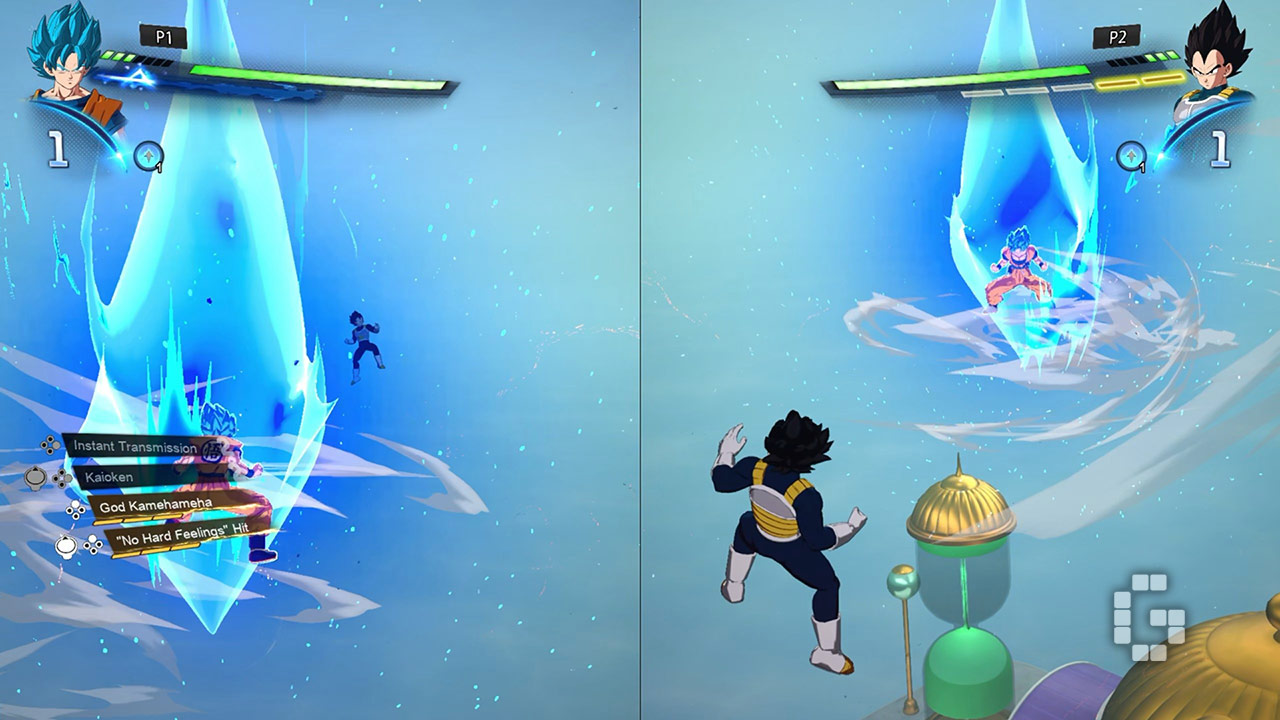
The Joy-Con controls feel responsive and comfortable overall. The smaller button layout doesn’t cause problems, and even playing with a single Joy-Con feels easy, intuitive, and genuinely comfortable for casual sessions. Where things fall short is the haptic feedback. While the game uses vibration, it feels extremely weak—normal punches don’t have any meaningful feedback at all. For a Dragon Ball game where every hit should feel explosive and heavy, that lack of impact is noticeable. The weight of the blows doesn’t come through, and the spectacle of big attacks barely registers in your hands, which is unfortunate considering the potential.
Custom Battle mode is fully included, letting you create your own rules, matchups, and themed scenarios. The World Library, which hosts player-made custom battle setups, is also available and can be accessed without a Nintendo Switch Online subscription. You can download fan-made recreations of iconic fights or try creative community scenarios without needing to pay for NSO. Online battles, however, still require Nintendo Switch Online as usual.
Final Thoughts
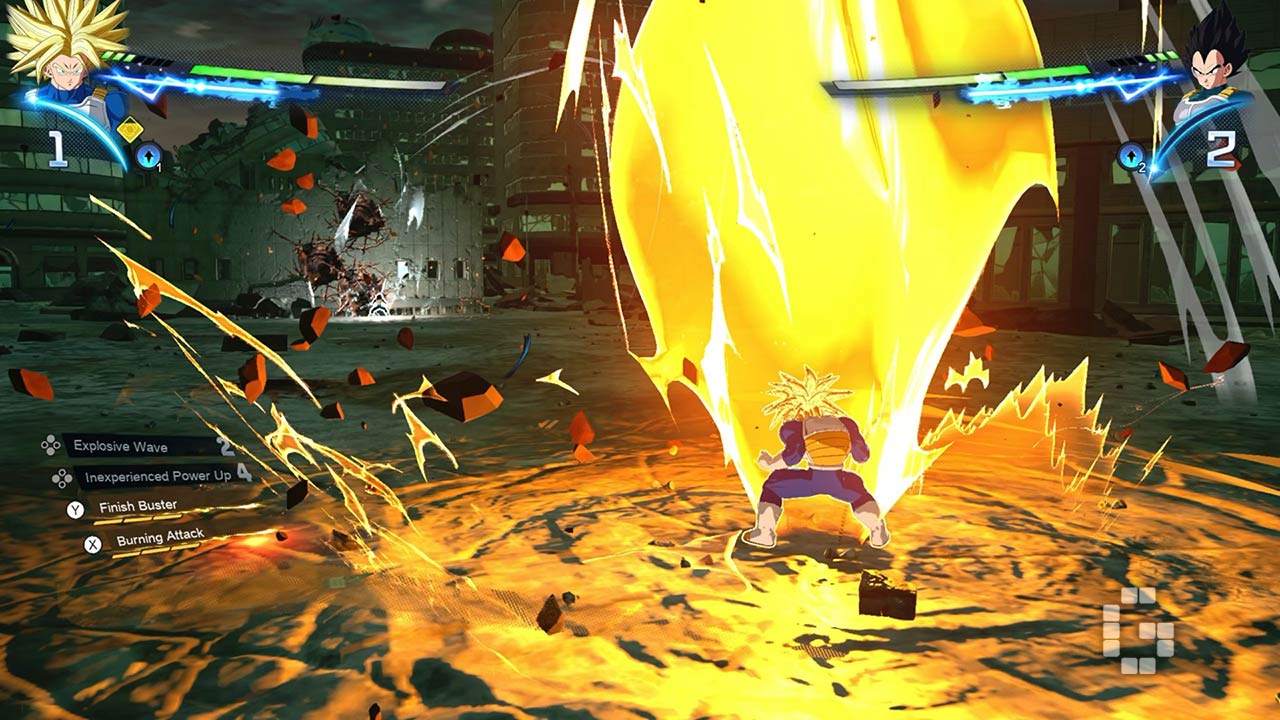
DRAGON BALL: Sparking ZERO on Switch 2 delivers two different experiences depending on how you play. As a portable version, it’s genuinely impressive. The stable 30FPS, sharp UI, fast load times, and the way the anime shaders hide many visual downgrades combine to make handheld mode feel like the natural way to enjoy Sparking ZERO on the go. The spectacle of Dragon Ball combat translates surprisingly well to the smaller screen.
Once you dock the console and play on a large screen, the limitations become harder to overlook. The 1080p output looks softer than competing platforms, the texture and foliage reductions are more visible, and the low-resolution pre-rendered cutscenes stand out as the weakest part of the entire port. The game remains fully playable and enjoyable in docked mode, but it’s less visually impressive than other platforms.
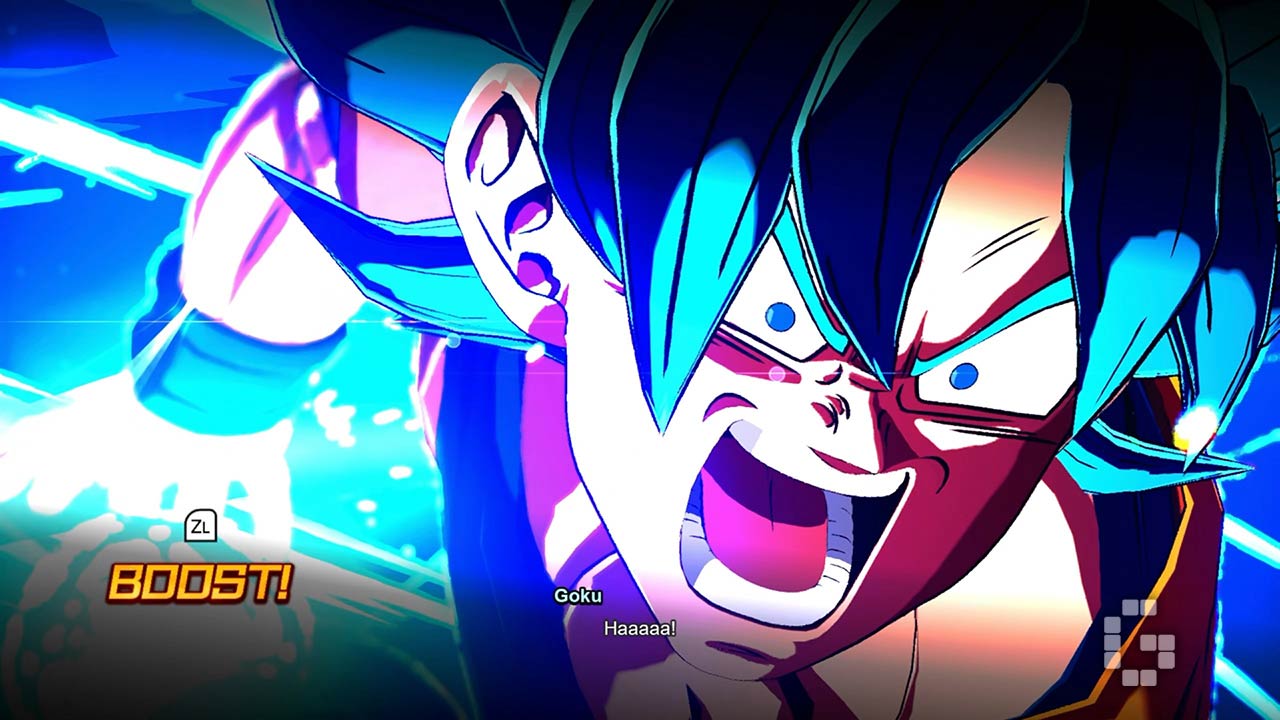
Feature-wise, the port is complete. Split-screen support is polished, one-Joy-Con play is a clever bonus, and the Custom Battle and World Library systems work smoothly without requiring NSO. Aside from the expected NSO requirement for online battles, no modes are missing. The port is limited mostly by hardware and visual compromises rather than content restrictions. If you prioritize portable play, this version shines. But if you’re looking for crisp visuals and high framerates on a bigger screen, the Switch 2 port won’t fully satisfy you.
The Review
DRAGON BALL: Sparking! ZERO
PROS
- Stable performance in high intensity scenes.
- Handheld mode looks great and works well.
- All gameplay features, destruction, and modes like Custom Battle is all here.
- Split-screen works well, including one-Joy-Con per player.
- World Library accessible without NSO.
CONS
- Hard-locked to 30FPS, no 60FPS option at all.
- Docked mode looks noticeably lacking than other platforms.
- Weak anti-aliasing, characters can look jagged.
- Pre-rendered cutscenes are very low resolution.