
![[EXCLUSIVE] Brendan Gan Delivers One of Malaysia’s Best-Ever Worlds Results, Shares Thoughts on Pressure and the Local Scene](https://cdn.gamerbraves.com/2026/08/Brendan-Gan_Interview_FI-360x180.jpg)

![[BIC2026] Hiroaki Nagashima from Toei Games Talks New IPs, Indie Roots, and Asia-First Strategy](https://cdn.gamerbraves.com/2026/08/Toei-Games-BIC-2026_Interview_FI-360x180.jpg)
![[BIC2026] From Outsider to Organizer: How Isabella Seo Jungsook Helped Build Busan’s Indie Game Scene through BIC](https://cdn.gamerbraves.com/2026/08/Isabella-BIC-2026_Interview_FI-360x180.jpg)
![[BIC2026] CanOpener’s Logan Moon Opens Up About Dungeon Settlers Ahead of Its September Early Access Launch](https://cdn.gamerbraves.com/2026/08/Logan-Moon-BIC-2026_Interview_FI-360x180.jpg)
![[CF 2025] Exclusive Interview with Melani Sie — MilkMochaBear, Silent Comics, and Stories That Resonate Worldwide](https://cdn.gamerbraves.com/2025/12/CF-Melani-Sie-Interview_Interview_FI-2.jpg)
During Comic Fiesta 2025, we got an exclusive interview with Melani Sie, creator of MilkMochaBear and author of Milk & Mocha, about the quiet journey behind one of the internet’s most recognisable and emotionally resonant comic series. What began as a set of LINE stickers has since grown into a wordless storytelling phenomenon that transcends language, culture, and even traditional comic conventions. In our conversation, Melani reflected on the unexpected growth of Milk and Mocha, her inspirations as a visual storyteller, and why relatability has always mattered more than defining characters too rigidly.
From LINE Stickers to a Global Comic
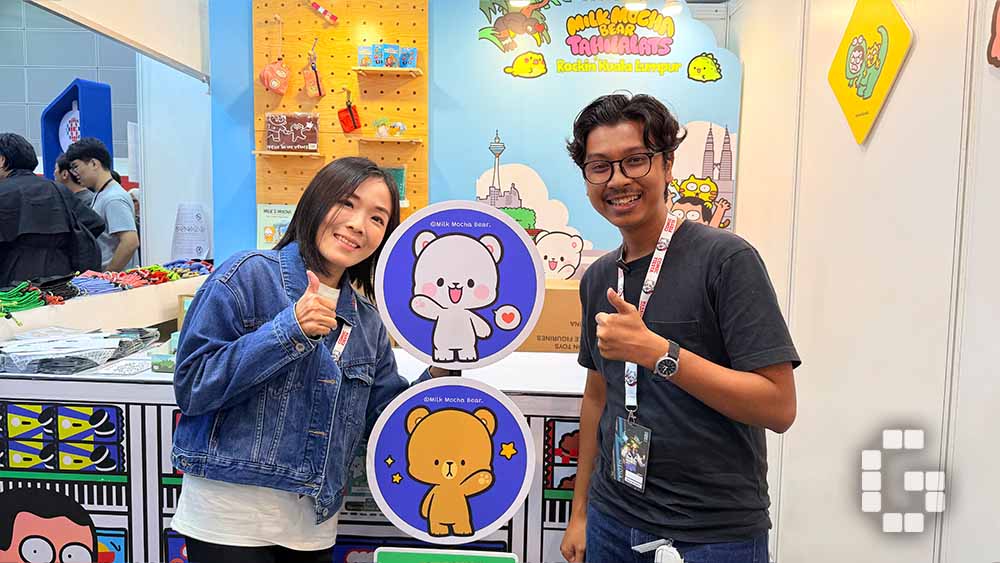
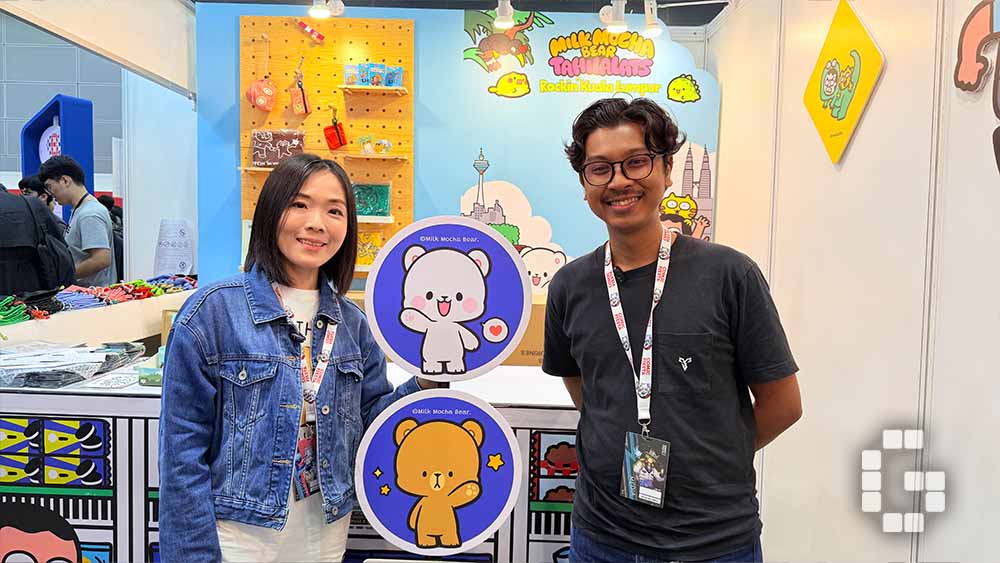
We began by asking Melani whether she ever imagined MilkMochaBear would grow beyond its origins as a LINE sticker set and eventually become a comic with a global audience. When MilkMochaBear first appeared as LINE stickers in 2016, Melani never imagined the characters would eventually become the centre of a globally read comic series. At the time, her focus was entirely practical.
“No, to be honest, I didn’t expect it at all,” she said. “I didn’t even think to make it far beyond the stickers. Because at that time, I was a full-time LINE sticker creator.”
There was a clear gap between MilkMochaBear’s debut and the start of its comic life. While the characters were created in 2016, the Instagram account that would later host the comics only launched in 2018. For those two years, Melani remained focused solely on sticker creation.
“So there is a gap,” she explained. “When I created MilkMochaBear as a sticker, it was in 2016, right? And then the Instagram account itself, it started in 2018. So, there is a two-year gap where I focused on LINE stickers. I didn’t think of a comic at all at that time.”
Finding Inspiration in Silence
We then turned to Melani’s creative influences, asking what inspired her to create short, wordless comics that still manage to feel emotionally warm and complete. The shift toward comics came with a specific creative influence: Japan’s Silent Manga Competition. Early Milk & Mocha comics famously featured little to no text, relying entirely on visuals to communicate emotion and narrative.
“The early comics, they were inspired by the Silent Manga Competition held by Japan,” Melani shared. “If you see all the winners and participants, they make the comics without words at all. But they still send a beautiful message.”
That realisation became a turning point for her approach to storytelling. “It inspired me like, ‘Oh, it can work with pictures only,’” she said. “You can send the message without any words.”
This influence became central to Milk & Mocha’s identity, especially when Melani began experimenting with silent storytelling around 2018.
Why Milk and Mocha Feel Universally Relatable
Curious about MilkMochaBear’s wide appeal, we asked Melani what she believes allows the characters to resonate so strongly with readers from different cultures and backgrounds. Despite their simple designs, Milk and Mocha resonate deeply with readers around the world. According to Melani, this universality comes from how the characters are constructed around personality rather than culture, language, or setting.
“Milk Mocha is focusing more through the personalities,” she explained. “Since I put the personality, it doesn’t have like a limited area or limited country.”
Readers often project themselves onto the characters, identifying with their contrasting traits. “People can connect with them, resonate with them,” she said. “Because Milk Mocha feel like themselves. They pick like, ‘I’m the quiet one, so I’m Mocha,’ or ‘I’m the energetic one, I’m Milk.’”
That relatability extends beyond romantic relationships, allowing the characters to function just as naturally as friends or companions.
Learning to Tell Stories Through Movement
As Milk and Mocha often communicate without dialogue, we asked Melani what she has learned as a storyteller from relying so heavily on gestures, movement, and visual expression. As Milk & Mocha evolved, Melani gradually introduced occasional text, acknowledging the difficulty of conveying complex ideas entirely without words. Still, body language remains the core of her storytelling.
“When I put the comic with no words, usually I put the gestures,” she explained. “The movement, because they didn’t talk, right? So it needs to show through how they move, how they show it, the body language.”
Over time, this process sharpened her understanding of visual communication. “When I made something like this, usually I learn about the gestures itself,” she said, noting that even the smallest actions can carry emotional weight.
This focus on physical expression is what allows readers to immediately recognise familiar moments in the comics, often without needing any explanation at all.
Beyond Gender and Stereotypes
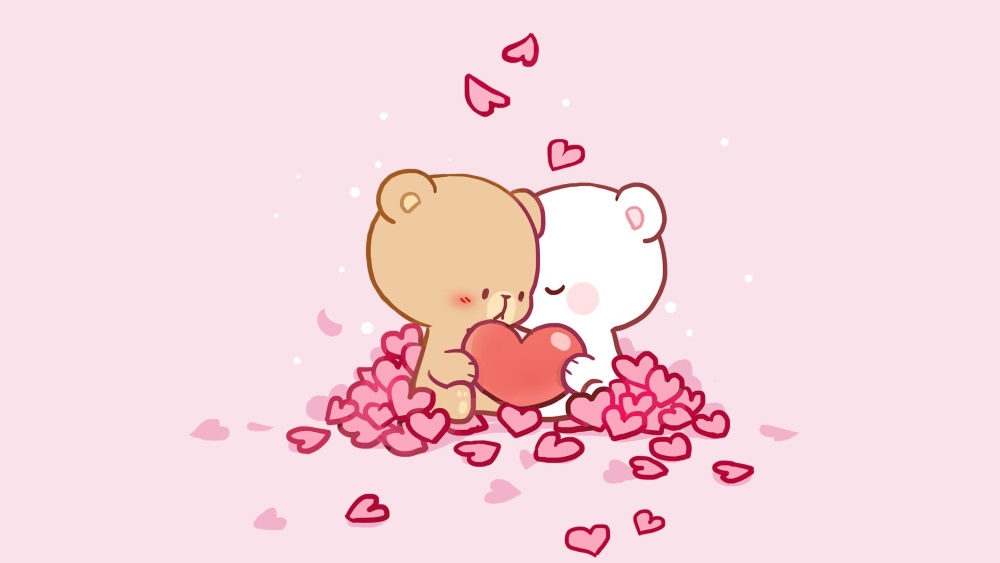
Building on that idea, we asked whether Milk and Mocha were intentionally designed to move beyond traditional gender roles or fixed relationship labels. Although Milk and Mocha are often perceived as a couple, Melani intentionally avoids assigning rigid identities or gender roles to them. Instead, the characters remain open to interpretation.
“It’s not like that,” she clarified when asked about gender assumptions. “Since we make them based on the personality, it’s kind of up to you which one you relate more.”
Melani herself relates more closely to Mocha, but she emphasised that this flexibility is intentional. “Even if you are not a couple, you’re just a friend, you can still relate to them,” she said.
This openness allows Milk and Mocha to reflect a wide range of relationships without being confined to stereotypes.
Growing the MilkMochaBear Universe
With the introduction of characters like Matcha and Mustard, we asked Melani how she decides when to expand the MilkMochaBear universe and when to keep the focus on Milk and Mocha themselves. Over the years, characters like Matcha and Mustard have become familiar faces within the MilkMochaBear universe. Matcha first appeared in early 2019, while Mustard was introduced in 2024.
Melani explained that new characters often emerge when she feels the series needs something fresh. “When it’s New Year, I’m thinking, ‘Oh, I think I need to add something new,’” she said. “So people can feel like, ‘Oh, this is interesting.’”
At the same time, she is careful not to let these additions overshadow Milk and Mocha. “They are more like pets,” she explained. “They’re smaller animals, so they can appear together with Milk Mocha. They’re not really competing or taking the focus.”
Everyday Moments That Feel Familiar
We also asked whether the everyday moments depicted in Milk & Mocha are drawn from Melani’s own experiences, or if they are imagined scenarios shaped by how she envisions the characters. Many Milk & Mocha comics depict small, seemingly mundane moments that resonate strongly with readers. Some of these ideas come directly from real life, while others are imagined scenarios that simply feel authentic.
“Some of it is based on real life events, but some of it, I made it up,” Melani explained. “It’s not really based on an ideal couple, but more like how I think it’s ideal for them.”
That authenticity often shows in tiny details. Melani recalled one comic where Mocha loses a phone, only to find it in the fridge. “It really happened,” she said. “If you read the comments, people will say, ‘Oh, it happened to me. I lost it in the fridge.’”
For her, those reactions confirm that the comics succeed when readers see their own lives reflected in them.
Imagining Milk and Mocha in Malaysia
When asked what kind of adventure Milk and Mocha might have in Malaysia, Melani’s answer was immediate and enthusiastic.
“I think they would love to visit the Genting Skywalk,” she said. “It’s really cute. Oh my God.” She also imagined them enjoying the thrill rides at Genting SkyWorlds, noting their love for rollercoasters.
As for Malaysian food, Milk would dive in without hesitation. “Milk is eating everything,” Melani laughed. “Everything.” Mocha, meanwhile, would be more cautious. “Mocha is like, ‘Okay, I will try it.’”
Durian, nasi lemak, and teh tarik would all be on Milk’s list, with Mocha following along, curious but reserved.
A Thank You to Malaysian Fans
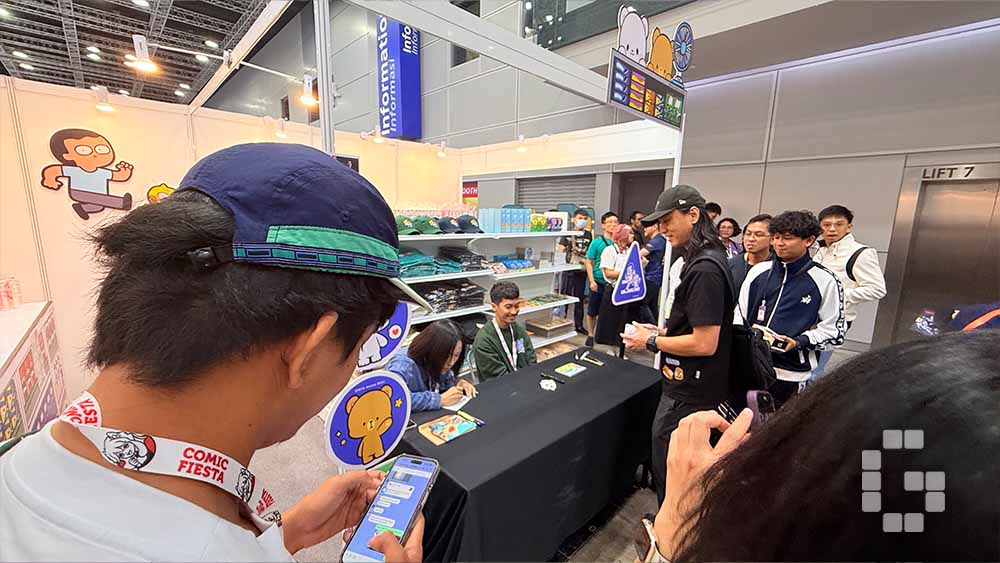
To close the interview, Melani shared her gratitude for the support she has received from Malaysia, which holds special significance in MilkMochaBear’s history.
“Actually, Milk Mocha’s first FMCG project was from Malaysia,” she revealed. “The gift-with-purchase project was from Malaysia, and then we made a water bottle.”
What surprised her most was the response. “I thought they didn’t know Milk Mocha,” she admitted. “But they really loved it. I think it was Malaysians first who gave the love to this unknown character.”
For Melani, that early support left a lasting impression. “So I feel really thankful for that.”
![[CF 2025] Exclusive Interview with Nurfadli Mursyid — Building Tahilalats, Comics That Everyone Can Relate To](https://cdn.gamerbraves.com/2025/12/CF-Palik-Interview_Interview_FI-2-1-75x75.jpg)