









![[EXCLUSIVE] Dragon’s Dogma 2: Dark Arisen Team Opens Up About the Expansion’s Name, New Norgan Region, and Performance Goals](https://cdn.gamerbraves.com/2026/07/Dragons-Dogma-2-Dark-Arisen_Interview_FI-360x180.jpg)



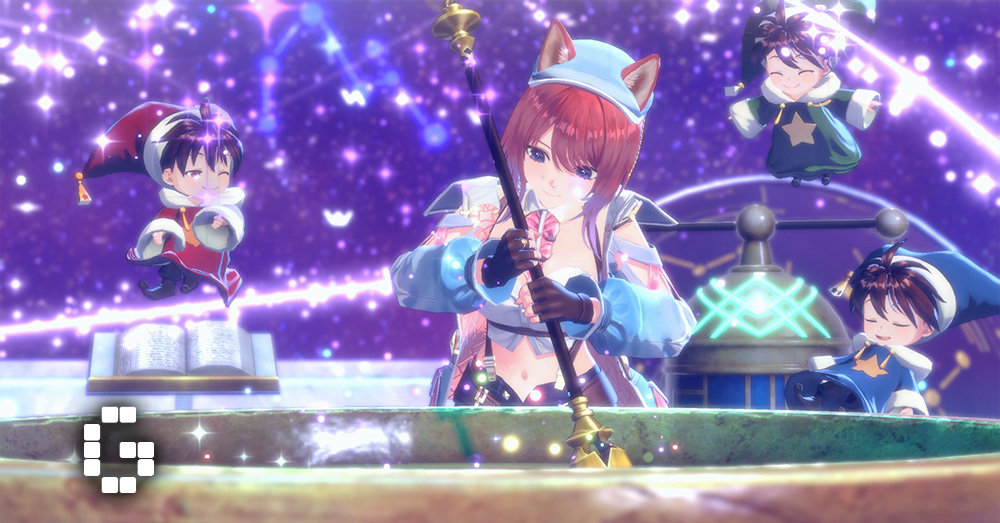
The Atelier series returns with Atelier Resleriana: The Red Alchemist & The White Guardian, another installment that promises to blend familiar alchemy mechanics with fresh story elements and new gameplay features. As a follow-up to Atelier Resleriana: Forgotten Alchemy & Polar Night Liberator, this latest entry takes players to the Lantarna continent with brand new protagonists and an original storyline. Our review covers the game’s key aspects, from its story and characters to the core alchemy system that defines the series, along with new additions like shop management and town development that aim to give players more reasons to engage with crafting.
Story and Characters
The Red Alchemist & The White Guardian takes place in the same timeline and universe as its predecessor but introduces us to a new region and cast. The story follows Rias Eidrese, a cheerful and adventurous girl looking to restore her grandfather’s shop, and Slade Clauslyter, a more reserved character searching for clues about a memento left by his parents. Both characters have returned to Hallfein, a town that once thrived on mining and trading before a mysterious disaster struck years ago, causing residents to go missing and turning the area into a restricted zone.
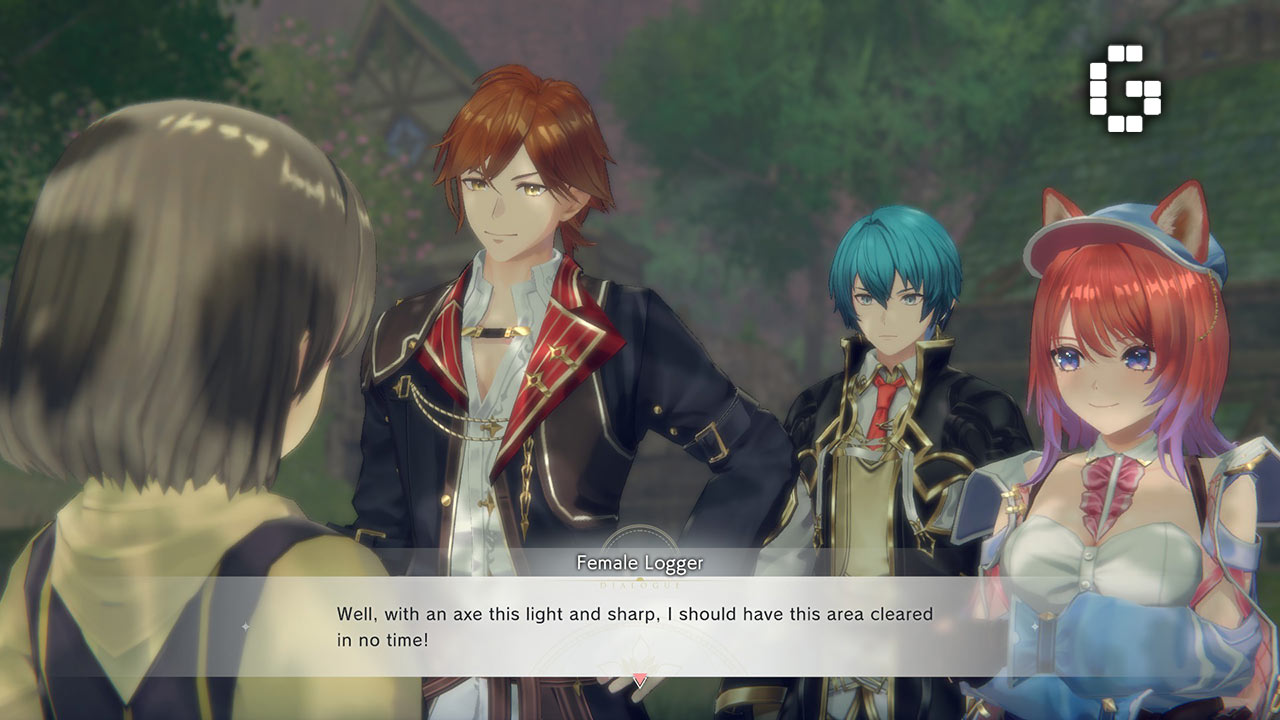
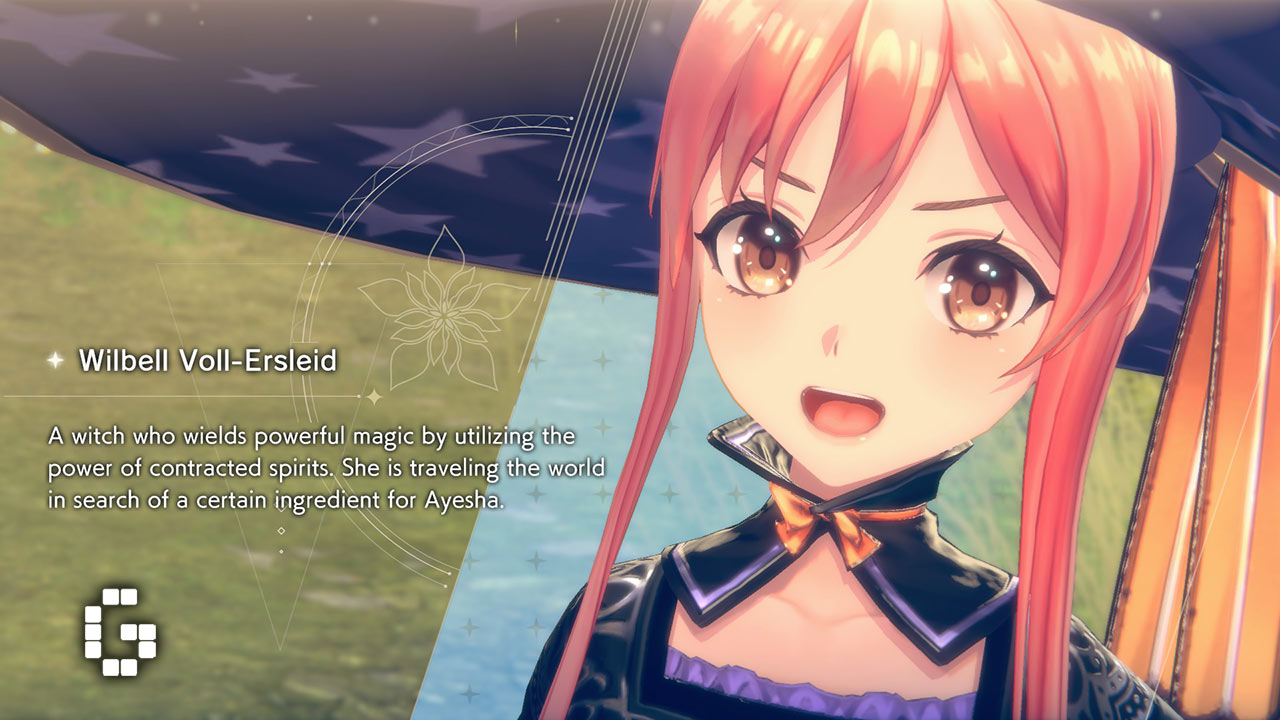
The game’s story starts slowly, taking time to introduce the 28 characters from other Atelier games who appear as wanderers, including familiar faces like Ayesha and Izana. While long-time series fans may recognize these characters immediately, newcomers might find themselves confused about their backgrounds, though this doesn’t significantly impact enjoyment of the main story. The pacing improves once the mystery surrounding the disaster begins to unfold and the story gains momentum.
Shop Management and Town Development
One of the game’s standout new features is the shop management system, which directly connects to the alchemy mechanics that drive the series. Players can sell the items they synthesize, from basic ingots to complex tools, creating a meaningful economic loop that gives purpose to crafting beyond personal use.
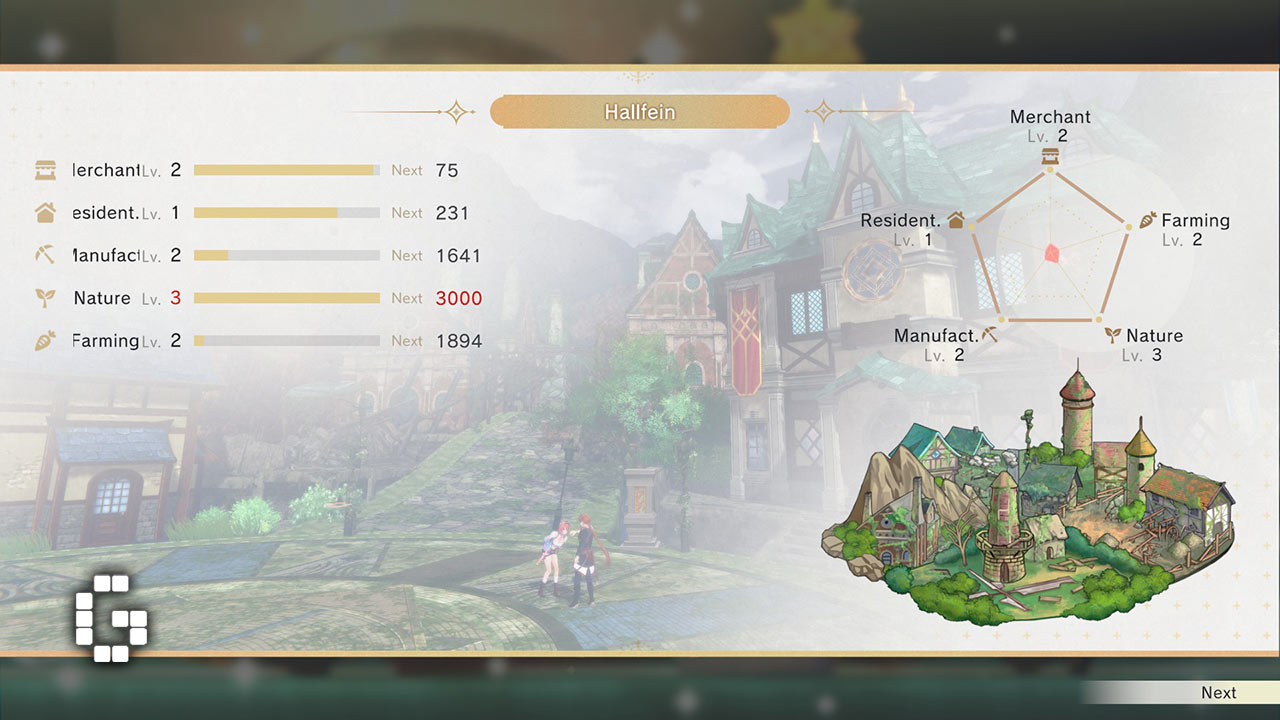
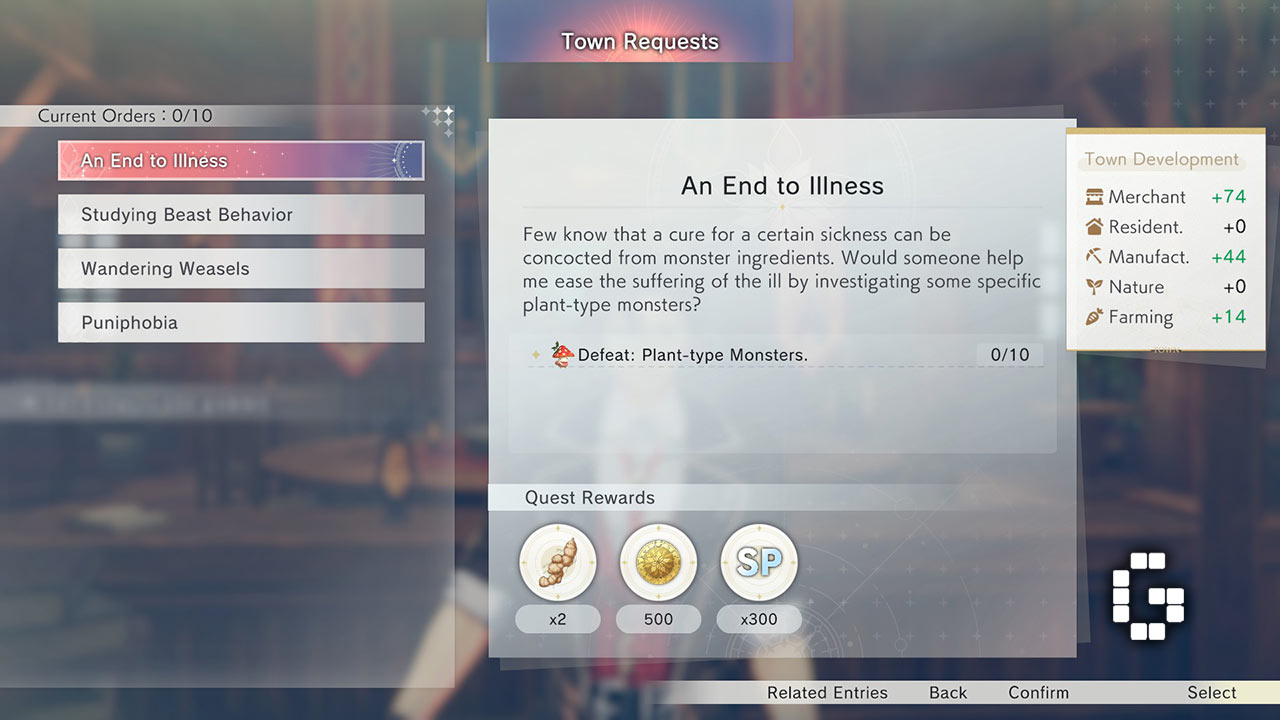
This system works alongside town development mechanics centered around Hallfein’s restoration. Players can invest money and materials to increase the town’s level at the Star Landing, which functions like a town hall. As the town level rises, more people move to Hallfein, opening up five different districts: Merchant, Residential, Manufacturer, Nature, and Farming. Each district brings new shops, merchants with restocked inventories, and additional quests.
The shop management adds another layer of strategy, as the items you choose to sell will attract different types of customers. Focusing on armor and equipment draws adventurers, while other item types bring in different customer profiles. However, specializing too heavily in one area can make it harder to sell other types of items, creating interesting trade-offs in how you manage your business.
Story progression is tied to these mechanics, requiring players to invest sufficiently in town development to unlock new areas. This creates a satisfying loop where alchemy serves multiple purposes: personal equipment, story progression, and economic growth.
Exploration and World Design
The game offers exploration through different city gates that lead to areas surrounding Hallfein. Players can freely switch between Rias and Slade during exploration, and this character switching serves a practical purpose. Each character has unique equipment that allows access to different areas: Rias can use her whip to swing across gaps and reach high places marked with glowing indicators, while Slade’s Geist Core can destroy specific boulders to reveal new passages.
These abilities aren’t immediately available and must be unlocked through each character’s skill tree. Different colored glows and boulders correspond to different skill levels, gradually opening up more of the world as players progress.
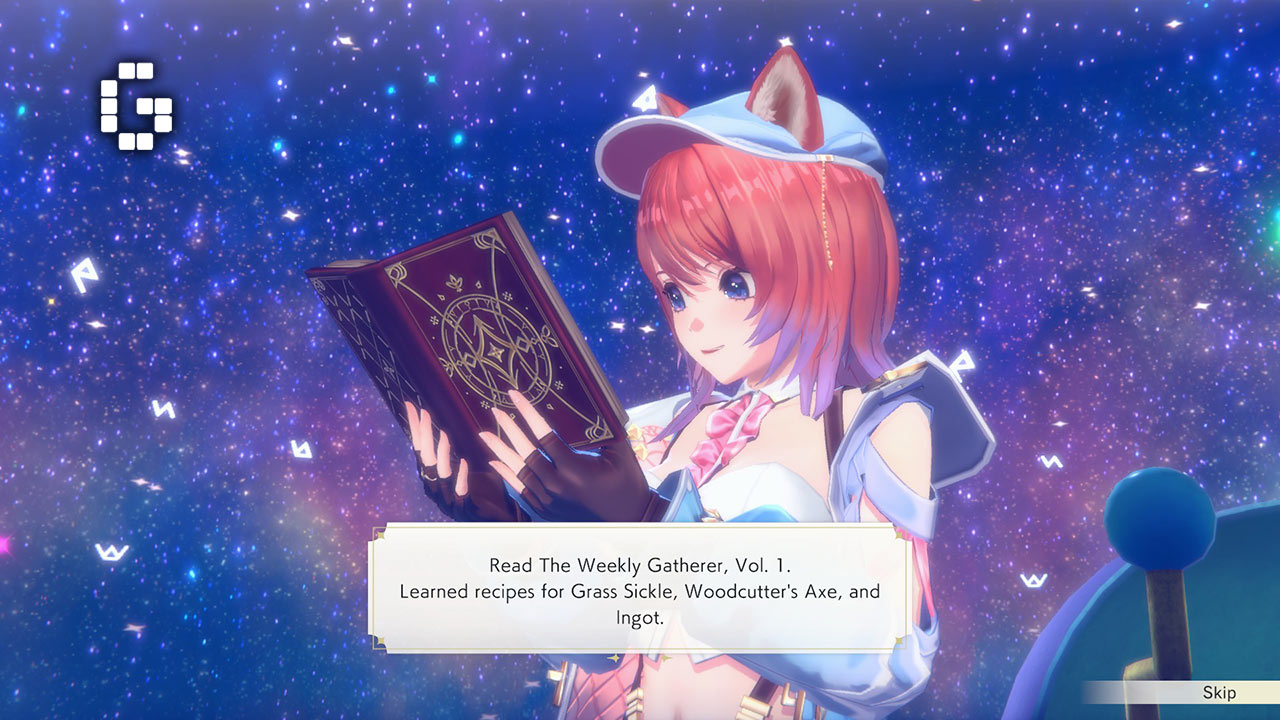
The gathering system follows series traditions, requiring synthesized equipment to collect ingredients. The quality, quantity, and variety of materials depend on both equipment quality and unlocked skills. The game adds variety by changing available ingredients and monsters based on time of day and weather conditions, preventing exploration from becoming too repetitive.
Dimensional Paths serve as the game’s dungeon system, unlocked through story progression. These areas change in size and layout with each visit and offer multiple difficulty levels with corresponding reward improvements. The dungeons include helpful fairies that provide temporary blessings and can be recruited to work in Rias’s shop. These areas also contain rare ingredients not found in the open world, essential for enhancing synthesized items.
Combat System
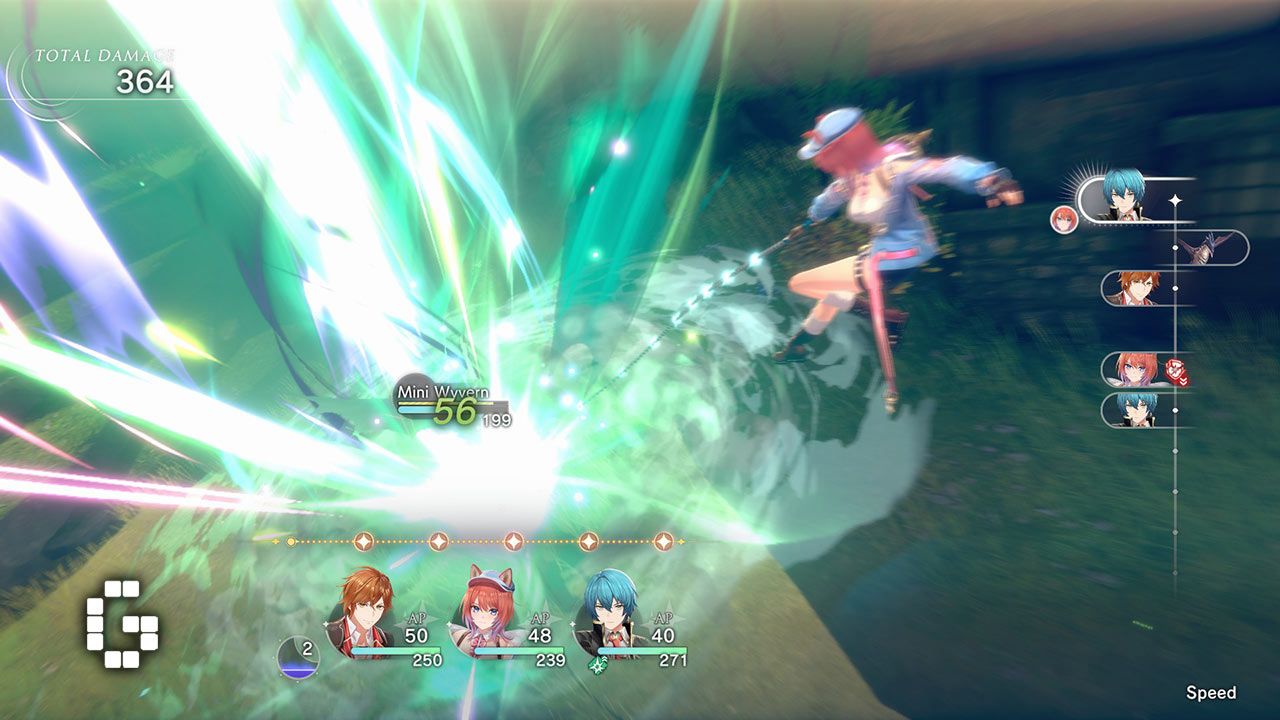
Combat maintains the turn-based system that defines Atelier games but includes several engaging mechanics. Players manage a party of six characters: three active fighters and three rear guard members. Characters can be swapped between front and back lines during battle, allowing players to protect low-health characters while benefiting from rear guard passive abilities. The battle system includes random effects that appear on the turn timeline, which players can manipulate by changing turn order to gain advantages. A parry system adds active engagement during enemy turns, with successful timing reducing damage and perfect Just Guard timing providing Technical Points.
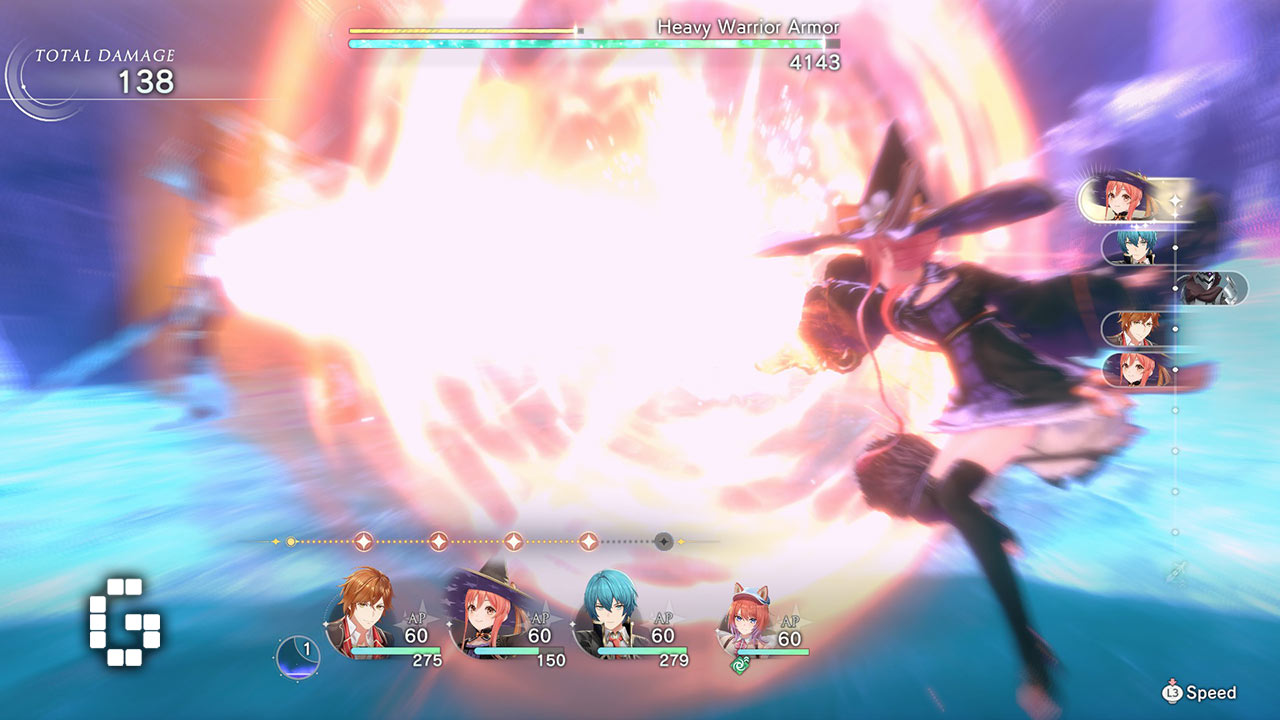
Combat revolves around managing three resources: Action Points (specific to each character for using skills), Technical Points (shared among all party members for Multi-Actions and interruptions), and Unite gauge (which provides passive effects and powerful Unite Burst attacks when fully charged). Multi-Actions allow up to three characters to combine their efforts for powerful combo attacks, with support characters automatically swapping positions when selected for these special moves.
Alchemy and Synthesis
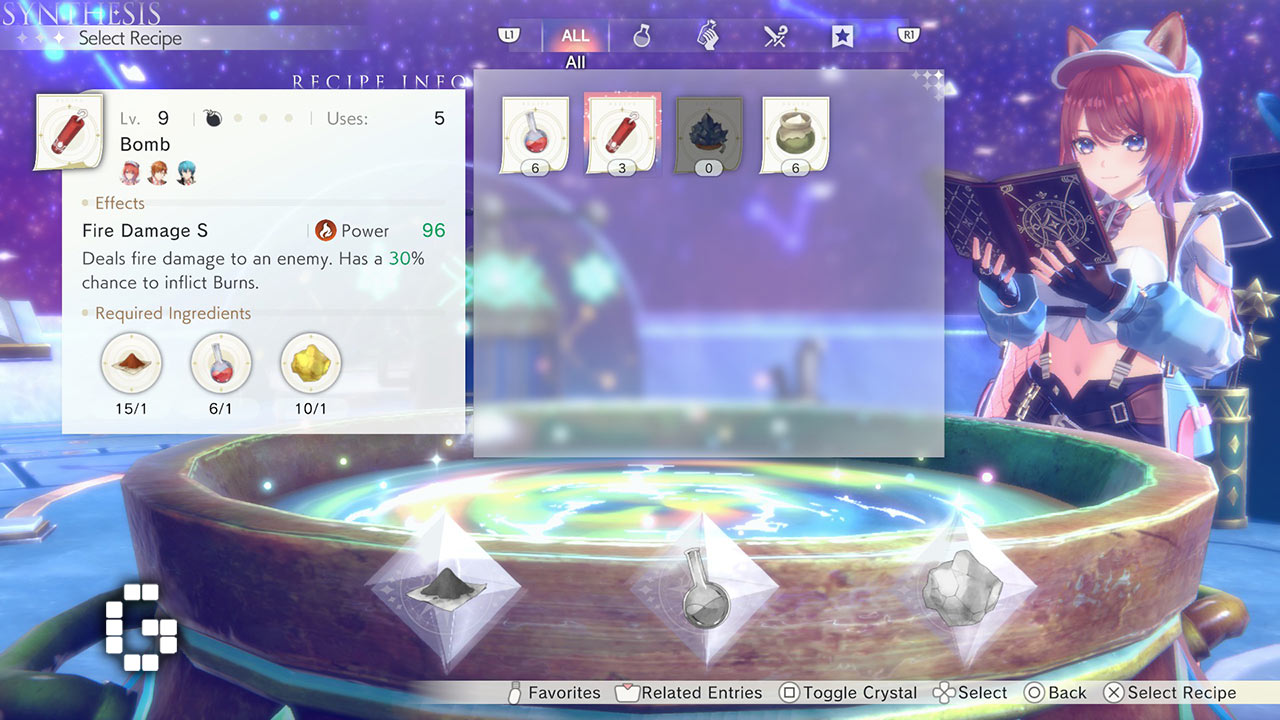
The synthesis system builds on the foundation established in the previous game, maintaining accessibility for newcomers while preserving depth for series veterans. The system centers around connecting Gift Colours of chosen ingredients through a two-step process. First, players activate the recipe’s core by placing required key ingredients into a grid, essentially bringing the item blueprint to life. The second step involves fine-tuning by adding traits and effects to enhance the final product. Success depends on effectively connecting Gift Colours to boost the finished item’s quality.
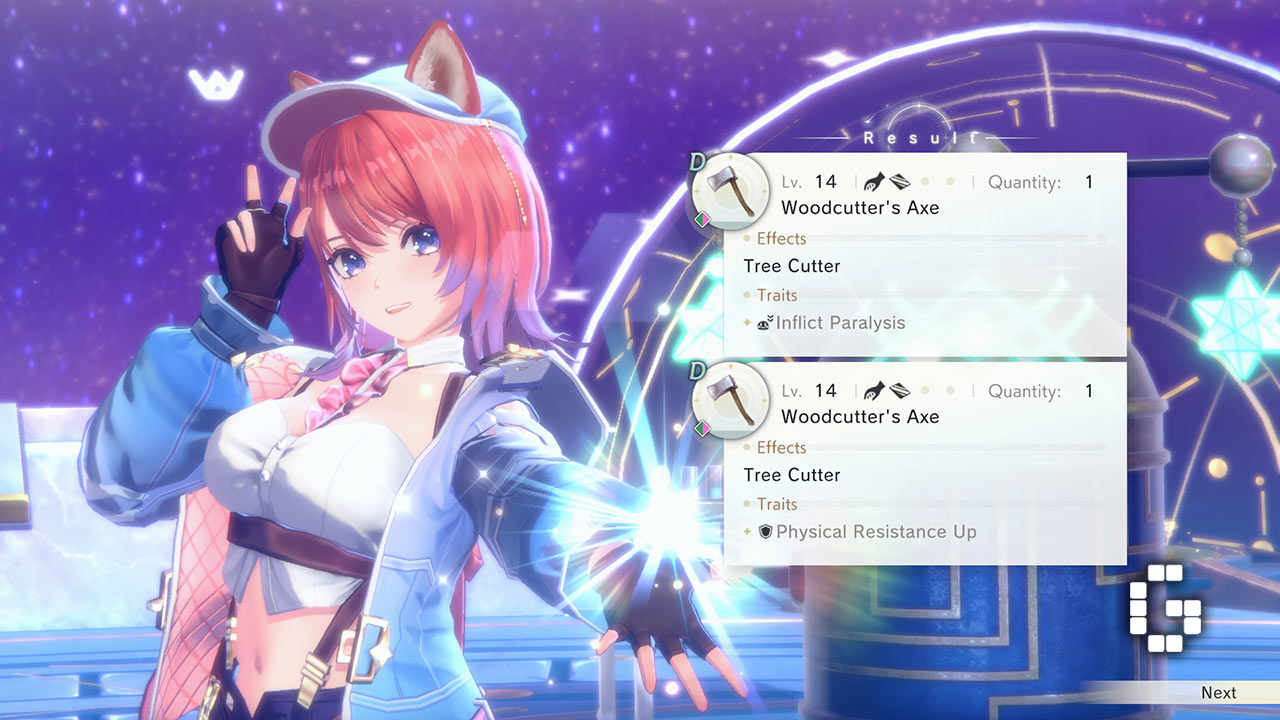
The Recipe Morph system allows discovery of new recipes during synthesis. Certain slots glow during the second step, indicating that placing specific ingredients will evolve the recipe into something new. A recipe tree shows which items trigger these transformations, and some recipes can branch into two different items.
Enhancement and remix systems allow improvement of already-crafted items using special equipment in Rias’s atelier. Party members participate directly in this process, linking their talents’ Gift Colours to modify item traits, adding a teamwork element to crafting.
Visual and Audio Presentation
The game delivers expected visual quality for an Atelier title, with appealing character designs and environments that effectively convey the intended atmosphere. While the world isn’t particularly immersive, it serves the game’s focus on alchemy and story rather than spectacular graphics.
The audio presentation proves adequate but unremarkable. The soundtrack doesn’t produce memorable tracks, though it appropriately supports cutscenes and battle sequences with suitable atmosphere and energy. Voice acting stands out as surprisingly effective, particularly Rias’s cheerful and innocent personality, which comes across well in the vocal performances.
Verdict
Atelier Resleriana: The Red Alchemist & The White Guardian represents solid progress for the series, building meaningfully on its predecessor while introducing worthwhile new mechanics. The shop management and town development systems create genuine purpose for the alchemy that drives the series, making crafting feel more integral to the overall experience.
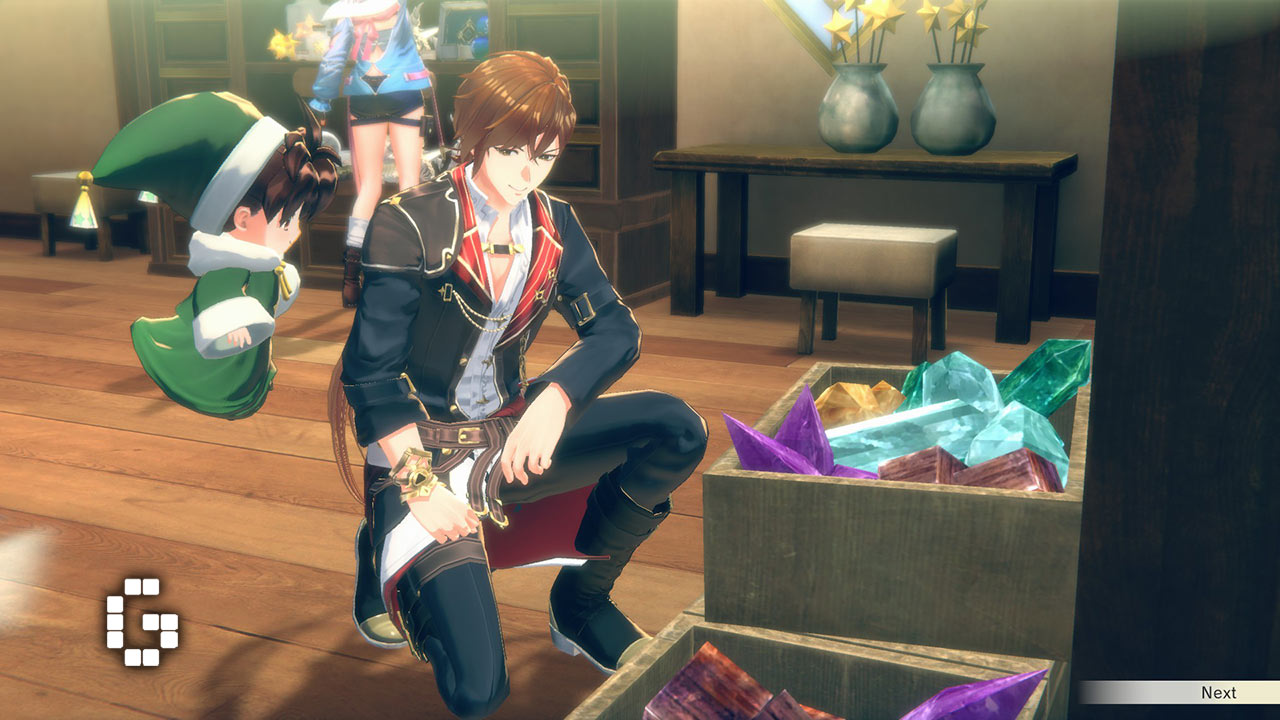
The combat system successfully balances familiar turn-based mechanics with engaging additions like parrying, technical points, and multi-actions that keep battles interesting. The alchemy system continues to serve as the game’s core strength, remaining approachable for newcomers while offering sufficient depth for dedicated players.
While the game has limitations including slow story pacing initially, solid but unremarkable visuals, and forgettable music, it succeeds in creating an addictive loop of exploration, gathering, crafting, and improvement. Once the story gains momentum and Hallfein develops into a thriving town, the experience becomes genuinely rewarding for both series newcomers and veterans.
The Review
Atelier Resleriana: The Red Alchemist & The White Guardian
PROS
- Deep yet approachable synthesis system with Recipe Morph and enhancements.
- Shop management and town development tie gameplay to story progression nicely.
- Fun exploration with unique character abilities and unlockable paths.
- Strategic turn-based combat with multi-actions and parries.
- Strong cast with appearances from familiar Atelier characters.
CONS
- Story pacing is slow at the start.
- Visuals and environments, while good, aren’t particularly standout. Music and soundtrack does not leave lasting impression.