

![[EXCLUSIVE] Brendan Gan Delivers One of Malaysia’s Best-Ever Worlds Results, Shares Thoughts on Pressure and the Local Scene](https://cdn.gamerbraves.com/2026/08/Brendan-Gan_Interview_FI-360x180.jpg)




![[BIC2026] Hiroaki Nagashima from Toei Games Talks New IPs, Indie Roots, and Asia-First Strategy](https://cdn.gamerbraves.com/2026/08/Toei-Games-BIC-2026_Interview_FI-360x180.jpg)
![[BIC2026] From Outsider to Organizer: How Isabella Seo Jungsook Helped Build Busan’s Indie Game Scene through BIC](https://cdn.gamerbraves.com/2026/08/Isabella-BIC-2026_Interview_FI-360x180.jpg)
![[BIC2026] CanOpener’s Logan Moon Opens Up About Dungeon Settlers Ahead of Its September Early Access Launch](https://cdn.gamerbraves.com/2026/08/Logan-Moon-BIC-2026_Interview_FI-360x180.jpg)


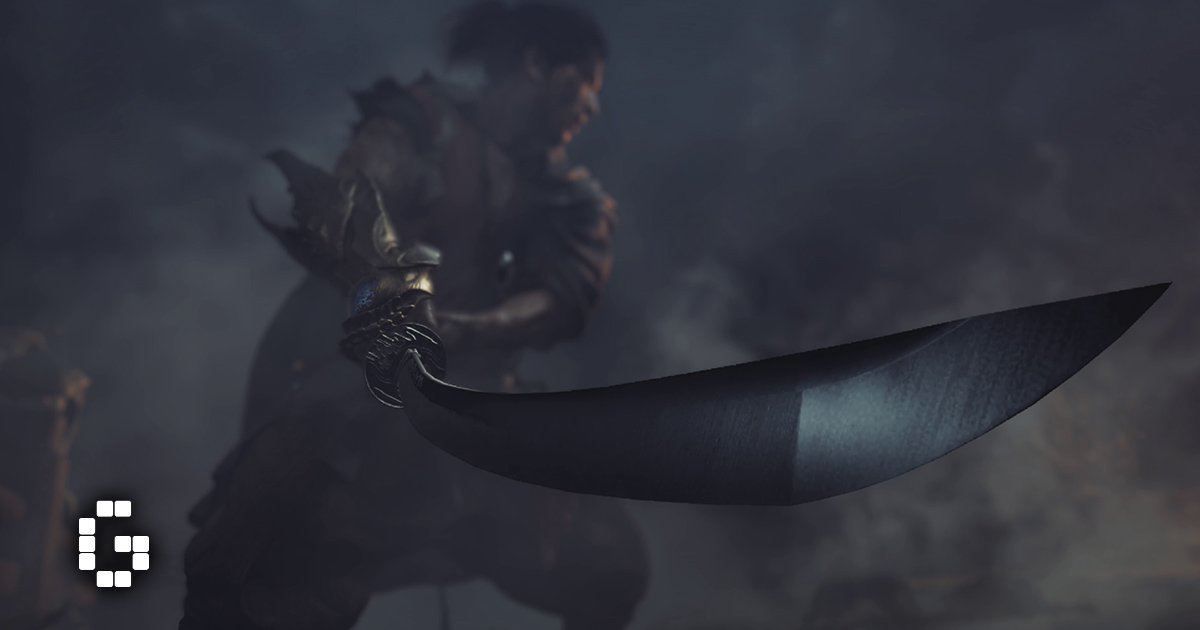
Onimusha: Way of the Sword doesn’t let you coast, and that becomes obvious fast once you’re in it. Playing on Action difficulty, basically the hardest setting available on a first playthrough demanded quick reactions, close attention to enemy patterns, and a willingness to get punished for getting careless. So how does it all hold up? In this review of Onimusha: Way of the Sword, we’ll break down the story, the combat, how enemies are designed, and how exploration feels, before getting into whether it’s actually worth your time.
Story
Way of the Sword moves away from the Sengoku period that the earlier games were set in and instead takes place in the early Edo period, with Kyoto as the main setting. The story follows the swordsman Miyamoto Musashi, who gets pulled into a supernatural conflict as the Genma invade the human world once again. Kyoto itself plays a bigger role than just being a backdrop. The game recreates familiar parts of the city, like temples, shrines, and traditional streets, then twists them with dark fantasy elements that fit the Onimusha tone. It starts off feeling familiar before slowly turning unsettling as the Genma and Malice spread.
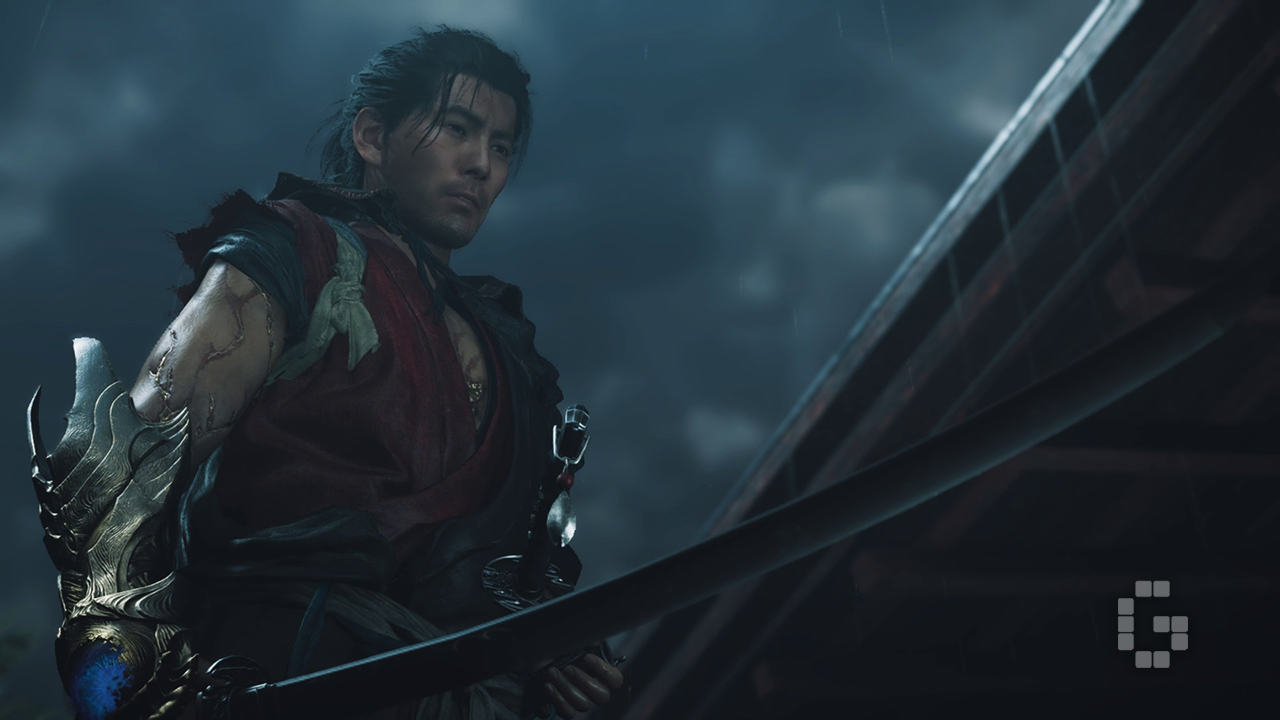
Musashi himself is a fairly different kind of protagonist. Instead of the usual serious and honorable samurai type, he starts out laid-back, carefree, and a little lazy, without much interest in living up to a strict samurai code. That starting point actually helps his character growth stand out more. By the end of the game, he feels like a noticeably different person compared to how he started, which makes his development one of the more satisfying parts of the story.
That said, the plot itself is fairly simple and easy to predict. It does not try to surprise you with twists, but the pacing is smooth and the supporting cast, including Ganryu Sasaki, gets enough time to feel relevant. The strongest part of the story is really its atmosphere, built through the setting, characters, and supernatural tone. On the other hand, the simplicity of the main story means there is not much depth to it, and the side quests feel thin compared to the main plot. Overall, it is not a complex story, but it delivers a well-paced experience that does what it needs to do.
Combat and Action
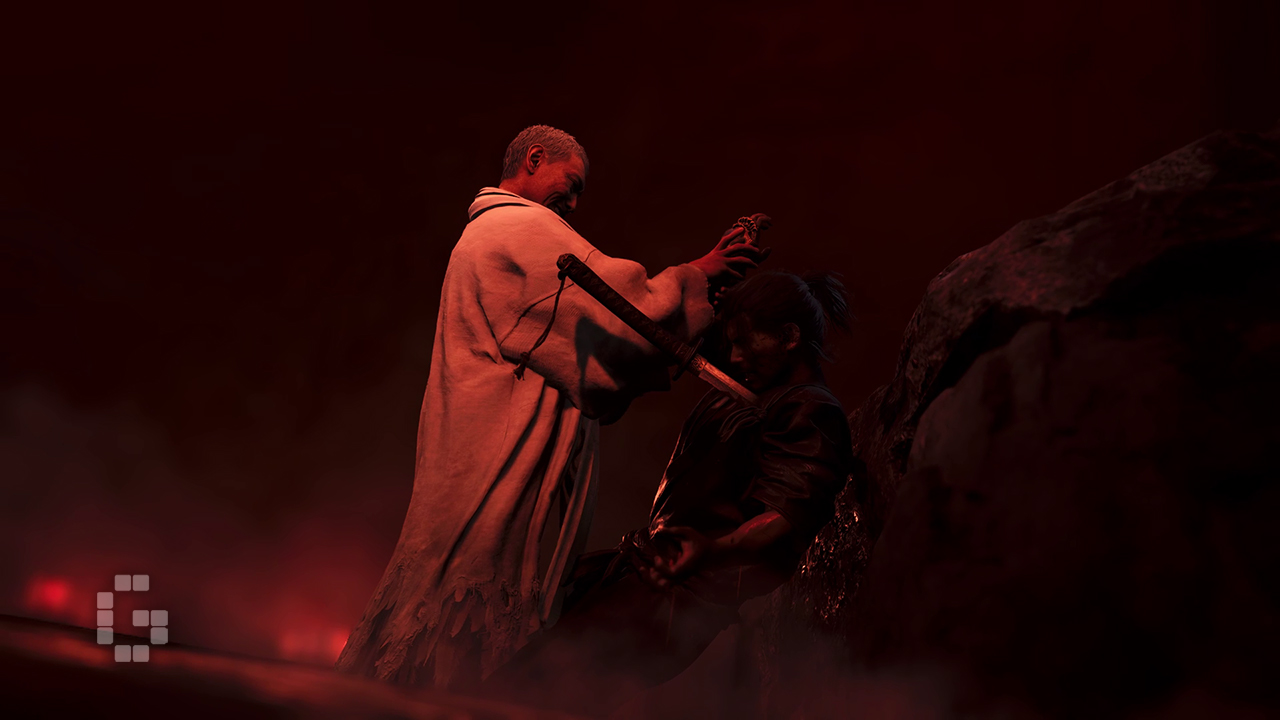
Combat is where the game puts most of its effort, and it shows. Everything revolves around timing, positioning, and knowing the right moment to strike. The Issen counter returns, letting you instantly cut down enemies with a perfectly timed hit, alongside parries and deflects that give you more ways to control a fight. The system does not reward mindless attacking. You have to actually read enemy animations and decide when to attack, defend, dodge, or go for an Issen. Once the timing starts clicking, fights become more aggressive and much more satisfying, and there is a real difference between just surviving a fight and actually mastering it.
The Oni Gauntlet adds another layer on top of that. By absorbing souls from defeated Genma, you can activate different Oni Armaments and trigger Oni Awakening, a limited window where Issen becomes easier to land, damage increases, and recovery from being knocked down speeds up. As the game goes on, enemies and bosses start dodging and blocking more, so you need to use Oni Strength and its six Oni Armaments to break through their defenses. At the same time, enemies can steal your souls if you get hit, so managing that becomes part of the strategy too, alongside deciding when to rely on your sword versus your Armaments.
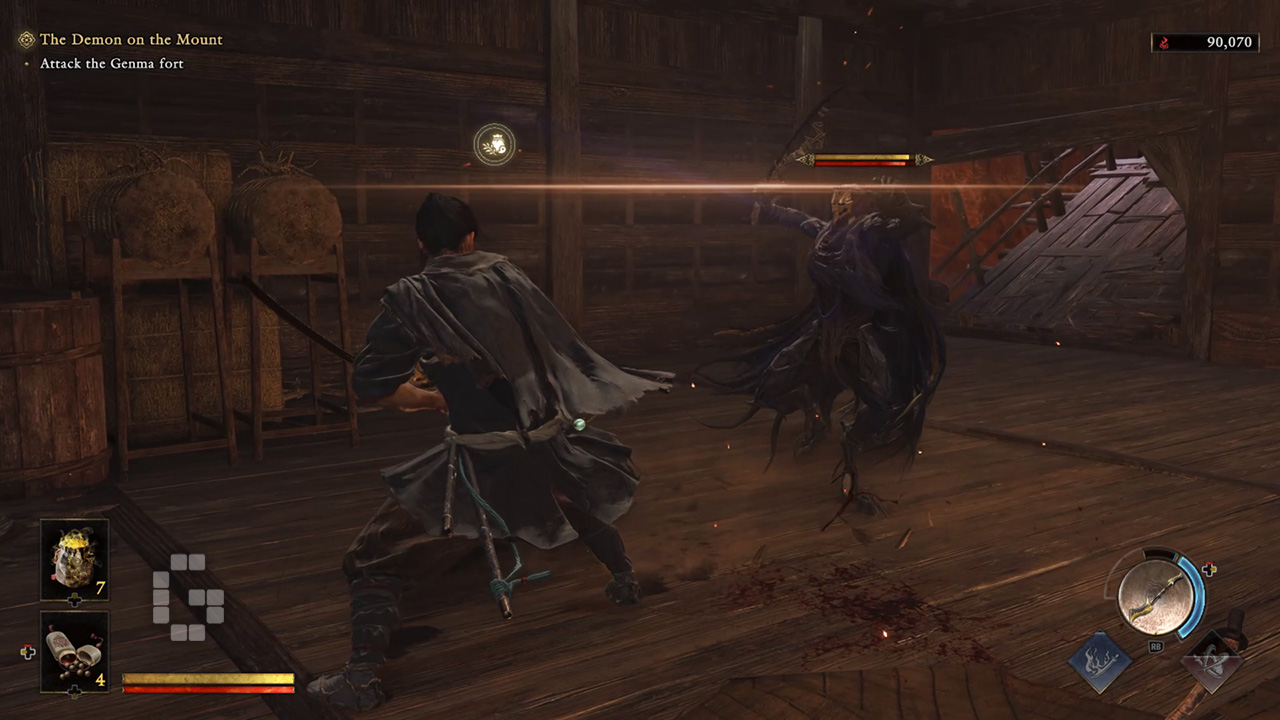
Visual cues matter a lot here. Red attacks need to be parried at the right time, and getting hit lets the enemy absorb your souls and grow stronger. Blue attacks are grabs that require dodging in a specific direction, and failing that also strengthens the enemy. This setup pushes you to actually pay attention instead of leaning on one defensive option repeatedly.
Progression is split into three categories. Equipment Enhancement upgrades your Clothing, Sword, and Gauntlet in terms of damage and health. The second category works like a skill tree, where Power Stones found around the world unlock new techniques such as Deflect, Reflex Combo, and Chain Issen. The third category focuses on Special Skills tied to your Oni Armaments and Oni Abilities. Even with all these upgrades, the game does not let you skip learning combat itself. You still need to understand how each enemy behaves, and since some bosses change tactics mid-fight, things stay varied instead of becoming repetitive.
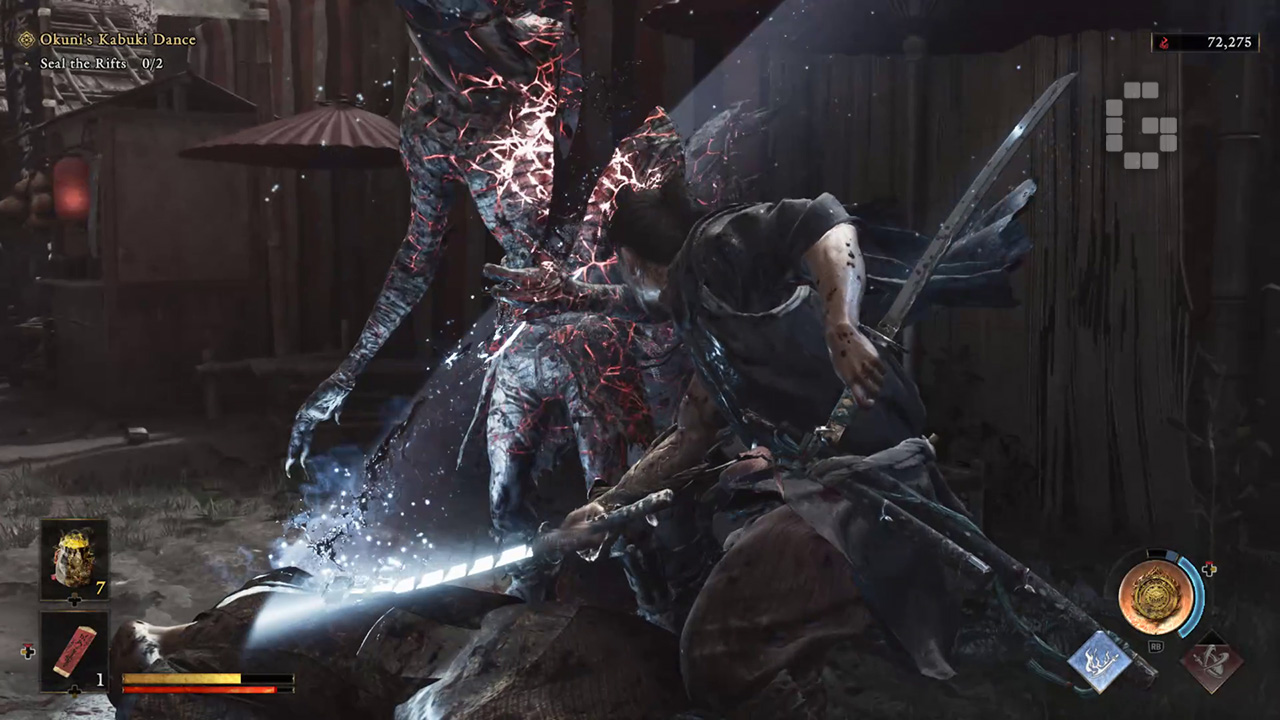
There is also a noticeable gap between Story and Action difficulty. Story mode is more forgiving, with weaker enemy damage, stronger player damage, and faster soul gain, though timing for parries and Issen still depends on the player either way. Action difficulty removes most of that cushion and demands more attention to enemy attacks. Even so, playing it as a first playthrough did not feel unfair. You might die more often and need more patience, but once the patterns click, most fights become manageable, and there is always the option to farm souls and upgrade before trying again. The real learning curve here is less about grinding stats and more about learning enemy behavior.
Enemies and Bosses
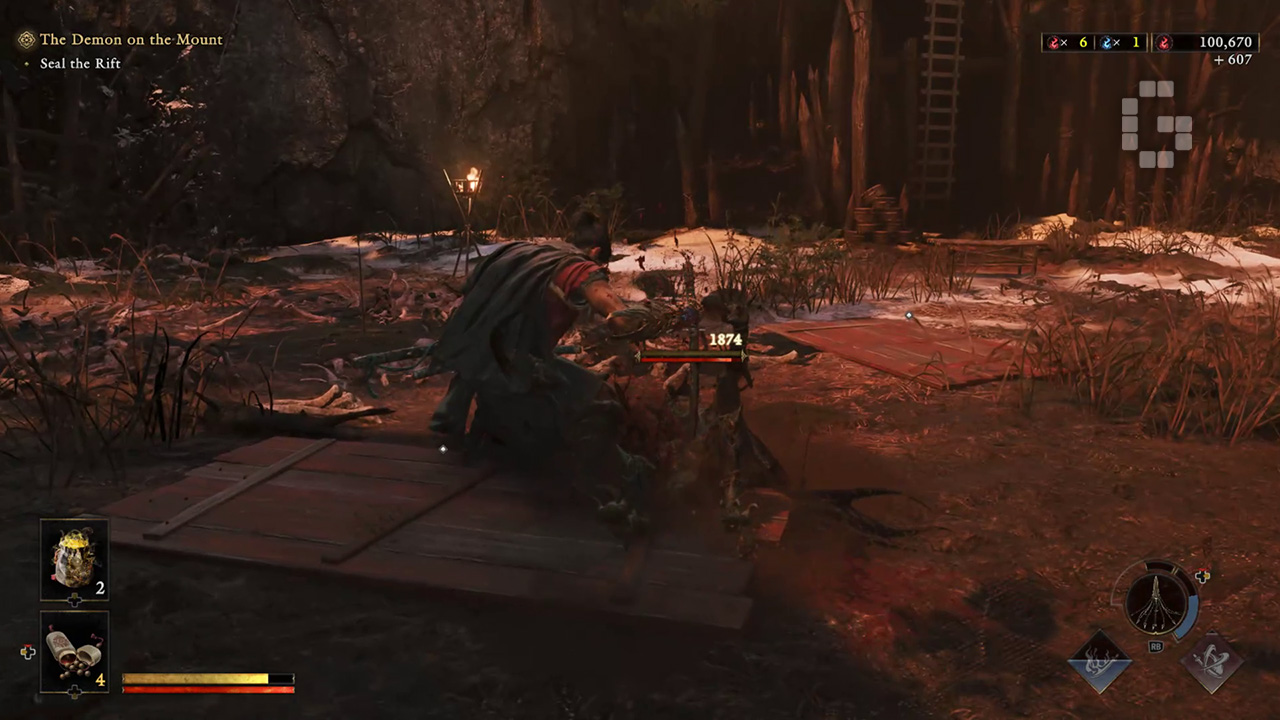
Genma make up most of the enemies you will fight, and the overall variety is limited to around 10 main types, with palette-swapped, stronger versions showing up later in the game. Despite that repetition, the individual designs hold up well, especially for longtime fans who will recognize familiar Genma reimagined with a more modern look.
On Action difficulty, enemy AI can be surprisingly sharp at times, sometimes hanging back to observe your movement instead of rushing in, which punishes players who try to just charge through fights. That said, this is not always consistent. In group fights, enemies can become too passive, with only the one you are targeting attacking actively while the rest just watch, making some group encounters easier than they should be. On the flip side, certain enemy combinations, especially when ranged enemies are mixed into cramped spaces, can get frustrating fast. So while the variety itself is not especially strong, the way enemies interact with the combat system keeps most encounters enjoyable, even if repetition becomes more noticeable later in the game.
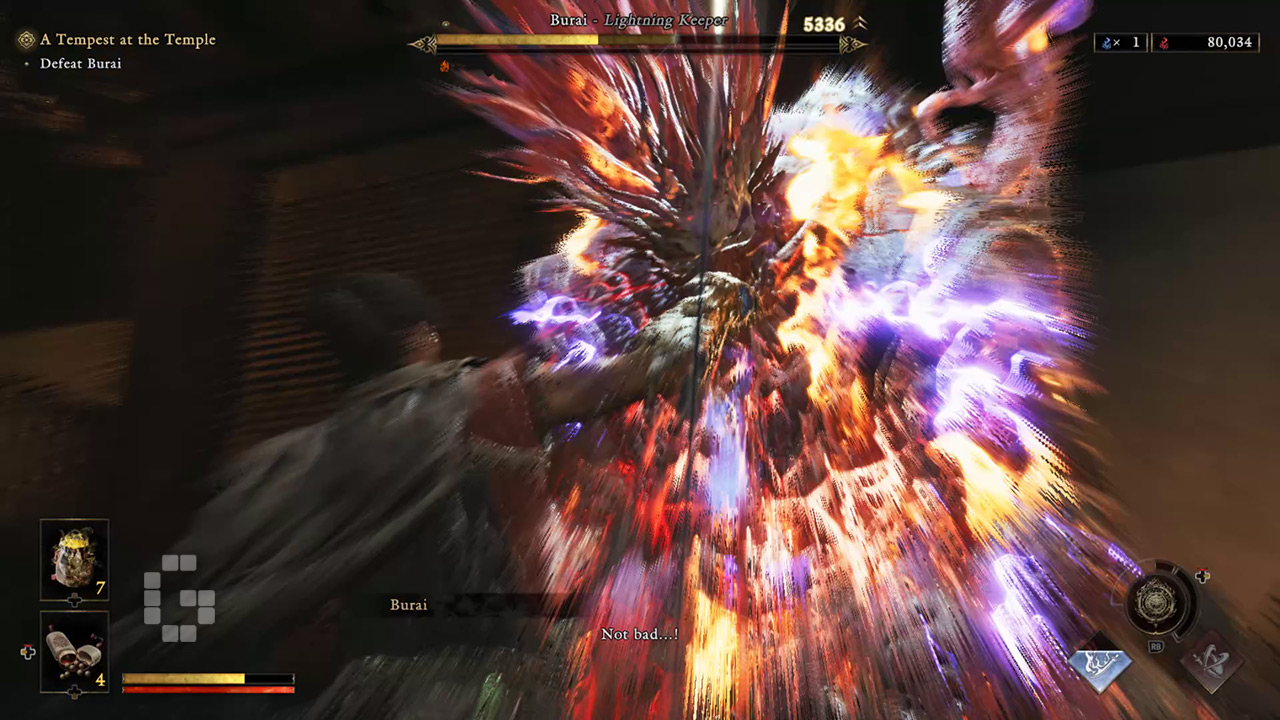
Bosses are a mixed bag in a similar way. There are a good number of boss encounters overall, but some bosses get reused multiple times throughout the story. Their designs stay visually distinct, but fighting the same boss again can feel repetitive, especially when you expect a brand new threat and instead get a stronger version of someone you already fought. That said, each boss fight has its own mechanics and attack patterns, so the fights themselves do not feel identical even when the boss does return. Phase changes add another layer, since bosses shift their movement, abilities, and attacks as a fight goes on, and rushing in carelessly can push a boss into a harder phase sooner than you’d like.
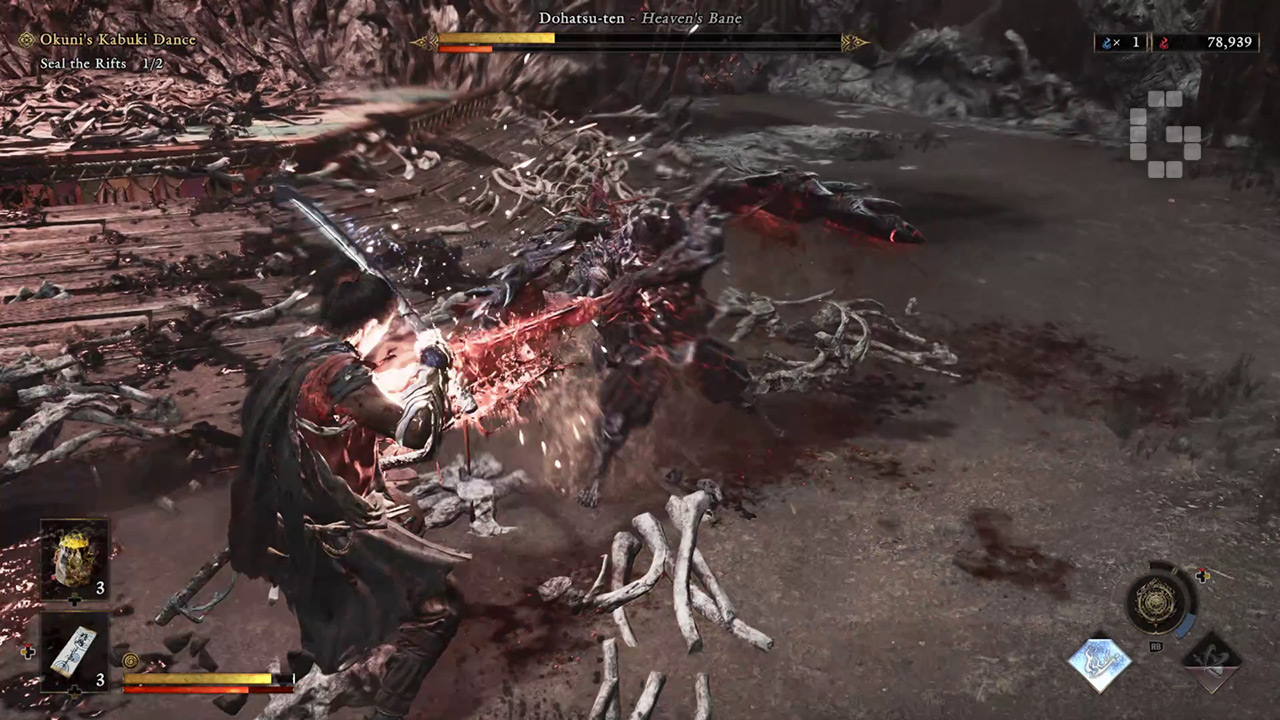
These phase shifts are also reflected visually, with changes to appearance and movement rather than just a stat bump. Dohatsu-ten stands out as a good example of this, starting as a fairly standard samurai-type boss before later fights add faster movement and long-range attacks to his moveset.
Map and Exploration
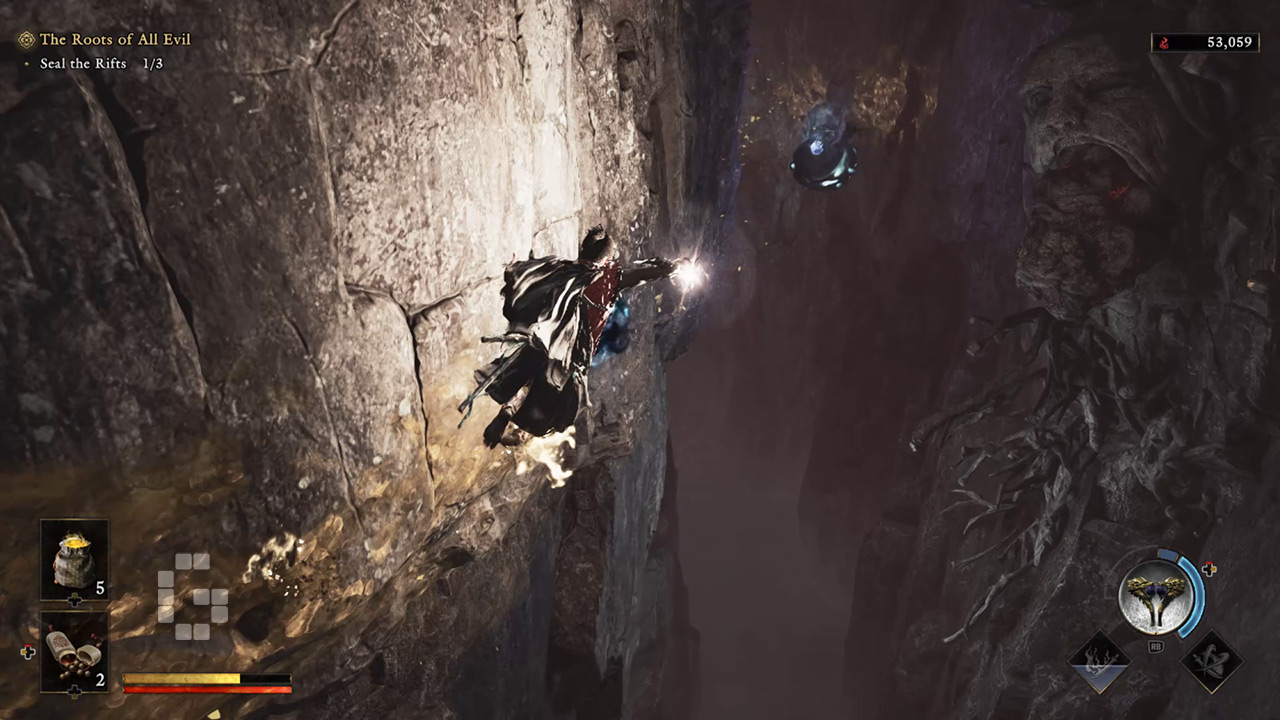
The game follows a hub-and-spoke, small sandbox style of map design rather than a large open world. Areas are compact enough to avoid getting lost, but still have enough hidden paths and optional areas to make exploring worthwhile. Eastern Kyoto stands out as one of the bigger areas, working more like a sandbox split into smaller sections that open up gradually as you gain new abilities, which also encourages revisiting older areas.
Backtracking plays a real role in exploration, since new abilities can unlock previously inaccessible spots, sometimes leading to extra rewards or even new bosses appearing in areas you’ve already cleared. Exploration also ties directly into progression, letting you farm souls, gather upgrade materials, and prepare before tackling a tough fight again. Puzzles are present but simple, working more as a pacing break between fights than as genuine challenges, which fits the game’s overall focus on action rather than puzzle-solving.
Beyond the main path, there are optional activities and collectibles scattered around Kyoto, including hidden Lion Dogs and Red Souls that can be exchanged for items, giving players extra reasons to explore even though the side content stays relatively light compared to the main story.
Verdict
Onimusha: Way of the Sword comes across as a solid return for the series. It does not try to reinvent itself into a massive open-world action RPG, and instead builds on what made the older games work: precise swordplay, Issen, Genma, oni, Japanese history, and a distinct supernatural atmosphere. The story stays fairly straightforward, enemy variety could be better, some bosses repeat more than ideal, and side content is on the lighter side. None of that outweighs what the game does well, though.
Combat is clearly the highlight. Learning enemy patterns, landing a well-timed Issen, breaking through defenses with the right Oni Armament, managing souls, and adjusting to boss phase changes all come together into a system that rewards genuine improvement rather than repetition. Even after 22 hours, paying close attention to enemy movement still mattered more than simply mashing attacks. Kyoto also turns out to be a strong setting for exploration, Musashi’s character arc adds more emotional weight to the story than expected, and the bosses keep giving players something new to learn throughout the campaign.
Onimusha: Way of the Sword is not without flaws, but it does not need to be flawless to work. It understands what made the series stand out in the first place and updates those ideas without losing what made them appealing. For longtime fans, it feels like a proper return to form, and for newcomers, it works as an accessible way into the series. Anyone who enjoys challenging action games where learning the enemy matters just as much as upgrading your character should find this one worth playing.
The Review
Onimusha: Way of the Sword
PROS
- Excellent and satisfying combat built around precise timing, parries, Issen, and learning enemy patterns.
- Deep and rewarding combat system featuring six Oni Armaments, Oni Strength, Oni Awakening, and strategic soul management.
- Great boss encounters with unique mechanics, varied attack patterns, and impactful phase changes.
- Strong atmosphere and worldbuilding, with Kyoto beautifully reimagined through its dark supernatural setting.
- Well-balanced difficulty, with Action difficulty providing a challenging but fair experience.
CONS
- Some bosses are reused throughout the story, which can feel repetitive and occasionally disrupt the pacing of the narrative, despite their different mechanics and phases.