








![[EXCLUSIVE] Dragon’s Dogma 2: Dark Arisen Team Opens Up About the Expansion’s Name, New Norgan Region, and Performance Goals](https://cdn.gamerbraves.com/2026/07/Dragons-Dogma-2-Dark-Arisen_Interview_FI-360x180.jpg)



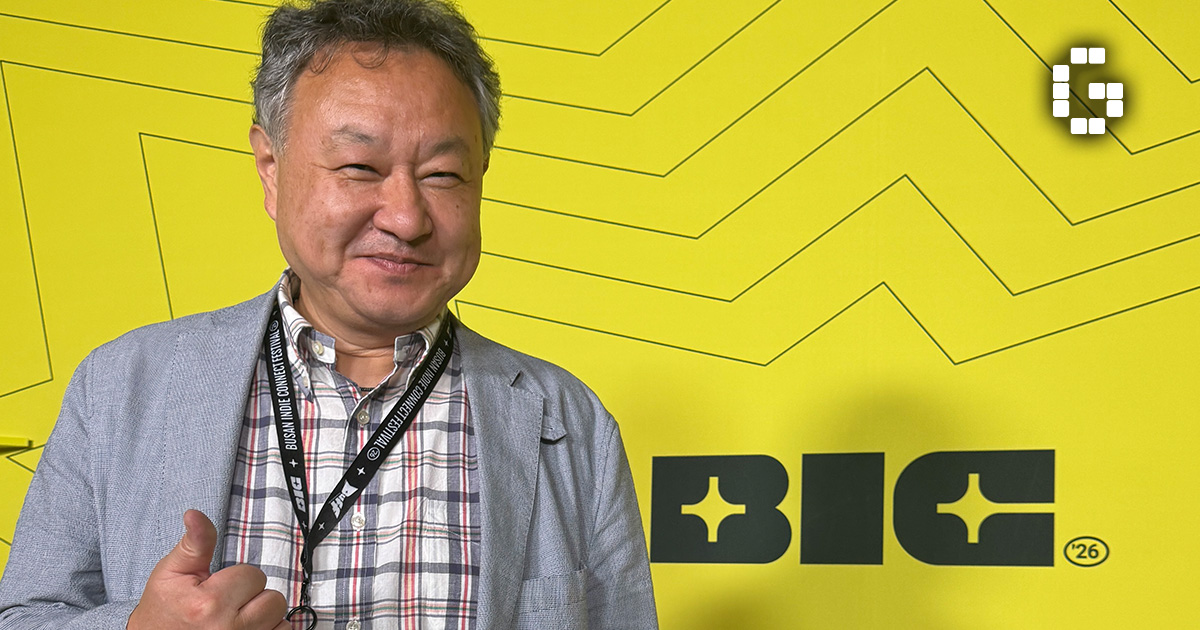
Busan Indie Connect Festival (BIC) 2026 drew indie developers and industry figures from across Asia, and among them was Shuhei Yoshida, the former president of Sony Interactive Entertainment who has spent decades championing independent games. Yoshida sat down with a group of gaming press, including our outlet, for a wide-ranging conversation about his life since leaving Sony, his thoughts on AI in game development, the games that caught his eye at this year’s show, and his hopes for the future of BIC itself.
Life After Sony: A New Role as Advisor
Yoshida left Sony in January of last year, and since then, his schedule has looked quite different. During his final five years at PlayStation, he led the Indies Initiative, an effort to support indie games on the platform. “For the last five years I was at PlayStation, I was involved in the Indies Initiative, an effort to promote indie games on PlayStation,” he said, noting that this gave him the chance to build relationships with many indie publishers and developers. After going independent, he started his own company, YOSP, and now works as an advisor to several of the people he came to know during that time.
“Many of the indie publishers and developers I had gotten to know and respect during those five years asked me to become their advisor, so I decided to continue working with them in that capacity,” Yoshida said. On the publishing side, he now advises Kepler Interactive, known for last year’s hit RPG Clair Obscur: Expedition 33, and Fictions, an American indie publisher started two years ago by former Annapurna Interactive staff. On the development side, he works with Enhance, founded by Tetsuya Mizuguchi, and Bokeh Game Studio, founded by Keiichiro Toyama.
Being untethered from a single platform has also opened up new experiences. “Since becoming independent, I am a freelancer, so I am not affiliated with any particular platform,” he explained. Working with publishers like Fictions or Kepler Interactive now means sitting in meetings with companies like Nintendo, Xbox, or even newer platforms such as Netflix. He said learning how each platform supports indie developers from this new vantage point has been something new for him.
“Being able to work with different platforms from the publisher’s perspective and learn how each platform supports indie developers and publishers has been a new experience for me.”
On AI in Game Development
Asked about the growing use of AI in game development, a topic that came up often at BIC this year, Yoshida pointed to programming as an area where it has made a real difference for smaller teams. He described a friend, a former PlayStation developer now working independently, who is strong in game planning and art but not in programming. “Now, by using AI for programming, he can work much faster and make the kinds of games he actually wants to create,” Yoshida said, adding that his friend now plans to release a game every year.
He also spoke about generative AI’s role in art production. Where developers once had to wait one or two weeks for a concept artist to turn around new ideas, they can now generate many art directions quickly. “Now, with generative AI, developers can quickly generate many different art ideas every day,” he said, noting this has sped up the process of finding the right visual direction for a project.
Beyond production tools, Yoshida said he is personally interested in AI as part of gameplay itself, pointing to games where players can speak naturally to characters and receive natural responses, or where player text input shapes the game’s environment and events. “I think these are very interesting experiments,” he said.
Standout Games and Indie Scenes
Yoshida came prepared for the show. Before arriving, he browsed the BIC website and found that many exhibited games were available to download. “So before coming here, I made a list of around 30 titles and played around 15 of them,” he said. He spent the rest of his time at the event trying games he hadn’t gotten to yet. “I have only been at BIC for a day and a half, but I have been able to play a lot of games,” he noted.
Asked to name his favorites, he picked three. The first was REVERIE, a puzzle game he called very clever. The second was World War V, a voxel-based title that starts in 2D and smoothly transitions into a 3D action shooter as the game progresses. The third was Where’s My Red Ball, a puzzle game he had also played the previous year and still enjoys, which he said was made by a teacher and students at a school. “It is a puzzle game, and the cat who is the protagonist is really cute. I love it,” he said. “I still really love this cute game,” he added.
As an advisor to publishers Kepler Interactive and Fictions, Yoshida said neither company is chasing a specific genre. Instead, the focus is on differentiation. He explained that within any genre, there are already games considered the best or most popular, citing Hades II and Vampire Survivors as examples. “We look at whether a new game has something that those top games do not have, and whether it has some kind of differentiation,” he said. That difference could come from the art direction, the game mechanics, or even blending multiple genres into something new.
Having attended indie events in China, Japan, and Korea, Yoshida shared some observations about each region’s indie scene. In Japan, a strong manga and anime culture has led to a good number of anime-style adventure games, and many developers work alone. “A lot of people want to make games by themselves,” he said, adding that while many are very talented, building larger teams tends to be difficult for them.
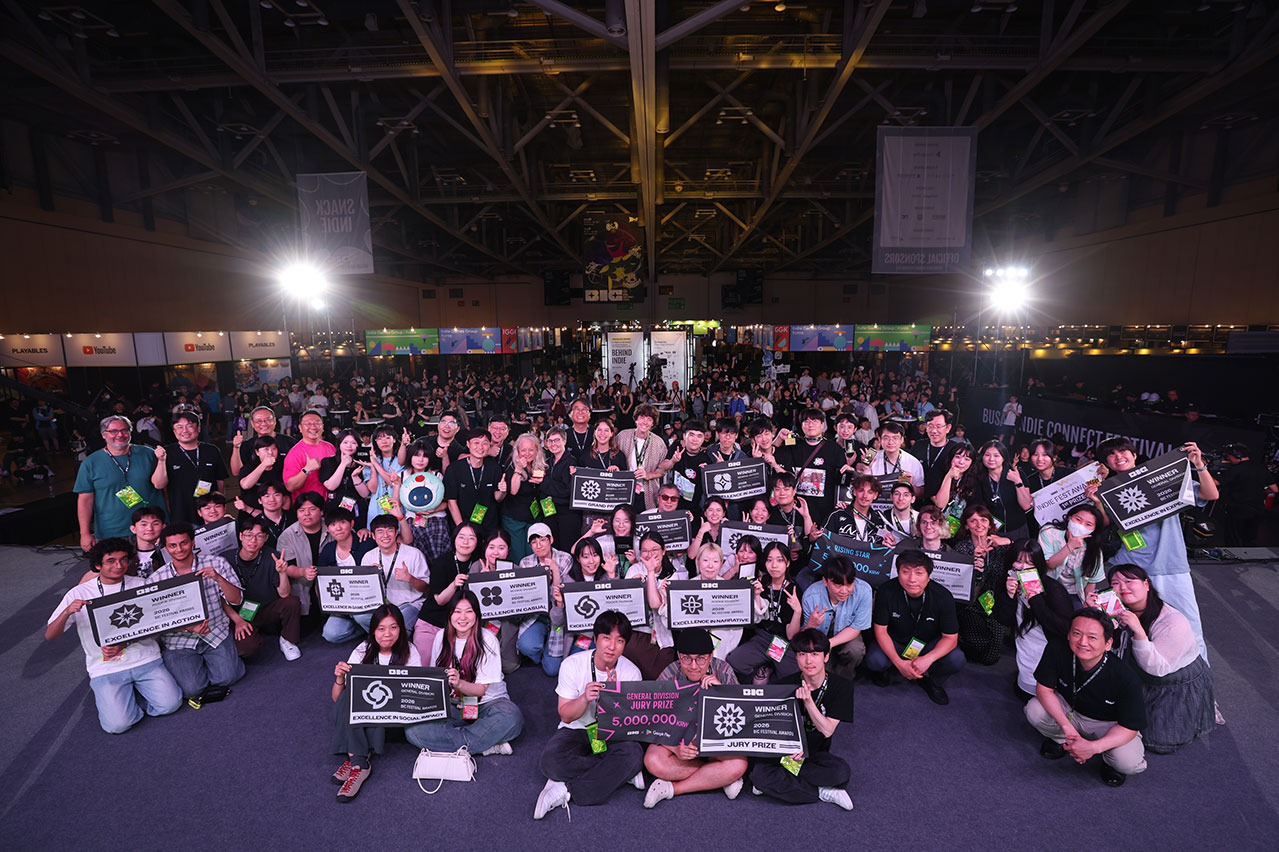
Korea’s scene has shifted over the past few years. Large Korean companies traditionally focused on MMOs and mobile games, but Yoshida has noticed a sharp rise in indie developers.
“Every time I come to Korea, I see new developers and many new games being created.”
He also noted that Korean developers seem drawn to 2D action games and music or rhythm games. As for China, Yoshida observed that teams there can grow very quickly, with newly formed studios sometimes reaching 50 to 100 people in a short time. He said there are many cases of Chinese indie developers creating 3D action games with AAA-level visuals.
Staying Connected to Games
Given how much time he now spends playing games for work, Yoshida was asked whether it ever makes games feel less enjoyable. He said it doesn’t. Most of what he plays are unfinished games, either pitched to publishers by developers or shown at events while still in progress. He has spent around 30 years playing games during their development and giving feedback to the teams behind them.
His approach to feedback is fairly hands-off when it comes to solutions. “I don’t tell developers, ‘You should fix it this way,'” he said. Instead, he points out issues, such as a confusing section or one that feels too difficult, and leaves it to the developer to decide how to address it. Sometimes, developers return a year or two later having made changes based on his earlier comments.
“I usually don’t even remember exactly what I told them, but when I see what they have done, I feel happy that they were able to improve it.”
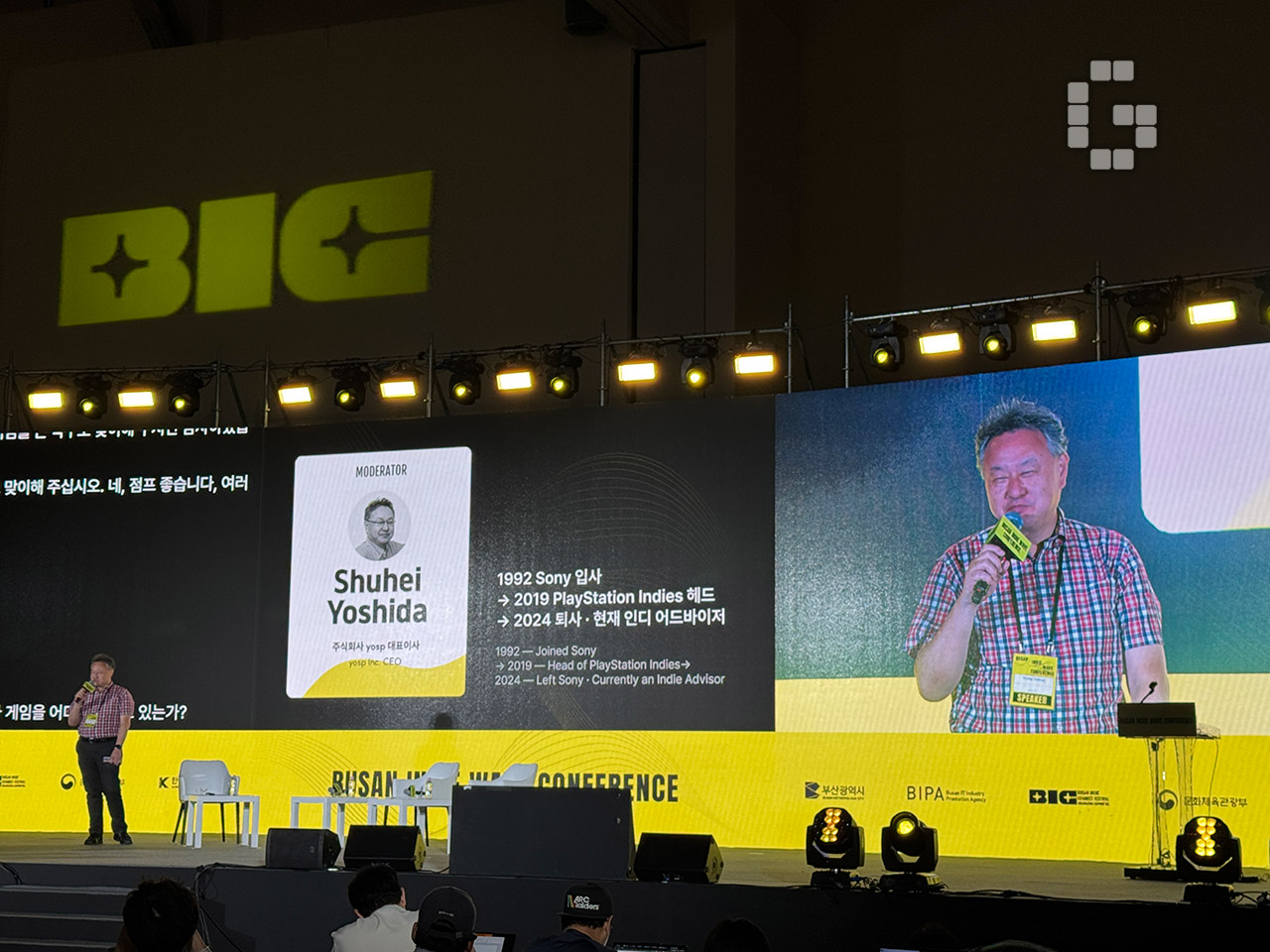
Yoshida was also asked how he personally defines an indie game, given how broadly the term gets used today. He traced the term back to its original meaning: independence from publishers, at a time when releasing a game without one was difficult due to a lack of capital. Digital distribution eventually made self-publishing possible. But with the rise of indie publishers, he said the line has become blurrier.
For Yoshida, the definition now comes down to something less about business structure and more about intent. “Personally, I think a game can be called an indie game when the creator’s passion is reflected in the game,” he said, describing it as the “indie spirit.” If a developer is making a game because there is something they strongly want to create, and that feeling comes through in the final product, he considers it an indie game.
Advice for Developers on Marketing Their Games
For developers who make a good game but struggle to get noticed, Yoshida acknowledged that marketing isn’t something every team is equipped for or interested in. Still, he offered a few practical suggestions. Showing games at events is one of the most effective ways to get noticed, though larger shows like BIC or BitSummit require selection. For less experienced developers, starting with smaller, open events can be a good first step.
He also emphasized the value of playtesting. “Let other people play your game and get their feedback. Watch people playing your game from behind,” he said, noting that this often reveals problems developers can’t see on their own. Beyond events, he recommended regularly sharing videos and artwork on social platforms like X, since publishers, other developers, or interested players might come across the posts. As a game nears completion, pitching to publishers and reaching out to influencers becomes important too.
He also pointed to language as a practical factor, something he had mentioned the day before the interview. “I think it is important to explain your game in English and Chinese. Adding Japanese would be even better,” he said, adding that localizing the game itself matters as well.
Thoughts on BIC 2026
This was Yoshida’s second year attending BIC. He had wanted to attend previously but said his schedule used to conflict with Gamescom and PAX West during his time at PlayStation. After going independent, he was able to attend BIC instead. “I got to eat delicious seafood in Busan and discovered many great Korean indie games, so I had a really good time,” he said.
He compared BIC to BitSummit in Japan, his favorite indie event, saying BIC currently reminds him of where BitSummit was about three years ago in terms of game count and quality. He also praised being able to download and try many exhibited games directly from the BIC website ahead of the show.
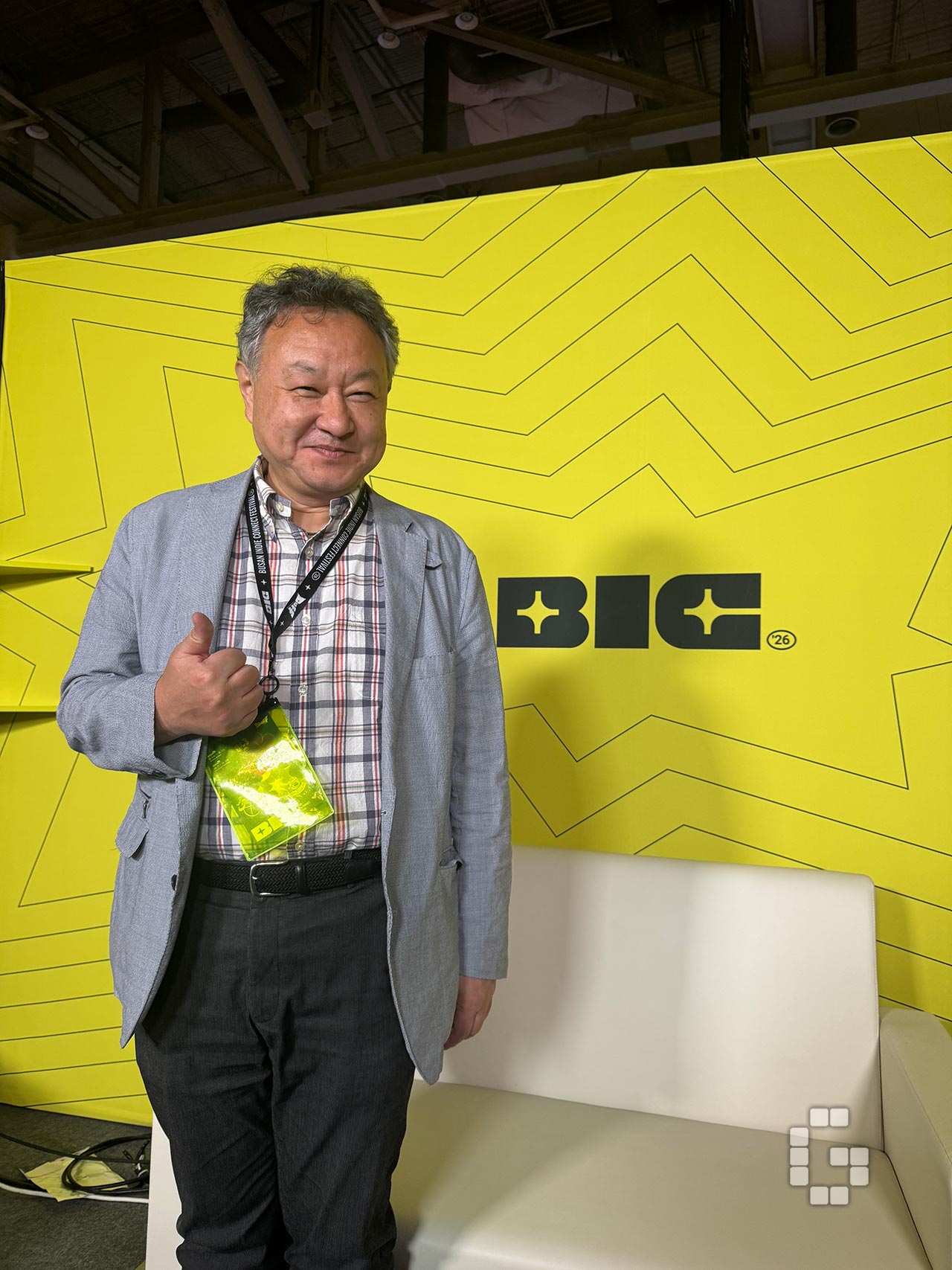
As for areas of improvement, Yoshida said he would like to see more visitors at the event, pointing out that BitSummit and similar Japanese events tend to draw crowds large enough that moving around becomes difficult. He suggested more media coverage could help grow BIC’s audience. He also noted the relatively low presence of international publishers compared to BitSummit, where overseas publishers actively scout for games. “I would like Western publishers to discover the great games being made by Korean developers,” he said, adding that more Japanese publishers attending would also be welcome given the shorter distance to Korea.
Closing out the conversation, Yoshida reflected on his time at this year’s event, which included a panel discussion with Korean developers. “I had a great time talking with Korean developers yesterday,” he said. He expressed hope to return to BIC in the coming years and encouraged continued support for the event from both developers and fans, saying he would love to experience BIC alongside even more Korean game fans in the future.