Valve has introduced a new set of regional pricing tools for developers on Steam, marking a significant step toward addressing one of the platform’s most persistent complaints: inconsistent game pricing across global markets. While the update does not enforce pricing changes directly, it provides developers with improved guidance designed to help them set more balanced prices worldwide.
For players in regions where game costs frequently exceed their U.S. equivalents—including parts of Southeast Asia and Latin America—this move signals a potential shift toward fairer digital storefront pricing in the future.
Why Steam’s Regional Pricing Has Been Controversial
Image Credit: Steam
Regional pricing has long been a major topic among PC gamers. Many users have reported paying disproportionately high prices compared to the United States despite differences in local purchasing power. These concerns intensified over time as Valve’s earlier pricing guidance remained largely unchanged for years, leading critics to argue that the recommendations no longer reflected modern economic realities.
Developers unfamiliar with international currency standards or regional affordability metrics often relied heavily on outdated defaults, which contributed to pricing inconsistencies across markets.
Valve’s new update appears to directly respond to this feedback by modernizing the pricing support available through Steamworks.
Three New Pricing Conversion Methods for Developers
Image Credit: Steam
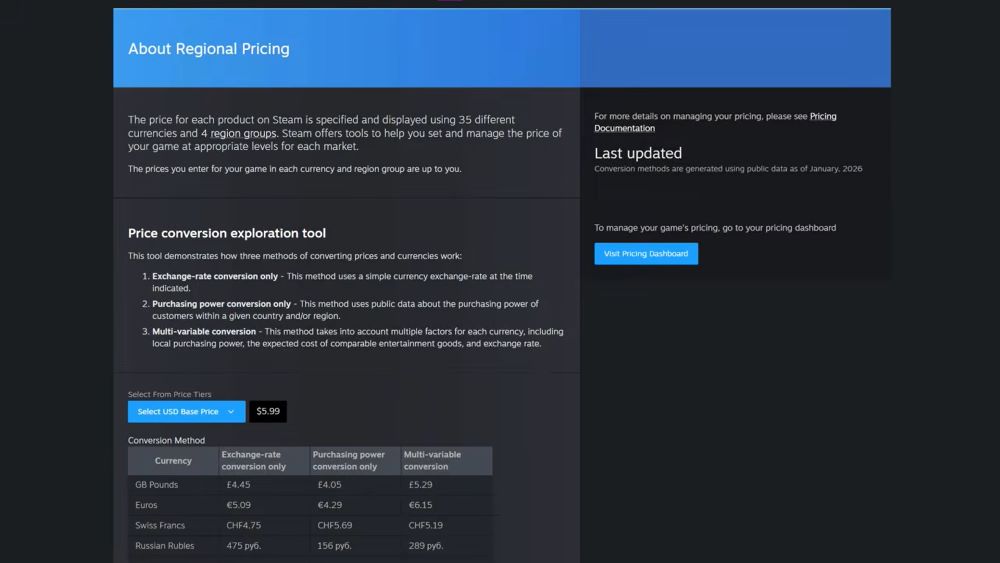
The updated Steamworks pricing system introduces three separate conversion approaches developers can use when setting regional prices.
The first option is a straightforward exchange-rate conversion based on current currency values. The second relies on purchasing-power data that reflects how affordable games are relative to local income levels. The third combines exchange rates, purchasing power, and comparisons with regional entertainment pricing to generate a more comprehensive recommendation.
According to Valve, this multi-variable method most closely resembles the platform’s previous pricing model, though developers now have greater flexibility to choose the approach that best fits their strategy.
Developers Still Control Final Game Prices
Image Credit: Steam
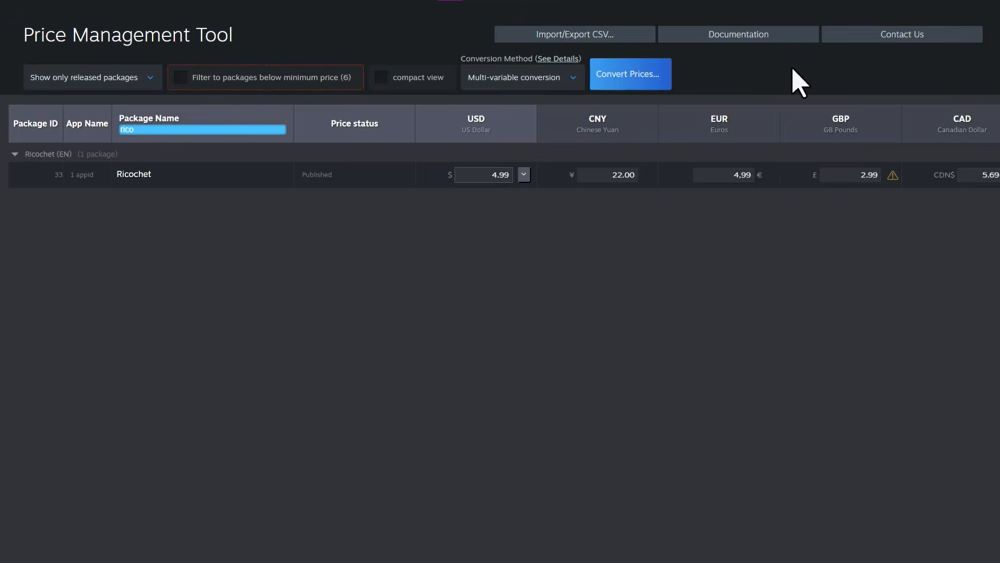
Despite the expanded toolkit, Valve is not imposing mandatory pricing standards across the platform. Developers and publishers continue to retain full authority over how their games are priced in each territory.
Instead, the new system functions as an advisory framework rather than a policy change. Valve has updated prices for its own titles as examples of best practices, but third-party studios remain responsible for implementing any adjustments themselves.
This means the effectiveness of the update will ultimately depend on how widely developers adopt the new recommendations.
What This Means for Players Worldwide
If widely adopted, the updated pricing tools could gradually reduce major disparities between regions. However, the impact may appear slowly, particularly for major AAA releases, where publishers already conduct their own pricing analysis independently of Steam’s recommendations.
Smaller independent developers may benefit the most from the new system, as it simplifies currency formatting and affordability considerations across dozens of markets.
Even so, the update represents an important signal that Valve is beginning to modernize its regional pricing approach. For players who have long argued that Steam game prices should better reflect local economic conditions, this change could mark the beginning of more consistent global pricing in the years ahead.
An elite Society agent and contractor of the seal weapon Embrasque, Beatrix's ferocity when facing primal beasts is rivaled only by her insatiable hunger for glory.
Eustace
Earthrending Thunder
An elite Society marksman and contractor of the seal weapon Flamek Thunder, Eustace is efficient, laconic, and longs to live in a world of peace and quiet.
Fraux
Striking Strength
Pactbearer to The Devil, a primal seeking to create a new world order, Fraux is otherwise an ordinary skydweller whose heart, character, and temperament are filled with love and compassion.
Fediel
Darkness Personified
One of the Six Dragons, entities who exist beyond the confines of the natural world. Having dominion over darkness, she influences the very laws of nature.
A gamer through and through. I grew up playing all kinds of games and consoles, and even worked as a Game Designer and Game Artist for awhile. Now I venture into another path of gaming where I will pass all gaming knowledge to everyone, no matter how far or treacherous the journey is.
















![[EXCLUSIVE] Beyond the Base Game: Cygames on What Endless Ragnarok Means for Granblue Fantasy: Relink](https://cdn.gamerbraves.com/2026/06/GBF-Relink-Endless-Ragnarok-Exclusive_Interview_FI-360x180.jpg)