
![[EXCLUSIVE] Brendan Gan Delivers One of Malaysia’s Best-Ever Worlds Results, Shares Thoughts on Pressure and the Local Scene](https://cdn.gamerbraves.com/2026/08/Brendan-Gan_Interview_FI-360x180.jpg)



![[BIC2026] Hiroaki Nagashima from Toei Games Talks New IPs, Indie Roots, and Asia-First Strategy](https://cdn.gamerbraves.com/2026/08/Toei-Games-BIC-2026_Interview_FI-360x180.jpg)
![[BIC2026] From Outsider to Organizer: How Isabella Seo Jungsook Helped Build Busan’s Indie Game Scene through BIC](https://cdn.gamerbraves.com/2026/08/Isabella-BIC-2026_Interview_FI-360x180.jpg)
![[BIC2026] CanOpener’s Logan Moon Opens Up About Dungeon Settlers Ahead of Its September Early Access Launch](https://cdn.gamerbraves.com/2026/08/Logan-Moon-BIC-2026_Interview_FI-360x180.jpg)

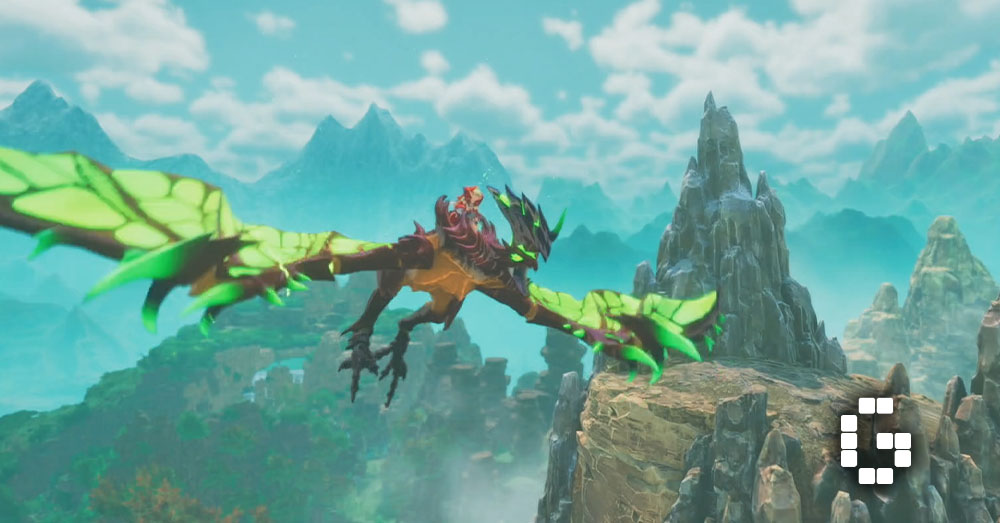
We had the chance to speak online with the development team behind Monster Hunter Stories 3: Twisted Reflection for an exclusive interview, diving into new features, gameplay mechanics, and design choices. Joining us were Tsujimoto Ryozo, the game’s Executive Producer, Kawano Takahiro, who serves as the Art Director, Wakahara Daisuke, the Lead Game Designer, and Oguro Kenji, the Director. Throughout the interview, they shared insights on how they approached combat, monster design, and world-building to make this entry both strategic and personal for players.
Habitat Restoration: Bringing the World Back to Life
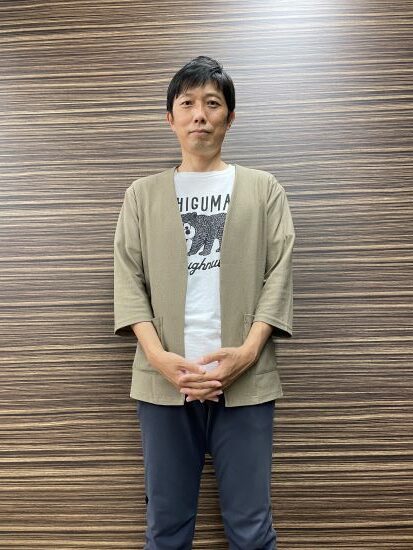
When we asked about the Habitat Restoration feature, and why it was integrated into the game, Oguro Kenji explained, “As you said, restoring the environment is very important. So, as a Ranger, reviving the environment is one of the key elements of the story. Expanding on the previous series and the previous entries into this game, while in previous games it was important that you combine or match (Genes) in order to create these monsters, in the new game what they really want players to feel is how they can allow for the restoration of the habitat in order to attain new monsties.”
He went on to emphasize the personalized nature of the feature, noting, “We have added a lot of new features. One important feature, which is that the monsties you find in each area are going to be different for each user. For example, what you might find in your field is going to be, or what you find in one habitat is going to be very different from the monsties that another player is going to find in this habitat, so it’s unique to each player. Basically, it’s very important that players can experience different ways to enjoy this game, and that one of the main things is that they want players to be able to feel like, you know, I want a monster of this element, I want a monster of this color, and to pursue that and to seek that as part of the fun of this game. So one of the key elements of this game is that they have the dual-element feature, so you can raise, you know, a monster in water habitat and have it learn water or create a monster at the water element and have that learn water attacks and all that, and that is, it’ll take on the color of water as well, special colors depending on the element, and that is one of the fun parts of that this game.”
Dual-element and Strategic Combat
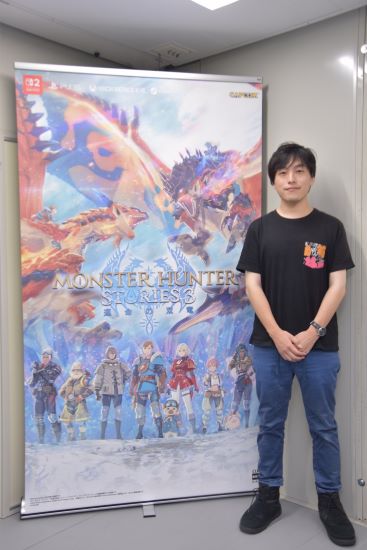
Continuing on the topic of dual-element, we asked how combining elements impacts gameplay strategy, particularly in battle. Wakahara Daisuke explained, “If you are to put two same elements on one monster, for example a fire monster, and using the Habitat Restoration feature, you give him a fire element as well, you’re going to be further enhancing the fire element and make it even stronger, compared to a single element monster. If you were to change colours, obviously through dual-element feature(s), it’ll be an aspect or feature that a lot of people can enjoy and look forward to, (are) monsters with different colours. For combat purposes, you’re going to have more abilities. If you have a fire monster, you might have a fire monster with water element abilities, for example. So that’s something that we think will open up a lot of new and interesting ways you can play this game and new combat strategies as well.”
Designing Bond Attacks
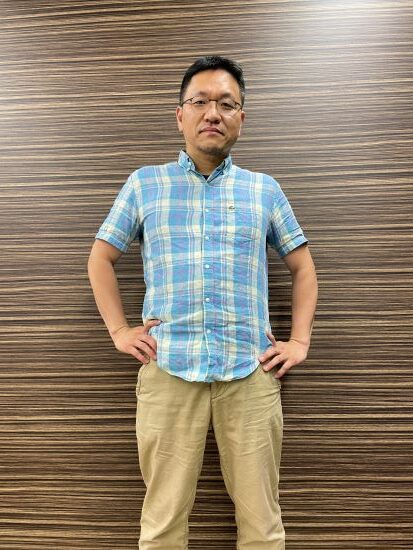
Curious about how the team created the kinship attacks, we asked how the development process worked. Kawano Takahiro shared, “The things that we consider are the settings, like the game setting, the world of Monster Hunter, and also we watch a lot of Monster Hunter videos, of gameplay videos, and then also they look for cool and interesting, unique features to each monster, and these are the elements they consider that help them in designing these kinship attacks. Basically looking through all of these different inspirations provides me with many hints, and then I have many different images within his mind on how these kinship attacks should look, and then it’s just a matter of picking one and then running with it, and that is how it takes shape.”
Gem Slots for Weapons and Armor: Expanding Customization
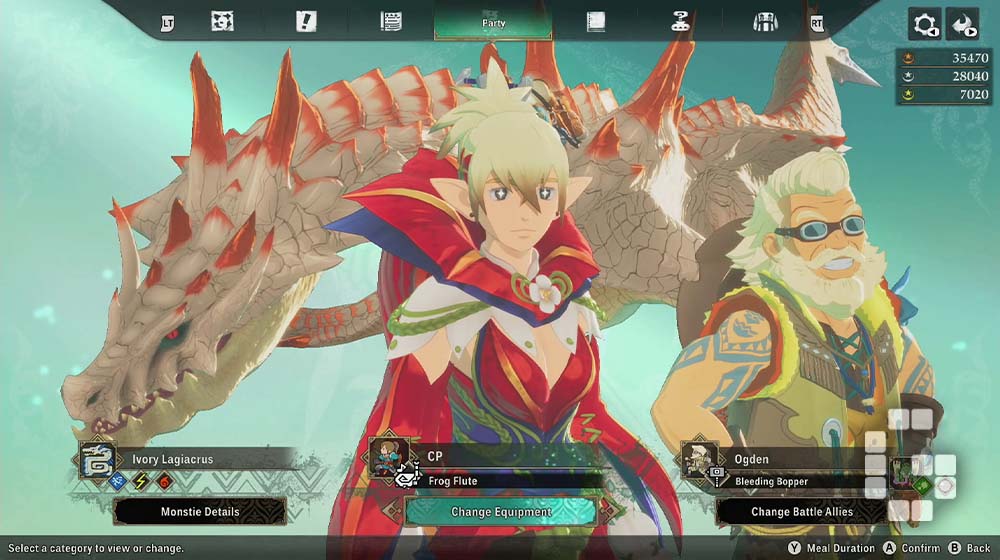
For the first time in the Monster Hunter Stories series, Monster Hunter Stories 3 introduces gem slots for weapons and armor, adding a new layer of customization to the Rider’s equipment. We asked why this system had not appeared in previous entries, and why now was the right time to introduce it. Oguro Kenji explained, “So it’s not a good idea to include too many elements into any game, so I think that’s one of the reasons why it was not in previous iterations. Compared to the Monster Hunter games, in the Monster Hunter Stories world, you are a rider not a hunter, so you are a supporter fighting together with your monster. So putting elements where you’d focus more on your hunter in the previous games I don’t think it’d be right, and want to focus more on the combat done by the monster instead”
He explains that, “So why we changed our minds (for Monster Hunter Stories 3), we wanted to have more features that feel closer to a traditional RPG, which is why we are bringing these features to the current game. This is the third game, so I thought it would be fun for the players to play, and I thought it would broaden the scope of the game. It’s important for people to enjoy this game, and adding new elements to this game that will help them create new strategies and deepen the combat system is very important.”
Rock-Paper-Scissors Battles and New Layers
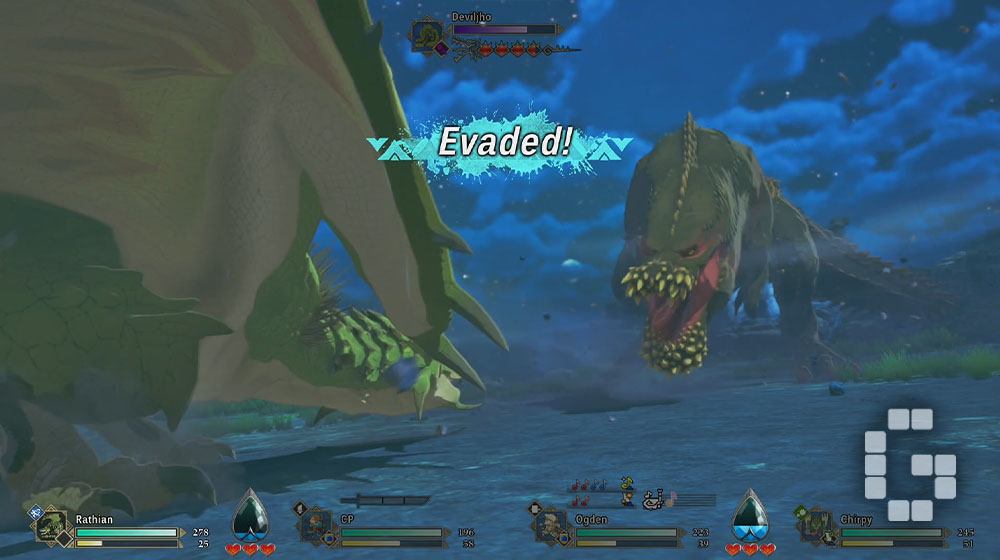
We asked about the inclusion of powerful neutral AOE attacks alongside the classic rock-paper-scissors system. Wakahara Daisuke said, “Yes, it’s on purpose. I wanted it to make it less important to win only with Janken (rock-paper-scissors via power-tech-speed) to play this game or win battles. It adds many new layers to the gameplay, if you know, it’s not just Janken, with this new element added, you have to think about a lot of different things like knowing that a big attack is coming, do you evade, are you going to use this chance to heal up? Are you going to try and break some parts? There are many different things that you can think about while also considering this big attack that’s coming.”
Rideable Monsters: Overcoming Design Challenges
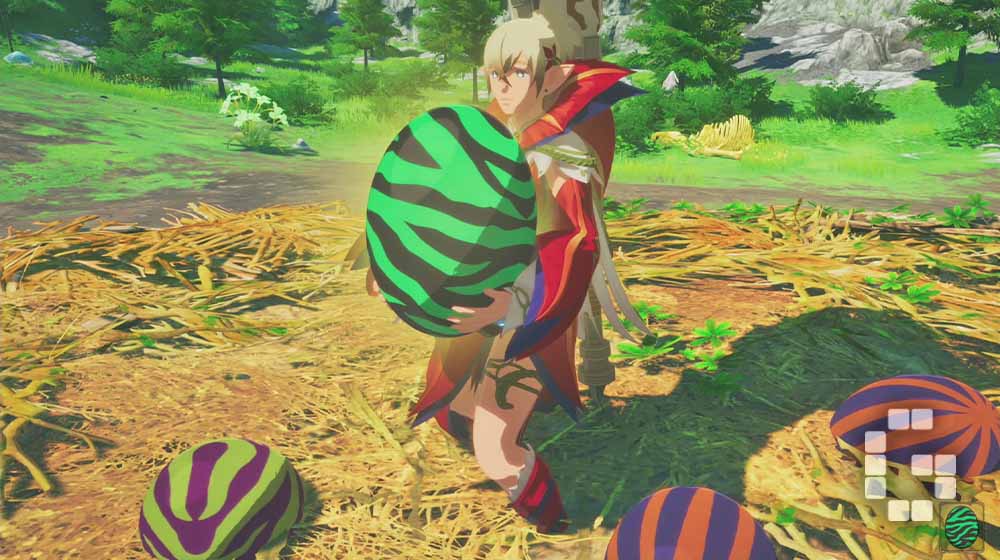
Finally, we asked about Plesioth finally being rideable. Kawano explained the design challenges, saying, “So, for example, with the Plesioth, the back of the scales are black in color, and also it looks very uncomfortable to ride. So, we had to create a saddle or put in some elements to make sure it looks like it’s easy to ride.”
Besides this interview, we even had the opportunity to try our hands on experiencing Monster Hunter Stories 3: Twisted Reflection, and you can check out our preview on the game.
If you’re interested in the game, you can check out their official website.