





![[EXCLUSIVE] Dragon’s Dogma 2: Dark Arisen Team Opens Up About the Expansion’s Name, New Norgan Region, and Performance Goals](https://cdn.gamerbraves.com/2026/07/Dragons-Dogma-2-Dark-Arisen_Interview_FI-360x180.jpg)



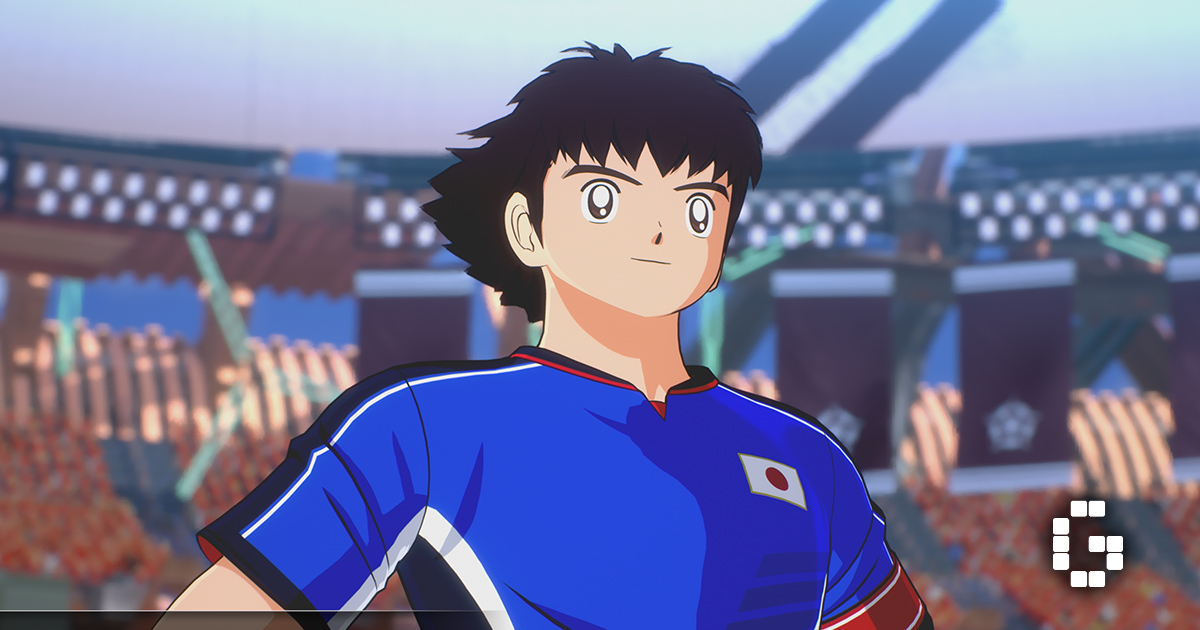
Captain Tsubasa has always been about big kicks, bigger dreams, and even bigger special moves flying across the field. With CAPTAIN TSUBASA 2: WORLD FIGHTERS, the series is getting a new entry that tries to keep that anime flair while adding some real strategy underneath it. A recent preview build gave us a limited but solid look at what the full game might offer, covering a slice of the story mode, an offline match option, and a surprisingly detailed character customization system. Here is what stood out during the hands on time with the game.
The preview let us try out a portion of the story mode, focused on select matches from the original Captain Tsubasa World Youth Arc. The matches available to us included games against Thailand Youth, Saudi Arabia Youth, and China Youth. Instead of just retelling the manga scene by scene, the game seems to be going for a reimagined take on the World Youth story. Alongside the Main Episode, there are also optional SIDE Scenarios and LINK Scenarios that fill in extra events happening behind the main story.
Offline Match and Roster
Outside of the story campaign, the preview also included an Offline Match mode. We could choose from 14 national teams out of the game’s full roster of 22, with access to every available player, their signature S-Moves, stadiums, and several uniform options. Both single player matches against the computer and local multiplayer were available, along with the option to turn the Golden Goal rule on or off. For a preview build, this is already a good amount of content, since we could jump straight into matches with well known teams and try out different lineups and techniques without needing to go through the story first. As Southeast Asian representatives, Thailand and Indonesia were both playable in this version. Indonesia’s inclusion is a nice surprise, with the team led by goalkeeper Jawato as captain, making it satisfying to finally see the country represented in a modern Captain Tsubasa game.
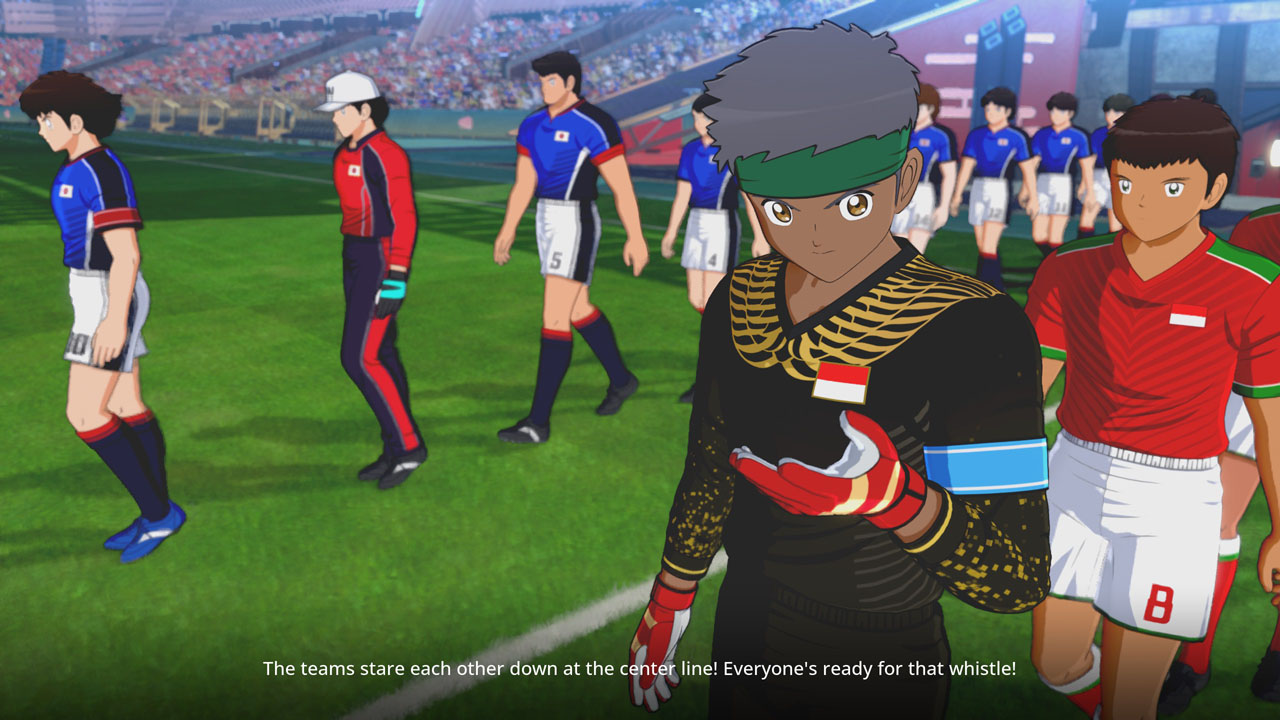
That said, Indonesia does feel a bit underwhelming compared to some of the other teams in the preview. Thailand, for example, stands out right away with unique signature moves like the Elephant Tackle and shots inspired by sepak takraw, both of which capture the exaggerated style the series is known for. Indonesia does not really have techniques that feel as memorable or distinct. This is a little disappointing, but it also lines up with how the manga portrays the country, since Indonesia was never shown as one of the strongest football nations in the original story, so the game seems to be staying faithful to that instead of making the team stronger than it was originally written.
Character Customization
One of the more surprising parts of the preview was just how deep the customization options are. The Player Edit mode let us fully build our own original New Stars character with a good amount of freedom. Facial features can be adjusted in detail, including different eye shapes, face shapes, cheek structures, and a wide range of hairstyles. Some hairstyle parts are even based on existing characters from the original series, so players can recreate familiar looks or design something completely new. The number of hairstyle choices alone stood out, offering more variety than expected and making the character creation process feel deeper than just picking from a few presets. Customization is not limited to appearance either.
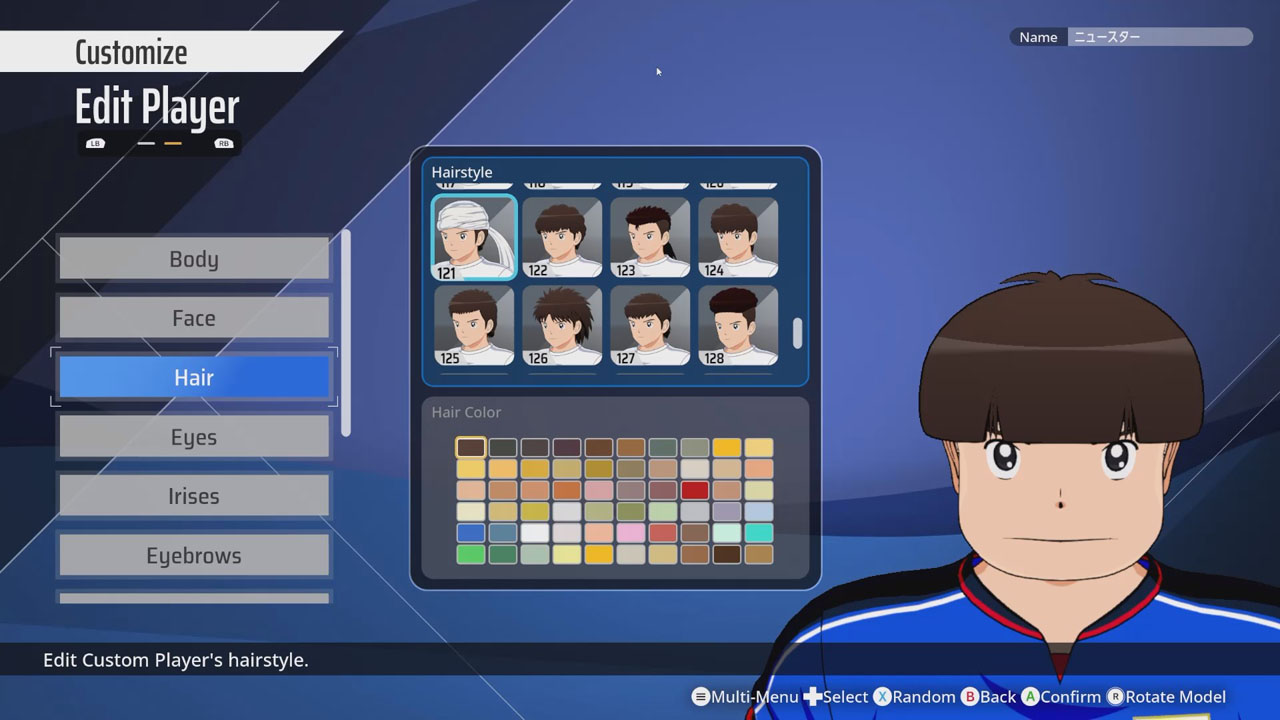
We could also freely change the techniques our character uses. Options like choosing between the Eagle Shot or the Tiger Shot each come with their own strengths, whether that means more power, more speed, or other differences in performance, so there is no single best choice and players are encouraged to build around their own preferred style. The Team Edit menu is just as detailed, letting players adjust formations, lineups, player abilities, and even goalkeeper techniques before heading into a match.
Gameplay
While Captain Tsubasa has always leaned on flashy, anime style action, the biggest change in this entry comes from the added strategy layered underneath all the spectacle.
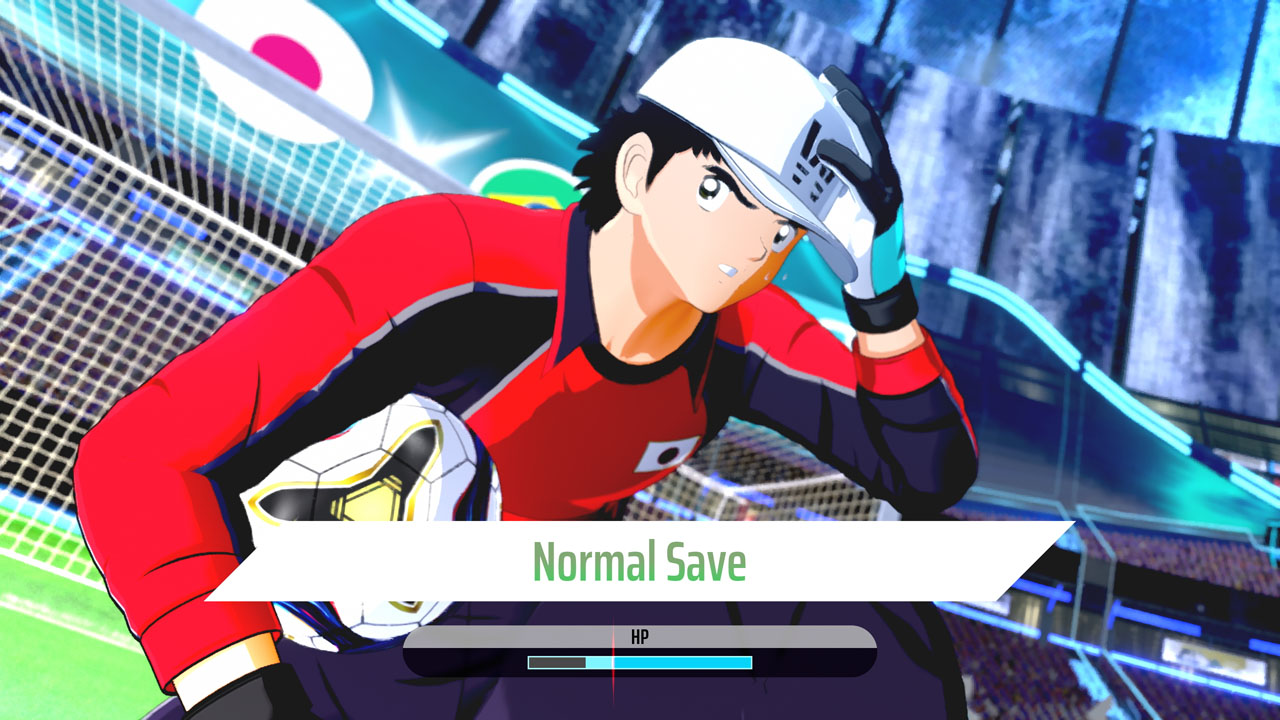
The most noticeable new feature is the goalkeeper tactical battle. Every shot now triggers a kind of prediction duel between the attacker and the goalkeeper. Instead of relying only on stats or chance, attackers pick from six possible shot trajectories while the goalkeeper tries to guess where the ball is going. A correct guess only costs the goalkeeper a small amount of stamina, while a guess that is somewhat off causes more damage, and a completely wrong guess causes major stamina loss. If the goalkeeper’s stamina runs out, it triggers a BREAK, which permanently lowers their maximum stamina for the rest of the match. This adds an interesting mental layer to the game, since players are encouraged to mix up their shot trajectories and shooting positions instead of always going for the strongest shot, slowly wearing the goalkeeper down before going for the finishing blow. It manages to feel more strategic without losing the fast paced presentation the series is known for.
Another major addition is the Chain System, which rewards players for keeping up offensive pressure. Dribbling past defenders, landing S-Moves, and linking attacking plays together gradually raises the team’s Chain Level. As this level goes up, shots get stronger and charging powerful attacks becomes faster. However, this momentum does not last forever. Losing possession immediately hands the built up Chain Level over to the other team, which creates constant swings throughout a match and makes every turnover risky, while also naturally raising the intensity as the match goes into the second half.
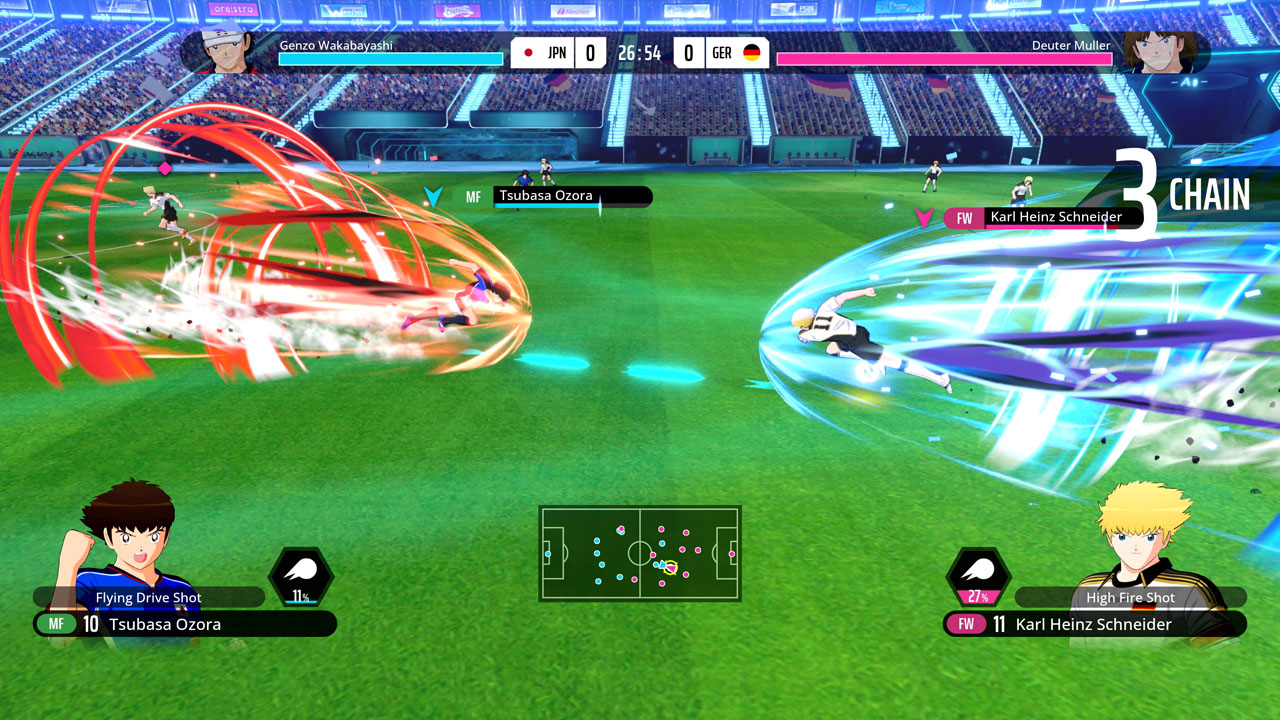
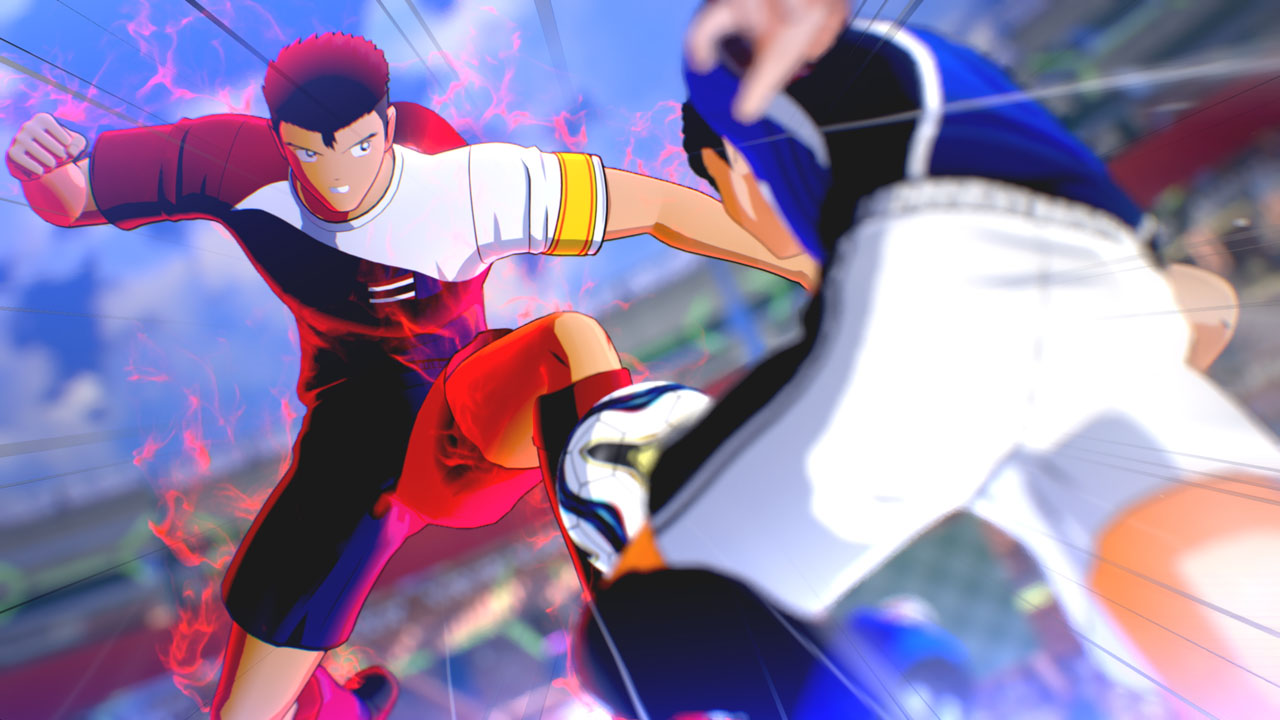
Of course, this would not be Captain Tsubasa without its signature special moves. Every player still has access to their own Super Moves once their gauge fills up, including Super Shots, powerful dribbling techniques, long range passes, aerial attacks, tackles, and defensive blocks. Each move has its own gameplay effect, whether that is more stamina damage, more speed, or better scoring chances. Charging up normal shots can also turn them into stronger versions, and aerial combinations let teammates finish off crosses with dramatic volleys similar to what is seen in the anime. On top of that, Miracle Moves add another layer of unpredictability, with goalkeepers sometimes pulling off impossible miracle saves when their stamina gets critically low, and certain teams able to trigger unique Miracle Team actions once specific conditions in a match are met. These moments are rare, especially the Miracle Save from goalkeepers.
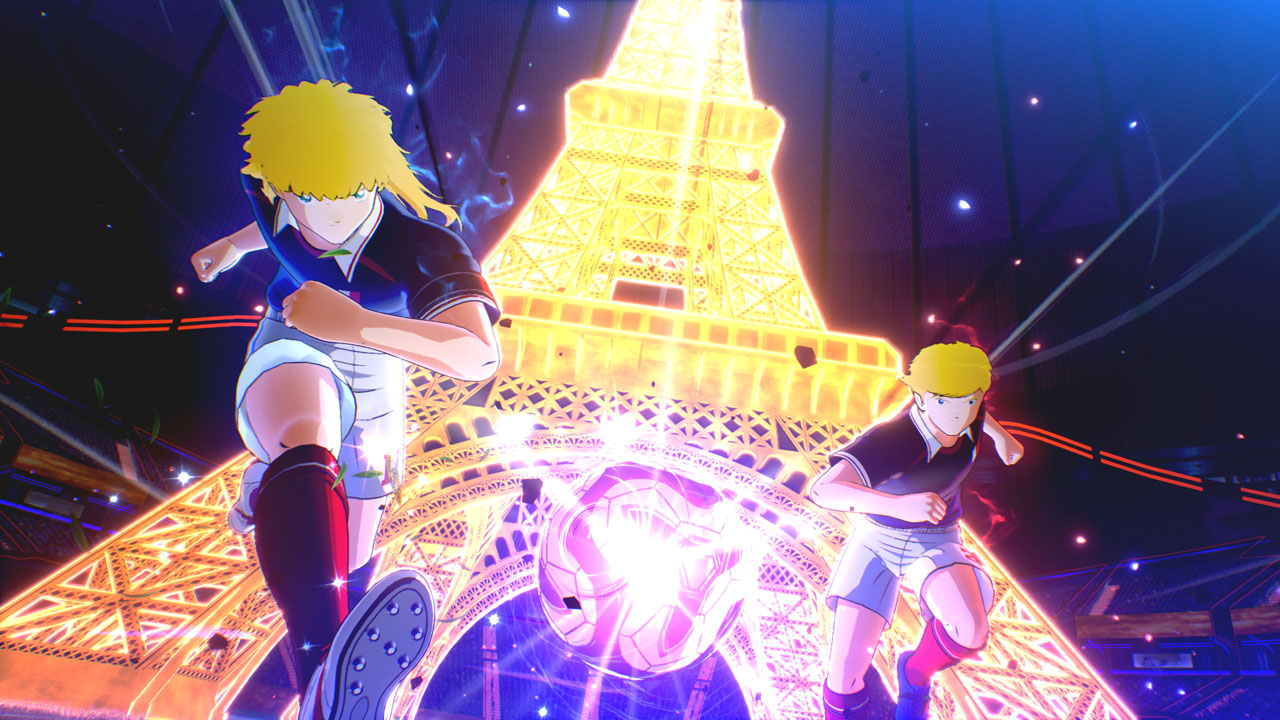
After spending around two hours with the preview build, the new systems clearly add more strategy, but a few mechanics still feel like they could use some balancing. The most noticeable issue is around scoring, since winning often came down to simply firing shots at the goalkeeper again and again. Even a regular shot without using a Super Move chips away at the goalkeeper’s stamina, so the most effective strategy often ended up being just taking as many shots as possible until the goalkeeper breaks, which then makes scoring much easier. This fits the new stamina based goalkeeper system, but repeatedly shooting from almost any opportunity could end up feeling repetitive over longer play sessions instead of building up a more careful attack each time.
Ball recovery could also be frustrating at times, though not necessarily in a bad way. Players can use a standard tackle or a stronger charged tackle, each tied to separate commands, and the way these interact is where it gets interesting. If a player commits to a tackle first and the opponent responds with the right counter action afterward, the opponent wins that exchange, and the same is true in reverse, so timing ends up being everything.
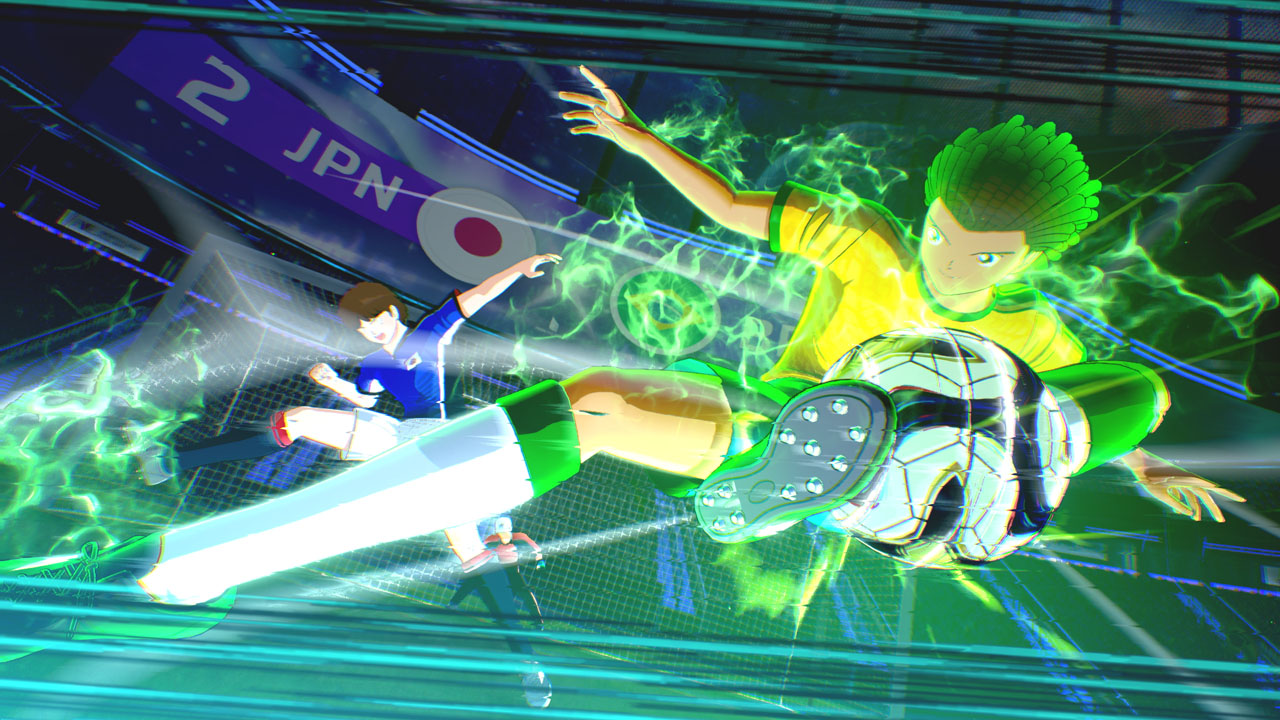
The same rule applies on offense too, since charging into a dribble too early can cause a player to lose the ball if the opponent reacts correctly, no matter how strong that player normally is. This creates a rock paper scissors style mind game where reading the opponent matters just as much as knowing a team’s abilities. There were moments where guessing wrong repeatedly got frustrating, but those same tense exchanges also created some of the most exciting moments in the preview, especially once both players understand how the system works.
First Impressions
Overall, Captain Tsubasa 2: World Fighters feels like a meaningful step forward for the series based on this preview. Even with a limited slice of content, the reimagined World Youth story, the generous Offline Match mode, and the surprisingly deep character customization all point to a game offering more than just flashy anime football. The new gameplay systems, especially the goalkeeper mind games and the Chain System, add a welcome layer of strategy while still keeping the fast paced action the series is known for.
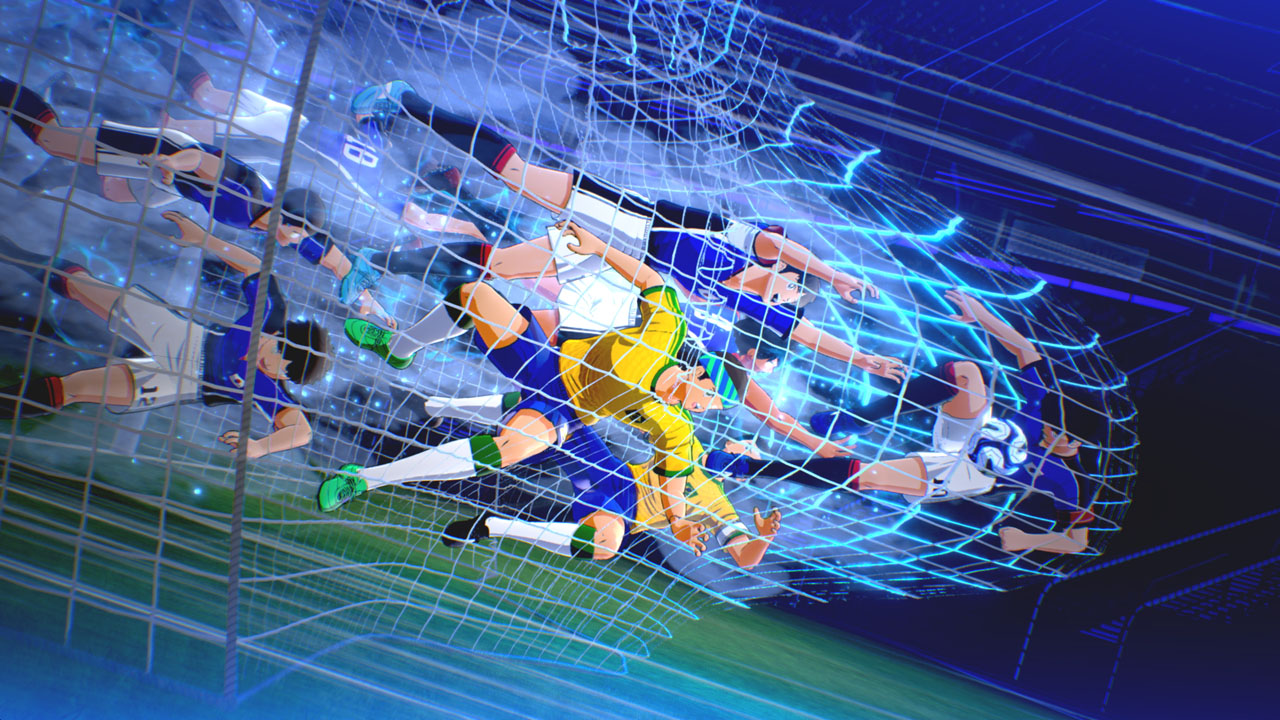
That said, some mechanics still seem to need adjustment, particularly the goalkeeper stamina system, which currently makes repeated shooting until a BREAK feel like the easiest path to scoring, and the tackle system, which can be frustrating due to how much it relies on timing and prediction. Based on this preview, Captain Tsubasa 2: World Fighters looks like the kind of game that could appeal not just to longtime fans of the series, but also to newcomers, football fans in general, and even players who do not usually enjoy football games, thanks to controls and gameplay that are easy to pick up while still being genuinely fun to play.