






![[EXCLUSIVE] Beyond the Base Game: Cygames on What Endless Ragnarok Means for Granblue Fantasy: Relink](https://cdn.gamerbraves.com/2026/06/GBF-Relink-Endless-Ragnarok-Exclusive_Interview_FI-360x180.jpg)

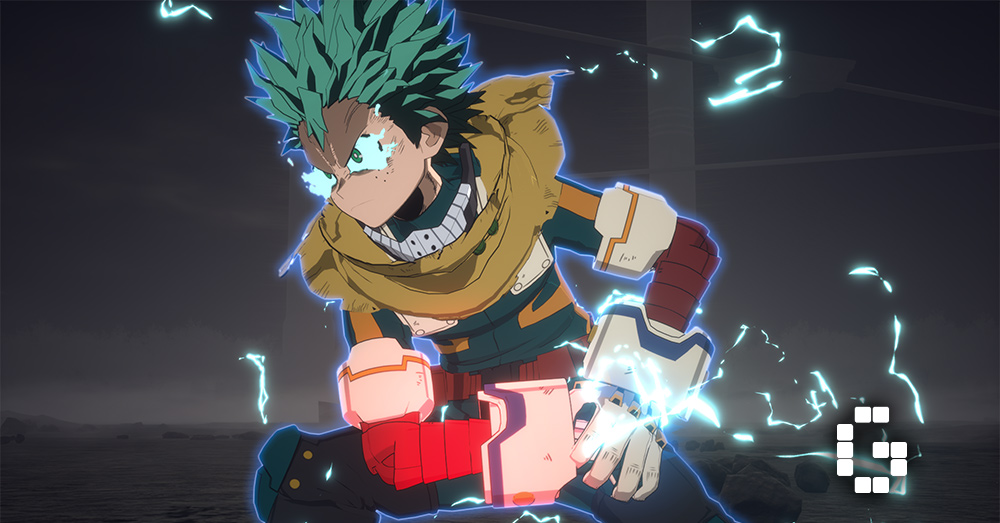
The final season of My Hero Academia is drawing to a close, and fans are eagerly anticipating what promises to be the ultimate gaming experience in the franchise. We recently had the opportunity to interview Aoba Miyazaki, the main producer behind the MY HERO ONE’S JUSTICE series, to discuss the upcoming MY HERO ACADEMIA: All’s Justice – a game that aims to be the definitive hero fighting experience.
Unlike its numbered predecessors, this latest entry takes a bold step forward with its title. “Instead of going for a number, we chose to say All Justice to encompass everything,” Miyazaki explains.
“The development staff decided to go for a power-up that wouldn’t be a number. So we powered up the content of the game, the battle system, and a lot of other things. We wanted to make everything more epic for the players to experience in this game that is like everything in one. Like the final of the final.”

Complete Class 1-A Finally Takes Center Stage
For the first time in the series, ALL of Class 1-A will be playable characters, including those who rarely get screen time like Toru Hagakure and Rikido Sato. This presented unique challenges for the development team.
“Even though they don’t have a lot of screen time, but in the story itself, it was kind of portrayed on their backstory, their origin story, how they wanted to become a hero, what kind of hero they wanted to become, so we took that into account in the character design and their skill design,” Miyazaki shares.
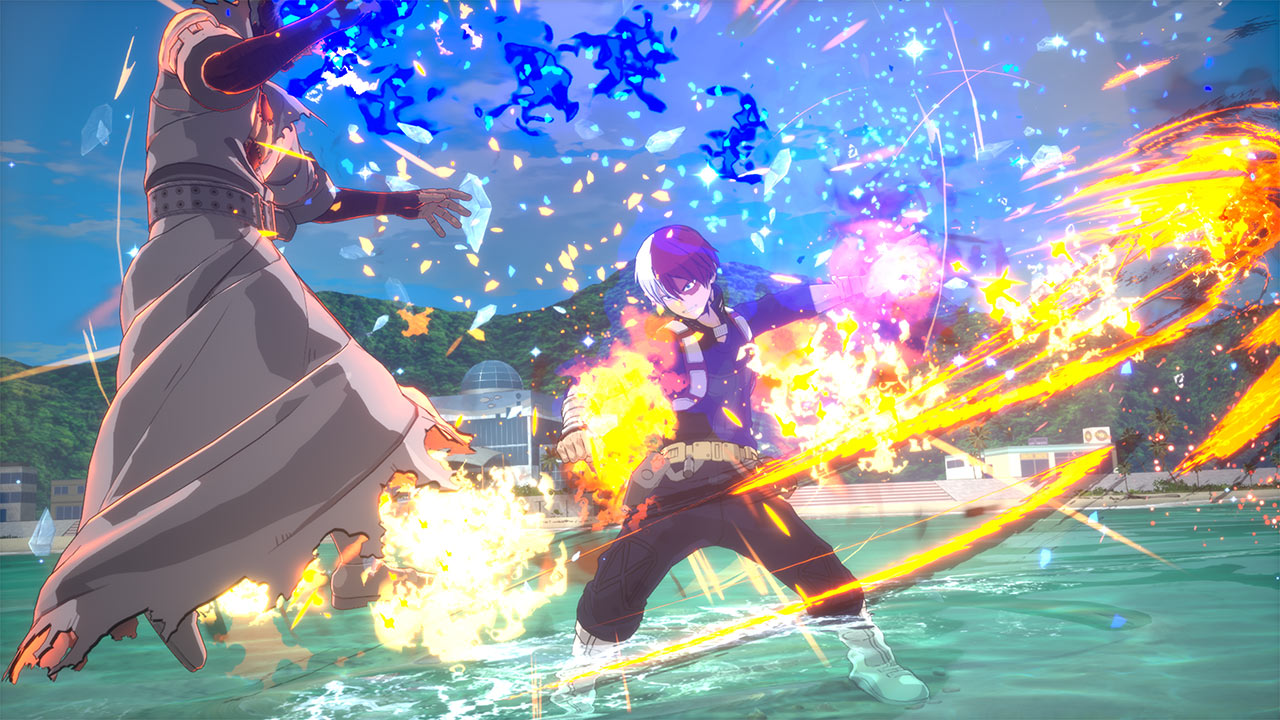
The team didn’t work alone in bringing these lesser-seen characters to life. “We worked with Shueisha and Toho Animation to ensure that these are in accordance with how the original artists would have portrayed them in, for example, in the actual story itself, if they had the space and the time to.”
This approach gives players a unique opportunity to experience characters in ways the anime and manga couldn’t fully explore. “We hope that even the players will be able to experience and have fun with characters whom you barely see even in the actual manga and or anime itself,” the producer notes.
Battle System and Visuals
The biggest change in All’s Justice is the shift to a three-versus-three team battle format, moving away from the traditional one-on-one fights of previous games. This isn’t just a number change – it’s a complete reimagining of how battles work.
“Because it’s a three versus three sort of team, every character has their pros and cons, what they’re strong at, what they’re weak at,” Miyazaki explains. “So if someone who is good at range, they might be terrible at close combat. And by balancing this and creating your team based on this balance, it allows characters to kind of use, kind of fight characters in a sort of tag team where they can switch out characters in and out.”
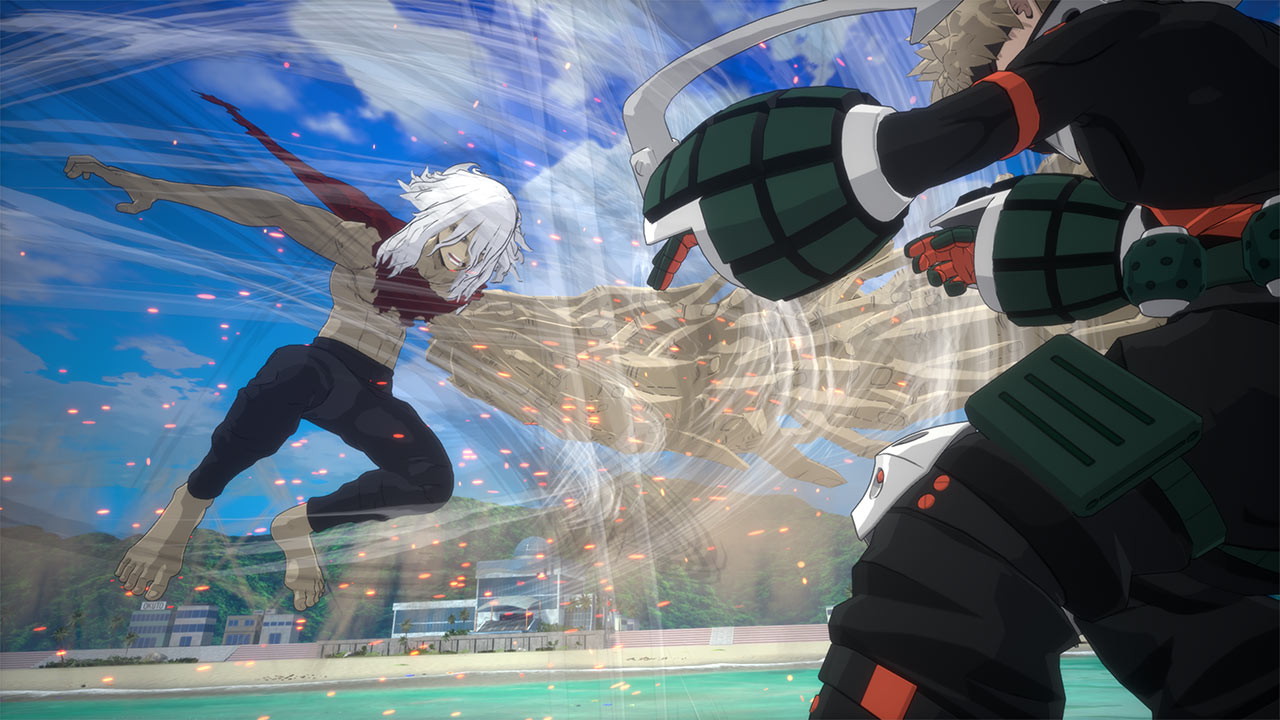
This system also addresses one of the biggest challenges in any hero-based fighting game: balancing characters of vastly different power levels. “Even though Hero Academia has a lot of characters and there are characters that are really, really strong along with characters that might not be as strong, but by being able to make this a three versus three tag team battle, it allows character synergy to kind of offset this whole power balance issue.”
Moving from Unreal Engine 4 to Unreal Engine 5, the game promises significantly improved visuals. But it’s not just about prettier graphics – the environment itself becomes part of the battle.
“With regards to the environmental destruction, it will kind of show like the power of each of the heroes, like how much destruction cause will show like how strong they actually are,” Miyazaki describes. The destructible environments aren’t just for show – they reflect the actual strength and impact of each character’s abilities.
Accessibility Without Compromise
One of the team’s biggest challenges was making a complex 3v3 fighting game accessible to casual fans while still appealing to competitive players. Their solution is impressively comprehensive.
“There is a setting in the game called kind of like auto-combat battle, where players who really aren’t really good with fighting games can literally just press a button to start a fight,” Miyazaki reveals. “And it also includes the character swaps based on their combinations of characters. So the CPU completely does everything for them for the really, really casual players.”
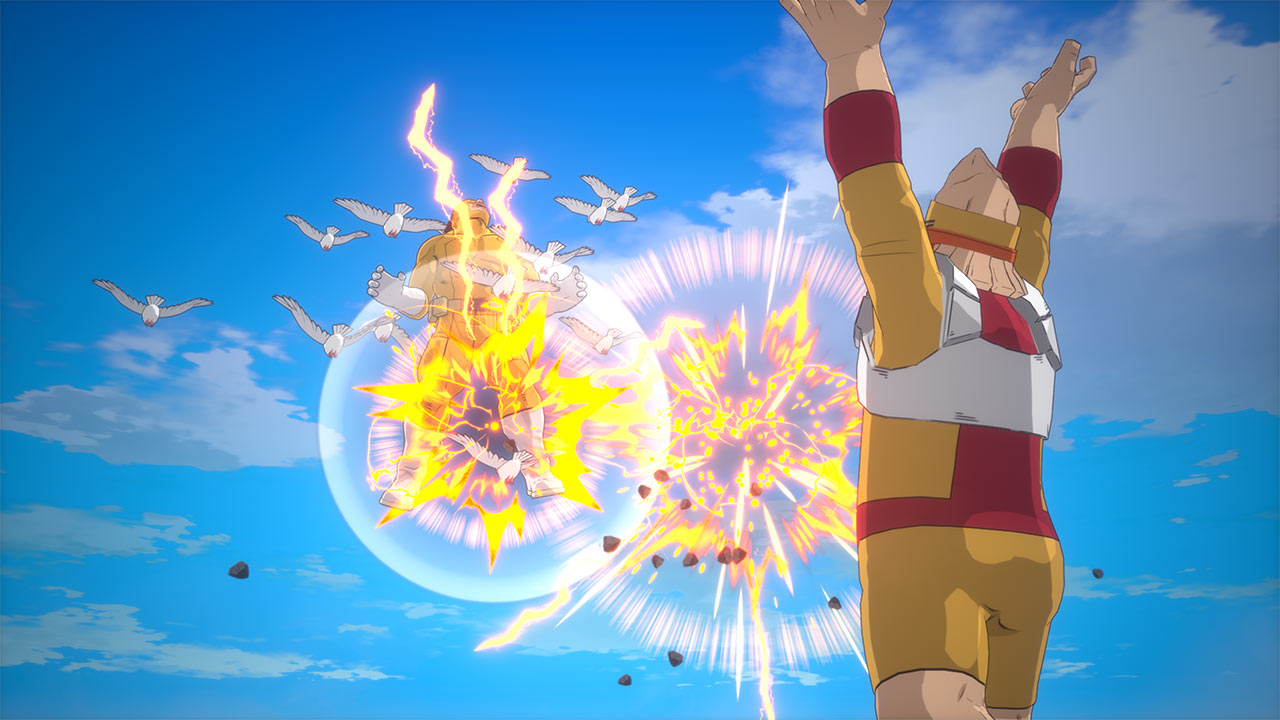
But this doesn’t mean competitive players are left out. “This mode is very adjustable, like how it’s very customizable, and it allows people to adjust according to their difficulty level and their playability level.” The game also features online multiplayer for those seeking more challenging battles.
Story-Driven Experience
Unlike previous entries that focused primarily on battles, All’s Justice puts significant emphasis on story and character development. This shift came directly from fan feedback.
“We received more feedback about wanting to experience more of Hero Academy’s story with regards to, aside from the battle, they want to experience more of the story, more of the characters,” Miyazaki explains. “So we’ve made this game a bit more story-based compared to the previous two games.”
The goal is ambitious: “We hope that players will also be able to experience the want to be a hero as according to the original anime and manga itself, like the want of the characters to be a hero and follow their journey through with the characters themselves in their interactions and their story.”
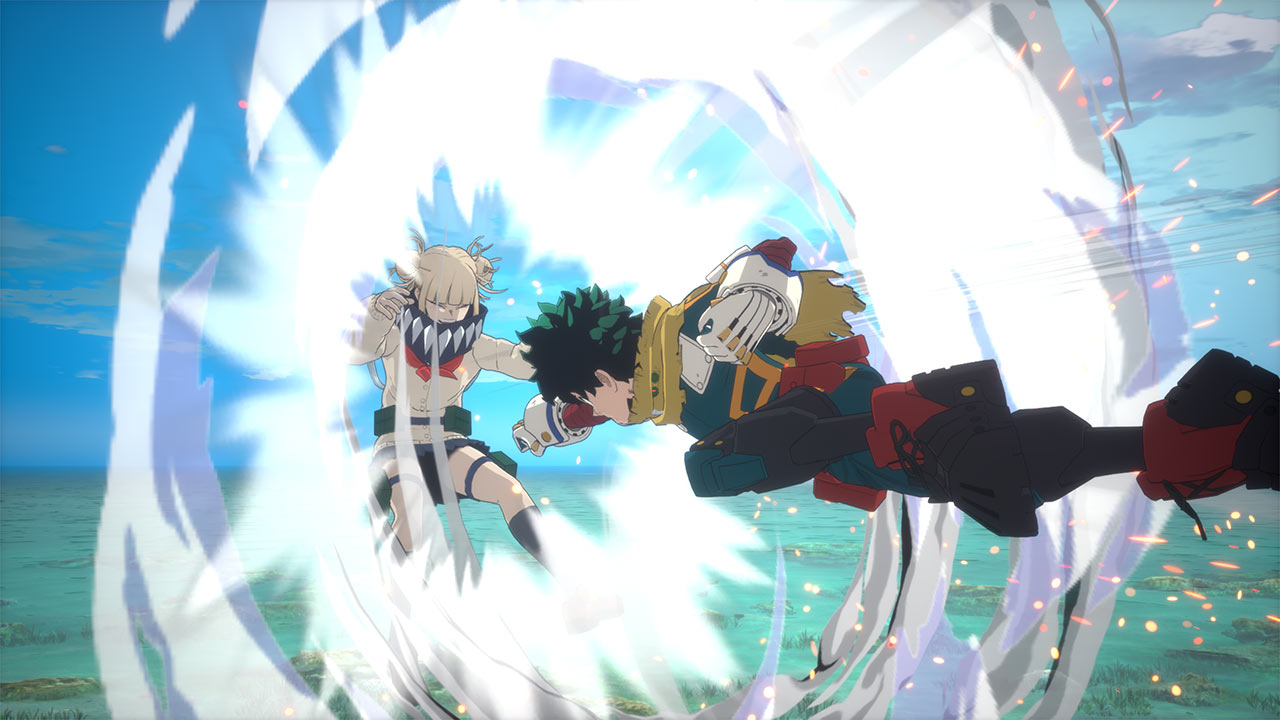
With the game releasing alongside the anime’s final season, the pressure on the development team has been immense. “Because the game is also the final season, the pressure is immense,” Miyazaki admits.
However, this timing also presents unique opportunities. “What we hope is that players would get more engrossed into the story as they play and feel the characters for themselves. So for example, by watching the anime, because it’s made by Bones, so the animation, when you watch it, you have a certain kind of feeling. So we hope that players will also be able to experience this feeling or even feel even more by being able to control the characters by themselves.”
A Message for Fans
When asked what message he’d like to share with eagerly waiting fans, Miyazaki’s response was beautifully simple: “You can also be a hero.”
He elaborates on this sentiment: “I hope that players and all the fans will be able to enjoy the story of the characters, enjoy their origin story, and enjoy playing as the characters themselves. As the anime season is also approaching its climax, and its final arc, we also hope that players will be able to enjoy the story of the characters, and that this game will be able to portray that to the fans.”
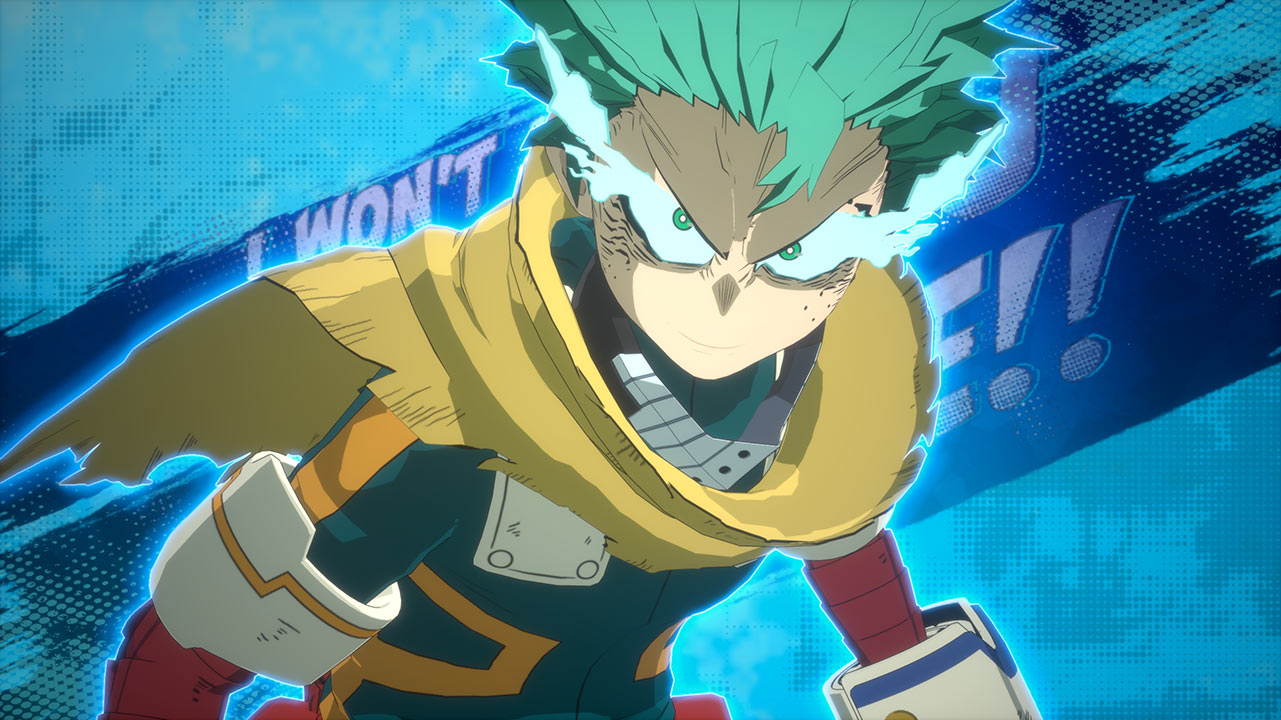
MY HERO ACADEMIA: All’s Justice represents more than just another fighting game – it’s the culmination of everything the development team has learned from previous entries, powered by new technology and driven by fan feedback. Whether you’re a competitive fighting game enthusiast or a casual fan who just wants to experience the world of heroes, this game promises to have something for everyone.
As Miyazaki concludes: “This time we have named our game not One’s Justice 3, but All’s Justice, to encompass everything and to show the full combination of our work so far.”