









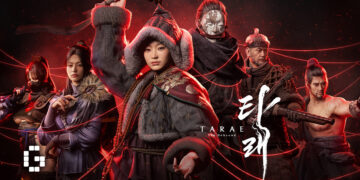


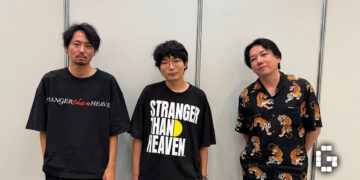


Where Winds Meet has spent the past year building a dedicated following across Southeast Asia, and its biggest storyline yet is about to reach its finale. At a recent Southeast Asian media gathering for the game, we were invited to get an early hands-on look at Hidden Mountain Chapter 3 ahead of its launch, followed by a group interview with Joy Chen, NetEase SEA Publishing Lead. The conversation covered a wide range of topics, from what comes after Hidden Mountain, to how the team approaches monetization, Wuxia philosophy, localization, and the game’s plans heading into its first anniversary.
Hands-On with Hidden Mountain’s Final Chapter
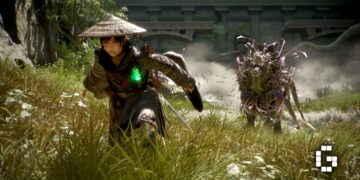
During the session, we tried out several pieces of content from Hidden Mountain Chapter 3, including the main story quest A Borrowed Self, the campaign Skyward City Ruins with Boss Halcyon, and the world boss Goshawk. The main story portion took around 10 minutes and included a short story sequence before leading into a battle against Qianye, while the Guardian and world boss encounters together took about 20 minutes. As the closing chapter of the three-part Hidden Mountain arc, it builds toward a major confrontation with the villain players have been chasing throughout the story, one that Joy Chen said was planned well in advance and refined through both community input and focus group testing. All of the content shown during the session will be available when Hidden Mountain Chapter 3 officially launches on September 16.

What Comes After Hidden Mountain: New Region in October, Anniversary in Winter
With Hidden Mountain wrapping up, the team already has plenty planned for the months ahead. Following the end of the storyline, October will bring a brand-new region, a fully independent story, and a new sect to the game. While Joy Chen could not share specific details just yet, she offered a few hints about how different the new area will feel. “Hidden Mountain emphasized verticality, freerunning, and exploring from high altitudes to underwater,” she explained.
“This new region will offer players a fresh sense of exploration. Its core gameplay will also be entirely new, how players interact with the open world, solve puzzles, and uncover hidden treasures will differ significantly from what they have experienced before.”

Then, in November and December, Where Winds Meet will mark its global first anniversary, which Joy Chen described as the biggest celebration the game has held since launch. She said players can expect new narrative content, new gameplay modes, and the largest set of welfare rewards offered so far, as a way to thank the community for its support over the past year. While specific details are still under wraps, she confirmed the team is actively looking into both online and offline special events for the occasion.
Alongside the interview, the team also shared a broader roadmap graphic for the next update through its official X account, giving players an early visual look at what’s coming over the next few months.
Venture deep into Skyward City, confront your nemesis Qianye, and uncover the final secrets of Hidden Mountain…
Get a sneak peek at the upcoming version highlights in the roadmap below! pic.twitter.com/Co201nd2Tg
— Where Winds Meet (@WhereWindsMeet_) September 14, 2026
A Non-Pay-to-Win Model Built Around Trust
One of the more frequent talking points around Where Winds Meet is its monetization approach, especially compared to other games in the genre. Joy Chen explained this was a deliberate choice from the start. “From the very beginning, our goal was not to create just another commercial game, but rather a work of art that conveys the core ideas our team is passionate about,” she said.
“We didn’t want any paywalls blocking players from enjoying the main narrative, boss encounters, or the freedom of exploring a Wuxia open world.”
She also pointed to the amount of historical research behind the game, noting the team has spent hundreds to thousands of hours on it, and that seeing players connect with small historical details has been rewarding for the development team.

Asked how this approach has held up nearly a year after launch, Joy Chen was direct. “Our non-pay-to-win business model has proven successful, and we will strictly maintain it over the long run,” she said. The team also tailors its cosmetics to regional preferences, noting that Asian players tend to favor traditional Wuxia looks while Western players lean toward pet-themed or battle-oriented styles, sometimes resulting in overseas-exclusive items chosen through community voting.
She also highlighted the game’s dyeing system as an example of player freedom, mentioning that during the recent Ghost Month update, players mixed a cropped top from a festive set with modern bottoms to create their own dance-inspired outfits.
Wuxia Philosophy and Bringing the Game Closer to Southeast Asia
Given that international audiences sometimes reduce Jianghu to simply the martial arts world, we asked how the team thinks about correcting that impression for global players. Joy Chen’s answer suggested the team prefers not to impose a single definition at all. “Our goal is never to correct global players or dictate what Wuxia should be,” she said.
“At its core, Wuxia represents freedom and personal choice. Forcing a definition onto players would contradict the very spirit of Wuxia itself.”
Rather than lecturing players, the team tries to convey this through storytelling, pointing to the Mohist sect from the Hidden Mountain expansion, where players encounter an internal struggle between opening up to the world or isolating in the mountains, as an example of Wuxia philosophy in practice.

That same care extends to how the game is localized for the region. “Localization is about communicating emotion and the Wuxia spirit, not just literal word translation,” Joy Chen explained, noting that the team continues refining dialogue not just for new chapters like Hidden Mountain, but also for earlier regions such as Qinghe and Kaifeng.
On the operations side, she shared that the team partners with local distributors such as Funtap in certain countries to support customer service and community management, and that offline meetups and event appearances in Southeast Asia are being considered for the long term. She also said the team actively listens to feedback about network latency from SEA players and continues optimizing server routing to keep competitive play fair and smooth in the region.
How Player Feedback Shapes Development
Given how often Where Winds Meet runs player surveys, we asked how much of that feedback actually makes it into development. Joy Chen said the team pulls input from platforms like Reddit, Discord, X, Instagram, and Facebook, then sorts it by volume, urgency, and importance to help decide what gets prioritized.
Beyond the more vocal parts of the community, she said the team also studies player demographics and habits to catch preferences that don’t always surface on social media. “We introduced the Homestead and Companion systems to cater to casual and simulation-minded players who might not post frequently on social media, giving them fulfilling alternative playstyles outside of combat and main quests,” she said. Localization and community teams also review player input globally every day, she added, and development leads then schedule updates based on feedback urgency and production capacity.

Looking specifically at what shaped Hidden Mountain, Joy Chen pointed to three examples from the past year. Regional latency concerns led the team to roll out dedicated servers for South America, the Middle East, and Oceania. On combat balance, she said the studio leans on both community input and its own numbers. “We combine community feedback on weapon performance with internal PvP telemetry data to continuously adjust martial arts balance,” she said. Players had also pushed for content to arrive alongside the Chinese server, something the team tried to accommodate where possible.
“Despite production challenges, we synchronized the release of the Reflection Temple and the upcoming Wuxia extraction mode globally, and will strive for more simultaneous updates in the future.”
Working with Industry Masters, from Combat to the Reflection Temple
Among the game’s notable partnerships is its work with martial arts choreographer Yuen Woo-ping, brought on earlier this year to help refine combat and weapon animations. “We reached out to Master Yuen Woo-ping early this year to initiate a cooperation to further refine the martial art actions shown in our combat and use of weaponry, aiming to deliver the purest, most authentic Wuxia experience,” Chen said.
Beyond his background in motion capture and cinematic choreography, she said what stood out most to the team was his insistence that martial arts should feel grounded in real-world physics. “He closely audited details such as body weight transfer, core stability, and force delivery for each stance,” she said. The payoff, she added, shows up in the finished combat, where every strike carries genuine weight and momentum when played.
That same appetite for outside expertise shaped one of the game’s more unusual pieces of content, the Reflection Temple, a stage built around specific survival rules rather than a typical story mission. Joy Chen traced its roots to the traditional Zhongyuan Festival, or Ghost Month, customs observed across several Asian countries. “We translated real-world folklore taboos into explicit gameplay survival rules,” she said, describing how the stage also weaves in mechanics themed around ancestor offerings and guiding wandering spirits.

Through scattered environmental clues, players piece together the temple’s forgotten history. “The gameplay unravels the forgotten history and secrets of the ancient temple,” she said.
“We invite players to piece together the historic truth, delivering a powerful emotional impact upon completion.”
The stage is a time-limited event rather than a permanent addition, currently live and running for about four weeks, with the exact end date listed in-game. It’s also separate from the broader Ghost Festival event, though the game includes other Ghost Month activities and themed cosmetics running alongside it. The concept came about somewhat organically. The team originally approached director Kevin Ko, known for the film Incantation, to produce a promotional short film. “However, our lead level designer is a huge fan of Incantation,” Chen said.
“During early brainstorming, their discussions naturally evolved into integrating film-grade horror storytelling and atmospheric design directly into a gameplay level.”
She confirmed more collaborations like this are on the way. “We will absolutely pursue similar high-profile collaborations,” she said.
“Because we view our game as a work of art, we seek out top-tier experts for every discipline, whether it’s action choreography with Stephen Tung Wai and Yuen Woo-ping, traditional dance choreography with renowned dance artists, or cinematic horror with Kevin Ko.”
Recognition, Icon Talks, and Future Platforms
Where Winds Meet recently won Best Mobile Game at Gamescom, and Joy Chen said the team was deeply honored by the recognition. She tied the award to the game’s broader reach, noting that surpassing 100 million players worldwide alongside the win reflects the team’s focus on gameplay quality. “It proves that an immersive, free, and emotionally resonant open world allows Wuxia to transcend cultural boundaries and resonate globally,” she said.
On the subject of collaborating with well-known martial arts actors such as Jet Li, Donnie Yen, or Jackie Chan, Joy Chen kept the door open without confirming any names. “We are actively pursuing opportunities to partner with legendary martial arts stars, and the collaboration is progressing very well,” she said.
“Please stay tuned for more updates.”

We also asked about bringing the game to other platforms, such as Nintendo Switch, given the renewed attention from the award and the upcoming anniversary. Joy Chen said the demand is heard loud and clear, but that quality takes priority over speed. “Our uncompromising commitment is that players on any platform must enjoy an uncompromised, top-tier experience,” she said.
“We refuse to rush multi-platform launches if it means delivering a degraded experience that erodes player trust.”
With Hidden Mountain drawing to a close, Where Winds Meet is clearly not slowing down. Between a new region and sect in October, an anniversary celebration expected in the months after, and ongoing collaborations with industry names across action, dance, and film, there’s a fair amount for both new and existing players to look forward to.